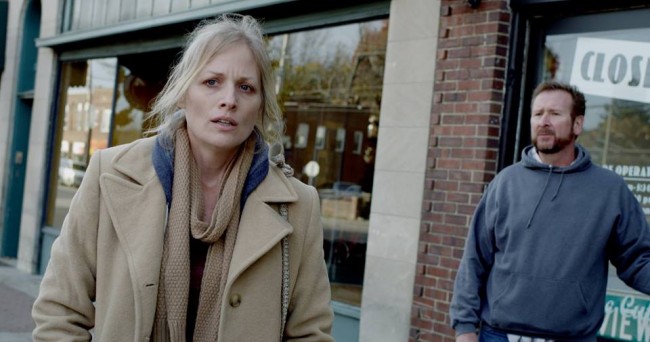
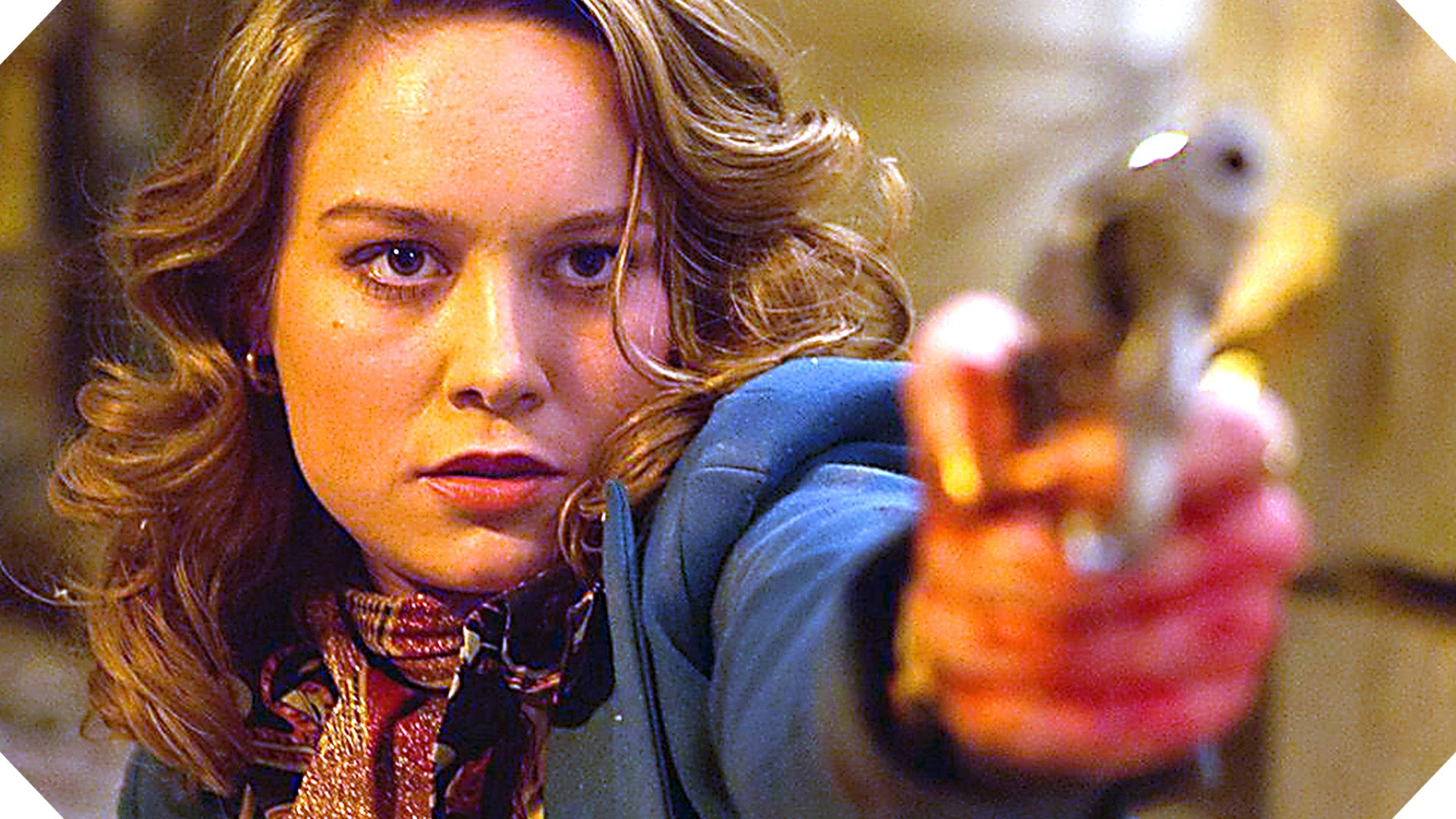
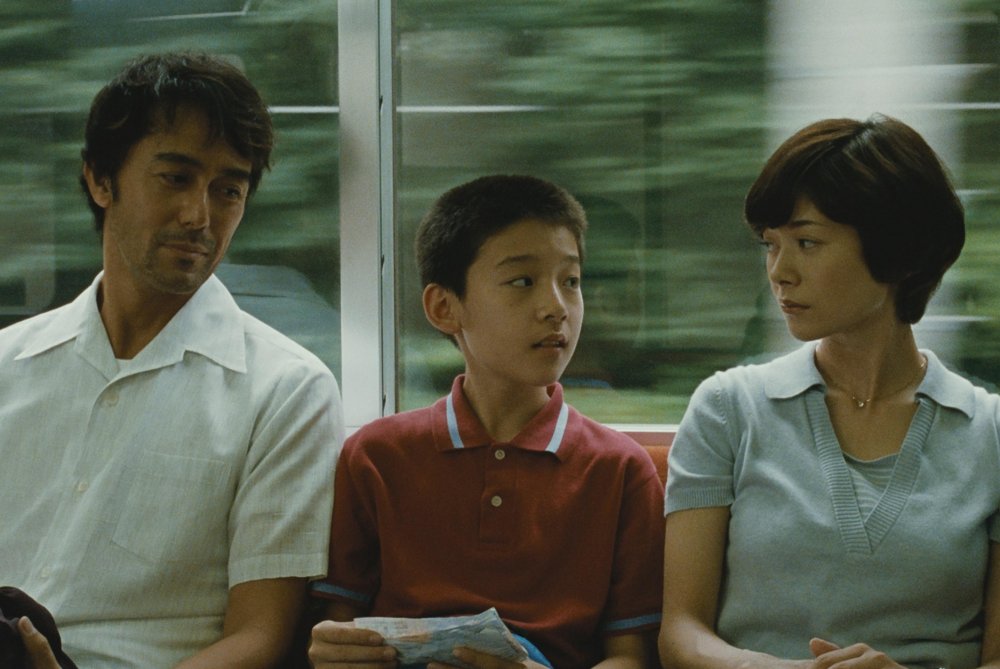
Two great actors going toe to toe. Trespass Against Us may be a strangely unfocused crime drama/comedy, but it does bring Michael Fassbender and Brendan Gleeson together, and that’s far from criminal.
Gleeson is Colby “Cole” Cutler, who heads a family band of tramps and thieves camped in the British countryside and committed to a life of robbing the wealthy while taunting the police. Fassbender is Chad Cutler, the eldest son looking for a way out. Like everyone else, Chad is scared to confront his old man, but as his own son is becoming a young man, Chad begins secretly plotting a path that might give his boy the chance at a different life.
In this narrative feature debut for both director Adam Smith and screenwriter Alastair Siddons, familiar themes are brought to the surface without giving the fine ensemble cast enough ammunition to make any meaningful statement. In fact, it’s hard to pin down the purpose for any particular course the film takes, other than generating a respectful shoulder shrug.
Chad’s wife Kelly (a terrific Lyndsey Marshall) is tired of waiting for her husband to make his move, and though we see both tension and affection throughout the extended family, the film never really breaks from a bystander’s point of view. These are clearly complicated relationships with loyalties that have shifted over the years, but they’re all kept at arm’s length, rendering Trespass Against Us a well-performed curiosity.
Yes, Split is the latest from writer/director M. Night Shyamalan, and no, you’ll never see it coming.
You know what I mean. And Shyamalan knows you know what I mean. So, while you’re trying to guess what surprise twist he’s got in store for you, a nifty psychological thriller plays out, elevated by a transfixing performance from James McAvoy.
After years of misfires, Shyamalan got his groove back by scaling back two years ago with The Visit, an enjoyable bit of lightly scary fun that amounted to one giant misdirection. With Split, the director himself is the main misdirection, as his reputation pushes you to chase something that may not be there at all.
McAvoy is Kevin, a deeply troubled man harboring 23 distinct personalities and some increasingly chilling behavior. When he kidnaps the teenaged Casey (The Witch‘s Anya Taylor-Joy) and her two friends (Haley Lu Richardson, Jessica Suva), the girls are faced with constantly changing identities as they desperately seek an escape from their disorienting confines.
Meanwhile, one of Kevin’s personalities is making emergency appointments with his longtime therapist (Betty Buckley, nice to see you), only to show up and assure the Dr. everything is fine. She thinks otherwise, and she is right.
The split personality trope has been used to eye-rolling effect in enough films to be the perfect device for Shyamalan’s clever rope-a-dope. By often splitting the frame with intentional set designs and camera angles, or by letting full face closeups linger one extra beat, he reinforces the psychological creepiness without any excess bloodshed that would have soiled a PG-13 rating.
Still, it all might have gone for naught without McAvoy, who manages to make Kevin a sympathetic character while deftly dancing between identities, often in the same take. He’s a wonder to watch, and the solid support from Buckley and Taylor-Joy help keep the tension simmering through speedbumps in pacing and questionable flashbacks to Casey’s childhood.
Maybe the best case for this new Shyamalan surprise is the fact that even without the kicker, Split would hold up as a competent, emotionally disquieting thriller. But when you add that final reveal?
Brit filmmaker Christopher Smith has some tricks up his sleeve.
The director/sometimes writer is willing to try most anything in the genre – from medical horror (2004’s Creep) to period horror (2010’s Black Death) to brilliant, blistering and woefully underseen horror comedy (2006’s Severance).
But he takes a harder left than usual with his latest, Detour – a noir-esque road picture with revenge on its mind.
Well-cast and enjoyably pulpy, the film follows Harper (Tye Sheridan) – law student and all around good kid – as he spins a dangerous web. He blames his stepdad (Stephen Moyer) for his mother’s coma, backing himself into a deal with local no-goodnicks Johnny Ray and Cherry (Emory Cohen and Bel Powley, respectively).
Twice the film winks toward the great Paul Newman neo-noir Harper as well as Strangers on a Train, then pulls more blatantly from Edgar Ulmer’s 1945 noir Detour. But Smith’s Detour feels more like style over substance than it does hard boiled or twisty.
Sheridan cuts a believably innocent figure, and Harper’s drunken ramblings are a hoot. Cohen – such a peach in last year’s Brooklyn – finely articulates the hot-headed, coked-out but ultimately wounded Johnny, while Powley manages to bring more than just a rosy pout to her under-developed but intriguing character.
Detour also litters the dusty road trip from Cali to Vegas with some weirdly compelling characters, chief among them Frank (John Lynch – so creepy!).
But Smith just does better when he’s working with another writer.
At a pivotal moment in Harper’s story, Smith brings in the split screen, drawing attention to a conversation – a little anecdote about conscience – Harper and Johnny Ray shared over loads of liquor the evening before.
Here’s where Smith’s directing outshines his writing.
With the split screen comes the mystery and the provocative notion that Smith is building then rebuilding the story. But the story can’t keep up, and in the end the split screen is little more than a gimmick – a great looking one, but a gimmick nonetheless.
Early clues are too tidy, later choices far sloppier, the resolution neither cynical nor satisfying enough to tie things up.
That’s not to say Detour is a total miss, just that it doesn’t live up to its potential.
Has it been six years since Mike Mills explored father/son relationships and the coming of middle age with Beginners? Insightful, emotionally complex and kind, the film marked Mills as not only a director of substance, but a writer with integrity and wit.
Not that it could have predicted 20th Century Women.
What a joyous conundrum this film is. Set in 1979, the film looks on as Jamie (Lucas Jade Zumann) maneuvers the troubles of adolescence, societal sea change and his loving if enigmatic mother, Dorothea (Annette Bening).
Too practical and pragmatic for the women of 1979, too independent and wise for her own generation, Dorothea is a woman without a timestamp. It gives her a gravitational pull, drawing the fierce and the unusual to her like satellites.
Those in her orbit – besides her pubescent son – are punk artist Abbie (Greta Gerwig), troubled teen Julie (Elle Fanning), and misplaced hippie William (Billy Crudup).
The cast is uniformly terrific, but Bening is a spectacle. A collector of friends, she’s still a solitary figure, one who looks on the relationships and complications in her life with a strange remove – almost like an anthropologist.
Dorothea is, from her son’s point of view, unknowable. Bening more than manages to embody that frustrating reality of a parent whose behavior seems entirely natural and yet almost alien. And she does it with such charm and humor.
Perhaps the biggest surprise in 20th Century Women is the humor – the film, like life, is peppered with laugh out loud moments that help make even the barely endurable pain of adolescence enjoyable.
Mills falls back at times on a punk rock undercurrent that creates a wonderful energy as well as a thoughtful theme for the time in history and in Jamie’s life. As Abbie puts it, the chaos of punk is comforting because it’s about, “When your passion is bigger than the tools you have to deal with it.”
It’s a line that’s almost too perfect, as this cast is almost too perfect. This seems to be the quiet wonder of Mike Mills: he puts his own complicated, insightful and emotionally generous writing into the hands of genuine talent.
Simplicity, tempo, pattern – to some, this alone constitutes poetry.
To Jim Jarmusch, perhaps.
Jarmusch’s second film in a year – after his wonderful Stooges documentary Gimme Danger – is a quieter effort. Paterson marks the days of a New Jersey bus driver, a man named Paterson (Adam Driver) driving in the town of Paterson.
He lives a life of routine: up around 6 to work on a poem while he eats his Cheerios, then a walk to work where he scribbles a bit more before starting his route, then a break for lunch where he returns to his poem, then home for dinner with his wife Laura (Golshifteh Farahani). After dinner he walks his dog to a corner bar where he stops for a beer, then to bed and back at it around 6 the next morning.
Paterson’s wife is more of an explosion of creativity that counters his disciplined artistry.
Paterson loves his wife, finds comfort and beauty in his routine. Above all, he observes, often finding grace in moments so quiet they might be overlooked by someone less still.
Jarmusch’s film is as measured, as calm and composed as its hero.
A languid pace tends to be an earmark of the auteur’s work, but with Paterson Jarnusch has left behind much of his iconic quirkiness in favor of clear-eyed if lyrical normalcy. Ordinariness is celebrated – elevated, even.
Through the character’s eyes we get to notice patterns and repetitions, seeing them as something more than coincidence or design, but a mystery deserving our interest.
Driver delivers a near perfect performance with a tough character. Paterson reveals nearly nothing of himself, preferring to direct attention back at his surroundings. Only through his poems – often scribbled across the screen and read in voiceover – do we get a sense of his inner self. But Driver’s expressions convey an enormous amount of information – about his meals, his relationship with his dog, his joy, fear and heartache.
Through Paterson, Jarmusch seems to memorialize an unplugged life – the kind that allows the mental quietness required for this type of meditative art.
There are elements of the film that feel appropriately unexplained, and others that simply come off as undercooked. And there are always those audience members who will itch for more – more drama, more action, more something. Those people may not be Paterson’s intended audience. Poetry often requires more patience to fully appreciate.
Everybody’s first experience with horror is a nightmare – their own bad dreams. Surreal horror manages to recreate the anxiety, confusion and dreamlike quality of those nightmares.
In fact, it’s such fertile ground for horror that there are dozens of excellent possible films to celebrate – beginning with Bunuel and Dali’s 1929 head trip Un Chien Andelou to Bergman’s 1968 film Hour of the Wolf, Shin’ya Tsukamoto’s fantastical 1989 fantasy Tetsuo, the Iron Man to Turkey’s latest foray into the genre, Can Evrenol’s 2015 head trip Baskin. All of these films are required viewing for horror fans, but something had to be set aside.
So, here you have it: our pick of the five best surreal horror films.
5. Vampyr (1932)
The well-groomed Allen Grey (Julian West) is an aimless dreamer preoccupied by tales of the supernatural. He wanders thusly, with what appears to be a fish net, to a secluded little inn. But trouble’s afoot.
And dig those crazy shadows!
Early in Vampyr, Grey receives a package from a weary looking man. The package says, “To be opened upon my death.” It appears that Grey has stumbled into a deadly mystery with nothing to help him puzzle out the details except that needless fish net.
The great Carl Theodor Dreyer co-wrote and directed this gorgeous black and white fantasy. The painterly quality of Dreyer’s frames and the bizarre character behavior give the film a surreal atmosphere you can’t shake. His decision to limit dialog to a minimum and craft the film with traditional silent film gimmicks benefitted the dreamscape atmosphere.
As Grey wanders through this picturesque nightmare realm, the film becomes almost drunk with weirdness. Dreyer captures the gorgeous terror of a dream more perfectly than any other filmmaker, in a movie that is never predictable, always a bit surreal and spooky.
https://www.youtube.com/watch?v=5xEWT23yA3o
4. Possession (1981)
Speaking of sex and monsters – wait, were we? – have you seen Possession? WTF is going on there?
Andrzej Zulawski – writer/director/Czech – created this wild ride with doppelgangers, private investigators, ominous government (or are they?) agencies, and curious sexual appetites. It’s more precisely fantasy than horror, but it strikes me as David Cronenberg meets David Lynch, which is a pairing we can get behind.
Mark (Sam Neill) and Anna’s (a fearless Isabelle Adjani) relationship boasts an intentional artificiality – a queasying sexuality – that makes it hard to root for either of them as their marriage deteriorates. Anna, it seems, is in love with someone else. Is it the sexually open – really, really open – Heinrich? Is it a bloody, mollusk-like monster? Is Mark boning Anna’s mean friend with a cast on her leg? Does Bob’s kindergarten teacher bear an unreasonable resemblance to Anna? Is anyone caring properly for Bob?
These questions and more go basically unanswered in a deviant, summary-defying, fantastical bit of filmmaking that mocks the idiocy, even insanity of obsession and boasts a handful of weirdly excellent performances. And sex with a bloody mollusk-like monster.
3. Repulsion (1965)
The first of Polanski’s brilliant “apartment trilogy,” Repulsion takes on its protagonist’s point of view. As Carol (an utterly amazing Catherine Deneuve) spirals into a hallucinogenic stupor of violence and paranoia, Polanski wisely decided to occupy that same headspace, rather than observing it as an outsider.
It gives the film its surreal feel, developed partly by the wonderful camera work of Gilbert Taylor, who uses the black and white necessitated by the budget to wondrous, shadowy, menacing effect.
Though the marketing for the film promoted a virgin’s hysteria, close attention to the film suggests something far more sinister beneath Catherine’s breakdown. Is it ironic that Roman Polanski of all people is able to articulate the mental and emotional chasm left by a likely sexual assault? Why yes, yes it is, but God help me, he does it well.
2. Gozu (2003)
If you are looking for genuine lunacy in film, your search should begin and quite possibly end with filmmaker Takashi Miike. His shit is nuts. Truth be told, there are scads of Miike films that could have populated this list because even his tamest, most logical, no-puppetry films are wild rides. So when he starts coloring way outside the lines, expect to be surprised.
This one starts off as a yakuza film – one guy on a mob-style assignment – then descends into absolute madness.
Minami (Yuta Sone) has been ordered to assassinate his feeble-minded yakuza boss Ozaki (Sho Aikawa), but he’s conflicted. Then he loses Ozaki and wanders, in search, into – you might say it was the Twilight Zone, except this place is considerably weirder. There’s a minotaur. An electrified anal soup ladle death scene. Some seriously, seriously weird shit.
Like a walk through somebody’s subconscious, the film is awash in repressed sexual desires of the very most insane and unspeakable. There’s a comical element that’s almost equally unsettling. Gozu is not as violent as many Miike films – it’s violent, don’t be mistaken, but the horror here is more in unseemly behavior and wildly inappropriate imagery. It’s just stuff you can’t unsee.
https://www.youtube.com/watch?v=penZT2N2xDw
1. Eraserhead (1977)
There truly is no film quite like David Lynch’s first feature, eh?
Eraserhead defies simple summarization. Easily the most surreal of all Lynch’s films – which is a huge statement – the film follows sad-sack Henry Spencer (Jack Nance) dealing poorly with fatherhood.
The film becomes a nightmare of paternal angst and existential crisis – indeed, it may be impossible to name a film or filmmaker more able to bring a nightmare to life.
It’s also among the finest examples of corporeal horror you will find. The shadowy, grimy b/w photography – partially handled by Lynch’s longtime cinematographer Frederick Elmes – amplifies the dismal stagnation facing Henry.
At the same time, it gives a weird, nostalgic camp factor to the Lady in the Radiator and adds a particularly lurid element to that whole bleeding “chicken” thing.
Plus, the baby. Yikes. Alive with the most disturbing imagery, Eraserhead is impossible to forget.
If director Peter Berg and star Mark Wahlberg are on a mission to salute America’s unsung heroes, they’re doing a damn fine job. After Lone Survivor and Deepwater Horizon, they bring a similar formula to Patriot’s Day and achieve even more satisfying results.
A chronicle of the 2013 Boston Marathon bombing and the frenzied search for terrorist bombers that followed it, the film employs a breathless timeline and confident pacing to triumphantly salute the courage, compassion and dedication of a city under siege.
As he did so well in Deepwater Horizon last year, Berg opens with quick snapshots of the many lives involved (terrorists included), efficiently creating a layer of humanity and emotional depth. The explosions are sudden and jarring, presented with a compelling mixture of chaos and carnage, as bloody limbs and shell shock bring us uncomfortably close to the suffering.
The ensuing manhunt is nothing less than thrilling, with the rock-solid ensemble cast (including Kevin Bacon, John Goodman, J.K. Simmons, Michelle Monaghan and a fully committed Wahlberg) illustrating the harried teamwork of first responders and government agencies.
Strong and sturdy with undeniable spirit, Patriot’s Day stands as a fitting tribute to both individual heroes and an entire city itself.
Yes, the faithful believe Jesus sacrificed himself for us – to clear our sins with God. But would he have sacrificed us for the sake of reverence?
Martin Scorsese’s elegant pondering on faith, Silence, enters the mind of Jesuit priest Fr. Rodrigues (Andrew Garfield) as he and his colleague Fr. Garrpe (Adam Driver) venture into 1640s Japan in search of a mentor priest lost to a violently anti-Catholic government.
Gorgeous, imposing shots paint the image of the vast and dangerous beauty of God’s world and the small if admirable people trying to survive there. Garrpe and Rodrigues first hide with faithful Japanese villagers, losing their primary mission while serving those oppressed Christian Japanese longing for signs of the church.
Garfield and Driver cut nicely opposing images, Garfield the sweet-faced picture of buoyant faith, Driver the more skeptical, impatient believer. While it’s Garfield whose story we hear, Driver’s counterpoint is a required piece of this crisis of faith driving the film and his performance delivers something painful and honest.
Scorsese’s abiding interest – some might say preoccupation – with faulty men and their tenuous grasp on Catholic faith has flavored many a film, though rarely as thoroughly as this one. What is faith? What is it, really? And who’s to say what harm Jesus would have you do to protect him?
The film may take itself too seriously (though, this is hardly light fare). Any possible misstep Scorsese can mostly overcome with meticulous, near-magical craftsmanship, though there are a handful of hang ups that sometimes break the seduction of the project.
These are Portuguese priests in 17th Century Japan speaking English (why?), and mainly with British/Irish accents (Liam Neeson plays lost Fr. Ferreira). (At least Driver gives the Portuguese accent a shot.)
And though Garfield is a genuine talent, this role requires something perhaps uglier than what he has to offer.
Mainly, though the film’s resolution is both nuanced and satisfying, there are certain answers, certain signs that feel more like movie magic than spiritual presence. They are minor flaws in a beautiful if ponderous work, but they keep Silence from joining Scorsese’s true masterpieces.
Writer/director Joshua Locy has crafted a unique, poignant drama with Hunter Gatherer.
The film succeeds in part due to Andre Royo’s stunning portrayal of Ashley, a man recently released from prison who wants to re-establish himself in his former girlfriend’s life. Fully inhabiting his character, Royo has chemistry with everyone he shares the screen with. His chemistry with George Sample III is especially winning – Sample’s Jeremy/“Germs” as the straight man to Royo’s boisterous Ashley.
Sample brings a sweetness to his character – especially apparent in Jeremy’s interactions with Dr. Merton (Jeannetta Arnette), a doctor involved in the medical science research for which Jeremy is a paid volunteer.
The film’s subtle comedy is quirky, but it works well alongside the more dramatic moments. A scene in which Ashley searches for a backpack could be mundane, but is enlivened by the funny interaction with the store clerk. The comedy is necessary, as the film quietly moves toward darker moments.
Though Ashley appears the eternal optimist, it’s clear as the film moves forward he is struggling to find his way – a depression lurks underneath the surface. Ashley jokes to hide the pain he feels as he tries to find connections with the people in his life.
It would be remiss not to mention Kellee Stewart’s noteworthy performance as Nat, the woman with whom Ashley spends most of his time. Her character’s sensitivity is much needed in Ashley’s life, but he takes her for granted as he continues to focus on rekindling his relationship with his ex, Linda (Ashley Wilkerson).
As a directorial debut, Locy’s film is not without problems, but as a moving character study, this is a film that will stick with viewers for its touching take on love and friendship.
The jury on Ben Affleck’s skills as a filmmaker came in about one and a half films ago. After Gone Baby Gone and halfway through The Town, it was clear this guy can direct. Argo hammered that point home but good. And don’t forget that Oscar for co-writing Good Will Hunting.
But after all that’s good about Live by Night, seeing Leonardo DiCaprio’s name in the producer credits instantly makes you wonder how much more effective he might have been in the lead role.
Instead, Affleck casts himself as Joe Coughlin, an “outlaw” in prohibition-era Boston who runs afoul of the local crime boss after getting cozy with the wrong dame (Sienna Miller). A few years and double-crosses later, Irish Joe is working Florida for the Italian mob, cornering the rum market and laying complicated groundwork for a sprawling casino.
Give Affleck credit for challenging himself with a big slice of genre filmmaking, and he comes close to pulling it off. In adapting the novel by Dennis Lehane (Gone Baby Gone), Affleck pens a smart script that’s full of juicy twists, satisfying callbacks and requisite noir touchstones that never feel overdone (though the questionable voiceover pushes it). We also get consistently interesting characters brought to life by a stellar supporting cast. Through Brendan Gleeson and Zoe Saldana to Chris Cooper, Elle Fanning and beyond, we see soul after soul facing serious moral compromises, and, to the film’s detriment, all resonate more deeply than Affleck.
This is Joe’s journey, rife with sin, judgement, hypocrisy and redemption, but Affleck never makes Joe worthy of being the center of all this gravity. Though the character isn’t that far removed from the outlaw Affleck played effectively in The Town, his move to genre actor, classic jawline aside, is clearly unnatural.
The film often looks fantastic, with nifty period details, sweeping panoramas, nicely backlit interiors and exciting shootouts, but Affleck’s incessantly gradual pace eventually takes a toll. In reaching for a sweeping gangster saga, Affleck includes too much plodding exposition that makes the film’s just-over two hour running time feel a good bit longer.
Though Affleck makes sure his film pushes all the genre buttons, Live by Night ranks as an ambitious overreach, never quite finding the right mix to make it truly memorable.