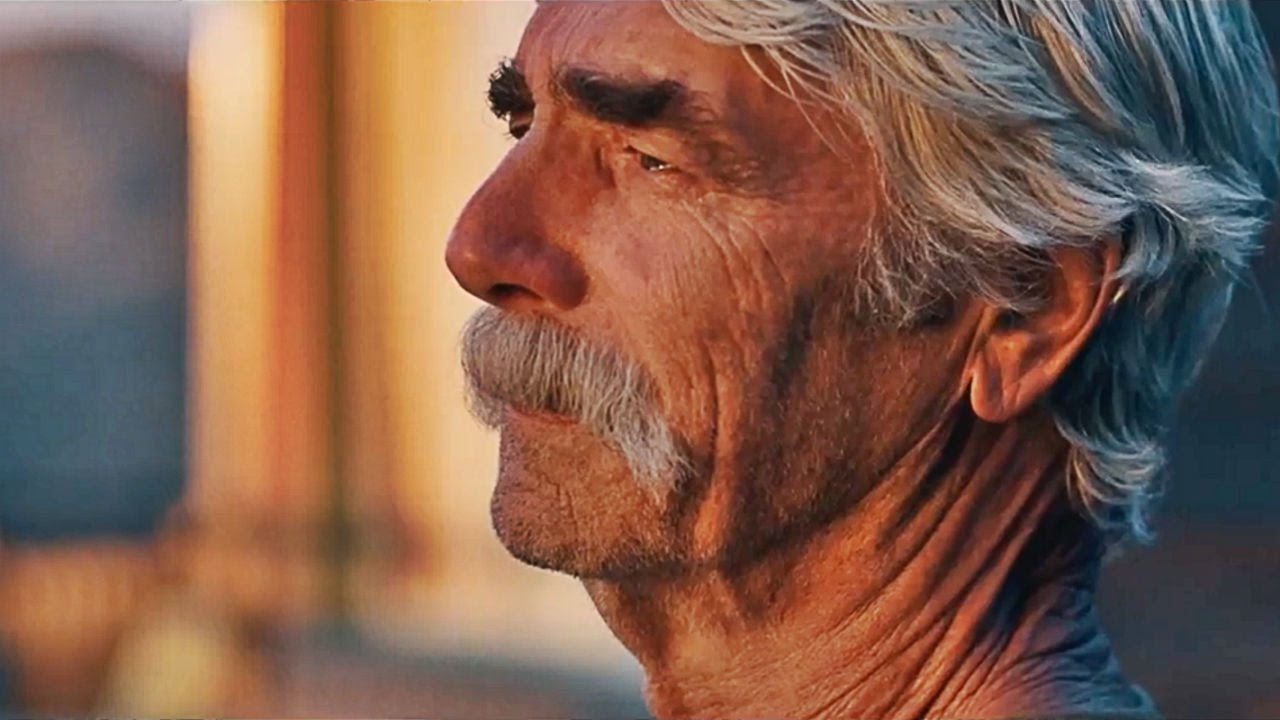
Wickity Wack

John Wick: Chapter 2

by Hope Madden

Keanu Reeves is a cyborg. He’s seen human behavior – he just can’t replicate it very believably. It’s a reasonable theory, isn’t it?

But every once in a while he lands on a role where acting like an actual human just doesn’t matter – like the surprise 2014 hit John Wick. If you enjoyed that splashy bit of violence and canine love, you’re likely to appreciate its strangely anticipated sequel, John Wick: Chapter 2.

The Keyser Soze of international hitmen, Wick was brought out of retirement, you’ll remember, when a half-assed Russian mobster stole his dog and his car. And if you could make it through the maudlin, sentimental crap and focus just on that kickass hotel shit, it was a mildly entertaining film despite Reeves’s absence of talent.

Once out of retirement, though, Wick has a tough time getting back out of the biz.

Chapter 2 picks up right where the previous installment ended. Wick, his beloved if unnamed pit by his side, re-buries the gold coins and weapons of his trade. But Santino D’Antonio (Riccardo Scamarcio) requires Wick’s services – and he’s not above doing ill-advised things to acquire his compliance.

Director Chad Stahelski and writer Derek Kolstad return, both improving on their previous effort by streamlining the story, limiting sentimentality and spending more time exploring what was cool the first time – The Continental.

Turns out there’s a mirror hotel in Rome, site of Wick’s new gig. There’s also a high-powered organization of the world’s most influential criminals as well as an armed, underground network masquerading as New York’s homeless.

Basically, 4 out of every 5 people walking the street are trained killers. Who’s paying for all this?

Stahelski ups his game with the action sequences. Wick’s movements are without ego – they are clean and efficient, which is appropriate. And he likes to shoot the knees out, so points for that. Stahelski films with flair – fascinating framing, often beautifully backlit. It’s fun.

Still, there’s the problem of Reeves’s acting. (I’m sure he’s a very nice man.) Stahelski does what he can by pairing his lead with slightly more agile actors to buoy the few scenes with dialog. The always-welcome Ian McShane returns. Peter Serafinowicz and Franco Nero make tangy appearances, along with one co-star who would have been a fun surprise had his face not been splashed all over the trailer.

Sure, there are problems – besides the dialog. Why are the bad guys all such bad shots? Where are all the witnesses? Eye-rolling contrivance follows ludicrous convenience, but these guys brought their shootin’ boots.

It’s not like you don’t know what you’re in for here.

Verdict-3-0-Stars

Abs-olutely Fabulous

The LEGO Batman Movie

by Christie Robb

This year’s spin-off of 2014’s The LEGO Movie centers on Batman—the brooding solitary vigilante with the wonderful toys and the nine-pack abs. We catch up with him doing the usual thing—saving Gotham City from a supervillain. But when he gets home after a long day, who does he have to share his life with? Just a judgey Alfred, Siri, and a microwaved plate full of lobster. Apparently Batman’s greatest fear is intimacy.

The Bat can’t even identify his “bad guy”—breaking Joker’s heart when he decides to “fight around.”

So when Barbara Gordon takes over as police commissioner amid plans to work more collaboratively with Batman, he gets the heebie jeebies. Discovering that he’s accidentally adopted an orphan doesn’t help. Nor does the Joker’s rounding up of all of Gotham’s villains and submitting a group resignation letter.

Faced with demands on his emotional intelligence and without purpose, Batman begins to crack. Sure that Joker is up to something, Batman refuses to work with Gordon and inadvertently places Joker in a position where he can destroy all of Gotham for good.

Only one thing can stop this nefarious plan…teamwork.

LEGO Batman is a PG-rated movie that is probably even more fun for adults than for kiddos. Those responsible for paying the tab will get to enjoy spotting the references to other Batman movies, identifying terrible Batman TV show villains (like the Condiment King), and wondering how the administrative folks at the studio acquired permission for all the outside intellectual property required for the climax.

The movie also has a remarkable depth of voice talent. Will Arnett handles the gravel-voiced protagonist, but Michael Cera steals scenes as the endearingly twee Robin. Not only do we get Rosario Dawson as Gordon, we get Ralph Fiennes as Alfred and Zach Galifianakis as the Joker. But even characters that have minute amounts of screen time get good coverage. Billy Dee Williams, for example, briefly reprises his 1989 role as Harvey Dent.

And, in the end, we learn everything is cool when you’re part of a team.

Verdict-4-0-Stars


The Angsty Frontier

The Space Between Us

by Hope Madden

Space – the weepy YA film’s final frontier. Hopefully.

Asa Butterfield (Miss Peregrine’s Home for Peculiar Children) is Gardner, the first child born on Mars – even if it was an accident. But he’s lonely and isolated and apparently we can build a community on Mars but we can’t get them contemporary movies.

Gardner’s lonely! He’s angsty! He’s smitten with Tulsa, the bored, hardened foster kid he met online (Britt Robertson – Tomorrowland).

Wouldn’t it be dreamy if they met? Maybe fell in love? I’m sure each one of them could appreciate how deeply special the other one is, even if no one else notices it.

The Space Between Us is harmless enough. Butterfield and his big blue eyes make Gardner’s exploration of Earth sweet, and solid performances from a veteran supporting cast including Gary Oldman and Carla Gugina give what life they can to the plodding, predictable plot.

The film, which screams of adolescent literature, is actually an original piece of writing by Allen Loeb. Loeb most recently brought us the excruciating Collateral Beauty. If you haven’t seen it, don’t.

Schmaltz and emotional manipulation – these are some of the tricks employed to draw your attention away from the utterly ludicrous storyline. Unfortunately, they don’t mask the lack of chemistry between the leads.

This is a love story without sparks, a potential tragedy without an emotional pull. The payoff feels not only predetermined but unearned.

Is it as bad as If I Stay or The Fault in Our Stars? Why, no. The Space Between Us mercifully avoids the truly maudlin. But there is enough overlap in theme that it feels more like a sanitized version of those tear jerkers than it does an original idea.

Verdict-2-0-Stars

Viral Video

Rings

by Hope Madden

Releasing a film without a pre-screening for critics is usually a bad sign. A mid-February studio release is never good.

You know what else isn’t good? Rings.

If you’re wondering whether Samara’s story disappeared with the last VCR, puzzle no longer. Sadly, it did not. Indie hipsters at a garage sale take home some vintage equipment, find an old VHS tape inside and watch it.

If you’ll recall, watching said video of freaky images condemns the viewer to death within a week. The images relate to the accursed life of, in the English language films, a little girl named Samara.

Gore Verbinski’s 2002 The Ring managed to do two remarkable things. One: it surpassed its Japanese-language original (Hideo Nakata’s Ringu) in quality. Two: it was a deeply frightening PG-13 movie.

But Verbinski has talent, as does his cast, most notably 2-time Oscar nominee Naomi Watts.
Rings director F. Javier Gutiérrez is playing without those kind of all-stars.

At this film’s heart is still that Scooby-doo mystery to solve that is the foundation of nearly every ghost story – and Samara’s tale is essentially that. In this episode – which forgets 2005’s The Ring 2 ever existed – two college freshmen do the sleuthing.

The leads are, as far as I can tell, made entirely of wood or wheat toast. Matilda Lutz is Julia the Bland, devoted girlfriend and courageous ghost hunter. Her boyfriend Holt (Alex Roe – yawn) participated in a wild psychological experiment led by his professor Gabriel (Johnny Galecki) – garage sale junkie. That experiment leaves Holt with 7 days to live…and his time is almost up.

The film’s running time isn’t, though. Oh, no. Holt’s fate is revealed and we still have at least 3/4 of the movie to suffer through.

Sadly, the genuinely talented Vincent D’Onofrio gets dragged into this at a certain point, his only real contribution is to remind the audience what acting actually looks like.

Why do I get my hopes up?

Verdict-2-0-Stars

https://www.youtube.com/watch?v=ouwST4IEvJo

The Saddest Lines

Neruda

by Hope Madden

Pablo Larraín is having quite a year. In theaters already with his insightful vision of grief, celebrity and politics, Jackie, the Chilean filmmaker returns with a page from his own nation’s history books – Neruda.

Again eschewing the traditional biopic structure, Neruda drops us into the life of Chile’s most beloved poet and most famous Communist as political tides are changing. Post WWII, Pablo Neruda’s outspoken support of his party puts him on the wrong side of his government.

Though Neruda (Luis Gnecco) became the voice of resistance in Chile and around the world, his own life hardly mirrored the communist principles he championed. A poet, a lover and a man of grand excess, he spoke eloquently of a struggle he refused to live himself.

A fascinating set of conundrums, Neruda is a hard man to pin down cinematically – so Larraín doesn’t exactly try.

When Chile calls for Neruda’s arrest, we follow him underground, as does Inspector Oscar Peluchonneau (Gael García Bernal – scene stealer).

Here is where Larrain, working from Guillermo Calderon’s inventive screenplay, gets a bit experimental to better serve his subject.

From Peluchonneau’s point of view, the film becomes hard-boiled detective pulp, a narrative device that allows Larraín to better explore the line between fact and fiction – and poetry.

The investigator becomes the antagonist in Neruda’s imagined persecution, allowing him the mythical martyrdom and drama he feels a man of his greatness deserves.

Gnecco’s performance hits all the right marks, creating a presence that’s simultaneously admirable, aggravating and disappointingly vain. Fine support from Mercedes Morán as Neruda’s longsuffering wife buoys the performance by articulating the effect he had on those around him.

But the fictional Peluchonneau runs away with the film. García Bernal’s oddball incompetent with his own delusions of grandeur brings color to the film as it transports the audience to a more literary landscape.

The conceit doesn’t always work. It often feels too cute. But there are several scenes where reality and fiction collide without a clear winner – one with Morán and a snowy finale, in particular – that elevate the entire project.

It’s an arresting and lovely near-miss.

Verdict-3-5-Stars

Funny How?

The Comedian

by George Wolf

Let me just admit something right now. I’m the guy who thought Robert DeNiro had some funny moments as the Dirty Grandpa.

Now DeNiro is The Comedian and..anybody seen Grandpa?

One of the curious aspects of the film is that even though it’s more of a character study than an outright comedy, that character is a legendary comic who’s not really that funny.

DeNiro stars as Jackie Burke, an insult comedian who hit it big back in the day with a smash TV sitcom. Nowadays, he chides his manager (Edie Falco) for the meager gigs while resenting fans who just want to hear him repeat his old TV catch phrase. An encounter with an aggressive heckler goes viral, and suddenly Jackie is hot again..while serving 30 days for assault.

He meets Harmony (Leslie Mann) while fulfilling community service hours, and director Taylor Hackford dutifully kicks off a series of situations in search of greater cohesion.

As Jackie and Harmony go to comedy clubs, weddings, and dinner, Jackie is always cajoled into doing a quick routine that isn’t nearly as impressive and everyone tells him it is. By the time Jackie goes viral again with a retirement home performance of a parody song about “making poopie,” the antics are more embarrassing than amusing.

An old school comic facing the truth that “being funny isn’t enough anymore” could have been fertile ground for a more layered, meaningful character. The Comedian isn’t interested. Veteran standup comics are among the film’s writers, comedy consultants, and cameo stars, but the script never gives Hackford the ammo to dig any more than surface deep.

What Hackford does have is a talented cast (including Danny DeVito, Harvey Keitel, Patti LuPone and Cloris Leachman), and he keeps all the actors engaged enough to deliver terrific performances, regardless of screen time. That’s about the best reason to see The Comedian, a film that seems content to put off getting its act together in favor of just wandering around backstage.

Verdict-2-5-Stars


https://www.youtube.com/watch?v=gLQXUmzXuEo

Attention Must Be Paid

The Salesman (Forushande)

by George Wolf

It should surprise no one familiar with Asghar Farhadi that the filmmaker is a former playwright. In films such as About Ely, The Past and the Oscar-winning A Separation, Farhadi, as both writer and director, has shown sharp instincts for building quiet tension through insightful, deliberately paced dialog.

His latest, The Salesman, is no exception, as Farhadi returns to his stage roots in crafting a meaningful parallel between a classic American play and an Iranian couple whose marriage is frayed by a traumatic incident.

Emad (Shahab Hosseini), a high school teacher, and his wife Rana (Taraneh Etesami) are starring in a community theatre production of Arthur Miller’s Death of a Salesman when they are forced to flee their apartment building as it crumbles around them. After renting a new apartment from one of their co-stars in the play, a dangerous occurrence involving the previous tenant drives a wedge of guilt and anger between husband and wife.

While The Salesman may lean on contrivance a whisper more than usual, Farhadi again uses intimate conflicts to explore more universal themes of gender and class, and he again delivers a screenplay with minimal filler. Buoyed by resonant performances from the two leads, each line of dialog is carefully placed for maximum impact, while Farhadi weaves Miller’s work into the narrative for a poignant undercurrent of generational clash in a changing world.

Though the classic “attention must be paid” speech occurs relatively early in Death of a Salesman, Farhadi confidently builds his film toward a third act reflecting similar themes. All of us, no matter what may have occurred in the past, deserve basic human dignity.

Sadly ironic, then, that if The Salesman earns Farhadi his second Academy Award, he won’t be there to accept it. The Iranian filmmaker has said he won’t attend even if “exceptions were made” to recent immigration directives, and his work must stand as a testament to the increasingly shaky ground of our own foundations.

Verdict-3-5-Stars


Strangers on a Trainwreck

Julieta

by Hope Madden

Pedro Almodovar brings his two most marked filmmaking styles – the one submerged in the world of women (Volver, for instance), the later of a more Hitchockian note (The Skin I Live In) – and pulls them together in his latest effort, Julieta.

The titular heroine, played at different ages by Emma Suárez and Adriana Ugarte, has a shameful secret – or two. As the film opens, Julieta (Suárez) is packing to leave Madrid for Portugal with her boyfriend, Lorenzo (Darío Grandinetti). But a chance encounter with a childhood friend of her daughter’s convinces Julieta to drop Lorenzo and stay in Madrid, moving instead to the old building where she’d lived for years with her daughter.

We then switch to the story of the younger Julieta (Ugarte), and Almodovar gets all Strangers on a Train with us – even to the point of eventually mentioning the novels of Patricia Highsmith, writer at the core of that Hitchcock classic.

Suárez capably maneuvers Julieta’s emotional landscape. She’s a woman pretending to be fine, keeping her true nature from those around her and attempting to hide it from herself. The performance is haunted, edged with remorse.

Ugarte stumbles, though. It doesn’t help that she and Suárez look so little alike, or that the flashback storyline is designed to be a thriller – an ill-fitting choice for the material.

Almodovar built the screenplay on three inter-connected shorts by Canadian writer Alice Munro, layering her words with an urgent score, suggesting dangerous thrills, and dialog-heavy close ups that feel more like daytime drama.

For all the clashing colors, discordant images and creepy housekeepers, Hitchcock and Munro just don’t fit together well.

Munro’s writing tends to lull you with quite unveilings. Julieta may be Almodovar’s attempt to spice that up by way of homage, score and framing, but it feels like a trick. His direction leads us to believe we’re watching some thriller wrought with dangerous secrets. We are not. This chicanery undercuts the power of Munro’s meditation on guilt while it all but guarantees the dissatisfaction of a misled audience.

The final result, though often gorgeous and compelling, is a bit of thematic chaos that doesn’t work.

Verdict-2-5-Stars

Fright Club: Skeletons in the Closet – Oscar Edition

It is that time again – the time of year where the Academy of Motion Picture Arts and Sciences honors the best of the best, and we honor the worst of those best.

Yes, Skeletons in the Closet: Oscar Edition is back. It’s the day we dig around in Oscar nominee closets to find those low budget, horror bones hiding behind the fancier schmancier stuff.

And we can always find them. The great Viola Davis wasted her talent in the Rear Window/Fright Night knock-off Disturbia. The also-great Michael Shannon spent some time early in his career in the actually quite decent Dead Birds, while Ryan Gosling co-starred in the intriguingly titled Frankenstein and Me. Meanwhile, Octavia Spencer slummed it up in Pulse.

But there’s worse – and yet, somehow better – material to discuss. Here are our favorite not-good horror hiding in these A-listers’ closets.

5. Denzel Washington: The Bone Collector (1999)

Denzel! Just a year after the serial Oscar nominee and winner made the dark action thriller Fallen – not good, but not bad – he returned to the land of CSI with The Bone Collector. Must’ve had an itch to scratch.

In Phillip Noyce’s grim police procedural, Washington plays a quadriplegic homicide detective helping beat cop Angelina Jolie track down a serial killer who’s leaving grisly victims and frustrating clues.

Plus, Queen Latifah!

The film is bland, Noyce never able to focus on a physically immobile hero and still create an exciting pace. And yet, Washington commands your attention no matter how listless the scene or unlikely the rest of the casting.

4. Michelle Williams, Halloween 20: H20 (1998)

It’s been 20 years since Michael Myers escaped his confines and slaughtered all those people in Haddonfield. Thousands of miles away in a private school in Northern California, Laurie Strode and her brother come face to face again.

Who was excited? Back in 1998, we were. Jamie Lee Curtis was back, and we were allowed to forget Halloweens 3 – 6 ever happened. Plus – though he’s no John Carpenter – director Steve Minor does have a history with horror, and Curtis’s iconic mom Janet Leigh popped by.

The result was slick, and boasted a great deal more talent than the others: Alan Arkin, Joseph Gordon-Levitt and 2017 Oscar nom Michelle Williams. The 4-time Oscar nominee was saddled with the one-dimensional sweetheart role, and though you’d never have known she’d one day be among the most talented performers in film, you knew she was too good for this movie.

3. Jeff Bridges: The Vanishing (1993)

In 1988, co-writer/director George Sluizer unleashed a daring, meticulous and devastating film on an unsuspecting world. Spoorloos asked you to follow a grieving boyfriend down a rabbit hole – one with no escape.

Five years later, Sluizer returned to the scene of the crime, current Oscar-nominee Jeff Bridges in tow. Bridges plays just an ordinary guy indulging a particular fantasy. Unfortunately, Bernrd-Pierre Donnadieu played the same ordinary guy to far, far more believable and therefore chilling effect back in ’88.

Worse still, the fantasy itself is gutted with an “America’s not ready for the real thing” ending that just makes you want to kick a guy. Infuriating!

2. Viggo Mortensen: The Prophecy (1995)

This is one of those bad movies that is fun to watch. Somehow the unusually talent-stacked cast doesn’t feel wasted as much as it does weirdly placed.

There is no question this film belongs to Christopher Walken – as do all films in which he graces the screen. His natural weirdness and uncanny comic timing make the film more memorable than it deserves to be, but when it comes to sinister, Oscar nominee Viggo Mortensen cuts quite a figure as Lucifer.

Unseemly, gorgeous and evil, he seethes through his few scenes and leaves the celluloid scorched.

1. Casey affleck: Soul Survivors (2001)

Good God, this one’s bad.

Writer/director Steve Carpenter – auteur behind such classics as The Dorm that Dripped Blood – somehow convinced talent to join this cast. Who? A post-American Beauty Wes Bentley, an established Luke Wilson, and pre-Oscar nominee Casey Affleck.

Affleck stars as the tragically dead (or is he?) boyfriend of Cassie (Melissa Sagemiller) an awkward runner. (Yes, it’s tangential to any reasonable conversation about the film, but she runs in nearly every scene and I have never seen a more awkward runner.)

Who’s alive? Who’s dead? What’s happening? Well, in case you’ve been lobotomized and can’t keep up, luckily Father Jude (Wilson) will literally explain everything.

Still, Affleck is somehow not terrible.

Let Some Light In

Things to Come

by Cat McAlpine

Depression is often depicted as something grey and dark – a hovering cloud or a dark pit. Writer/Director Mia Hansen Love takes depression and divorce and instead floods them with light in her hopeful but slow Things to Come.

Things follows Nathalie (Isabelle Huppert) as she navigates political upheaval, the end of her relationship, and the death of her mother. Instead of shooting a multitude of midlife-crises in dark corners and dim bars, Nathalie is found sleeping in sunny parks and running away to the country.

Even her mother Yvette (Edith Scob), wrought with panic attacks and depression, is bathed in light. Her apartment is bright and clean and she lays in bed all day in nothing but a silver silk night gown. Hansen Love’s film is determined to stay bright.

Huppert is steady and contemplative during the undoing of Nathalie, but her poise is just thinly veiled denial. When her husband Heinz (André Marcon) quietly announces that he’s leaving her for another woman, Huppert stares daggers out the window. “I thought you’d love me forever,” she quietly surrenders. And then, after a beat, “What an idiot.”

The tottering act of being okay and not-okay at the same time is mesmerizing from Huppert, who masters Nathalie’s self-assuredness. Nathalie needs just one puff of someone else’s cigarette to be okay. Nathalie needs just one invigorating philosophical conversation. Nathalie needs just four brief sobs alone in her room.

Riding out into the country side, she declares, “My mother is dead. My husband has left me. I’ve never been so free in my life!” All while toting along her mother’s black cat Pandora.

Nathalie hates Pandora, and is also allergic to her. But she refuses to recognize her literal baggage because sometimes faking it ’til you make it is the only option.

Things to Come can be heavy handed and slow. It intermixes quotes from philosophers and lengthy discussions on morality in a way that makes scenes feel listless. Rather than a complete narrative, the film unfolds like a series of emotional landscapes, loosely connected.

The first and last five minutes offer bizarre time jumps that don’t quite provide useful background or satisfying resolution. They are just moments on a timeline we’ve been invited to watch. But Huppert is ceaselessly watchable, and Hansen Love refuses to let dark times be … well, dark.

Verdict-3-5-Stars

Hope Madden and George Wolf … get it?