If you don’t know director J.A. Bayona, that’s unfortunate. His first three feature films—The Orphanage, The Impossible and A Monster Calls—emphasized storytelling skills that were equal parts visceral and poetic.
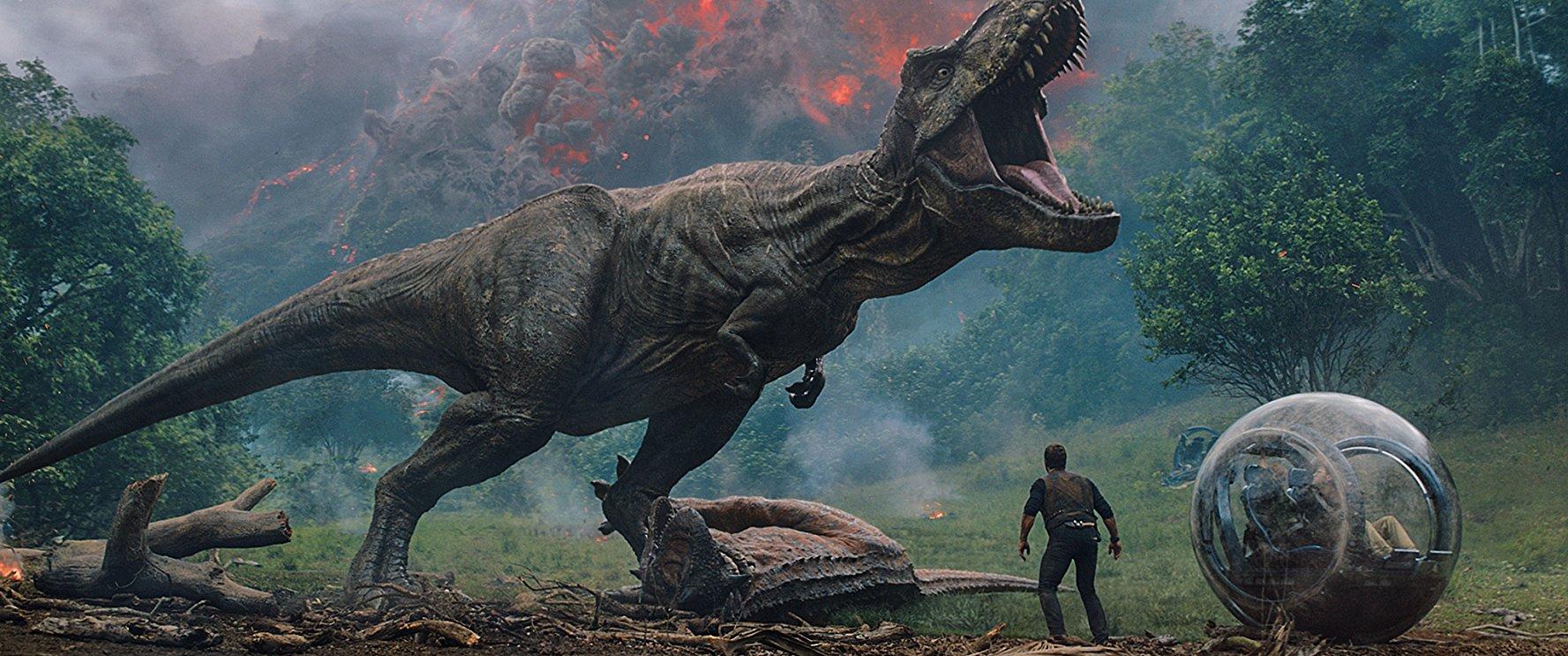
He picks up the Jurassic mantle with the latest in the franchise, Jurassic World: Fallen Kingdom. The visceral part seems likely, but dinosaur poetry? Sadly, no.
It’s been a few years since toothy, carnivorous hell broke loose on the island theme park Jurassic World. Though the un-Jurassic world has left those dinosaurs alone on their island—mostly—the island itself seems to be self-selecting extinction for the beasts, its now-active volcano an immediate threat to their very survival.
Claire Dearing (Bryce Dallas Howard) wants to save them. But how? I mean, dinosaurs are really big. Many of them bite. Interacting with them has proven dangerous and silly four different times. What’s a girl to do?
Well, put on some sensible shoes, for once, and take a deal from a dying old billionaire with a Hogwarts-style estate and a guilt complex. Benjamin Lockwood (James Cromwell), one-time partner of John Hammond (Richard Attenborough from the original film), wants to bring as many beasties as possible to a secluded island he owns where they’ll be safe.
Or is this just another example of idealistic lefties falling prey to greedy capitalists and scientists with their cadre of guns-for-hire?
It’s basically The Lost World with more volcano and less Vince Vaughn.
Howard’s Dearing—point of such contention in the previous installment with her severe hair, white pumps and icy demeanor just waiting to be melted by a real man—is simultaneously softer and stronger this time around. Howard, though, is mainly just dewy-skinned and earnest.
Chris Pratt returns as the real man in question, and he is as charmingly Chris Pratt as ever.
The real problem, besides the hackneyed and derivative story penned by Derek Connolly and Colin Trevorrow (who both penned Jurassic World, which Trevorrow directed), is Bayona’s tired direction.
Though he does not shy away from showing human carnage, there is not a fresh or compelling set piece in the film. What doesn’t feel directly lifted from earlier works plods along blandly, the only tension coming from the real curiosity about why the character hasn’t yet a) closed the door, b) climbed the ladder, c) run.
Yes, the sight of a volcano exploding on Hawaii (location for the filming) does generate some anxiety, and the sound of a child crying out near images of anything being caged against its will is even more horrific. It’s hard to credit Bayona for having his finger on the pulse of current events, though, given that he’d have completed shooting at least a year before our latest American shame.
Hell, dinosaurs would be a welcome change of pace at this point.
In 2012, director Bart Layton laid down one of the most compelling and nutty documentaries in recent history. His true crime doc The Imposter was one of those rare films that you could not predict nor could you turn away from. It was fascinating, and not just because the story was so wild, but because of Layton’s spry skills as a storyteller.
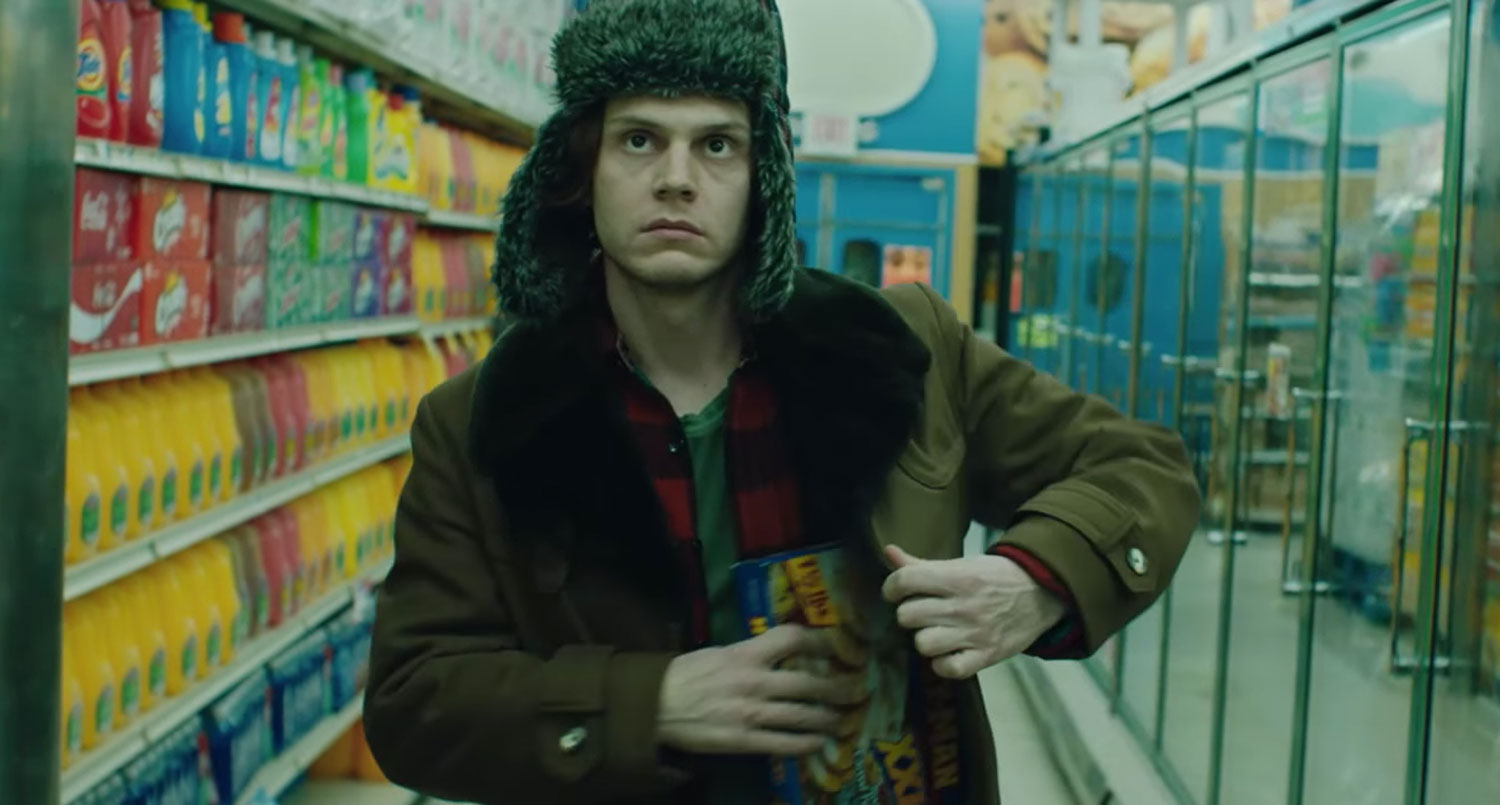
He’s again pulling from the world of true crime to tell a potent story with his latest, the narrative feature American Animals. The yarn he spins here: four perfectly reasonable, likable, comfortable college kids steal a set of pricey books from Transylvania University’s rare books collection, including Darwin’s original Origins of the Species and Audubon’s Birds of America.
The audacity of the plan itself is reason enough to pay attention. Buddies get the itch to do something big. Something life-changing. Consequences be damned. Or, more rightly, ignored.
Build from there with a truly talented group of young actors: Evan Peters (X-Men’s Quicksilver), Barry Keoghan (Killing of a Sacred Deer, Dunkirk – the kid can do no wrong), Jared Abrahamson (Sweet Virginia, Detour) and Blake Jenner (Everybody Wants Some).
Layton opens with text on screen: This is not based on a true story. The words “not based on” disappear, leaving: This is a true story.
A bold statement to make, and American Animals is as interested in the effect individual perspective plays on true stories as Craig Gillespie’s I, Tonya or Sarah Polley’s near-perfect 2012 documentary, Stories We Tell.
Once again, Layton blends fiction and nonfiction devices to question the possibility of honesty in storytelling. As he weaves from actors recreating the heist to the actual participants telling their versions of events, Layton poses intriguing questions about perspective and truth.
They aren’t questions he answers, though, or even truly explores.
The film works best when it digs into the American preoccupation with unlimited potential, the individual’s specialness. The four young men who risk their futures unnecessarily suffer from that curse of the restlessly entitled.
As you watch the inevitable collapse of a reckless gang of kids’ movie-inspired heist, American Animals suggests depth and introspection but feels more like it’s grasping for a suitable ending, an appropriate way to cap all this madness with a bit of insight.
The problem with the film is the problem with the heist itself: it was fun while it lasted, but was there really a purpose?
Dude, it’s the heat of the summer. No better way to escape all that hair-frizzing humidity than by lounging about in your own home watching movies. We understand. This week, you can choose from new indie comedies, horror, dramedies and straight up trash. Let us help.
On this week’s podcast, Hope and George disagree about Pixar’s latest, Incredibles 2. They also talk through Tag, SuperFly, A Kid Like Jake, Feral, The Seagull and what’s new in home entertainment.
Part of the fun of horror is to be able to separate yourself from the images onscreen. The old “this could never really happen” thing helps us sleep at night. But there are some films that rob you of that safety net, burrowing under your skin and into your subconscious specifically because you are convinced that it could definitely happen—maybe it already has.
Today we salute realism in horror with five films to give you nightmares.
5. Nothing Bad Can Happen (2001)
This film is tough to watch, and the fact that it is based on a true story only makes the feat of endurance that much harder. But writer-director Katrin Gebbe mines this horrific tale for a peculiar point of view that suits it brilliantly and ensures that it is never simply a gratuitous wallowing in someone else’s suffering.
Tore (Julius Feldmeier) is an awkward teen in Germany. His best friend is Jesus. He means it. In fact, he’s so genuine and pure that when he lays his hands on stranded motorist Benno’s (Sascha Alexander Gersak) car, the engine starts.
Thus begins a relationship that devolves into a sociological exploration of button-pushing evil and submission to your own beliefs. Feldmeier is wondrous—so tender and vulnerable you will ache for him. Gersak is his equal in a role of burgeoning cruelty. The whole film has a, “you’re making me do this,” mentality that is hard to shake. It examines one peculiar nature of evil and does it so authentically as to leave you truly shaken.
4. Open Water (2003)
Jaws wasn’t cinema’s only powerful shark horror. In 2003, young filmmaker Chris Kentis’s first foray into terror is unerringly realistic and, therefore, deeply disturbing.
From the true events that inspired it to one unreasonably recognizable married couple, from superbly accurate dialog to actual sharks, Open Water’s greatest strength is its unsettling authenticity. Every element benefits from Chris Kentis’s control of the project. Writer, director, cinematographer and editor, Kentis clarifies his conception for this relentless film, and it is devastating.
A couple on vacation (Blanchard Ryan and Daniel Travis) books a trip on a crowded, touristy scuba boat. Once in the water, they swim off on their own – they’re really a little too accomplished to hang with the tourists. And then, when they emerge from the depths, they realize the boat is gone. It’s just empty water in every direction.
Now, sharks aren’t an immediate threat, right? I mean, tourist scuba boats don’t just drop you off in shark-infested waters. But the longer you drift, the later it gets, who knows what will happen?
3. The Snowtown Murders (2011)
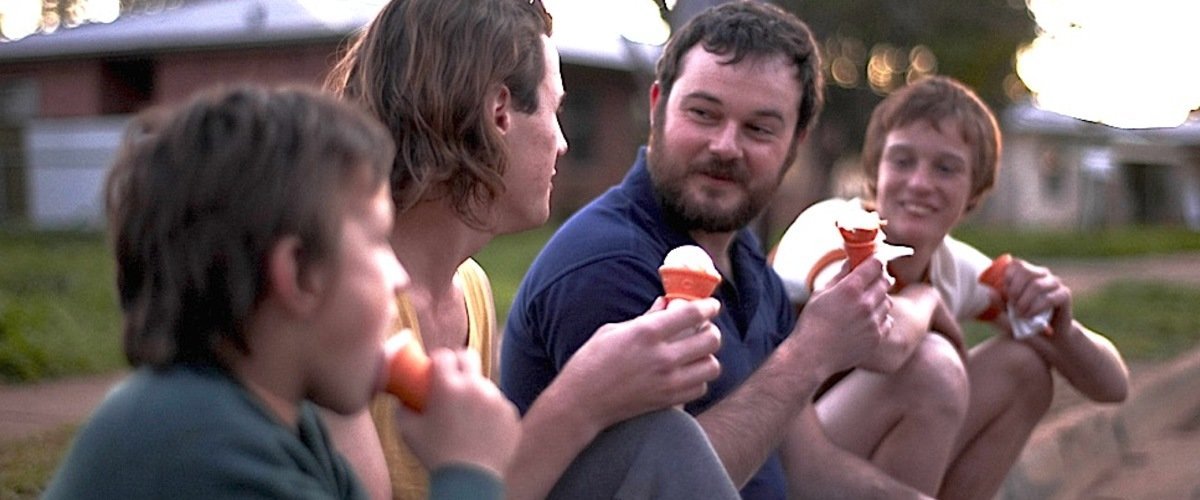
John Bunting tortured and killed eleven people during his spree in South Australia in the Nineties. We only watch it happen once on film, but that’s more than enough.
Director Justin Kurzel seems less interested in the lurid details of Bunting’s brutal violence than he is in the complicated and alarming nature of complicity. Ironically, this less-is-more approach may be why the movie leaves you so shaken.
An unflinching examination of a predator swimming among prey, Snowtown succeeds where many true crime films fail because of its understatement, its casual observational style, and its unsettling authenticity. More than anything, though, the film excels due to one astounding performance.
Daniel Henshall (also in Babadook) cuts an unimpressive figure on screen – a round faced, smiling schlub. But he brings Bunting an amiability and confrontational fearlessness that provides insight into what draws people to a sadistic madman.
https://www.youtube.com/watch?v=qcoCTA2IZ7c
2. Hounds of Love (2016)
Driven by a fiercely invested and touchingly deranged performance from Emma Booth, Hounds of Love makes a subtle shift from horrific torture tale to psychological character study. In 108 grueling minutes, writer/director Ben Young’s feature debut marks him as a filmmaker with confident vision and exciting potential.
It is the late 1980s in Perth, Australia, and at least one young girl has already gone missing when the grounded Vicki (Ashleigh Cummings) sneaks out her bedroom window to attend a party. This isn’t nearly as dumb a move as is accepting a ride from Evie White (Booth) and her husband John (Stephen Curry).
As the couple dance seductively and drink to celebrate, Young disturbingly conveys the weight of Vicki’s panicked realization that she is now their captive. It is just one in a series of moments where Young flexes impressive chops for visual storytelling, utilizing slo-motion, freeze frame, patient panning shots and carefully chosen soundtrack music to set the mood and advance the dreadful narrative without a spoken word.
And then, just when you might suspect his film to wallow in the grisly nature of the Whites’ plan for Vicki, Young turns to dialog sharp enough to upend your expectations, and three vivid characters are crafted in the suffocating dread of the White’s neighborhood home.
No doubt, events get brutal, but never without reminders that Young is a craftsman. Subtle additions, such as airplanes flying freely overhead to contrast with Vicki’s captivity, give Hounds of Love a steady dose of smarts, even as it’s shaking your core.
https://www.youtube.com/watch?v=UNEurXzvHqE
1. Texas Chainsaw Massacre (1974)
Not everyone considers The Texas Chainsaw Massacre a classic. Those people are wrong. Perhaps even stupid.
Tobe Hooper’s camera work, so home-movie like, worked with the “based on a true story” tag line like nothing before it, and the result seriously disturbed the folks of 1974. It has been ripped off and copied dozens of times since its release, but in the context of its time, it was so absolutely original it was terrifying.
Hooper sidestepped all the horror gimmicks audiences had grown accustomed to – a spooky score that let you know when to grow tense, shadowy interiors that predicted oncoming scares – and instead shot guerilla-style in broad daylight, outdoors, with no score at all. You just couldn’t predict what was coming.
He dashes your expectations, making you uncomfortable, as if you have no idea what you could be in for. As if, in watching this film, you yourself are in more danger than you’d predicted.
But not more danger than Franklin is in, because Franklin is not in for a good time.
So, poor, unlikeable Franklin Hardesty, his pretty sister Sally, and a few other friends head out to Grampa Hardesty’s final resting place after hearing the news of some Texas cemeteries being grave-robbed. They just want to make sure Grampy’s still resting in peace – an adventure which eventually leads to most of them making a second trip to a cemetery. Well, what’s left of them.
The 70s blaxploitation classic Super Fly was no masterpiece, but it was a provocative time capsule of flash, style and soulful soundtrack. Any attempt to recapture the spirit seems doomed to failure.
But Director X, with a decades-long career in flashy music videos showcasing the same kind of decadent lifestyle first glamorized by films like Super Fly, has the cred to take a good swing.
Plus, he throws in some Curtis Mayfield just when you missed him the most.
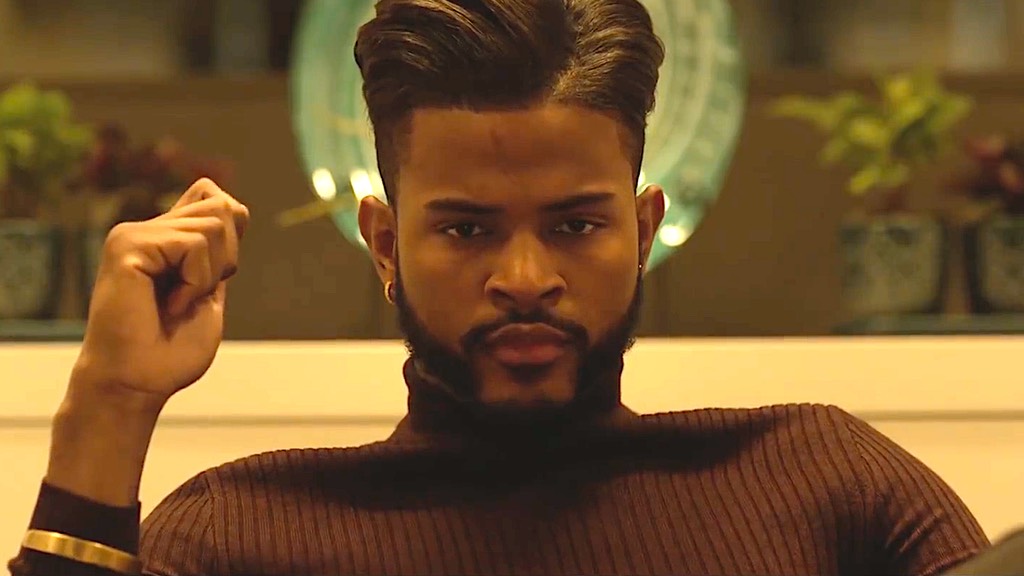
It’s clear X and screenwriter Alex Tse (Watchmen) are fans of Gordon Parks Jr.’s first and most important film. Tse is mostly, surprisingly faithful to the original. Youngblood Priest (Trevor Jackson) is a successful drug dealer who wants out while he still looks good, but The Man and an assortment of less-controlled colleagues complicate an already difficult process.
Less provocative than the original by a wide margin, X’s vision still takes some hard-earned enjoyment in scenes of comeuppance that are, unfortunately, as timely today as they were when Ron O’Neal outwitted corrupt New York detectives 46 years ago.
The update is marginally more respectful of women and boasts an impressive supporting cast including the always welcome Jason Mitchell, the always intimidating Michael Kenneth Williams, and a great turn by Esai Morales.
Oddly enough, that splashy support, which enlivens the film immeasurably, also helps to showcase its weakness—Jackson. There’s no conflicted soul inside that leather duster and skinny jeans, no tormented mind beneath that pompadour. Sure, O’Neal’s karate and cape now seem embarrassingly of-the-moment, but his performance evoked a restlessness and internal conflict that Jackson cannot manage.
A clever new image built on the skeleton of the groundbreaking ’72 film, SuperFly does not manage to provoke, intrigue or satisfy in the same way as the original. It does have style, though, and something relevant to say.
The premise is ridiculous. It’s also attention-grabbing, and mostly true.
A film could have worse starting blocks, and Tag makes sure they’re put to good use. TV vet Jeff Tomsic flashes sharp directing instincts in his feature film debut, blending a snappy pace with sharp characterizations, some effective physical comedy and just enough heart for a solidly funny good time.
Five years ago, a front page Wall Street Journal article hipped the world to a group of 10 friends who’d been playing the same game of tag for over twenty years. Adhering to their original rules, and then amendments to those rules, they’d stalk each other every February.
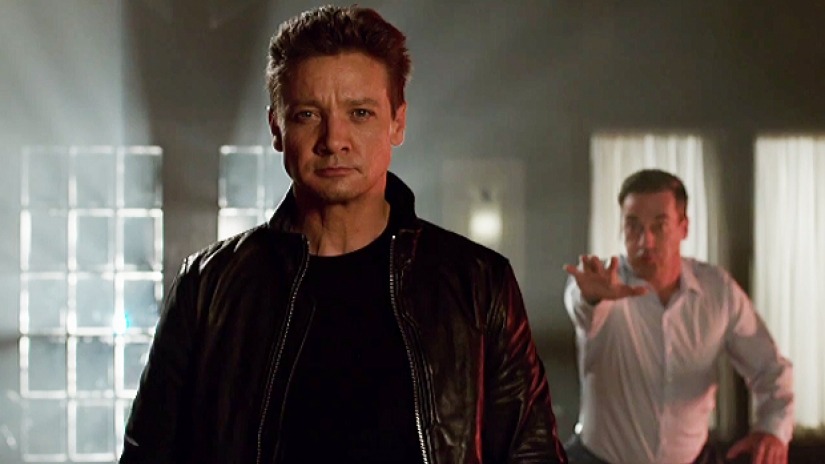
For the film version, the month has changed to May and the group scaled down to the four (Jon Hamm, Ed Helms, Hannibal Burris and Jake Johnston) that think they finally have a plan to tag the fifth (Jeremy Renner), who has never, ever been “it.”
The WSJ reporter who tags along (Annabelle Wallis) becomes an effective device to organically handle the questions we’re wondering about, and the entire ensemble quickly establishes a chemistry that feels true.
Hamm, Johnston and Renner carve out layered characters with ease, while Helms and Burris are basically leaning on their usual, but reliably funny, personas. Nice assists come from Isla Fisher as Helms’s highly competitive wife, and some assorted memorable weirdos (Steve Berg, Nora Dunn, Thomas MIddleditch).
The script, from Rob McKittrick and Mark Steilin, stays funny and hip throughout, pausing just long enough to reflect on friendship and adulthood without getting sappy. It’s more than enough fuel for this likable ensemble to play with and come out a winner.
What happens to parents when they’re confronted with the truth about their child? In A Kid Like Jake, the titular Jake is not the kind of five-year-old boy who likes trucks and cars, but rather princesses and fairy tales. His parents, Alex and Greg (Claire Danes and Jim Parsons), see it as a harmless phase. But when it seems possible it’s more than a phase, they’re forced to confront their own fears and prejudices.
Writer Daniel Pearle (adapting from from his play) and director Silas Howard address a topic that deserves attention. With a sensitive touch, they’ve crafted a film that is heartfelt and earnest.
The film’s main shortcomings occur during the first act. It takes the film a while to get to the meat of the issue, spending too much time on inconsequential details, including a montage of private school tours that has no real bearing on the story. Rather than focusing on this minutia, the film would have been better served if some of the ancillary characters were given more to do. Friends and family members are introduced (and played well by the likes of Octavia Spencer, Ann Dowd and Priyanka Chopra), but never satisfactorily weaved into the main drama.
As Jake’s parents, Danes and Parsons work best together when they’re at odds. The dialog during Alex and Greg’s most charged moments is impeccable. Their idyllic scenes, on the other hand, are shallow. The attempt at showing us a loving family is superficial, and it’s hard to root for people we never get a chance to know.
However, there are interesting dilemmas explored in the film. When Jake wants to dress as Rapunzel for Halloween, Alex instead brings home a pirate costume for him. Her rationale is that she wants to avoid weird looks or negative comments. She wants to “protect” her son. But as Jake acts out, it’s clear that her protection is misguided. Rather than defending her son, she’s part of the problem. Greg comes to this realization more quickly, recognizing his son’s change in demeanor as a sign he’s unhappy. It leads to confrontations that are uncomfortable, yet recognizable.
As for Jake, most of what we learn about him comes from exposition. This is likely a result of the transition from stage play to film. In some ways, it works, as Jake knows who he is. But in a world that needs greater representation for gender nonconformity and transgender men and women, it would have been nice to spend time with Jake instead of only seeing him through other people’s eyes.
I’m no math whiz, but 2004 seems somewhere close to 14 years ago. You wouldn’t know it from Incredibles 2, where no time has passed. Kicking off right where the original left off, the long-awaited sequel delivers just enough of the same charm to stave off some stale odors.
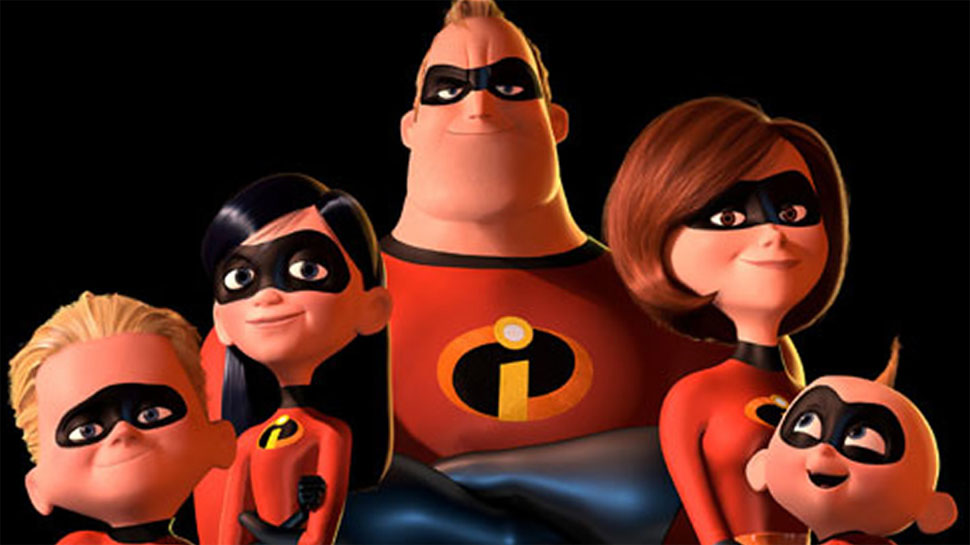
The super-powered Parr family has been sidelined, along with all the others like them, thanks to the law against superheroes. But when the evil Screenslayer starts cyber-attacking the city, local tycoon Winston Deavor (voiced by Bob Odenkirk) and his tech-savvy sister Evelyn (Catherine Keener) hatch a plan to get the supers back on the job.
It starts with putting Helen Parr aka Elastigirl (Holly Hunter) on the trail of Screenslayer, leaving Bob/Mr. Incredible (Craig T. Nelson) alone to care for baby Jack-Jack, help Dash (Huck Milner) with his homework and Violet (Sarah Vowell) with her first heartbreak.
Brad Bird returns as writer/director, armed with a worthy game plan but not quite enough nerve to swing for the fences.
While the Deavor’s groom Elastigirl for a media makeover, Screenslayer’s plan is to use technology against its users, and to “destroy the people’s trust in it.” Call that incredibly timely, and fertile ground for some Zootopia-style animated bite.
Bird is more interested in exploring the warm family fuzzies. That’s fine, but the “can clueless Dad handle the house while Mom’s at work?” angle feels every bit 14 years old, even more so when you consider the edgy path Bird abandons to chase one so safe and comfortable.
But hey, it’s summer, why so serious?
Frozone (Samuel L. Jackson) is back in chill mode, the action sequences pop and the animation has the requisite pizazz. I2 is a part 2 that’s easy to enjoy.
Outside of the near-perfect Toy Story franchise, Pixar sequels (much like sequels in general) have often faltered. Incredibles 2 ranks as one of their best, even with all it leaves on the table.
You love her, but she loves him, and he loves somebody else…
J. Geils may have rocked it up, but Russian playwright Anton Chekov was singing that tune in 1895 with The Seagull. Darker shades pepper the comedic take on unrequited love, and director Michael Mayer is the latest to bring that balancing act to the big screen.
He’s blessed with a wonderful cast. Saoirse Ronan shines again as Nina, a starry-eyed young woman who longs for a life on the stage. Nina’s boyfriend Konstantin (Billy Howle) dreams of writing plays for her, but things get complicated when the couple meets up with family, friends and servants at a country estate in the early 20th century.
Annette Bening, Elisabeth Moss, Corey Stoll, Brain Dennehy and Mare Winngham are customarily wonderful. There’s no denying everyone here is committed, but Mayer and writer Stephen Karam (adapting Chekov) can’t find the balance between comedy and drama, or stage and screen.
The setting is perfectly lush, and the material has certainly lost little of its relevance over the many years, but all the worthy parts are never assembled into anything more than serviceable.
The comedic barbs early on seem too restrained, and the later tragedies too melodramatic. Some staging seems lifted straight from a stage production, while other set pieces breath with more freedom.
Give the relatively inexperienced writer/director team credit for taking on The Seagull. Getting the competing themes to work in unison is no easy feat, and this latest film version is a well-intentioned testament to that very challenge.