Electric Love

Divine Love

by Cat McAlpine

In the near future, Brazil is under Evangelical leadership. Middle-aged Joana, a devout believer in both Jesus and bureaucracy, is doing the lord’s work as a notary. This gives her plenty of opportunities to convince clients filing for divorce to instead join her couples-only cult and save their marriages.

Writer/Director Gabriel Mascaro paints a visceral picture in Divine Love with long sex scenes, full frontal nudity, and even a graphic hospital scene. But all the flesh we see feels distant and unnatural, illuminated by neon lights, sometimes clouded by haze, and always caught in rituals of necessity.

In 2027, the most important characteristics for women are their marital status and their pregnancy status, brightly displayed on the screens of “detectors” when they pass into buildings. And what Joana (Dira Paes) wants more than anything is to have a child. She and her husband Danilo (Julio Machado) are trying everything they can to conceive, and the process has Joana frequenting her local drive-thru pastor (Emílio de Mello).

Mascaro and co-writer Rachel Daisy Ellis don’t tell you how to feel about religion, even the future’s sexy, club-going, drive-thru version. Instead, they focus on exploring Joana’s own journey of faith.

At one point, her drive-thru pastor urges Joana that he can help her go through the motions of repentance, even if she doesn’t feel guilty. She assures him she regrets nothing, but women’s position seems worse in this new age. The same way that “Divorced” flashes over some heads, “Guilty” seems to flash over Joana’s, despite her protestations. Her faith remains constant.

The biggest conflict of Divine Love is Joana’s interior faith versus the faith of those around her. Everything she does is in complete alignment with her belief system, but it doesn’t save her from being judged or from losing the things most precious to her. “Faith doesn’t need to be tested,” a voiceover muses, but Joana seems to be tested at every turn.

Visually, the film is a marvel. I’m a sucker for lighting and Mascaro delivers from hazy pink rooms to natural light making gorgeous silhouettes. He paints good vignettes too, interspersing the narrative with pretty pictures, like the notary staff lazing on the lawn at lunch-time, tangled up in each other.

Shocking and beautiful, Divine Love is worth the watch even if its conclusion leaves you with more questions than answers.

Who’s Afraid of Virginia Bear?

Black Bear

by George Wolf

As slippery as it is inviting, Lawrence Michael Levine’s Black Bear is an intoxicating trip through the inspirations and indulgences that take root in creative minds.

It feels intensely personal, and yet – once Levine delivers his midstream shape shift – malleable enough to bend to myriad perspectives and interpretations.

We first meet Allison (Aubrey Plaza) as an actress and director facing a crisis of inspiration. She’s hoping to ignite the creative spark at a remote lakeside property overseen by Gabe (Christopher Abbott) and his pregnant girlfriend, Blair (Sarah Gadon).

As the three get to know each other, we learn that Gabe inherited the property from his family. Beyond that, there isn’t much Blair and Gabe seem to agree on. The couple’s little barbs become more intense, as does the attraction between Allison and Gabe, and we think we have a pretty good handle on what’s soon to be up.

And then we don’t.

The opening scene repeats, but Allison and Blair are co-stars on the set of the new film directed by Gabe, who is also married to Allison. The shoot is chaotic, Gabe’s motivational methods are questionable and now Allison is the one jealous of Gabe and Blair’s cozy relationship.

Knowing that Levine’s own history includes films with his wife (actress/director Sophia Takal) adds a layer of intimate intrigue, and knowing even a little about the workings of a movie set will add relatable humor.

But Black Bear isn’t a comedy – except when it’s funny. It’s also dramatic and slightly horrific, depending on your viewpoint.

Most of all, it’s emotional, propelled by career high performances from Abbott, Gadon, and Plaza. The glee each performer takes in upending character expectations is evident, with Plaza seamlessly moving from a cool, casual customer to the emotionally frayed flashpoint of a volatile triangle.

After such fireworks play out, Levine’s payoff may seem a bit underwhelming, but his film is more about the trail than where it ends. Black Bear‘s got plenty to say – about creativity, ego, insecurity, sexual politics and more – but its resonance comes from not demanding you take a side.

Action Jackson

Anything for Jackson

by Hope Madden

Writer Keith Cooper and director Justin G. Dyck collaborate often, but nothing either one of them has done will properly prepare you for the reverse-exorcism horror Anything for Jackson.

Not Christmas with a View, or Christmas Catch, or Christmas with a Prince, or A Very Country Christmas, or Hometown Holiday, or Baby in a Manger, or A Christmas Exchange, or Dyck’s forthcoming Christmas in the Rockies and Christmas in the Wild.

It’s as if somewhere in the dead center of all that holiday hoopla, the duo decided they needed to just sit down and write something about the absolute opposite experience. And this is how they made a good movie.

Steeped in grief and boasting a small handful of beautiful performances, the film follows Dr. and Mrs. Walsh (Julian Richings and Sheila McCarthy), grandparents willing to do anything to bring their little Jackson back to them.

The opening sequence beautifully situates you in this particular brand of domestic bliss. The aging couple has a lived-in authenticity about them, even as they are embarking on a very new phase in their relationship.

The details of their little plot cause two simultaneous sets of complications, one legal and one supernatural. Where the filmmakers take this utterly lovely couple making incredibly ugly decisions is fascinating, primarily because of McCarthy and Richings’s performances.

They’re not alone. As their involuntary helpmate,  Konstantina Mantelos creates a character in a role that rarely offers that opportunity.

There’s a clean simplicity in the storytelling that’s appealing, although Act 3 is not nearly as clearly defined or interesting as the balance of the film. But maybe it’s not the resolution the film is after, or really the audience. It’s the story of this sweet couple, mad with grief, that’ll get you.

Voice of Rage and Ruin

Werewolf

by Hope Madden

Liberation isn’t always the good time it’s cracked up to be. In his strangely hopeful tale Werewolf, writer/director Adrian Panek offers a different image of social rebuilding.

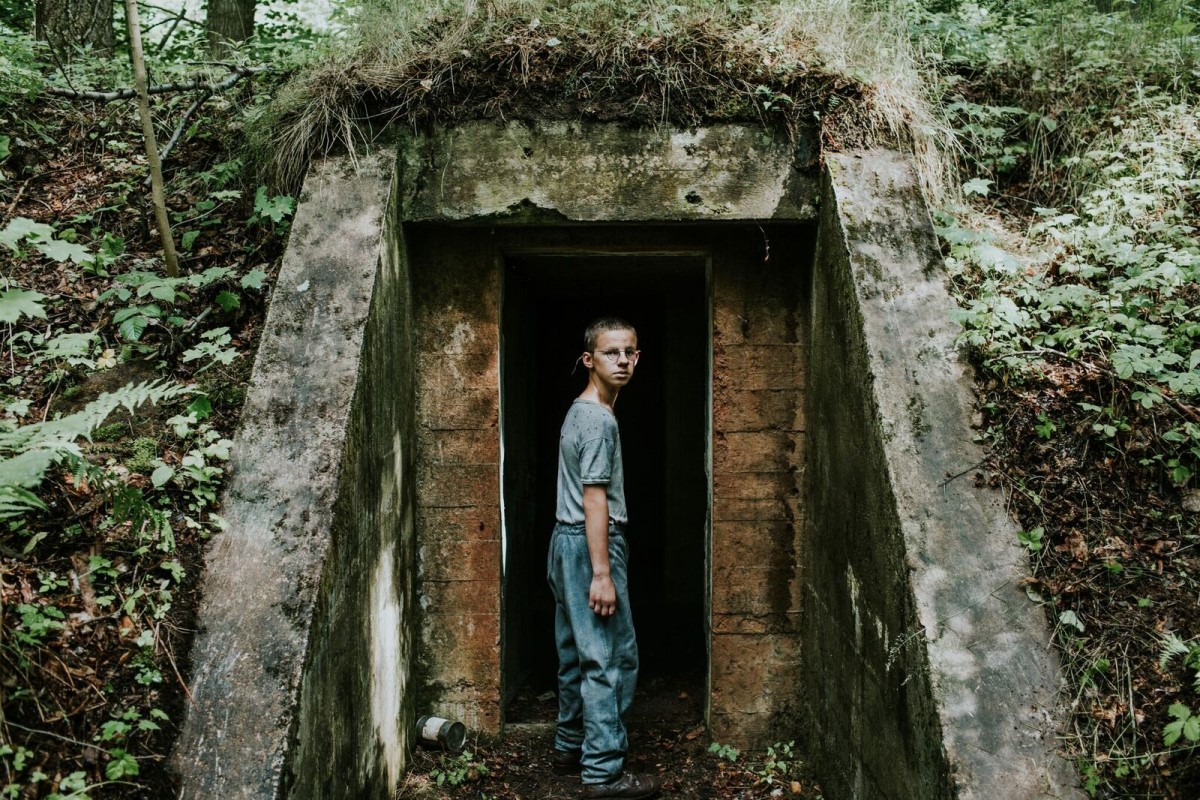
His film follows a handful of orphans of the Nazi occupation. Eight children liberated from a concentration camp are dropped off at a makeshift orphanage—really a deserted mansion, long bereft of food, no running water, no electricity. The possibility of aid comes by way of rare visits from Russian guards who may or may not bring rations, may or may not bring their own danger.

Still, little by little the children begin to shake off the horrors of the camp. They explore the woods around them, find berries, even play. But Nazi danger is everywhere—maybe in the bunkers dug deep into the surrounding mountains. Definitely in the woods.

Lurking figures and echoing growls haunt the film from the children’s first steps outside the ruined mansion. Then there’s a body, then more bodies. When Panek reveals the source of the terror, Werewolf could easily turn to pulpy horror. It does not.

At times the film conjures the same magic and dread of Monos, but Panek may see more resilience than Lord of the Flies in children. The filmmaker shows restraint and a forgiving nature when it comes to the barbarity of childhood. He reveals strong instincts with his young cast, understating sentiment and avoiding either the maudlin or the saccharine.

Werewolf is beautifully shot, inside the crumbling castle, out in the woods, even in the early, jarring nonchalance of the concentration camp’s brutality. Panek hints at supernatural elements afoot, but the magic in his film is less metaphorical than that. 

The film is creepy and tense. It speaks of the unspeakable – the level of evil that can only really be understood through images of Nazi horror—but it sees a path back to something unspoiled.

https://www.youtube.com/watch?v=EXk6tB4lJQM

City of Ruins

Mosul

by Hope Madden

Matthew Michael Carnahan is a screenwriter unafraid to dive into the political. Though none of his films are classics, from the best (The Kingdom) to the worst (Lions for Lambs), all tell stories that combine governmental indecision with action in an attempt at cultural relevance.

As a rule, the success of his themes depends on the film’s director. So with Mosul, Carnahan has no one to blame but himself if it doesn’t work.

The film spends a single, tumultuous afternoon in the titular Iraqi city with the Nineveh province SWAT team, the only group to fight ISIS occupiers continuously from 2014 to 2017. Onscreen text clues us in to their successes, their legendary status, and their desperation to complete one last mission before ISIS finally flees the city.

En route to completing that mission, they hear gunfire and come to the aid of two standard issue uniformed police officers about to lose their lives in a standoff with ISIS. When all is said and done, one cop is on his way back to the other side of the city. The second, Kawa (Adam Bessa, Extraction), joins the rogue unit.

Carnahan shows surprising instincts when it comes to pacing. Rather than generating tension to be released with bursts of action, Mosul periodically punctuates the near-constant action with brief respites.

Carnahan knows how to make the most of these moments. We catch our breath for a glimpse of each of these men as men. The character building is brief and nearly everyone will die before we know their names, but thanks to touches that never feel scripted or heavy handed, the characters have the chance to be human.

The breathlessly paced slice of war torn life is grounded by two performances: Bessa and Suhail Dabbach, playing commanding officer Jasem. Kawa’s character evolves almost at the speed of light, turning in one afternoon from a wide-eyed, by the books police officer to an unrecognizable man with a mission.

Jasem is on the other side of that evolution and the veteran Iraqi actor makes you believe. A father figure who is simultaneously merciless and dangerously compassionate, he’s a bright and constant reminder of exactly why the unit fights.

Carnahan’s first time out behind the camera rushes at times. Kawa’s speedy transformation certainly strains credulity. But Mosul handles the political themes with a surprisingly light hand. It certainly keeps your attention and delivers eye-opening information without abandoning storytelling to do it.

He should keep directing his own movies.

Search for Tomorrow

The Croods: A New Age

by George Wolf

At least two things have happened since we met The Croods seven years ago. One, we’ve forgotten about the Croods, and two, Dreamworks has plotted their return.

A New Age gets the caveman clan back together with some talented new voices and a hipper approach for a sequel that easily ups the fun factor from part one.

The orphaned Guy (voiced by Ryan Reynolds) has become part of pack Crood, which is fine with everyone except papa Grug (Nicolas Cage), who isn’t wild about the teen hormones raging between Guy and Eep (Emma Stone).

The nomadic gang is continuing their search for the elusive “tomorrow” when they stumble onto the Stone Age paradise of Phil and Hope Betterman (Peter Dinklage and Leslie Mann, both priceless). The Betterman’s lifestyle puts the “New Age” in this tale, and they hatch a plan to send the barbaric Croods on their way while keeping Guy for their daughter Dawn (Kelly Marie Tran).

But a funny thing happens along the way. Check that, many things happen, and plenty of them funny, in a film that nearly gets derailed by the sheer number of characters and convolutions it throws at us.

The new writing team of Kevin Hageman, Dan Hageman and Paul Fisher keeps the adventure consistently madcap with some frequent LOLs (those Punch Monkeys are a riot) and even topical lessons on conservation, individuality and girl power.

Or maybe that should read Granny Power, since it is Gran’s (Cloris Leachman) warrior past that inspires the ladies to don facepaint, take nicknames and crank up a theme song from Haim as they take a stand against some imposing marauders.

Director Joel Crawford – an animation vet – keeps his feature debut fast moving and stylish, drawing performances from his talented cast (which also includes Catherine Keener and Clark Duke) that consistently remind you how important the “acting” can be in voice acting.

By the time Tenacious D drops in to see what condition the Partridge Family’s “I Think I Love You” is in, the whole affair starts to feel like some sort of animated head trip.

Yeah, a little sharper focus wouldn’t hurt, but A New Age delivers the good time you forgot to remember to wonder where it’s been.

Teenaged Chasteland

Porno

by Hope Madden

Have you seen Lamberto Bava’s 1985 horror Demons?

I can’t help but wonder if writers Matt Black and Laurence Vannicelli have. It’s a low rent affair that suckers a group of moviegoers into watching a violent horror flick that unleashes—you guessed it—demons.

More than three decades later, Vannicelli and Black pen a more good natured horror that traps five Christian teens in the small town cinema where they work circa 1992. After closing they chase a homeless intruder into an unknown basement, find additional theaters, movie posters for Orgy of the Dead and other unsavory features, and a canister.

Here’s where things get a little familiar. The teens decide to screen the film from the basement canister. But it’s not exactly a grisly horror film, like Bava’s. For these sexually repressed teens, it’s worse.

It’s porn.

Hell for sure.

Black and Vannicelli give director Keola Racela plenty to work with, whether touching the funny bone or the gag reflex. Porno is strangely upbeat and even sweet for a film whose villain (Katelyn Pearce) doesn’t deliver a single line or wear any clothes the entire running time (unless you count her merkin).

And it’s gross. You don’t even want to know what happens to Heavy Metal Jeff’s nut sack.

Four of the five teens are afraid they’re pervs in one way or another and are therefore headed to hell. (Not Jeff. Jeff’s keeping his edge.) Racela and cast have fun with this idea, thanks in large part to charming performances.

Porno nails the time period and the mood, delivering some carnage-laden laughs pointed at both the uptight and the nasty. But Racela gets a little lost in the storytelling. Porno would benefit from a serious edit. It runs a mere 90 minutes but feels much longer, likely because storylines spin out all over the building with little thought to pacing or tension.

Between the sloppy structure and some sophomoric comedy, even the brightest and wildest moments can be overlooked. (Well, not that thing with Jeff.) The weaknesses pile up and by the end, Porno feels like a near miss.

Frankly, My Dear

Uncle Frank

by George Wolf

Dropping right at the start of the season normally filled with relative reunions, Uncle Frank digs into the scars of family strife for an effective drama full of understated grace and stellar performances.

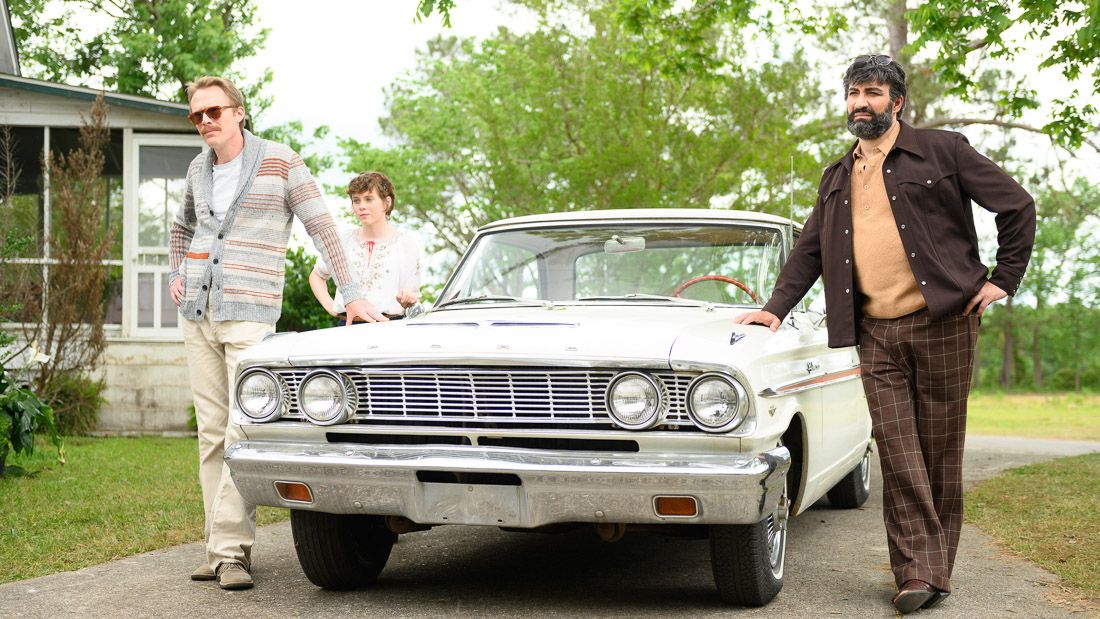
Writer/director Alan Bell frames his narrative through the eyes (and scattershot narration) of Betty (Sophia Lillis), a curious teenager in the summer of 1969.

Mainly, she’s curious about life beyond tiny Creekville, South Carolina, which is a big reason Betty is always happy to visit with her Uncle Frank (Paul Bettany).

He got out of Dodge years ago, settled in New York City and now sweetly encourages Betty to look outside her backwater hometown for any kind of future she desires. A new name? Of course. Betty likes “Beth,” and Frank agrees, so that’s that.

Fast forward four years, and Beth is a freshman at NYU, where Frank teaches. Dropping by Frank’s apartment unexpectedly one night, Beth meets Wally (Peter Macdissi, terrific), and quickly finds out why Frank has long felt like an outsider in his own family.

An unexpected death in that family means Frank and Beth must travel back home for the funeral, with Wally hatching a pretty funny plan to tag along.

This time on the road becomes the bridge that connects Frank’s coming out and Beth’s coming-of-age. Ball (writer of American Beauty, creator of True Blood) isn’t blazing any trails here, but his outstanding ensemble consistently elevates even the most well-traveled terrain.

Bettany has never been better, covering Frank with a mask of easy charm that can never quite hide his self-loathing. He finds a touching chemistry with the wonderful Lillis, who brings a warm authenticity to Beth’s wide-eyed awakenings.

And check out who’s waiting at home in Creekville: Stephen Root, Margo Martindale, Judy Greer, and Steve Zahn, all seasoned talents able to keep their characters above the hicktown cliches that tempt the script.

There’s pain here, for sure, but there’s also humor and a comforting sense of hope. Uncle Frank may not be the first film to remind us how heavy family baggage can feel, but this has the cast and commitment to make you glad you unpacked for a spell.

Dear White People

Hillbilly Elegy

by Hope Madden

I can’t say I’m a big Ron Howard fan. I find his films safe and sentimental. But I’d certainly say they were all competently made.

Until today.

What the hell is going on with Hillbilly Elegy?

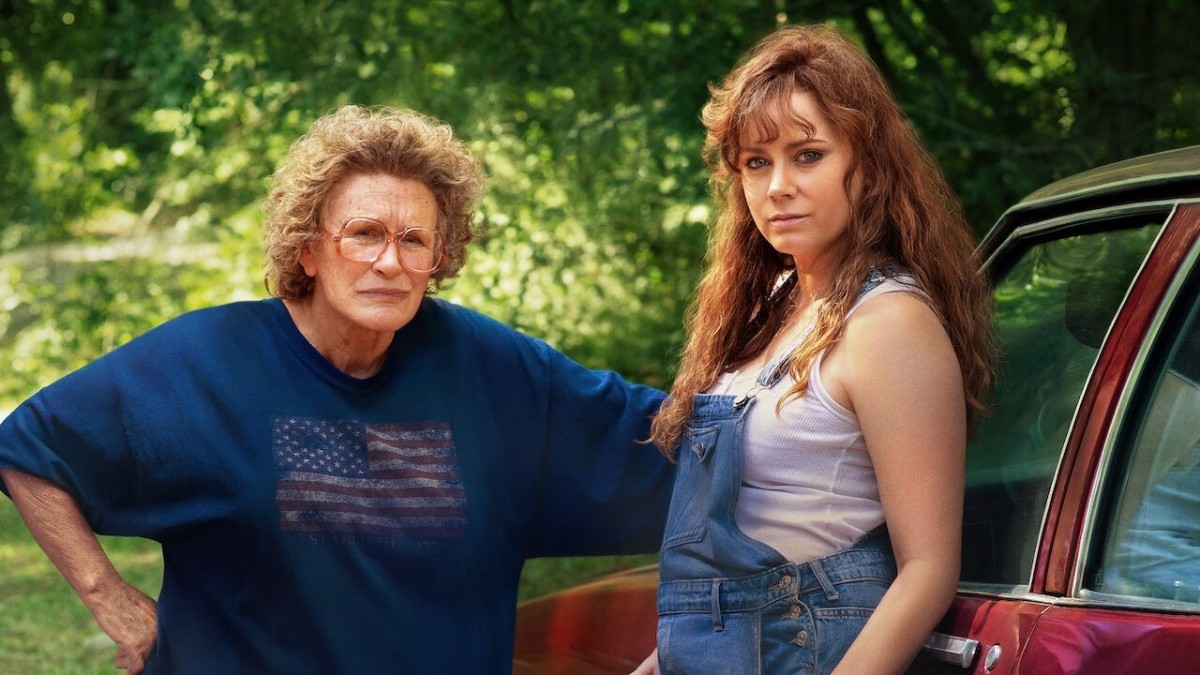
Howard’s adaptation of J.D. Vance’s memoir does boast the one-two punch of perennial Oscar contenders Amy Adams and Glenn Close. Adams plays Vance’s unstable mother, Beverly. It’s less a character than a collection of outbursts, so I can’t even say whether she’s good.

Close, as Vance’s beloved Mamaw, gets more opportunity to carve out an actual character. But like everything else in the film, Mamaw exists in snippets to illustrate the Middletown, Ohio chains J.D. needs to break.

The main story is of law student J.D. (Gabriel Basso) trying to land summer employment at a firm so he can afford Yale next year. His mother overdoses on heroin just days before his interview. Can he get to Ohio, sort that out, and still make it back to Connecticut in time? Or will he be forever waylaid by all the hyperventilating, acid washed jeans, scrunchies and hysterics that populate his flashbacks?

Howard’s characters don’t show us much, but they do tell us a lot of things. J.D. tells us his mother is the smartest person he’s ever met. We never see even a glimpse of that, so we’ll have to take him at his word. He also tells us twice that he will do whatever it takes to make sure his mother gets the help she needs.

That’s supposed to be the heart of the story. Does there come a time when you have to put yourself first? Is it ever wrong to sacrifice yourself for your family?

Too bad Howard, working from a screenplay by Vanessa Taylor, can’t find that heartbeat.

Flashbacks do little to differentiate J.D. (played in youth by Owen Asztalos) from the others who can look forward to a life of “food stamps or jail.”

Never does the film see J.D. as possessing any privileges that may make success easier for him than for his grandmother, mother, or sister (Haley Bennett). Nope. J.D. just worked harder.

The reason Howard’s film seems like it refuses to say anything, which gives it the feel of a poorly pieced together puzzle, is that it says two things simultaneously. 1) Redneck is a term elitists use to make themselves feel superior to perfectly valuable people. 2) If rednecks worked hard enough, they could go to Yale and stop being rednecks.

Hope Madden and George Wolf … get it?