Fright Club: Side Characters, Part 1

This episode is years in the making. We’ve talked about doing this, jotted down ideas and characters, debated — and now it’s finally here. Well, half of it, anyway. There’s just no way to reasonably fit the best side characters—those fully deserving a film of their own—in just one podcast. So here is our list, in alphabetical order (no need to rank them!). This one’s for the ladies.

Aunt Martha (Desiree Gould), Sleepaway Camp (1983)

Smartly dressed, thoughtful, loving, misguided, and as if a creature from an entirely different film. She made a decision and, sure, Angela probably should have been a part of that decision-making process. But it wasn’t Aunt Martha’s fault that Paul was a no-good cheater. Or that Judy was such an asshole. I mean, yes, that surprise at the end was due in large part to Aunt Martha, but as for the campers—they had it coming.

Mademoiselle (Catherine Begin), Martyrs (2008)

What a presence. Commanding, calm, wizened and weary, Catherine Begin’s Madamoiselle has such resigned decisiveness that it’s almost impossible to argue with her. She turns something that could have easily become torture porn into a mesmerizing glimpse at zealotry.

https://www.youtube.com/watch?v=KWYFLwHbu8k

Minnie Castavet (Ruth Gordon) Rosemary’s Baby (1968)

Ruth Gordon earned an Oscar as Rosemary and Guy Woodhouse’s busybody neighbor Minnie Castavet, wife of Roman and nonplussed chief operations officer of the coven. Yes, Roman made a good figurehead, but somebody has to just keep things moving. And as long as she ate the mouse, everything’s fine.

Mother (Fons Rademakers), Daughters of Darkness (1971)

One of the many glorious things about Harry Kumel’s decadent 1971 vampire fable is the way it feels like two or three different films colliding into one elegant bloodletting. Mother casts a looming shadow over one of those storylines, that of a young, beautiful couple recently married, Stefan and Valerie. Even before they’re ensnared in Countess Bathory’s love web, Stefan (an irredeemable asshole if ever there was one) needs to figure out how to break the news of his nuptials to Mother.

Whenever a new character makes you simply need to hear an entirely other story, one focused on whatever they’re not telling you about that character, you know you have a winner. The way Fons Rademakers pets his butler’s head, holds court in the greenhouse, and wields unspecified but somehow sinister power over Stefan begs for its own movie.

Mrs. Baylock (Billie Whitelaw), The Omen (1976)

From the moment she takes the screen, Mrs. Baylock is the new sheriff in town. She quietly yet immediately takes control of the Thorn household. If you didn’t know who was alpha, you only need to see who the dog listens to. Yep, Richard Thorn is in trouble. To say nothing of his poor, useless wife Catherine.

Tangina (Zelda Rubenstein), Poltergeist (1982)

Walks in the house, owns the place. Tangina is a force of nature with a soft little lilt and a no-nonsense approach to cleaning the Freeling house. Her confidence gives the character more than a huckster vibe, although there is a sense of showmanship to everything she does. But when she is addressing the living, it’s best not to give trick answers.

Zelda (Andrew Hubatsek), Pet Sematary (1989)

Scary as hell. Sure, the cat, little Gage, that guy with the brain on the outside of his skull—all of it has its horror charm. But the real nightmare in Mary Lamber’s adaptation of the Stephen King tale is Rachel Creed’s guilty memory of the sister who terrified and horrified her, the sister she believes died—at least in part—due to her own negligence and hatred. Thanks to the angular, monstrous vision of Andrew Hubastek in a nightdress, all contorting ribcage and spine, Zelda became easily the scariest thing in the film.

Screening Room: Wrath of Man, Here Today, Fried Barry, Above Suspicion, The Oak Room & More

Yeti Persisted

15 Things You Didn’t Know About Bigfoot (#1 Will Blow Your Mind)

by George Wolf

You’ve seen the t-shirts and memes, right? “Bigfoot: Undefeated Hide and Seek Champion”

It may be elusive in the wild, but Bigfoot is not at all hard to find on your movie screen of choice. 15 Things…was originally known as The VICE Guide to Bigfoot, and the new title gives you a big clue as to what this mockumentary is really searching for.

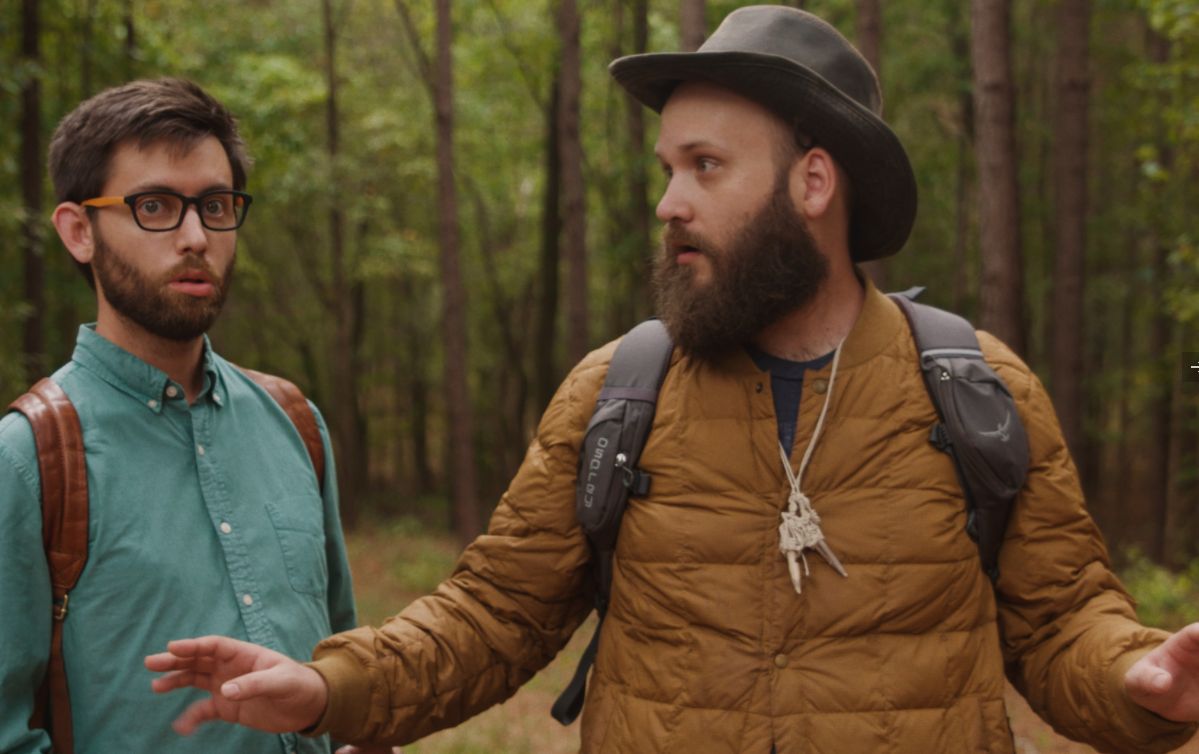
Brian (co-writer Brian Emond) is a reporter for an online news outlet (like VICE) who is longing to cover some actual news. Even when he and producer Zach (director and co-writer Zach Lamplugh) are sent to some hot war zone, it’s only so he can uncover the happening craft beer scene. So Brian’s paid his dues, which, as it turns out, doesn’t mean squat when there’s an opening on the network news side.

That slot goes to “Dirty Dolla$ign$” (Tevin Williams, hilarious) who advises Brian to “get in the shit, baby!” if he wants to move up.

The shit Brian and Zach get into starts at the Georgia Bigfoot Convention, and leads into the North Georgia foothills with YouTube Bigfoot hunter “The Cryptid Commander” (Jeffrey Stephenson). As he investigates a possible sighting, Brian tries to get the Commander to admit his Bigfoot obsession cost him the love of Jenny, and that he’s utterly full of crap.

Keeping a mockumentary tone that’s both consistent and consistently funny is not easy, and 15 Things…does stumble a bit on both counts, especially when the Blair Witch-iness of the woods takes a sudden hard left into a heroine smuggling operation.

But from clickbait to fake news to false flags, Lamplugh and Edmond do get their shots in, and some of them land with a solid LOL. Do they find the Bigfoot…or the “Bigfoot in themselves?”

If that’s the type of mocking tone that makes you giggle, there’s at least 7.5 things about this film that will have you laughing in appreciation.

He Is Wrath

Wrath of Man

by Hope Madden

I’m not saying Jason Statham is unconvincing with a gun. Nor am I saying that Guy Ritchie is ill-suited to direct a humorless vengeance drama.

I’m just saying that these are not their strong suits.

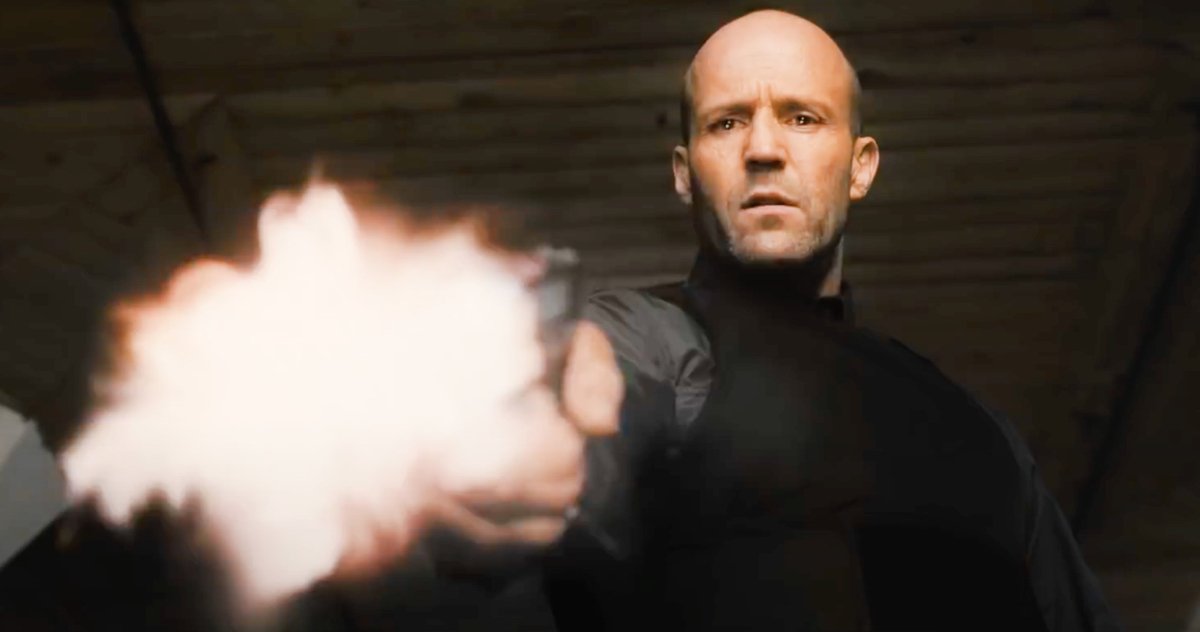
Wrath of Man shadows a very dour Statham—just call him H, like the bomb—as he begins training for his new gig with a cash truck crew.

Something’s up, obviously, and the only fun to be had in the film is trying to figure out what it is, so do not watch the trailer.

At The Depot, where all the trucks come and go and all the crew mock and belittle one another, we meet the assortment of characters you will not come to know or care about: Boy Sweat Dave (Josh Hartnett – where have you been?), Dana (Niamh Algar), Bullet (Holt McCallany). All of them choking on ludicrously overwritten banter, none of them drawing even a single compelling character.

Which is fine because there are at least 16 more people you won’t get to know, won’t care if they’re killed, won’t be invested in their conflicts.

Ritchie is usually much better than this at scattershot introductions of oddball lowlife clusters, each pod with its own story, each story intersection every other story at one turn or another. Maybe he’s just too out of his element setting the action in LA rather than his beloved London, but the lived-in feel of a reprobate world that’s usually a high point to a Ritchie flick is sorely missing here.

And what is the deal with these accents? By now, we know better than to expect Statham to attempt a yank accent, but what exactly is Eddie Marsan’s nationality supposed to be? Or Andy Garcia’s, for that matter?

Hell if I know. I do know that casting Statham generally guarantees some nifty fisticuffs.

Not today!

He shoots a bunch of people, sure, but there’s no panache to anything. It’s a heist movie without the meticulous execution, a vengeance thriller with no emotional connection to the villain, a Statham movie with no ass kicking, and a Ritchie movie with no humor, no flash, no style.

No thank you.   

Tall Tales

The Oak Room

by Hope Madden

There’s nothing as immediately cool and comforting as a boozy hillbilly noir. The haunting soundtrack choices, shadowy basement barrooms, isolating cushion of all those trees—it’s a tall tale of blood, beer and backstabbing just waiting to happen.

That’s just what director Cody Calahan serves up from the opening strains of The Oak Room, a stylish little thriller. It may be a bit too wordy, but it repays you for your patience.

There’s a story within a story within a story on this blustery night in smalltown Canada as ne’er do well Steve (RJ Mitte, Breaking Bad) dares to show his face at closing time. He’s been gone a long time and bartender Paul (Peter Outerbridge) is none too happy to see him. There’s a score to settle here, a debt owed, and Steve has until midnight to take care of it.

First, though, Steve wants to tell Paul a story.

Over the next 90 minutes, Calahan weaves from near-midnight at Paul’s bar to Steve’s story and back, giving a lovely cinematic quality to the power of storytelling inherent in Peter Genoway’s script. There is something hypnotic in the way the night progresses, and in the way phrases and ideas repeat across different decades and different tales.

Outerbridge is particularly effective, but every actor remains true to the style the filmmaker develops. Genoway’s script gets away from him at times, especially in the first half of the film, giving certain scenes the feel of filler. A leaner script would have benefitted the overall project. As it is, there are conversations in the first half of the film that come close to breaking the spell Calahan casts.

The filmmaker deploys other tactics to keep you engaged, though. The Oak Room glories in its sound design, whether the creak of mop bucket wheels across a wooden bar floor, the swing of a metal trashcan lid, or the hush of the wind outside the window where snow deepens. Steph Copeland’s score—a mixture of Kabuki-style drums and Appalachian strings—foretells of violence and misery.

Calahan also develops a fun dose of dread as midnight nears and tales—both present and past—take sinister turns. It’s all good fun, though, right? Just a couple of guys passing the time until debts are to be paid.

Funny How?

Here Today

by George Wolf

Billy Crystal is a likable guy, and frequently funny. Tiffany Haddish is a likable gal, and often funny.

So there are possibilities for some odd couple fun in Crystal’s Here Today, but almost all of them are wasted in an overlong, self-indulgent, misguided and unfunny misfire.

Crystal, in his first big screen directing effort since 95’s Forget Paris, also co-writes and stars as Charlie, a legendary comedy writer currently working on a TV sketch show. Haddish is Emma, a singer whose boyfriend wins lunch with Charlie in a charity auction. But when the boyfriend becomes an ex, Emma shows up at the restaurant instead, and an unlikely friendship is born.

Charlie’s memory problems are quickly becoming an issue, as are the flashbacks to a vaguely traumatic event involving his ex-wife (Louisa Krause). Frequent visits to the doctor (Anna Deavere Smith) help Charlie hide his condition from his grown children (Penn Badgley, Laura Benanti), so the speed with which Emma sniffs it out is just one example of the falseness that plagues the entire film.

From phone conversations to reaction shots to skits on Charlie’s TV show, there’s hardly an ounce of authenticity to Crystal’s direction. And because none of these characters feel real, Charlie’s dismissive attitude toward the younger writers’ brands of comedy – complete with an embarrassing riff on Network‘s “mad as hell” speech – comes off as sour grapes from Crystal himself.

The script, based on co-writer Alan Zweibel’s short story “The Prize,” has only enough humor to elicit some scattered smiles. The bigger goal quickly becomes telling us how Charlie comes to grips with his condition and his past, and more disappointingly, showing us how Emma puts her own dreams on hold to pursue her magically healing effect on this white family.

Crystal has enjoyed many high points in a long and legendary career. He may very well have more, which would help everyone forget the lowlight that is Here Today.

Hillbilly Eulogy

Above Suspicion

by Hope Madden

There are films that open with voiceover. Sometimes the voiceover is a character who is already dead. These films are rarely very good.

It’s no spoiler. As Susan Smith (Emilia Clarke) waxes melancholic over the opening images of Phillip Noyce’s true crime thriller Above Suspicion, she’s straightforward with us. She’s dead, we’re watching her body being found, there sure are a lot of trees, and now she has a lot of time to think.

Chris Gerolmo (Mississippi Burning) adapts Joe Sharkey’s book about the case, which was also the subject of Aphrodite Jones’s book The FBI Killer as well as at least one true crime TV series episode. Why all the fuss?

Susan Smith’s case represented the first in history to see an FBI agent convicted of murder.

Smith, a smalltown Kentucky addict with two kids, a live-in ex-husband for a dealer, took a shine to Mark Putnam (Jack Huston) the moment she saw him. The shiny new FBI agent, just two weeks on the force, had taken the gig to begin to build a career. He and his wife Kathy (Sophie Lowe) had a 5-year plan.

Smith would alter that plan.

Noyce’s movie looks good. It looks the part, plenty of dusty small towns, low rent lots, dive bars and trees. And he’s assembled a game cast. Clarke surprises as a hard and hard-headed woman looking for a way out.

A cascade of odd ducks and smalltown curiosities give plenty of supporting actors the chance to add some layers to the Appalachian backdrop. Johnny Knoxville especially impresses as Smith’s low key but dangerous ex.

Huston’s take on Putnam is pretty forgiving. The performance feels indecisive. In his hands, Putnam is certainly too smart to fall into this situation, but is he naïve enough to do it? This is partly where the entire film falters.

The voiceover lets us know whose story we’re hearing, and yet somehow we’re mainly on Mark’s side through most of this. Kudos to Noyce and Clarke for sidestepping noble victim cliches and giving Smith a backbone as strong as her head is wrong, but the film’s overall tone lacks conviction.

It doesn’t help that we know where everything is going from the opening scene, since Smith tells us. There’s no real tension to build, and Noyce never takes advantage of his opportunity to give us an unreliable narrator. At least that would have given us something to think about. Lacking that, or any real insight and certainly no deep empathy for anyone involved, Above Suspicion can’t help but feel like a couple hours of wallowing in someone else’s pain.

Next-Level Flower Arrangements

Queen Marie

by Christie Robb

Alexis Cahill’s biopic is a sumptuous surface-level look at Queen Marie of Romania’s impact on the negotiations leading up to the Treaty of Versailles—which wrapped up the first World War in 1919.

Promised by its allies to have all its disparate historical territories united at the conclusion of the war, Romania has been devastated by German occupation. Despite passionate pleas by the prime minister at the peace talks, none of the major players (Clemenceau of France, Lloyd George of the United Kingdom, and Wilson of the United States) can be bothered to lend an ear, much less lend some aid.

So, Queen Marie (Roxana Lupu, a veteran of royal portrayal), granddaughter of Queen Victoria, hops the royal train to Paris to lobby on her country’s behalf.

The attention to detail in the costumes, interiors, and settings is divine. It’s a joy to sit back and luxuriate in the opulence while historical personages debate national boundaries wearing haute couture in a variety of fancy reception rooms decorated by an almost ridiculous amount of freshly-cut flowers.

But once the delight of the visual treat starts to get old, there’s not much here to hold the attention.

We are frequently told of the sacrifices the Romanians made during the war and of the hardships they are currently suffering. But without grounding in the experience of a specific character, it’s a lot of tell with no show. (In fact, the film’s intro is several minutes of black and white footage with a voiceover summarizing Romania’s involvement in the war that’s more reminiscent of an early 2000s Biography Channel program than a feature film.)

We don’t get why a united Romania has any meaning for the people. We just have to take the well-dressed lady at her sometimes wooden word.

There’s also the issue that the story is overloaded with potential conflicts and character arcs that don’t seem to go anywhere.  There’s some sort of marital difficulties between the king and queen and a hint that Marie is having an affair. The heir seems to hate his mom and is conducting an affair with a woman who is unsuitable for reasons that are unclear. And more or less everyone tells Marie that she should probably just stay in her lane and focus on her clothes, children, and social engagements and stop with the politicking already.

I imagine all of this plays better for a Romanian audience for whom the history, characters, and subject matter are familiar. As an American with a very tenuous grasp on WWI and Eastern Europe generally, I found the film to be a pleasant enough introduction to an interesting person, but one that would have benefitted by sacrificing breadth of coverage for depth of character development.

Memories of Murder

Cerebrum

by Brandon Thomas

Every filmmaker dipping a toe into the science fiction genre is looking for that singular hook that will drive audiences wild. Think The Matrix with its kung-fu fighting in a simulated reality. Or Christopher Nolan’s Inception with its grounded look at dream invasion. Co-writer/director Arvi’s Cerebrum may not reach the heights of either of those movies, but it certainly seeks to have a hook of its own.

Tom (Christian James) has returned home at the behest of his father, Kirk (James Russo,  Django Unchained and My Own Private Idaho). The two men are barely on speaking terms, but Kirk has asked his son to help him on a project that could have a significant impact on retaining the memories in dementia patients. The project becomes much more complicated when corporate espionage, murder, and body-swapping come into the picture. 

Cerebrum doesn’t have the desire, or the budget, to go big like The Matrix or the movies of Chris Nolan. It’s not a film built around pushing technological limits or grand action sequences. This is a film that wisely knows its limits. Instead of a watered-down wannabe action-palooza, Cerebrum has more in common with a classic murder mystery. There’s even a pinch of neo-noir thrown in for taste.

Still, there’s an inherent cheapness to the film that’s hard to shake. The memory loading tech never goes beyond looking like anything more than a dollar store brand smartwatch. The movie would’ve benefited greatly from a better visualization of the technology and how the implementation of memories works.

Dual roles come into play in a big way during the latter half of the film, and James as Tom/Kirk does a commendable job swapping between the two. Sure, sometimes it’s as easy as throwing in a southern accent for Kirk, but James manages to get the interesting tics and mannerisms that Russo has as an actor. And speaking of Russo, the veteran character actor makes an impression with the limited screen time he has. I’ll admit, it’s a bit of a stretch to see Russo as a renowned scientist, but it’s not Denise Richards as a nuclear physicist Bond girl kind of a stretch.

Cerebrum lacks the “oohs” and “aahs” of a lot of modern sci-fi, but it still manages to tell an intriguing and economical story that’s worth a look.

South African Mayhem

Fried Barry

by Hope Madden

So, Fried Barry then.

Four years ago, South African writer/director Ryan Kruger made the 28th short film of his young career, a quick and experimental one-man meth attack starring Gary Green called Fried Barry. On the merits of Kruger’s vision for harrowing realism underlying a scifi vibe, as well as the startling central figure (Green is quite something to gaze upon), the short film made a big impact.

It’s also a single scene of a profound reaction to a drug. Not a lot to build on, and yet that’s just what Kruger does in his feature of the same name, streaming this week on Shudder.

Green returns as a Cape Town low life whose latest high is complicated due to an alien abduction.

Or is he just really, really, really high?

Kruger maintains an experimental feel, although his feature takes on more of a traditional cinematic structure. This primarily consists of Green—looking as disheveled, lean and imposing as ever—wandering wide-eyed and silent through Cape Town. Oh, the adventures he finds!

Most of them involve different women who are curiously interested in having sex with this obvious junkie. He must just smell so rank! Suspend disbelief. The movie is nuts.

It’s not entirely unique, though, as it continuously calls to mind Rolf de Heer’s notorious 1993 film Bad Boy Bubby—another Huck Finn style adventure about a man-child and the curiosities he stumbles into.

And to be honest, de Veer’s film is far more of a mind f*ck.

Fried Barry also conjures Terry Gilliam and Panos Cosmatos (top-notch purveyors of drug-fueled mayhem), and maybe even an especially high-octane Lynch. Which is to say, the film offers insanity to spare. Kruger’s episodic fever dream blends frenetic editing and a charged soundtrack into something harsher and harder than a psychedelic trip, but the film lives and dies with Green.

It isn’t as if the actor performs alone. He stumbles into and upon a slew of wild, weird and sometimes insane (literally) characters. But it’s Green you cannot take your eyes off of.

Dude is fried.

Hope Madden and George Wolf … get it?