Fright Club: Small Town Horror

In today’s episode, we celebrate Hope’s novel ROOST, plus the brand spanking new audiobook, recorded by George himself. ROOST is the story of twins in a small Midwestern town during the satanic panic of the 1980s.

To properly put us in the mood, we will run through the best smalltown horror. There is a lot! Partly because small towns come equipped with small police forces. So, in addition to this fuzzy math list, we recommend: The Mist, Children of the Corn, Tremors, Dead and Buried, The Fog, The Birds, The Blob, We Are Still Here, Something Wicked This Way Comes, The Wolf of Snow Hollow, and Brotherhood of Satan (which always makes Hope think of her hometown).

6. I Am Not a Serial Killer (2016)

Billy O’Brien (Isolation) finds a new vision for the tired serial killer formula with his wry, understated indie horror I Am Not a Serial Killer.

An outsider in a small Minnesota town, John (Max Records) works in his mom’s morgue, writes all his school papers on serial killers, and generally creeps out the whole of his high school. But when townsfolk start turning up in gory pieces, John turns his keen insights on the case.

Records, who melted me as young Max in Spike Jonze’s 2009 masterpiece Where the Wild Things Are, serves up an extraordinarily confident, restrained performance. His onscreen chemistry with the nice old man across the street – Back to the Future’s Christopher Lloyd – generates thrills enough to offset the movie’s slow pace.

For his part, Lloyd is in turns tender, heartbreaking and terrifying.

Bursts of driest humor keep the film engaging as the story cleverly inverts the age-old “catch a killer” cliché and toys with your expectations as it does.

5. 30 Days of Night (2007)

If vampires can only come out at night, wouldn’t it make sense for them to head to the parts of the globe that remain under cover of darkness for weeks on end? Like the Arctic circle? 

The first potential downfall here is that Josh Hartnett plays our lead, the small town sheriff whose ‘burg goes haywire just after the last flight for a month leaves town. A drifter blows into town. Dogs die viciously. Vehicles are disabled. Power is disrupted. You know what that means…the hunt’s begun.

Much of the film’s success is due to the always spectacular Danny Huston as the leader of the bloodsuckers. His whole gang takes a novel, unwholesome approach to the idea of vampires, and it works marvelously.

4. It (2017)

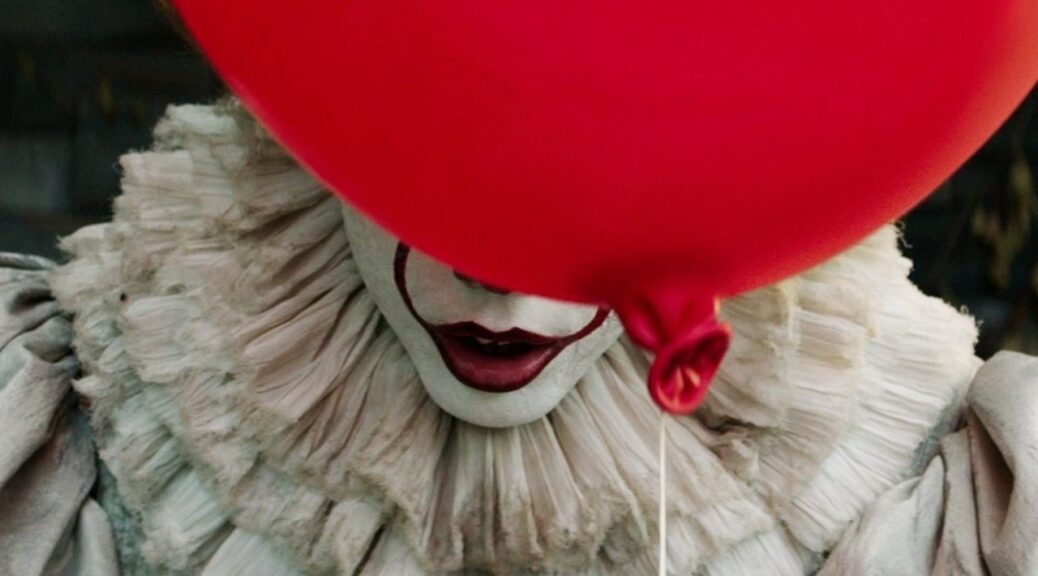
The Derry, Maine “losers club” finds itself in 1988 in this adaptation, an era that not only brings the possibility of Part 2 much closer to present day, but it gives the pre-teen adventures a nostalgic and familiar quality.

Bill Skarsgård has the unenviable task of following a letter-perfect Tim Curry in the role of Pennywise. Those are some big clown shoes to fill, but Skarsgård is up to the challenge. His Pennywise is more theatrical, more of an exploitation of all that’s inherently macabre and grotesque about clowns.

Director Andy Muschietti shows great instinct for taking advantage of foreground, background and sound. Yes, It relies heavily on jump scares, but Muschietti’s approach to plumbing your fear has more depth than that and he manages your rising terror expertly.

3. The Wailing (2016)

“Why are you troubled?” Jesus asked, “And why do doubts arise in your hearts? Look at my hands and my feet. It is I myself. Touch me and see — for a spirit does not have flesh and bones, as you see I have.”

Though the true meaning of this quote won’t take hold until the final act, it presents many questions. Is this film supernatural? Demonic? Or, given the corporeal nature of the quote, is it rooted in the human flesh?

Yes.

That’s what makes the quote so perfect. Writer/director Hong-jin Na meshes everything together in this small town horror where superstition and religion blend. The film echoes with misery, as the title suggests. The filmmaker throws every grisly thing at you – zombies, pustules, demonic possession, police procedural, multiple homicides – and yet keeps it all slippery with overt comedy.

2. Halloween (1978)

No film is more responsible for the explosion of teen slashers than John Carpenter’s babysitter butchering classic.

From the creepy opening piano notes to the disappearing body ending, this low budget surprise changed everything. Carpenter develops anxiety like nobody else, and plants it right in a wholesome Midwestern neighborhood. You don’t have to go camping or take a road trip or do anything at all – the boogeyman is right there at home.

Michael Myers – that hulking, unstoppable, blank menace – is scary. Pair that with the down-to-earth charm of lead Jamie Lee Curtis, who brought a little class and talent to the genre, and add the bellowing melodrama of horror veteran Donald Pleasance, and you’ve hit all the important notes. Just add John Carpenter’s spare score to ratchet up the anxiety. Perfect.

1. Jaws (1975)

A big city cop moves to tiny Amity, where one man can make a difference. Unfortunately, that one man is Mayor Vaughn.

Steven Spielberg cemented his legacy with this blockbuster masterpiece. The interplay among the grizzled and possibly insane sea captain Quint (Robert Shaw), the wealthy young upstart marine biologist Hooper (Richard Dreyfuss) and the decent lawman/endearing everyman Brody (Roy Scheider) helps the film transcend horror to become simply a great movie.

Spielberg achieved one of those rare cinematic feats: he bettered the source material. Though Peter Benchley’s nautical novel attracted droves of fans, Spielberg streamlined the text and surpassed its climax to craft a sleek terror tale.

It’s John Williams’s iconic score; it’s Bill Butler’s camera, capturing all the majesty and the terror, but never too much of the shark; it’s Spielberg’s cinematic eye. The film’s second pivotal threesome works, together with very fine performances, to mine for a primal terror of the unknown, of the natural order of predator and prey.

Today’s Lesson

The Blood of the Dinosaurs

by Hope Madden

Joe Badon seems like an odd duck.

Or so his films would suggest. The director/co-writer’s latest absurdity, The Blood of the Dinosaurs —which appears to be related to an upcoming short The Wheel of Heaven—delivers oddball charm and horror in equal measure.

What’s it about? That’s an excellent question, and not a simple one to answer.  

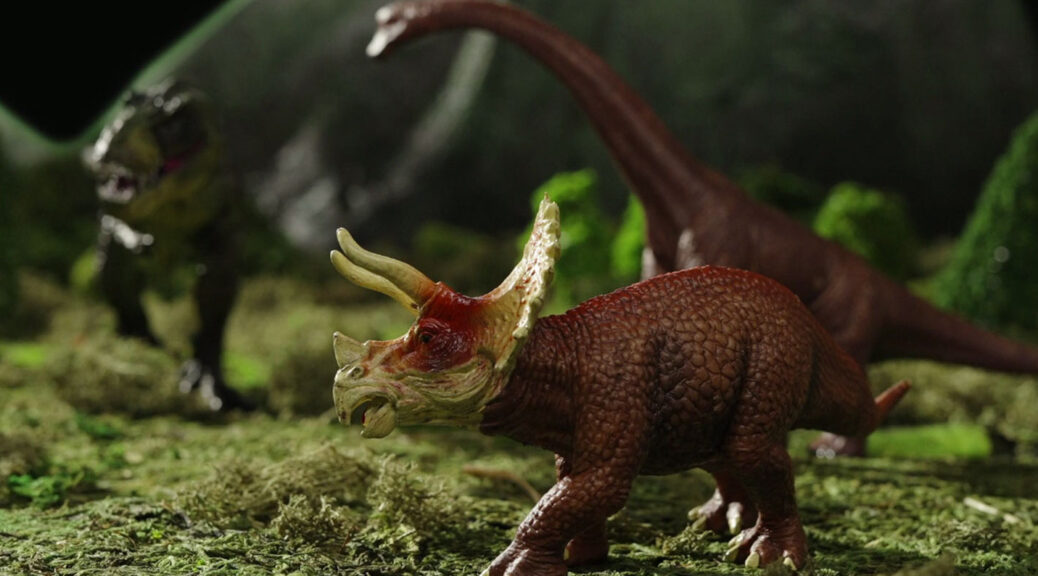
Kids’ TV host Uncle Bobbo (an eerily unblinking Vincent Stalba) wants to teach us where oil comes from. With assistance from his vampire puppet co-host Grampa Universe (voiced by John Davis) and his young helper Purity (Stella Creel), he seeks to enlighten and entertain. And misinform.

What else does Badon hit on? Birth. Death. Choice. 3D glasses. Kitch. Homage. Dinosaurs.

Badon, writing with regular collaborator Jason Kruppa, riffs on old school kids programming almost along the lines of Turbo Kid, Psycho Goreman, maybe even Strawberry Mansion and last year’s Linoleum. The Blood of the Dinosaurs, running a brisk 30 minutes, is far more confined and targeted than these. It feels a bit like an actual episode of something, but something terribly wrongheaded. Sort of a Pee-wee’s Playhouse for sociopaths.

If that does not seem like a ringing endorsement, you’re not reading it correctly.

The film throws a lot at you and not all of it hits, but Stalba’s central performance jibes perfectly with the weird concept to create a show that, quite honestly, I’m sorry I can’t watch every Saturday morning.

Head in the Clouds

Nope

by Hope Madden and George Wolf

There are some truly frightening moments in Nope. Some revolve around things you may think you know based on the trailer. Others feature a bloody monkey in a party hat.

All these and more are tucked inside the kind of patient and expansive brand of storytelling you might not expect from writer/director/producer Jordan Peele. Where the filmmaker’s first two exceptional features explored wildly different styles of horror, his third effort, though scary, taps much more into Sci-Fi.

And Nope has plenty to say about Black cowboys, the arrogance of spectacle, and getting that elusive perfect shot.

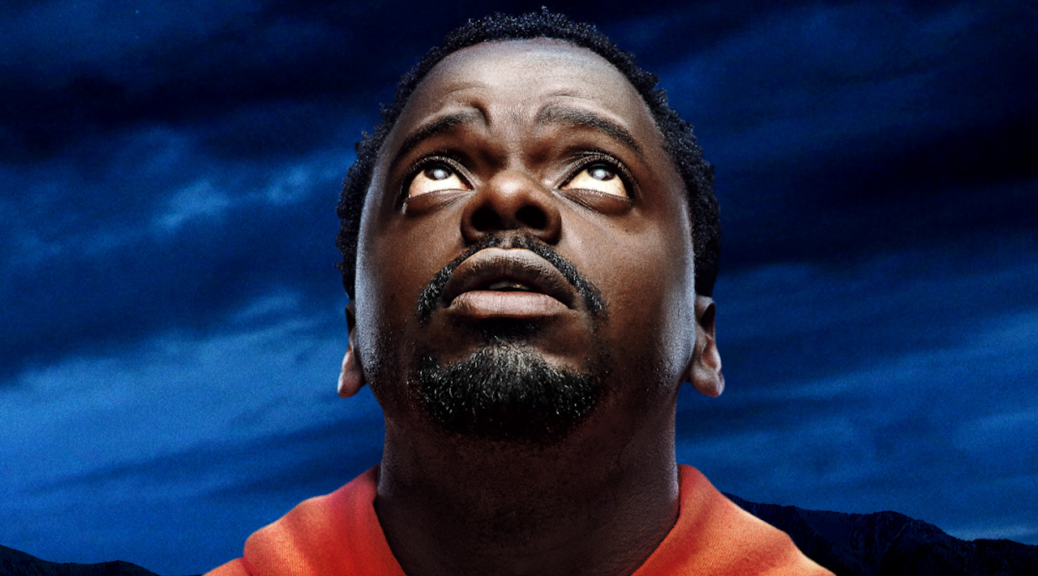
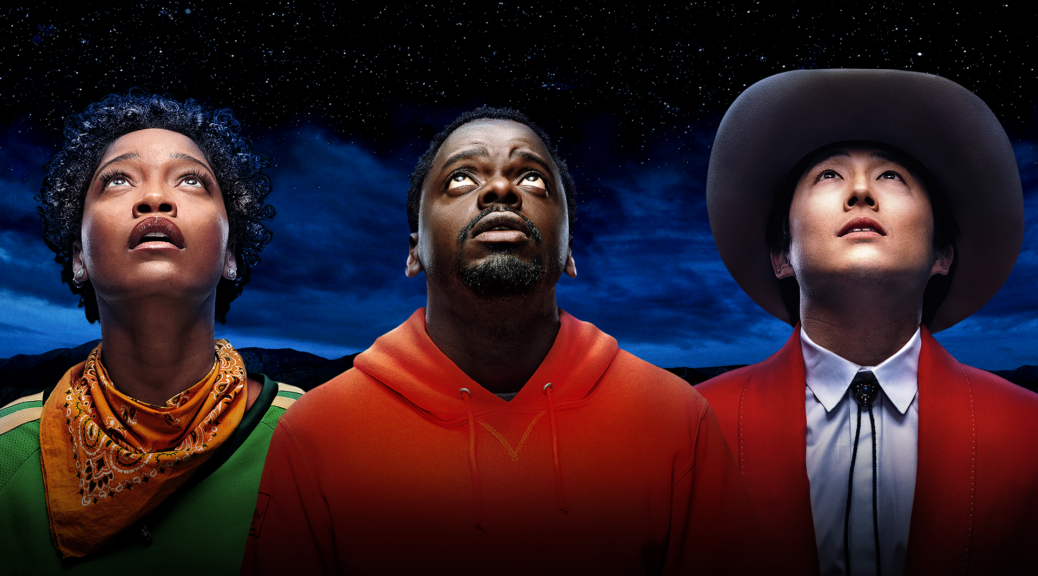
OJ Haywood (Daniel Kaluuya) and his sister Emerald (Keke Palmer) work under their father Otis, Sr. (Keith David) at the only Black-owned horse training business in Hollywood. The Haywood lineage dates back to the very first “assembly of photographs to create a motion picture,” and Haywood’s Hollywood Horses serves various TV and film productions out of a remote California ranch.

But recently, OJ has also been doing business with Ricky “Jupe” Park (Steven Yeun), a former child star who runs a nearby tourist attraction. Some amazing things have been happening there, and Ricky seems to need more and more horses to keep the people amazed.

Toss in Brandon Perea as a dangerously curious tech store worker and the inimitable Michael Wincott as an esteemed and disenchanted cinematographer and you have a remarkable set of oddball characters, each brought to life with peculiar but sympathetic performances.

Peele’s direction and writing effortlessly mine comedic moments, but Nope is no comedy. He unravels a mystery before your eyes, and his shot-making has never been so on point. The way he splashes color and motion across this arid landscape is stunning. His visual cues—often executed with macabre humor and panache—amplify the film’s themes while inducing anxiety.

Palmer and Kaluuya are a fantastic pair, sharing an uneasy, lived-in familial tension. Their battling energy—OJ is slow-moving and soft-spoken to Em’s live wire—contributes to the film’s discombobulating feel. Yeun delivers a surprise turn as a man still trading on past glories at a theme park. But everyone here has a relationship to the dangerous, life-altering, perhaps idiotic act of filming, of entertainment, of spectacle.

It feels a bit like Peele is saying that making a movie will kill you, if you’re lucky. But opening a film with a Biblical passage is no accident, and on a grander scale, Peele has crafted a genre-loving ode to a comeuppance tempted by grandiose delusions.

Nope is a tense, gorgeous, funny, insightful and ambitious thrill ride, which updates the filmmaker’s scorecard to three for three. And while Peele may still feel like he’s chasing perfection, here’s hoping he just keeps chasing.

Pretty in Pink

Anything’s Possible

by Hope Madden

On the surface, Billy Porter’s directorial debut—the coming-of-age rom-com Anything’s Possible—is pretty traditional fare. High school can be tolerable with good friends, boys complicate everything, being different is the worst, just hold on until you can start it all again at college.

That does describe this film. The only thing differentiating this story from dozens of other high school dramedies littering cinematic history is that our lead, our Gen Z Molly Ringwald, is a beautiful trans girl named Kelsa.

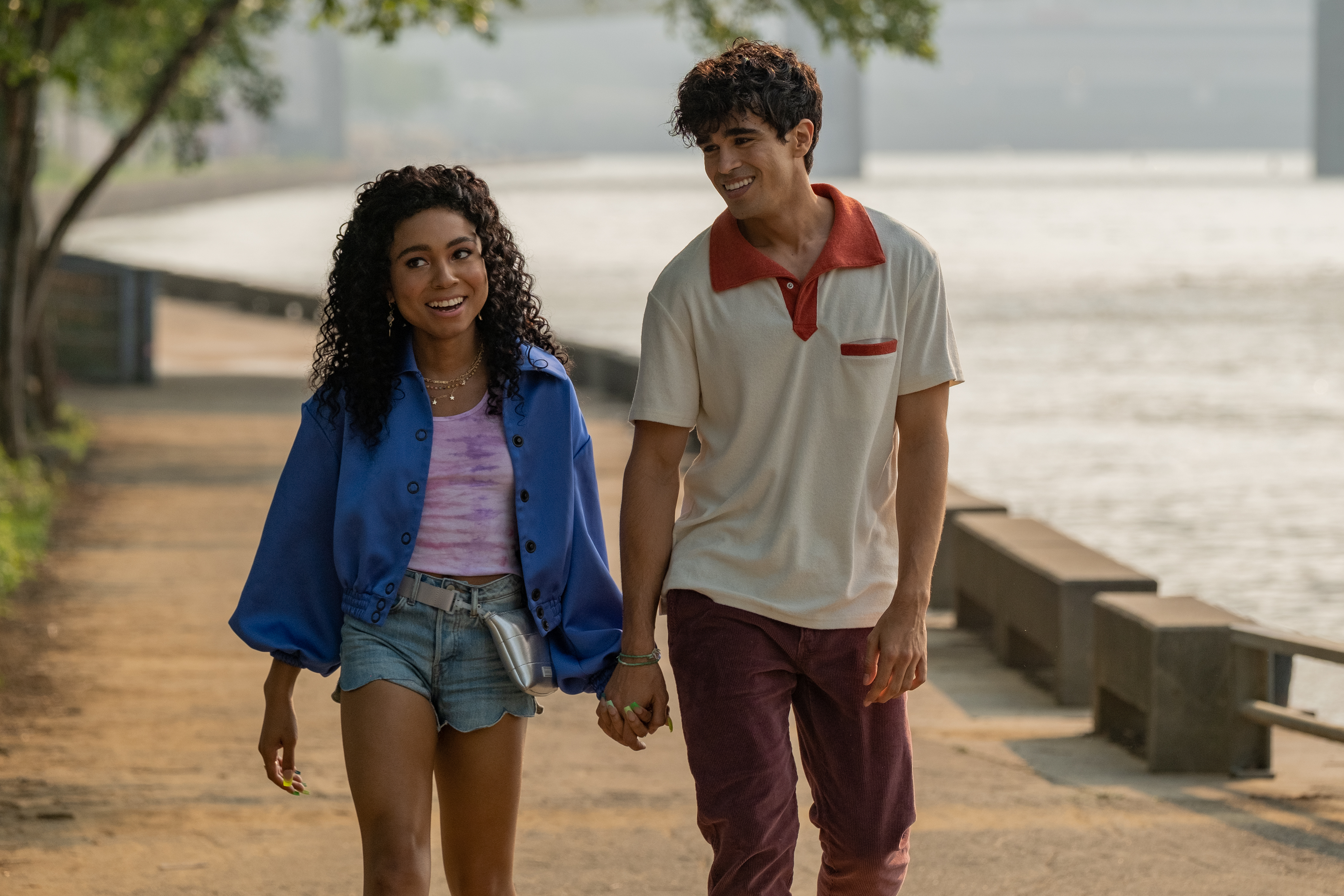
Kelsa (Eva Reign) is starting her senior year and counting the days until she can leave Pittsburgh for her dream school, UCLA. She spends all her time with her two besties, Em (Courtnee Carter) and Chris (Kelly Lamor Wilson), but their balance is thrown out of whack when Em announces she likes Khaled (Abubakr Ali), Kelsa’s secret crush.

Porter and screenwriter Ximena García Lecuona lean hard on formula. The one difference here is that Kelsa is juggling more than most high school seniors, even if she’s determined to convince herself that she is not.

Porter’s sly direction follows Kelsa’s lead. As she’s ready to complicate the narrative by considering how the world is reacting to her not as a teen but as a trans teen, the film redirects its attention. The simplicity of the movie’s structure, its plot, even its performances often work in its favor.

Many viewers will, for the first time ever, see themselves in this comforting adolescent formula. For countless other viewers, normalizing Kelsa’s high school anxieties demystifies and creates empathy.

But is it entertaining? Sure! Reign is a charmer, as is Ali. Support work, especially from the always impressive Renée Elise Goldsberry, as well as a clearly loving look at PittsburgH, give the film a welcome sense of joy. And while there is one extremely ugly comment, on the whole Anything’s Possible never wallows in trauma.

That’s not to say that Anything’s Possible or Kelsa manages to sidestep all the dangers and indignities that face trans teens. But it’s not the focus.

Rather than making a film about the day-to-day oppression, trauma, bigotry and danger facing a trans teen,  Porter and García Lecuona turn our attention to the universal dramas of being a teenager in Pittsburgh. That may not feel groundbreaking or even necessary, but it absolutely is.

Sticky Icky

This is GWAR

by George Wolf

“People like getting spewed on.”

True enough.

Back in the early 90s, I tended bar on the Ohio State University campus, at a place right beside a concert venue that Gwar would invade on a regular basis.

I can attest that fans lined up plenty early for a chance to be in the firing line of Gwar’s goo, and the kids poured out at show’s end with fists pumping after another slimy soaking.

But This Is GWAR wants you to know that goo was FDA approved, and the band behind it has traveled a long and sticky road that’s worth a closer look.

Director Scott Barber rolls out plenty of archival footage and first person interviews, taking us all the way back to the band’s creation by a group of misfit artists at Virginia Commonwealth University in the early 80s.

Hunter Jackson and Chuck Varga were art students who were told their fantasy-leaning stuff was dumb, so they planned to make a movie called Scumdogs of the Universe. Dave Brockie was singer and bassist for a local punk band named Death Piggy.

Then they all decided to put on costumes from the movie and open Death Piggy shows as a heavy metal band of barbarians that would sacrifice fake animals…and Gwar was born.

And when that opening band started drawing bigger crowds? Jackson, Brockie and a constantly rotating group of musicians adopted garish latex costumes and names like Flattis Maximus to set off as “barbarian interplanetary warlords” on a quest to search, spew and destroy.

Barber’s approach is well-rounded and determined, looking to put together not only a complete history of the band and the art collective that’s propelled it for decades, but also a tribute that would satisfy longtime fans.

Of course, you’ll find the arcs of excess and conflict that once drove Behind the Music to the heights of cliche, but this isn’t your normal band biopic simply because this band isn’t normal. And even if “the sickest band in the world” isn’t your jam, its history and the circus of talented people that keeps it running is just interesting.

But at just under two hours, the doc’s expanse errs more on the side of Gwar devotees (like Weird Al, one of the famous fans Barber features) than neophytes, and that’s probably as it should be.

Wear that goo as a badge of honor, This Is GWAR and this is for you.

Rattlin’ Bog

Moloch

by Hope Madden

A bog is a nice spot for horror, eh? You think you’re walking along a lovely field when suddenly, you’re sucked in. Like quicksand, only mossier.

Betriek (Sallie Harmsen) and her daughter Hanna (Noor van der Velden) live with Hanna’s grandparents on the edge of one such Dutch mire in Nico van den Brink’s Moloch. A body just turned up out there, perfectly preserved for maybe hundreds of years.

And then another appears. And another. And another—each a female from a different era. The discoveries trigger other unusual behaviors, all of it corresponding with the town’s celebration of an unsavory history.

It sounds a little contrived, a little familiar, but van den Brink’s naturalistic approach to the story offsets any hokeyness. Harmsen’s spooked but reasonable lead makes for a clear-eyed hero, one who rails against her lot in life quietly but surely. Her choices sometimes feel erratic but never unnatural, and the cast around her shares a lovely and reasonably strained chemistry.

All performances are more raw than polished, which amplifies an authenticity struggling to anchor the supernatural elements.

Because scary stories are scarier if you believe them.

Not that the film ignores its spectral side. Ringing bells, musical interludes, moments in an aquarium and other highlights of the film’s sound design lend Moloch a supernatural eeriness that deepens its dread.

Van der Velden shows keen instincts for allowing his tale to unravel in its own time. Close attention to detail allows a rich understanding of the story Moloch tells. Whether you devote that kind of attention to the film or not, Moloch gets its point across.

Ticket to Ride

The Wheel

by George Wolf

Remember that scene near the end of Parenthood, where Grandma compares life to an amusement park ride?

Well, if you add layers of subtlety, a much more intimate focus, and subtract several decades of living, you’ll find yourself near the heart of The Wheel, a surprisingly compelling look at relationship dynamics.

I say “surprising” because films don’t often look to characters this young for hard-won insight.

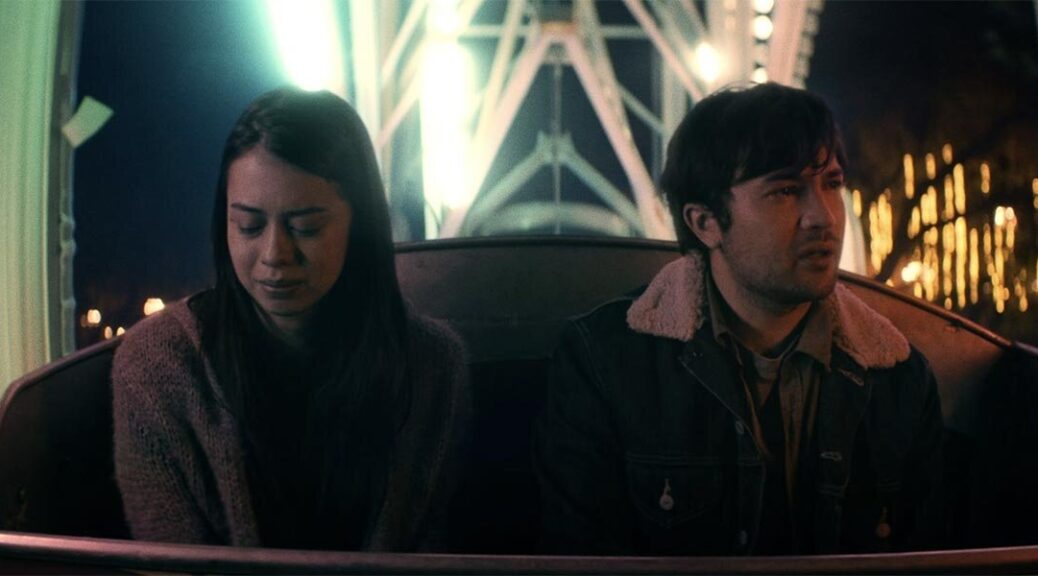
Walker (Taylor Gray) and Albee (Amber Midthunder from TV’s Legion) met when they were 12, got married at 16, and now 8 years in are close to splitting. In a last ditch effort to patch things up, they retreat to a secluded B&B and promise each other “brutal honesty.”

For Walker, that starts with following the directions of a “save your marriage” self help book. But for Albee, it means mocking that book, her husband, and the very idea that the marriage can be saved.

The film’s early going as a two-hander feels a bit desperate, but director Steve Pink (Hot Tub Time Machine, screenplays for High Fidelity and Grosse Pointe Blank) and writer Trent Atkinson smartly bring in another couple for some important push and pull.

Fortysomethings Carly (Bethany Anne Lind) and Ben (Nelson Lee) run the B&B, and are making final preparations for their own wedding. Despite a longstanding rule to avoid mixing with guests (not to mention Ben’s assessment of Albee as a “monster”), Carly reaches out to the young couple.

The scars revealed are not shocking and the insights less than revelatory, but four terrific performances make it easy to care about these characters, and Pink’s gently assured pace means the eventual catharsis feels more earned than force fed.

But even at its most familiar, the film carries a freshness that comes from never losing empathy for the type of characters generally used as convenient fodder. The Wheel believes in them, and that makes all the difference in the ride.

Screening Room: Where the Crawdads Sing, Mrs. Harris Goes to Paris, Paws of Fury, Landis: Just Watch Me & More

Milkbone of Blood

Paws of Fury: The Legend of Hank

by Hope Madden

Who’s up for a perfectly harmless, slight, not especially funny cartoon? Well, depending on how hot it is outside and how bored your kids are, Paws of Fury: The Legend of Hank could be worse.

Hank (Michael Cera) dreams of being a samurai. Ika Chu (Ricky Gervais) dreams of ridding the land of this ugly little town that ruins the view from his palace. How about making Hank the samurai that protects that ugly village? Hank will be a terrible samurai! He’s a dog! Who ever heard of a dog samurai?

Well, who ever heard of a cat Western? But that’s what we essentially have here, because Hank has crossed many treacherous lands to find his way to the land of cats so he could fulfill his destiny, even if nobody there wants him. Like at all.

OK, maybe little Emiko (Kylie Kuioka), who also dreams of becoming a samurai. But definitely not Jimbo (Samuel L. Jackson), the town drunk who used to be a samurai before shame led him to catnip.

It sounds like it should be funny. There’s also the supporting voice cast, if you need to be impressed: George Takei, Michelle Yeoh, Djimon Hounsou, Aasif Mandvi, Gabriel Iglesias, Mel Brooks.

Brooks also co-wrote the screenplay, which explains a lot. A dozen or so jokes littered throughout the film might have been funny 60 or so years before the target audience was born. Very few jokes connect to dogs, cats, samurai films, Westerns—anything in particular, but they lack that fun, random feel. A giant toilet figures prominently. There is flatulence.

Cera and Jackson definitely share an odd couple quality—enough that I’d love to see them do a live action film together. But Yeoh and Takei are wasted, and Gervais gets no good dialog to deliver (though he does a villain well). Hounsou’s fun.

The movie looks fine—not great, but fine. Its themes about acceptance are muddled and soft peddled, though—another victim of weak writing.

A profoundly odd short film called Bad Hamster precedes Paws of Fury, though. There’s that. Just depends how hot it is, I guess.

Hope Madden and George Wolf … get it?