Category Archives: Slider
For the homepage slider

Fa La La Land
The High Note
by George Wolf
Since rising to fame on Black-ish, Tracee Ellis Ross has apparently been biding her time, patiently waiting for the right vehicle to showcase her talents as a singer. It isn’t hard to understand the apprehension.
Oh, look, another TV star trying to sing. And this one just wants to ride her mother’s (Diana, FYI) iconic coattails!
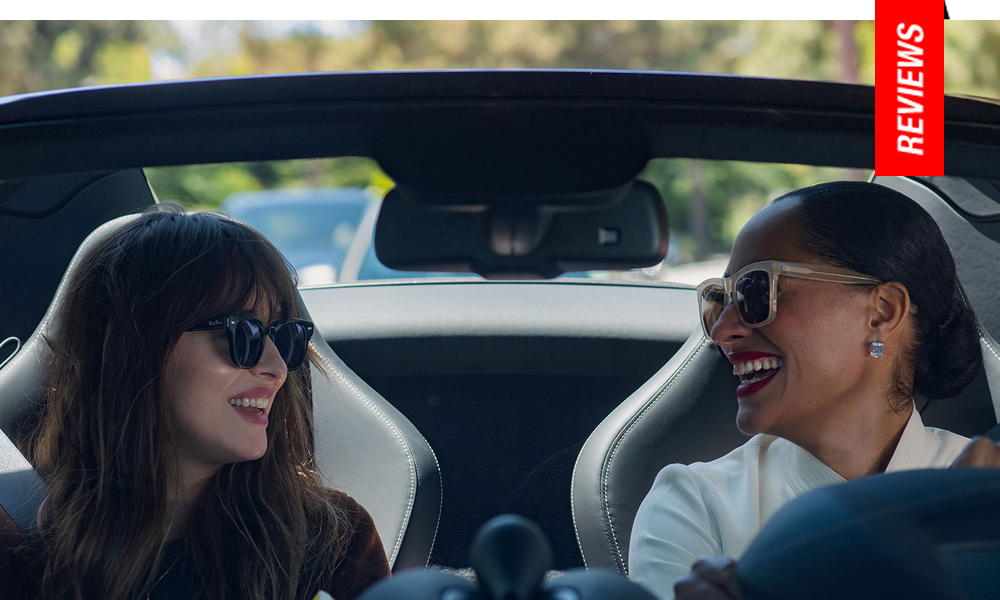
Ross chooses wisely with the endearing The High Note, absolutely killing it as Grace Davis, a modern brand of pop diva.
Davis still basks in the glow of worldwide fame, but it’s been a minute since she scored a big hit. Grace’s longtime manager Jack (Ice Cube, with more proof of his maturation as an actor) wants her to ink a long-term residency in Vegas, but Grace isn’t sure she’s ready to be pushed onto the “greatest hits” circuit. And there’s a small but potentially mighty voice in Grace’s corner.
It belongs to her personal assistant Maggie (Dakota Johnson, flashing a winning mix of naïveté and ambition). She’s been lobbying for new Grace Davis music, which would carry some weight if everyone only knew how great a producer Maggie could be if they’d just give her the chance!
If this sounds like something for the Hallmark Channel, did I mention Maggie has stumbled across David (the impressive Kelvin Harrison, Jr., with his own vocal chops), a talented musician who could use an L.A. music producer and maybe even a girlfriend?
Sure, you can guess where most (but not all) of this goes, and in other hands it might have been a tone deaf stiff. But director Nisha Ganatra (the underseen gem Late Night) runs Flora Greeson’s debut screenplay through the filter of an endlessly charming cast to craft an extended mix of finger-snapping smiles.
Look beneath those layers of what may feel like fluff, and you’ll even find a sometimes awkward but still refreshing look at two women gracefully navigating the path to controlling their own destinies. Nice.
Don’t discount those finger snaps, either. In a music business movie the music should mean business, and the tunes in The High Note sound like something a producer might actually get excited about, especially when Ross lets it rip.
She makes Grace a determined diva that’s spoiled but still worth rooting for, infusing her big numbers with the expressive vocal power of an actor and a character who are both seizing their moment.
The first single from the soundtrack, Ross’s “Love Myself,” is already looking like a hit. The High Note sounds like one, too.

I Shouldn’t Go Out – Week of May 25
Drive-in sensation and throwback SciFi fun comes home this week, as well as a handful of other mainly decent choices.
Click the film title to link to the full review.
The Vast of Night

Once Were Brothers: Robbie Robertson and The Band
The Invisible Man (DVD)
Endings, Beginnings (DVD)


Screening Room: Lovebirds, Trip to Greece, Inheritance and more

Greece Is the Word
The Trip to Greece
by George Wolf
“Exhausting? Me? You should meet you!”
Yes, the boys are at it for the fourth time on the big screen, enjoying exotic locales, savoring sumptuous cuisine, and critiquing the finer points of each other’s celebrity impressions.
Since taking The Trip around England ten years ago, Steve Coogan and Rob Brydon have also toured Italy (2014) and Spain (2017), reviewing restaurants and juggling their slightly fictionalized lives while director Michael Winterbottom documents it all.
This time out, they’ve also adopted more of an interest in history. They journey from Troy to Ithaca, following in the footsteps of the Odysseus, checking the tour book when they aren’t quizzing each other on historical timelines or Bee Gees tunes (Brydon’s bit with “Stayin Alive” is a scream).
The sarcasm is thick and the barbs sharp per usual, but while the overall hilarity level may be down a notch, this film boasts the most impressive vistas and enticing recipes of the entire series. Sure, it might be the quarantine talking, but less than an hour in I was ready to call either a travel agent or a Greek restaurant. Maybe both.
And in what might be a nod to the end of the franchise, the whiff of mortality pierces the air. Steve calls home often for updates on the health of his dad, and the levity of the “at our age” references carries an added layer of wistful resignation. You get the feeling these guys are finally giving up chasing youthful ghosts and embracing the time they have now.
These trips have always been about appreciating old friends, great food and often uproarious conversation. But while this isn’t the franchise high point, there’s a poignancy here in Greece, underneath Aristotle’s ashes and all the painful falsetto harmonies, that would make it the most satisfying finale.

Fright Club: Best Jump Scares
We spend a lot of time ripping on weak and lazy jump scares. But today we want to acknowledge that, when done well, jump scares can be an incredibly effective tool for a horror filmmaker.
Here are our 10 favorite jump scares from horror movies.
10. It Follows (2014): tall man at the door
This movie is a freak show of scares beginning to end, and the different images the demon takes throughout is forever terrifying and fascinating. But it was the tall man at the door that really got to us.
9. Les Diaboliques (1955): alive in the tub
First of all, this is a spoiler. But the film came out 65 years ago, so if you haven’t seen it by now (we even showed it once!), that’s on you, man. It’s a classic, and a classic scare.
8. The Ring (2002): I saw her face
Again, here is a film chocker block full of utterly fantastic creeps, all told a moment at a time. But it was that first one, when we see Samara’s first victim, that set the stage and made us jump out of our seats.
7. A Tale of Two Sisters (2003): under the sink
So much nuttiness, so many confusing ideas to keep track of, such a master class piece of atmosphere building in this film. You just are not expecting jump scares in this one. And yet, as one dinner party goes wrong…
6. Hereditary (2018): signpost
Tell us you saw this one coming and we will tell you that you are a liar.
5. Carrie (1976): Carrie White’s grave
Oh holy shit. You think Sue Snell has been through enough, what with missing out on prom and watching every friend she has die in a flaming blood bath. But you would think wrong.
4. Audition (1999): What’s in the bag?
Ring ring. Ring ring. The way Takashi Miike frames this scene, lovely Asami’s hair draped in front of her, her spine showing, that loud phone – you can’t take your eyes off her, waiting for her to rouse, to answer. You might not even notice that burlap sack…
3. Jaws (1975): Hey, it’s Bruce!
Jaws has two classic jump scares, and it was hard to pick. Remember when Hooper’s digging that tooth out of Ben Gardner’s boat and then, all the the sudden, a human head! Well, that would have been enough for most movies, but after waiting nearly 2/3 of the film to see that shark, Steven Spielberg introduces his lead with authority.
2. The Conjuring (2013): bureau
James Wan’s instant classic haunted house movie also boasts more than one strong contender for this list. That hand clapping scene, showcased in the trailer, was reason enough for us to buy our tickets. But the one that did the most damage starts with a sleep walker and ends with the best jump scare in the last twenty years.
1. The Exorcist III: guy in the hall
There are so many utterly priceless moments in this underrated horror show: Patrick Ewing and Fabio as angels, Sam Jackson as a blind man, that terrifying confessional scene. But there is this one flash of white that is the reason everybody who sees this movie remembers it.

Screening Room: Scoob, Capone, Vast of Night, Fourteen, Monstrum
Long Distance Dedication
The Vast of Night
by George Wolf
The Vast of Night wastes no time in transporting you to another world.
Opening with vintage Rod Serling welcoming us to “Paradox Theatre,” director Andrew Patterson unveils an incredibly polished debut, one that’s full of meticulous craftsmanship, effective pacing and wonderfully engaging storytelling.
Picture the small town of Cayuga, New Mexico in the 1950s. As the gymnasium stands are filling up for the night’s big high school basketball matchup, a smooth-talking radio DJ and a wholesome teen have stumbled onto something very, very big.
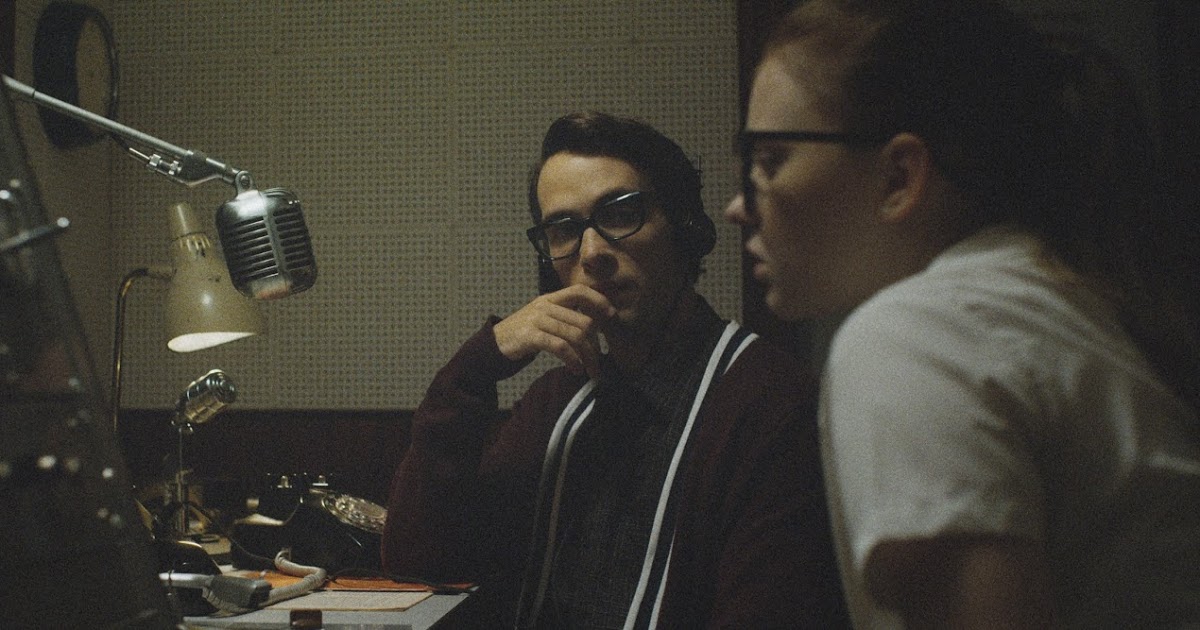
Fay Crocker (Sierra McCormick) is filling in for the local telephone operator as WOTW’s nighttime show with Everett “The Maverick” Sloan (Jake Horowitz) playing in the background. But a strange transmission is also coming through the radio, and Fay lets Everett know about it.
Everett opens the mic to ask if any of his “five listeners” can identify the sound, and Billy (Bruce Davis) calls in with a mighty big story to tell. Mabel (Gail Cronaur) has one, too, leading Everett and Fay off into the New Mexico night to search for answers.
Peterson’s commitment to production and sound design results in a totally immersive experience. The period details – from costumes to recording equipment – are more than just historically correct. Paired with the rapid-fire, comfortably lived-in dialog from screenwriters James Montague and Craig W. Sanger, they create a throwback setting that charms without the tell of undue effort.
Peterson also flexes confidently behind the camera, moving from extended tracks to slow pans to quiet stills, all in service of the film’s wondrous tone. With McCormick and Horowitz leading a stellar ensemble, what could have been a generic sci-fi time filler becomes a smart parable with an eerie grip.
The Vast of Night is a film about listening. To each other, to the stars, to the ugly secrets of our past and to the great possibilities of our future.
And speaking of the future, Andrew Patterson has a bright one.

Gangster Lean
Capone
by Hope Madden
What a nutty idea.
You’ve seen Capone on film: films about him, films containing him, films about gangsters reminiscent of him. A lot of these movies have been great – some of them classic. But you have never seen Alphonse Capone the way writer/director Josh Trank sees him.
Wisely, Trank realized Tom Hardy would be able to translate his vision.
There are moments, especially early in the film, where Hardy and Trank seem to be conjuring Vito Corleone (Hardy has always carried the same dangerous charisma of Brando, anyway). But it doesn’t take long before the role defines itself as something we truly have not seen before.
The film focuses on the final year of the infamous mobster’s life—the adult diapers and dementia year. He’s served his prison term for tax evasion, the syphilis he contracted in his youth has taken its toll on his mind and body, and his money is quickly evaporating.
Maybe he’s hidden $10 million somewhere. Maybe he’s just nuts.
Trank’s loose narrative is less concerned with the scheming, criss-crossing and backstabbing from underlings trying to find the money than it is with Capone’s deterioration, and that’s what makes this film so gloriously odd.
There is a grotesque humor underlying many of these scenes. Trank doesn’t ask you to sympathize with this notorious villain, nor does he revel in his decrepitude. But he definitely explores it, and that’s a brave decision. Many a mobster film fanatic will be annoyed by this glimpse into the post-badass years, but defying expectations is something Capone does early and often.
If Trank doesn’t trade in sympathy, we can still expect Hardy to generate empathy. As is characteristic of every performance in his career, Tom Hardy finds the faulty humanity in this character. His depiction of Capone’s confusion is unerringly human, and in his hands Trank’s macabre humor never feels like mockery.
Linda Cardellini flexes more in the role of Capone’s wife Mae than she has in her many other turns as put-upon spouse. She’s a great sparring partner for Hardy, and their volatile but ultimately tender relationship creates a needed grounding for a film so busy with the shadowy unreality of a diseased mind.
Because of the borderline surreal nature of a film told from the point of view of a man in the throes of dementia, it’s often tough to suss out the reality of the events onscreen. This generally works, but there are certainly moments—generally those inserted to give us stepping stones of a plot–that seem stiffly ill placed.
Thankfully, Hardy’s there to command your attention. No doubt some viewers will be disappointed—those who tuned in to see Hardy play a badass at the top of his game. My guess is that the reason one of the finest actors working today was drawn to Capone was the opportunity to do something just this unexpected.

Hindsight 2020
Capital in the Twenty-First Century
by George Wolf
You want to understand the economic mess we’re in? Simple. It all comes down to horses and board games.
Wut?
Watch Capital in the Twenty-First Century, and more than just vague analogies will come into startling focus.
New Zealand filmmaker Justin Pemberton has assembled an array of scholars and historians (including Thomas Piketty, author of the source book) for a 103-minute presentation that is so informative, measured and concise it should earn you college credits.
There are graphs, illustrations and pop culture snippets from film and television that Pemberton weaves throughout the lecture material to attract the eye and boost the film’s overall entertainment value. But make no mistake, his mission is about breaking down the 400 years of history that explain the social and economic precipice we’re teetering on right now.
The breakdown is an accomplishment in itself, but Pemberton and his scholars never condescend or confuse, bringing an immeasurable value to the medium delivering this invaluable message.
And while some of the lessons are not new (i.e. we need a strong middle class) the context here is so vivid and relevant many observations may land with an echo of “eureka!” inside your head.
The history of nations carrying staggering wealth inequality and stagnant social mobility is not pleasant, but the ironic timing of Pemberton’s film helps fuel the hope that total socio-economic collapse may still be avoided.
The key lies in totally re-shaping the way a population thinks, which historically has only been achieved through seismic cultural shifts such as a war or a depression.
Or a pandemic?
We’ll see, but by the time Capital in the Twenty-First Century is done telling you about the horses and the board games, there will be little doubt why the “job creators” are so anxious to give us the business.

