Category Archives: Slider

For the homepage slider

Shimmer Time

Barb and Star Go to Vista Del Mar

by George Wolf

Remember that opening of Napoleon Dynamite, where Napoleon was tossing a green plastic Army man on a string out of the school bus window? If you didn’t think that was funny, it was an early sign you were gonna have a bad time.

Barb and Star Go to Vista Del Mar opens with its own litmus test, as a kid on a bicycle is delivering papers while singing “Guilty” along with the Streisand and Gibb in his headphones.

If that makes you laugh, stick around, you’ll laugh more.

Things have been better for the always perky, cullotte-loving Barb and Star (co-writers Annie Mumolo and Kristen Wiig). They’ve lost their husbands, their spot in weekly “talking club,” and their jobs at the hottest furniture store in Soft Rock, Nebraska (not a real place, but it should be).

With mid-lifers in tube tops, a 24 hour CVS and a parade of guys in Tommy Bahama, Vista Del Mar, Florida promises a vacation paradise perfect for “finding their shimmer.” Plus, it’s the home of the annual Seafood Jam (“where the crowd’s on the older side!”).

After a Disney-on-Viagra greeting at the hotel, it isn’t long before the BFFs’ rock solid bond is threatened by the handsome Edgar (Jamie Dornan) and the chance to rent a banana boat.

Will the girls’ friendship survive all the fibs and sneaking around? And how long can Edgar hide his part in the nefarious plan by an evil genius (also Kristen Wiig) to kill everyone on the island with poisonous mosquitoes?

I’m sorry, what was that second thing?

Just know director Josh Greenbaum keeps a loose grip on a film that’s ridiculous at every turn but still full of good-natured, garish fun and about as many laugh out loud moments as dry patches. Even though Barb and Star are new to us, they feel like characters the two stars have been privately honing for years, and it’s the chemistry of Mumolo and Wiig (who also co-wrote Bridesmaids) that allows a bit about the name “Trish” to continue beyond all limits of good sense until you give in to the hilarity.

You’ll also recognize plenty of faces in the supporting cast, highlighted by Mark Jonathan Davis doing his Richard Cheese lounge singer persona and Damon Wayans, Jr. as a spy with a bad habit of spilling his personal info (“dammit!”).

Expect some goofy outtakes over the credits, and waves of silliness that just won’t rest until your frown is turned upside down! It may not be dynamite, but Barb and Star brings enough laughs to make spending time with them a pleasure.

Just don’t call it guilty.

Avenging Fred Hampton

Judas and the Black Messiah

by Hope Madden

Daniel Kaluuya’s range is simply unreal. From the vulnerable hero of Get Out to the chilling sociopath of Widows, he’s prepared us for quite a gamut of characters. I’m not sure he’s prepared us for his Chairman, though.

Kaluuya plays Fred Hampton, Chairman of the Illinois Chapter of the Black Panther Party circa 1969, in Shaka King’s Judas and the Black Messiah. A feeling of mortality permeates his performance, and with it a melancholy sense of urgency. His quiet moments swell with tenderness and turmoil, and his speeches burn through the screen. We’ve seen some great performances this year, but we’d give Kaluuya the Oscar right now.

That’s a lot to live up to, but the balance of King’s cast meets the task. LaKeith Stanfield, as police informant Bill O’Neal, strikes the right balance between cowardice and regret. He doesn’t try to make us pity O’Neal and the deal he’s struck with the devil, but he gives the character an energy that suggests more emotional and psychological layers than what’s found on the page.

As FBI Agent Roy Mitchell, Jesse Plemons is as solid as ever, delivering lines with enough genuineness that Mitchell doesn’t become an outright villain until he, along with O’Neal, have gone too far to pretend they’re anything else.

Their performances draw support from an understated Dominique Fishback as a firmly but not blindly committed comrade—Hampton’s girlfriend Deborah Johnson. Meanwhile, Dominique Thorne has badassedness to burn as part of a deep ensemble that impresses in most every turn.  

The film never feels like a biopic. The rendering is far more crime thriller, and had this been a simple fictional account of a mole in a political organization, King’s film would have been riveting. Performances alone would have elevated the genre beats.

The real star may be King’s script, co-written with Will Berson and Keith and Kenneth Lucas. There’s no placating. There’s no playing to the masses. King doesn’t water down Hampton’s message of unifying the poor or throwing off the oppression of a police state. In fact, this is a film that means to show the difference between revolution and the “candy coated façade of gradual reform.”

Forest for the Trees

Land

by George Wolf

After directing one short film and ten episodes of her House of Cards TV series, Robin Wright makes an assured feature debut with Land, mining one shattered life for graceful insight into healing.

Wright also delivers a touching and understated performance as Edee, a woman who clings to grief as her closest connection to the husband and child she has lost, and who can no longer bear any expectations that she will “get better.”

Moving alone to a remote cabin in the Wyoming wilderness, Edee ignores advice to at least keep a vehicle at her disposal and settles in, wanting nothing else to do with anything or anyone.

No surprise, but Wyoming winters are harsh for the inexperienced. Eventually, it is only the aid of a passing hunter named Miguel (Demián Bichir, also terrific) that saves Edee’s life.

Miguel is carrying emotional scars as well, and the two strike a deal. He will teach her the survival skills she needs, and when the lessons are done, she will never see him again.

The screenplay from Jesse Chatham and Erin Dignam may not blaze any thematic trails, but it does resist following the roads most expected. Of course Edee begins to feel a human connection again, but this point isn’t exploited for a cheap and easy narrative out.

The performances from Wright and Bichir make you care about pain even when you haven’t glimpsed it, giving director Wright a solid emotional base to lean on while deftly unveiling the different lives Edee and Miguel used to lead.

Edee’s memories of her family are brought to the screen with a tenderness from Wright that is both touching and well-played. Woven through the beautifully framed and intimidating Wyoming landscapes are wonderful sketches of visual storytelling.

Yes, we’ve heard Land‘s lessons before, but Wright’s feature debut behind the camera impresses through her fine instincts for subtle over showy, paring those lessons down to an essence as timeless as the majestic skyline.

Fright Club: 1, 2, or 3 Person Casts

Fuzzy math takes over as we count cast members and celebrate minimalist films that can seep into your nightmares with the help of very few performers. There are some great options, but here are our six favorites films with 1, 2, or 3 people in the cast.

Thanks Fright Clubber Michael for the topic!

6. Hard Candy (2005)

It would be two years before Elliot Paige burst into public consciousness as the hilarious and pregnant teen in Juno–still a kid getting herself into trouble, I guess. But the trouble in Hard Candy is tougher to manage.

Paige is a force of nature, playing off Patrick Wilson in a cat-and-mouse game where roles are flexible. Director David Slade keeps tensions ratcheted up to an unbearable level while Brian Nelson (who collaborated with Spade on the underappreciated vampire flick 30 Days of Night) twists the knife in a script as sharp and shady as these actors are wily and hard edged. It’s a breathless exploration of all that’s bad in the world.

5. Buried (2010)

If you’re claustrophobic, you might want to sit this one out. A tour de force meant to unveil Ryan Reynolds’s skill as an actor, Buried spends a breathless 95 minutes inside a coffin with the lanky Canadian, who’s left his quips on the surface.

Writer Chris Spalding stretches credibility as he tries to keep the crises lively, which is unfortunate because the simple story and Reynolds’s raw delivery makes this a gut-wrenching experience.

4. Creep (2014)

This true two-man show boasts dark and twisted humor, a great jump scare, and a truly exceptional mask.

Writer/director Patrick Brice plays Aaron, hapless videographer seeking work, thrills, maybe even love. He answers an ad to record Josef (Mark Duplass) at home, and then on the road. The film toys with that inner warning you hear and then choose to ignore.

Duplass has an incredible aptitude for pushing boundaries just enough to prick that inner voice but not quite enough to guarantee that you’ll head for the exit. As red flag after red flag go unheeded, Brice unveils more and more chilling detail.

3. 10 Cloverfield Lane (2016)

This one is a threesome. Well, not if Howard (a glorious John Goodman) has anything to say about it.

The feature debut from director Dan Trachtenberg toys with the idea of an alien invasion (or some kind of chemical warfare), but it keeps you snugly indoors with Howard and his guests Michelle (Mary Elizabeth Winstead) and Emmett (John Gallagher Jr.). Guess which one Howard doesn’t really want around?

The trio of performances compel your attention, even in the few down moments. This is a tight, taut thrill ride—even if it is confined to one guy’s basement.

2. Antichrist (2009)

Boy, Charlotte Gainsbourg and Willem Dafoe are a one/two punch in this one. A married couple overcoming the guilt and desperate grief of their son’s death, the two make some increasingly dreadful decisions.

Alone in their apartment, the two bodies take up much of the screen. Once we move to the cabin in the woods, the colors become deeper and darker, the atmosphere denser, and the actors appear almost tiny and insignificant inside all this throbbing, living nature. Both performances are jarring and fantastic in a movie quite unlike any other.

1. The Lighthouse (2019)

The one thing you just don’t do as you descend into madness is spill your beans.

Dafoe again, this time with Robert Pattinson as his wickie mate in one of the most fascinating examinations of power shifts in horror history. Gorgeously photographed in black and white and boasting 2019’s best sound design, The Lighthouse offers these two actors plenty to work with.

But in the end, it’s the performances that kill you. Madness!

A Little Familiar

The Little Things

by Hope Madden

When you see a film whose plot synopsis exactly mirrors hundreds of other movies, it is the little things you have to look for to set it apart.

Writer/director John Lee Hancock’s The Little Things introduces plenty of those small details: a massive cross high in the Hollywood hills, a gun casing, a barrette, a radio station, a dog. Like the 1990s setting, though, they mostly amount to little more than understated flourish.

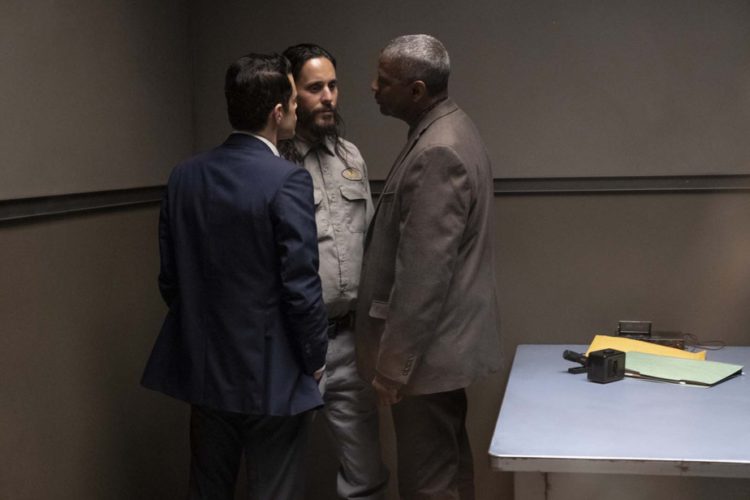
Hancock (who wrote and directed The Blind Side, but I will try not to hold that against him) introduces two cops. One, Deke (Denzel Washington, always a pleasure), is a Kern County sheriff’s deputy with bad blood back in LA. The other, Baxter (Rami Malek), is a climbing homicide detective hot shot in the big town.

When Deke is sent to the city to retrieve some evidence for a county case, Baxter inexplicably pulls him into a serial killer investigation, and there you have it: haunted veteran cop, ambitious newcomer, cold blooded killer (who may or may not be Jared Leto).

Again, that barebones description could be about 300 movies and TV series, including Netflix’s current true crime mini The Night Stalker (who is mentioned once during this film). How to elevate it?

Well, four Oscars among your three leads is a start. Perhaps that’s why this police procedural turns character study so quickly.

Washington’s worn out crime fighter offers a low key emotional center, which is a needed respite from the odd Baxter. Malek’s characterization of the by-the-books half of this duo is curiously manic, and Hancock spends frustratingly little time digging into Baxter’s motivation. Still, Malek and Washington offer quick chemistry that gives their scenes some depth.

Leto delivers a characteristically tic-heavy performance—perhaps also a tad overdone. Both he and Malek help generate a little energy with their accumulated weirdness, but it’s not enough to overcome the film’s general lack of momentum or purpose.

It doesn’t help that the color, period and low boil bring to mind two wildly superior Fincher efforts—Seven and, even more clearly, Zodiac. And however competently made (and it is) or impressively cast (obviously), The Little Things just can’t distinguish itself from the pack.

Shooting Stars

Supernova

by George Wolf

Sometimes, just watching two master actors at work is worth the price of admission. And though Colin Firth and Stanley Tucci are not all that Supernova has in the win column, they are what keeps the film engaging throughout a fairly familiar narrative.

Firth is Sam and Tucci is Tusker, two longtime partners who have hit the road with their beloved dog, traveling across England in an old RV.

The two men have been in a committed, loving relationship for over twenty years. Now, after Tusker’s diagnosis of early onset dementia, they’re taking the time to catch up with cherished family and friends while they revisit some favorite spots from their past.

For his second feature, writer/director Harry Macqueen is on familiar ground as well, returning to some of the themes that drove Hinterland, his 2014 debut.

Like that film, Supernova becomes a road trip through wonderfully picturesque landscapes, as two souls appreciate the chance to share the beauty – and the heartbreak – that life brings.

But here, with older characters connected by more than just friendship, Macqueen adds a layer that is made beautifully resonant by the warm chemistry and fully formed characterizations of Tucci and Firth.

Every glance and subtle movement between them reflects the preciousness of the time that Sam and Tusker have left. And though its predictability has you wishing Supernova had something a bit more luminous to say, the two shooting stars in the lead are not to be missed.

Check Out Anytime You Like

The Night

by George Wolf

Come on, it’s been forty years, can’t we get a new haunted hotel flick without you screaming bloody redrum?

That’s fair, but what if the new take unveils a slow shower curtain reveal and turns to a golden oldie for creepy soundtrack effect?

Oh. Well then the film’s going to have to work even harder to avoid the dustbin of shameless Shining wannabees.

The Night does just that, and ultimately manages to find its own voice with a goosebump-inducing tale of a frantic family’s sleepless night away from home.

Babak (Shahab Hosseini) and Neda (Niousha Noor) are an Iranian couple living in the U.S. They have a new daughter, who is pretty well-behaved during their game night with some friends.

Neda’s not happy that Babak knocked back a few shots during the evening, so when the GPS starts acting crazy on the drive home and the baby is fussing, Neda suggests they find the nearest hotel and start fresh in the morning.

But from the moment the clerk at the Hotel Normandie (George Maguire – perfectly weird) greets Babak with tales of all the death he’s seen in his life, things ain’t right.

They get worse.

Director/co writer Kourosh Ahari proves adept at spooky atmospherics, with long, not-quite-Kubrick hallways around many turns and unsettling, not-exactly Serling paintings hanging about. Things go bump, voices carry and wandering souls appear, with Hosseini (The Salesman, A Separation) and Noor proving terrific vehicles for selling the scare.

Babek was hoping the booze would dull his toothache, but now he’s just exhausted from being kept awake by what he’s seeing…or just thinks he’s seeing. While Neda, increasingly desperate just to keep her child safe, begins to suspect the key to escaping may lie in revealing some long-held family secrets.

As a simple device with plenty of easy fright potential, the haunted house has served horror well for decades. But elevating it to a metaphor for something deeper is only as successful as the weakest pillar involved.

The Night shows strength all around, and by daybreak a pretty well-known blueprint builds to a satisfying reminder on the cost of deception.

A/S/L

#Like

by Brandon Thomas

One only needs a fleeting familiarity with social media, message boards and comment sections to know that the internet is a breeding ground for toxicity and abuse. Everyone becomes a target at one point or another. Young women, especially, can become the focal points for violent, disturbed predators who want only one thing: satisfaction through cruelty. 

Rosie (Sarah Rich) and her mother aren’t doing so well. It’s been one year since Rosie’s younger sister, Amelia (Samantha Nicole Dunn), died by suicide. The pain of the loss is made worse as Amelia was goaded into taking her own life by an online abuser. This abuser used his perverse coercion to worm its way into Amelia’s day-to-day life. Rosie’s depression and guilt morph into rage as she believes she’s uncovered the identity of the man responsible for Amelia’s death.

Like many of cinema’s greatest thrillers, #Like leans hard into discomfort. Director Sarah Pirozek pulls no punches when examining how young women are treated not only online, but in their every waking moment. The sexual adoration that men – young and old – direct toward women such as Rosie is shown for what it truly is – villainous and scary. Outside of being a damning portrait of male behavior, this also complicates Rosie’s search for the truth behind her sister’s death. How can she find the man responsible when so many are capable of this reprehensible behavior?

#Like isn’t all hard truths. There’s a throughline of ambiguity in the film that creates an ever-present sense of unease. The audience is sure Rosie has her man…until she doesn’t. Like the aforementioned online cruelty, Pirozek doesn’t shy away from the ugly side of Rosie’s anger. All good revenge movies grapple with the cost of vengeance, and this one is no exception.

Rosie is a great showcase for Sarah Rich. This is a character who is a ball of guilt, depression, rage and sadness – sometimes all within the same scene. Rosie should be your typical teenager, but the grief boiling inside of her won’t allow that. Rich plays Rosie’s loss of innocence as the film’s ultimate tragedy. 

On the other side, Marc Menchaca (Ozark, Alone) impresses as The Man (the only title given to this character), the focus of Rosie’s ire. Menchaca has the hardest role in that he can’t simply play The Man as a mustache-twirling villain without steamrolling the movie’s overall theme. Menchaca’s portrayal of The Man runs the gamut from suspicious to sympathetic. 

#Like could’ve easily gone for pure pulp and still have been a successful film. But by investing in theme, both storywise and through character beats, #Like manages to stand out by challenging the audience.

‘Til the End

Our Friend

by George Wolf

We don’t tell the truth about dying.

Writer Matthew Teague came to that realization in 2012 when his wife Nicole died of cancer at the age of 34, leaving behind Matt, two daughters, and one very special best friend.

Five years later, Matt detailed their ordeal in an award-winning piece for Esquire magazine. Though it wasn’t Matt’s original intent, as the piece took shape it became clear his focus was Dane Faucheux, the friend who put his own life on hold to be there for Matt, Nicole and their girls.

Director Gabriela Cowperthwaite and screenwriter Brad Ingelsby deliver Teague’s memoir to the screen with a tender focus on the daily details, and a stellar trio of leads delivering authentic, emotional performances.

Dakota Johnson has never been better as Nicole, bringing a heartbreaking sweetness to the journey into physical and mental decay before her character’s final breaths.

The quiet, committed stoicism that Matt fights to maintain is a natural vehicle for Casey Affleck, and he absorbs the role seamlessly. The Oscar-winning Affleck allows Matt’s hurt to register even in the lightly humorous moments, revealing a man caught between remaining strong and truly processing what the future will bring.

But much like in Teague’s original story, Dane is the soul of this film, thanks to Jason Segel’s warm and vulnerable performance. We see – even before Dane does – that his place in the Teague family has given his life the purpose he’s been craving. Segel never stoops to melodrama, and his scenes with the Teague girls (Isabella Kai and Violet McGraw, both terrific) sparkle with the charm of a man who has found peace within this family.

A wonderful cameo by the always-welcome Cherry Jones as a hospice nurse only cements the effectiveness of this cast, and of Cowperthwaite’s dramatic instincts.

The drawback here is the non-linear structure in Ingelsby’s (The Way Back, Out of the Furnace) script. Though you can see how the shifting timelines might fit a magazine article, on screen they keeps us at a distance, and prevent the trio’s backstory from truly taking root. The chapters in these lives are not equally important, each builds on the other to strengthen the human bonds. Our connection suffers with the re-set of each new time stamp.

Is this a tear-jerker? For sure, but Cowperthwaite (Blackfish, Megan Leavey) creates a mood that steers clear of sappy. That elusive truth of dying will always be uniquely intimate, and the way Cowperthwaite’s camera gently wanders away from characters and conversations provides a consistent reminder that the nature of grieving is that it’s often for the lives left behind.

Because this isn’t really a story about dying, it’s one about caring – caring about other people enough to care for them when it helps. As one family found out, there’s a true beauty in that, and Our Friend lets us glimpse it.