Category Archives: New In Theaters

Reviews of what’s out now

System Failure

You Resemble Me

by Tori Hanes

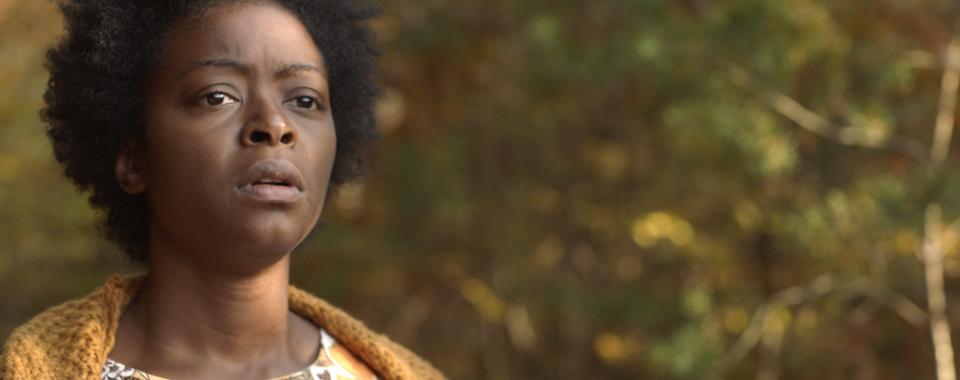
How easy it is to cast mindless blame, right? How thoughtless an act to blindly hate those constructed to be our villains. The easiness of hate comes from the idea of the “other” – an unknown enemy, distant and different. The metaphorical peeling of the onion, cathartic and harrowing, is how first-time director/co-writer Dina Amer makes the “other” the protagonist of You Resemble Me.

You Resemble Me expedites this connection to the “other”, forcing bitter tears to stream down unready cheeks. Following alleged suicide bomber (later found to be homicide victim) Hasna Ait Boulachen through her twisted and harrowing past, Amer examines the universal pipeline from neglect to radicalism. 

Amer strengthens this story with overarching themes. Whether it be a victim of abuse’s search for family, neglect manifesting into harm, or yearnings for connection, there is a strong and present backbone throughout Hasna’s tragic tale.

These ideas act as an anchor for Hasna’s orbit, and for the cast of performers. Young Hasna (Lorenza Grimaudo) embodies the fitful spirit being darkened by trauma, while adult Hasna (Mouna Soualem) shows mature yearnings. 

Each performance surrounding the two leads molds itself to represent one of Amer’s themes. While this creates a spotlight around Hasna as a character, it dims the other actors – a tragedy of sorts, as the actors’ potential screams for opportunity.

While the delve into trauma is successful at humanizing, the pipeline effect Amer relies on leaves little room for nuance. This creates a tunnel vision rehashing of an incredibly complex existence, boiling down to its more traumatic cause-and-effect moments.

The discomfort in becoming what you’ve been bred to fear is the soul of You Resemble Me. Audiences who choose to engage will unwittingly participate in slicing the onion, with tears to show for it.

https://www.youtube.com/watch?v=i0A0PWVGqw0

Drive-By

Lamborghini: The Man Behind the Legend

by George Wolf

The name “Lamborghini” probably brings to mind some beautiful, expensive cars that go very fast. In fact, they can reach speeds that are recommended only for the most skillful drivers.

That’s very much like the approach of Lamborghini: The Man Behind the Legend, writer/director Bobby Moresco’s drive-by telling of Ferruccio Lamborghini’s rise from the vineyards to the showrooms and the race tracks.

It is great to watch Frank Grillo dig into the lead role, though. He’s been a mainstay of action films for years, but here Grillo gets the chance to move beyond a reliance on brawn for a performance that shines with passion and charisma. He’s easily the best part of the film.

It’s also nice to see Oscar-winner Mira Sorvino as Ferrucchio’s loving-but-frustrated wife, Annita. But Moresco (who won his own Oscar for co-writing Crash with Paul Haggis) is simply content to check off the boxes of Ferrucchio’s journey, never giving any of them the depth or consideration required to resonate.

Moresco frames the biography around a late-night drag race between Lamborghini and rival Enzo Ferrari (Gabriel Byrne in a glorified cameo once pegged for Alec Baldwin). As the men trade steely glares and steady gear-shifting, Moresco quickly moves the flashbacks through Ferrucchio’s return from war, the launch of the company, personal and professional strife, success, and the constant drive for perfection.

The rush to get a car ready for the 1964 Geneva auto show instantly recalls James Mangold’s Ford v Ferrari, which is not a comparison that works in Lamborghini‘s favor. While Mangold wisely chose to limit his film’s scope so we could become invested in the lives and the details of a particular mission, Moresco is just reciting all these things that happened in a famous man’s life and hoping we might care as much as he does.

That’s rarely a winning formula. The film’s constant lack of authenticity undercuts any attempt to deconstruct Ferruchio’s need for recognition as more than a poor farmer, and Lamborghini: The Man Behind the Legend just can’t deliver the horses, or the power.

Going Like a Ghost Town

Sideworld: Damnation Village

by Hope Madden

Director/narrator George Popov and writer Jonathan Russell return to England’s shadowy past for the third installment of their documentary series, Sideworld: Damnation Village. We leave the forests and seas behind to peek inside the cottages, inns and public houses beset by residents unwilling or unable to leave.

The sixty-minute doc benefits again from the collaboration of a team that’s clearly on the same page. Russell and Popov have worked together, not only on both previous installments in this series (The Haunted Forests of England and Terrors of the Sea) but also the narrative features Hex and The Droving.

Cinematographer Richard Suckling once again helps Popov fill the screen with spooky but beautiful scenes, while composer Matthew Laming again breathes eerie life to the imagery with his whispering, whistling score.

Their focus this go-round are the tiny clusters of cottages dotting the English countryside, villages that have withstood centuries of war, pestilence and trauma that have left their marks. We begin, of course, in Pluckley – Guinness’s “most haunted village”.

The film moves on to Prestbury and the tale of, among others, the Black Abbott. Visits to the mostly empty villages are accompanied by Popov’s associated tale of the macabre. The filmmakers enlist actors Helen O’Connor and William Poulter to give voice to letters, articles and witness accounts.

As intriguing as the tales of lost love and criminal retribution are, it’s the mournful story of Eyam that stays with you. Perhaps it’s the connection to modern tragedy – Eyam voluntarily quarantined during the Plague, saving all the communities around it from infection but dooming themselves in the process.

As the series progresses, an interest in connecting the spectral with the scientific has become one of Sideworld’s prominent elements. In this case, Popov and company explore British archeologist/author T.C. Lethbridge’s Stone Tape theory to help explain recurring, looping paranormal phenomena.

Perhaps what best sets this series apart from other spooky folklore entertainment is its reverence for the subject – not just the scary stories, but the actual human lives behind them. Mingled with the solid storytelling – visual and aural – the heady concoction delivers another solid look at the unexplainable.

https://www.youtube.com/watch?v=C0bzPJYgpS0

Someone Else’s Baggage

Bantú Mama

by Daniel Baldwin

When Bantú Mama first opens, we follow Emma (Claire Albrecht) – a French woman of African descent – as she quietly returns home on a city bus. She says hello to some neighbors, has dinner, feeds her parrot, and goes to bed. The next morning, she sets off on a vacation to the Dominican Republic, where she will spend a week relaxing at a luxurious resort.

Or so she thinks. Only a day or two into her stay, she gets a phone call. We don’t hear the other side of the conversation, but it’s clear that she’s going to be heading home early. We see her meet up with an unknown man and switch her belongings over to a different suitcase, before heading to the airport. There she is taken into custody by the authorities. The charge? Trafficking. It seems Emma is a drug mule.

Not long after, as luck would have it, Emma manages to escape custody and finds herself hiding/living in a dangerous Santo Domingo barrio with a group of children. They help care for Emma and she, in turn, helps care for them. After all, she’s not a bad person. She’s just spent her life surviving as best she can and this situation is no different. It might lack the luxury of the resort or even her previous life back home, but life is what we make of it. That said, maybe don’t go around carrying other people’s baggage? Literally, in this case.

Bantú Mama is a timely story of hardship, culture clash, compassion, and chosen family. The core performances are all compelling and refreshingly naturalistic. So too is the absolutely gorgeous cinematography, which primarily utilizes natural light. This is one of the most beautifully shot films of the year, so it’s no wonder that it is already in contention for awards season.

If the film has any major fault, it’s that it doesn’t really have a third act. There’s simply Emma’s life before the arrest and her life after it. Not every story needs to follow a traditional narrative structure, especially one like this that willfully plays around with more commercial thriller and dramatic tropes. It does, however, rob the story of some impact and staying power.

Still, this is a striking debut from filmmaker Ivan Herrera, who we should keep an eye on going forward. Ditto for cinematographer Sebastian Cabrera Chelin, who deserves some major recognition for the work on display here.

Work Trip

Presence

by Rachel Willis

Writer/director Christian Schultz, along with co-writer Peter Ambrosio, attempts to weave together a story of a woman haunted by darkness in his film, Presence.

The movie opens with Jen (Jenna Lyng Adams) pacing in her bedroom on a dark and stormy night. We see from her computer messages she’s been trying to contact someone named Sam (Alexandria DeBerry) for three weeks. A quick flashback lets us know Sam is a friend from New York who is essential in Jen’s life.

Sam’s disappearance weighs heavily on Jen, and it’s in this desperation for information that we get our first inklings of suspense. However, the strangeness of the film’s opening gives way to something more mundane. Despite its initial creepiness, most of the film offers a mishmash of ineffective hallucinatory moments and scenes of dull dinner table conversation.

Sam reappears to tell Jen she has found them a business partner, David (Dave Davis), to fund their venture. It’s not entirely clear what Jen and Sam do, but it seems that they create and design… zippers. Sam wants Jen to meet David, and the opportunity for this comes on board David’s yacht. Along with a small crew, the characters set sail for David’s factory in Puerto Rico where they will sign a business deal.

There is a lot left unsaid, but not in the subtle way that hints at something sinister. Instead, it suggests the writers had only a basic idea of how to get these three people in a secluded location and then ran with it. That it leaves us to get lost in a sea of questions that don’t really matter to the overall plot but are distracting nonetheless.

This lack of satisfactory backstory is telling for the movie overall. A lot of little pieces of information never connect. Some of it is unimportant, while other bits should have been expanded upon. If some of the unnecessary issues had been dumped, it would have left room for deeper exploration of what exactly is haunting Jen. The writers don’t seem to understand that general confusion does not equal tension.  

The result is that nothing much happens and there is no clarity on what exactly is going on. We end up with bones instead of flesh, and it leads to disappointment.

Grass Is Green, Girls Are Pretty

Paradise City

by George Wolf

Until the recent news that Bruce Willis had sold his “likeness” for use in future projects, Paradise City was once targeted as his final film before the retirement brought on by aphasia.

It seemed like a good plan. Reunite him with John Travolta, add the talents of Stephen Dorff, and Bruce could bow out with a respectable crime thriller.

Turns out, they should have saved Gasoline Alley for last.

Paradise City lands as another cookie cutter production from Edward Drake, Corey Large and Chuck Russell, surrounding solid work by the three leads with a litany of dreadful supporting performances and careless construction.

Willis is bounty hunter Ian Swan, who goes missing in Maui after finally confronting the $10 million fugitive he’s been tracking for years. Ian’s son Ryan (Blake Jenner) wants in on the family business, so he travels to Hawaii where he teams with Ian’s old partner Robby (Dorff) and a Maui cop named Savannah (Praya Lundberg) to take up the mystery of what happened to his old man.

And odds are it has something to do with Buckley (Travolta), a local big wig who’s buying off all the Maui politicians for the rights to strip mine all over the island.

Explosions. Shoot ’em ups. Bikinis. Embarrassing fight choreography. Unsurprising surprises.

Fattening this holiday turkey to feature length also requires a side trip to the village of Paradise City, where the natives are resisting Buckley’s bribes. Why don’t Ryan and Savannah use one of her endless supply of off days to try on some skimpy swimsuits and learn about Hawaiian culture?

And then…back to the bad guys.

Travolta mercifully tones down scenery chewing, Willis is game for what he’s asked to do and Dorff seems like Olivier next to most of the cast members he’s often saddled with.

Really, I can’t imagine what was going through Dorff’s head during some of his takes. He may as well be teaching a class for mannequins who just came to life that very day. But they’re so excited to be acting! Painful.

But they all probably had a great time in Maui.

Screening Room: Wakanda Forever, Spirited, My Father’s Dragon & More

Northern Lights

Slash/Back

by Hope Madden

Nyla Innuksuk’s sci-fi horror Slash/Back opens with a likable, snow-suited scientist gathering permafrost samples in a breathtaking Northern Canadian snowscape.

Researchers on the Arctic Circle don’t have a great track record for surviving horror movies. Don’t you love the way blood pops on snow? The tentacled menace that cuts the scientist’s research short is soon to terrorize a remote fishing village called Pangnitung, or as Maika (Tasiana Shirley) and her buddies call it, Pang.

Innuksuk has a lot of fun reconsidering John Carpenter’s The Thing – the tale of an invasive species and the terrifying havoc it can wreak ­– from the perspective of four indigenous teens. And in case the point is lost on you, Maika has a badass jacket to wear when killing invasive species that may help to clarify things.

None of the performances suggest a superstar in the making, although Nalajoss Ellsworth impresses as instigator, malcontent and comic relief Uki. Still, the buddies – who include Chelsea Prusky as Lee Lee and Alexis Wolfe as Jesse – share a rapport that feels honest and relatable. Innuksuk mines this to enrich the fantasy elements with realism.

The filmmaker’s greatest collaborator is cinematographer Guy Godfree (MaudieLet Him Go). The two contrast the ramshackle buildings of Pang with the glorious natural landscape around it. The effect not only conveys what could be lost to these bloodthirsty outsiders, but what was lost the last time.

Creature design is sometimes inspired, sometimes a little weak, but Innuksuk embraces these limitations. Production value is high, even when the images and performances on the screen seem a bit amateurish. Somehow the two fit together in this world at the edge of the world, where that adolescent urge to pretend to be someone you’re not feels like a real betrayal and those seal hunting trips you took with your dad finally pay off.

Eye of the Beholder

Brainwashed: Sex-Camera-Power

by Hope Madden

Filmmaker Nina Menkes tries to distill the effect of a century of cinema’s male gaze in her documentary Brainwashed: Sex-Camera-Power. Her focus is the way the language of film – particularly shot design, lighting and sound – subconsciously, insidiously inform how we see not just the film we’re watching, but everything we see everywhere.

Menkes’s doc is essentially a Ted Talk, padded here and there with talking head footage from academics, filmmakers and actors. Their conclusion? Filmmakers can’t fall back on any of the existing language of cinema because this language was developed by men for men, with men as the subject (one who acts) and women as the object (one who is acted upon) of their interest. It’s a language of power, and is used to disempower not only women, but any person or population meant to be seen as subject to the white, heterosexual patriarchy.

Intriguingly, Menkes chooses as examples mainly films universally considered masterpieces – Raging Bull, The Phantom Thread, The Hurt Locker, Do the Right Thing. Her aim is not to diminish each film on its own, but to point out that cinematic techniques that objectify women are so ingrained in filmmaking that even female filmmakers invoke them without thinking.

Menkes’s expert commentary includes Laura Mulvey, who coined the term “male gaze” in her 1973 essay “Visual Pleasure and Narrative Cinema.” The incomparable Julie Dash (Daughters of the Dust) quotes Audre Lourde to explain why even Patty Jenkins and Kathryn Bigelow fall prey to the same disempowering cinematic tendencies in their films. “The master’s tools will never dismantle the master’s house.”

And when women do make films, in all likelihood, we do not see them. Director Eliza Hittman (Never Rarely Sometimes Always, It Felt Like Love) points to one of the many reasons we are so inundated by films awash in objectifying visuals. Men also choose which films are distributed.

The film clips she chooses are often spot on, sometimes head-scratchers. (I would argue that one Phantom Thread sequence is, in fact, an example of Paul Thomas Anderson intentionally subverting a common shot sequence to give the female power.) But more troubling is an over-reliance on her own footage.

Menkes’s brief venture into the lawsuits facing Hollywood studios is too brief. So, too, are sections about the connection between cinema’s treatment of women and Hollywood’s hiring practices, as well as global rape culture.

The arguments she raises are necessary, though. It’s important for women to see how the films we love betray us in large ways and small, and perhaps even more important for all of us to see that this is a structured, intentional device that we should notice and change.

All In the Family

Sam & Kate

by Hope Madden

Film right now is littered with “geezer teasers” – lowish budget action flicks with inflated cameos from aging actors who were once the world’s biggest box office draws. Bruce Willis and John Travolta have one right now. Mel Gibson has one every other week.

Wouldn’t it be lovely to see a film that casts veteran actors in challenging roles that respect the actor, their age, and the audience? Yes, it would. The proof is called Kate & Sam.

Dustin Hoffman and Sissy Spacek co-star in the indie dramedy about resilience, grief and family. Hoffman’s Bill, a boisterous widowed veteran, lives modestly with his good-natured son, Sam (Jake Hoffman, coincidentally Dustin Hoffman’s actual son).

Father and son fall, almost simultaneously, for Spacek’s Tina and her daughter, Kate (Schuyler Fisk, coincidentally Spacek’s daughter – not that you could miss it with that pointed little nose).

As much as the family ties may seem like a gimmick, the truth is that they bring unmistakable depth and rapport to the pairings. Writer/director Darren Le Gallo mines this repeatedly in large and small ways to create a believable, rich environment for pathos and love. Even small details breathe with authenticity touched lightly by nostalgia. You can imagine Bill’s recliner and afghan perhaps belonging to Le Gallo’s own father, while the stash of family photos clearly, sweetly come from the Hoffmans.

Le Gallo never condescends, mercifully. His small town is possibly hipper than most, but the way the film expresses a healthy respect for vintage materials is impressive.

Spacek is the adorable, natural presence she’s always been in a film that looks without mockery but with humor at the toll life takes on us all. She and Hoffman are, as expected, excellent. But they never outshine their kids.

Fisk’s elegant, frustrated Kate is a solid anchor for the film’s drama, but Jake Hoffman is its heartbeat. With him in the lead, Le Gallo is able to make a lot of subtle points about fathers and sons, masculinity and acceptance. Most of all, the film balances loss and resilience beautifully.

Le Gallo’s first feature delivers grace and goodwill in ways that are genuinely uncommon. It doesn’t tell a big story, but the story it tells resonates. Yes, he lucked into a dream cast, but they may have been luckier still to have him.