Category Archives: New In Theaters

Reviews of what’s out now

Dismantling the Master’s House

Concerning Violence

by Hope Madden

Concerning Violence – a remarkable documentary that looks at the global ramifications of Europe’s history of colonizing African nations – is not for the faint of heart or the slow witted. You may feel like you have to take notes. Director Goran Olsson (The Black Power Mixtape 1967-1975) challenges viewers with unadorned footage and undiluted narration, but for those who can tough it out, the film is as rewarding as it is upsetting (and theoretical).

Olsson’s handiwork can hardly be considered smooth or ornate. He has 9 clips to share (titled Nine Scenes from the Anti-Imperialistic Self-Defense) – news footage highlighting conflicts in Angola, Rhodesia, Liberia and other African nations burdened by colonization. He structures the pieces with onscreen type representing his thesis outline, then connects them with text from Frantz Fanon’s The Wretched of the Earth, a nonfiction work that has inspired anti-colonialist movements the world over. Don’t expect a soothing voiceover or talking head footage to help you fit together the pieces. Rather, expect images of revolution paired with quotes from a 1961 text and little else.

Often enough, Olsson makes the scrappy simplicity of his approach work well, giving the images onscreen the attention they deserve. The footage he’s chosen varies enough to offer a multidimensional image of the effects of colonization: the sense of entitlement in the colonizer; the generations-deep weight of oppression, poverty, limitation and powerlessness in the colonized; the frightening exhilaration in the struggle for independence; the inevitable bloodshed.

Fanon’s words are insightful, often lofty and theoretical, but frequently startling with unexpected, brutal turns of phrase that ensure you’re still paying attention. Olsson knows when to pepper in these more provocative remarks and Lauryn Hill’s narration beautifully underscores the points, whether idealistic or disturbing.

Still, Fanon’s words discount any evil in the inevitable violence of anti-colonialism, although we know that any act of coordinated violence draws true evil to it, and evil participates hand in hand with the noble. In this way, the film oversimplifies the struggle.

The film also fails to contextualize its subject in modern concerns, and that’s a major failing. Olsson rarely pulls punches in his film, yet he seems almost afraid to connect the dots to current political, economic and social conditions. He also starts the film off on weak footing with a bewildering preface that seeks to soften Fanon’s grim themes as it also throws a sideways glance toward the film’s omission of complicating gender politics.

Still, this is a big, big story. Concerning Violence is not meant to entertain, and as an informative look at the repercussions of colonialism, it’s an impressive piece containing certain images you won’t soon forget.

Verdict-3-5-Stars

Zombies Ho!

[Rec]4 Apocalypse

by Hope Madden

In 2007, Paco Plaza and Jaume Balaguero revived the already dying first-person-camera gimmick with a claustrophobic zombie flick that was imaginative, bloody, and thrilling – though you may remember their [Rec] better by its American remake title, Quarantine. In both, a news reporter and her cameraman are trapped inside an apartment building under quarantine with a rabies-like virus running rampant. No matter the language, the film was a fun and exciting ride.

The American franchise petered out with one sequel (Zombies on a Plane), but its Spanish counterpart has spawned three offspring. [Rec]2 put us right back inside the quarantined building to find that the virus had some kind of demonic origin, while the third installment saw that demon zombification take on a wedding reception. The latest in the series returns to the scene of the crime, as a new team of responders infiltrates the apartment building to set detonators – then one handsome hero hears the call of that lovely reporter, Angela (Manuela Velasco).

Those of us who have kept up on the series happen to know something about Angela that noble Guzman (Paco Manzanedo) does not. If you have not kept up, well, you and Guzman may have a surprise in store.

Balaguero helms this mission solo, placing Angela, Guzmon, the sole survivor of Part 3’s wedding, some armed goons, some sketchy doctors, and a hapless crew onboard a ship to really put some miles around this particular quarantine. Corridors, holds and lower decks give the action a heightened sense of claustrophobia, while Balaguero back peddles from both the silly wedding theme and the hokey demon-virus angle. He also uses security cameras to call back to the original first-person idea without succumbing to tired formula.

Otherwise, though, the film offers little in the way of novelty. The story and its telling are about as fresh as a poop deck. Balaguero can’t generate any tension from the medical experimentation angle and, worse still, he fails to use the sea itself as a source of isolation or claustrophobia.

On the other hand, the zombies have boils on their faces this time, plus there are infected monkeys, which are pretty mean.

[Rec]4 offers a serviceably entertaining riff on the original with much of what you enjoyed the first time around, especially if you enjoyed seeing Velasco in a bloody wife-beater. But it’s high tide and high time to lay this oft-reanimated corpse to rest.

Verdict-2-5-Stars

Spies Like Them

The Interview

by George Wolf

Forget the theories about this whole thing being a marketing ploy. If it is, it’s the worst marketing ploy ever, as The Interview is going to end up making millions less than it might have if the whole North Korea threatdown would have been handled differently.

But anyway…is it funny?

Yes it is., sometimes very funny. It also has some dry stretches, jokes that fall flat, and plenty of toilet humor, but Seth Rogen and James Franco do hit their targets fairly often. They get a big assist from Randall Park, who turns in a hilarious sendup of Supreme Leader Kim Jong-un and continually gives the film a boost at precisely the right moments .

On the Rogen/Franco scale, its no Pineapple Express, This Is the End or Neighbors, but The Interview is far from a national disgrace.

America! F&^% yeah!


Verdict-3-0-Stars


Hold ‘Em, Fold ‘Em and What Not

The Gambler

by George Wolf

“I tell the truth, that’s all I got.”

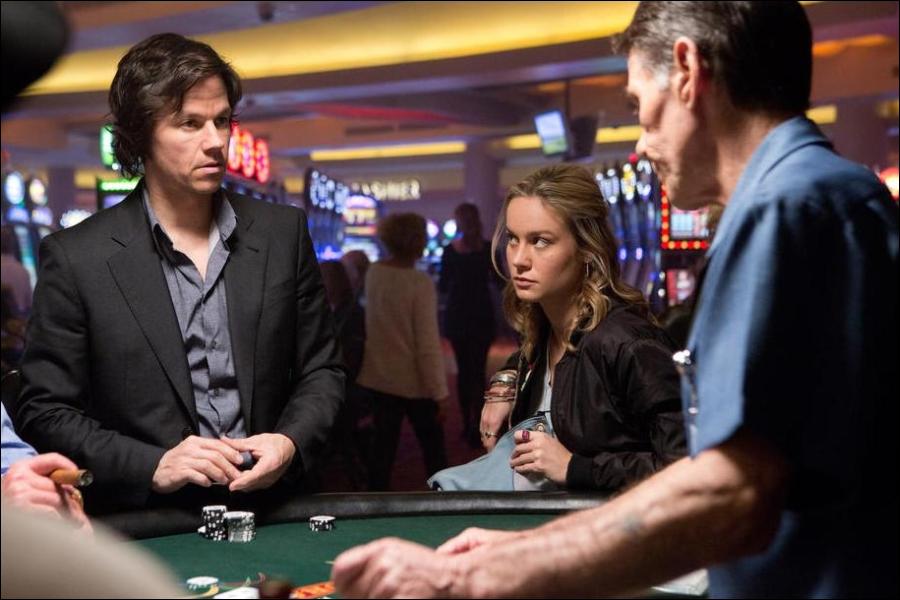
So says Jim Bennett (Mark Wahlberg) in The Gambler, an intermittently tense thriller that doesn’t feel all that truthful.

Bennett is a college literature professor with a secret: he’s a high stakes gambler, and he’s deep in debt to the kind of people you shouldn’t be deep in debt to. Jim borrows from everyone and his mother (Jessica Lange) to get out, but his compulsion leads to a deeper and deeper hole.

If it all sounds familiar, then you remember the original 1974 version starring James Caan, a film that doesn’t exactly beg for a re-do. Still, if you’re going to do it, the writer/director team of William Monahan and Rupert Wyatt is a pretty good building block. The exciting, well-paced opening sets the hook for a more effective crime drama than the one that materializes.

Monahan wrote The Departed, and Wyatt helmed Rise of the Planet of the Apes, which makes The Gambler‘s resulting missteps all the more surprising.

Though John Goodman and Michael Kenneth Williams make solid gangsters, you never believe Jim is in any real danger if he fails to pay up. Sure, they rough him up a bit, but Jim just keeps on cracking wise like he’s in Lethal Weapon 6 and someone who’s too old for this shit is coming with the cavalry.

Even worse, when Jim gets involved in a point-shaving scheme, the resulting basketball footage makes you wonder if Wyatt has ever watched even five minutes of an actual college game.

Still, there are stretches that suggest The Gambler could have been more of a contender. Wahlberg is always better with a confident director, and he realizes Jim’s self-loathing without letting it become a caricature. Brie Larson is equally fine in an under-developed role as a student who has seen Jim’s dark side.

There are characters here that are ripe for exploring, amid the stylish depiction of a seedy underbelly worthy of illumination. It’s been done well before, but doing it well again requires hedging your bets with a few risky moves, and The Gambler is just too quick to fold ’em.


Verdict-3-0-Stars


Lost and Found

Unbroken

by Hope Madden

With Unbroken, Angelina Jolie’s second effort behind the camera, she proves she knows how to put together a team. Beginning with screenwriters Joel and Ethan Cohen (each with 4 Oscars, two apiece for writing) and extending to cinematographer Roger Deakins (11-time Oscar nominee) and the man behind the music, Alexandre Desplat (with his mere 6 Oscar noms), she’s given Louis Zamperini’s story the storytellers it deserves.

Their film shares the honestly amazing tale of an Olympic runner who finds himself adrift at sea and then held in a Japanese POW camp during WWII. If the film suffers from anything, it’s an overabundance of respect for the source material.

So much of Zamperini’s life just defies belief – if ever there was a true story destined for the big screen, it was his, and Jack O’Connell delivers the grit and spirit needed to pull off the tale. O’Connell may be new to many viewers, but this Brit has been quietly developing an impressive arsenal of work (Eden Lake, Starred Up, ’71). If this performance and film leave questions about Zamperini as a person, O’Connell certainly convinces when it comes to the man’s seemingly bottomless reserve of strength.

While you absolutely get the feeling that this is the guy you’d want with you if you were ever lost at sea, the film refuses to expound on what drives that buoyancy. Nor does it offer a glimpse at the conflicting emotional turmoil he would carry with him after the war.

The cast is large and O’Connell has the kind of easy charisma that makes most scenes feel intimate. The ensemble offers some memorable turns – from Domhnall Gleeson and Takamasa Ishihara, in particular – but too many actors fall back on broad stroke flying ace clichés and too few hold your interest.

Still, there’s no escaping the jaw-dropping facts of this adventure – facts which alone compel rapt attention for the duration of the film. Deakins’s images are on a scale befitting the epic, and Jolie has a knack for taking advantage of every inch of a screen.

Whatever Unbroken’s faults, the adventure will overwhelm you, as it should, and the facts and triumphs will stay with you long after the credits roll.


Verdict-3-5-Stars


A Sincere Form of Flattery

The Imitation Game

by George Wolf

Here’s the thing about historical dramas: they’re not documentaries. Factual liberties are going to be taken by filmmakers searching for the right mix of and accuracy and emotional punch. The Imitation Game is one that almost scores a knockout.

It manages to be both an exciting historical mystery and a heartfelt look into the complicated soul at its center.

Benedict Cumberbatch is Oscar-worthy as Alan Turing, the English mathematician and all-around brilliant thinker who played a major role in cracking the Nazi’s “unbreakable” Enigma code during World War II.

Director Morton Tyldum (the underseen 2011 Norwegian gem Headhunters) expertly weaves the breathless quest by Turing and his team of code breakers together with Turing’s personal journey of loneliness and longing. Set designs that appear too tidy for 1940s wartime are negated by Tyldum’s impeccable sense of pacing, as he simultaneously builds the tension in both plot lines while steering clear of excess melodrama.

He’s blessed with an impressive debut screenplay from Graham Moore, adapting Andrew Hodges’ book “Alan Turing:  the Enigma”. This is a film about secrets of all kinds, and Moore’s taut, nuanced script covers all angles in exploring their wages.

Cumberbatch leads the stellar ensemble cast with a wondrous turn. He presents Turing as a complex, unique individual blessed with an exceptional mind and a puzzling personality. Is it a dead-on reflection of the actual Alan Turing? I doubt it, but it is a multi-dimensional performance that any “based on true events” film would be lucky to have driving it.

Keira Knightley shines as Turing’s teammate and eventual fiancé Joan Clarke, subtlety creating a brilliant, outgoing personality where Turing finds comfort. Kudos, too, to Charles Dance and Mark Strong, both able to make lasting impressions with limited screen time as Turing’s superior officers.

As the human drama and the historical heroics both come to weighty conclusions, the film pulls back right when it might have cemented itself as truly unforgettable. Erring on the side of understatement is certainly the safe way home, but still disappointing. After Turing’s repeated pleas to pay attention, shying away from the tough questions raised leaves a film filled with logic feeling a touch too calculated.


Verdict-3-5-Stars


https://www.youtube.com/watch?v=S5CjKEFb-sM

What Big Eyes You Have

Big Eyes

by George Wolf


Do people buy art because it touches them, or simply because they are “in the right place at the right time?”

The often combative relationship between art and commerce, and between two people who personified it, lies at the heart of Big Eyes, Tim Burton’s eccentric take on the story of Walter and Margaret Keane.

Walter rose to fame in the 50s and 60s as the artist behind those massively popular portraits of “big-eyed waifs” staring out from behind a frame. He became the Thomas Kincade of his age, savaged by critics but embraced by the masses… and it was all a sham. Margaret was actually the talent, while Walter took the credit and honed his considerable skills in self-promotion. She finally ‘fessed up and claimed her works in 1970, igniting a legal tussle between the former spouses that lasted years.

One look at Keane’s big-eyed characters will tell you Burton is a fan, and the film often benefits from his whimsical vision. Like a mix of Edward Scissorhands and A NIightmare Before Christmas, Burton gives Big Eyes a setting that looks historically familiar, yet slightly other-worldly.

Amy Adams delivers another captivating performance as Mrs. Keane. We feel the conflicting emotions present as Margaret agrees to stay out of the limelight, with Adams creating her own finely crafted portrait of a woman’s quiet struggle against the submissiveness expected of her gender. Margaret is an underdog, and Adams makes it easy to root for her.

It’s a stark contrast to Christoph Waltz’s over-the-top depiction of Mr. Keane. Waltz is a gifted two-time Oscar winner, but Burton and the writing team of Scott Alexander and Larry Karaszewski (Man on the Moon/The People vs. Larry Flynt) don’t give him room to let Walter become anything more than a one-dimensional con artist.

Big Eyes is an entertaining period drama held back by Burton’s broad stroke. The very nature of the Keane’s story begs deeper questions, but they’re ultimately abandoned in favor of those crowd – pleasing happy trees.


Verdict-3-5-Stars


The Meryl Witch Project

Into the Woods

by George Wolf


Don’t let the name Disney at the top of the poster fool you, Into the Woods isn’t little kid stuff. But it is more evidence that Rob Marshall is the guy who should be directing your next musical.

After nearly thirty years, the Tony-award winner from Stephen Sondheim (music) and James Lapine (book/screenplay) makes it to the big screen. It’s more lean, less mean, and still pretty spectacular.

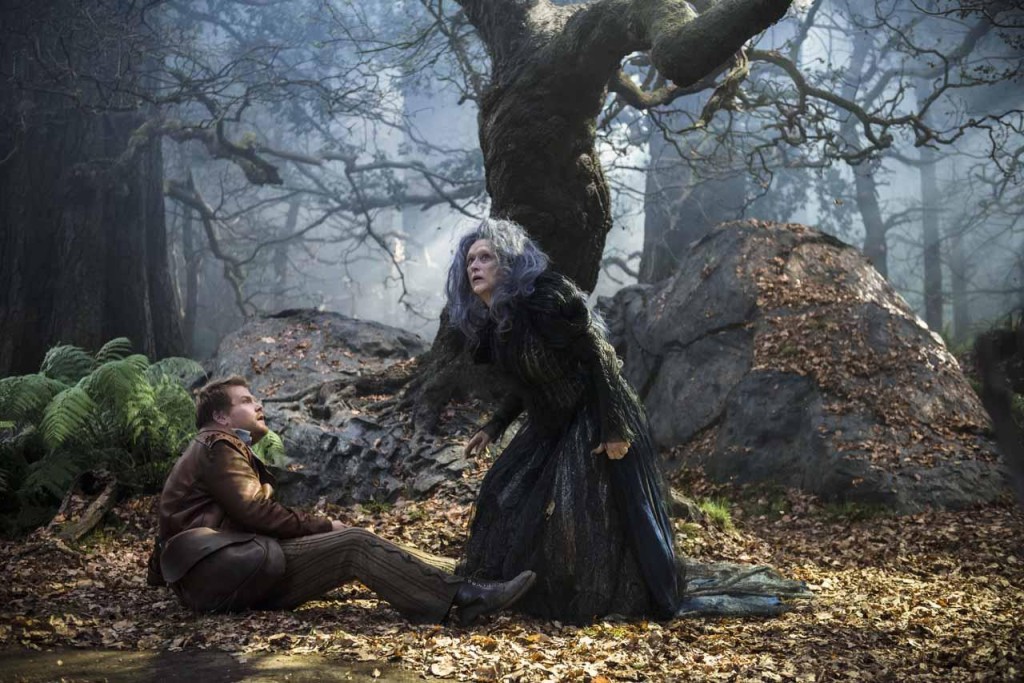
Having Meryl Streep at the top of your cast list is always a wise move, and she’s utterly commanding as a Witch who offers the village Baker (James Corden) and his wife (Emily Blunt) a mysterious deal. In exchange for a few magical items (red cape, white cow, yellow hair and golden slipper), the Witch will reverse a curse that is keeping the couple childless.

As the Bakers head into the woods to begin their search, four classic fairy tales begin an enchanting intersection.

With the benefit of a live stage, Cinderella, Rapunzel, Red Riding Hood, Jack and his beanstalk could take turns in the spotlight while still keeping a combined narrative intact. A screen version presents an inherent challenge to recreate that vision, but Marshall doesn’t shrink from it.

His camera is almost always moving, with wide aerial shots showcasing everyone’s place in the woods, and slow pans that glide easily from one fairy tale to the next. While Marshall’s Nine was more a series of dazzling parts, here he’s able to sustain the realization that each storyline in the woods is connected.

Marshall is also smart enough to know the material and adjust. The high-stepping pizazz he utilized so well in the Oscar-winning Chicago was a perfect fit for that show, but this is Sondheim. The songs are graceful, poetic, challenging, and Marshall, with a big assist from Dion Beebe’s pristine cinematography, frames them accordingly.

The fine ensemble cast follows suit with sharp characterizations. Blunt is excellent (when isn’t she?) as the desperate wife, Corden makes a fine unlikely hero and Anna Kendrick’s Cinderella is..apologies in advance…pitch perfect. Chris Pine makes Prince Charming a delightfully amusing cad while Johnny Depp, as Johnny Depp does, leaves a memorable impression with limited screen time as the Big Bad Wolf.

Though several songs have been pruned from the stage musical, along with some of the darker edges, Marshall keeps the metaphor of “the Woods as real life” intact without overplaying the hand. Into the Woods explores what’s on the other side of fairy tales, where handsome Princes “will always love the maiden who ran away.”

The wee ones may not find any bland theme songs to call their own, but this is family entertainment on a grand, sometimes glorious scale.


Verdict-4-0-Stars


Trilogy Finale … No, the Other One

Some trilogies come to a close with dragons, gold, tiny heroes, legendary foes and Ben Stiller. Wait, what?

Yes, though it may have flown under your radar, Stiller’s Night at the Museum series comes to a close with its third installment. Night at the Museum: Secret of the Tomb completes the arc begun in 2006 when Stiller’s night watchman Larry Daly learned that, after sundown, the exhibits at New York’s Museum of Natural History come to life. (So basically, Toy Story in a museum setting.)

In 2009, Larry and his crew broke into the Smithsonian. This time around, when the golden tablet that reanimates the exhibits night after night begins to mysteriously corrode, the team heads to a London museum to repair the device and save everyone.

Truth be told, this is a series that has been sweet, imaginative but disposable from its inception.

Much fault lies with the series’ director Shawn Levy (Real Steel, Big Fat Liar), an unrepentant purveyor of anemic family fun. The Museum trilogy represents the best of his body of work. Still, he substitutes a busy screen and abundance of characters for actual pacing and energy.

The talent – Stiller, Robin Williams, Owen Wilson, Steve Coogan and others – creates likeable, rascally characters, and most draw at least a chuckle or two during the adventure.

We’re to learn that life is about letting go as Larry recognizes his son’s impending manhood, though nothing feels genuine or heartfelt. But why start now? When Levy expanded Milan Trenc’s educational children’s book to a feature film, he borrowed a concept and lengthened it with some inside jokes, some cheap theatrics, and lots of dated gags, but little in the way of heart. Its subsequent sequels rehash the same basic concepts in new museums, and because of an underlying lack of creativity and abundance of coasting on the comic timing of the cast, the sequels have all been about as entertaining as the original.

The concluding chapter offers some coincidental tear jerking as Robin Williams delivers lines more moving because of their real-life context than their importance to the film. There are some other mildly amusing, well placed gags and gimmicks, and an awful lot of rehashing. If you and yours enjoyed the first two installments, the third promises more of exactly the same. The rest of us can overlook the third episode, exactly as we did the first two.

Verdict-2-5-Stars

Trading Olympic for Oscar Gold

Foxcatcher

by Hope Madden

Sibling rivalry, loneliness, competition and madness fuel director Bennett Miller’s award-worthy true crime tale Foxcatcher.

The film follows the events that unfolded as Olympic gold medal winning wrestler Mark Schultz, and later his older brother, gold medal winner Dave (Mark Ruffalo), get involved with sinister millionaire John du Pont, who’s looking to bankroll 1988 US Olympic competitors.

Tatum performs as we have simply never seen him before, a fact that may be outshone by the other two quite amazing performances. Tatum has proven himself a facile comic talent, but his dramatic skills to this point have been lackluster at best.Yet here he brings a brooding, insecure competitor to life in every facet of his performance.

The always excellent Ruffalo is likewise stellar as the more congenial, more talented of the brothers, and the two together create a realistic sibling bond, one as desperate for the other’s approval and help as he is to finally best him; the other a tender, protective mentor.

Joining them, Steve Carell is revelatory as John du Pont. Never transparent, offering no easy answers, equal parts monstrous and pathetic, Carell creates an enigmatic and unseemly presence that haunts the screen. His graceless chemistry with all cast mates creates an uneasy tension in every frame, though his scene with a marvelous Vanessa Redgrave is particularly intriguing.

One thing you can expect from a Bennett Miller film is his meticulous attention to the setting. Miller creates such rich yet understated contexts that the drama unfolding within that environment cannot help but feel authentic. Whether it’s small town 1959 Kansas rocked by murders in Capote or Billy Bean’s world of low rent MLB wheeling and dealing in Moneyball, Bennett shows such respect for the settings of these true tales that the stories immediately take root.

Foxcatcher benefits from his measured touch – from the spare score and the film’s unusual pacing to the embedded, inescapable symbolism he mines of the relationships and the sport of wrestling. It all contributes to a building sense of unease that befits the tale.

Miller may go unnoticed as the maestro behind the weird onscreen magic, but his faith in unproven talent alone is reason to hail him one remarkable director.

Verdict-4-0-Stars