Category Archives: New In Theaters

Reviews of what’s out now

Reese Gone Wild

Wild

by Hope Madden

There may be no more personal, more individual an emotion or experience than grief. It is, by definition, a selfish act: just you and your loss. No one can determine for you the length, depth, duration or symptoms of your own pain. Cheryl Strayed is a case in point.

Wild tells the story of how Cheryl overcame the guilt, regret, shame and profound sense of loss that overcame her after her mother’s death. Cheryl’s is a unique tale, as she is a fascinatingly individual character, but the film mines for the universality in her pain and redemption.

Wild moves back and forth between Cheryl’s 1100 mile trek across the Pacific Crest Trail and the memories that haunt her, past and present braiding together to form a clear picture of the woman emerging from her pain and the pretty jaw-droppingly dangerous behavior that pain wrought.

Though director Jean-Marc Vallee’s (Dallas Buyers Club) film gets off to a slow start, Reese Witherspoon’s performance – aided by the sometimes terrifying, sometimes tragic, sometimes funny events of Strayed’s journey – compel rapt attention.

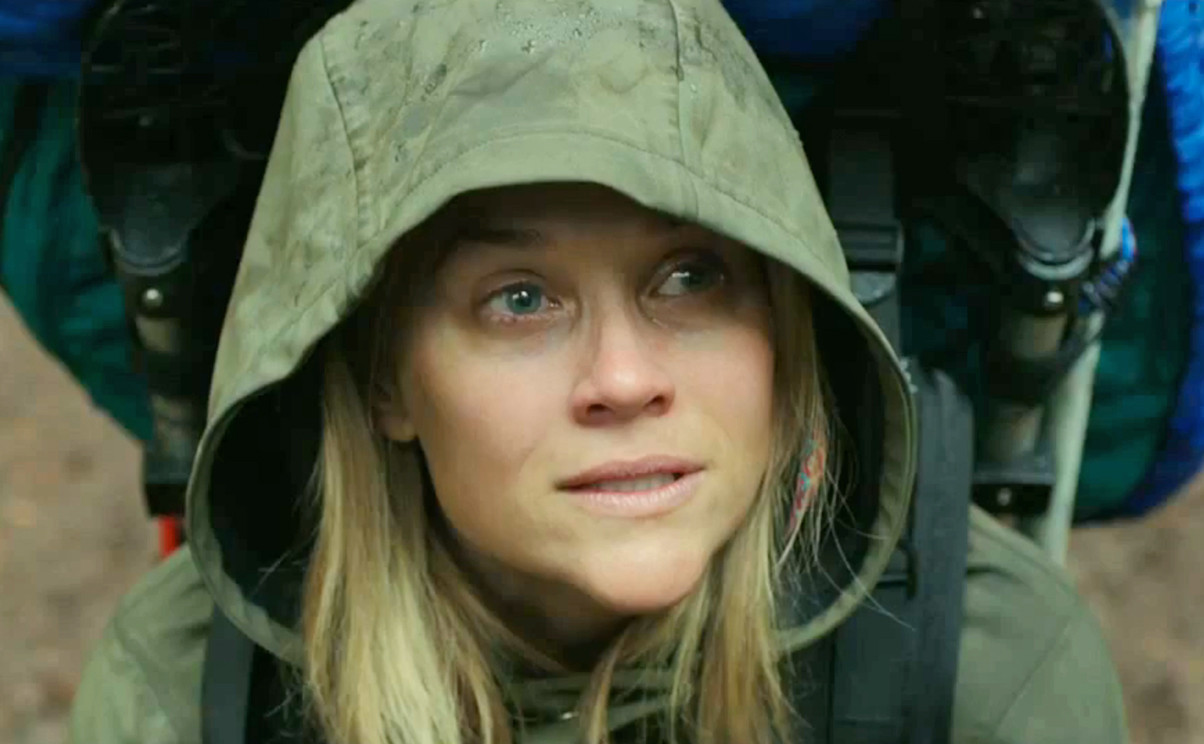
Witherspoon leaves her comfort zone, allowing Cheryl more vulnerability and ugliness than you might expect. Strayed is comfortable enough in her skin to examine and, eventually, accept all of her own failings, so presenting the character fully is a requirement for the film to work. Witherspoon understands this and gives easily the grittiest, most naturalistic performance of her career.

Witherspoon spends an awful lot of screen time alone, Strayed’s relationship with herself the larger conflict than her relationships with the inhospitable terrain, weather, circumstances and occasional creepy guy. Her pain and self loathing are impeccably drawn, never maudlin or false, and in Witherspoon’s scenes with the equally impressive Laura Dern she sews the seeds that bloom in her time alone onscreen.

The truth is that Strayed’s grief is not typical, and her behavior is certainly extreme, yet Vallee is content to create a somewhat safe structure for the adventure: the lengthy journey punctuated by nightmares and memories that give us a glimpse into the life Strayed was trying to shake off with her hike.

Still, the understated approach allows scenes to breathe, and Strayed’s true alone-ness seeps into certain frames in a way that is deeply unsettling and yet triumphant. And there are no two words better suited to Strayed’s experiences than unsettling and triumphant, so Vallee, Witherspoon and crew were certainly doing something right.

Verdict-3-5-Stars

Orphan No More

Annie

by George Wolf

First of all, this Annie wants you to know she is a “little foster kid,” not a little orphan. That’s just one of the many updates made for the new film version of the classic musical, one that doesn’t end up being any better than the first version from 1982.

“Daddy Warbucks” is now a germaphobe business tycoon named Will Stacks (Jamie Foxx), who’s made billions selling smartphones but now wants to be mayor of New York City. Will’s poll numbers aren’t good, but his advisors Grace and Guy (Rose Byrne and Bobby Cannavale) think a certain little girl could give him a big bump.

A chance meeting finds Will pulling 10 year-old Annie (Quvenzhane Wallis) out of the path of a speeding car, and the internet takes notice. So, why not invite the young street kid to come live in a mansion for as long as it takes to lock up the “swell guy” vote?

Director Will Gluck (Friends with Benefits/Easy A) introduces his film’s sugar-coated sheen with a colorful, pleasant opening, but things quickly fall clumsily flat. The musical numbers, which of course should be a high point, never get off the ground. Gluck’s heart is in it, and though he tries to throw in plenty of visual flair (quick cuts, props as percussion), he can’t muster the pizazz required to keep the numbers vibrant onscreen.

Wallis, so shockingly good at just six years old in Beasts of the Southern Wild, sings well enough and is an impossibly cute Annie, and that’s really all this script requires. The entire cast, most notably Cameron Diaz as mean Miss Hannigan, is pushed to exaggerated, big eyebrowed performances, which may fit the comic strip origins of the characters but often leaves the film feeling too childish.

With a two hour running time that will make the littlest viewers restless, Annie is more concerned with modernizing the plot through multiple nods to social media than actual storytelling. Despite some well-placed cameos and a few clever, self-aware asides, it ends up being a mixed bag of Christmas candy, endlessly sweet but never satisfying.


Verdict-2-5-Stars


Bilbo’s Misty Mountain Hop

The Hobbit: The Battle of the Five Armies

by Hope Madden

This Christmas, Peter Jackson gives us the gift of his final trip to Middle Earth with The Hobbit: The Battle of the Five Armies (or Enough Already).

I went reluctantly to LOTR: Fellowship of the Ring back in 2001. I am not a big fan of fantasy and was never able to make it through one of Tolkien’s epics as a kid, so a cinematic adaptation held no interest. But I did go, and immediately celebrated that decision.

Peter Jackson (previously know to me solely for splatter-gore comedies) had such a facility for the landscape and heart of these Middle Earth sagas that I was immediately beguiled. And while by hour 4 of the third installment I had wearied of this first trilogy a bit, still I marveled at the accomplishment. Jackson and his versatile cast had carved out genuine characters, which made the peril and adventure all the more absorbing. The fact that Jackson’s native New Zealand lent an authentic backdrop to the derring do completed the fantasy.

The Hobbit has become a tougher slog. Though Martin Freeman continues to be a joy as Master Burglar Bilbo Baggins, the balance of the cast struggles to find dimension for their characters, and Jackson falls back far too often on swelling strings, dramatic lighting and lengthy, ponderous shots to emphasize drama.

What drama? Well, the dragon Smaug (voiced by Benedict Cumberbatch) flies toward innocent Laketown to unleash his fiery fury; meanwhile Thorin Oakenshield (of the Glorious Mane Oakenshields) (Richard Armitage) begins his descent into madness, victim of the Dragon Sickness. Unbeknownst to him and his band of wee warriors, Azog the Defiler (now that is an awesome name) leads Orc armies to claim the mountain Smaug just vacated. Plus some fairies have grievances.

Unfortunately, the most interesting character is done away with before the opening credits, and though the film boasts almost constant action, it fails to hold attention.

Jackson’s first trilogy worked as well as it did because he managed to ground the high fantasy in something authentic. His second go at Tolkien abandons authenticity, creating stagey sets and falling back on theatrical performance and uncharacteristically so-so CGI. The late-film nods to the LOTR films only serve as reminders of that trilogy’s superiority. It’s time to ramble on.


Verdict-2-5-Stars

Rocky Top

Top Five

by George Wolf

Just a few minutes of Chris Rock’s standup act will tell you he’s one of the funniest people alive. Read one of his interviews and you’ll see he’s also smart and thoughtful. His work on the big screen has delivered uneven results, but with Top Five, his talent and his vision are finally in perfect sync.

It’s Rock’s third feature as writer/director/star, and he finds gold in the old adage “write what you know.”

Stand-up veteran Andre Allen (Rock) has left the clubs behind for success in Hollywood, thanks mainly to the “Hammy the Bear” franchise where he stars as a wisecracking, crime-fighting Grizzly (catch phrase: “it’s Hammy time!”) But Andre has come to a crossroads, in both work and life.

He wants to be taken seriously as an artist, but his new film about a Haitian slave uprising is having trouble finding an audience. Meanwhile, he’s engaged to a reality TV star (Gabrielle Union) who feels anything out of camera range doesn’t matter.

So Andre is in no mood for an interview with the New York Times, a paper that has a long history of trashing his work. Ambitious reporter Chelsea Brown (Rosario Dawson) softens his stance, and their interaction grounds an insightful look into what’s on Chris Rock’s mind.

It’s a lot: celebrity culture, race relations, sobriety, fame, love, sex, even Angry Birds are in Rock’s crosshairs, as he riffs from one topic to the next and back, not unlike a tightly packed monologue. Rock shows much growth as a director, and his confident, often out-of-sequence approach not only keeps the pace feeling brisk, but it makes sure the cheesy sequences (and there are a couple) don’t get the time to take root.

Chris Rock the actor still suffers some unsteady moments but has never been more appealing. Dawson helps. She has the talent to lead without upstaging, and they create a comfortably sweet rapport.

Even before Adam Sandler show up as himself, you’re reminded that this might be what he and Judd Apatow wanted Funny People to be, until that film dissolved into a self-indulgent overreach.

Top Five is obviously a very personal statement, but it’s also got the heart, and the smarts, to become universal.

Funny and entertaining? That doesn’t hurt, either.


Verdict-3-5-Stars


Oh, Can’t You See, You Belong to Me?

Comet

By Christie Robb

The extent to which you will enjoy Comet will probably depend on whether you are the type of person who thinks the Police’s “Every Breath You Take” is a good song to play at a wedding or not.

Romantic or stalkery?

Comet has a similar feel.

Neurotic Dell (Justin Long, who you might remember as the Mac guy from the commercials),relentlessly pursues Kimberly (Emmy Rossum) over a six year period during which he physically runs her down, declares his probable love for her on their first date, waylays her on a train, and shows up on her doorstep before her wedding.

Long and Rossum deliver stellar performances managing to effortlessly handle repartee of nearly Gilmore Girls proportions. Their chemistry is undeniable. However, it may be my inner cynic talking, but I found myself wanting to shake Kimberly by her slender little shoulders and point out all the red flags she seems unable to see.

Comet is a far more intellectual movie romance than is typical. It takes place in a parallel universe, which allows writer/director Sam Esmail to include some beautiful and trippy imagery. He also presents the story out of sequence, skipping around in the timeline of Dell and Kimberly’s relationship from a meeting during a meteor shower, to a snowy day in Paris, to a heart-to-heart on an LA rooftop at dusk (or is it sunrise?). Comet leaves the interpretation of what actually happens to the couple up to your careful scrutiny and interpretation.

Maybe not the movie to see on a first date, it nevertheless provides excellent fodder for discussion and perhaps a follow up movie marathon featuring 500 Days of Summer and Eternal Sunshine of the Spotless Mind.

Verdict-3-0-Stars

One Bad Book

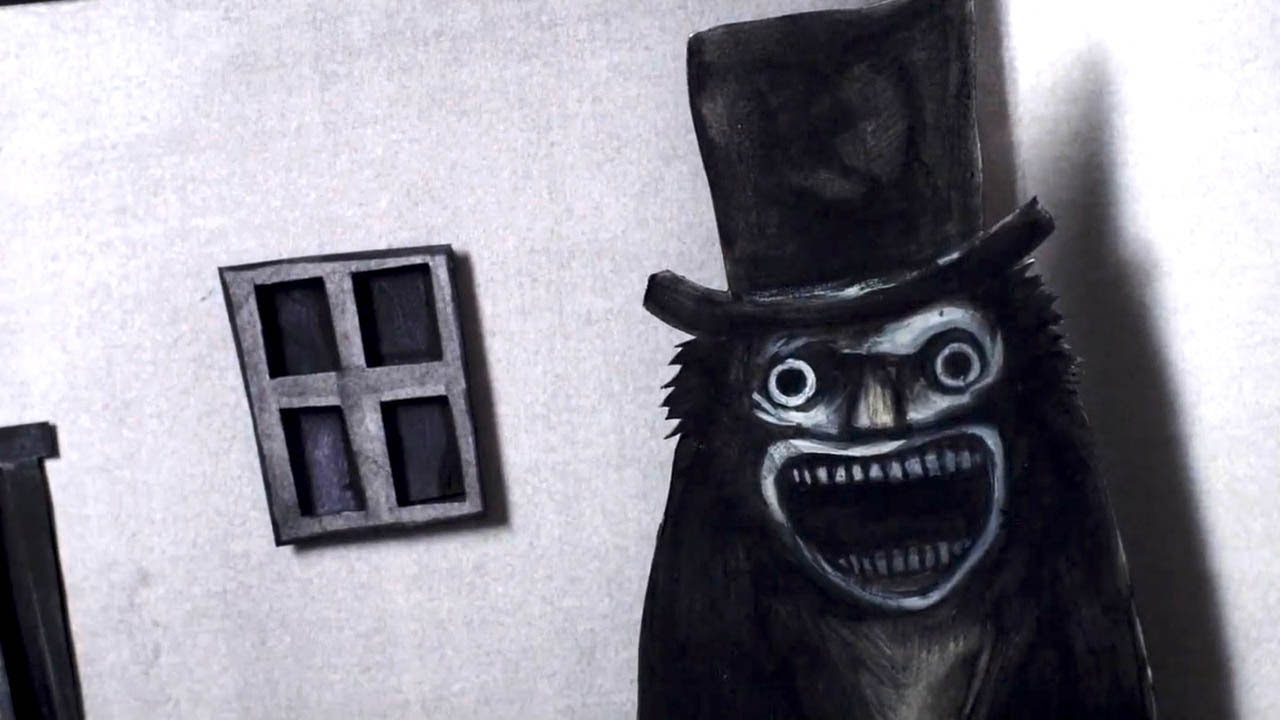
The Babadook

by  Hope Madden

You’re exhausted – just bone-deep tired – and for the umpteenth night in a row your son refuses to sleep. He’s terrified, inconsolable. You check under the bed, you check in the closet, you read a book together – no luck. You let him choose the next book to read, and he hands you a pop-up you don’t recognize: The Babadook. Pretty soon, your son isn’t the only one afraid of what’s in the shadows.

It’s a simple premise, and writer/director Jennifer Kent spins her tale with straightforward efficiency. There is no need for cheap theatrics, camera tricks or convoluted backstories, because Kent is drilling down into something deeply, frighteningly human.

Like a fairy tale or nursery rhyme, simplicity and a child’s logic can be all you need for terror.

Kent’s film is expertly written and beautifully acted, boasting unnerving performances from not only a stellar lead in Essie Davis, but also the alarmingly spot-on young Noah Wiseman. Davis’s lovely, loving Amelia is so recognizably wearied by her only child’s erratic, sometimes violent behavior that you cannot help but pity her, and sometimes fear for her, and other times fear her.

Likewise, Wiseman delivers as a tender, confused, dear little boy you sometimes just want to throttle. Their naturalistic performances genuinely showcase the baggage that can exist between a parent and a child.

Radek Ladczuk’s vivid cinematography gives scenes a properly macabre sense, the exaggerated colors, sizes, angles and shadows evoking the living terror of a child’s imagination.

Much of what catapults The Babadook beyond similar “presence in my house” flicks is the allegorical nature of the story. There’s an almost subversive relevance to the familial tensions because of their naked honesty, and the fight with the shadowy monster as well as the film’s unusual resolution heighten tensions.

The film’s subtext sits so close to the surface that it threatens to burst through. Though that does at times weaken the fantasy, it gives the film a terrifying urgency. In the subtext there is a primal horror, a taboo rarely visited in film and certainly never examined with such sympathy. Indeed, the compassion in the film may be the element that makes it so very unsettling.

Eerily familiar yet peculiar and unique, The Babadook immediately ranks among the freshest and more memorable films the genre has to offer. It also marks a filmmaker to keep an eye on.

Verdict-4-0-Stars

Doc Week Reviews: “Happy Valley” & “Art and Craft”

by George Wolf


Happy Valley

A documentary filled with sordid details of Penn State University’s sexual abuse scandal is, thankfully, not something that Happy Valley is interested in becoming. Instead, writer/director Amir Bar-Lev (My Kid Could Paint That) wisely keeps his focus on the aftermath, and the shockwaves the trial set off in the community.

It is a striking portrait of a community dealing with the realization that they had a monster in their midst, and struggling to balance a devotion to Penn State football with the crimes that were committed within that very program.

Of course, by extension the film becomes a comment on the religion of football in all of America, and how, as one man puts it, “we all want to believe we live in a better world than we do, and it’s pretty easy when there’s a big, shiny, loud spectacle.”

Though Bar-Lev gives the Paterno family a bit too much airtime to hammer home their mantra “Joe did the right thing,” he delivers several even-handed and downright devastating sequences on the dark side of hero worship.


Verdict-3-5-Stars


Art and Craft

“He knew right where to hit us…our soft spot: art and money.”

Art and Craft is the fascinating documentary on Mark Landis, one of the most notorious art forgers in U.S. History. Over the course of three decades, Landis successfully duped countless museums, bowing to a strange compulsion he seems powerless to control.

The directing team of Sam Cullman, Jennifer Grausman and Mark Becker are able to balance a compelling character study with an art world mystery, crafting a film that does not require an Art History degree to enjoy.

Landis is a fragile soul, and the film treats him as such. Never judgmental, it seems to echo the sentiments of those in the art community who are shown tracking him down. They badly want Landis to stop his forgeries, but can’t bring themselves to treat him impolitely.

At times funny, shocking, and intensely curious, Art and Craft is also a heartbreaking look inside a lonely life, and the lengths to which one might go to find a sense of belonging.

It’s even better when viewed as a companion piece to Big Eyes, Tim Burton’s upcoming look at a very different kind of art forgery.


Verdict-4-0-Stars


https://www.youtube.com/watch?v=gb9A5qu_GNA

Sarcrapagus

The Pyramid

by Hope Madden

The Pyramid could not have better timing. Had the film been released just a few weeks later it would missed its opportunity to rank among the very worst films of 2014.

To be fair, a really good creature feature is incredibly difficult to make, so you can hardly blame first time director Gregory Levasseur for not even trying. Instead he’s crafted a The Descent knock off that can’t rise above the caliber of a late night, made for cable TV movie.

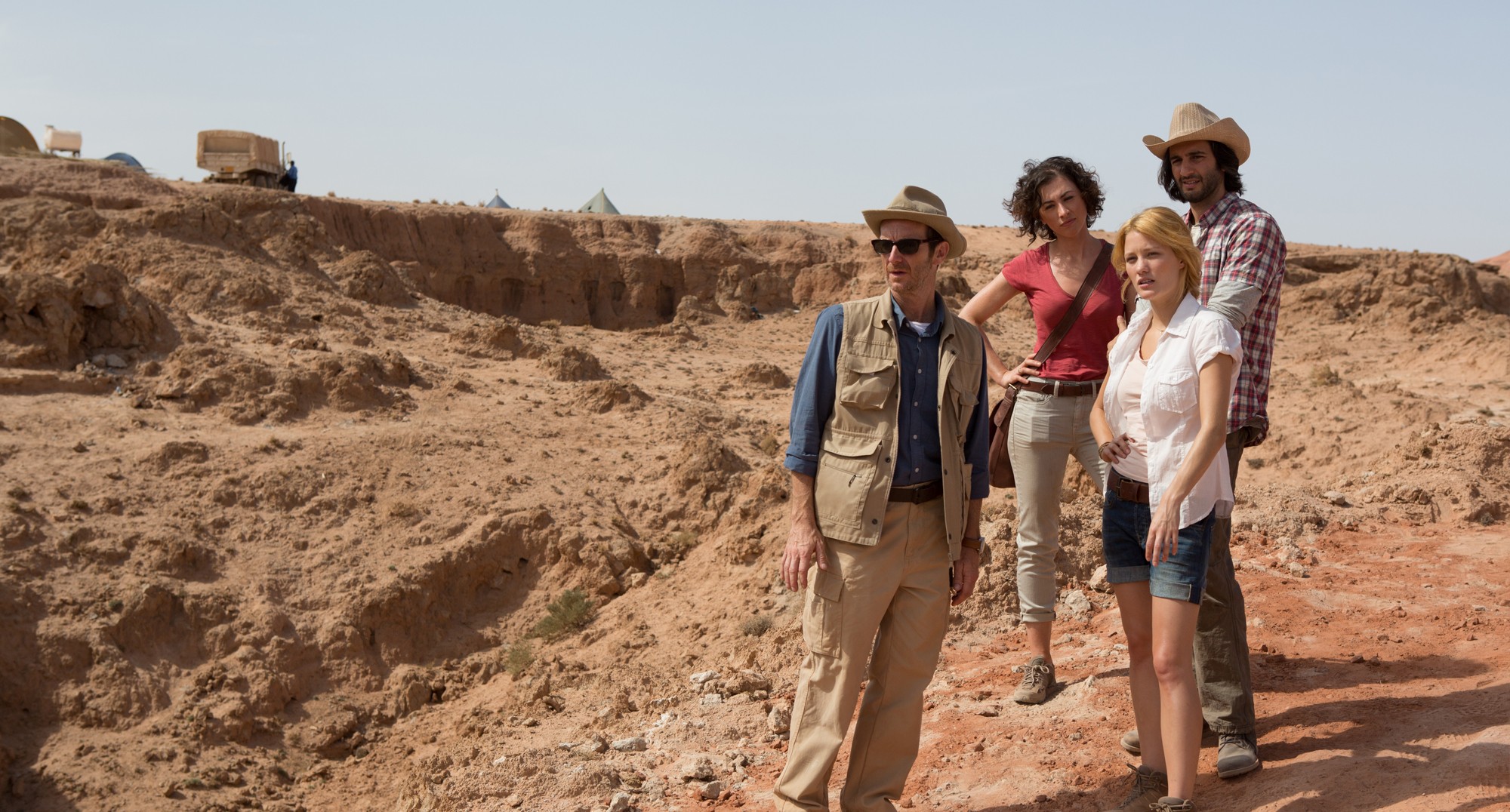
His Egyptian horror sees a father and daughter archeologist team and the documentarians who want to film their discovery – a mysterious pyramid sitting hundreds of feet below the desert sands.

The bickering parent and child are played by American Horror Story’s Denis O’Hare and bad actress Ashley Hinshaw, respectively (but not respectably). That Hinshaw plays an archeologist seems less ludicrous only if you remember that Denise Richards played nuclear physicist Dr. Christmas Jones in The World is Not Enough. But at least that was back when the Bond films embraced their campy awfulness. The Pyramid is just awful.

O’Hare serves an unseemly purpose in his American Horror Story roles, but he’s not a strong enough actor to elevate this dreck. Hinshaw’s worse, and Christa Nicola is community theater bad as the documentarian risking life and cameraman for that elusive Emmy.

The only castmate to acquit himself with any level of respectability is former Inbetweener James Buckley, who still struggles mightily with this script.

An aside: When you’re writing a screenplay and you’ve trapped all your characters with unnamed beasties in a labyrinthine catacomb hundreds of feet below the earth’s surface, you may want to limit your use of the lines “we have to get out of here” and “we need to find a way out of here” to fewer than 200 instances apiece. It sort of goes without saying.

Oh, yes, and the beasties – if you squint and pretend they are ill-conceived but earnest odes to Ray Harryhausen and not simply weak, uninspired, fake looking props … Basically, it’s just too much work to have to pretend they don’t suck. Like the movie itself. It’s best just to accept it.

Verdict-1-0-Star

Not So Happy Trails

The Homesman

by Hope Madden

In front of the camera, Tommy Lee Jones is a world-wearied, direct and laconic actor, but there’s a cowboy poetry about him. He’s no different behind the camera, as his second feature proves. The Homesman brims with the lonesome, brutal beauty of the frontier, but thanks to Jones’s capable storytelling, it offers more than that.

Jones plays George Briggs – if that is the real name of the claim jumping low life who finds himself at the end of a rope and the mercy of the upright Mary Bee Cuddy (Hilary Swank). A prosperous but “uncommonly single” lady on the frontier, Ms. Cuddy has volunteered her services for a particular journey and will oblige Mr. Briggs to accompany her or remain in his predicament.

What unfolds is a wagon wheel Western of sorts, replete with stunning images of the prairie, beautifully framed by the director. Swank – who can be counted upon to create a vivid if one-dimensional character – can’t help but bring to mind the Mattie Ross role from True Grit. It appears Jones (and Swank) are intentional with this, as Hailee Steinfeld (of the Coen remake) has a late supporting role.

It suggests that Jones is retelling our sentimental Western favorites with a lonelier, harsher but hauntingly beautiful tone.

The journey meets expectations and then subverts them, filling the screen with surprises – some fun, some bitter, all a bit melancholy. And yet there’s a black but entertaining humor in many scenes. The swings in tone, on the whole, are capably handled by a director who mined somewhat similar styles in his underseen 2005 first feature as director, The Three Burials of Melquiades Estrada.

Peppered with fascinating if jarringly brief cameos, Jones’s film keeps your attention as it journeys slowly East, making a statement about the hard realities of frontier life as well as the more universal ache to be loved.

The territories of the American West have filled our imaginations for more than two hundred years and it can be tough to find a new approach. Jones succeeds in using that same dusty path across the frontier we find so familiar, and even populating the trip with characters we almost remember, yet somehow he tells a truly new and memorable tale.

Verdict-4-0-Stars

The Lady is a Vamp

A Girl Walks Home Alone at Night

by Hope Madden

Earlier this year Jim Jarmusch released his vampire film, Only Lovers Left Alive – a brilliant and woefully underseen flick. Had he not released that film, A Girl Walks Home Alone at Night would certainly be the most Jarmusch-y vampire movie ever made.

In fact, writer/director Ana Lily Amirpour has made the world’s first Iranian vampire movie, and though she borrows liberally and lovingly from a wide array of inspirations, the film she’s crafted is undeniably, peculiarly her own.

Amirpour is blessed with a cinematographer in Lyle Vincent capable of translating her theme of loneliness in a dead end town, as well as the cultural influences and Eighties pop references, into a seamless, hypnotic, mesmerizingly lovely vision. The film is simply, hauntingly gorgeous.

Set in Bad Town, a city depleted of life – tidy yet nearly vacant – Girl haunts the shadowy, lonesome fringes of civilization. The image is highly stylized, with a hip quirkiness and stationary camera framings that noticeably mine Jarmusch’s early work. Indeed, Amirpour seems an avid fan of American indies of the Eighties and Nineties, as well as the films of endlessly imitated French New Wave filmmakers and Sergio Leone – so that’s a mish mash. But Amirpour effortlessly balances the homages and inspirations, the cultural nuances alive in Girl giving every scene a uniqueness that makes the whole effort surprising.

Amirpour develops a deliberate pace that makes the film feel longer, slower than is probably necessary. The time is spent with singular individuals – a prostitute (a world-wearied and magnificent Mozhan Marno), a drug addicted father (Marshall Manesh), a street urchin (Milad Eghbali), a pimp (Dominic Rains), and a rich girl (Rome Shadanloo). Two people weave in among these players – the handsome Arash (Arash Marandi), and a lonesome vampire (Sheila Vand).

Though these are character types more than characters outright, Amirpour and her actors don’t abandon them. Each has breath and dimensionality, their fate a question that piques sympathy.

Vand’s Girl is the constant question mark, and that – along with the eerie, sometimes playful beauty of Vincent’s camerawork – is what makes the film unshakably memorable. I promise the image of a vampire on a skateboard will stay with you.

Verdict-4-0-Stars