Category Archives: New In Theaters

Reviews of what’s out now

This Dude Abides

The Hero

by Hope Madden

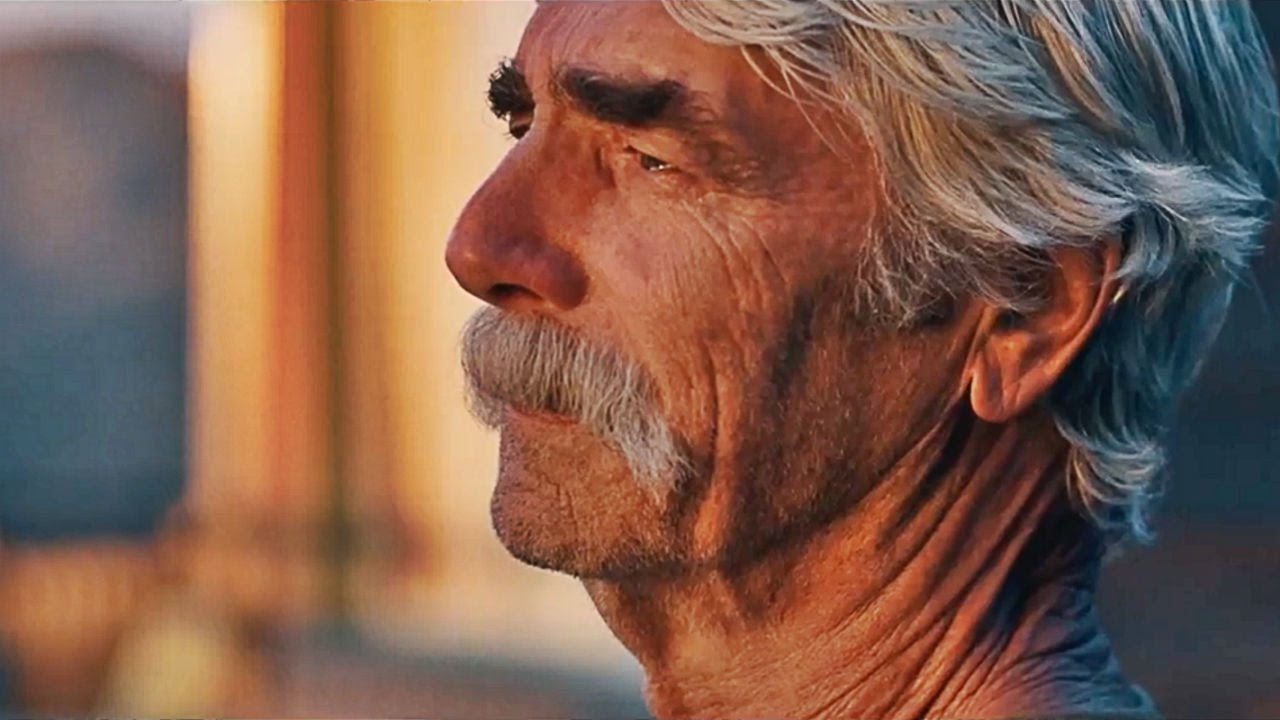
Somebody finally wrote a starring role for Sam Elliott. Let’s be honest, we all love him. What’s not to love? His lived-in masculinity, mannered charm and sonorous delivery make every line a comic/dramatic/romantic dream.

His latest film, the Brett Haley directed and co-penned The Hero, feels like an attempt to give Elliott his own The Wrestler or Crazy Heart.

I’m cool with that.

Haley was responsible for the 2015 life-renewing romance I’ll See You In My Dreams, a post-middle-age adventure starring Blythe Danner, with Elliott joining as her mustachioed gentleman caller.

With Hero, Haley places Elliott firmly in the lead of another “life begins when you decide it does” kind of story.

In a role undoubtedly written specifically for the actor, Elliott plays an aging performer who’s knocked around Hollywood for decades but is best known for his deep, cowboy voice. The film opens with that memorable baritone recommending, “Lone Star barbeque sauce – the perfect pardner for your chicken.”

It’s an inspired scene, full of humorous indignity and carried beautifully by the voice-over veteran. It’s really a shame Haley can’t build on it.

Elliott’s Lee Hayden has cause to reevaluate his life when a health issue, a lifetime achievement award, a viral video and a surprising new girlfriend all collide unexpectedly. Oh, so many reasons to contemplate your own mortality.

Elliott’s quiet, moseying way remains as enigmatic and charming as it ever has been, and seeing him play a character so very close to himself is sometimes eerie. Real-life wife Katharine Ross even plays his ex.

The film scores highest marks in two scenes with Ross, and in everything with a delightful Nick Offerman, playing against type as Lee’s goofy former co-star and current weed dealer.

It derails hardest, though, when it tries to juggle a distant relationship with a daughter (Krysten Ritter) and a new romance with a hot, much younger woman (Laura Prepon).

The Hero breaks no new ground. Had Haley and co-writer Marc Basch (who also co-wrote Dreams) thrown one or two fewer contrivances at us, or found perhaps a fresher way to contend with their obvious choices, they might have had something.

Instead they ride Elliott’s charm and settle for sentimentality, which is such a shame. It’s high time Sam Elliott gets to lead his own movie, but he deserves a little more than this.

Verdict-3-0-Stars

Teenage Dream

Spider-Man: Homecoming

by Hope Madden and George Wolf 

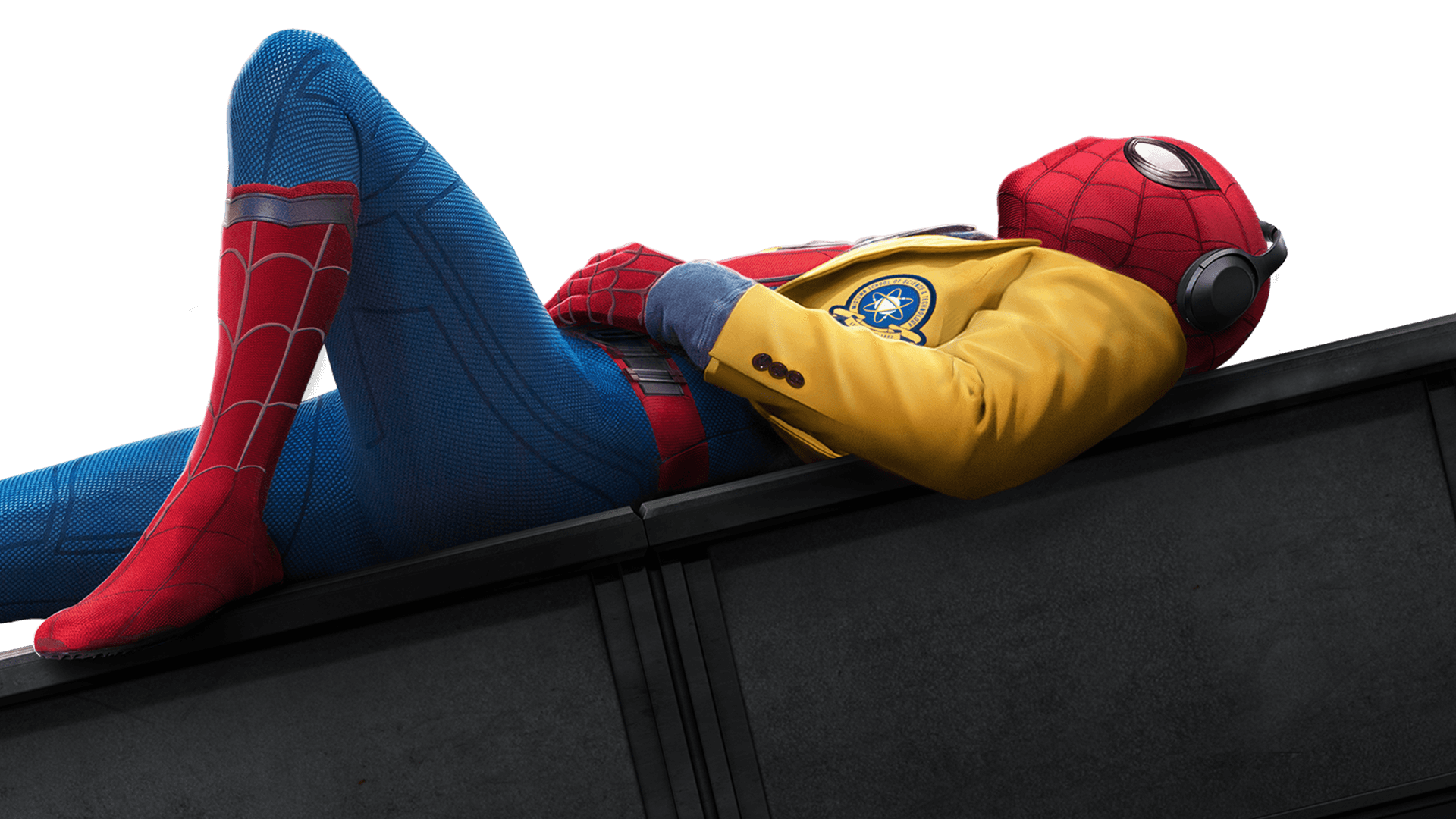
With brief but wildly enjoyable screen time, the newest Spider-Man (Tom Holland) introduced himself to us in last year’s Captain America: Civil War. His presence was energetic, light-hearted and fun – childlike. Appropriate for a high school freshman.

It’s exactly that bottled exuberance that makes Spider-Man: Homecoming so enjoyable.

The events of Cap and Iron Man’s battle for control of the Avengers only months behind them, Tony Stark (Robert Downey, Jr. – like you didn’t know) takes arachnid-bitten science nerd Peter Parker under his wing.

Pete’s not ready for the big time yet, though. Mr. Stark would prefer his protégé focus on being a friendly, neighborhood Spider-Man instead of pestering for an invite to be the next Avenger.

There are several things director Jon Watts (Clown, Cop Car) and his enormous team of writers get right.

Firstly, they know we’re hip to Pete’s origin story, so the bite, Uncle Ben and all that needless angst are mercifully missing.

Next, they keep the story tight and low to the ground. It’s a training-wheels villain – somebody too big for you or me to contend with, but no intergalactic menace or god waiting to annihilate global humanity.

It also helps that said villain, the “Vulture,” is played by the reliably nutty and likeable Michael Keaton, who brings the perfect mix of psychosis and humanity to a role that could have easily been pushed over the top.

But mainly, Watts hits a bullseye with the film’s joyously entertaining tone.

As solid as the Marvel universe has been, it’s not hard to find moments (especially in Civil War) when the push for a hip chuckle undercuts the action. The humor in Homecoming hits early and often, but only to reinforce that the film’s worldview is sprung from a teenage boy. In this way, it feels more true to its comic origins than most in the entire film genre.

Holland, who just turned twenty-one, has no trouble passing for fifteen in a wonderfully wide-eyed performance. Paired with a nicely diverse group of classmates, Holland finds the perfect sweet spot to contrast the social minefields of high school with the learning curve of his new Stark Industries super suit.

Best of all, Holland re-sets the character to a place where its growth seems both unburdened and unpredictable. That’s exciting, and not just for Pete.

Same goes for the film. Watts and his writing team fill Homecoming with the thrills, wit and humanity (plus a plot twist that’s subtle genius) to give the entire superhero film genre a freshness that’s plenty welcome.

Throw in a letter-perfect final scene, and we’re already tingling about what Spidey might be up to next.

Verdict-4-0-Stars

Mr. and Mrs. Vegas

The House

by George Wolf

It’s a simple formula, really: D = sO2.

A comedy’s desperation is equal to the speed at which the outtakes start rolling, squared. Which means The House is mighty desperate to send you home laughing.

There’s plenty of talent involved, but it’s a film held together with barest of threads, as if the prompt for writers Andrew Jay Cohen and Brendan O’Brien (from the very funny Neighbors films – so what gives?) was merely to round up some funny people and hope they do funny things.

Will Ferrell and Amy Poehler are certainly funny, and they star as Scott and Kate Johansen, who start to panic when their daughter Alex (a curiously bland Ryan Simpkins) is accepted to Bucknell University.

They can’t afford Bucknell University.

Teaming up with their crazy, Vegas-loving friend Frank (Jason Mantzoukas) the Johansens open a secret neighborhood casino, kicking off a wave of uninspired riffs on stuffy suburbanites acting all Soprano and shit.

Cohen, making his feature directing debut, leaves plenty of contrived loose ends behind in search of the next forced gag. Fred and Barney may have pulled off a similar premise for 23-minutes in an old Flintstones episode, but The House is built on a less than sturdy foundation.

Verdict-2-5-Stars


Evil Twin Powers…Activate

Despicable Me 3

by George Wolf

I’ll be honest, it took a little research before I remembered anything at all about Despicable Me 2 that wasn’t a minion.

And even when those little yellow scene-stealers got their own movie, the result was surprisingly mediocre.

The entire franchise has been memorable only for being so easily forgettable. So how’s part 3?

It’s fine.

Steve Carell returns as the voice of Gru, the super villain-turned good guy who’s now teamed up with wife Lucy (Kristen Wiig) for double the secret agent heroics. And, their three adopted daughters are back to say “fluffyyyyyyyyy!’ and other adorable things.

The family ties get more tangled when Gru meets his long lost twin brother Dru (also Carell), who convinces him to return to the dark side and steal a massive diamond from an 80s-obsessed baddie named Balthazar Bratt (South Park‘s Trey Parker).

The writing and directing teams are full of animation vets who have been at least some part of every film in this franchise, so it’s little wonder DM3 can’t find ways to revitalize the brand. It doesn’t really want to.

While all the films have been pleasantly amusing, part 3 may actually land the greatest number of solidly funny gags. The “minions in prison” sequence is an inspired hoot, and an 80s dance-off between Gru and Bratt keeps silly going long enough for a decent payoff.

But again, while the latest Despicable Me will satisfy the kids with its frenetic zaniness and give the parents some escapist smiles, it might raise a question once part 4 comes calling.

“Which one had the twin brother again?”

Verdict-3-0-Stars

Wolf in the Hen House

The Beguiled

by Hope Madden

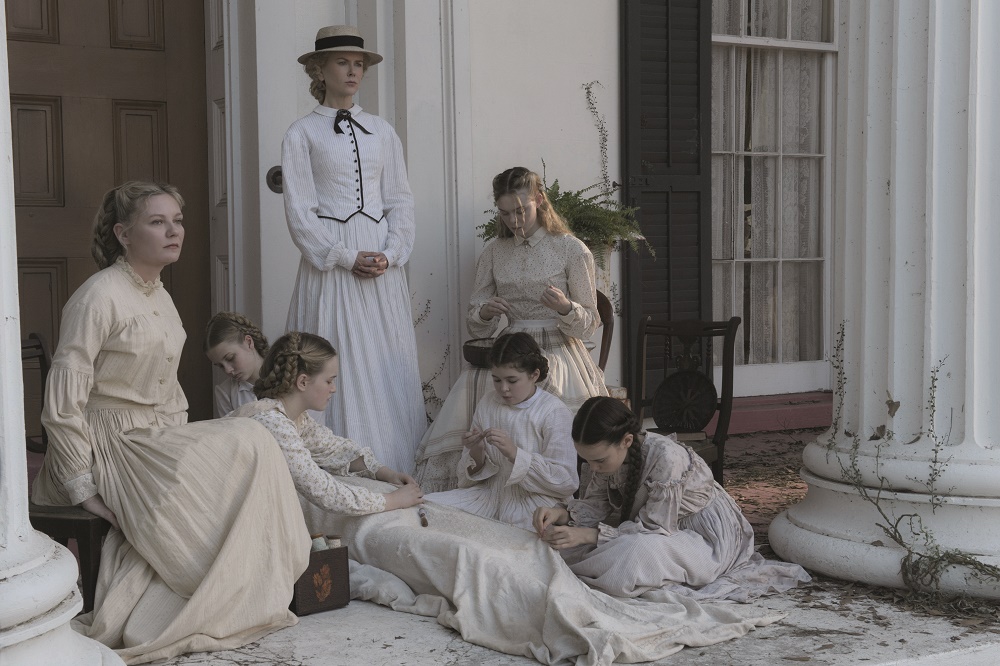
In a mist-laden Virginia woods, pre-adolescent Amy (Oona Laurence) mushroom picks her way to uncovering a wounded Union soldier. Sure he’s a bluebelly, but she can’t leave him there to die, can she?

Amy helps him back to Miss Farnsworth’s Seminary for Young Ladies, the isolated boarding school where she, Miss Farnsworth, one teacher and just a handful of pupils are waiting out the Civil War.

The Beguiled marks a return to critical favor for writer/director Sofia Coppola, who won best directing honor at this year’s Cannes Fest Festival for her adaptation of Thomas Cullinan’s novel.

Few frame delicate, ornate beauty quite like Coppola. She has found quite a palette with this film – the draping trees, columned porches, foggy woods, the tender grace of the school’s inhabitants.

The film is a study in restraint, and probably the most conventional film Coppola’s made. She abandons the sexual hysteria of Don Siegel’s pulpy 1971 adaptation, creating instead a chamber piece lush with decay and longing.

From his first words at the school – “Corporal John McBurney, 66th New York, grateful to be your prisoner,” – Colin Farrell’s wounded deserter is a likeable mystery. Is he earnest or manipulative? A good guy, or a wolf in the hen house?

Clint Eastwood’s performance (easily the best thing about Siegel’s version) was immediately creepy and scheming. Farrell’s slightly more of a blunt instrument. He’s less conniving, more primal –vulnerable and explosive, sometimes in the same breath.

He’s met his match, though, in Martha Farnsworth – Nicole Kidman. Coppola’s script is crisp, and no one delivers a passive aggressive barb quite as skillfully as Kidman.

Like her girls, Martha carries a lived-in weariness that weakens her to this attractive distraction from the war. But she is a survivor, an instinct she hopes to bring out in her charges as well.

The cast is uniformly wonderful – Kirstin Dunst, in particular. Coppola is fascinated by the internal power struggle as well as the morphing moral and emotional factors at work here. As patriotism battles Christian compulsions in the beginning, so competition for the Corporal’s attention evolves into fear.

The film makes a sharp turn with the inevitable explosion of impotent male dominance. As sudden as it seems, Coppola’s languid approach earlier in the film ensures that each character’s inner motivations and interpretations are clear – without the hackneyed flashback or interior monologue Siegel resorted to.

The result is a bewitching film – beautifully acted, gloriously filmed and haunting.

Verdict-4-0-Stars

Baby Did a Bad, Bad Thing

Baby Driver

by Hope Madden

Start to finish, the soundtrack-driven heist flick Baby Driver has a bright, infectious charm – and you can dance to it.

It needs to be good, though. The third film in as many years about a mixtape, a rag-tag gang and a dead mom, this movie needs to bring something genuinely mesmerizing.

If there is one thing writer/director Edger Wright knows how to do, it’s propel a film’s action. That’s hardly his only talent, but few excel here quite the way he does. Scene to scene, set piece to set piece, he makes sure your eyes and your ears are aware that things are moving at a quick clip.

Never has this been more true than with Baby Driver.

Wright edits in time with his expertly curated mix tape, creating a rhythm that keeps his lead dancing, his film moving, and his audience engaged.

The beats offer more than a gimmick to ensure the flick dances along – the tunes getaway driver Baby (Ansel Elgort) has buzzing through his ear buds give rhythm to his impressive high speed antics.

Baby is the one constant in the teams Doc (Kevin Spacey) assembles to pull off his jobs. A reluctant participant making good on a debt, Baby keeps his distance from the crew – whether it’s the oily Buddy (Jon Hamm, marvelous as ever), his sketchy girlfriend Darling, (Eiza Gonzales), or the straight-up psycho, Bats (Jamie Foxx – glad to see you in something worthwhile again).

Of course, the tension comes in when Baby tries to leave the robbery biz behind, egged on by feelings for the cute waitress at his favorite diner (Lily James).

If you’ve ever seen a movie, you’ll know that getting out is never easy.

Wright’s agile camera keeps tempo with his killer playlist. Whether back-dropping romance at the laundromat with gorgeous color and tongue-in-cheek visual call-backs, or boogying through back alleys, on-ramps and highways, Baby Driver is as tasty a feast for the eyes as it is the ears.

The game cast never drops a beat, playing characters with the right mix of goofiness and malice to be as fun or as terrifying as they need to be. For all its danceability, Wright’s film offers plenty of tension, too.

Like much of the filmmaker’s work, Baby Driver boasts a contagious pop mentality, intelligent wit and sweet heart.

Verdict-4-0-Stars

Stars, Stripes & Appetites

The Bad Batch

by Hope Madden

Three years ago, Ana Lily Amirpour dazzled moviegoers with her sleek and imaginative vampire fable A Girl Walks Home Alone at Night.

The film tells of a solitary female figure and the surprising impact of unlikely companionship. Amirpour called the film a “vampire western.”

If you haven’t seen the film (and you should, immediately), but you like the premise, then Amirpour’s follow up The Bad Batch might also appeal to you. It mines a similar vein, although the context is a bit more merciless.

The film’s provocative opening of mostly voiceover under credits introduces the concept of the “bad batch” – unwanteds. Drugs, immigration, petty crime – it’s never clear what this batch has been up to, but we know where they’re going. They’re headed to a quarantined expanse of arid Texas desert no longer considered part of These United States.

Once the images on screen take form, Amirpour creates an atmosphere of dystopian terror that the balance of the film never quite reaches again.

Newest resident Arlen (Suki Waterhouse – very impressive), realizes just how Mad Max this can get moments after gates are locked behind her. In a breathless and brutal piece of cinema, we are introduced to one of two communities thriving in this wasteland.

The Bridge People are hyper-bulked up, ultra-tanned cannibals represented by Miami Man (Jason Momoa). (They may not have access to steroids, but they’re certainly getting a lot of protein.)

The second community of Comfort offers a colorful, almost habitable environment led by charismatic leader The Dream (Keanu Reeves).

With these two communities, Amirpour moves very clearly into metaphorical territory, ideas she underscores nicely with strategic use of the American flag.

One version of America sees the vain, self-centered “winners” literally feeding on the weak. The second may seem more accepting, but it pushes religion, drugs and other “comforts” to encourage passivity.

It’s a clever but unwieldy storyline, and Amirpour has trouble concluding her tale.

She has a great cast, though. Joining Woodhouse, Momoa and Reeves are flashes of Jim Carrey, Giovanni Ribisi, Diego Luna and a host of the freakish and intriguing.

Amirpour has such a facility with creating mood and environment, and though the approach here is different than with her debut, she once again loads the soundtrack and screen with inspired images, sounds and idiosyncrasies.

Her opening sets such a high bar – one she fails to reach again – and her finale feels too conventional for this character and this world. They’re fairly slight criticisms, but with a filmmaker of such amazing talent, they can’t help but be a let-down.

Verdict-3-5-Stars

Just Desserts

Beatriz at Dinner

by George Wolf

Have you ever owned the worst car in the parking lot of some fancy event?

Then you’ll immediately identify with Beatriz.

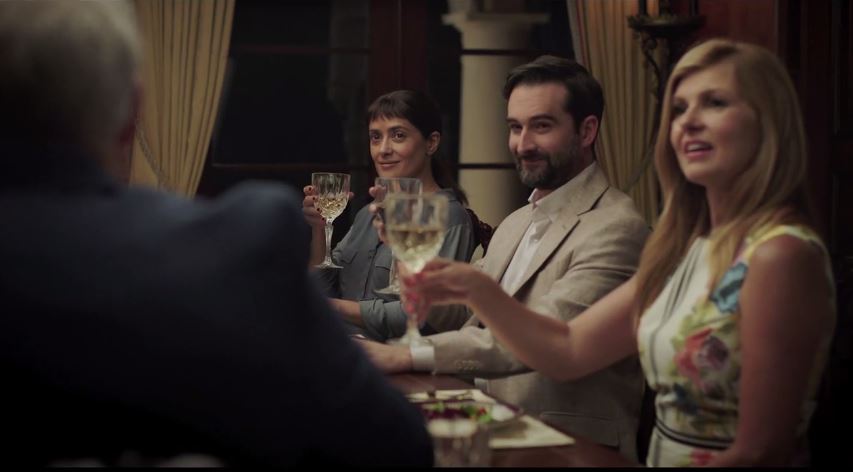
Beatriz is a holistic therapist finishing up a massage at the elegant home of her friend Cathy, when her car won’t start. Cathy (Connie Britton), over the mild objections of her husband Grant (David Warshofsky), invites Beatriz to stay for the dinner party that evening. Alex (Jay Duplass) and Doug (John Lithgow), two of Grant’s business associates, roll up with their wives (Amy Landecker, Chloe Sevigny), and it isn’t long before Beatriz is mistaken for the hired help.

Writer Mike White and director Miguel Arteta, after teaming for Chuck and Buck and The Good Girl, reunite for the first time in fifteen years with a clearly defined purpose.

As the dinner gets increasingly awkward, Doug is revealed as a narcissistic billionaire mogul reveling in the obnoxious ass-kissing of his company. Beatriz, egged on by multiple glasses of wine, confronts him, and suddenly it’s Trump and the resistance taking dessert in the living room.

The comedy is dark and biting, the performances sharp and well-defined. Stumbling only when it trades sly observations for broader speechifying, Beatriz at Dinner is plenty satisfying.

Verdict-3-5-Stars

Wheels on the Bus

Free to Ride

by Hope Madden

A movie about bus stops, eh? It may seem like a trivial topic for a film, but Free to Ride does what many solid documentaries do: it points to the profound relevance of the seemingly ordinary.

With their impressive debut as feature length documentarians, director Jamaal Bell and writer/producer Matthew Martin craft an even-handed but powerful tale of a modern civil rights victory.

In 2009, the Dayton community activist group LEAD decided on their next cause: three bus stops between Dayton and Beavercreek, OH.

After the building of I675, Beavercreek hit a bit of an economic boom. This meant jobs, many of which were filled by residents of nearby Dayton. Public transit commuters found themselves in the unfortunate situation of walking the 1.1 mile trek from the nearest RTI stop, across a busy overpass not meant for pedestrians.

Commuters wanted more bus stops. LEAD wanted more bus stops. RTI wanted to put in more bus stops.

Beavercreek said no.

Why? A lot of reasons were given about crime and traffic and listening to constituents. LEAD felt that these reasons were coded. Beavercreek’s population is less than 5% African American, while Dayton’s is about 40% African American.

Regardless of reason, rejecting the new bus stops did two things. It endangered the people commuting from Dayton to Beavercreek and it limited the employment opportunities, among others, of the citizens of Dayton.

What follows is a provocative look into small town politics, discrimination and community activism.

Free to Ride offers a surprisingly balanced, thoughtful documentation of an issue much larger than it might appear. Through city council meeting footage and in-person interviews, the film sheds light on the bigger picture without feeling preachy or sensationalistic.

The solution to the problem was not only clever but groundbreaking, offering the film a historical heft that it might not otherwise have. More than that, we not only glimpse the tenacity and passion of community activists, we actually get to see corporate executives and government officials tear up. Nice!

Credit the filmmakers, both researchers at The Ohio State University’s Kirwan Institute, for approaching the topic with a clear eye and a background in research. Free to Ride finds more power in fact and understatement than it could have with sensationalism or sentimentality.

Verdict-3-5-Stars

http://gatewayfilmcenter.org/free-to-ride/

The Longest Knight

Transformers: The Last Knight

by Hope Madden

Have you ever wondered what kind of chaos would ensue if both Optimus Prime and Megatron just disappeared?

Nope? Well, what if we could work the Transformers story and the King Arthur story into one?

No interest?

Cars, robots, explosions, needless sentiment and a girl who looks alarmingly like Megan Fox in tight clothes?

Let’s be honest, either you’re going to see Transformers: The Last Knight or you are not. Nothing I say is going to sway you one direction or another. But I had to see it. So I’m saying some stuff.

The latest installment in Michael Bay’s toy franchise might actually be more palatable than any of its predecessors. The story borders on being coherent. The action is far more clearly presented than usual. The racism is somewhat muted. There’s less sentimentality.

Also, Bay – not known to have a sense of humor at all – flirts with self-referential comedy now and again. Sure, he steals whole cloth from Alien, Terminator, Star Wars, Short Circuit – but he jokes about it, so it’s cool.

There’s also a strong female character – Vivian (Laura Haddock). We shouldn’t question her strength just because she’s convinced to do something when a male character yells, “Do it. Now!”

Twice.

But the costume changes have to raise an eyebrow. In the car ride she wears one outfit, she gets out of the car in another, goes back home to change, goes directly to a submarine in another outfit, gets off the submarine in another outfit – where are all these clothes coming from?!

And, in case you’re betting, Michael Bay is not above shooting down the shirt of an under-aged girl (Isabel Moner – here playing Needless Emotional Youngster).

All of which could have been almost tolerable, until it occurred to me that we were 70 minutes in and the plot had still not been explained. Then more than 90 minutes in and the hero (not Mark Wahlberg, the real hero) hadn’t joined the cast.

Transformers: The Last Knight is long.

So.
Fucking.
Long.

So needlessly long. So unendurably long. It’s a movie about toy trucks that turn into robots who fight with each other. For the love of God, can we cap it at 2 hours?

Nope.

Verdict-2-0-Stars