Category Archives: New In Theaters

Reviews of what’s out now

Trickier Dick

Vice

by Hope Madden and George Wolf

Remember when the Vice President of the United States shot some guy in the face, and then the guy with the snoot full of buckshot apologized to the V.P. for all the trouble? That really happened!

When did the upper reaches of the Executive Branch go so brazenly corrupt, so treasonously, moronically, dumpster-fire-with-a-spray-tan wrong?

It’s not as recent as you think.

With Vice, writer/director Adam McKay remembers a time long before moronic presidential tweet storms, when the quiet, steady rise of a ruthless power broker rewrote American politics and changed the course of history.

V.P. Dick Cheney was often thought of as the de facto decision-maker in George W. Bush’s presidency, and McKay uses absurdist humor and a spellbinding cast to give that line of thinking a more weighty focus.

Christian Bale is characteristically flawless as Cheney. With added girth from (according to Bale) “eating pies” and the trademark Burgess-Meredith -as-the-Penguin speech pattern, the physical transformation alone is astounding. But it is the way Cheney’s cut throat ambition, scorched-earth power grabs and soulless devotion to ideology contrasted with his familial tenderness that Bale articulates so astutely.

Because of, or perhaps in spite of, his legacy, Cheney is a fascinating figure, and Bale makes that fact endlessly resonate.

But fittingly, Vice‘s secret weapon is Amy Adams as Cheney’s wife Lynne who commands the screen as equally as Bale. In a performance full of subtle power of ferocity, Adams casts Mrs. Cheney as a pivotal and equally ambitious partner in Cheney’s climb, publicly lessening his weakness as a politician and privately demanding his allegiance to their plan.

Bale and Adams anchor an utterly glorious ensemble (including Sam Rockwell as “W” and Steve Carrell as a dead ringer for Donald Rumsfeld) that—with the help of McKay’s blistering script and wise direction—utilizes comedy to inform, illustrate, and act as an outlet for the otherwise soul-blackening disgust one might carry around with them concerning the American political system.

In 2015, after a slew of directorial successes including Anchorman, Talladega Nights and Step Brothers, McKay redefined the term “filmmaker Adam McKay” with the blistering, cynical, hilarious, informative and angry The Big Short.

In an act of all out heroism or masochism, McKay did all he could to help us understand the housing collapse with that film. He so understood his material (dry) and his audience (confused/disinterested) that he would cut away periodically to let a bubble-bath-soaking Margot Robbie explain a bit of vocabulary.

It was perhaps his way of saying: This is really important, guys. Pay attention!

Turns out, McKay is just as pissed off about the polluting of American politics, with his conspicuous outrage and biting comic sensibilities again proving to be powerful fuel.

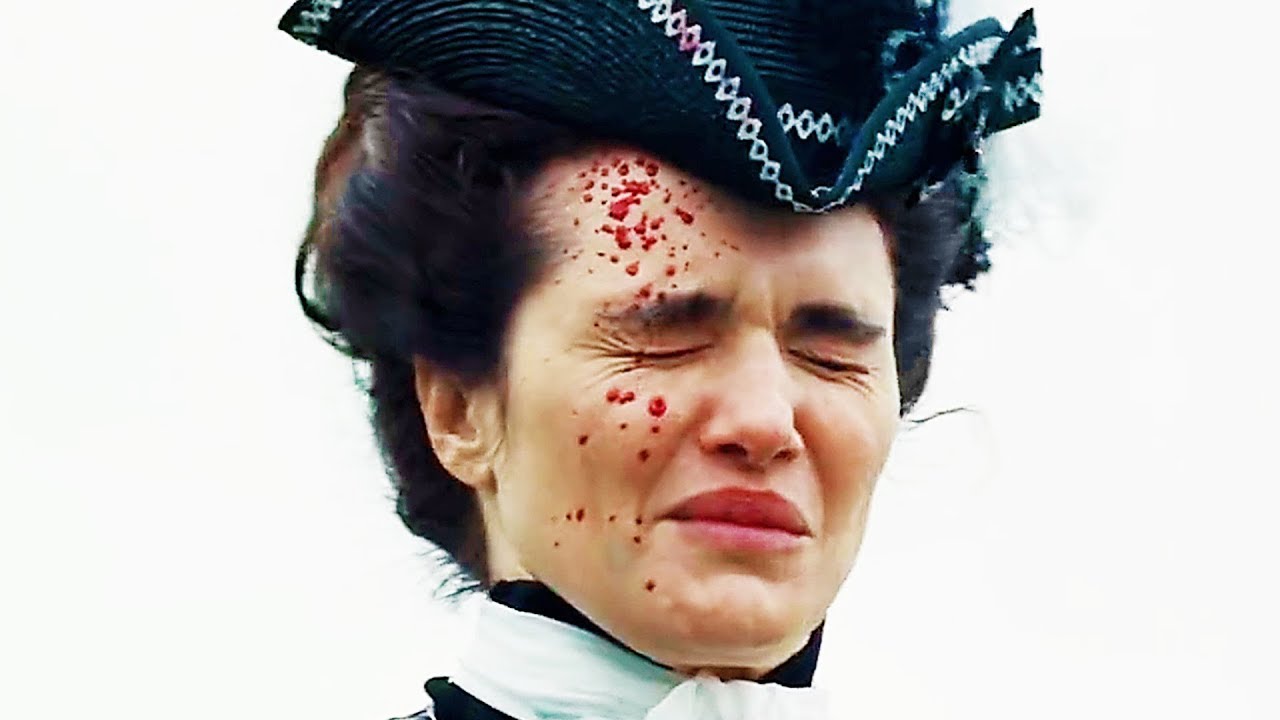
From the film’s false ending and sudden Shakespearean detour to the unapologetic face-shooting, Vice has a definite “can you believe this shit?” air about it, a nod to the need to laugh so you won’t start crying.

Thanks to McKay and his tremendous cast, you might just do both.

Little Women

Welcome to Marwen

by Cat McAlpine

Mark Hogancamp awoke from a vicious attack with no memory of his former life. He remembers, vaguely, that five men beat him to the brink of death, that they beat him because he drunkenly mentioned he liked to wear women’s shoes, and that one of his assailants had a swastika tattoo. The rest of his life has been left for Mark to piece together.

No longer able to draw as he once did (or even write his name), Mark finds a new art to work through his trauma. He models dolls after himself and women he knows. The dolls awaken in the town of Marwen every morning to fight five Nazis, again and again.

The real life story was the basis for the wonderful documentary Marwecol in 2010, inspiring director/co-writer Robert Zemeckis to craft his own narrative version,

Steve Carell does his level best as Mark, and connects with an impressive range. But he’s better than this film, and he’s better than this script.

Also occupying the town of Marwen is a mysterious Belgian witch whose obsessive grasp on Captain Hogie (Mark) is so obviously a metaphor for his addiction that she literally disappears from scenes by morphing into the pills Mark takes each morning. And yet, half way through the film, when he’s asked what real life woman the witch is based on, Mark says in wonderment “I don’t know. I don’t know where she came from.” Someone in my theatre laughed.

Welcome to Marwen’s greatest struggle is that it cannot commit to what it wants to be. Half of the film takes place with Mark’s dolls in Marwen, fully animated and pursuing comical fits of violence. The other half of the film follows Mark in real life as a lovable weirdo whose addiction to his medication and rampant PTSD don’t allow him to live far beyond the model village built in his yard.

The dissonance in the film comes from a holding back of sorts. It never gets quite as weird or fantastical as it could. The real world plot of Mark’s life is boring and predictable. The whole film feels like a concession between Zemeckis’s vision, and what he thought the audience might want to see. Instead, he ends up with something from an alternate universe Hallmark channel.

Worst of all, is the film’s bizarre commoditization of women. Mark fashions dolls from the hobby shop into sexier, more violent versions of women he knows in real life. None of these women seem upset or worried about their doll counterparts, disturbing though they are. Especially when one of the dolls is molded after his favorite porn star.

The film leads by making a joke of calling the women “dolls”, and then uses this joke to consistently refer to them as such moving forward. Twice Welcome to Marwen milks a joke out of a doll’s shirt being ripped open to expose her chest. Mark says he wears women’s shoes because he loves women so much, it helps him connect with their essence. His G. I. Alter Ego, Captain Hogie, screams in a triumphant moment, “Women are the saviors of the world!”

So. Mark can be celebrated for being brave enough to wear women’s shoes, but women’s clothing reduces them to sexualized objects.
Mark’s life seems to be defined by his failure to find a woman to love. His entire fantasy world is based on the idea that women can and will save him. The idea of women is celebrated, but women themselves are only treated as vehicles for romance or items waiting to be idealized. And there’s more. But a review should only be so long and disappointed.

Women aren’t here to fix you, or to save you. And they certainly couldn’t save Welcome to Marwen.

JLo Goes Low

Second Act

by Brandon Thomas

1998 was a good year to be a fan of Jennifer Lopez. She had just come off of a great turn as Selena Quintanilla in Selena, and her performance as Karen Sisco in Out of Sight made even more people stand up and take notice. Unfortunately, in the following years, movies like The Wedding Planner, Maid in Manhattan and Gigli showed that the promise of 1998 was an outlier. Second Act continues that storied tradition of mediocrity.

On the surface, life looks pretty good for Maya (Lopez). She has a job she excels at and enjoys; has a great partner (Milo Ventimiglia); and is surrounded by supportive family and friends. After she’s passed over for a promotion due to her lack of a college education, Maya’s confidence in her life choices start to crumble. When her genius nephew spruces up her resume with a few white lies, Maya lands an opportunity that allows her to use her natural skills, but also forces her to pretend to be someone she’s not.

Second Act is a confusing mix of several different kinds of comedies. There’s the romance straight out of the romantic comedy, pratfalls and potty humor from the Apatow camp, and a gee-whiz camaraderie angle that left me wondering if magic pants were about to come into play.

None of these approaches works.

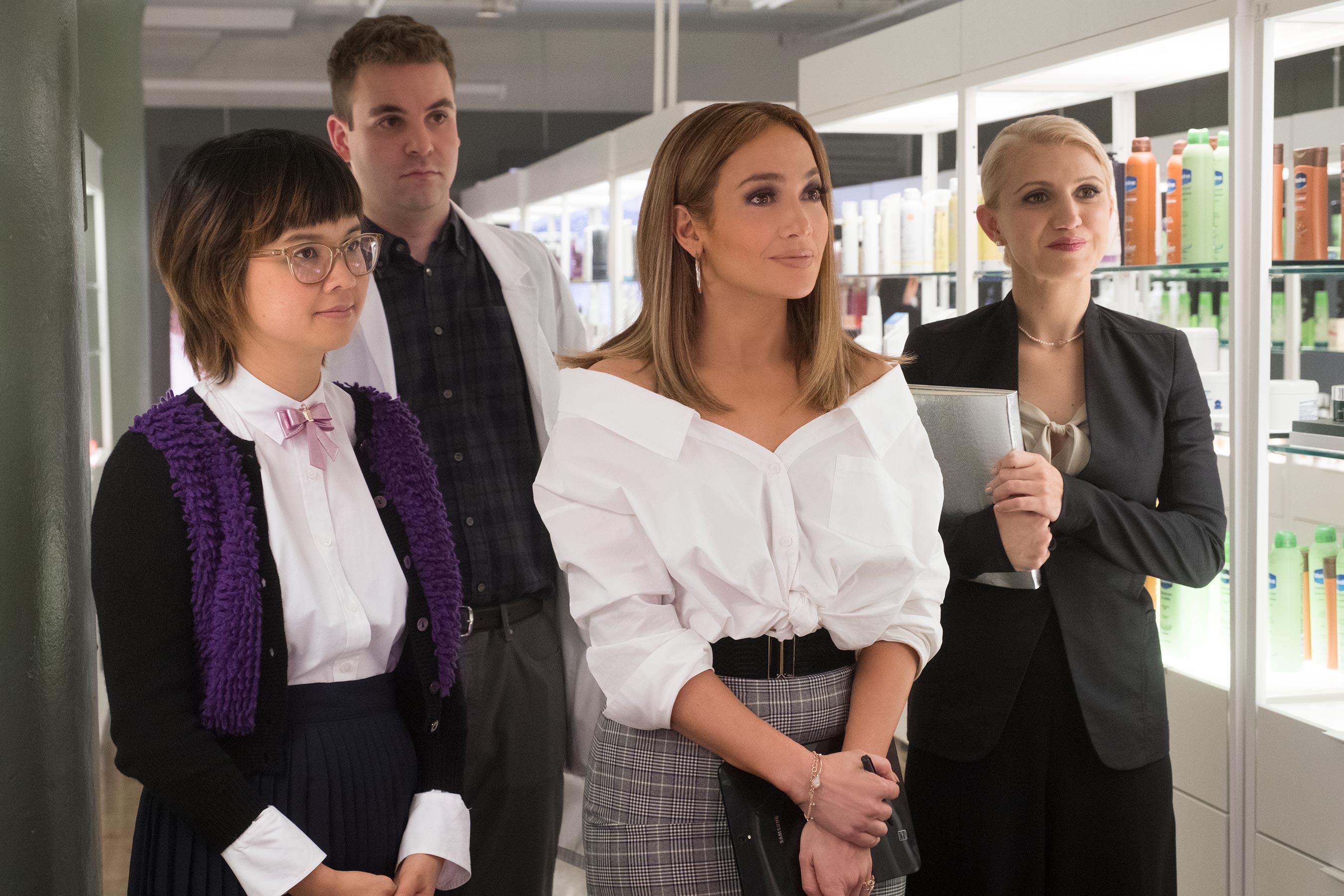
Lopez is completely out of her element with the physical comedy. She sells tripping over a barrier about as convincingly as Denise Richards did playing a nuclear physicist in The World Is Not Enough. Not helping is her complete lack of comedic chemistry with co-stars Leah Remini, Treat Williams and Dave Foley. When the top comedic performance of the movie is delivered by Charlyne Yi… there’s a problem.

The film’s entire structure is supported by the worst kind of cliches: Maya’s lie and the hoops she has to jump through to keep the lie alive; the workplace competition that was tired in 2013 when The Internship did it; and a lazy second act reveal so bad it’d feel out of place in a Hallmark Christmas movie. Second Act is a Frankenstein’s monster of plot points from already terrible movies.

This is a movie that your mom who sees one movie a year will probably love. For the rest of us, it’s the worst movie of 2002 that somehow got released in 2018.

The Other Queen Movie

Mary Queen of Scots

by Rachel Willis

From a technical perspective, everything about director Josie Rourke’s film, Mary Queen of Scots is nearly perfectly realized.

Saoirse Ronan is resplendent as Mary, the rightful queen of Scotland and contested heir to the throne of England. Margot Robbie is equally enlivening as Mary’s cousin, better known as Elizabeth I.

The film begins with Mary’s return to Scotland at the age of 18 following the death of her husband, the Dauphin of France. As she assumes her rightful throne from her half-brother, she is quickly met with opposition. John Knox (David Tennant), a Protestant minister – and also one of the leader’s of Scotland’s Reformation – immediately dismisses her rule as she is both Catholic and a woman.

From Knox’s initial dissent, more threats emerge, primarily from the English queen, Elizabeth I.

Dual narratives tell the story of Mary and Elizabeth’s rivalry. Through letters, the queens express solidarity, but behind the scenes, Elizabeth worries. Her most loyal advisor, William Cecil (Guy Pearce) stokes those fears. But his genuine affection for Elizabeth is a glaring contrast to Mary, who frequently stands alone.

Much history is condensed in the two hour running time. Because of this, the movie flows smoothly, but history is glossed over, changed, or omitted entirely. While this works, it’s also misleading. Mary’s trusted advisor, David Rizzio, is reduced to a minstrel who is more handmaiden than advisor.

It’s not unusual for a fictional film to mold history to fit a story, but the most disappointing aspect is the portrayal of Mary. The film asserts that Mary was a good queen with a good heart who was an innocent victim of the people around her. This begs the question: Was Mary truly an innocent – a pawn at the mercy of scheming men? Or was she a ruler like any other? One who made mistakes, bad choices, and whose ambition was outmatched by another’s power?

The history surrounding Mary has always been controversial – it’s impossible to know exactly what she knew and what she plotted. But by portraying Mary as a victim, the film reduces her to a caricature rather than a woman – a queen – with agency.

It’s a disappointing decision in an otherwise stunning film.

Beautiful Ben

Ben is Back

by Hope Madden

Family can be a nightmare during the holidays, eh? Well, if you think your Fox-News-spouting uncle is a problem, you need to meet Ben.

Yes, Ben is Back, the damaged teen at Christmas drama from writer/director Peter Hedges, is clear Oscar bait. It is, after all, a family drama starring two of the Academy’s favorite thespians, Julia Roberts and the filmmaker’s own son, Lucas Hedges.

Lucas Hedges plays Ben, the eldest son of Holly (Roberts), who surprises his family—mom, sister Ivy (Kathryn Newton), half siblings Lacey and Liam (Mia Fowler and Jakari Fraser, respectively) and stepdad Neal (Courtney B. Vance)—on Christmas Eve. Ben’s been away in rehab, and not everyone is as thrilled at the prospect of reliving Christmas Horrors Past as Holly seems to be.

Though filmmaker Hedges’s script has a few rough edges, one of its great strengths is its limits. Ben is Back chooses not to spell out every aspect of Ben’s addiction, his descent, his likely court-determined recover program. These are wise omissions as they make the slow reveals more powerful and leave you feeling less manipulated.

What unspools as a tense family drama takes a wild left turn by act three, when Ben’s shaky present and dark past come crashing into Holly’s living room only to make off with the family’s beloved mutt. The balance of the film sees mother and son drive deeper into an ugly abyss of sexual predators, junkies and criminals to have poor Ponce back for the siblings by Christmas morn.

Once the borderline thriller storyline takes flight, Hedges Senior flails a bit with pacing and tone. Hedges Junior and Roberts, however, lose nothing.

The voyage into the underbelly of Holly’s lovely suburbia offers not only some insight into the realities of drug addiction and our current opioid crisis, but allows these two talents the chance to mine their characters’ psyches.

Hedges never overstates the emotions roiling barely beneath the surface. He is almost simultaneously overjoyed, anxious, guilty, dishonest, tender, vulnerable, loyal, broken and resilient. There is nothing showy in his performance as he conveys with clarity the confusing mix of emotions and motives that surface from moment to moment.

Roberts, who has solidified her status as formidable character actor in own second act, takes command of this film and never gives an inch. She owns every scene, and equals Hedges in her own ability to swing—sometimes gently, sometimes seismically—from one emotion to the next. Again, there is nothing inauthentic or overly dramatic in this performance.

The film itself dips too often into maudlin traps. And though the third act is far from awful, the filmmaker’s insights for family dynamics and dysfunction are stronger.

He can cast the shit out of a movie, though.

The Dunce and Future King

Aquaman

by Matt Weiner

A movie that brings together Willem Dafoe, Nicole Kidman, Julie Andrews and Dolph Lundgren is inevitably going to have a lot going on. That’s certainly the case for James Wan’s Aquaman, a weird mix of origin story, Arthurian myth and anti-racist appeal to coexistence. If that sounds like a lot for the frat bro character from 2017’s Justice League, well… it is. But thankfully it’s also never boring.

The new movie takes place after the events of Justice League, allowing half-man/half-Atlantean Arthur Curry (Jason Momoa) to resume his day job of serving as a one-man Coast Guard and drinking. Flashbacks piece together Curry’s life story: his father (Temuera Morrison) fell in love with the queen (Kidman) of the underwater kingdom Atlantis, who later had to choose between endangering her taboo love child or returning to the kingdom.

A series of tragedies pushes Curry on his hero’s journey, with enough family strife between him and his half-brother Orm (Patrick Wilson) to fill a Greek play. Together with the Atlantean princess Mera (Amber Heard), Curry strikes out in search of a golden MacGuffin along with his destiny, even finding time to pick up an archenemy for good measure (Yahya Abdul-Mateen II as Black Manta).

How much of a comfort it is that Aquaman is one of the better recent superhero movies depends on where you fall on the debate over whether distinctive directors should get picked for more of these big comic book projects (and given a long leash)—or if you wish we lived in a universe where they could pursue these visions without yoking themselves to Disney/Marvel or DC.

It is to the film’s benefit that Wan, veteran of horror franchises Saw, The Conjuring and Insidious, manages to tie Curry’s predictable Arthurian ascent to the most disturbing Lovecraftian horror this side of Hellboy. And it’s almost shocking to see the cotton candy brightness of Atlantis after the pummeling color palettes of Batman v. Superman and Justice League.

With his nonstop pace, steady stream of exotic settings and action that never gets bogged down in its own seriousness, Wan’s entry in the genre hits the mark as his loving homage to vintage Spielberg and Lucas—plus tentacles. Best of all, it’s a refreshing reminder that you shouldn’t need a flowchart and multi-phase corporate synergy to make a good popcorn movie.

Which is good because it doesn’t look like these franchises are going anywhere anytime soon, so if any other directors are looking to wed their creative vision to the corporate motherships then maybe I can learn to be more tolerant of the products they give birth to. It’s a message that sounds oddly familiar.

Practically Perfect

Mary Poppins Returns

by Christie Robb

Recreating the magic of a classic film like Mary Poppins seems like it should be impossible. Thankfully, with the sequel Disney proves that truly everything is possible, even the impossible.

Set 20 years after the original, Jane and Michael Banks are grown and eking out a living during the “Great Slump” (the term for the Great Depression in the United Kingdom). Michael (Ben Wishaw) has been recently widowed and is struggling to raise his three children alone when the bank sends some agents to inform him that his family home on Cherry Tree Lane is in foreclosure. He’s got until Friday at midnight to cough up the cash.

Enter Mary Poppins (Emily Blunt), who returns to take care of the Banks children. This time the stakes are clearly a bit higher. Instead of the children and nanny dealing with neglectful and boring parents, they have to negotiate grief over their dead mother, probable homelessness, and some light animated kidnapping. It’s a more Lemony Snicket approach that keeps the plot moving at a good pace, but may be intense for the more sensitive kiddos.

The drama is balanced with some exhilarating song and dance numbers that mirror, but update, those in the original film. Remember Uncle Albert? Now we have a song with Cousin Topsy (Meryl Streep). The live action/animated number occurs inside the pattern of a Royal Doulton china bowl instead of a chalk drawing. And instead of chimney sweeps elevating the kids to the London rooftops for a jig, lamplighters led by Mary’s friend Jack (Lin-Manuel Miranda) wind the kids through the sewers and engage in some stunt biking and parkour.

Throughout, director Rob Marshall is faithful to the tone of the original film. There’s a continuity established from the opening credit sequence that continues through the choices in musical score, sets and costuming. However, Marshall’s experience directing movie musicals (for example, Into the Woods and Chicago) makes for more dynamic camera work and the occasional vaudevillian set piece.

This charming bit of nostalgia makes for an excellent holiday movie that celebrates the joys of childhood, imagination and family.

https://www.youtube.com/watch?v=-3jsfXDZLIY

Wheels Keep On Turnin’

Mortal Engines

by Cat McAlpine

As the credits rolled, I turned to my friend  and said, with horror, “I think that would’ve been better…as a trilogy.”

What’s that? You’ve had your fill of YA Dystopian trilogies? You’re damn right.

But Mortal Engines suffers from the age-old curse of having a book’s worth of content in a single movie. And while that movie is OVER TWO HOURS LONG, it still feels overstuffed with backstories and subplots around the basic premise: large, predator cities on wheels roam the landscape consuming weaker cities.

It starts off well.

Okay. That’s a lie. It starts off with an exposition voice over providing bare minimum world-building that we get again in dialogue, not 10 minutes later.

Then, it starts off well. We’re treated to an opening high speed chase that delightfully plays like the bastard child of Howl’s Moving Castle and Mad Max: Fury Road that Mortal Engines so desperately wants to be.

Robert Sheehan is effortlessly lovable as Tom. Hera Hilmer is brooding and feral as Hester Shaw. And to the credit of both, Tom and Hester have some sputtering chemistry. There’s just nothing in the script to support a real connection between them. Which leaves Hugo Weaving to shine as he savors his villainous role, simplified though it is, as Thaddeus Valentine, .

With fun action sequences, CGI that melds almost seamlessly with the set, and a rousing score the movie is set up for success. Despite director Christian Rivers’s best efforts, ultimately the script just isn’t good. Penned by Fran Walsh, Philippa Boyens and Peter Jackson (who also produced) the Mortal Engines script stuffs so much context into two hours that it all but abandons real character development. And decent dialogue.

The ending of the Mortal Engines novel, the first in a series of four, is much more emotionally complicated than that of the film. The film, in fact, is painfully predictable. The more I investigate the source material (thanks Wikipedia) the more it seems the writers have sacrificed all the wrong parts of this story to make it more marketable.

Mortal Engines has a lot to say about colonialism, class struggles, capitalism, environmentalism, life after death, the will to live, and the courage to love. But it’s boiled all of its points down to catchphrases delivered in passing by characters whose names you can’t remember.

The whole b plot and an easy five supporting character could’ve been cut to give this story room to breathe. Instead, supporting characters randomly disappear to never be heard from again. An additional tragic backstory adds a full 40 minutes (give or take). These moving parts fill out a novel; they bloat a two hour adaptation.

Every time a new wonder was unveiled—an elevator made from the London Eye or a city floating among the clouds—I giggled with glee. Every time someone opened their mouths, I rolled my eyes. Mortal Engines exists in a fascinating and bizarre world, but we’re never really given the opportunity to fall in love with that world.

Houses of the Unholy

The House that Jack Built

by Hope Madden and George Wolf

What does a serial killer have in common with an indie filmmaker? Quite a lot, or so suggests indie filmmaker Lars von Trier.

We’ll say this with all sincerity: The House that Jack Built—a 2+ hour peek into the mind and methods of a murderer—is von Trier’s most lighthearted picture to date.

It’s also as tedious and self-indulgent as Nymphomaniac: Vol. II.

LvT’s artistry lies in his ability to make the viewer uncomfortable. His films are punishing, which is why his first foray into horror, the brilliant and wildly unnerving 2009 film Antichrist, was such a perfect fit. He returns to the genre with Jack, here allowing a sadistic murderer the opportunity to shed light on the filmmaker’s own discomforting artistry.

Which can work—Julian Richards’s The Last Horror Movie and Remy Balvaux’s Man Bites Dog both offer blistering achievements on the theme. But Jack falters, and von Trier falters, in two important ways.

The film does deliver sadistic glory, yet in terms of violence or depravity, it feels oddly safe. Not safe for all viewers, mind you, but horror fans and von Trier fans have seen far more envelope-pushing than what Jack depicts. There is one sequence—the picnic sequence—that is among the most perfect horror movie episodes ever filmed. Beyond that, much of this movie is competently made but ultimately tired.

We follow Jack (Matt Dillon, making the most of a surprising casting choice) through various instances of homicidal mania. As voiceover conversations with the mysterious Verge (Bruno Ganz) pay homage to Dante’s Divine Comedy, Jack’s bloody exploits become less darkly comedic and more brazenly sadistic, testing his claim that “the soul belongs to heaven and the body to hell.”

Just as the Nymphomaniac films traded provocative ideas for fist-shaking admonishments from filmmaker to critics, Jack devolves into an instrument wielded even less bluntly. Again, von Trier channels his tale through two voices: the protagonist and a straw man. Verge serves up the proselytizations on art and morality so Jack can knock ’em down, with snippets of von Trier’s previous films peppered in for anyone who still isn’t getting it.

Not that LvT’s ideas on this topic aren’t interesting – far from it- but the line between personal and self-indulgent is the same one that separates uncomfortable questions that resonate (as in von Trier’s own Dogville) from spoon-fed answers that do not. One side makes for an engaging film experience while the other falls short, no matter how impressive the visual set pieces (which Jack does indeed provide).

Von Trier has unapologetically wallowed in depravity his entire career, and those themes have served the narrative in amazing ways. Now he seems more interested in narratives that serve grandiose debates of his own artistic value.

Let’s hope that road has reached an end. While von Trier remains an artist worthy of attention, The House That Jack Built stands as another missed opportunity.

Consider the Monarch

The Favourite

by Matt Weiner

Greek auteur Yorgos Lanthimos is someone you might charitably describe as “uncompromising.” His last two English-language films include a dystopian romantic comedy and a revenge thriller rooted in Greek mythology. So it is both a delight and a relief to see in The Favourite that Lanthimos at his most accessible is also his best yet.

The story for The Favourite was originally written by Deborah Davis, later joined by Tony McNamara but with no screenplay credit for Lanthimos—a rarity. The film covers the later years of Queen Anne’s reign, during which the War of the Spanish Succession and political jockeying in Parliament are tearing the indecisive, physically frail queen in multiple directions.

But the men of the court are little more than foppish pawns. The real palace intrigue takes place between court favorite Sarah Churchill, Duchess of Marlborough (Rachel Weisz) and her new maid, Abigail Hill (Emma Stone), daughter to a once-prosperous family that has fallen on hard times. Sarah and Abigail vie for Queen Anne’s affection and behind-the-scenes power, although those two things are entangled together to varying degrees for Sarah and Abigail.

The Favourite might be dressed up as a period piece, but it’s not a demandingly historical one. Lanthimos admits to taking significant poetic license with the relationship and events between the three women. The effect isn’t just practical (although this should come as some relief if, like me, you were dreading a Wikipedia deep-dive on Whiggism).

It’s also an avenue by which Lanthimos can smuggle in his trademark eye for the very contemporary and very weird, cruel ways we treat each other. And in this area, Lanthimos has cast the perfect leading women to keep up with—and even rise above—his vision.

Stone and Weisz play off each other to perfection, with pitch black verbal volleys that threaten to turn as deadly as the war taking place beyond the mannered confines of the palace. But it’s Olivia Colman who dominates every scene, which is all the more impressive for her mercurial take on the physically deteriorating Queen Anne. Colman brings a measure of sympathy to Queen Anne that transcends what could have been played for easy mockery, and she deserves every award coming her way this year.

Lanthimos and cinematographer Robbie Ryan (American Honey, Slow West) keep the camera movement as brisk as the dialogue. The film’s frequent and disorienting use of fisheye is a recurring signature, but even the more conventional wide shots manage to combine a palatial sense of openness with Lanthimos’s signature creeping, queasy dread.

It felt strange to laugh out loud so much during a Lanthimos movie, especially with the undercurrents of violence and misanthropy that stalk The Favourite. Maybe it was the irrepressible performances from the leading women. Or maybe lines like “No one bets on whist!” are just inherently funny.

Whatever the reason, this deadly serious comedy of manners is among the director’s—and the year’s—best.