Category Archives: New In Theaters

Reviews of what’s out now

Proper Credit

Materialists

by Hope Madden

Just two years ago, filmmaker Celine Song produced a breathtakingly original romance movies in Past Lives. With that film, she delivered a love triangle of sorts where no character felt cliched, no choice felt obvious, and every moment felt achingly true.

Now she sets her sights on something decidedly more mainstream, but that only makes her instinct for inverting cinematic cliché in search of authenticity that much more impressive.

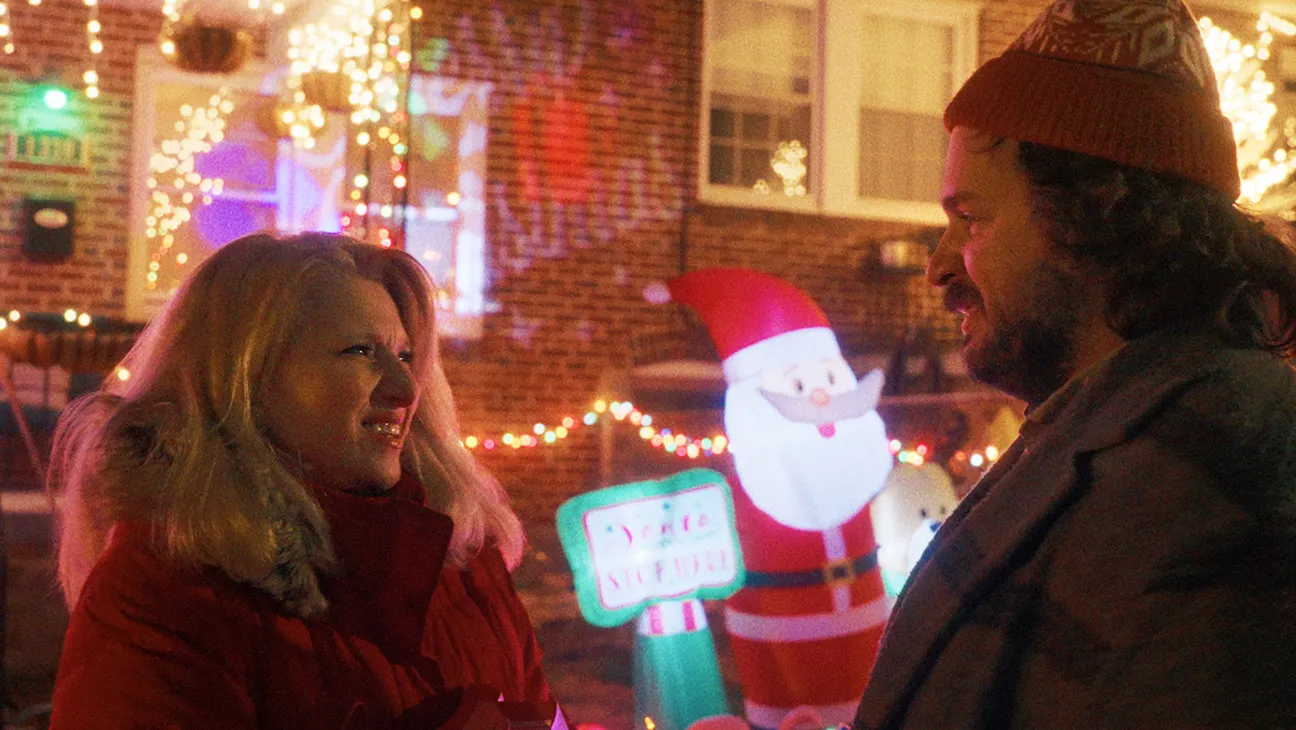
Lucy (Dakota Johnson) is a skilled matchmaker at a high-end Manhattan boutique. When she attends the wedding of clients she introduced, she runs into her ex, John (Chris Evans). He’s handsome, thoughtful, clearly into her, and he’s catering. Actually, he’s a waiter working for the caterer.

Lucy also meets the groom’s brother, Harry (Pedro Pascal). In the parlance of Lucy’s profession, Harry is a unicorn: handsome, wealthy, smart, and single.

Immediately, we know this movie. Lucy’s job is to broker relationships. Check boxes. Create partnerships. And the film is going to teach her that a good match can’t hold a candle to the unruly nature of love.

It has been done to death. But the path Song takes to get there, and the insights and realities she explores along the route, never cease to fascinate.

Characters use the words value and risk a lot, terms that have a specific meaning in business but actually mean something quite different in the human setting. It’s interesting, in a society where women have agency and financial means, how different the vocabulary of love can be. Listening to women turn men into commodities, ordering as if from a buffet or build-a-bear, is simultaneously funny and horrifying.

Of course, Lucy has men for clients, too, and Song is quick to remind us of the entrenched language of objectification and conquest. And the different definitions of risk.

She also never asks us to root against anyone. Harry’s a gem. John’s a good dude. The one person whose flaws are explored is Lucy, and Johnson’s reflective, quiet delivery is characteristically on point, allowing those flaws to draw us closer to the character.

Materialists isn’t perfect, and to a degree, Song submits too much to formula. But the way she works within those confines is often magical.

Thanks for the Memories

The Life of Chuck

by George Wolf

Near the end of The Life of Chuck, a character enters a room and is careful to test the floor as he steps in. Organic dialog earlier in the film has let us know why he’s doing this, so no voiceover narration explaining the action is necessary.

This moment stands out, because it’s one of the few where viewers are given space to think for themselves.

This is a film that is impressively crafted, with an immensely likable cast and a broad, generically inspiring message that many people will be quick to embrace. Writer/director Mike Flanagan adapts the Stephen King novella with such earnest polish that the film can leave you feeling guilty for not liking it – and I didn’t.

Flanagan, who has already done stellar King adaptations (Doctor Sleep, Gerald’s Game) and whose own great work (Midnight Mass, The Haunting of Hill House) can have a distinct King feel, keeps the story’s reverse chronology intact.

In chapter one, teacher Marty Anderson (Chiwtel Ejiofor) and his ex-wife Felicia (Karen Gillan) try to make sense of repeated ads thanking Charles Krantz for “39 great years!” as the world seems to be ending.

From there, we see how the buttoned-up accountant “Chuck” Krantz (Tom Hiddleston) learned to rediscover his love of dancing.

And finally, we go back to two different periods in the life of young Chuck (Benjamin Pajek and later, Jacob Tremblay), as he’s raised by his caring grandparents (Mark Hamill and Mia Sara) to find joy in dance and fear of the cupola upstairs.

It’s wonderful to see Sara back in a feature for the first time in 14 years, and I wouldn’t be surprised to hear Oscar talk for Hamill. The film is often warm hearted and lovely, but the familiarity of the cosmic profundities and the constant narration from Nick Offerman reduces its overall effect to that of a pop-up audiobook.

Causes, effects and motivations are provided at nearly turn, diluting potential magic down to mundane and undercutting the power of the film’s eventual sleight-of-hand reveal.

It’s a twist you may see coming, you may not. But you will understand the surface deep lesson being sold. The Life of Chuck leaves no room for nuance or interpretation, just take your dose of bland inspiration and move on.

So yeah, thanks Chuck. I guess.

Fire in the Sky

How to Train Your Dragon

by Hope Madden

If it weren’t for Toy Story, How to Train Your Dragon would be remembered as the finest animated trilogy ever made. The tale of outsider love, parental expectations, physical limitations and dragons was as emotionally satisfying as it was visually stunning. So, it was both disappointing and inevitable to learn that it would be given the live-action treatment.

Dean DeBlois, co-writer and co-director of the animated features, returns with a surprisingly game adaptation.

Mason Thames is Hiccup, the puny, brainy son of Viking chieftain Stoick the Vast (Gerard Butler, reprising his role from the animated series). A disappointment as a Viking, Hiccup eventually finds that his weakness (empathy) is, indeed, his greatest strength. Next, to convince the thick-headed Vikings that the dragons they fight and fear are really, really cool.

And they are cool.

Hiccup’s new bestie, Toothless—the last of the Night Furies—is as beautifully, charmingly, mischievously feline as fans of the original remember. Wisely, DeBlois and team lean the balance of dragons more toward live action. They’re detailed and intimidating—decidedly less kid-friendly than their animated counterparts. One of them is always on fire, which is badass.

The ragtag gang of Vikings-in-training (Julian Dennison, Bronwyn James, Harry Trevaldwyn, and Gabriel Howell) endear and amuse. Likewise, Nick Frost cuts a fun, comical figure as wizened old Gobber, Viking trainer.

Butler, who brought power and pathos to the cartoon, is perhaps even more effective in the flesh (though under pounds of makeup and prosthetics). His confused affection, misdirected pride and aching tenderness lend real humanity to the tale.

Too bad the leads can’t muster the same. Thames and Nico Parker, as Hiccup’s rival/love interest Astrid, share no real chemistry. Parker lacks the fire the role calls for, and Thames can’t mine his fish-out-of-water moments for comedy.

DuBlois also inexplicably cuts the legs from under the original film’s all-is-lost moment, rushing to emotional safety and limiting the power of the film’s breathless climax.

But whatever its flaws, once How to Train Your Dragon is airborne, it’s pure cinema. DuBlois takes to the skies with an untamed wonder that makes the ride both real and magical. Though it may not be the masterpiece of its animated predecessor, this live action dragon adventure is a worthwhile trip.

Fun With Hand Grenades

From the World of John Wick: Ballerina

by Hope Madden

Who are the greatest female action heroes? Ellen Ripley, obviously. Beatrix Kiddo makes a good case for herself. Viola Davis cut one badass figure in G20 last year. Let’s not forget Atomic Blonde.

Ana de Armas is the latest to throw her hat in the ring — her tutu on the stage? — as Eve, orphan turned assassin in From the World of John Wick: Ballerina.

Why is she a ballerina? No idea. Zero actual narrative reason for it. But how much of Ballerina are we going to hold to that high a standard of logic?

Ironically, director Len Wiseman’s action choreography is less balletic than what we’ve come to expect from the franchise. It certainly lacks the elegant choreography that delivered the bloodshed in John Wick 4. But what Ballerina lacks in grace it makes up for with brute force. Most of the action sequences (most—not all) are on a smaller but more brutal scale than the norm for the series. This has much to do with Eve’s fondness for hand grenades.

The result is a colorful, messy but impressive bit of action.

The spectacle is still there, as is the fun mythology where essentially every third person on the planet is secretly a highly trained assassin bound to rules and consequences set by the High Table.

Ballerina remains true to that mythology. Keanu Reeves makes an appearance, as do Anjelica Huston, Ian McShane, and the much missed Lance Reddick. We visit the Continental, and the film even expands the legend to include a snow globe like little town of killers.

The spinoff film fits into that legacy, of course, because it’s the spawn of the same writing team. Derek Kolstad, who penned even the 2014 original, and Shay Hatten, who joined the project for its 2019 third installment, stay within the confines they set for the universe, just changing perspective by delivering a different killer’s POV.

So, they’re true to the idea, if not the timeline. Funny how we’re willing to suspend disbelief when giant flamethrowers are involved, but some fuzzy math with dates on the calendar is troubling.

The plot is irrelevant, which is lucky because it’s pretty trite and overused. Vengeance over a puppy? That was new. You killed my father, prepare to die? I feel like I’ve heard that one. So, the colorful shell feels pretty empty, but sometimes pretty colors are enough.

Fins to the Left, Fins to the Right

Dangerous Animals

by George Wolf

When are they going to run out of ideas for new shark movies?

Well, not today.

Dangerous Animals – director Sean Byrne’s first film in a decade – rises above the glut of silly sharksploitation yarns by aggressively hunting an adventure thriller of abduction and survival.

Jai Courtney stuffs his own jaws full of scenery as Tucker, a bawdy and boisterous boat captain in Australia who takes tourists out for shark encounters. But Tucker is always on the lookout for those visitors who may be alone and not easily tracked. And when Tucker identifies his prey, he pounces, hooking them up to a harness and slowly feeding them to the sharks while he records it all on VHS.

Free vegemite with any blank VHS tape purchase!

But when Tucker abducts American surfer Zephyr (Hassie Harrison) on the beach one very early morning, he quickly realizes he’s hooked “a Marlin,” a real fighter. Tucker loves a fight, and Zephyr is going to give it to him.

Byrne (The Loved Ones, The Devil’s Candy) shows a pretty firm hand juggling the sharky business with other genres and influences. You’ll see clear nods to The Silence of the Lambs and Hounds of Love, and Byrne is able to draw some tense, terrifying moments out of fairly standard tropes and the obligatory nonsensical choices made by potential victims.

Nick Lepard’s script falters most by wedging in a potential love story between Zephyr and local dude Moses (Josh Heuston). The narrative need to have someone miss Zephyr when she’s gone is understandable, but the thread lands as forced, contrived, and a heavy weight that drags the film down.

Courtney has never been better. His Tucker is a hammy hoot, and Courtney leans into a Mad Aussie physicality that makes the heavy handed predator metaphors more entertaining. Harrison sells the defiant grit that makes Zephyr a worthy adversary, and the two trade blows in a power struggle that keeps you engaged on the way to a finale that you’ve already guessed.

Byrne makes sure the shark footage is occasionally thrilling and always competent. But he also finds plenty of ways to make this more than just another preposterous fin story, and Dangerous Animals is better for it.

Inconvenient Arrangement

Sister Midnight

by Rachel Willis

Watching the trailer for writer/director Karan Kandhari’s film Sister Midnight did not prepare me for the wild ride I was about to take. It is best to go into this movie knowing as little as possible, so each change in direction allows for surprise. For that reason, I will give away as little as I can.

When Uma (Radhika Apte) travels into the city to marry Gopal (Ashok Pathak) in an arranged marriage, she doesn’t know exactly what to expect. She and Gopal knew each other as children, but it’s clear they no longer have any idea what makes the other one tick.

We’re treated to several comedic moments as these two newlyweds navigate their shared space in one very tiny apartment on a busy street. However, the comedy quickly gives way to Uma’s despair.

As her misery grows, she finds herself unable to eat, but the only thing her female neighbors seem to notice is how pale she appears. Many of them ask her which whitening cream she uses.

This is one example of how deeply embedded into the culture the film lies. While most of the film’s details transcend culture, Kandhari doesn’t beat anyone over the head with extraneous information. Some things will likely go over the heads of anyone unfamiliar with India’s cultural history and background, but the audience can still identify with how Uma feels, which keeps the story relatable.

Though Sister Midnight retains its humor, it’s impossible to deny the sadness that underlies it. As the film progresses, Kandhari peppers in horror elements. A couple of scenes even reminded me of Ari Aster’s Midsommar, though Sister Midnight never delves so deeply into outright terror.

Apte excels as the woman whose husband is incomprehensible to her. Equally enjoyable is Pathak’s turn as the bumbling spouse who is just as perplexed by his new wife.

Sister Midnight is funny, horrifying, and a little sad—a nice blend for an interesting take on surviving an unhappy marriage.

Crane, Meet Dragon

Karate Kid: Legends

by George Wolf

The success of cable’s Cobra Kai probably made a new Karate Kid movie pretty inevitable. So here we are, in the Kai universe, bringing Ralph Macchio, Jackie Chan and the ghost of Pat Morita all together for Karate Kid: Legends.

Don’t expect “The Crane,” the new move is “Dragon Kick,” but getting to it follows the well worn KK formula. Li Fong (Ben Wang, last seen in Mean Girls) and his Mom (Ming-Na Wen) move from Bejing to NYC, where Li meets the cute Mia (Sadie Stanley) even before the first day of high school.

But Mia’s ex-boyfriend Conor (Aramis Knight, who should license his name for a new cologne) is mean, jealous and the reigning champ of the 5 boroughs karate tournament. And this year’s tourney is coming up.

Can Li put aside his tragic past – not to mention the vow he made to his mother – and shock the crowd?

Give screenwriter Rob Leiber credit for working some much appreciated script flips inside these plug-and-play story beats.

First, Li is no novice when he comes to town. He’d been studying with Mr. Han (Jackie Chan) back home, and is already skilled enough to train Mia’s Dad (Joshua Jackson) – a former boxer looking for much needed prize money – for his upcoming fight.

Plus, the choreography for Li’s early fights with baddies and bullies is total Jackie Chan – complete with nimble acrobatics and a humorous, Chaplin-esqe style that delights. Still, Li is in need of help, so Mr. Han arrives to provide it.

But Han’s specialty is Kung Fu. Where can they find a karate master? Enter Daniel LaRusso (Macchio), the prize student of Han’s old fried, Mr. Miyagi.

It is a nostalgic kick seeing them train Li together, and some nice moments of goofy humor come from the pairing. But like almost every other positive in the film, they’re buried under director Jonathan Entwistle’s breakneck pace.

At barely 90 minutes, a film that was already less-than-subtle becomes a lightning quick series of contrived blows to the head that we know are coming but powerless to stop. Whether from meat cleaver editing or a calculated nod to short attention spans, the result feels too much like an ESPN 30 for 30 highlight reel, robbing us of any chance to get truly invested and forget that we already know how this ends.

Still, Legends manages to land a few fun blows. Just don’t blink or you’ll miss ’em.

Jane Says

Jane Austen Wrecked My Life

by George Wolf

The Cult of Jane is strong, for good reason. On film, Austen’s groundbreaking work has inspired faithful adaptations, inspired re-imaginings and even romance fantasy. Jane Austen Wrecked My Life (Jane Austen a gâché ma vie) gets filed behind door number three, a fanciful rom-com that finds its joy by throwing a devoted fan into the Austen formula.

Agathe Robinson (Anatomy of a Fall‘s Camille Rutherford) is a “desperately single” bookseller who has dreams of becoming a writer -dreams that she is too scared to pursue. Her love life falls along the same lines, so Agathe seems destined to wander through life in her own fantasy world.

Things change when Agathe’s friend with possible benefits Felix (Pablo Pauly) submits the first chapters of her manuscript to a Jane Austen residency. The organizers there are impressed enough to offer Agathe a spot at their next writer’s retreat, where she’s greeted by Jane’s great-great-great-great nephew Mr. Darcy, er, I mean Oliver (Charlie Anson).

Oliver thinks Jane is overrated. Agathe thinks Oliver is unbearable and arrogant. Felix thinks he and Agathe are ready to take things to the next level.

Guess how that all plays out.

Writer/director Laura Piani knows you can guess, and she makes sure her feature debut leans into that part of the fun. This is meta Jane that manages to be both entirely predictable and consistently pleasing. It’s lush and beautifully shot, intelligent but always accessible, with strong performances and plenty of gently amusing dialog.

And while Piani scores by planting Austen’s centuries-old anxieties into our timeline, she can never quite find a groove of comedy and/or romance that feels memorable. This Jane Austen is hardly a wreck, but it lands as more sweet distraction than solid persuasion.

Mother’s Little Helper

Bring Her Back

by Hope Madden

Damn, son. The Philippou brothers know how to unsettle you.

Filmmakers Danny and Michael Philippou drew attention in 2022 for their wildly popular feature debut, Talk to Me. Before releasing the sequel, due out this August, the pair changes the game up with a different, but at least equally disturbing, look at grief.

Sora Wong and Billy Barratt are stepsiblings Piper and Andy. Andy, on the cusp of 18, is fiercely protective of his visually impaired little sister. When their dad dies unexpectedly, the pair finds themselves navigating the world of foster parenting until Andy can apply for legal custody and they can get their own place.

In the interim, Laura (the always welcome Sally Hawkins) has agreed to take them in. Well, she agreed to take in Piper, and kind of wound up saddled with Andy. Not to worry! The upbeat former counselor, whose own daughter had been blind, will find the room.

Hawkins is a dream. The film asks a great deal of her character, and she delivers on every request and more. There are countless facets to Laura, so many that a weaker actor would have had trouble delivering the depth necessary to connect them authentically. Hawkins doesn’t just manage the depth; she mines it effortlessly.

She’s surrounded by an extremely natural and charismatic young ensemble. Wong, in her first professional acting role, charms as a kid who never gives her disability a second thought. Barratt delivers heartbreaking tenderness under general adolescent dumbassedness and winds up being the character you root hardest for.

Jonah Wren Phillips haunts the film. Though he is utterly terrifying, there’s also something unmistakably sad in the performance that shakes you.  

Danny Philippou, who again co-writes with Bill Hinzman, grounds the film in character and upends tropes so often that on the rare occasion that Bring Her Back falls to cliché, it’s noticeable.

It’s a slow burn, a movie that communicates dread brilliantly with its cinematography and pacing. But when Bring Her Back hits the gas, dude! Nastiness not for the squeamish! Especially if you have a thing about teeth, be warned. But the body horror always serves the narrative, deepening your sympathies even as it has you hiding your eyes.

Australia has a great habit of sending unsettling horror our way. The latest package from Down Under doesn’t disappoint.

Samurai West

Tornado

by George Wolf

Less than ten minutes into Tornado, you’ll be wondering about the cinematographer behind the expansive beauty on the screen. That would be the Oscar-nominated Robbie Ryan (The Favourite, Poor Things), who elevates writer/director John Maclean’s Samurai survival thriller with consistently sumptuous framing of Scotland’s savage beauty.

In the late 1790’s, young Tornado (Kôki) is on the run from a ruthless crime gang led by Sugarman (Tim Roth) and his son Little Sugar (Jack Lowden). Tornado performs enchanting puppet shows with her father Fujin (Takehiro Hira), but when their traveling show crosses paths with Sugarman and his boys, some impulsive choices lead to deadly consequences.

A full decade after Maclean’s impressive debut Slow West (also shot by Ryan), he returns to a similar story structure. A young adult must again navigate harsh countryside and the threat of violence, while keeping their wits about them and their focus on a committed goal.

But this time, the young Tornado has a bit more going for her when events turn ugly. Fujin is a Samurai, and though he has been teaching his daughter the importance of patience and peace, Tornado is more than handy with a sword.

She also prefers to speak English and often scoffs at her father’s attempts to impart wisdom, character traits Maclean uses to place her between cultures. Tornado seems more vulnerable as Sugarman closes in, and the need to accept her destiny becomes increasingly clear.

Anyone who saw Slow West won’t be surprised by the Western themes here, but the influence of martial arts classics starts simmering early in Tornado before Maclean puts Samurai lore at the heart of act three. The transition isn’t completely seamless and does seem a bit overdue by the time it arrives, but terrific performances by both Kôki and Roth create a compelling dynamic on the way to a showdown.

The offbeat humor of Slow West is missed, and though the support cast is strong (especially Joanne Whalley and Jack Morris), no side character makes a mark as unforgettable as Ben Mendelsohn’s Payne from a decade ago.

Instead, it’s Ryan who isn’t afraid to steal the show. Tornado is a simply gorgeous movie, a compelling Samurai Western hybrid that’s painted on a canvas deserving of the big screen.