Category Archives: New In Theaters

Reviews of what’s out now

Is Anyone There?

Go/Don’t Go

by Brandon Thomas

The opening minutes of Go/Don’t Go hint at a burgeoning relationship drama. Shy boy meets an outgoing girl. Girl draws the boy out of his shell. Hints of electricity crackle as they find themselves engrossed in conversation. The parts are all there, but as the scene comes to a close, Go/Don’t Go crosses into something a little more…sinister. 

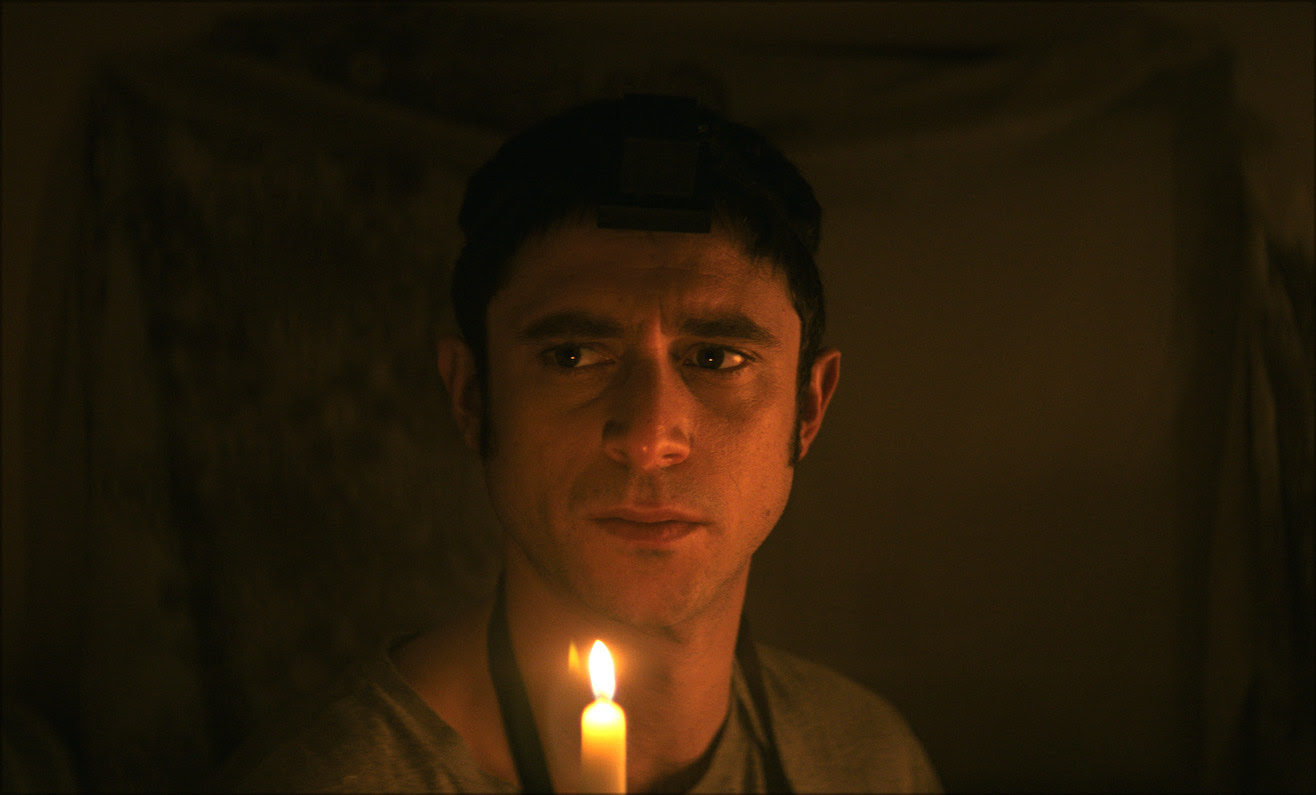
Set in a not-so-distant future, Adam (writer/director Alex Knapp) spends his days completing routine tasks. He cleans, prepares meals and works on repairing a car. When not doing his day-to-day, Adam wanders the countryside, checks homes and marks areas on a map as “Go/Don’t Go.” Adam appears to be the only person left.

Isolation and loneliness exist in the periphery of every post-apocalyptic type movie. In Go/Don’t Go, the isolation is front and center. Adam doesn’t spend the entire running time evading cannibalistic marauders or dispatching shuffling zombies. No, Adam’s conflict exists in the haunted memories of a past love, K (Olivia Luccardi, It Follows). 

Looked at as a typical horror/thriller, Go/Don’t Go could be a frustrating watch for many. There’s a purposeful aloofness to the narrative that builds a lot of mystery, but also never shows much interest in resolving said mysteries. Adam’s flashbacks fill in interesting character gaps instead of explaining how Adam found himself in his current situation. 

The film’s most interesting angle is how it plays with metaphor. Is the landscape in which Adam lives even real? Every house he enters has running water and electricity. The market he goes to is always stocked full of fresh products. Maybe Adam’s shyness, hinted at in those opening minutes, has consumed him after the ending of a relationship. Of course, nothing is definitive and most of this is left to the viewer to decide. 

Knapp’s handling of familiar territory is a breath of fresh air. Despite the lack of momentum in the narrative, Knapp taps into a sense of urgency through clever editing. This allows layers of character to be peeled back piece by piece. It’s enough to keep us interested and invested in a story that moves at more of a sporadic pace. 

By focusing on character and theme, Go/Don’t Go manages to stand out in a sea of post-apocalyptic tales. 

https://www.youtube.com/watch?v=38k4Mmat_6I

Not a British Comedy

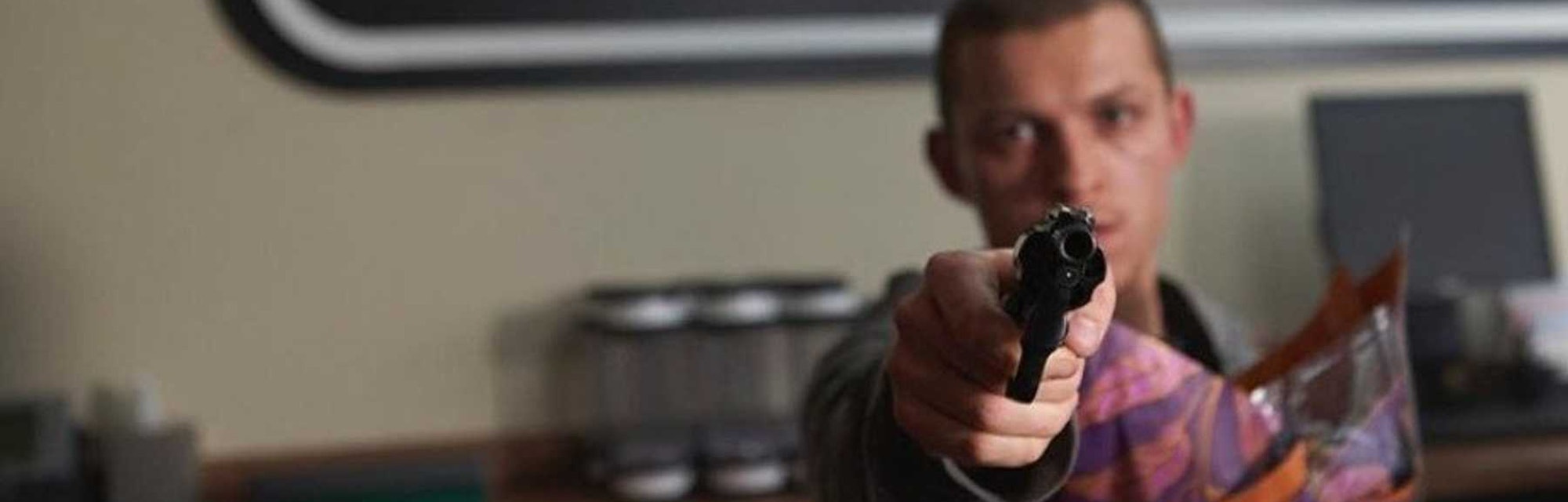
Bloody Hell

by Hope Madden

The title made me think I was in for droll English humor. Not the case.

Bloody Hell, the latest from filmmaker Alister Grierson, is a kind of American/Finnish hybrid about tourism and how it’s often a terrible decision.

Rex (Ben O’Toole, Detroit) made one mistake. Well, it was sort of a series of mistakes all at one time, but they’re only mistakes if you think of them that way, and he doesn’t. Not really. Yes, one person died as a result, but Rex’s debt is paid now and he’s ready to rebuild his life.

Just not in the US, where the video of his “mistake” made him wildly, oppressively famous. Nope, somewhere else. Somewhere far away. Somewhere calm.

Finland! It’s the happiest country in the world! (It’s true. Look it up.) What could go wrong? There’s even reindeer.

There’s also this one sadistic and insane family, and Rex is about to get to know them and learn that unwanted fame is not, in the grander scheme, that bad when the grander scheme includes Finnish cannibals.

Bloody Hell is funny. It’s mean funny, sometimes tone-deaf mean and not so funny, but the often joyously dark humor almost makes up for that. The film’s success is mainly thanks to O’Toole, who manages to be sympathetic and sort of awful.

A string of lunatic supporting turns moves the story forward. Caroline Craig and Matthew Sunderland, in particular, are creepy fun as the heads of the household.

Credit screenwriter Robert Benjamin for much of the film’s frenetic pace. He has a knack for understanding what details we really do not need to possess to be able to follow along. Benjamin has basically strung together a series of carnage-strewn set pieces, and Grierson relies on O’Toole’s charisma to elevate these for messy, bloody laughs.

With self-deprecating charm to burn, O’Toole creates a wrong-headed but hilarious and almost sweet tone that helps Grierson hold together a plot that throws a lot at you. But at its heart, Bloody Hell is the tale of a lonely guy—endearingly but borderline psychotically lonely—and what it takes for him to find someone to love.   

It takes a trip to Finland. No wonder they’re so happy over there!

Peace From the World

The Reason I Jump

by George Wolf

Ten years ago, a Japanese teenager wrote a book that quickly became regarded as “an envoy from another world.”

With The Reason I Jump, 13 year-old Naoki Higashida expressed in poetic detail how a nonverbal autistic child sees the world.

In short, it’s “details first…then the whole thing.”

For the film adaptation, veteran documentarian Jerry Rothwell gently weaves narrated passages from the book around visits with a handful of other mostly nonverbal autistic teens from around the globe.

The wonderful cinematography from Ruben Woodin Deschamps is a perfect vessel to unveil the beautifully undiscovered country the film explores. These teens are talented, intelligent and expressive, longing for friendships that only require “peace from the world.”

And more than anything, they want to change the perception of autism by joining the conversations they’ve long been the subject of. The Reason I Jump is a touching introduction into how much we can learn by listening to them.

Better Together

If Not Now, When?

by Hope Madden

Meagan Good and Tamara Bass have essentially grown up before our eyes. Mainly taking supporting roles in films and TV, the veterans have been fairly consistent presences since the Nineties.

For their latest, they create their own roles and their own stories. If Not Now, When?—written by Bass and co-directed by the duo—chronicles the lives of four high school besties facing their thirties and wondering what went wrong.

Good and Bass co-star as, respectively, a professional facing her addiction problem and a nurse unwilling to hope for a family of her own. They’re joined by Mekia Cox as a football star’s unhappily pregnant wife, and, most impressively, Meagan Holder as a mother torn between family and ambition.

The four have a fairly solid chemistry, with Holder bringing a mellow, peacemaker vibe that diffuses much of the melodrama the film flirts with. A solid supporting cast—Edwin Hodge is especially strong as a love interest—help give each character’s personal story some needed depth and interest.

Bass’s script is too often superficial, creating moments for each star to shine, but those moments invariably feel unearned. Without weightier or more believable interior lives and conflicts, flashes of heartbreak or breakthrough come off as little more than fodder for an acting reel. They rarely feel like honest moments in a character’s life.

If Not Now, When? does a lot right, too. The pacing of each character’s arc is different, so the excitement and poignant moments are staggered—more like real life. We don’t all hit our own personal highs and lows simultaneously (thank God), and neither should these characters. The cadence not only lends some needed authenticity, but it gives the film a slight irregularity in its structure, which keeps it from feeling formulaic or predictable.

In keeping with that thread of authenticity, Bass wisely avoids closing each individual story with tidy precision. Will she or won’t she? And how will that turn out for her? The questions are rarely answered with any real finality, and that emphasizes the film’s point, which is not how each one is doing individually. Bass and Good are more interested in exploring how they do together.

Troubled Water

Pieces of a Woman

by George Wolf

Pieces of a Woman opens with a crew working on bridge construction. It closes with that new bridge standing strong after many months of work. And it between, the film gracefully navigates how one woman learns to rise above some deeply troubled waters.

Vanessa Kirby is devastatingly good as Martha, a pregnant Bostonian who settles in with her partner Sean (Shia LaBeouf, a bit too showy) for the home birthing experience they have planned since day one.

What they didn’t plan on was backup midwife Eva (a terrific Molly Parker) having to take the lead when their original choice is tied up with another, longer-than-expected delivery. And when events turn tragic, Martha and Sean are hit with waves of grief while family, friends, and lawyers search for blame and restitution.

Director Kornél Mundruczó wields a camera that meanders to great effect, utilizing slow, extended takes and Benjamin Loeb’s dazzling cinematography to completely immerse us in Martha’s emotional upheaval. Mundruczó teams again with screenwriter Kata Wéber (White God, Jupiter’s Moon) for a gentle journey toward one woman’s healing, where the clear metaphors (the bridge, Martha’s fixation on apples) and moody score (credit composer Howard Shore) ultimately land with more sincerity than force.

And what a vessel the filmmakers have in Kirby, who stakes her claim as a talent full of staggering depth. From the robotic, soul-deadening way Martha responds to condolences to her final defiance against her tone deaf mother (a blistering Ellen Burstyn), Kirby delivers every note of Martha’s arc with a humanity that is achingly real.

This is a film that delivers just what the title promises: one woman, shattered into pieces, grasping for the chance to heal in her own way, on her own terms. And even in its most uncomfortable moments, Pieces of a Woman doesn’t blink.

That, and Kirby, make it hard to look away.

Cloudy with a Chance of Whoop Ass

Shadow in the Cloud

by Hope Madden

Sometimes, you’re just in the mood for a B movie, especially if it’s a creature feature.

Extra points if it’s a feminist take on a misogynist’s story.

Shadow in the Clouds co-writer Max Landis has been accused of sexual misconduct and/or outright assault by eight different women. And while it’s tough to stomach any ticket purchase benefitting him, the truth is that co-writer/director Roseanne Liang’s film has stylized fun in depantsing exactly the kind of weak, entitled, insecure crybaby that makes you think of Max Landis.

If you’ve seen the New Zealander’s 2017 horror short Do No Harm, you’ll recognize Liang’s writing here.

The film tags along on a non-combat WWII military flight out of New Zealand. With seconds to spare, an unexpected female flight officer named Maude Garrett (Chloe Grace Moretz) boards the flight carrying a duffel bag with confidential contents.

The rowdy, boorish, some would say violently sexist crew quickly stashes Maude – sans duffel – in the gun turret until take off.

This is a brilliant move, cinematically. It creates immediate, palpable tension because she is locked into a tiny cell dangling from a moving airplane and dependent upon the good nature of the mainly bad natured men above.

It also allows Moretz and Liang the opportunity to introduce any number of terrifying elements out there in the clouds.

But mainly, it gives Moretz the chance to own the film for a while, and she does. Together filmmaker and lead slyly reveal more about Maude, ratcheting tensions and thrills as they do. Liang leans into budgetary constraints, developing a cheesy retro vibe while finding appealing ways to introduce different characters.

In many respects, the writing is the weakness. Too often scenes devolve into obvious but inauthentic ways to further the plot. Still, a lot tends to be forgivable in an openly, charmingly B movie.

If the style doesn’t engage you immediately, abandon all hope. The film builds on style, repaying your attention with increasingly insane action ending in a climax where one fight, one monster stands in for every belittling, dangerous, violent, controlling obstacle Maude has ever faced.

You can picture Max Landis if you like.

Shadow in the Cloud is a ludicrous, over-the-top action horror. It knows what it is and it delivers on its promises.

Eighties Lady

Wonder Woman 1984

by Hope Madden and George Wolf

During a moment in time when a TV personality megalomaniac attains unprecedented and appalling power and threatens global civilization, it’s good to find a little hope in humanity.

Or at least a diversion, so let’s watch Wonder Woman 1984, eh?

Gal Gadot returns, lasso in hand, to defend the world from Eighties-style greed and fashion in a film that homages Reeve-era Superman while it straps some social commentary in shoulder pads, and lets loose with some thrilling fun.

Unburdened by the origin story of her 2017 original, co-writer/director Patty Jenkins is free to expand the hero’s narrative. 1984 finds Diana Prince as a Smithsonian anthropologist working with the socially awkward gemologist Barbara Minerva (Kristen Wiig, a blast) when self-help ponzi scam artist Maxwell Lord (Pedro Pascal, slimy perfection) brings Big Comic Book Villainy to the DC mall.

Lord is looking for a 4,000 year old artifact that grants wishes. But when the dream stone gives, it also takes, and Diana’s sleuthing finds that over the many centuries, entire civilizations have paid the cost.

While the last film weakened in the final third with an overly cumbersome finale, WW84 only gets better as it progresses, making that two and a half-hour running time seem much more palatable.

The story turns manage to find real hope in the face of overwhelming global selfishness and the destruction that comes with it. The Reagan-era spin is luminous—Whamtastic, even—and Jenkins displays a delightful knack for the Eighties-style action sequences.

Bigger! Bolder! With leg warmers attached to legs that ain’t afraid to kick a sexist pig where it counts.

Gadot’s easy grace creates a more wizened hero than the naieve goddess of the last go. Jenkins and her co-writers even find a perfectly reasonable and wildly welcome way to bring Steve Trevor (Chris Pine) back from the dead. The chemistry between the two actors again sparkles with endless charm while Pine’s “man out of time” deadpans fuel the funniest lines in the film.

And this film is funny, playful even. But more than anything, this episode is a bow to truth, and to the belief that the truth still means something. If it doesn’t, not even a superhero will be able to save us. And the truth is, WW84 finds a thoroughly entertaining, surprisingly touching way to point that out.

And stay during the credits for a welcome stinger.

Love Notes

Sylvie’s Love

by Rachel Willis

Writer/director Eugene Ashe (Homecoming) helms a charming, if paint-by-numbers, love story in Sylvie’s Love.

Young saxophonist Robert (Nnamdi Asomugha, Crown Heights) is instantly smitten with Sylvie (Tessa Thompson, Annihilation, Little Woods) when he walks into her father’s record store and sees her at the counter. Though Sylvie’s engaged, that doesn’t stop two from forming a connection.

The chemistry between Thompson and Asomugha is undeniable. Particularly in the early stages of the relationship, these two characters radiate attraction. The early sexuality of young love then gives way to a sensuality that blends seamlessly into something more mature as the years pass. Thompson and Asomugha bring an unmistakable authenticity to the relationship, and to the depth of their characters’ feelings for each other.

The first two acts follow a conventional pattern, much of the dialogue you could voice before the characters do. But at times, Ashe surprises with a few well-chosen moments. The third act strays outside the realm of predictability, but not by much. It’s not hard to figure out where the film is going to take you, but whether or not that bothers you depends entirely on how invested you are in Sylvie and Robert’s relationship.

The focus is sometimes too narrow, which one sees very rarely. Far too many films take on more than they can handle. One of my biggest criticisms of the film is too much of a spoiler to reveal, but a particular character feels like an afterthought in much of Sylvie and Robert’s orbit. This is their world, and other people barely inhabit it. This leaves a few irritating loose ends that, while not essential to the film to clear up, are a thorn in its side.

An epic love story must have its characters go through a few ups-and-downs and navigate obstacles to determine if theirs is a love that will last. There is some fun in watching Robert’s career as a saxophone player over the course of the film, and as a jazz musician in the 50’s and 60’s, you can be sure there’s a fantastic soundtrack boasting some of the greatest songs of the era. The same can’t be said for the score, which is often distractingly sappy.

The holidays seem a perfect time to get lost in an epic love story, but Sylvie’s Love isn’t quite compelling enough to join the ranks of the truly great romances.

Contact Tracing

The Midnight Sky

by George Wolf

Between sci-fi and horror, it’s sometimes hard to keep track of which genre relies more heavily on recycled ideas. Since I see more horror than anything else, I’m inclined to lean in that direction, but The Midnight Sky adds one to the science fiction tally, building its very respectable tale on some very recognizable building blocks.

Director George Clooney also turns in a gritty and understated performance as Dr. Augustine Lofthouse (nice!), a revered scientist in the year 2049. Three weeks after a cataclysmic event on Earth forces survivors underground, Augustine chooses to remain at his Arctic Circle observatory. His hope is to make contact with Aether K-23, and warn the five crew members finishing a two year mission that there is no home worth returning to.

Augustine’s simple goal gets complicated by his discovery of Iris (Caoilinn Springall), an eight year-old girl missed during the outpost’s evacuation, and by the realization that he’ll have to take her along on a treacherous journey to the only satellite antenna capable of making contact with Aether.

Clooney and writer Mark L. Smith (The Revenant, Overlord) adapt Lily Brooks-Dalton’s source novel through three rotating narratives that offer mixed results.

On board with the Aether crew, we learn Sully (Felicity Jones) and Ade (David Oyelowo) are close, Sanchez (Demián Bichir) is the quietly wise vet, Maya (Tiffany Boone) the baby-faced youngster and Mitchell is the stoic manly man we’re not surprised is played by Kyle Chandler.

There are some effectively human moments with the crew, but too much of this thread feels strangely overwritten by Smith, a tendency that only becomes more weighty during the flashbacks to a younger Augustine (Ethan Peck).

Though we learn what drives the Dr.’s frigid quest for redemption, the backstory lessons are more spoon-fed than well-earned, standing in sharp contrast to the gentler hand played between Augustine and Iris.

Remember, Clooney has a deserved Oscar nom for directing, and his latest course is steady as she goes. Many of the deep space segments, buoyed by another wonderful score from Alexandre Desplat, will make you long for a return to big screens, while two tension filled set pieces – one with a snowmobile and another sporting zero gravity blood loss – find Clooney flexing some thrill muscles to fine effect.

There’s nothing really wrong with the themes and devices here, that’s why they’re used so often. The failures of humankind and the promise of the next generation are ideas that sit comfortably in the wonders explored by science fiction. But though our current global crisis gives The Midnight Sky’s iteration some added urgency, it can’t shake the feeling we’ve boldly gone here pretty often.

The Midnight Sky premieres on Netflix December 23.

All That Jazz

Soul

by George Wolf

Pete Docter has written, directed, or been a part of the story team for some of Pixar’s greatest achievements. From Up to Inside Out, WALL-E to Toy Story, he’s helped set the standard that each new Pixar film competes with.

For Soul, Docter and co-writer/co-director Kemp Powers sense the time is right to tweak the winning formula a bit, creating a deceptively simple, beautifully constructed ode to happiness.

The updated blueprint starts with an African-American lead, Joe (voiced by Jamie Foxx), a middle-aged music teacher who still harbors dreams of stardom in a jazz combo. Just when Joe gets that long-awaited chance to play with one of his favorite artists, an out-of-body experience finds him fighting to get back to the life he’d been living.

Hence, the “soul” here may be not what you’re expecting. The music is all that jazz, but once Joe meets up with a wandering infant soul named 22 (Tina Fey), the film becomes a funny, surprising and truly touching journey toward becoming a fulfilled human being.

And what a beautiful, big screen-begging journey it is. Soul looks like no Pixar film before it, with wonderfully layered and personality-laden animation for Joe’s daily life that morphs into an apt Picasso vibe for our time in the before and after worlds. In those other worlds, Joe and 22 are gently pushed toward their destinies by the reassuring voice of the cubist Counselor Jerry (Alice Braga) amid a madcap series of detours carrying the emotional highs and lows of an inspired jazz trumpeter’s solo.

Foxx and Fey are joyfully harmonious, backed by jazzy arrangements from Jonathan Batiste, an ethereal score from Trent Reznor and Atticus Ross and a stellar supporting group of voice actors that includes Phylicia Rashad, Daveed Diggs, June Squibb, Rachel House, Wes Studi and a perfectly nutty Graham Norton. 

And though Soul delivers plenty of whimsical fun, it’s anchored by the existential yearning Docter hinted at with Inside Out’s “Bing Bong” character five years ago. 

But just when you think you know where the film will leave you, it has other plans, and that’s okay. Because while the best of Pixar has always touched us with family adventures that speak to what it means to be human, Soul leaves plenty of room for our own improvisations, producing a heartfelt composition that may be Pixar’s most profound statement to date.