When filmmakers Steve Bognar and Julia Reichert documented
the last days of Moraine, Ohio’s GM plant for their Oscar nominated 2008 doc The
Last Truck, they probably did not foresee a second nomination coming nearly
a decade later for what amounts to a sequel.
And yet, American Factory returns to the same scene,
this time to provide a fly-on-the-wall peek at the Fuyayo Glass Factory, a
Chinese/American experiment taking place inside those same walls.
The first film released by Michelle and Barak Obama’s Higher Ground Productions, American Factory is a case study in cross-cultural miscommunication and national personality clash.
After Moraine’s GM plant closed, the town sank into economic disaster—something Dayton’s own Bognar and Reichert certainly witnessed daily since the short film. Looking to expand their production in the States, China’s Fuayo Glass Industry Group purchased the old GM plant and instantly created quite a buzz.
What Reichert and Bognar capture is astonishing and
unnervingly honest. Chinese workers in Ohio are given a crash course in what to
expect from Americans, as management tutors them to expect blunt honesty and the
Americans’ belief that they are somehow special no matter who they are.
Meanwhile, American managers are treated to a company meeting in China where
the orderliness and productiveness of the workers inspires awe, the
propaganda-riddled pageantry alarms, and the sight of employees sifting through
broken glass to find pieces worth salvaging horrifies.
The human struggle at the plant mostly comes down to an
attempt to unionize, which Chinese management sees as an opportunity for lazy
Americans to gut productivity while the American labor sees it as an
opportunity to institute legal protections concerning safety, health code
regulations, wages and benefits.
It truly is as if the parties speak different languages.
Bognar and Reichert strive to provide a balanced point of view. Any finger- wagging is directed at both sides of the argument, but even that’s somewhat limited. The filmmakers and their film are more interested in the human side of the exchange. The film sheds light on the loneliness of the Chinese workers biding their time until their families can be brought overseas. We’re also privy to the early optimism and then heartbreaking disappointments faced by the Ohioans hoping for another chance to make an honest living.
While the cultural wreckage offers a fascinating sociological
experiment, the film ends far more ominously as automation proves to eliminate all
concerns over wages, hours, productivity, quality, jingoism, racism and any
other human frailty you can think of.
What the filmmakers encapsulate about humanity, culture and the future of labor is equal parts enthralling and frightening.
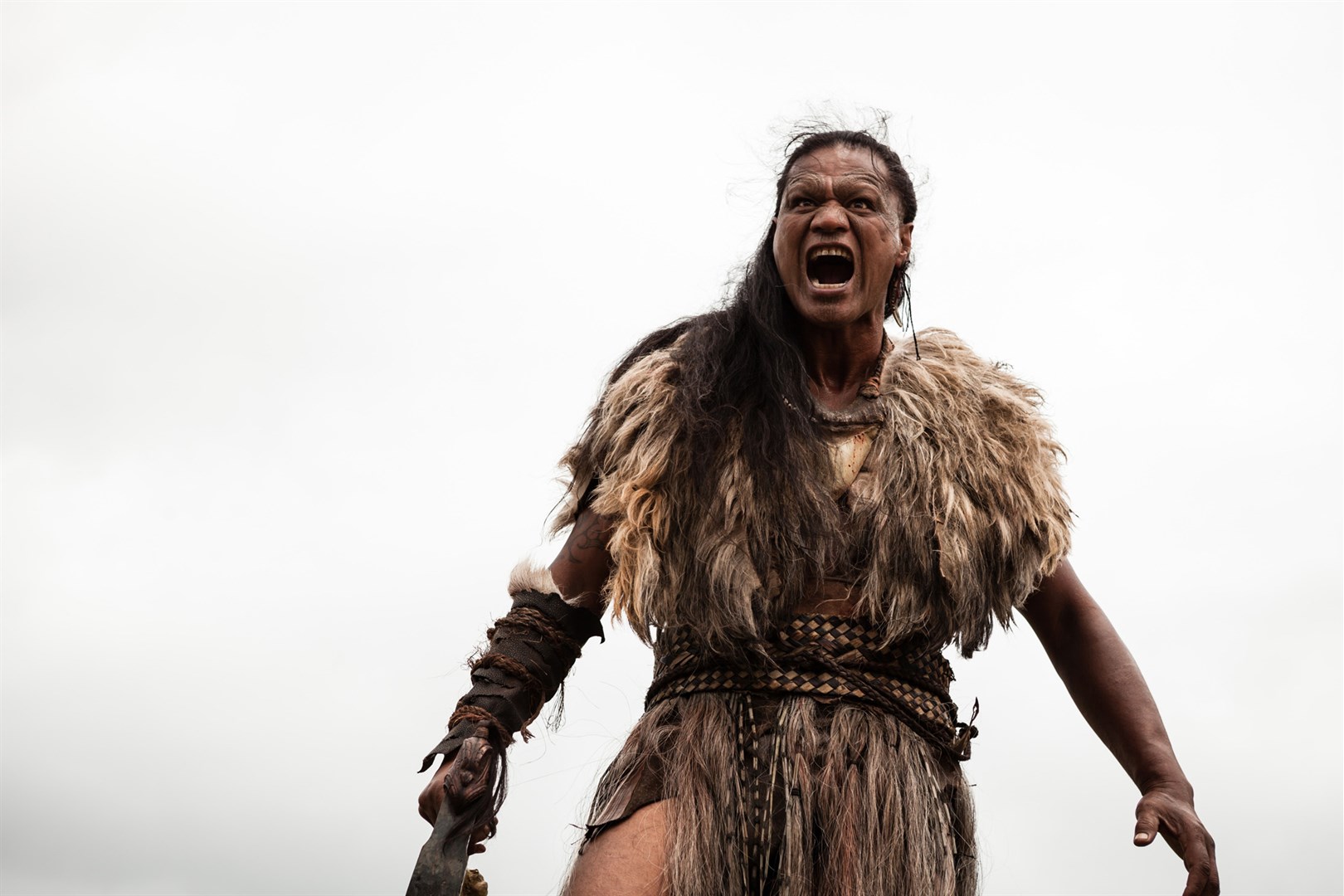
After a tense, fast-paced second episode, the third episode
of The Dead Lands is a bit of a come down.
It’s not surprising that the show runners would choose to follow an action-paced episode with a slower focus on world-building. However, The Kingdom at the Edge of the World comes off more like a placeholder than an opportunity to further the series arc.
Searching for more information about how to right the wrongs in Aotearoa, Mehe and Waka seek out three sister witches. When they find two of the three, we learn more about what’s happening to the world, but not enough to justify devoting two-thirds of the episode to these characters. Much of the dialogue feels like riddles designed to confuse rather than enlighten, and it becomes tedious trying to keep track of what is important information and what’s merely filler.
Though we’re treated to more of the Maori style martial arts, Mau Rākau, there is a scene between Waka and one of the witches that comes off a bit silly. Their choreographed moves are beautiful, but the interaction never feels real.
It’s only during the last third of the episode that the pace picks up and a few truly tense moments occur, reminding us why this show is worth watching.
Even though the pacing falters, the character development is some of the series’ best yet, with a strong focus on trust. Many times, Mehe is advised not to trust Waka by both by her friends and by those who sense his dangerous nature. Waka is similarly advised to keep his guard up around Mehe, that she will use him to suit her needs and then betray him. This is the first time Waka truly feels like a danger, and to Mehe in particular.
Despite the obvious threat Waka might pose to her, it is
clear Mehe trusts him – she even says as much while they’re training. However,
Waka seems to punish her for that trust. It begs the question: will his deadly,
distrustful nature threaten their developing bond?
When he gives her a test, she passes it – in the audience’s eyes. Waka, on the other hand, seems to make a decision that reveals his true feelings. However, we’re left hanging as to how Waka will act as the show progresses. The end of The Kingdom at the Edge of the World promises greater conflict to come.
What does true art require of its maker? It’s an incredibly
common theme in film (and books and sculpture and painting and any other kind
of art) because, for an artist, it’s a common point of introspection. Why am I
doing this, why aren’t I better than this, what would I give to be really
great?
There’s such an underlying element of the diabolical and desperate in these questions that it’s only sensible so many horror flicks have sprung from this well. From Roger Corman’s A Bucket of Blood in ’59 to Sean Byrne’s Devil’s Candy in 2015, horror movies love to explore what we’re willing to become if only our art could be great.
Joe Begos returns to the concept with Bliss, an
unrelenting attack on the senses that equates artistic obsession with addiction
and monstrosity.
Frenetically paced and entirely reliant on Dora Madison’s
impressive performance, Bliss works like a hypnotic pulse. Madison plays
artist and malcontent Dezzy, who opens the film dodging her landlord, tooling LA
in her convertible caddy and panicking. She can’t finish her latest piece, her
agent wants to drop her, she’s about to lose her exhibit space.
Why isn’t her dealer answering the goddamn phone?
When she does catch up with him, he has something potent for her. She goes a little overboard and by the time she’s semi-conscious again, a house party is in full rage, the drugs, beat and sexy look from an old friend propelling Dezzy into a hypnotic night of excess and debauchery. But somewhere in the stew and slurry of the night, her painting starts to take shape.
It’s intriguing that the more minor the character, the more
likable the performance. Begos seems not to want you to care about the lead or
those closest to her, and that’s always an intriguing approach to a film.
The only real problem with Bliss is its lack of originality, but that’s a pretty big problem. Quick cuts and quicker tempo, nimble performances and concussive beat, like Gaspar Noe’s Climax, Bliss leaves you feeling worn out. But with little new to say, it mainly leaves you feeling more hung over than entertained.
Excellent week in lazybags theater. Stay inside and watch the best film of 2019, one hell of a performance, and an unreasonably underseen action flick in which Schwarzenegger gets off the funniest line of his career.
It’s the hap-happiest time of the year! Oh, our favorite thing about Oscar nominations is the excuse it gives us to dredge up those old horror flicks lingering in every good and bad actor’s past. This year’s crop was especially ripe, too. Here are the handful that made the final cut.
5. Al Pacino & Charlize Theron: The Devil’s Advocate
(1997)
A guilty pleasure, this one. Theron’s screen debut just two
years earlier came from an uncredited role in the clearly inferior Children
of the Corn 3, but she has no lines in that and how do we pass up a two for
one like this movie?
Al Pacino plays to type as Satan, disguised as NY lawyer
John Milton who invites unbeaten Florida lawyer Kevin Lomax (Keanu Reeves) to
join the firm (after Lomax knowingly gets a child molester acquitted). Lomax
and his saucy wife Mary Ann (Theron) head north, but Milton keeps Kevin working
late and Mary Ann becomes isolated and then paranoid and then possessed.
Theron’s performance is solid throughout and Pacino’s a lot
of fun chewing scenes and spitting them out. Reeves is Reeves. But this is such
a ludicrous, over-the-top morality play—one that Theron plays for drama and Pacino
plays for camp—that Reeves’s goofball in the middle feels somehow right.
4. Tom Hanks: He Knows You’re Alone (1980)
Tommy’s first show biz performance came by way of Armand
Mastroianni’s bride stalker, He Knows You’re Alone.
The first problem with the film is the plot. It is
absolutely impossible to believe that any knife wielding maniac is scarier than
a bride just 24 hours before her wedding. She’d kick his ass then slit his
throat, all the while screaming about seating arrangements.
The bride thing is a weak gimmick to introduce a slasher, so
we watch a shiny knife catch the light just before slicing through some friend
or acquaintance of bride-to-be Amy (Caitlin O’Heaney).
In the film that’s little more than a smattering of ideas
stolen from Wes Craven and John Carpenter, surrounded by basic stock images and
sounds from early 80s slashers, the only thing that stands out is Hanks. In an
essentially useless role, Hanks introduces the idea of comic timing and natural
character behavior. Too bad we have to wait a full hour for his first scene,
and that he only gets one more before his girlfriend’s head finds its way into
the fish tank and he vanishes from the film.
3. Renee Zellweger: Texas Chainsaw Massacre: The Next
Generation (1995)
Written and directed by Kim Henkel, Tobe Hooper’s
co-scriptor for the original, Texas Chainsaw Massacre: The Next Generation
amounts to one bizarre cabaret of backwoods S&M horror. You’ll think for a
while it’s a regular ol’ slasher, what with the unlikable teens, broken down
car, and bad decision-making. But if you stick it out, you’ll find it tries to
be something different – something almost surreal, kind of madcap. It doesn’t
work, but it counts that they tried, doesn’t it?
A profoundly unconvincing set-up involves Renee Zellweger as
well as several colleagues no longer in the acting profession. They deliver
teen clichés while wandering into a truly weird situation. The four prom-goers
are terrorized by Matthew McConaughey, now leader of Team Leatherface, and his
bizarre band. It’s not necessarily weird in a good way, but weird is rarely
ever entirely bad.
There’s a visit from a limo-driven S& M maestro of some
kind, paranoid delusions of Big Brother control, a more clearly cross-dressing
Leatherface, but absolutely no tension or terror, and shocking little in the way
of horror, either, regardless of Freaky Limo Guy’s line: I want these people to
know the meaning of horror.
(Hint: they should watch the original.)
https://www.youtube.com/watch?v=PNsgi_n-hro
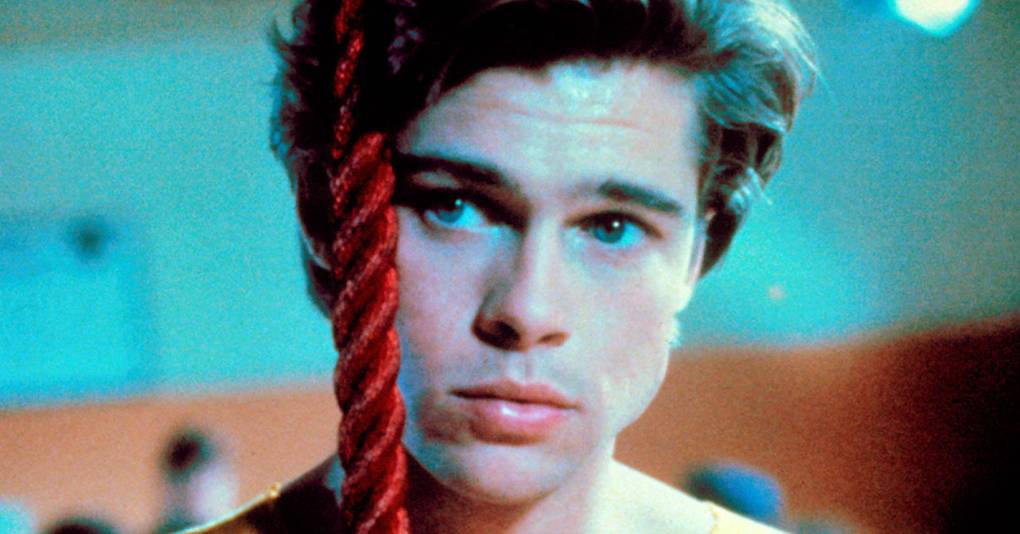
2. Brad Pitt: Cutting Class (1989)
Someone’s killing off folks at the nameless high school
where Pitt, as Dwight Ingalls, portrays the horny, popular basketball star
repressing rage concerning his overbearing father. Perhaps he’s bottling up
something more?
Sexual frustration, no doubt, as he spends every second on
screen trying to get somewhere with girlfriend Paula (Jill Schoelen, frequent
flier on bad 80s Horror Express).
Usually, when you look back on a superstar’s early career
and find low-budget horror, one of two trends emerges. Either the superstar
stands out as clearly the greatest talent in the film, or else they just cut
their teeth on a very small role. Sometimes both. In Pitt’s case, well, at
least he looks like Brad Pitt.
Still, it’s fun to see him try on some tics and
idiosyncrasies he’ll come to rely on in later, better roles. (Like Pitt’s
Oceans character Rusty Ryan, Dwight eats in every scene.)
The freakishly uneven tone, the film’s episodic nature, each
scene’s seeming amnesia concerning other scenes’ actions, and the whiplash of
comedy to psychological thriller to comedy all add up to an exercise in incoherence.
1. Laura Dern: Grizzly II: The Concert (1987)
Here’s the crowning jewel for nearly any Skeletons in the Closet feature. It
features not just a current nominee, but one past winner and ever-the-winner
Charlie Sheen. It’s hard to come by and even harder to watch. The sequel to William
Girdler’s 1796 forest-astrophe Grizzly was filmed in 1983 and never
completed, but sort of, kind of released anyway in 1987. Every death scene ends
just before the death itself, because the bear side of the struggle was never
shot. So, we get a lot of bear’s eye view of the victim, but never a look at
the bear side of the sequence. It’s surreal, almost.
Sandwiched somewhere between the non-death sequences is a never ending
faux-eighties synth pop concert. The concert footage is interminably long, nonsensical
enough to cause an aneurism, and awful enough to make you grateful for the
aneurism. You will lose your will to live. So, why bother? Because this
invisible grizzly puppet kills Charlie Sheen, Oscar nominee Laura Dern, and
George Clooney. (Dern and Clooney are making out at the time, which actually
probably happened).
A Holocaust movie where the central tragedy haunts the
characters just offscreen like a specter, anchored by two forceful leads and a
mystery that spans decades. What could go wrong? A lot, it turns out.
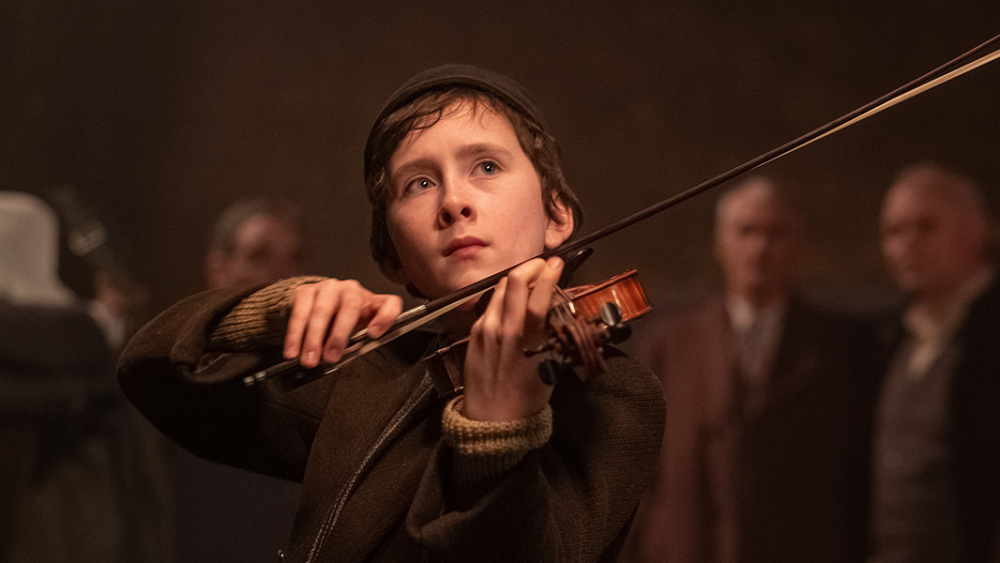
Dovidl (Clive Owen/Jonah Hauer-King) is a Jewish violin prodigy from Poland. Martin (Tim Roth/Gerran Howell) is an accomplished musician in his own right, but once Dovidl joins the household as a wartime refugee, Martin seems to lack both the talent and the affection to win over his father’s attention.
When Dovidl disappears on the night of a big coming-out concert, it tears families apart and leaves Martin with a lifelong quest for answers about what happened that fateful evening. Directed by François Girard and written by Jeffrey Caine (based on the novel by Norman Lebrecht), The Song of Names jumps back and forth in time between Martin’s contemporary search for the missing genius Dovidl and the wartime London childhood that originally brought them together.
The second biggest problem the film is up against is that
while Roth does yeoman’s work keeping the present-day mystery engaging, it’s
the slow drips of revelations from the past that hold the movie back.
But the biggest weakness is how flat and inoffensive those revelations end up being, which points to a sad milestone for the genre. It’s not that The Song of Names is aggressively bad with its background treatment of the Holocaust. In fact, it goes out of its way not to take offense. (Although Clive Owen’s spirit gum Haredi beard comes dangerously close.)
That inoffensiveness holds the movie back from being memorable,
or at least different enough to merit the solemn subject. If we’re so far
removed now from the Holocaust that not every movie needs to be a Prestige
Event (remember that time we collectively lost our minds pretending Life Is
Beautiful was deeply observed and worthy of awards, rather than a peerless
grotesquerie of the era?), we should also be far enough removed for those
involved to add something new to the conversation.
And for a brief moment, The Song of Names comes close.
The World War II-era storyline trembles with pregnant pauses around themes like
there might be nothing inherently heroic about survival, or that losing hope might
be a recognizably sane response to unfathomable enormities.
But the schmaltzy resolution is a hard comedown. And given what it’s all about in the end, The Song of Names would’ve been better off playing up the mystery—at least Tim Roth is great. And who doesn’t like a mystery that wraps up with tidy answers?
Way back in 1961, Jack Clayton directed Deborah Kerr to an Oscar nomination with the atmospheric thriller, The Innocents, a nerve-jangling screen version of Henry James’s oft-adapted novel The Turn of the Screw.
Respectful of the book without being a slave to it, Clayton perfectly
balanced that ever-important horror theme: is this woman insane or is something
supernatural afoot? The novel’s been remade for TV and the big screen dozens of
times in countries the world over. Given that, director Floria Sigismondi must
have something new to say with her latest, The Turning.
She certainly has a hell of a cast.
Mackenzie Davis has impressed in every film she’s made, regardless
of the fact that most of those films have gone utterly unnoticed by moviegoers.
She quickly morphs into whatever is needed—badass, emotional wreck, whimsical
youth, badass again—without losing an authentic human grounding. She’ll need
that as Kate, the new live-in nanny.
Finn Wolfhard (It) and Broklynn Prince (The Florida Project) portray her charges, Miles and Flora. Both kids are amazing. Wolfhard masters the contemptuous sneer of the privileged but still convinces as a tender, protective older brother.
Prince, so entirely stunning in Florida Project,
again owns the screen. Her timing is spot on and her sassiness magnificent. In
a smaller role as prim housekeeper Mrs. Grose, British TV actor Barbara Marten delivers
the perfect mix of brittle and caustic.
Not one of them manages a convincing argument as to why this
film was made.
It’s been ten years since director Floria Sigismondi made a
feature. A groundbreaking music video director, Sigismondi moved primarily to
television after her impressive 2010 feature debut, The Runaways. For The
Turning, her eye for setting and framing are clearly on display and, again,
the performances are strong. There’s just not much she can do with this script.
Written by Carey W. and Chad Hayes (The Conjuring),The
Turning suggests no solid reason for its existence. Every scene is rushed,
every revelation unearned. Early red herrings prove pointless (cheats, even, as
they make no narrative sense in retrospect).
Worse yet, Sigsimondi fails to develop any real tension or
sense of dread and there’s not a single scare in the entire film.
I knew better than to get excited about a January release, but it’s hard not to hold out hope with this group of artists. Give yourself the gift of the Clayton version instead.
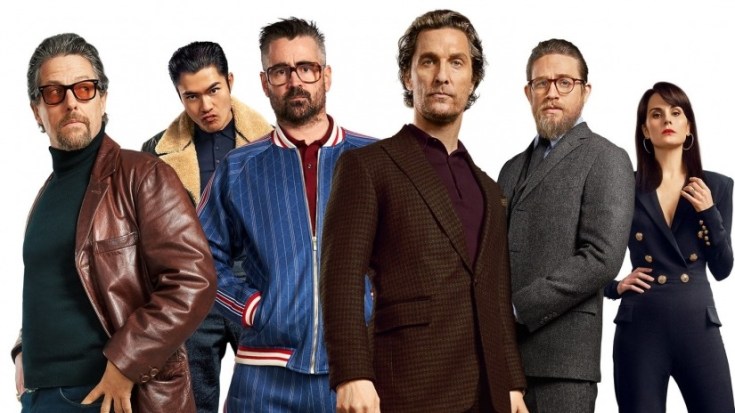
If nothing else, Guy Ritchie and his Gentlemen are not lacking in self-confidence. This is a film, and a filmmaker, anxious to prove the old guys can still cut it, and that any young upstart who thinks otherwise has a painful lesson coming.
Ritchie returns to the testosterone-laden, subtitle-needin’ bloody British gangster comedy terrain of Snatch and Lock, Stock and Two Smoking Barrels – the early films that still define him – for a stylish ride through a violent jungle with a man who’s not sure he still wants to be King.
Matthew McConaughey is Mickey Pearson, an American Rhodes Scholar who put his brains to work in the drug trade, utilizing a string of expansive British estates to build an underground network that controls the supply of “bush” aka “supercheese” aka weed.
But now it seems he’s ready for a quiet life of leisure with wife Roz (Michelle Dockery), and offers to sell his entire operation to brilliant criminal nerd Matthew (Jeremy Strong) for a sizable sum.
As Matthew is mulling, Roz smells “fuckery afoot,” and she smells wisely.
There’s plenty, and a PI named Fletcher (Hugh Grant) thinks he has it all figured out, so much so that he visits Ray (Charlie Hunnam), Mickey’s number two, with an offer to save Mickey’s hide…in exchange for a hefty fee.
Ya follow? There’s plenty more, and it’s all spelled out via the screenplay Fletcher has conveniently written. As Fletcher joyously outlines the plot to Ray (and us) over scotches and steaks, Ritchie uses the device to play with possible threads, backtrack, and start again.
The Gentlemen is not just meta. As the double crosses and corpses mount, it becomes shamelessly meta, a sometimes engaging, other times tiresome romp buoyed by slick visual style and committed performances (especially Grant and Hunnam), but marred by self-satisfaction and stale humor that might have been less tone deaf a decade ago.
You get the feeling that after a marriage to Madonna and some big Hollywood franchise films (Sherlock Homes, Aladdin), Ritchie is out to prove he hasn’t gone soft with a little raucous, chest-beating fun.
But while The Gentlemen does show Ritchie’s way with a camera can still be impressive, its best parts only add up to a fraction of their promise.
“Remember this, my friends. There is no such thing as bad
plants or bad men. There are only bad cultivators.”
Victor Hugo penned those words as he watched the suffering
and oppression in the streets of Montfermeil.
Set in July 2018, when the World Cup victory made
celebratory compatriots of everyone in France, at first blush, Ladj Ly’s film Les
Miserables bears little resemblance to the saga of Jean Valjean and that
tenacious Javert. But it doesn’t take long for the filmmaker to use the story
of law enforcement and the population of modern day Montfermeil to show that
little has changed since Hugo set quill to parchment 150 years ago.
Damien Bonnard (Staying Vertical) plays Stéphane. Ly taps Julien Poupard’s camera to follow Stephane on his first day in Paris as part of a three man unit tasked with keeping an eye on a mainly poor, primarily Muslim district.
Stéphane’s new partners, Chris (Alexis Manenti) and Gwada (Djibril Zonga), have been on the job long enough to have developed relationships and tensions in the neighborhood. Thanks to an almost absurd subplot involving a traveling circus—whose lion delivers an apt metaphor and a heartbreaking scene—Stephane’s first days on the force will be regrettable.
Ly was inspired to write the film by riots that broke out in
his own apartment building and neighborhood in 2005. That authenticity lends
the film both a visceral dread as well as a complicated compassion.
Like Hugo, Ly seems unwilling to abandon those in authority
to the fate of villain any more than he’s willing to entirely forgive the
actions of the oppressed. Rather, each side is implicated (one far more boldly
than the other), but it’s the lack of tidy resolution that makes the fate of
these characters compelling.
While every performance is impressive, young Issa Perica is
the film’s beating heart, its undetermined destiny, and he’s more than up to
the task. His lines are limited but his performance is heartbreaking, his
character really the only one that matters.
A devastating social commentary masquerading quite convincingly as an intense cop drama, I’d say Les Miserables would do Hugo proud. The truth is, it would probably break his heart.