All posts by maddwolf

Feeling Seen

The Invisible Man

by Hope Madden and George Wolf

Leigh Whannell likes him some mad science.

Two years ago the Saw and Insidious writer found his footing as a director with the unreasonably entertaining Upgrade. In what amounted to Knight Rider as imagined by David Cronenberg, the film gave the old yin/yang concept a robotics feel thanks to the work of an evil genius.

The evil genius concept is back for Whannell’s reimagining of The Invisible Man. But the most interesting thing about this version of the old H.G. Wells tale is that the man—invisible or not—plays second fiddle.

Instead of the existential ponderings that generally underscore cinematic Invisible Man retellings, Whannell uses this story to examine sexual politics, abuse, control and agency.

It’s a laudable aim, but the reason it works is casting.

How fucking great is Elisabeth Moss?

Not just in this film—but make no mistake, she’s fantastic. Whether it’s her TV work, small bits in indies like The Square or The Kitchen, or leading film roles, she’s been brilliant in everything she’s ever done. (Last year’s Her Smell is making its cable TV rounds – watch it!)

Whannell’s script is smart, with much needed upgrades to the invisibility formula as well as the havoc wrought. There are a handful of unrealistic moments, mostly in terms of character development, but a game cast (including Aldis Hodge, Storm Reid, Harriet Dyer and Michael Dorman) consistently elevates the material.

There is also an irritatingly convenient employment of security footage: there when it suits the film, but weirdly unmentioned when it would derail the plot.

The fight choreography, on the other hand, is evenly fantastic, and these one-sided battles had to be hard to execute.

But the success of The Invisible Man is almost entirely shouldered by Moss, who nails every moment of oppressed Cecilia Kass’s arc. And early on, Moss has to sell it – pardon the pun- sight unseen. We’re only told Cecelia is abused, but Moss makes sure we never doubt that it is so.

Cecelia’s desperation, her fear, her logic, self-doubt as well as belief—all of it rings absolutely true. When you’re building a fantasy film in which one character is invisible and most actors are responding to an empty room, authenticity is key (and often very hard to come by). Moss makes it look easy.

But beyond the sci-fi and horror elements, Whannell’s success at weaving this tale through a #metoo lens comes from our total investment in Cecelia as a person first, personification of a systemic problem second. Without that, the gaslighting is less resonant and the eventual payoff less earned.

The two-hour running time does come to feel a tad bloated, but this new monster vision boasts plenty of creepy atmospherics, controlled tension and – wonder of wonders – well developed jump scares.

At its core, The Invisible Man is an entertaining B-movie horror propped up by contrivance. Whannell’s aim is to give the story new relevance, and thanks to Moss, his aim is true.

Weaponizing Anxiety

Viral: Antisemitism in Four Mutations

by Christie Robb

“Those who cannot remember the past are condemned to repeat it[1].”

In the documentary Viral, director Andrew Goldberg explores the recent rise of antisemitism in the United States and Europe. In a painterly black and white introductory sequence he gives the subject matter the feeling of a fairy tale. The film begins, “It started long ago with a lie about the Jew…”

If only the rest of the film was fiction.

Goldberg compares antisemitism to a virus (topical) which evolves and spreads, empowered by its ability to adapt to the people and circumstances in different locations. The virus began thousands of years ago. Now, one of the interview subjects suggests, we are nearing the “end of a Jewish golden age of feeling comfortable.” The virus is ending a period of dormancy and becoming active once again.

In this film, we are introduced to four “mutations” of the antisemitism virus: the Far Right, USA; Blaming the Jew, Hungary; The Far Left, The United Kingdom; and Islamic Radicalism, France.

 Although tweaked in each mutation to suit the individual circumstances, the “virus” involves getting people to turn off their ability to think critically and giving them a embodied focus on which to place the blame for their fears or anxieties. (See Germany in the 1930s.)

In the US it’s the Jew as orchestrator of the Civil Rights movement and subsequent supposed lessening of accustomed white privileges. In Hungary it’s a campaign to brand George Soros as a puppet master apparently forcing Muslim refugees into the nation to destabilize national culture. In the United Kingdom it’s Jewish colonial capitalists evidently conspiring against the working class. In France, it’s Muslim former-colonial subjects violently murdering random French Jews because they ostensibly back the Palestinians against the Israelis.

Individual Jews are conflated with “the Jew,” which is associated with the threat, the change, the loss of power. Concepts that take years of study to unpack are simplified and reduced again and again until the result is a caricature of a hook-nosed grinning villain with a neon arrow pointing to it and letters spelling out, “B-A-D G-U-Y.”

The whole simplification process is only made more efficient by the availability of the Internet. Once the conspiracy theory is tailored for a local audience it can be repurposed by anyone with a cell phone and/or social media account and replicated over and over.

It’s a scary documentary Goldberg has put together. It’s scary because of the real-life examples of abuse, vandalism, and murder, and because the film itself can be a bit simplistic. This could easily be a miniseries or several individual films, rather than Viral‘s quick summaries of really complicated issues. (Just unpacking everything around the creation of the state of Israel could be its own series – or academic career.)

Still, it’s useful to be aware of when, how, and where a virus is surging. Those of us who are willing to think must keep an eye on the present so we are not doomed to repeat the past.


[1] A quote by George Santayana which is itself frequently misremembered.

Put the Load Right On Me

Once Were Brothers: Robbie Robertson and The Band

by George Wolf

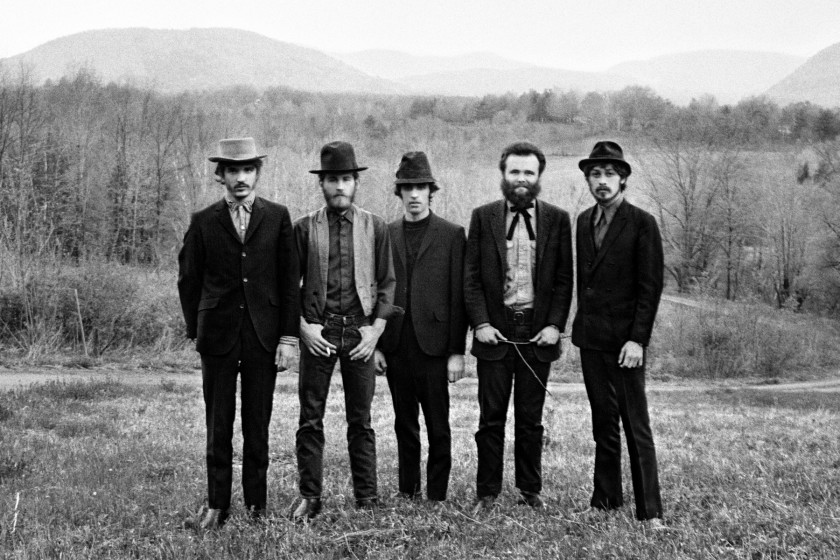
How big of a music geek are you if you can name all five members of The Band?

They were the rare musical breed whose biggest personality was not the lead singer. Still, even charismatic guitarist Robbie Robertson remained largely anonymous next to the very rock stars his work was influencing.

Writer/director Daniel Roher makes Robertson and his memoir the anchor of Once Were Brothers, and while that does limit the film’s scope, Robertson is such an enthusiastic and engaging storyteller – and his access is so valuable – you come to understand the choice pretty quickly.

Robertson met his future Band-mates while he was still a teenager, playing guitar and writing songs for Ronnie Hawkins and the Hawks. The Hawks’ talent soon outgrew Hawkins rockabilly style, as Robertson and the boys moved on to a legendary Hawks collaboration with Bob Dylan, before cementing their legacy as The Band.

Roher and executive producer Martin Scorsese surround Robertson (looking fantastic at age 76) with praise from of a succession of legendary fans (Eric Clapton exclaims “Big Pink changed my life,”) and, of course, plenty of priceless archival footage.

Music docs are always going to be most interesting to the subject’s core following, but even casual Band fans will get bracing reminders of Robertson’s guitar virtuosity and drummer Levon Helm’s passionately soulful vocal power.

Plus, getting a peek at Dylan telling folk fans “Don’t boo me anymore!” and hearing Scorsese deconstruct his own filmmaking on the iconic concert film The Last Waltz fosters an engaging intimacy. At times, the reach extends beyond Robertson’s music history to touch on the creative process itself.

As a rock doc, Once Were Brothers blazes few trails, but the ones it travels are well worth revisiting. And though the lack of any counterpoint from surviving member Garth Hudson is noticeable, tour guide Robertson is the kind you’re ready to tip when the day is done.

Rick Danko, Richard Manuel, Hudson, Helm and Robertson, by the way, but you knew that.

Geek.

I Don’t Want to Go Out—Week of February 24

It’s here! The one movie of 2019 that everybody loved, and why not? Plus, you know what? The rest of this week’s crop ain’t half bad.

Knives Out

Brainiac: Transmissions After Zero

Scandalous: The True Story of the National Enquirer

Frozen 2

Color Out of Space

Friends to the End

Brahms: The Boy II

by Hope Madden

Wow. Who would have guessed that director William Brent Bell could drive his lackluster 2016 scary doll flick The Boy to a sequel? Not the half dozen or so of us who saw it.

But here you have it, Brahms: The Boy II is a real live movie.

Katie Holmes is in it. She plays Liza, concerned mum. She and her youngster Jude (Christopher Convery) survived a trauma and now they are recuperating, along with supportive dad Sean (Owain Yoeman), in an old English manner.

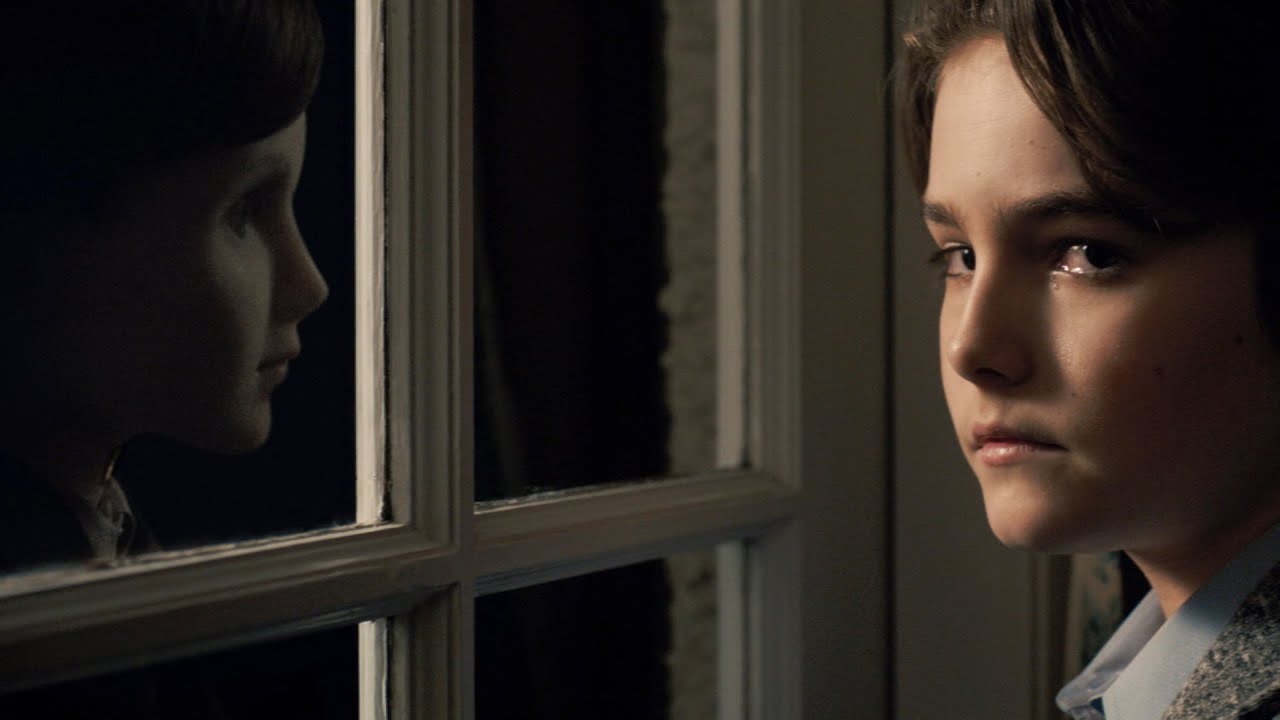
Jude finds this creepy doll buried outside, just his little white hand poking out from the ground. They take him inside and clean him up and keep him because they have never seen a horror movie.

If you have, you can definitely skip this one.

While there’s not a lot to like about Stacey Menear’s script, the problem here—as with his 2016 effort that began this whole killer plaything saga—feels more like poor direction. The story sets up a slight twist on a common horror theme: someone survives a traumatic experience only to find themselves in a potentially super natural circumstance. This begs the question, is this person insane, or is this super natural event really happening?

Scads and scads of horror films have wandered the psychological corridors of this premise. In this case, there are two possible crazies (both Liza and Jude). So, there is something here. We could twist throughout the film wondering, is this doll sentient evil? Is little Jude a budding maniac? Or is Liza suffering from PTSD and imagining it all?

We don’t wonder, though, because Bell clarifies the true culprit early and often. He’s so clear on the matter that the subsequent moments of Liza questioning her own sanity, or of Jude staring menacingly at his bully cousin, amount to an idiotic mishandling of material.

Ralph Ineson (The Witch) and his grizzled baritone make a quick appearance. There’s also a Google search or two—damn, horror movie Google searches deliver results, don’t they?! And how lucky to bump into that stranger in town who 1) asks where you live and, 2) happens to have all the info you’d ever need on the entire history of the home you’re renting. Too nutty!

But let’s be honest, do you even want to see this movie?

Muzzled

The Call of the Wild

by George Wolf

Look, we’re all thinking it, so let’s just get it out there.

Raiders of the Lost Bark.

Happy now? Okay, we can move on.

Truth is, there’s plenty of bark in this latest adaptation of Jack London’s classic novel, but not much bite to be found.

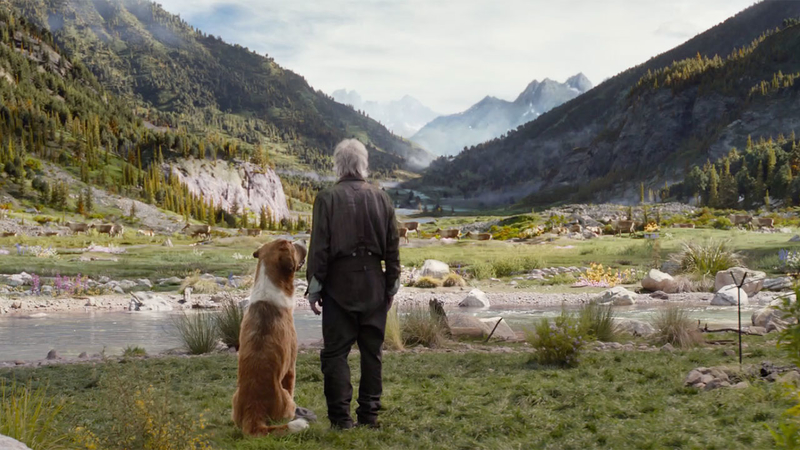
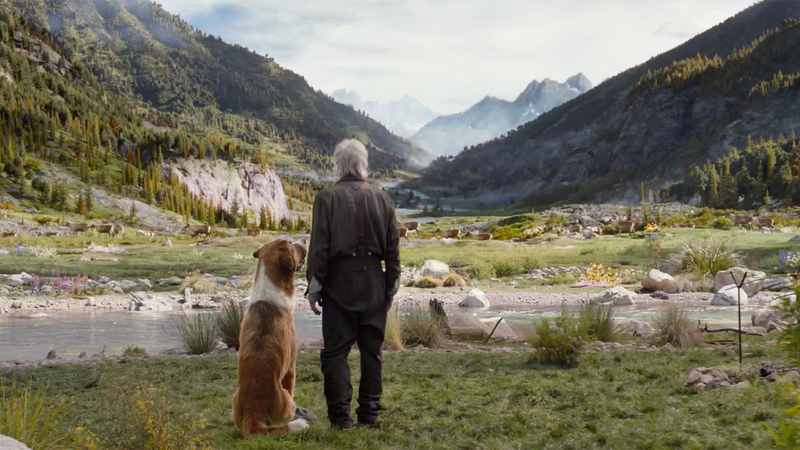
We’re still introduced to Buck, the sturdy St. Bernard-Scotch Collie mix, as the spoiled pet of a wealthy California judge (Bradley Whitford) in the late 1800s. Stolen and sold as a sled dog to French-Canadian mail dispatchers, Buck adapts to the pack mentality and the harsh conditions of the Alaskan wilderness, eventually teaming up with the grizzled Thorton (Harrison Ford) for a journey into the Yukon.

It should come as no surprise that Ford is effortlessly affecting as a world weary mountain man. What is surprising is his endearing rapport with a CGI dog (motioned-captured by Terry Notary). Ford’s narration is earnest enough to soften its heavy hands, drawing Thorton and Buck as two kindred spirits, both lost in their own wilderness.

While taking the actual wild out of The Call of the Wild seems sadly ironic, the computer-generated beasts come to fall perfectly in line with director Chris Sanders’ family-ready vision for the enduring tale.

Stripped of any bloody carnage, cultural insensitivities or harsh realities, Sanders (How to Train Your Dragon, Lilo & Stitch, The Croods) and writer Michael Green (Logan, Blade Runner 2049) fill the gaps with obvious questions, easy answers, and a flesh and blood bad guy (Dan Stevens in full Snidley Whiplash mode) who manages to be the biggest cartoon in a film full of computer animation.

Buck himself – looking fine but landing a notch below the motion capture high water of the last Planet of the Apes trilogy – is often stuck between Lassie and Scooby, heroically loyal while seeming to instantly understand everything from English to drunkenness.

With the sharp edges ground down, this Call of the Wild becomes a pleasant metaphor for the simple life, and for finding your place in it. In short, it’s a PG-rated primer, meant to hold a place until the kids are ready for the real thing.

Late Shift

The Night Clerk

by Hope Madden

Any film centering on a character on the Autism spectrum is risking a lot. It’s far too easy to simplify this character to a handful of tics that lend themselves to a narrative device: Mercury Rising, Extremely Loud and Incredibly Close, Forest Gump. (That’s right. I said it.)

But if it’s done well, if the character is a character and not a narrative device, the film can benefit immeasurably.

The Night Clerk falls somewhere in between these two options.

Writer/director Michael Cristofer leans on a committed cast, including the always wonderful Tye Sheridan in the lead, to pull you into a mystery thriller that may be too simple for its own good.

Sheridan is Bart. He works nights at a hotel near his home and in his off hours he practices. He rehearses human interaction, small talk. He and his mother (Helen Hunt, a touching mixture of brittle and tender) live day to day in what has clearly become well-worn patterns. Most nights at work are probably uneventful, but on this particular night, Bart discovers a murder.

The detective on the case (John Leguizamo) suspects Bart, but Bart is distracted by a kind hearted and lovely new guest (a convincing Ana de Armas).

Without Sheridan’s committed performance, the film would fall apart. At no point does Sheridan, Cristofer or this film condescend to Bart. The audience isn’t one step ahead of the character; we are piecing through the mystery along with him. We aren’t asked by the film to pity Bart but to be frustrated along with him, and Sheridan is up to the task of keeping this character from tipping into martyrdom.

The problem with this film is not the characterization of a young man with Asperger syndrome. The issue is the writing.

Cristofer may nail the characters—and for the most part, with the help of talented performers, he does. But the lapses in logic when it comes to the policework, not to mention the basic simplicity of the plot itself, keeps the film from really engaging or staying with you.

The plot feels almost too uncomplicated to be a TV drama let alone a feature film. Tensions over the outcome never rise above a flutter, and regardless of how strong the performances—de Armas, Hunt and Sheridan, in particular—this is a thriller that rarely manages to generate any real tension.

As a character study it’s intriguing, sometimes comical and certainly respectful. It’s a showcase for solid acting, but not much else.

Lukewarm Runnings

Olympic Dreams

by Matt Weiner

You have to admire the chutzpah when the first feature film ever to shoot on location at the Olympics has the star athlete’s event be over immediately after the opening ceremony.

But it’s an anticlimax that sets the tone for the rest of Olympic Dreams. Cross-country skier Penelope (real-life Olympian Alexi Pappas) is at a crossroads in her life. Young in years but already worn out in a world that measures time in all-consuming four-year spans, she spends the rest of her time at the Olympic Village wandering around, talking to fellow athletes and delaying the inevitable return to reality when she has to go back home.

She meets volunteer dentist Ezra (Nick Kroll, foreshadowing an effective mid-career transition to these reined in dramedy roles), an outgoing Olympics nerd who’s just happy to be there.

The two hit it off, united by a vague sense of longing for… well, something. It’s a movie with modest aims, which are often dwarfed by the impressive settings. The story (by Pappas and Kroll along with Jeremy Teicher, who also directs) feels like it came long after securing the PyeongChang Olympic Village as the setting.

There’s the barest of plots, a sort of fish-out-of-water romcom that plays like a mumblecore Lost In Translation. As endearing as the two leads are, there’s not a lot of scaffolding to help them out. The film relies less on subtle characterization and more on a safe bet that you’ve seen these particulars enough to fill in the blanks yourself.

It’s a shame because Kroll and Pappas excel in their elements. Between Kroll’s deadpan improv with the various athletes and Pappas’ sincere empathy for the sacrifice and emotional highs and lows constantly unfolding in the background, it’s a wonder the filmmakers didn’t play it straight as a documentary.

The film has plenty of warm moments, with Pappas especially managing to balance a range of heartbreak, uncertainty and charm in a way that doesn’t get to come through in the official behind-the-scenes featurettes during the Olympics.

There’s just not enough there to back her up. The film might take us to the finish line, but just barely.

Death by a Thousand Papercuts

The Assistant

by Christie Robb

One of the more depressing aspects of maturity is the realization that evil is somewhat banal. Rarely does the antagonist sport a handlebar mustache that he twirls while ogling the victim he’s tied to the railroad tracks. The heinous are more ubiquitous and their misdeeds are cliched. The soul is crushed, not under a train, but under the repetition of many predictable, everyday disappointments.

Kitty Green’s The Assistant is a day-long coming-of-age story. Jane (Julia Garner), the titular assistant, has held her job for five weeks. We follow her from her bleary pre-dawn commute till she shuffles away from the office hours after sunset. She’s entry level at a New York production company, one of many assistants to an entertainment bigwig with a well-used casting couch.

Her day is filled with mundane tasks: organizing travel, making copies, stocking the fridge with bottled water, cleaning cum stains off her boss’s furniture, taking messages, fielding phone calls, ordering lunch…

Concerned about a young and potentially vulnerable new-hire, Jane tries to alert folks at Human Resources. But there are no heroes at corporate.

Garner carries the film with a nuanced performance that illustrates the exhaustion of a woman who represses much of herself in order to navigate a culture that normalizes predatory behavior and rewards complicity.

Informed by Green’s research and interviews with women post-Weinstein at technology and engineering companies as well as those in entertainment, The Assistant explores the machinery involved that works to normalize toxic work environments, that exchanges tolerance of bad behavior for a modicum of opportunity.

Green’s background in documentary (Ukraine Is not a Brothel, Casting JonBenet) serves her well here. She’s got an eye for the tiny but not so insignificant details that give an office its character—whether people decide to talk or to stay silent when a co-worker enters the breakroom, who gets off the elevator first, the aggression not so subtly hinted at by sliding a box of tissues across a desk.

It’s a hard film to watch that explores what, besides our time and labor, we are trading in exchange for a paycheck.