All posts by maddwolf

Fright Club: Incest in Horror

Well there’s an uncomfortable topic! Of course, that’s what makes it so perfect for horror. Any idea that automatically induces a wince or a grimace, anything you want instinctively to turn away from, immediately creates the kind of discomfort that only horror can truly manipulate.

It’s been used for lurid ends in films like Flowers in the Attic, and has become the source of comedy in others – Tromeo and Juliet springs to mind. But often, it creates a particular kind of tension that drives a film in truly horrific directions: Jug Face, Crimson Peak, Pin, Angel Heart, The Crazies.

Here are the films we think handle the topic best. SPOILERS AHEAD!!!

6. 100 Bloody Acres (2012)

A testament to the entrepreneurial spirit and the bonds of family, 100 Bloody Acres is Australia’s answer to The Texas Chainsaw Massacre. Same body count and more blood, but a far sweeter disposition and loads more laughs.

Brothers Reg (Damon Herriman) and Lindsay (Angus Sampson) sell organic fertilizer. Business is good. Too good. Demand is driving the brothers to more and more extreme measures to gather ingredients.

Interesting the way writing/directing brothers Cameron and Colin Cairnes explore sibling rivalry, but the film’s strength is in its humor: silly enough to make even the most repugnant bits enjoyable. (I’m looking at you, Aunt Nancy. Oh, no! Why did I look?!)

5. The Woman (2011)

There’s something not quite right about Chris Cleese (an unsettlingly cherubic Sean Bridgers), and his family’s uber-wholesomeness is clearly suspect. This becomes evident once Chris hunts down a feral woman (an awesome Pollyanna McIntosh), chains her, and invites the family to help him “civilize” her.

The film rethinks family – well, patriarchy, anyway. You know from the opening, sunshiny segment that nothing is as lovely as it seems, but what lurks underneath this wholesome facade begins with some obvious ugliness—abuse, incest—but where it leads is diabolical.

Nothing happens in this film by accident – not even the innocent seeming baking of cookies – nor does it ever happen solely to titillate. It’s a dark and disturbing adventure that finds something unsavory in our primal nature and even worse in our quest to civilize. Don’t even ask about what it finds in the dog pen.

https://www.youtube.com/watch?v=GL50yBcw5wA

4. Bad Boy Bubby (1993)

Writer/director Rolf de Heer’s astonishing film is horribly marred by the fact that a cat is, in fact, killed on camera, so buyer beware. For most people, that will be reason enough to miss this one. But that just makes the director’s choice that much more tragic, because this is a really good movie.

Nicholas Hope is astonishing as the titular Bubby, a 30-year-old manchild who’s never, ever left the room he keeps with his mum.

Remember the Oscar-winning indie film Room? Remember how tragedy is somehow skirted because of the courageous love of a mother for her son? Well, this was not Bubby’s mum. Bad things are happening in that room, and once Bubby is finally free to explore the world, his adventure is equal parts deranged and soul-crushing. Hope is so frustratingly empathetic in the lead that no matter what he does, you root for him. You root for friends who will love him, for someone who will care for him, but it’s the resigned cheerfulness with which he faces any kind of abuse that really just kills you.

This taboo-shattering film is so wrong in so many ways, and yet it’s also lovely, optimistic, sweet, and funny. And just so, so fucked up.

3. Henry: Portrait of a Serial Killer (1986)

Director John McNaughton’s picture offers a uniquely unemotional telling – no swelling strings to warn us danger is afoot and no hero to speak of to balance the ugliness. He confuses viewers because the characters you identify with are evil, and even when you think you might be seeing this to understand the origins of the ugliness, he pulls the rug out from under you again by creating an untrustworthy narrative voice. His film is so nonjudgmental, so flatly unemotional, that it’s honestly hard to watch.

What’s diabolically fascinating, though, is the workaday, white trash camaraderie of the psychopath relationship in this film, and the grey areas where one crazy killer feels the other has crossed some line of decency.

Rooker’s performance unsettles to the bone, flashing glimpses of an almost sympathetic beast now and again, but there’s never a question that he will do the worst things every time, more out of boredom than anything.

It’s a uniquely awful, absolutely compelling piece of filmmaking.

https://www.youtube.com/watch?v=QcM5L-ZBmXk

2. The Loved Ones (2009)

Writer/director/Tasmanian Sean Byrne upends high school clichés and deftly maneuvers between gritty drama and glittery carnage in a story that borrows from other horror flicks but absolutely tells its own story.

Brent (Xavier Samuel) is dealing with guilt and tragedy in his own way, and his girlfriend Holly tries to be patient with him. Oblivious to all this, Lola (a gloriously wrong-minded Robin McLeavy) asks Brent to the end of school dance. He politely declines, which proves to be probably a poor decision.

Inside Lola’s house, we’re privy to the weirdest, darkest image of a spoiled princess and her daddy. The daddy/daughter bonding over power tool related tasks is – well – I’m not sure touching is the right word for it.

The Loved Ones is a cleverly written, unique piece of filmmaking that benefits from McLeavy’s inspired performance as much as it does its filmmaker’s sly handling of subject matter.

1.Oldboy (2003)

This is the one that’s utterly spoiled by the upfront knowledge of incest. It’s also easily the best example of the topic’s handling in a horror film, plus the movie is 17 years old, so we went ahead and included it. Sue us. You were warned.

A guy passes out after a hard night of drinking. It’s his daughter’s birthday, and that helps us see that this guy is a dick. He wakes up a prisoner in a weird, apartment-like cell. Here he stays for years and years.

The guy is Dae-su Oh (Min-sik Choi). The film is Oldboy, director Chan-wook Park’s masterpiece of subversive brutality and serious wrongdoing.

Choi is unforgettable as the film’s anti-hero, and his disheveled explosion of emotion is perfectly balanced by the elegantly evil Ji-tae Yu.

Choi takes you with him through a brutal, original, startling and difficult to watch mystery. You will want to look away, but don’t do it! What you witness will no doubt shake and disturb you, but missing it would be the bigger mistake.

Bring the Noise

Sound of Metal

by Hope Madden

Riz Ahmed is a guy who can do anything.

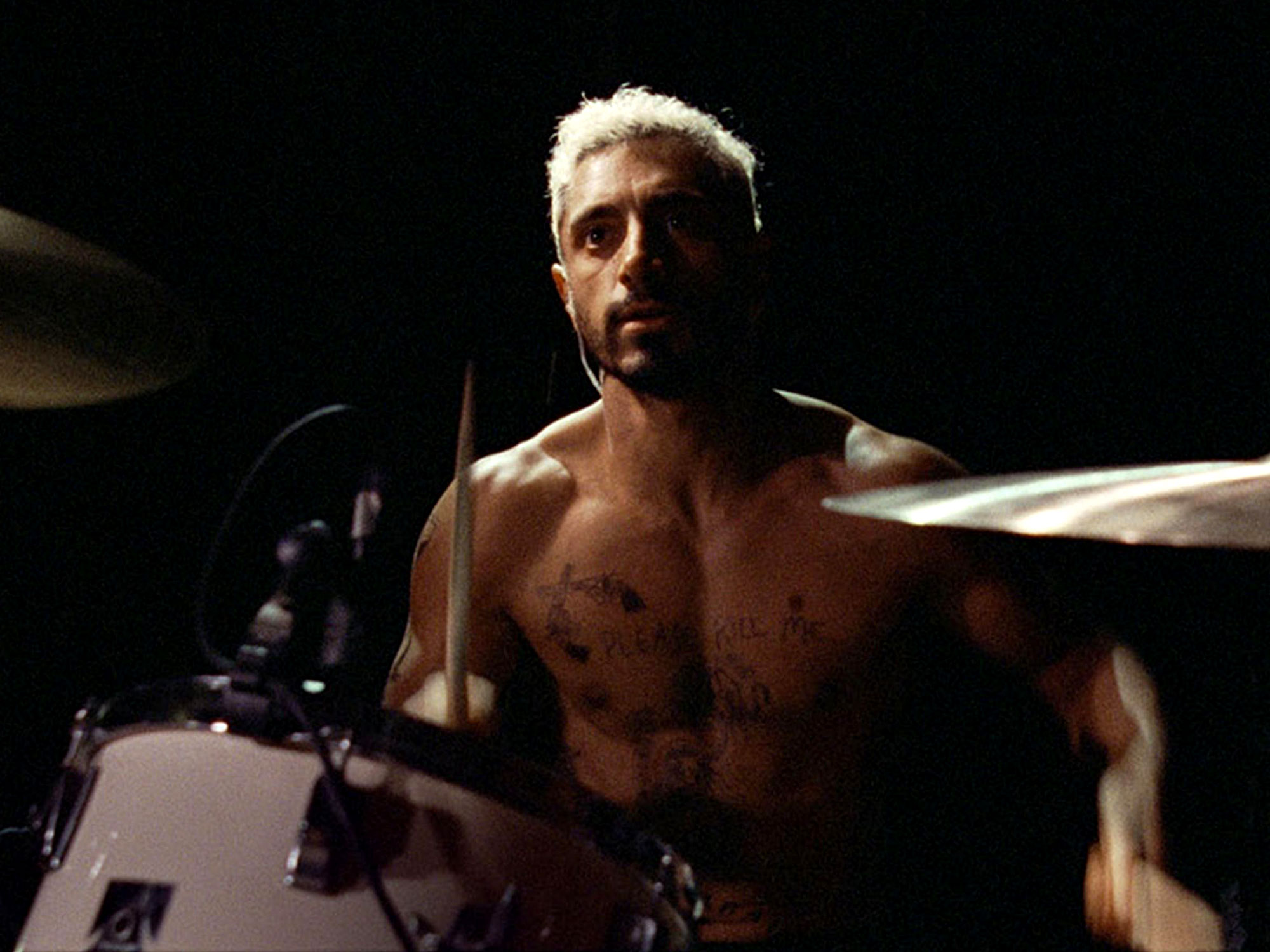
He can be funny (Four Lions), pathetic (Nightcrawler), tragic (Sisters Brothers), villainous (Venom). He’s soon to be Hamlet. But in Sound of Metal, playing a recovering addict heavy metal drummer who’s hearing suddenly deteriorates, he’s more than all of these put together.

Ahmed is Ruben, in a performance that brings this man to life with so many layers and such nuance and power it requires your attention.

Ruben’s traveling the country in an airstream with his girlfriend Lou (the always welcome Olivia Cooke). She sings/wails/screams and plays guitar, he bangs on the drums, and they keep each other safe, sane and sober. This is how they do it, one day at a time.

But Ruben’s sudden deafness is more than he can take and as he spirals out of control, Lou and his sponsor find him a place. It’s secluded, nestled on a big piece of land near a school for the deaf—a spot for recovering addicts who are deaf. No one else.

No Lou.

Even before you begin to appreciate Ahmed’s remarkable performance, you’ll likely notice writer/director Darius Marder’s choices when it comes to sound design.

Also, Sound of Metal is captioned, but not all the time. If Ruben can’t understand what’s being said, neither can you.

The sound design evokes the same sensation: of being in Ruben’s head. What he can’t really hear it, you can’t, either. Marder mimics the humming, echoing, and blurring together of sounds to create an immersive sensation that never feels like a gimmick.

It might, were it not for Ahmed, though. The rest of the cast, most of them non-actors, offer solid support. Cooke is characteristically strong, simultaneously resilient and dependent in a way that feels authentic to the character. The charming and endlessly tender third act arrival of Matthieu Amalric only adds to the emotional heft the film carries.

Sound of Metal is Marder’s first feature. It often benefits from a loose structure, but just as often, this becomes its downfall. There are scenes that amount to little, giving the film a bloated quality. But that’s not enough to defeat it, not nearly. Sound of Metal is a powerful experiment and a star turn for a talented actor.

Playing Dirty

Buddy Games

by George Wolf

Buddy Games has the smell of something that’s been sitting on a shelf for quite a while, thrown out to theaters now like a piece of rancid meat to a hungry dog.

The theaters that are still open may be starving for content, but this meal is rotten to the core.

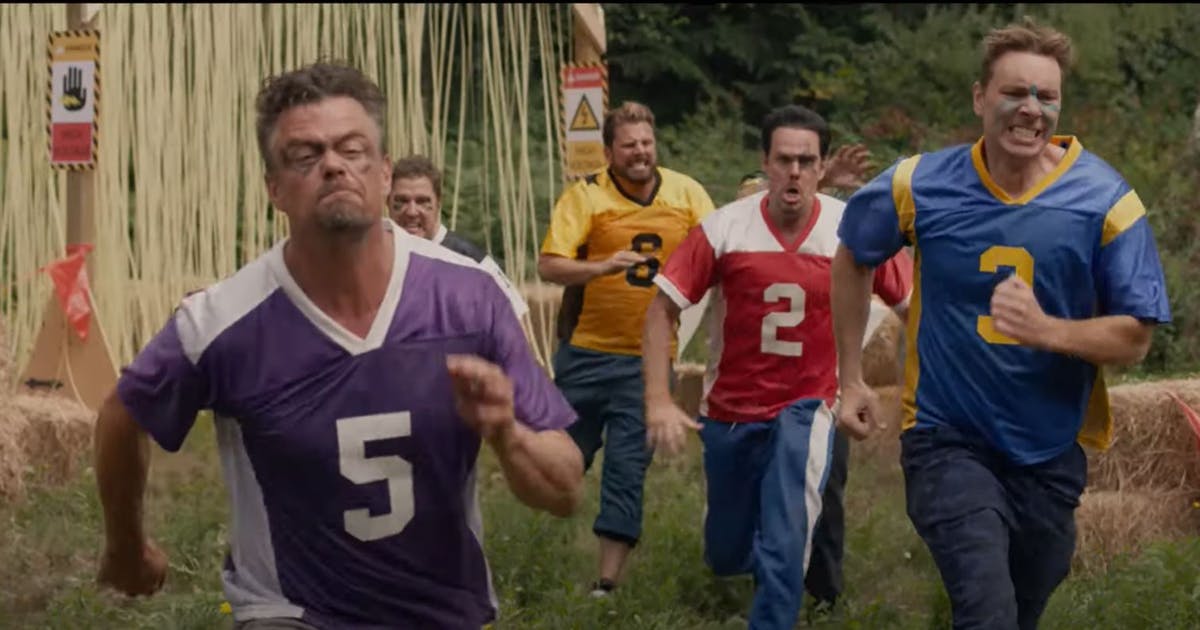
Director/co-writer/star Josh Duhamel leads a group of lifelong friends (Dax Shepard, Kevin Dillon, Nick Swardson, Dan Bakkedahl, James Roday Rodriguez) as the “Bobfather,” rich guy ringleader of their annual brodown throwdown they call the Buddy Games. Indulging their “primal need to dominate,” the guys hit an outdoor obstacle course to compete against each other in a variety of events for a lame trophy and – most importantly – bragging rights.

But an unfortunate paintball-to-nutsack incident shuts the games down, sending Buddy Game Champ Sheldon (Bakkedhahl) into a downward spiral that leads to rehab.

So at the urging of Shelly’s mom, the boys revive the Games after five long and aimless years, this time with a $150,000 prize to the victor.

If you’re sensing a mix of Tag and Grown Ups, you’re close, just remove all the charm of the former, and add even more stupidity than the latter.

It’s a tone deaf, crass and almost completely humorless exercise in objectifying women and indulging the selfishness of entitled d-bags. The longer it drags, the more you just wonder: why? Why did Duhamel pick this for his directing debut? Why did Olivia Munn accept another role as “low cut shirt for the marketing”? Why are we seeing Nick Swardson without Adam Sandler?

But, like most of those Sandler comedies, it looks like the cast of Buddy Games had a blast making it.

I guess you had to be there.

Paint By Numbers

The Last Vermeer

by Hope Madden

Who doesn’t like a story about swindling Nazis?

There’s something festive in that notion, and Dan Friedkin’s The Last Vermeer does what it can to keep the mood light as one of Holland’s unsung artists is accused of consorting with Nazis to help Goering purchase a painting by Dutch master Vermeer.

The film is set shortly after the end of WWII. Claes Bang, who seems to only make films about art (Burnt Orange Heresy, The Cube), plays Captain Joseph Piller. A former member of the resistance with a strained family life, Piller is part of an operation that finds said Vermeer, Christ and the Adulteress.

The problem with this movie is that Friedkin treats it like a mystery. Mysteries are cool, and the reveal here is certainly interesting, but there very are few clues to follow. And following those few clues are characters far less interesting than Han Van Meegeren, played here with fanciful, libidinous panache by Guy Pearce and someone’s joke of a pair of eyebrows.

Van Meegeren’s crime, if he did collaborate with Nazis to move a masterpiece from Holland’s greatest artist, is a capital one. Not that you’d know that from Pearce’s flashes of eccentricity and decadence. He seems to be enjoying himself. His character—and, indeed, Van Meegeren himself—commands attention.

Too bad Friedkin and his slew of scriptwriters decided to bury the lede. In one of those Hollywood moves, this film chose to sideline its main character—the real life figure who could face a firing squad—in favor of a safe, blandly attractive hero we can all root for.

Yawn.

Worse still is the criminal underuse of The Phantom Thread’s Vicky Krieps as the attractive but honorable assistant.

The Last Vermeer is one of those hopelessly manipulated true histories. It looks good, although nothing about the direction seems inspired. Instead the film delivers a competently made, by-the-numbers historical recreation when it could have been art.

Down the Rabbit Hole

Collective

by Brando Thomas

On October 30, 2015, a massive fire broke out at the Colectiv Club in Bucharest, Romania. Twenty-seven people died in the initial blaze while another 180 were injured. In the days and weeks following the fire, dozens of survivors died in the hospital of preventable infections. Over the next year, journalist Catalin Tolontan would uncover a trail of corruption that had all but hobbled the country’s health care system.

There’s a restraint to Collective that is much appreciated. Absent are the talking heads and exposition-heavy voiceovers that have become staples of documentaries. In fact, Collective is a film more than happy to let multiple scenes set in boardrooms and offices play out almost in real-time.

And it is riveting. 

The access granted to filmmaker Alexander Nanau is nothing short of astounding. They are there as Tolontan interviews a doctor that has smuggled disturbing footage out of a Romanian hospital. Nanau is also granted unprecedented access to newly appointed Romanian Health Minister Vlad Voiculescu. The juxtaposition between Tolontan’s journalistic work and Voiculescu’s navigation of hostile political waters is fascinating and demoralizing all at once. 

Collective’s foundation is built around that tragic fire and the deaths that occurred. However, the film never once seems exploitative. The victims and their families loom large, but Nanau feels no need to use their grief to propel his film forward. 

The power of Collective is in the film’s desire to avoid one specific point of view. There’s a matter-of-factness to the film that is methodical and precise. Films and filmmaking are all about manipulation, and this clinically observational approach feels more authentic. For a film so steeped in the hunt for the truth, Nanau’s fly-on-the-wall perspective just seems right.

Collective isn’t a flashy film – it doesn’t want to be. What it is, though, is a gripping look at the good that can come from honest, professional investigative journalism. 

Fe Fi Fo Fum

The Giant

by Hope Madden

Been a while since I’ve been swimming in the dark. Who knows what nasty things are in there?

It may be a line delivered by high school senior Olivia (Madelyn Cline), but it’s a theme writer/director David Raboy knows how to work.

Somewhere in that steamy summer between youth and adulthood, between the loose ends of rural Southern life and the tidiness of college, an ugliness lurks like a trap to keep you. On the same night as that dark swim, when Olivia and Charlotte (Odessa Young, Shirley) jump in alongside a couple of menacingly boyish buddies, a girl is murdered.

Olivia’s feeling nostalgic, maybe panicked that this next chapter will mean a separation from her closest friend. Charlotte’s preoccupation is hazier and more menacing.

The truth is, the time of year and Charlotte’s impending move have her thinking about—dreaming? remembering?—her mother’s suicide. But then, when the girl is murdered, Charlotte’s ex shows up like he’s back from the dead, himself.

And then another girl dies.

Raboy’s indie drama The Giant plays like the fever dream of someone so wedded to a certain kind of pain that they may submit to it rather than move on. The murders on the periphery, the Malick-esque use of voiceover, the hazy close ups and distorted light combine to create a groggy nightmare, both beautiful and frustrating.

The Giant’s beauty lies not only in Raboy’s intriguing framing and pacing—so thick you feel as if you’re hallucinating—but in the lead performances. Young cuts an enigmatic central figure, a tragedy waiting and possibly willing to happen. Meanwhile, Cline’s innocent and earnest turn is like its own light source in the murky Gothic.

But The Giant is frustrating in its vagueness. The dreamlike dread Raboy creates sometimes takes the place of narrative structure, the elements within his script—the serial killings, the suicide, the partying—create creepiness but they don’t serve a concrete narrative purpose. The film serves any number of potential allegorical objectives, but it never actually tells a story.

As weird as it seems, that isn’t enough to sink the film. The nastiness in those murky waters keeps your interest even without it.

https://www.youtube.com/watch?v=VmZJPaLcxA4

It’s Out There

Truth is the Only Client: The Official Investigation of the Murder of John F. Kennedy

by Rachel Willis

Quick question: do you think Lee Harvey Oswald acted alone in assassinating John F. Kennedy? If you think Oswald was part of a larger network, whether tied to the mob, Cuba, or the Soviet Union, you’re not alone.

Directors Todd Kwait and Rob Stegman want to dispel the conspiracy theories once and for all. Along with Cuyahoga County Judge Brendan Sheehan, who narrates the film, Stegman and Kwait bring us a detailed look at the findings and conclusions of the Warren Commission, the committee of men charged with investigating the Kennedy assassination.

The bulk of the film features interviews with many who worked for the Commission, men who conducted witness interviews, reviewed the police and FBI reports from the crime scene, and sifted through the numerous avenues which Oswald might have been connected.

But there is also gruesome footage – the infamous Zapruder film, autopsy photos. These scenes are hard to watch. Since these things are easy to find online, their inclusion in the film could be deemed unnecessary, but they help underscore the point being made – that the conclusion Kennedy was shot from behind is accurate.

Two of the major avenues for a conspiracy are addressed in the film – the destruction of evidence by members of the FBI, and the CIA coverup of the plot to assassinate Cuban Prime Minister Fidel Castro. Both events became known after the Commission released its findings. These are profoundly disturbing occurrences, but do they speak to a larger conspiracy?

Not every conspiracy surrounding the assassination can be tackled in a 2 hour and 20 minute documentary, so the filmmakers try to restrict their focus to not only the most major theories, but also to a lengthy examination of Oswald himself. Some of the information presented is tedious and doesn’t do anything to convince us that Oswald acted alone. However, most of the information is pertinent to the investigation and the conclusions made.

The major question: Is any of the information presented new to those who believe Kennedy’s murder was part of a larger plot?

Maybe not, but as we approach the anniversary of the assassination, during a period of history that’s ripe with conspiracy theories, it’s worth re-examining once more. 

https://www.youtube.com/watch?v=1qpSHFMne9o&t=28s

Devil In the Details

Leap of Faith: William Friedkin on The Exorcist

by George Wolf

Most of the time, limiting a documentary to only one point of view is not a winning strategy. You want balance, with a scope wide enough to deliver more than just an agenda-laden screed.

Leap of Faith doesn’t worry about all that. If your aim is to take a deep dive into the filming of The Exorcist, and director William Friedkin agrees to a lengthy interview, well, that’s that.

Sure, you could probably find someone to argue Friedkin didn’t craft one of the greatest horror films in history, but do we really need to give idiots any more screen time this year?

In just the last three years, director Alexandre O. Phillippe has deconstructed horror classics Alien (Memory: The Origins of Alien) and Psycho (78/52: Hitchcock’s Shower Scene) to fascinating effect. Leap of Faith makes it a trifecta of terror, thanks to a film icon who also proves himself an endlessly engaging storyteller in front of the camera.

If it’s true every interview needs at least one good story to be worth the time, Phillippe’s visit with Friedkin is a pound for pound champ. The stories here – from Jason Miller taking the Father Karras role away from Stacy Keach to Friedkin’s battle with legendary composer Bernard Herrman over the score – keep you hanging on every word.

Strangely, though, the conversation never does get around to Linda Blair at all – not her casting, her performance, or the complexities of directing a teenage actress in such extreme subject matter. Even with all the compelling content here, it’s a noticeable omission.

But more than an indispensable guide through the making of a classic, Leap of Faith shines a wonderfully illuminating light on Friedkin’s creative process. Yes, Billy clearly likes him some Billy, but at 85 years old now, it’s hard to blame him.

Whether or not Phillippe knew what he was getting when first he sat down with Friedkin, the game plan no doubt materialized pretty quickly. Keep him talking, trim the fat, and then splice in the appropriate clips at the perfect time.

Leap of Faith might be a one man show, but when the show is The Exorcist and the man is William Friedkin, it feels like enough.

Goodness and Lightsabers

The LEGO Star Wars Holiday Special

by George Wolf

Ladies and gentlemen, please welcome the comedy stylings of…Emperor Palpatine!

If you’re not applauding now, you will be…you will be…as the wrinkly-faced baddie becomes the surprise standout of The LEGO Star Wars Holiday Special, a fast moving and often hilarious brick by brick homage to the entire franchise.

With narration from Master Yoda himself, the special is set around the festivities for “Life Day.” Rey and Finn have plans to attend the big celebration at Chewie’s place, but Rey is distracted.

She’s been trying to mentor Finn as a Jedi, but things aren’t going smoothly. Why can’t she train him?

Rey thinks the answers can be found with the Key to Galaxy’s Past, a tool that will let her travel across space and time and observe the training methods of previous Jedi masters. So with a promise to get back to Chewie’s as soon as possible, Rey and BB-8 take off to drop in on plenty of LEGO-fied moments from Star Wars history and gain a better understanding of the Force.

Once the time-hopping starts, director Ken Cunningham and writer David Shayne (both LEGO film veterans) unleash a barrage of wink-wink fun, highlighted by those priceless barbs from Palpatine.

This Emperor quickly becomes Darth Not-So-Serious, and no one – not Kylo Ren (“Put a shirt on!”) or anyone else (“Less talky-talky, more fighty-fighty!”) – is safe. The true power of the Dark Side? Mockery.

Featuring a smattering of voices from the original cast (Billy Dee Williams, Kelly Marie Tran, Anthony Daniels), the film threads our love of Star Wars through the spirit of some classic Christmas specials past for an irresistible family treat.

And with more lockdowns looming this Holiday season, it’s 44-minutes of smiles tailor made for repeated helpings.

The LEGO Star Wars Holiday Special debuts Nov. 17th on Disney+