All posts by maddwolf

Free As A Bird

Time

by George Wolf

I can’t remember the last time a film I was dreading made me feel so grateful that it existed.

I knew that Time was a documentary account of a man serving an outrageous prison sentence, and the wife who was working to get him released. I braced for another heartbreaking deconstruction of injustice and systemic oppression.

As effective as those films can be, what director Garrett Bradley delivers is a miracle of love, hope and superhuman perseverance. The film unfolds in a poetic, sometimes stream-of-consciousness fashion, enveloping you in the indefatigable spirit of Fox Rich.

Bradley first envisioned Rich’s story to be a bookend for her 2017 short film Alone, which focused on families effected by incarceration. But as she dug deeper into the hours and hours of Fox’s home videos, Bradley knew this was a journey that could not be denied.

In 1997, Fox was the getaway driver as her husband Rob held up a credit union in Louisiana. After Fox delivered twins, she served three and a half years in prison. Rob tried to accept a plea deal, but a series of mishandled legal maneuvers forced him to stand trial. The guilty verdict brought a sentence of sixty years with no chance of parole. Six-zero.

The respect that Bradley and editor Gabe Rhodes exhibit for the deeply personal nature of Rich’s footage is eclipsed only by the emotional power of how they present it. Concentrating more on the effects of Rob’s sentence than the background of his case, the film sings in a style that is simply transportive, carried by the voice of a true wonder woman.

We see Fox lift herself and her children to the heights of motivation and self-respect, never letting Rob’s return home seem like anything less than a coming day. And that ending…bravo. I’m tearing up just thinking about it.

Time is a stunning journey, searingly intimate with a sobering undercurrent of commonality. You wear this film like a blanket of feeling. Don’t miss the chance to wrap it around you.

Funeral for a Friend

The Mortuary Collection

by Hope Madden

“Have you any experience in the mortuary arts?”

So begins a conversation between Raven’s End’s mysterious mortician and a young woman who’s come to answer the help wanted sign out front in writer/director Ryan Spindell’s fun and stylish horror anthology, The Mortuary Collection.

Mortician Montgomery Dark (Clancy Brown) has tales to tell of the lives and deaths in Raven’s End. His new assistant Sam (Caitlin Custer) is an eager listener, but also tough to please.

Such is the framing device for the anthology of short horrors, much like the one from Rusty Cundieff’s 1995 collection, Tales from the Hood (and just a bit like Jeff Burr’s 1987 anthology with Vincent Price, From a Whisper to a Scream).

The framing device is so often the best part.

Brown conjures a bit of Angus Scrimm (Phantasm’s Tall Man), channeling a little Tom Noonan as well, to create a spooky but somehow vulnerable master of ceremonies. Custer’s is an intriguing character, challenging her host, never squeamish or spooked. It makes for an interesting dynamic that turns more into a conversation on storytelling than you might expect.

The tales themselves are all set in and around a town where newspaper headlines speak of beasts, asylums, and missing persons. Raven’s End and its stories possess an unidentifiably vintage quality, something fictional and fanciful, modern and yet of an indeterminate past.

Characters sometimes pop up in multiple tales, each story boasting that patented twist ending you’d expect from a Tales from the Crypt episode. Some of the shorts are stronger than others (as Sam likes to point out to Mr. Dark), but the performances are all very solid, and Spindell peppers every story with fun bits of dialog.

“They won’t let me near a scalpel, and for good reason.”

There isn’t a weak short in the bunch, and though certainly some of the twists are not surprising, the execution is slick, the shorts are gorgeous and moody, and Clancy Brown is an absolute treat.

Pennies From Heaven

Faith Ba$ed

by Hope Madden and George Wolf

I have seen Faith Ba$ed and I am outraged.

People that haven’t seen it are outraged, and you know what that is?

Outrageous, but not surprising.

According to writer and co-star Luke Barnett, people are upset at just “the idea of it.” And that’s an ironic protest that actually speaks more negatively about the Christian film industry than anything in this actual movie.

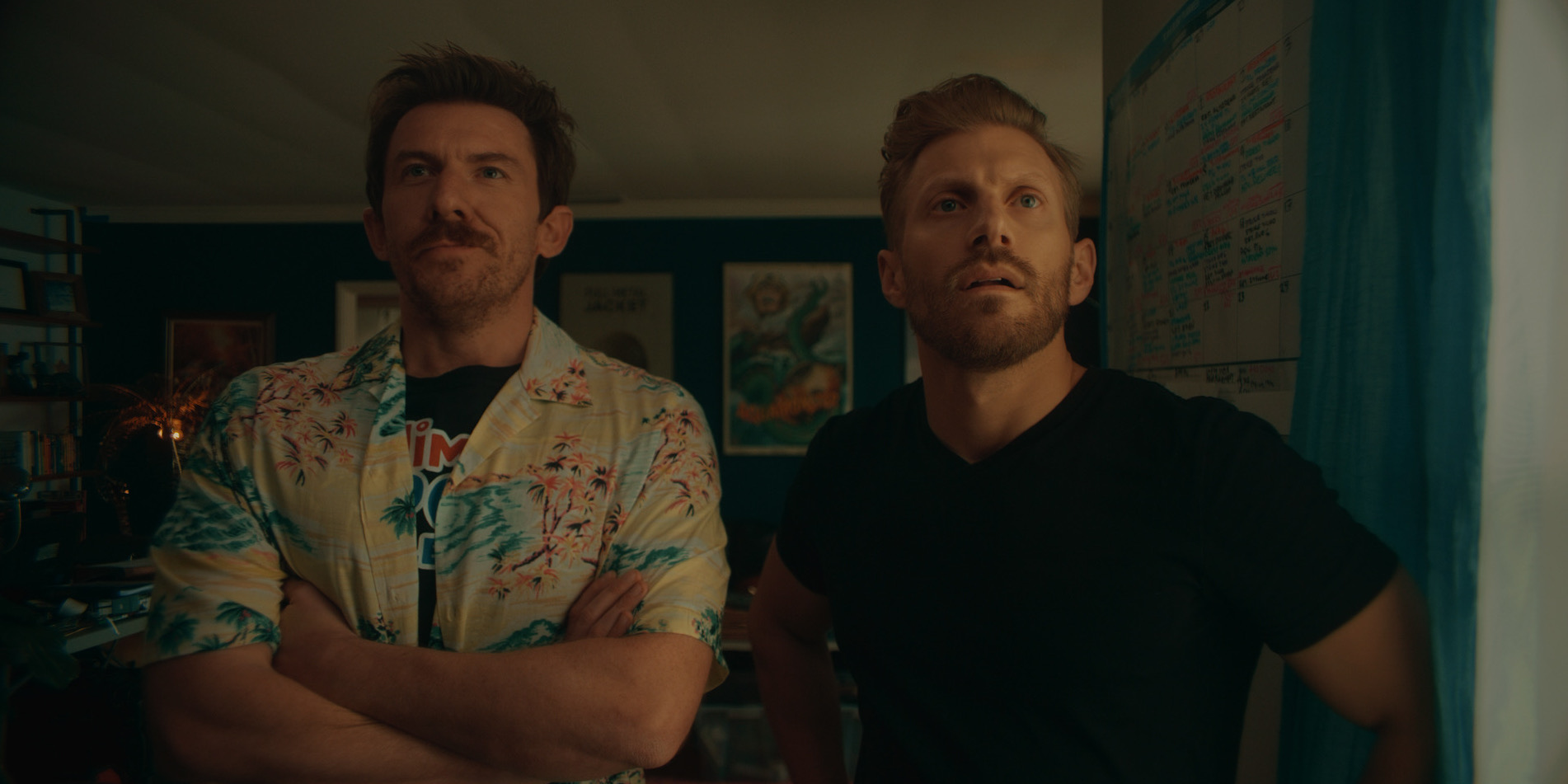
Barnett and director Vincent Masciale, both Funny or Die veterans, are more interested in the goofy exploits of two lifelong friends in California who are having trouble adjusting to adulthood.

Tanner (Tanner Thomason) is a ladies man bartender whose life goals don’t extend beyond drinking and hanging out with friends. Luke (Barnett) cleans pools while peddling the weight loss tea pyramid scheme of his entrepreneurial idol Nicky Steele (Jason Alexander in a bonkers cameo).

Luke and Tanner are big movie fans, and when they discover just how profitable the faith-based market is, a plan emerges. If they can make their own “Jesus” film and sell it to ChristFlix pictures, there should be more than enough profit to stuff their pockets and help out the local Elevate Church where Luke’s father (Lance Reddick) is the pastor.

The big question: can the boys snag Butch Savage (David Koechner, bonkers himself), the action hero from their youth, for the pivotal role?

Masciale, helming his second feature, brings an irresistibly absurdist vibe to the shenanigans that practically begs you not to overthink any of it. Sometimes we get character interviews as per a mockumentary, sometimes we don’t. The continuity and internal logic gets shaky at times, all of which falls perfectly in line with the movie within this movie.

Good-natured fun is certainly had at the expense of the faith-based industry. Margaret Cho’s appearance as a ChristFlix executive running down the rules of Christian films is every bit the bullseye of the horror rules in Scream, and the big Christian yacht rock concert (pay attention to those lyrics!) is subtle perfection.

But it’s the continued success of the Christian entertainment industry that makes it ripe for satire. And while Faith Ba$ed uses the setting to great advantage, its knives are never out for the believers themselves.

Because you know what else Barnett’s script gives us? A church community that is welcoming to all, one where people missing something in their lives can and do find real fulfillment.

And it gives us plenty of laughs, memorable quotes and overall nuttiness at a time when we could use it.

Oh, the outrage.

Mother Knows Best

Evil Eye

by George Wolf

Though they live in different countries, Usha (Sarita Choudhury) and her daughter Pallavi (Sunita Mani) talk often, and Mom always seems to have two main things on her mind.

Does Pallavi have a boyfriend yet? And is she remembering to wear her “evil eye” bracelet?

It’s been years since Usha and her husband left the U.S. for their native India, as Pallavi stayed behind with aspirations of writing a novel. Now, as her very American daughter nears thirty, the traditional Usha is getting impatient for a wedding, and trusts in the bracelet to protect Pallavi against any evil spirits preventing her from marriage.

So, when Pallavi begins a serious relationship with the dashing Sandeep (Omar Maskati), she is shocked when Mom objects, and strenuously.

You’d object, too, if you believed your daughter was dating a reincarnation of the abusive boyfriend who tried to kill you three decades before.

Originally a best-selling Audible original, Evil Eye is directors Elan and Rajeev Dassani’s contribution to Amazon’s Welcome to the Blumhouse series. With an adapted script from source author Madhuri Shekar, the film lands as a delightfully cultured mystery. As narrative layers develop, the atmosphere is more supernatural thriller than outright horror show.

Plot turns tend to rely on convenience and in the absence of any sustained tension or outright fear, the real draw becomes the mother/daughter dynamic propelled by the two lead performances.

The veteran Choudhury makes Usha a fascinating conundrum, haunted by her past, fearing for her daughter’s future and forced to question some beliefs she’s long held dear. When the script wavers, Choudhury elevates it, selling every moment with conviction.

Mani, an up-and-comer seen in Glow and the current Save Yourselves!, provides the effective contrast. Pallavi’s modern path is, at first, only mildly affected by her mother’s traditional sensibilities. But when Usha comes west to present her concerns in person, Pallavi must confront her own inner turmoil.

By the time the final twist is revealed, you’ll most likely have already guessed it. But what you’ll remember about Evil Eye has little to do with the mysterious occurrences surrounding this mother and daughter. It’s the humanity flowing between them that sticks.

Monstrous Temptation

Boo

by Hope Madden

Alcoholism and addiction prove to be powerful underlying themes for a lot of horror films—The Shining, The Monster, and Habit among them. Writer/director/star Rakefet Abergel delivers a twist on that sobriety tale in her short, Boo.

It’s a clever film with a savvy lead turn by Abergel as Devi, 7 years sober and waiting for her fiancé to pick her up from the meeting where she gets her chip.

So much can happen in those minutes between “Come get me” and “I’m here.”

A couple of friends, both more recently sober, smoke and wait with her awhile, and Devi reveals that lately she has just been so tempted.

From there, the filmmaker runs through a quick handful of everyday nightmares: alone in a parking lot, then not alone. Polite and then afraid. In every scene, though, Abergel’s performance suggests a distraction greater than the fear itself.

Darkly funny and boasting outstanding soundtrack choices, Boo is a wicked good time.

Boo premieres on ALTER October 19.

And Feathered

Tar

by George Wolf

It takes a good while to get to the creature in this creature feature, but that’s hardly the most misplayed hand in Tar. It isn’t until the last few minutes that the film serves up the kind of winky-winky that would have gone a long way toward saving it.

A group of employees in an office building above L.A.’s old La Brea Tar Pits is under a tight deadline to clear out. The smarmy landlord is evicting them all with one day’s notice, and they have to be gone by 6am or face a big penalty. Then of course the building’s power is cut mid-move, but there are bigger, messier problems.

Underground construction work on the subway expansion has awakened La Brea’s Matchi Manitou, and it ain’t happy.

Director/co-writer/co-star Aaron Wolf gets Timothy Bottoms and Graham Greene to head up his cast, which is good for the poster but bad for the rest of the actors who can’t keep up.

Wolf employs a narrative structure heavy on flashback, and the moments of tension that manage to avoid that roadblock are awkward and clearly telegraphed.

The ensemble of evacuees/possible victims (including Emily Peachy, Sandy Danto, Tiffany Shepis and Nicole Alexandra Shipley) has the depth and logic to only reinforce the point of that horror spoof Geico ad. And after about 90 minutes, the film’s eureka moment makes you wonder about the Drive-In pleasure Tar might have been if it hadn’t waited so long to tap a self-aware vein.

This Was Not a Ski Accident!

The Wolf of Snow Hollow

by George Wolf

How good does a movie have to be before it can’t be improved by adding werewolves?

Don’t answer yet, let’s backtrack.

Two years ago. Thunder Road was a pretty fantastic breakout for writer/director/star Jim Cummings. A visionary character study with alternating moments of heart and hilarity, it felt like recognizable pieces molded into something bracingly original.

Now, Cummings feels it’s time to throw in some werewolves.

While The Wolf of Snow Hollow may not be exactly the same film, the road it travels is pretty thunderous, with Cummings playing a very similar character on a very similar arc.

He’s officer John Marshall of the Snow Hollow sheriff’s department. John’s father (Robert Forster, in his final role) is the longtime sheriff of the small ski resort town, but Dad’s reached the age and condition where John feels he’s really the one in charge.

John’s also a recovering alcoholic with a hot temper, a bitter ex-wife and a teen daughter who doesn’t like him much. But when a young ski bunny gets slaughtered near the hot tub under a full moon, suddenly John’s got a much bigger, much bloodier problem.

As more mutilated corpses stain the snowy landscape, John faces the wrath of scared townsfolk and the growing belief from his own deputies (especially Chavez!) that a werewolf might have come to Snow Hollow.

John doesn’t agree. “It’s a man! When do I get to be right about something?”

This script, like his last, is full of life, and has Cummings again juggling random outbursts of absurd non-sequiturs and hilarious anger with real human issues of struggle and loss. John’s afraid of losing his father, women are being preyed upon, and a drink would sure hit the spot.

And there’s a beast out there threatening the lives and livelihood of Snow Hollow. Yes, you’ll be reminded of Jaws, as well as any number of werewolf films and even Silence of the Lambs.

And if you have seen Thunder Road, you’ll quickly be struck by how much more stylish of a director Cummings is this time out. He’s got a bigger budget and it damn sure shows, with some gorgeous outdoor landscapes, frisky visuals (he must be an Edgar Wright fan) and a confident grip on his monster vision.

Forster’s mere presence brings a bittersweet authenticity to the supporting ensemble, and a stellar turn by Riki Lindhome as Snow Hollow’s most reliably steady deputy gives John’s manic nature a welcome contrast.

Cummings appears to have a gift for taking a pile of familiar, reshaping it and emerging with something endlessly interesting and effortlessly entertaining. The Wolf of Snow Hollow is all that and more.

At its core, it’s a super deluxe re-write of Thunder Road with werewolves. I call that a bloody good time.

Father/Daughter Dance

On the Rocks

by Hope Madden

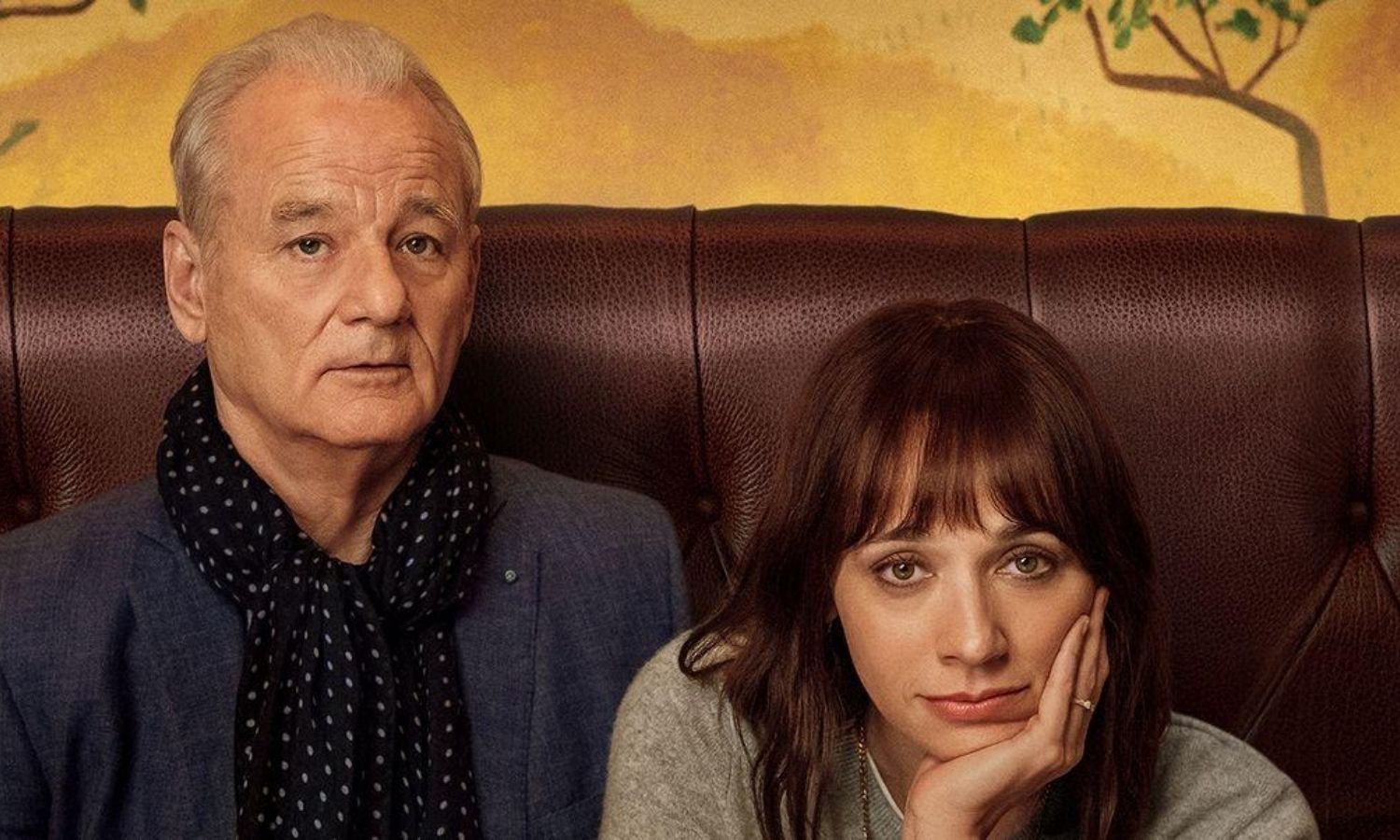
At its surface, On the Rocks offers a wryly fun adventure film. It’s a flashy, superficial good time with Bill Murray, and who does not want that?! It’s a father/daughter romp and a heist film of sorts, full of high-end cocktails, cool cars, and hijinks.

But that’s not really the film at all. Writer/director Sofia Coppola’s latest is a candy-coated rumination on legacies left by loving but problematic fathers.

Rashida Jones is Laura, a writer devoting most of her attention and time to her two little girls, with little left for creativity or chemistry. Her husband (Marlon Wayans) is putting in extra hours at work, traveling a lot, and spending a lot of time with his leggy colleague Fiona (Jessica Henwick).

Maybe he’s just busy and maybe Laura’s just in a rut.

Dad doesn’t think so.

Laura’s unrepentant playboy dad Felix (Murray) orchestrates a sleuthing adventure, tailing hubby’s taxis and offering sage advice from a man who knows a little something about infidelity.

Murray is all charm, his charisma at fever pitch. There’s also a lonesome, tender quality to the performance that gives it real depth, and enough self-absorption to grant it some authenticity.

Jones, as his reluctant accomplice, suggests the reality of midlife doldrums with grace. She also transmits the tragic enthusiasm of a daughter still pleased to be the focus of her father’s attention.

It’s almost impossible to avoid comparing Coppola’s latest dramedy with her Oscar-winning 2003 Murray vehicle, Lost in Translation. There are certainly similar themes: a woman unsure about her marriage finds herself drawn into a paternal relationship (with Bill Murray). On the Rocks is too tidy and too slick to entirely stand up to that comparison, but like Lost in Translation, there’s an autobiographical quality to the film that gives it a soul.

Squeaky Clean

The Cleansing Hour

by Hope Madden

Almost a decade ago, Colin Minihan and Stuart Ortiz locked a couple of fraudulent online “ghost hunters” inside an abandoned hospital in the entertaining flick Grave Encounters. It wasn’t the best “supernatural huckster faces honest demonic peril” film of that year—that award goes to Daniel Stamm’s impeccably cast The Last Exorcism.

So, fast forward about a decade and writer/director Damien LeVeck (that is a horror name, my friends) gives us a mash up of both of those movies.

The Cleansing Hour is actually a full-length version of his 2016 short of the same name. In the feature, boyhood friends Max (Ryan Guzman) and Drew (Kyle Gallner) use what they remember of their Catholic school days to fake weekly online exorcisms.

Star of the show Max is a hottie and a bit of a d-bag. Dressed like a priest, he’s in it for the fame and groupies, or as he likes to call them, disciples. Drew is the brains behind the operation. But they’ve hit a plateau. Their viewership isn’t growing as fast as they’d like. Maybe Max is looking at other opportunities. Maybe Drew should just marry longtime girlfriend Lane (Alix Angelis) and get an honest job.

Or maybe a real demon will show up for their next episode.

LeVeck and crew mine that oh-so-Catholic nightmare of shame and confession well. Performances are fine, Guzman’s pretty, but there’s so little new being said here that the film grows tedious long before its 95 minute run is up.

The Cleansing Hour plays too much like a film made by someone who’s seen a lot of horror movies but lacks an original voice. Storylines fall back, not on primal scares or universal areas of dread, but on ideas from other movies.

LeVeck’s film offers a few speeches concerning the evils of the Catholic church (nothing inspired or vital, mainly obvious and hollow), points to our unholy dependence on technology, and shows anxiety about how tech both connects us and brings out the worst in us. Also, an ugly voice comes out of a pretty face.

Familiar stuff, that.

Most problematic (but least surprising) is the twist ending that’s so tired by this point, the idea was just mocked in another horror movie that opened last week.

There’s nothing awful about The Cleansing Hour. It is perfectly serviceable low budget horror. You could watch it. Or you could find any one of the movies it steals from instead.