All posts by maddwolf

Because You’re Mine

Spell

by Hope Madden

Spell is here to let you know that fear of backwoods folk is not for white people only.

Omari Hardwick is Marquis, an enormously successful corporate lawyer who is not above defending clients against class action lawsuits that would primarily benefit people of color like himself. Why does he do it? Because that’s his job, he’s good at his job, he makes a lot of money, and he worked very hard to get where he is.

How do we know that last bit? Well, nightmares about abuse wake him in the morning, plus he knows how to pick a lock when his wife somehow locks herself in her own bedroom. Marquis came from somewhere he’s not proud of, and now he has to pilot his own airplane with his wife and two teens back to Appalachia to go to his father’s funeral.

Spell is a by-the-numbers backwoods thriller. Our hero has forgotten where he comes from. This film plans to scare him into remembering.

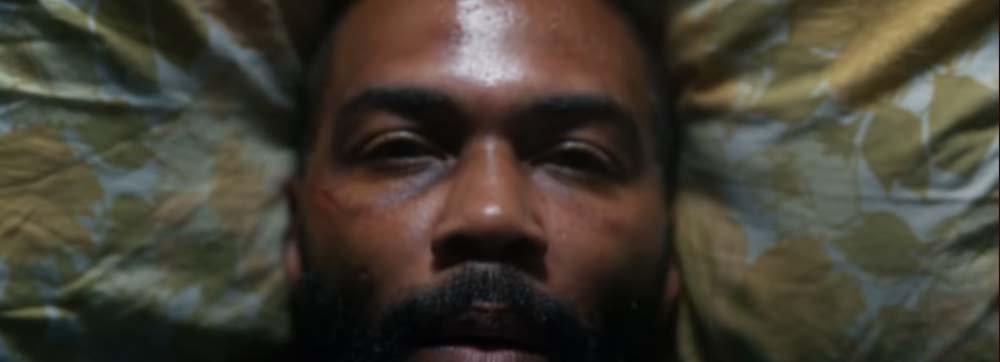
Marquis wakes up all James Caan style in the bedroom of some helpful but controlling woman who wants him just to rest. He does not not want to rest, though. Quite reasonably, he wants to know where his family is, what happened to him, and why Miss Eloise (Loretta Devine) keeps the door to his room locked.

Deep in Appalachia, it seems, you will always find a creepy granny type who conjures a bit, an amiable grampa type who’s not as nice as he seems, and an extra-large, extra quiet Jethro kind of guy in bib overalls.

Screenwriter Kurt Wimmer doesn’t drum up too many surprises there. His screenplay borrows heavily from about a dozen films from Misery to The Skeleton Key to Green Inferno, not to mention every flick where a group stops off at a creepy gas station only to realize they’ve gone too far off the map for their own safety.

Wimmer is white, though, which makes this particular story an unusual one for him. Director Mark Tonderai does not get a screenwriting credit, so I guess we assume that this vernacular sprung from the head of Wimmer. I really hope not. It would be problematic enough coming from a Black writer.

Marquis’s foot, though. For gore hounds and the squeamish looking for a nasty thrill, that foot alone is almost worth it.

Until the third act. I am not one to suggest that ambiguity equals plot holes. I like movies that leave questions unanswered. Unless those questions are: Where did the entire cast of villains go off to, leaving the hero all the time in the world to travel wherever he needs to go in these woods? And why isn’t he even limping?

Teen Wolves

The True Adventures of Wolfboy

by George Wolf (no relation)

Have many Young Adult films carry a theme of self-acceptance? Plenty, but that’s not a problem.

It’s delivering that message via the same tired playbook that gets old, which is just one of the reasons The True Adventures of Wolfboy lands as a charming and completely captivating tale of a truly special teen.

And director Martin Krejci makes sure it feels like a tale in so many magical ways, starting with the beautifully ornate title cards separating each chapter in the journey of a lonely and self-loathing boy on his thirteenth birthday.

Paul (Jaeden Martell) suffers from hypertrichosis – an extremely rare affliction causing abnormal hair growth all over his face and body. He covers his face with a ski mask most of the time, but his father (Chris Messina) gently urges him to put the mask aside and accept the taunts of “dogboy!” with dignity.

Paul’s mother has been gone since he was born, but when a strange birthday gift delivers a map and a promise of explanations, Paul runs away to answer the invitation and get some answers from Mom (Chloe Sevigny).

Krejci crafts Paul’s journey from dog to wolf as an epic odyssey of self-discovery. From Pinnochio-like exploitation in a sideshow run by Mr. Silk (John Turturro, also a producer), to joining the eyepatch-wearing Rose (Eve Hewson) for a string of petty holdups, Paul’s world – and his world view – expands quickly.

But it is the effervescent teen Aristiana (transgender actress Sophie Giannamore) that most triggers Paul’s awakening. She hates the short “boy” haircut her mother insists on, while Paul is ashamed of how much hair he has. Her mother calls her Kevin, his mother doesn’t call at all.

Similarly, Martell delivers true tenderness and longing behind Mark Garbarino’s impressive makeup, while Giannamore is a heartwarming example of defiant positivity. Both actors and their characters bond quickly, and screenwriter Olivia Dufault (also transgender) finds a power that eludes so many YA dramas via the subtle genius of writing Aristiana as a secondary catalyst.

We already feel for Paul, so Aristiana’s effect on his self image is something we feel without being told. The point is made organically, with wit and wisdom, and much more resonance. What Paul finds at the end of his journey is sweet, but just gravy.

Wolfboy is the rare teen drama that speaks without condescension, and entertains without calculation.

That’s welcome, special even.

The Beast in Me

May the Devil Take You Too

by Hope Madden

Alfie (Chelsea Islan) is a badass survivor. You can tell because she’s really mean to everyone and she and others repeatedly mention the ordeal she’s already survived.

One problem: if you haven’t seen writer/director Timo Tjahjanto’s 2018 film May the Devil Take You—and you probably haven’t—you’ll need to take this film at its word. May the Devil Take You Too (also called May the Devil Take You: Chapter Two) revisits the hero of that little known Indonesian film two years after the incidents you likely don’t know about.

Maybe I’m wrong. Maybe you totally know all about Alfie, young Nara (Hadijah Shahab) and some kind of demonic parenting issues. If you haven’t seen the original—and I haven’t, by the way—you should probably still be able to make heads or tails of this sequel’s story. More or less. Kind of.

So here’s the skinny. Meanie-pants Alfie, badass survivor, and young Nara find themselves the involuntary guests of seven foster siblings. Like Alfie, the group has some diabolical paternal concerns. It’s never at all clear why they think Alfie could help them, why Nara had to come, or why the whole thing is staged as a kidnapping.

The point is, best not to look closely at the details.

The filmmaker has his own take on religious ritual, possession and afterlife horror, although he is unafraid to wear his American influences on his sleeve. Evil Dead references are a lot less fun when delivered so humorlessly, though. (You may also detect several Nightmare on Elm Street references, and just a touch of Constantine.)

Chapter Two does a lot with a limited budget, relying mainly on old fashioned practical effects and makeup for scares—with frequently decent outcomes. There is some grisly fun to be had in Tjahjanto’s nightmare funhouse.

The filmmaker’s strength is certainly more in staging and effects than it is in writing, however. Contrived and often counter intuitive, the plot is little more than an opportunity to string together kills and the dialog is weak. Not one character makes natural decisions— mainly they stand around in a group looking shocked and screaming each other’s names while something happens.

But once it gets going, Chapter Two is pretty relentless with the bloody action. That’s probably not reason enough to see it, unless you’re a huge fan of the original. Maybe that one was good.

Screening Room: Borat Subsequent Moviefilm, The Witches, Rebecca, Empty Man & More

Bottle Feeding

The Empty Man

by George Wolf

Okay, so here’s the story: if you’re on a bridge at night and blow into an empty bottle, you’ll conjure the Empty Man. And in three days, he’ll find you.

Right, so it’s a bit of Candyman, some of The Ring, lots of jump scares and kills for Halloween, got it.

I don’t think you do…unless you’ve read Cullen Bunn’s graphic novels.

Writer/director David Prior adapts the series with James Badge Dale in the lead as James, an ex-cop still grieving from the loss of his wife and son. When the daughter of his good friend Nora (Marin Ireland) goes missing, James sidesteps the local Missouri cops for a rogue investigation of his own.

Prior, a video vet making his feature debut, lays down an atmosphere that gets plenty creepy, but seldom horrific. As James digs in, the film becomes a dark mystery, one full of freaky cult members with aspirations of total consciousness and malevolent chaos.

Dale keeps your interest with a terrific performance full of wounded determination, getting solid support from Ireland (plus Stephen Root in a memorable cameo).

But at nearly two hours and twenty minutes, it’s a bit too much of wandering slog in need of a leaner path.

Come in looking for a tidy little slasher, and you’re going to be disappointed. But if you’re down for a dark and moody rumination on grief, metaphysics and itchy brains, you could conjure up worse than The Empty Man.

Paradise Found

Beasts Clawing at Straws

by Hope Madden

Who doesn’t enjoy a good bag o’cash flick?

Whether it’s the darkly humorous Lucky Grandma or lyrically tragic A Simple Plan, the terrifying innocence of Millions, or the violent masterpiece that is No Country for Old Men modern cinema has proven that you can do a lot with the combination of thrill, hijinks and dread that come along with an unexpected satchel full of bills.

Writer/director Kim Yong-Hoon pieces together just such emotions with his first feature. A nice guy, a missing person, that bag of cash, a mean tattoo, a lucky pack of cigarettes, a cool title—Beasts Clawing at Straws looks like it has it all.

Telling his tale in chapters that disjoint the narrative into a series of six interconnected plotlines, the filmmaker borrows the cinematic language of Tarantino and the Coens. If you’re going to steal from somewhere, you could do worse.

His pacing, framing, use of color and light all give the film its own swagger, though, and whether you guess where it’s all headed or you don’t, you’re bound to remain interested.

Where the filmmaker really strikes it rich is with this cast. Every actor adds a little exaggerated pathos to the mix as we ascend the ranks of smalltime crooks, each looking to score off another, all of them somehow connected to this stuffed Luis Vuitton bag.

Woebegone and hard working, Sung-Woo Bae offers the picture an emotional center. But the mid-film entrance of Do-yeon Jeon—glorious as ever—gives Beasts new life. She offers the chapters a sleek, devious tone the film had been missing.

Beasts Clawing at Straws offers mainly visceral if superficial thrills, but periodically it does ask us why it is we find ourselves rooting for the baddie. In the world created in this film, good and bad are separated by shades of grey and blood stains and no matter how you define yourself, you’re only one big, fat bag of cash away from finding out the truth.

High Five!

Borat Subsequent Moviefilm

by George Wolf, because Hope Madden can’t watch Borat’s pranks without leaving the room

You may have already seen a headline or two about Rudy Giuliani’s run-in with Sacha Baron Cohen as Borat.

When it happened this past July, Giuliani called the cops, and then boasted that Cohen didn’t “get him.” But now that Subsequent Moviefilm is here, we see Giuliani still lives in a world unhindered by reality, and Cohen still has a knack for finding cringeworthy humor in the most unseemly situations.

Much as changed in Borat’s world – and ours – since his 2006 adventure brought shame to his native Kazakhstan, and earned him a life sentence of hard labor. But now, with the American president’s fondness for dictatorships, Borat has a chance for redemption.

He must return to America, and get Kazakhstan on the short list for Trump’s “strongman club” by bribing Vice President Pence with a valuable offering.

The gift? Borat’s 15 year-old daughter Tutar- also known as “Sandra Jessica Parker Sagdiyev” (Bulgarian actress Maria Bakalova, nearly Cohen’s equal for stone faced boundary-pushing.)

Borat’s special delivery during Pence’s CPAC speech (beautifully synched to a COVID-19 reassurance of being “ready for anything!”) is rebuffed, so Giuliani becomes the next logical target.

And that road to Rudy is filled with Cohen’s fearless hijinx, again skewering the breeding grounds for bigotry, ignorance, misogyny, anti-semitism, QAnon, Karens and..what else ya got?

Pervy ex-mayors of NYC!

But Borat is pranking a meaner America this time. There are no layers to peel away anymore, the ugliness is out and proud. From a bakery to a pregnancy center to a Tea Party rally, the often hilarious audacity is tempered by the sadness of realizing we no longer need Borat to expose this underbelly.

So Cohen and director Jason Wolinar (a TV vet helming his first feature) make a smart and subtle pivot. Segments with Tutar’s “babysitter,” and another featuring two elderly Jewish ladies in a synagogue (one of which the film is dedicated to) mix the bracing humor with moments of touching sweetness. Cohen’s not going soft, just pausing to remind us there is hope.

Early on, Borat has to run from random Americans excited to see him on the street. It’s a refreshing acknowledgment that we’ve seen this schtick before. Yes, it’s still shockingly brazen and often laugh out loud funny, but the thrill of discovery is naturally gone.

But whether he’s Cohen posing as Borat or Borat posing as Cliff Safari (or John Chevrolet, take your pick), the comedy and the tragedy are nearly impossible to ignore, even if you want to.

Right, Rudy?

A Connecting Principle

Synchronic

by Hope Madden

Has it really been three years since filmmakers Justin Benson and Aaron Moorhead took us on the UFO death cult head trip that was The Endless?

It’s hard to tell with these guys. They really like to play with time.

Another riff on the same theme, Synchronic is a sci-fi fantasy about parallel dimensions and time travel—plus bath salts.

Steve (Anthony Mackie) and Dennis (Jamie Dornan) are best friends and NOLA paramedics, each facing his own existential crisis. Dennis can’t seem to move past the fear that he’s settled: for his wife, his job, his life. Meanwhile, Steve—whose existence of work, drink and women long ago ceased to have meaning—gets a medical diagnosis that has him rethinking everything.

So far so ordinary, but if you’ve seen anything these filmmakers have done (and you should see everything), you know something seriously weird is coming.

The film’s conceit is a fascinating one, and every grisly crime scene offers a curious clue that may eventually help Steve solve a mystery that gives him purpose and redirects his bestie. Benson, who writes and co-directs, offers plenty of opportunity for mind-bending action and wild set pieces.

He and co-director/cinematographer Moorhead cut back and forth through time to keep you guessing as to the mystery developing, but what’s left underdeveloped are the characters.

Two of the filmmakers’ previous three efforts focused on a pair of men linked through time and experience to the other—best friends in Resolution, brothers in The Endless. This kind of relationship has proven a beautiful anchor for their trippy plots, but Synchronic doesn’t invest enough time or attention to Steve and Dennis’s characters.

Both Mackie and Dornan are solid enough, but their chemistry is weak. The time-worn friendship is more discussed than exposed. Worse, Synchronic is the first of the filmmakers’ movies to lack a robust sense of humor. And it is missed.

The result is a sometimes dour though mainly melancholy effort that feels far less original than it really is. Synchronic is clever, to be sure, and at times quite touching. But for filmmakers who’ve until now positively dripped with inspiration, it feels like a step backward.

Casa de los Muertos

32 Malasaña Street

by Hope Madden

What is it about haunted houses that always sucker in big families? We saw it in The Conjuring and The Amityville Horror before it. And now another big old clan is about to regret that bargain dream house over at 32 Malasaña Street.

Albert Pintó’s nightmare follows the Olmedos, who take their two teenagers, their 5-year-old, an aging grandfather, and their shame to Madrid, leaving the country and their old lives behind. But haunted houses smell shame and secrets, don’t the Olmedos know that?

Pintó creates a dreadful, dreamy quality to the haunting, every shot’s framing and color, light and shadow taking on a painterly quality. He conjures a mood, a vintage era where hope and freedom bumped up against tradition and oppression.

The film is set in 1976, and like those other films of dream homes gone wrong, Malasaña creates concrete tension. The first response to any haunting is to just get the F out, but where are you supposed to take three kids and an elderly father? Where’s abuela supposed to plug in his C-Pap? The “down to our last penny and nowhere to go” vibe feels authentic under these circumstances.

But Pintó seems out to do more with the size of the family than simply convince you that thre’s nowhere to go. 17-year-old Amparo (Begoña Vargas) dreams of becoming a flight attendant, of flying up and away from this life, but the house itself is the metaphor for the family as a trap.

Faith and culture beget big families and poverty, and old-fashioned thinking creates monsters.

Where Pintó takes the metaphor is less inspired than it might be. Troublingly, the filmmaker’s throwback vibe retains that old horror trope of the physically disabled character as conduit to the supernatural, and enlightened lip service can’t excuse the way the film falls back on cliches of the monstrous “other.”

32 Malasaña Street sets complicated characters in motion within a familiar world. It just doesn’t use them to tell us anything new.