What opens as a slyly comic take on a familiar horror scene turns – with a blinding light and the sound of a garage door – into something more silly and broadly funny. Born Again, Hands Off Productions’ 6 ½ minute visit with the “worst Satanists ever,” wastes no time and packs a comedic wallop.
Written by director Jason Tostevin and co-star Randall Greenland, the film’s success relies on a clever turn. Most of the pair’s collaborations, including 2015’s impressive (and award-bedecked) gangster short A Way Out, benefit from a similar subversion of expectations. But Born Again takes the team back to horror, and the sensibility here is much more enjoyably goofy.
Regular Tostevin collaborator, cinematographer Mike McNeese, lenses an impressive effort. The two handle the shift in tone beautifully, opening with sumptuous colors and tight close ups, then pivoting to a visual style that feels in on the joke.
Production values throughout impress, while performances – though brief – are strong. Tiffany Arnold, whose work relies almost entirely on facial expressions, is a riot, but the scene stealer is Greenland.
With sharp timing and a panda mask, Greenland perfectly represents Born Again: it’s so wrong, yet endearingly hilarious.
Between sci-fi and horror, it’s sometimes hard to keep track of which genre relies more heavily on recycled ideas. Since I see more horror than anything else, I’m inclined to lean in that direction, but The Midnight Sky adds one to the science fiction tally, building its very respectable tale on some very recognizable building blocks.
Director George Clooney also turns in a gritty and understated performance as Dr. Augustine Lofthouse (nice!), a revered scientist in the year 2049. Three weeks after a cataclysmic event on Earth forces survivors underground, Augustine chooses to remain at his Arctic Circle observatory. His hope is to make contact with Aether K-23, and warn the five crew members finishing a two year mission that there is no home worth returning to.
Augustine’s simple goal gets complicated by his discovery of Iris (Caoilinn Springall), an eight year-old girl missed during the outpost’s evacuation, and by the realization that he’ll have to take her along on a treacherous journey to the only satellite antenna capable of making contact with Aether.
Clooney and writer Mark L. Smith (The Revenant, Overlord) adapt Lily Brooks-Dalton’s source novel through three rotating narratives that offer mixed results.
On board with the Aether crew, we learn Sully (Felicity Jones) and Ade (David Oyelowo) are close, Sanchez (Demián Bichir) is the quietly wise vet, Maya (Tiffany Boone) the baby-faced youngster and Mitchell is the stoic manly man we’re not surprised is played by Kyle Chandler.
There are some effectively human moments with the crew, but too much of this thread feels strangely overwritten by Smith, a tendency that only becomes more weighty during the flashbacks to a younger Augustine (Ethan Peck).
Though we learn what drives the Dr.’s frigid quest for redemption, the backstory lessons are more spoon-fed than well-earned, standing in sharp contrast to the gentler hand played between Augustine and Iris.
Remember, Clooney has a deserved Oscar nom for directing, and his latest course is steady as she goes. Many of the deep space segments, buoyed by another wonderful score from Alexandre Desplat, will make you long for a return to big screens, while two tension filled set pieces – one with a snowmobile and another sporting zero gravity blood loss – find Clooney flexing some thrill muscles to fine effect.
There’s nothing really wrong with the themes and devices here, that’s why they’re used so often. The failures of humankind and the promise of the next generation are ideas that sit comfortably in the wonders explored by science fiction. But though our current global crisis gives The Midnight Sky’s iteration some added urgency, it can’t shake the feeling we’ve boldly gone here pretty often.
The Midnight Sky premieres on Netflix December 23.
Pete Docter has written, directed, or been a part of the story team for some of Pixar’s greatest achievements. From Up to Inside Out, WALL-E to Toy Story, he’s helped set the standard that each new Pixar film competes with.
For Soul, Docter and co-writer/co-director Kemp Powers sense the time is right to tweak the winning formula a bit, creating a deceptively simple, beautifully constructed ode to happiness.
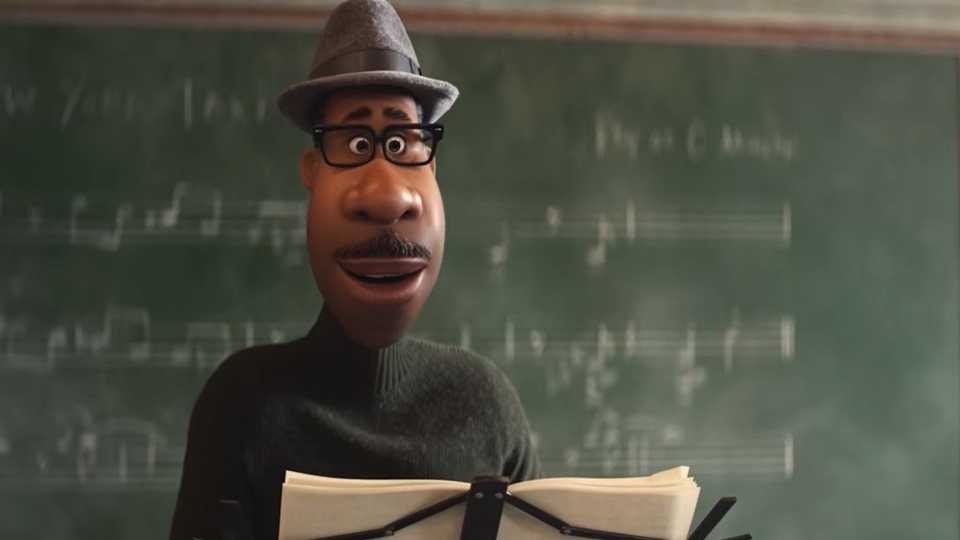
The updated blueprint starts with an African-American lead, Joe (voiced by Jamie Foxx), a middle-aged music teacher who still harbors dreams of stardom in a jazz combo. Just when Joe gets that long-awaited chance to play with one of his favorite artists, an out-of-body experience finds him fighting to get back to the life he’d been living.
Hence, the “soul” here may be not what you’re expecting. The music is all that jazz, but once Joe meets up with a wandering infant soul named 22 (Tina Fey), the film becomes a funny, surprising and truly touching journey toward becoming a fulfilled human being.
And what a beautiful, big screen-begging journey it is. Soul looks like no Pixar film before it, with wonderfully layered and personality-laden animation for Joe’s daily life that morphs into an apt Picasso vibe for our time in the before and after worlds. In those other worlds, Joe and 22 are gently pushed toward their destinies by the reassuring voice of the cubist Counselor Jerry (Alice Braga) amid a madcap series of detours carrying the emotional highs and lows of an inspired jazz trumpeter’s solo.
Foxx and Fey are joyfully harmonious, backed by jazzy arrangements from Jonathan Batiste, an ethereal score from Trent Reznor and Atticus Ross and a stellar supporting group of voice actors that includes Phylicia Rashad, Daveed Diggs, June Squibb, Rachel House, Wes Studi and a perfectly nutty Graham Norton.
And though Soul delivers plenty of whimsical fun, it’s anchored by the existential yearning Docter hinted at with Inside Out’s “Bing Bong” character five years ago.
But just when you think you know where the film will leave you, it has other plans, and that’s okay. Because while the best of Pixar has always touched us with family adventures that speak to what it means to be human, Soul leaves plenty of room for our own improvisations, producing a heartfelt composition that may be Pixar’s most profound statement to date.
From the moment Sheriff Woody lamented that snake in his boot, it’s been inevitable that Tom Hanks would star in a Western. Not because he personifies the bruised masculinity, the solitary grit—that’s just ornamentation, anyway.
Tom Hanks would inevitably be the hero in a Western because we
believe he would do the right thing, however difficult that is.
The Western News of the World is a film we’re less inclined to expect from director Paul Greengrass. His kinetic camerawork and near-verite style that lent realism to United 93 and added tension to his Jason Bourne films hardly suit a Western. He adapts with a more fluid camera that underscores the tension as well as the lyricism inherent in the genre.
He also takes full advantage of our faith in Tom Hanks.
Hanks is Captain Jefferson Kyle Kidd, a Civil War veteran who travels from town to town reading news stories to weary people looking for a distraction. In his travels he comes across a 10-year-old girl (Helena Zengel, wonderful) who’d been raised by Kiowa people and is now being returned against her will to her natural aunt and uncle.
Reluctantly, Captain Kidd agrees to transport her 200 miles
across dangerous territory. Not because he wants to or because he will benefit
in any way from it. In fact, he will probably die, and she with him.
Greengrass adapts Paulette Jiles’s nove with the help of Luke Davies. An acclaimed poet, Davies can be a handful for some directors. His material, even when done well, as it was with Garth Davis’s 2016 film Lion, can feel overwrought and overwritten. But Greengrass’s touch is lighter, his style always bending more toward realism than poetry, and here he’s struck a lovely balance.
Westerns lend themselves to poetry of a sort. News of the World offers a simple hero’s journey, understated by Greengrass’s influence and Tom Hanks’s natural abilities. A damaged soul faces an opportunity to prove himself, perhaps only to himself, and he takes it. And he is forever changed.
Now more than ever, home has become the ultimate refuge. Our home is where we are supposed to feel the most comfortable, the safest. Image how horrifying it would be if that sanctuary started driving you insane.
Well, maybe that’s not too hard to imagine right now, either.
Successful stockbroker Henry Sharpe (Grand Bowler) seemingly has it all: a great career, a supportive and equally successful wife (Sonya Walger, TV’s Lost), and three healthy kids. All of that changes the night Henry is attacked in his home by masked strangers. Paranoid and angry, Henry installs a state-of-the-art security system in their home. This system is so high-tech that the family must provide blood samples so that their DNA can be bonded to the system. As the Sharpes’ comfort with the new system increases, so does their anger and paranoia.
Writer Jason Chase Tyrrell and director Michelle Danner make a few big swings for social commentary, but the ideas and the execution just aren’t there. Dismantling the facade of suburbia as a safe haven has been a genre trope since the 1970s, and Bad Impulse’s inclusion of technology into the mix is neither fresh nor surprising. The broad strokes of this idea feel culled from a half dozen bottom shelf Twilight Zone episodes.
Bad Impulse could’ve been fun on a purely visceral level. Instead, it’s a movie that never fully commits to its genre leanings. Outside of a stylish and well-executed opening, the movie almost seems embarrassed to be in the horror/thriller genre. Going full Savini might not have saved the film, but it certainly would’ve made for a more enjoyable watch.
Danner is well-regarded as an industry acting coach, and she was able to attract some notable talent to the project. Bowler and Walger, in particular, do their best with the given material. Other industry vets like Dan Lauria (TV’s The Wonder Years) and Paul Sorvino (Goodfellas) pop up in small roles to class the joint up. Unfortunately, the rest of the main cast does little to impress. The actors playing the Sharpe children aren’t up to the challenge of raising up weak material. Their solo scenes are where the movie loses too much steam to recover.
Bad Impulse is a tired, and somewhat lazy, attempt at social horror that manages to bungle both the social and the horror.
In a seedy underworld ripe for the comic book taking, a teen crime journalist named Hamster just wants a shot to tell the real stories of these streets. He stumbles across a homeless man who claims to be a hero from another dimension. The thing is, Hamster believes him.
Hokey, right? It is, but co-writer/director Adam Egypt Mortimer hits an interesting tone with Archenemy. He creates the space needed to develop some ideas before logic and cynicism close them down.
Mortimer combines animation with live action, sometimes bleeding
whispery voiceover into the mix to heighten the sense that nothing is as it
seems. Is Max Fist (that is a name!) really from a parallel dimension, or is he
an alcoholic schizophrenic homeless guy living under the bridge?
Mortimer mainly works from young Hamster’s point of view, occasionally veering into Max’s. By limiting the logic of the tale to the perspective of either a naïve optimist or the likely victim of mental illness and addiction, the filmmaker ensures that you’re never truly able to differentiate reality from unreality.
It’s a tough tone to maintain, but Mortimer manages, thanks
in large part to the commitment of his lead. As Max Fist (seriously, that name!),
Joe Manganiello carries Archenemy on his shoulders. The performance is
simultaneously lucid and muddled, with a physical edge that makes the character
feel like a threat even at his most vulnerable.
Around him, characters are sometimes cartoonish (Glenn
Howerton as The Manager or Paul Scheer as Kreig), but Manganiello keeps the
film from dipping into camp with a turn that’s gritty and believable.
Skylan Brooks does a fine job of elevating the least realistic role—a character that benefits from endless contrivances. The writing around Hamster is easily the weakest part of the film, but Brooks does what he can to keep you engaged.
As Hamster’s sister Indigo, Zolee Griggs walks an interesting line as well, the good guy and bad guy in the same breath. It’s an understated performance that impresses. And Amy Seimetz—always a welcome sight—delivers a resigned villainy that perfectly suits the picture.
Archenemy has plenty of faults, but more than enough inspiration and grit to make you want to overlook them.
Wren Cosgrove is happy to go on her morning runs, talk to her cat Wentworth, and work too hard. But when her ex-boyfriend hires her marketing firm, she’s suddenly forced to face her past and contemplate whether or not she’s actually happy at all.
Based on Jane Austen’s novel Persuasion, Modern Persuasion trades social balls for launch parties and romantic poets for lyrics by The Smiths. Jonathan Lisecki co-wrote and co-directed the film, with fellow writer Babara Radecki and co-director Alex Appel. Even with three different visions at work, plus Austen’s original groundwork, the film largely fails to find any footing.
Wren (Alicia Witt) is more likable and more approachable than predecessors in the workaholic trope. Unfortunately, her counterpart/ex Owen Jasper (Shane McRae) says and does little to tease any anguish out of her. What makes Austen’s novels so compelling, even after all this time, is the absolute longing they are filled with. That tension is largely missing from this adaptation.
Wren has better chemistry with her two other love interests. And at 1 hour and 20 minutes, three love interests are a lot to juggle, making Owen little more than an awkward inconvenience for most of the film.
Modern
Persuasion is filled with an interesting cast of characters, but they
stay flat for the length of the film. It seems late in the game to be making
millennial jokes, but two of Wren’s coworkers are reduced to trendy lingo and
illicit “Speak English please,” responses from their much older boss.
The
film is strongest in the moments where it finds genuine connection between
characters, like when Wren gives new assistant Denise (a lovable Adrienne C.
Moore) help on her first day. Another shining moment is when Wren and Sam (Dominic
Rains, charming) connect over a moody playlist. Witty lines, mostly from the
women in the cast, keep it comedic and grounded.
For Austen and romcom fans alike, the film might be worth a curious watch. But for the rest, Modern Persuasion has nothing new to offer.
“Welcome to Ireland! My name is Tony Reilly and I’m dead.”
So begins Wild Mountain Thyme, a romantic comedy so cartoonishly
Irish you’ll expect the Lucky Charm leprechaun to drop by for a Guinness.
Writer/director John Patrick Shanley can be very good,
especially when he’s working from his own plays. Shanley won an Oscar for
penning Moonstruck, and drew a nomination when he adapted his stage play
Doubt for the screen.
He also directed the latter, a film that soared thanks to a
quartet of nearly perfect performances (Meryl Streep, Viola Davis, Philip
Seymour Hoffman, Amy Adams—each the most exquisite piece of casting
imaginable).
Though considerably lighter, Shanley’s latest boasts an
impressive cast as well. Not Doubt impressive, but what is?
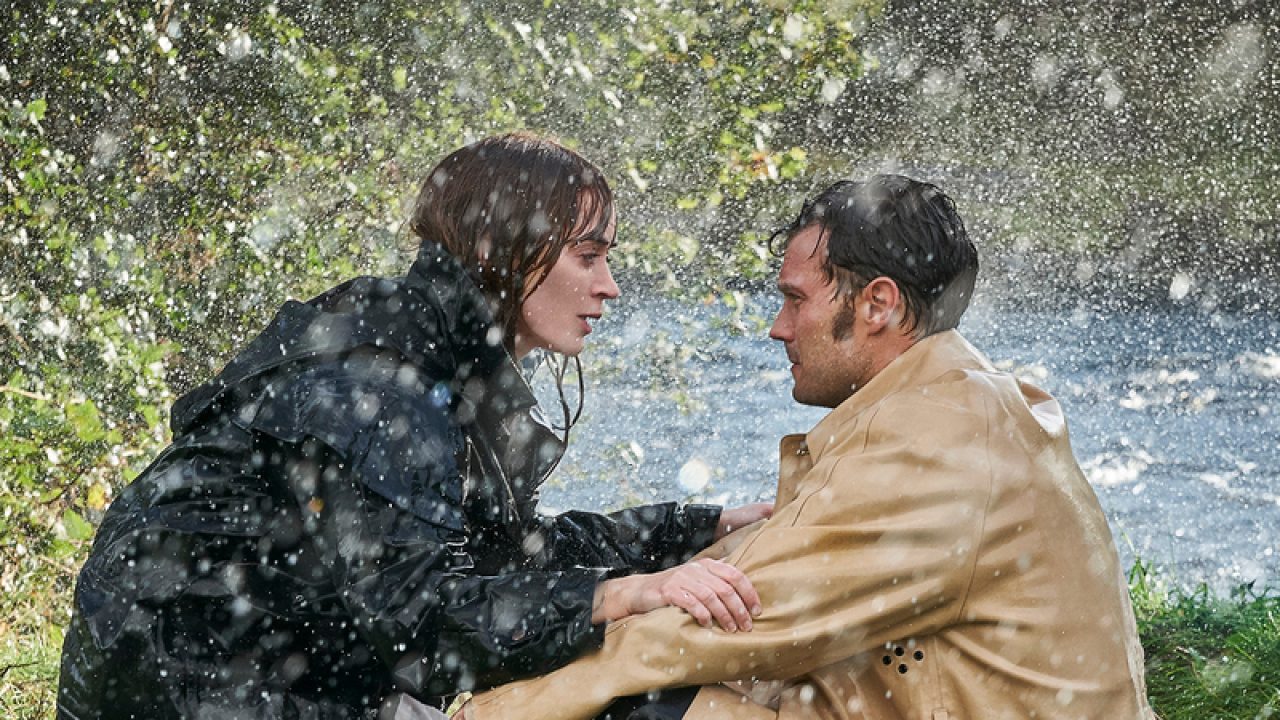
Emily Blunt and Jamie Dornan anchor the film as two unreasonably
attractive and weirdly single neighbors in rural County Mayo. Rosemary and
Anthony have known each other all their lives, and even though many (including
Anthony’s father Tony, played by Christopher Walken) have given up on the
union, Rosemary will have her beloved Anthony one day.
Let’s stop a sec on Walken. He’s a great actor, a beloved
icon, a cool dude. What he is not is Irish. Does that really matter—Walken’s
accent isn’t exactly American, right? It’s just, well, Walken.
The point is that Shanley couldn’t be less interested in
authentic Irishness. Wild Mountain Thyme’s authenticity rivals that of Darby
O’Gill and the Little People.
Oh the whimsy! The blarney! The third act reveal that outshines
any act of nonsense you are likely to find on screen this year. How much
Jameson’s did Shanley down before committing this to film?
It’s beautiful, don’t misunderstand. The verdant farms as well as the cast (Jon Hamm joins Blunt and Dornan as the Yank looking for an Irish farm and an Irish lass). It’s just so Irish-Spring-ad ridiculous.
It’s nice, though. Its belabored whimsy kind of clubs you
into a stupor by around the third or fourth rainstorm (what, no rainbow?!). The
story meanders. The symbolism serves only to further confuse things. The magic
Shanley weaves can’t transcend the film’s lunacy long enough to give Wild Mountain
Thyme the fairy tale quality it desperately wants.
Still, Blunt and Dornan are engaging and you have to give the film credit for sheer shamrock audacity.
At this point, there’s nothing surprising about a terrific performance from Sienna Miller. The really curious thing is why she still seems to fly so far under the radar.
Maybe it’s the knack she has for adopting unrecognizable looks and unique personalities from role to role, making it harder to tie her to an easily recalled resume. Whatever the cause, the effect Miller has on Wander Darkly is seismic, with an award-worthy turn that gives the film much of its emotional pull.
Miller is Adrienne, a new mom who’s starting to question her relationship with Matteo (Diego Luna, also stellar). Despite a child and a new mortgage, the couple hasn’t married, and as a rare date night out turns disappointing, they’re involved in a nasty car accident.
Dazed and disoriented, Adrienne believes she has died. While her parents and friends whisper “psychiatry,” Matteo tries to convince Adrienne that she is indeed still alive and recovering in the real, physical world.
Writer/director Tara Miele’s narrative is ambitious, surreal, touching and at times even terrifying, but it’s ultimately the sheer talents of Miller and Luna that keep the film from falling prey to gimmickry.
We re-live the couple’s journey together as they do, visually drifting through transfixing waves of history where both Adrienne and Matteo pepper the flashbacks with hindsight benefitting from their current perspectives.
As they make new admissions and wonder about who may be guilty of misremembering, the couple is reminded of why they first committed to each other, even as they search their respective memories for the exact moment it started to go wrong.
Whether or not you sniff out what Miele has in mind, where the film lands doesn’t quite deliver on its promise of profundity. But the cascade of emotion required to manifest this trauma is beautifully realized by Miller, and her chemistry with Luna makes it inviting to become invested.
You care about these characters, and that opens the door to care about Wander Darkly.