Screening Room: Morbius, The Contractor, Nitram, Let the Wrong One In & More
by Hope Madden
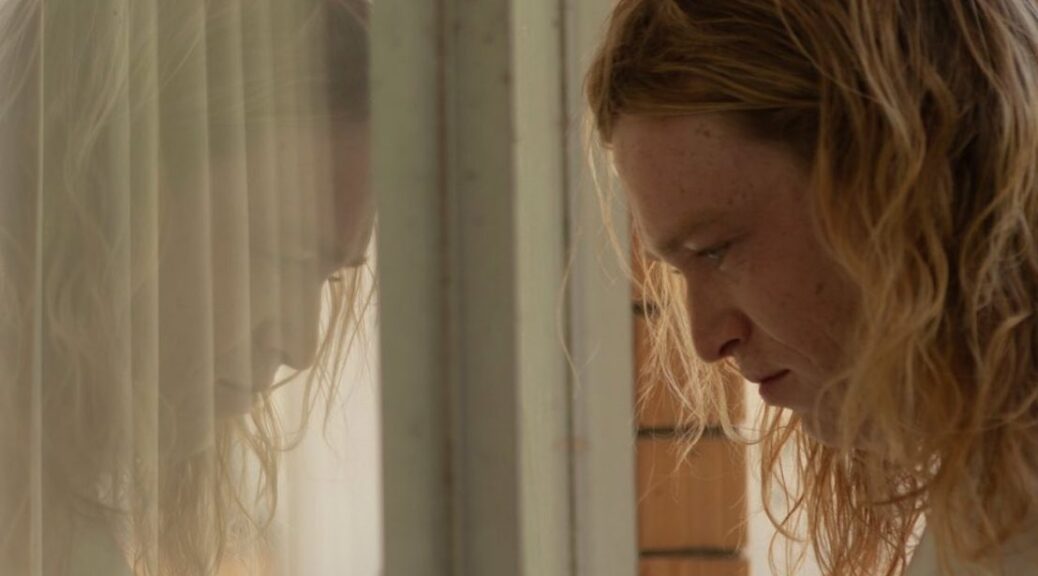
To suppose that filmmaker Goran Stolevski is a fan of Terrence Malick seems fair. His tale of 19th century Macedonian witchery offers the same type of visual aesthetic, whispery voiceover and absence of dialog in much of Malick’s work, especially 2018’s A Hidden Life.
You Won’t Be Alone follows Neneva (Sara Klimoska), a teenager raised in isolation, hidden from the Wolf-eatress (Anamaria Marinca) who’s claimed her. Freed from hiding, the teen shapeshifter takes on different forms (Noomi Rapace, Felix Maritaud, Alice Englert) and learns of life.
The vast majority of the film’s spoken language comes in the form of Neneva’s thoughts via voiceover. Having grown up alone and unable to speak, Neneva’s language is disjointed and poetic, her musings untouched by traditional socialization.
These reflections are periodically punctuated by the bitter logic of her lifelong tormentor, the Wolf-eatress, whose own upbringing among the human race has left her horribly scarred, literally and metaphorically.
Sections of the film are quite lovely. Admirable performances all around help to keep you engaged. Klimoska’s physical performance reflects the primal beginnings of Neneva’s explorations. Rapace brings an awkward adolescence feel to the character’s early interpretations of normal human behavior. Englert carries the character into adulthood with quiet curiosity, never losing that animalistic inquisitiveness carried throughout the earlier performances.
Stolevski’s cast gives him all he could have hoped. Unfortunately, he doesn’t entirely deliver on his end. The story free floats, its style often overwhelming its substance. You feel every minute of its running time.
That’s not to say Stolevski’s approach is a failure, only that it’s taken too far. His fractured storytelling suits his purposes of exploring gender identity and the nature of humanity. He builds dread well and his fluid camera allows his tale to cast a spell.
The result is mainly entrancing, but too often frustrating.

by Hope Madden
About a decade ago, director Justin Kurzel made one amazing true crime film. Working from a script by Shaun Grant, Kurzel took a notorious crime spree and created the most realistic and unnerving film of 2011 in Snowtown.
The pair reteamed for 2019’s underseen treasure based on true Australian events, True History of the Kelly Gang. They are back, once again digging into the seedier side of Aussie history with another true crime in Nitram.
In 1996, Martin Bryant murdered 35 people, injuring another 23 in Port Arthur, Tasmania. The horror led to immediate gun reform in the nation, but Kurtzel and Grant are more interested in what came before than after.
Playing the unnamed central figure (Nitram is Martin spelled backward), Caleb Landry Jones has never been better, and that’s saying something. He is one of the most versatile actors working today, effortlessly moving from comedy to drama, from terrifying to charming to awkward to ethereal. There is an aching tenderness central to every performance. (OK, maybe not Get Out, but that would have been weird.)
Kurzel surrounds him with veteran talent at the top of their games. Essie Davis matches Landry Jones’s with a fragile, winsome turn as the older misfit who becomes his friend. Anthony LaPaglia creates a believable, gentle presence as Martin’s father, while the formidable Judy Davis nails every nuance as his complicated, hard mother.
She’s mesmerizing and award-worthy.
Looking at the making of the monster is no new concept in film, and it’s often a misfire, either romanticizing or relishing in the lurid. Nitram does neither. Grant’s greatest gift as a writer may be his ability to mine difficult terrain without sentiment. (His script for Cate Shortland’s crushing 2017 thriller Berlin Syndrome is his greatest triumph in this area.)
Nitram looks at how nature and nurture are to blame. Socialization plus parenting plus bad wiring is exacerbated by the isolation and loneliness they demand. Everyone is to blame. It’s a conundrum the film nails.
But it’s Landry Jones you’ll remember. He’s terrifying but endlessly sympathetic in a bleak film that’s a tough but rewarding watch.

by Brandon Thomas
Georgian filmmaker Levan Koguashvili’s Brighton 4th is a charming drama that surprises with some subtle comedic flourishes. It’s a film that never gets lost in a self-serious tale of immigrants “roughing it” – instead staying firmly grounded in interesting and likable characters.
Kakhi (Levan Tedaishvili), a former Olympic wrestler, travels from the central Asian country of Georgia to the Brighton Beach neighborhood of Brooklyn to visit his son. He finds him living in a shabby boarding house and learns that his son owes serious debts to a local mob boss. Hoping to get his son out of this jam, Kakhi begins looking for ways to raise the money to pay off his son’s debt and return home to Georgia.
Tedaishvili wows with a beautifully stoic performance. Kakhi is a character that happily takes on the burdens of those he loves. From committing a “minor” case of kidnapping to help two women get the pay they’re owed, to letting that same man free out of a sense of respect, Kakhi is a man with a strong – but quiet – moral code. Tedaishvili’s performance is all the more amazing as this is only his second film. His debut was all the way back in 1987’s Khareba da Gogia.
Brighton 4th wonderfully blends drama and comedy. There’s a grounded absurdity to the comedy that makes it entirely relatable. Whether it’s the chaos from the kidnapping plot, or Kakhi’s family members continually losing money over minor annoyances, the laughs are good-natured and always centered in character.
The most striking part of Brighton 4th is the spotlight it puts on basic decency. It would be easy to focus on the ugly parts of life when depicting the struggles of immigrants. That part is apparent in the film for sure, but Koguashvili’s interest is in how people treat one another when times get hard. Kakhi continually puts the hardships of his friends and family on his own shoulders and does so without complaint. One scene in particular – when the newly kidnapped man helps soothe a woman with epilepsy while she’s having a seizure – showcases the film’s core belief: that when things are hard, people will rise up to lend a helping hand.
While not being an overly complicated tale about the strife of new immigrants, Brighton 4th does offer a sweet, uplifting tale of a family doing what they can with what they have to help each other.
by George Wolf
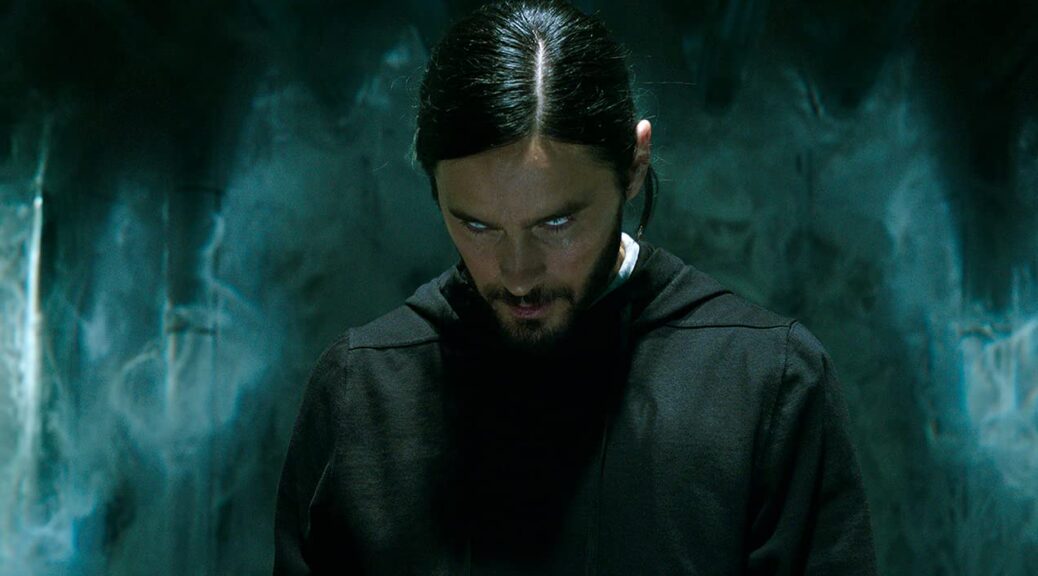
For a movie about a guy with a serious taste for blood, Morbius shows hardly any of it being spilled. That’s just one of the reasons the film feels hamstrung from what it wants to be.
What Dr. Michael Morbius (Jared Leto) wants to be is healthy. Born with a strange DNA abnormality that paired a genius mind with a broken body, Michael put “Dr.” in front of Morbius at age 19 on the way to becoming the foremost expert on blood borne diseases.
And now, his research with vampire bats from Costa Rica has yielded a breakthrough…with a catch. He gets super human, downright monstrous powers, but they wear off without more servings of blood. And while he’s getting by with the artificial variety for now, Morbius knows the time is coming when only human blood will do.
So the clock is ticking, and not just for Morbius. His colleague Martine (Adria Arjona) is feeling the heat, while Milo (Doctor Who‘s Matt Smith, who seems to enjoy hamming it up), Michael’s childhood friend who suffers from the same DNA abnormality, is eager for the cure – and fine with the consequences.
Director Daniel Espinosa (Life, Safe House) has plenty of fun with the CGI, and while the facial morphing is mighty impressive, the increased battle sequences end up trending more toward soulless, Van Helsing-style gymnastics.
Abrupt editing does Espinosa no favors, either, and the pace that initially feels nicely brisk leads to a narrative that just seems impatient. Many of the themes at work here are common to comic book adaptations, but just checking off the boxes is no substitute for development.
Screenwriters Matt Sazama and Burk Sharpless (the duo behind Gods Of Egypt, The Last Witch Hunter and Dracula Untold – all dreadful) try to inject some humor via a pair of detectives (Tyrese Gibson and Al Madrigal) hunting the “vampire killer,” but what the script needs most of all is to take Milo’s advice.
Embrace what you are!
This Morbius seems too desperate to sit at the cool Spider-Man table right now, skirting the commitment to a more fully formed, standalone character that would only reap dividends down the road. And yes, sit tight during the credits for two extra peeks in that direction.
But come on, this is vampire stuff, right? Throw off those PG-13 shackles and really dig in! Go for the jugular, if you will. Man, that could have been a rush.
This isn’t.

by George Wolf
A morality play rooted in family bonds, The Devil You Know looks to carve a modern-day Cain and Abel allegory from the ripples of a brutal murder.
Marcus (Omar Epps) is an ex-con who finally has a handle on sobriety and is hopeful for the future. He has a solid new job as an L.A. bus driver, a promising relationship with new girl Eva (Erica Tazel), and an extended family always ready to offer support.
But at the big family party in his honor, Marcus stumbles across something that appears to link his wayward brother Drew (William Catlett) to the home invasion killings that are dominating the news.
Should Marcus tell detective McDonald (Michael Ealy) what he knows? Or should Marcus keep quiet, covering for his brother and hoping that the local hoods Drew runs with (B.J. Britt and Theo Rossi) don’t eye him any more suspiciously than they already do?
Writer/director Charles Murray (TV’s Luke Cage and Sons of Anarchy) layers a compelling crisis of conscience through family strife that feels authentic thanks to a fine ensemble including veterans Glynn Turman and Vanessa Bell Calloway. It takes more than just stoically reciting the word “family” into the camera multiple times to reveal strength in conflict, and Murray has a good feel for this nuance.
Less successful are the TV and news reports of the murders (like old-age makeup, these continue to be a conundrum for filmmakers) and the tendency of Murray’s script to retrace some of the moral terrain it’s traveling. As a result, you start to feel the nearly two-hour run time as the pace develops some unmistakable drag.
But Murray seems like a TV vet with potential for compelling features. There is a thoughtful and effective thriller at the heart of The Devil You Know, and it’s often glimpsed through the moments of bloat that hold it back.

by Hope Madden
Why is the dinner party such a ripe concept for horror? Or at least trauma?
Indies It’s a Disaster and Coherence bend time and space. The Invitation takes things in a bloody direction, The Humans picked more familial scabs. What they all have in common is that intimate gathering where familiarity breeds contempt.
They also require few locations and minimal cast, so they’re not too tough to mount on a small budget.
Director/co-writer Charles Dorfman takes all that into consideration with his feature debut. A veteran producer, Dorfman co-writes this fearsome tale with another longtime producer making his creative debut, Statten Roeg.
Together they spin the story of birthday boy Adam (Iwan Rheon, Game of Thrones). He and girlfriend Eva (Catalina Sandino Moreno) await their two guests. Eva is a sculptor, and she and Adam have been living in the first of what will be many exclusive new homes developed on ancient, isolated, mystical UK land.
The developer, Lucas (Tom Cullen and his exceptional beard), is Adam’s polar opposite: narcissistic, ambitious, full of shit. Today Eva unveils her big sculpture, she and Adam sign final paperwork to own the house, and Adam blows out the candles on his dream of making it as a director in London in favor of quiet country life.
Well, maybe not because a) Lucas has had another offer, and b) masked intruders threaten the whole evening.
Part comedy of manners, part home invasion thriller, Barbarians finds itself on uneven footing.
With its monolith and fertility festival masks, the film not-so-subtly conjures 2001: A Space Odyssey and The Wicker Man. It can’t deliver on either promise, though.
More problematic is the way Dorfman discards the themes and character development so carefully articulated in the first half of the film. The fact that the invasion itself never matches the tension of the simple dinner —what with its evasions, lies, manipulations — becomes Dormfan’s biggest problem. At dinner, the filmmaker tends to the themes of the film, twisting discomfort into a knot that’s too easily untied by some intruders in animal masks.
by Hope Madden
Chris Pine is Hollywood’s unsung Chris, isn’t he? Under-sung, anyway. Just because he’s not an Avenger. He is a dependable, charismatic presence in any film, though, which is why each of his efforts deserves a little optimism. Even one as seemingly unremarkable as The Contractor.
Pine plays James Harper, a Navy Seal with 5 tours under his belt. One shredded knee, one worthless lung and a host of other physical consequences from his time under fire mean that Harper is no longer of use to the US military. Debts at home have him entertaining offers he probably shouldn’t.
After too lengthy an Act I, The Contractor pivots to tight action thriller. Pine delivers vulnerability and honor as the damaged service vet, and director Tarik Saleh surrounds him with able support.
The great Ben Foster arrives about 20 minutes into the feature, and that’s never a bad sign. The film’s biggest draw is the chance to see Pine and his Hell or High Water co-star reunite. Foster is among the most effortlessly authentic actors working, every character’s backstory hanging on his face and haunting his eyes.
He and Pine have a lived-in camaraderie that goes a long way toward deepening the emotional underpinning of what is otherwise a blandly repetitive, unimaginative military action flick.
The real surprise is that Saleh — who began his career with the bizarre and amazing dystopian fantasy Metropia — couldn’t produce something a little more intriguing. The by-the-numbers script from J.P. Davis doesn’t help, but aside from a handful of decent fisticuff sequences, Selah does not prove himself as an action director.
Gillian Jacobs, Fares Fares, Eddie Marsan and Kiefer Sutherland — all underused — do what they can to bring nuance to underwritten characters, but it’s not enough to salvage the film.
Rather than elevate a bland picture, the performances feel wasted in this derivative and formulaic thriller.
by George Wolf
First off, someone has earned a victory lap for that title, Let the Wrong One In. It’s perfect. Five words, and we instantly expect this film to be about vampires, and we expect it to be silly.
Done and done.
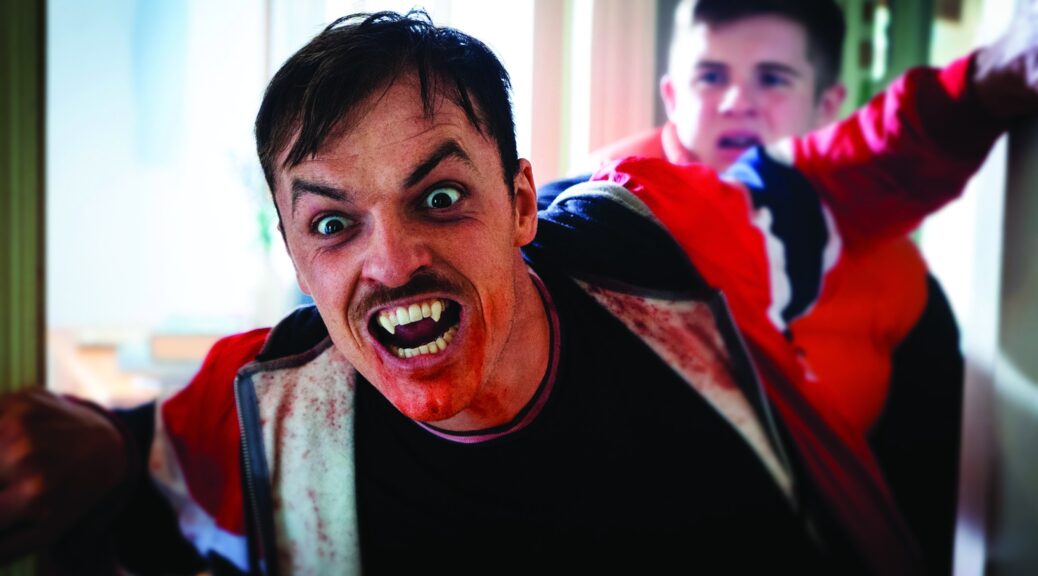
Writer/director Conor McMahon, the Irish goof behind Stiches and Dead Meat, brings his trademark nuttiness and thick, sometimes caption-worthy brogues to a story of love among the bloodsuckers.
Bachelorette Sheila (Mary Murray) is bitten during her hen party (in Transylvania, no less). Sheila comes home to the Emerald Isle and bites Deco (Eoin Duffy), whose sudden aversion to sunlight and garlic french fries doesn’t go unnoticed by his brother Derek (Jordan Lennon).
“You’re a vampire!”
“What are you insinuating?”
After calling in Dr. Henry (Anthony Head from TV’s Buffy the Vampire Slayer), the boys discover that the doc is also a vampire hunter (and train enthusiast) on the trail of his fiance Sheila and her gang of vamps.
There’s a showdown looming between the living and the undead, with McMahon and crew leaving a blood and guts-splattered trail along the way. The effects are low-rent and cheesy, the gags often obvious but always affable, and the nods to Kubrick and Edgar Wright unmistakable.
And if you’re thinking What We Do in the Shadows, this is a slightly different neighborhood. Let the Wrong One In is more working class, unbridled and often scattershot in its delivery.
But it does end up delivering on the promise of that title, with just enough zany bite to make the lifeless stretches easier to bury.
by Christie Robb
Madeline (Brea Grant, Eastsiders) and her husband Owen (Parry Shen, General Hospital) are two independent scientists working on a time travel device in their garage laboratory. Everything seems to be going well. They successfully moved an orange across time and space. They secured investment capital from their backer Rory (Richard Riehle, Office Space/legendary “that guy”). And they are all set to try experimenting on human subjects.
But one night, Madeline starts coding after she’s had a few too many wines and sends herself into the future only to return and find out that, due to a typo in the code, she and Rory can expect a new Madeline to return from the future every day at the same time for 3,600 days. What to do?
It’s a real conundrum.
Directed by Jason Richard Miller (who produced Frozen—no, not the Disney one) and co-written by Brea Grant, the film manages to entertain despite its minuscule cast of three and limited setting. A lot of the credit goes to Grant, who gives individual quirks to the various Madelines that she embodies.
Matt Akers’s 80s-inspired synth score is also a real delight, providing the entire project with a late-night direct-to-syndication guilty pleasure vibe.
It’s not a movie that can stand up to much logical scrutiny, though. And both the horrific and comedic elements could have been dialed up somewhat. But as an experiment, I think the team is on to something.