In 1927 Chicago, four musicians – three vets and a brash youngster – gather in the basement of a downtown recording studio. They tune up and rib each other, waiting for the star vocalist to arrive.
That would be one Gertrude “Ma” Rainey, legendary “Mother of the Blues” and one of the first blues singers to make records. And in the late 1920s, those records sold, which meant Ma didn’t waste her time in studio basements.
That spatial divide becomes the metaphorical anchor in director George C. Wolfe and screenwriter Ruben Santiago-Hudson’s adaptation of August Wilson’s Tony Award-winning play. And thanks to the blistering adversarial performances by Chadwick Boseman and Viola Davis, the film has a show-stopping pillar on each floor.
Boseman is electric as Levee, the ambitious trumpet player who’s not only ready to give Ma’s tunes some new swing, but also to break away and record some of his own compositions.
Ma ain’t having any of that, or anything else that doesn’t smell the least bit right to Ma. And Davis, surprising no one, effortlessly embodies the blues legend with a smoldering, defiant ferocity.
Early on, the rehearsal conversations still carry the aura of the stage, but this is Wolfe reinforcing the different worlds co-existing here, a difference that will be pivotal as events escalate.
Wilson’s source work is another compelling example of his ability to explore the Black experience in America through the piercing intimacy of his characters. Ma’s records are selling, which gives her leverage over the white record producers. She exploits that leverage at every turn, but it only takes one cold, world-weary stare from the transcendent Davis to remind you how little illusions Ma has about any of it.
Boseman’s work will undoubtedly earn an Oscar nomination, which will be nothing but well-deserved. Labeling Boseman’s final performance as his finest may smack of sentimentality – at least until you experience it. Then you realize how gracefully Boseman claims this story for Levee, and for the countless real life souls he represents.
It is Levee’s arc that carries this film’s very soul, and Boseman’s chemistry with the stellar ensemble of Glynn Turman, Coleman Domingo and Michael Potts is a thing of beauty. As Levee moves from the cocky enthusiasm of the gifted to the painful cry of the oppressed, Boseman’s bittersweet goodbye becomes doubly heartbreaking.
This is an elegant, artful salute to great art, and a sobering reminder of a shameful legacy marked by exploitation and appropriation. And it is thanks to a collection of great artists that Ma Rainey comes to the screen with all of its joy and pain intact.
We want to thank Cory Metcalf of the Rewatch Podcast for joining us today to look into those meticulous planners who cause so much trouble! They’ve thought of everything! Here are our 5 favorites, but listen in because Cory brought his own list.
5. Muffy, April Fool’s Day (1986)
Evil twins, Eighties icons,
chicanery—this movie has it all. The pseudo-slasher was panned when it came
out. Horror fans felt mocked (plus there’s no gore—not really), and the general
public didn’t seem to get the joke.
But Danilo Bach’s screenplay is a clever
dose of slasher desconstruction. Deborah Foreman (Valley Girl, Waxwork, My
Chauffeur, Grizzly II) is Muffy and/or Buffy, a little weirdo who’s having
some coed guests out to the island for spring break. Amy Steel (Friday the
13th Part 2) will be there, along with a lot of feathered hair
and Biff from Back to the Future, to see what the hostess has planned.
She has definitely done some
planning.
4. Ann, Happy Birthday to Me (1981)
OK, no one’s saying it’s a good movie. But Ann has a real
knack for planning.
This is one of those Eighties horror gems that involves a
traumatic head injury, black outs, and serial murder. And a latex face!
Director J. Lee Thompson had made classics like Cape Fear
and Guns of Navarone (for which he earned an Oscar nomination), but the
Eighties were hard on everyone. Here he is ushering Little House on the
Prairie star Melissa Sue Anderson into scream queen stardom with a ridiculous
slasher.
And yet, when the big reveal comes, audiences couldn’t have
guessed it. They really couldn’t have because the team of screenwriters hadn’t
finished the script until it was time to shoot the end. So they were not good
planners.
That Ann, though…
3. Howard, 10 Cloverfield Lane
(2016)
First of all, John Goodman. He’s always good, absolutely
always, but in this film he is stone cold terrifying.
Not right off the bat, though. Howard (Goodman) had things
all figured out, but then Emmett (John Gallagher Jr.) threw a monkey in the
wrench and now there are three people down in Howard’s bunker waiting out the
alien invasion.
Emmett was not part of the plan.
The plan has Howard living out the end of days alone with
Michelle (Mary Elizabeth Winstead), whether she wanted to or not. And so
unfolds a fascinating series of well-constructed events that fray your nerves.
2. Ji-Tae Yoo, Oldboy (2003)
Yes, we’ve included this movie on another list. And why not?
How many horror movie characters have the patience to plot out this 15-year-long
revenge? Who else has figured out how exactly to manipulate his foe, to wear him
down, to put him into a situation that makes him realize just how wrong he
might have been?
Only Yoo Ji-Tae (Woo-jin Lee). We’ve given credit many times
over the years to Choi Min-sik (the man can take a beating). But the elegant
and controlled counterpart to Oldboy’s disheveled eruption of humanity is just
as important. He is an eerie calm. His character represents every opposite
thing.
And he’s been planning every detail of this revenge for 15
years.
1. John Doe, Seven (1995)
Who else? He had everything and everyone figured out. He
knew his calling, understood his victims, knew his own weakness, and knew how
to become immortal.
And David Fincher knew how to surprise an audience. We
should have seen it coming. We should have known. But we did not. Sure, that
means we enjoyed the film, its creativity and cleverness startled us and stayed
with us. (Just like those different
crime scenes did. Don’t tell me Sloth didn’t make you jump!)
But it also means that John Doe isn’t the only meticulous
planner. Andrew Kevin Walker knew how to create a character who’s meticulous
nature allowed him to outthink the police, but David Fincher’s eye for detail
and instinct for mood is the reason Se7en still compels attention and horror 25
years later.
“Don’t make me psychotic. You wouldn’t like me when I’m psychotic.”
Okay, that’s not the exact quote, but science fiction and horror stories have been mining the conflicting personality premise since well before Bill Bixby on 1970s TV. Minor Premise ups the ante in stellar fashion, with no less than 10 identities competing for one man’s consciousness.
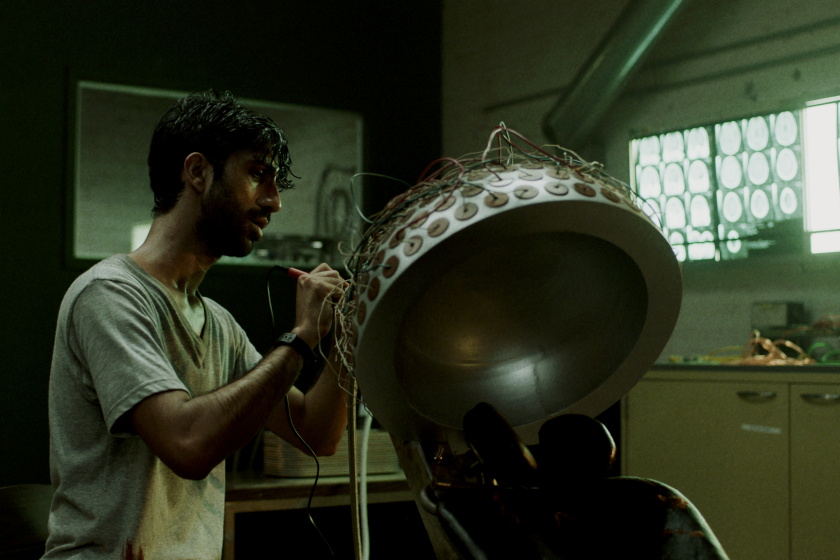
Dr. Ethan Kochar (Sathya Sridharan) is a scientist living in the shadow of his late father, but Ethan’s on the verge of a breakthrough that would make his spotlight quite a bit brighter.
His work is centered on mapping memories as physical imprints on neural pathways. If Ethan can isolate sections of the brain, he foresees amazing possibilities such as boosting intellect, erasing Alzheimers and PTSD, maybe even constructing consciousness.
But when Ethan goes full Brundlefly and experiments on himself, his identity is fractured into 10 different emotions – ranging from euphoric to psychotic – each operating at 6 minute increments.
Anyone familiar with 2004’s wonderful Primer will feel right at home, especially after Ethan’s colleague and former flame Allie (Paton Ashbrook) drops by to help him put the pieces of his mind back together. From there, the film becomes a one setting two-hander, as director/co-writer Eric Schultz unveils a feature debut of clever intellect, stylish pacing and claustrophobic, beat-the-clock tension.
Sridharan and Ashbrook make a formidable team, anchoring their wary chemistry and heady dialogue with a “try to keep up” attitude that’s organically right for their characters. They’re brilliant scientists (Schultz, by the way, studied psychology at Harvard) and we’re not, so if you pay enough attention and suspend a little disbelief, Minor Premise crackles with some major sci-fi thrills.
Eeewww – no 16 year-old girl wants to hear about her Mom’s sexcapades with the new boyfriend!
John (Trey Tucker) is kinda hot, though, and young Liberty (Ema Horvath) has caught herself staring when he traipses around the Adirondacks lake house with his shirt off – which is often.
Mom Michelle (Mena Suvari) is 42 but has told John she’s 35 – and she’s desperate for “Libs” to keep her secret so he doesn’t run off. But John seems like he’s strangely attached to Michelle – or at least to the lake. In fact, as Libs looks closer, there’s plenty about John that’s strange.
He says he’s an “aquatic geneticist” working to preserve fresh water supplies. But man, he’s really interested in parasites, especially ones that can adapt to any host available.
Writer/director Braden R. Duemmler’s feature debut unfolds like a minor league Under the Skin. There’s simmering sexual tension here – some of it metaphorical – amid dreamlike atmospherics and a few glimpses of a creature on the hunt.
Horvath (The Mortuary Collection) is great. Her mix of teenage disgust, confusion and curiosity hits just the right pitch, as does her panicked courage when Lib has to fight for her life (and her Mom’s).
Not every logical building block is water tight, and the sci-fi/horror combo sometimes feels desperately earnest. But the creep factor in What Lies Below holds steady, with Duemmler earning some water-logged points for not copping out at the finish.
As slippery as it is inviting, Lawrence Michael Levine’s Black Bear is an intoxicating trip through the inspirations and indulgences that take root in creative minds.
It feels intensely personal, and yet – once Levine delivers his midstream shape shift – malleable enough to bend to myriad perspectives and interpretations.
We first meet Allison (Aubrey Plaza) as an actress and director facing a crisis of inspiration. She’s hoping to ignite the creative spark at a remote lakeside property overseen by Gabe (Christopher Abbott) and his pregnant girlfriend, Blair (Sarah Gadon).
As the three get to know each other, we learn that Gabe inherited the property from his family. Beyond that, there isn’t much Blair and Gabe seem to agree on. The couple’s little barbs become more intense, as does the attraction between Allison and Gabe, and we think we have a pretty good handle on what’s soon to be up.
And then we don’t.
The opening scene repeats, but Allison and Blair are co-stars on the set of the new film directed by Gabe, who is also married to Allison. The shoot is chaotic, Gabe’s motivational methods are questionable and now Allison is the one jealous of Gabe and Blair’s cozy relationship.
Knowing that Levine’s own history includes films with his wife (actress/director Sophia Takal) adds a layer of intimate intrigue, and knowing even a little about the workings of a movie set will add relatable humor.
But Black Bear isn’t a comedy – except when it’s funny. It’s also dramatic and slightly horrific, depending on your viewpoint.
Most of all, it’s emotional, propelled by career high performances from Abbott, Gadon, and Plaza. The glee each performer takes in upending character expectations is evident, with Plaza seamlessly moving from a cool, casual customer to the emotionally frayed flashpoint of a volatile triangle.
After such fireworks play out, Levine’s payoff may seem a bit underwhelming, but his film is more about the trail than where it ends. Black Bear‘s got plenty to say – about creativity, ego, insecurity, sexual politics and more – but its resonance comes from not demanding you take a side.
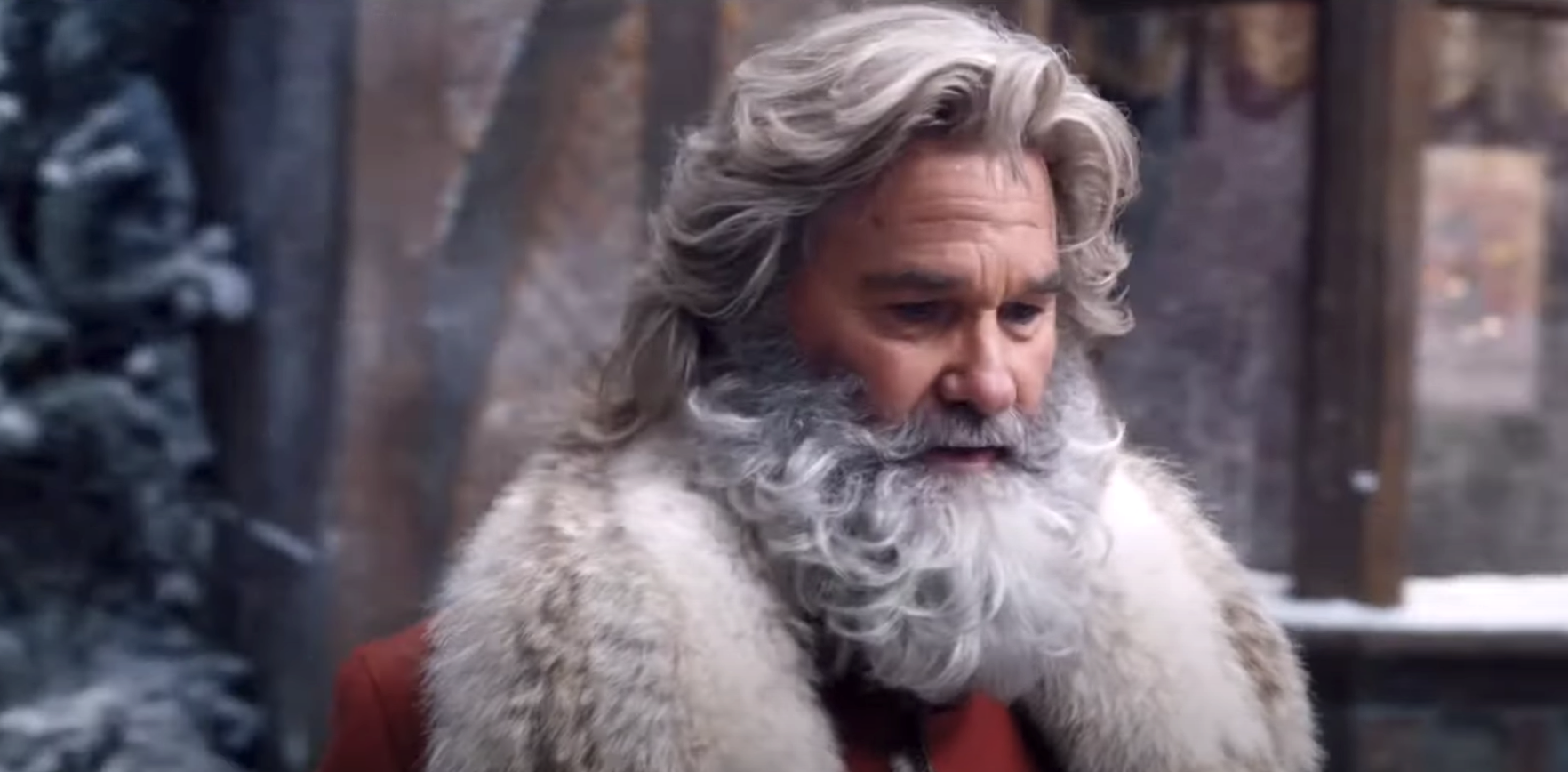
At least two things have happened since we met The Croods seven years ago. One, we’ve forgotten about the Croods, and two, Dreamworks has plotted their return.
A New Age gets the caveman clan back together with some talented new voices and a hipper approach for a sequel that easily ups the fun factor from part one.
The orphaned Guy (voiced by Ryan Reynolds) has become part of pack Crood, which is fine with everyone except papa Grug (Nicolas Cage), who isn’t wild about the teen hormones raging between Guy and Eep (Emma Stone).
The nomadic gang is continuing their search for the elusive “tomorrow” when they stumble onto the Stone Age paradise of Phil and Hope Betterman (Peter Dinklage and Leslie Mann, both priceless). The Betterman’s lifestyle puts the “New Age” in this tale, and they hatch a plan to send the barbaric Croods on their way while keeping Guy for their daughter Dawn (Kelly Marie Tran).
But a funny thing happens along the way. Check that, many things happen, and plenty of them funny, in a film that nearly gets derailed by the sheer number of characters and convolutions it throws at us.
The new writing team of Kevin Hageman, Dan Hageman and Paul Fisher keeps the adventure consistently madcap with some frequent LOLs (those Punch Monkeys are a riot) and even topical lessons on conservation, individuality and girl power.
Or maybe that should read Granny Power, since it is Gran’s (Cloris Leachman) warrior past that inspires the ladies to don facepaint, take nicknames and crank up a theme song from Haim as they take a stand against some imposing marauders.
Director Joel Crawford – an animation vet – keeps his feature debut fast moving and stylish, drawing performances from his talented cast (which also includes Catherine Keener and Clark Duke) that consistently remind you how important the “acting” can be in voice acting.
By the time Tenacious D drops in to see what condition the Partridge Family’s “I Think I Love You” is in, the whole affair starts to feel like some sort of animated head trip.
Yeah, a little sharper focus wouldn’t hurt, but A New Age delivers the good time you forgot to remember to wonder where it’s been.
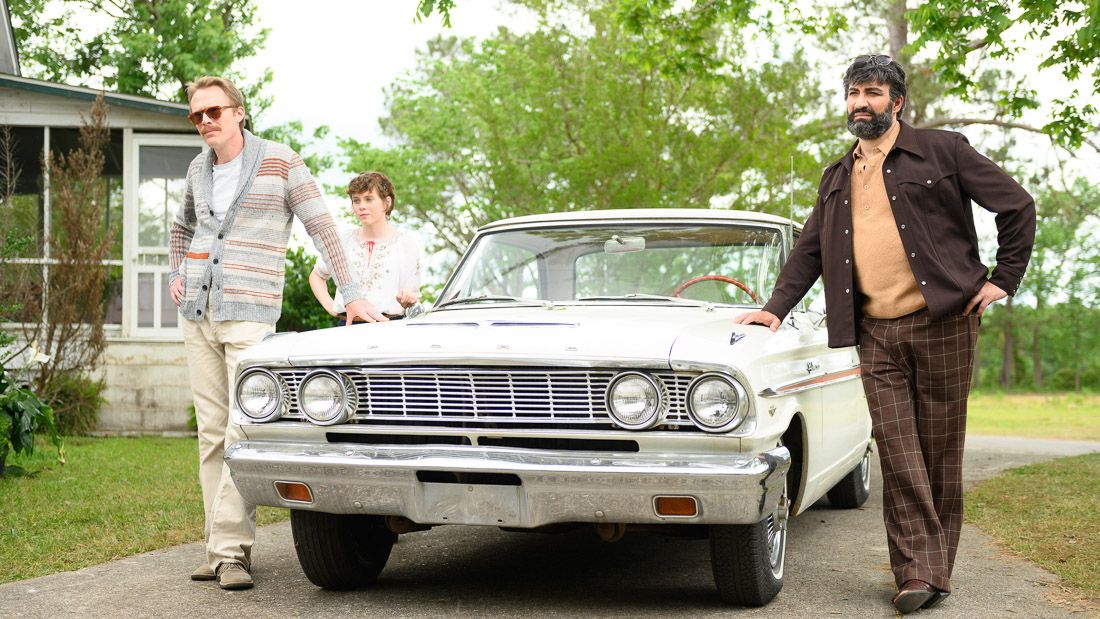
Dropping right at the start of the season normally filled with relative reunions, Uncle Frank digs into the scars of family strife for an effective drama full of understated grace and stellar performances.
Writer/director Alan Bell frames his narrative through the eyes (and scattershot narration) of Betty (Sophia Lillis), a curious teenager in the summer of 1969.
Mainly, she’s curious about life beyond tiny Creekville, South Carolina, which is a big reason Betty is always happy to visit with her Uncle Frank (Paul Bettany).
He got out of Dodge years ago, settled in New York City and now sweetly encourages Betty to look outside her backwater hometown for any kind of future she desires. A new name? Of course. Betty likes “Beth,” and Frank agrees, so that’s that.
Fast forward four years, and Beth is a freshman at NYU, where Frank teaches. Dropping by Frank’s apartment unexpectedly one night, Beth meets Wally (Peter Macdissi, terrific), and quickly finds out why Frank has long felt like an outsider in his own family.
An unexpected death in that family means Frank and Beth must travel back home for the funeral, with Wally hatching a pretty funny plan to tag along.
This time on the road becomes the bridge that connects Frank’s coming out and Beth’s coming-of-age. Ball (writer of American Beauty, creator of True Blood) isn’t blazing any trails here, but his outstanding ensemble consistently elevates even the most well-traveled terrain.
Bettany has never been better, covering Frank with a mask of easy charm that can never quite hide his self-loathing. He finds a touching chemistry with the wonderful Lillis, who brings a warm authenticity to Beth’s wide-eyed awakenings.
And check out who’s waiting at home in Creekville: Stephen Root, Margo Martindale, Judy Greer, and Steve Zahn, all seasoned talents able to keep their characters above the hicktown cliches that tempt the script.
There’s pain here, for sure, but there’s also humor and a comforting sense of hope. Uncle Frank may not be the first film to remind us how heavy family baggage can feel, but this has the cast and commitment to make you glad you unpacked for a spell.
Well there’s an uncomfortable topic! Of course, that’s what makes it so perfect for horror. Any idea that automatically induces a wince or a grimace, anything you want instinctively to turn away from, immediately creates the kind of discomfort that only horror can truly manipulate.
It’s been used for lurid ends in films like Flowers in the Attic, and has become the source of comedy in others – Tromeo and Juliet springs to mind. But often, it creates a particular kind of tension that drives a film in truly horrific directions: Jug Face, Crimson Peak, Pin, Angel Heart, The Crazies.
Here are the films we think handle the topic best. SPOILERS AHEAD!!!
6. 100 Bloody Acres (2012)
A testament to the entrepreneurial spirit and the bonds of family, 100 Bloody Acres is Australia’s answer to The Texas Chainsaw Massacre. Same body count and more blood, but a far sweeter disposition and loads more laughs.
Brothers Reg (Damon Herriman) and Lindsay (Angus Sampson) sell organic fertilizer. Business is good. Too good. Demand is driving the brothers to more and more extreme measures to gather ingredients.
Interesting the way writing/directing brothers Cameron and Colin Cairnes explore sibling rivalry, but the film’s strength is in its humor: silly enough to make even the most repugnant bits enjoyable. (I’m looking at you, Aunt Nancy. Oh, no! Why did I look?!)
5. The Woman (2011)
There’s something not quite right about Chris Cleese (an unsettlingly cherubic Sean Bridgers), and his family’s uber-wholesomeness is clearly suspect. This becomes evident once Chris hunts down a feral woman (an awesome Pollyanna McIntosh), chains her, and invites the family to help him “civilize” her.
The film rethinks family – well, patriarchy, anyway. You know from the opening, sunshiny segment that nothing is as lovely as it seems, but what lurks underneath this wholesome facade begins with some obvious ugliness—abuse, incest—but where it leads is diabolical.
Nothing happens in this film by accident – not even the innocent seeming baking of cookies – nor does it ever happen solely to titillate. It’s a dark and disturbing adventure that finds something unsavory in our primal nature and even worse in our quest to civilize. Don’t even ask about what it finds in the dog pen.
https://www.youtube.com/watch?v=GL50yBcw5wA
4. Bad Boy Bubby (1993)
Writer/director Rolf de Heer’s astonishing film is horribly marred by the fact that a cat is, in fact, killed on camera, so buyer beware. For most people, that will be reason enough to miss this one. But that just makes the director’s choice that much more tragic, because this is a really good movie.
Nicholas Hope is astonishing as the titular Bubby, a 30-year-old manchild who’s never, ever left the room he keeps with his mum.
Remember the Oscar-winning indie film Room? Remember how tragedy is somehow skirted because of the courageous love of a mother for her son? Well, this was not Bubby’s mum. Bad things are happening in that room, and once Bubby is finally free to explore the world, his adventure is equal parts deranged and soul-crushing. Hope is so frustratingly empathetic in the lead that no matter what he does, you root for him. You root for friends who will love him, for someone who will care for him, but it’s the resigned cheerfulness with which he faces any kind of abuse that really just kills you.
This taboo-shattering film is so wrong in so many ways, and yet it’s also lovely, optimistic, sweet, and funny. And just so, so fucked up.
3. Henry: Portrait of a Serial Killer (1986)
Director John McNaughton’s picture offers a uniquely unemotional telling – no swelling strings to warn us danger is afoot and no hero to speak of to balance the ugliness. He confuses viewers because the characters you identify with are evil, and even when you think you might be seeing this to understand the origins of the ugliness, he pulls the rug out from under you again by creating an untrustworthy narrative voice. His film is so nonjudgmental, so flatly unemotional, that it’s honestly hard to watch.
What’s diabolically fascinating, though, is the workaday, white trash camaraderie of the psychopath relationship in this film, and the grey areas where one crazy killer feels the other has crossed some line of decency.
Rooker’s performance unsettles to the bone, flashing glimpses of an almost sympathetic beast now and again, but there’s never a question that he will do the worst things every time, more out of boredom than anything.
It’s a uniquely awful, absolutely compelling piece of filmmaking.
https://www.youtube.com/watch?v=QcM5L-ZBmXk
2. The Loved Ones (2009)
Writer/director/Tasmanian Sean Byrne upends high school clichés and deftly maneuvers between gritty drama and glittery carnage in a story that borrows from other horror flicks but absolutely tells its own story.
Brent (Xavier Samuel) is dealing with guilt and tragedy in his own way, and his girlfriend Holly tries to be patient with him. Oblivious to all this, Lola (a gloriously wrong-minded Robin McLeavy) asks Brent to the end of school dance. He politely declines, which proves to be probably a poor decision.
Inside Lola’s house, we’re privy to the weirdest, darkest image of a spoiled princess and her daddy. The daddy/daughter bonding over power tool related tasks is – well – I’m not sure touching is the right word for it.
The Loved Ones is a cleverly written, unique piece of filmmaking that benefits from McLeavy’s inspired performance as much as it does its filmmaker’s sly handling of subject matter.
1.Oldboy (2003)
This is the one that’s utterly spoiled by the upfront knowledge of incest. It’s also easily the best example of the topic’s handling in a horror film, plus the movie is 17 years old, so we went ahead and included it. Sue us. You were warned.
A guy passes out after a hard night of drinking. It’s his daughter’s birthday, and that helps us see that this guy is a dick. He wakes up a prisoner in a weird, apartment-like cell. Here he stays for years and years.
The guy is Dae-su Oh (Min-sik Choi). The film is Oldboy, director Chan-wook Park’s masterpiece of subversive brutality and serious wrongdoing.
Choi is unforgettable as the film’s anti-hero, and his disheveled explosion of emotion is perfectly balanced by the elegantly evil Ji-tae Yu.
Choi takes you with him through a brutal, original, startling and difficult to watch mystery. You will want to look away, but don’t do it! What you witness will no doubt shake and disturb you, but missing it would be the bigger mistake.