Tag Archives: Rachel Willis

Dance till You’re Dead

Meet Me in the Bathroom

by Rachel Willis

Based on the book by Lizzy Goodman, Meet Me in the Bathroom finds documentarians Dylan Southern and Will Lovelace exploring the New York City rock scene of the early 2000s.

Opening in 1999, the film treats us to a little history of the popular music scene of the time. Artists like The Offspring, Blink 182 and Fred Durst of Limp Bizkit dominated the radio and airwaves (mostly courtesy of MTV).

Our introduction to a new wave of rock in New York begins with the duo that made up The Moldy Peaches. We’re treated to several home movie moments of the two getting acquainted, not only with their new city (many of these bands are transplants to NYC) but also with the young men who would make up the band The Strokes. 

The biggest benefit of adapting a book about a music scene is the access to footage from some of the early concerts. Watching bands like The Strokes, Interpol and the Yeah Yeah Yeahs play to small crowds is one of those things that cannot be replicated in book form.

The film also adapts the book’s narrative style – overlaying the footage and images with soundbites from several of the people who were part of the scene. You’ll find no talking heads here – the best part of the documentary is getting to watch the timeline unfold.

The trick of adapting such an expansive book is knowing where to concentrate your focus. The majority of the film focuses on three bands – The Strokes, Interpol and James Murphy (LCD Soundsystem). And though the filmmakers reduce the number of bands covered compared to the book, there are still too many others brought into play.

The Moldy Peaches are our introduction, but they drop out as the film passes through 2001. TV on the Radio comes into play briefly, and one of the scene’s most interesting bands, The Liars, gets even less attention. Several other mentions are made, but each is so quick as to be forgettable.

Because of this shifting focus as we weave from The Strokes to Interpol to the Yeah Yeah Yeahs and beyond, things get messy. It’s impossible to keep track of every band and person introduced.

If the filmmakers had whittled down the book’s focus just a bit more, they could have delivered a more interesting documentary.

Insidious

Soft & Quiet

by Rachel Willis

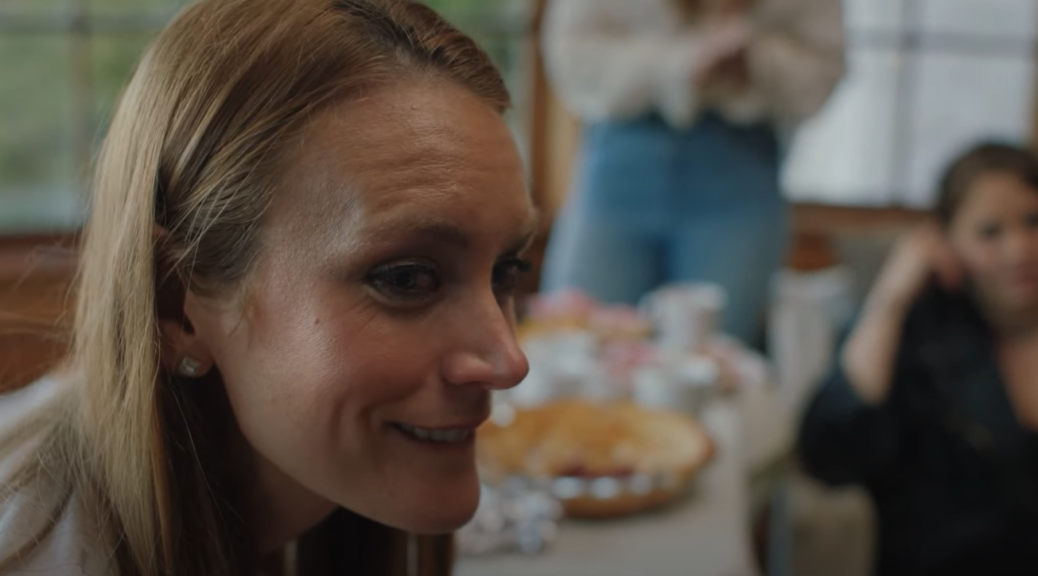
The idea that the kindergarten teacher at your child’s school might be a member of an Aryan group is terrifying enough, but writer/director Beth de Araújo takes that idea even further in her first full-length feature, Soft & Quiet.

The kindergarten teacher, Emily (Stefanie Estes), is our focus as we watch her leave school one afternoon to attend a meeting of like-minded women. Right from the beginning, it’s clear Stefanie is unlikeable. She coerces a young boy into confronting a janitor over mopping the floor, painting it to the child’s mom as teaching him to be empowered.

From this uncomfortable moment, the movie takes us further into discomfort as we follow Emily in real time as her evening progresses. Giving away anything more would remove the tension that is slowly built as the movie moves from unsettling to disturbing to terrifying.

Telling a story in real time takes a truly talented editor, and Lindsay Armstrong nails it. Her cut is seamless, and it helps deepen the tension. The editing work keeps you in the moment, showing how quickly mob mentality can take over – especially if the group in question feels threatened (even when the threat actually comes from the group in question).

Most of the time, the cinematography complements the writing and editing. But on occasion, it feels like we’re watching a found footage film, which detracts slightly from the tension. While there are many moments filmed to unsettle, at other times it removes us from the moment. However, these minor faults are easily overlooked.

The acting throughout is perfect. Every woman feels like someone you might know. From the pregnant Stormfront member to the woman living paycheck-to-paycheck, each actor brings a realism that lends to the dread we feel as we follow the group.

Though we follow Emily, it’s impossible to feel any sympathy for her. She is at times coerced into action and other times the leader of the pack. What she chooses to do is horrifying, and her responses to the events don’t evoke understanding.

There are several themes running in the film, but all of them work together to paint a picture that isn’t hard to envision.   It’s easy to imagine women like these among us. That’s the scariest part of all.

Hep Cats & Cool Kitties

Please Baby Please

by Rachel Willis

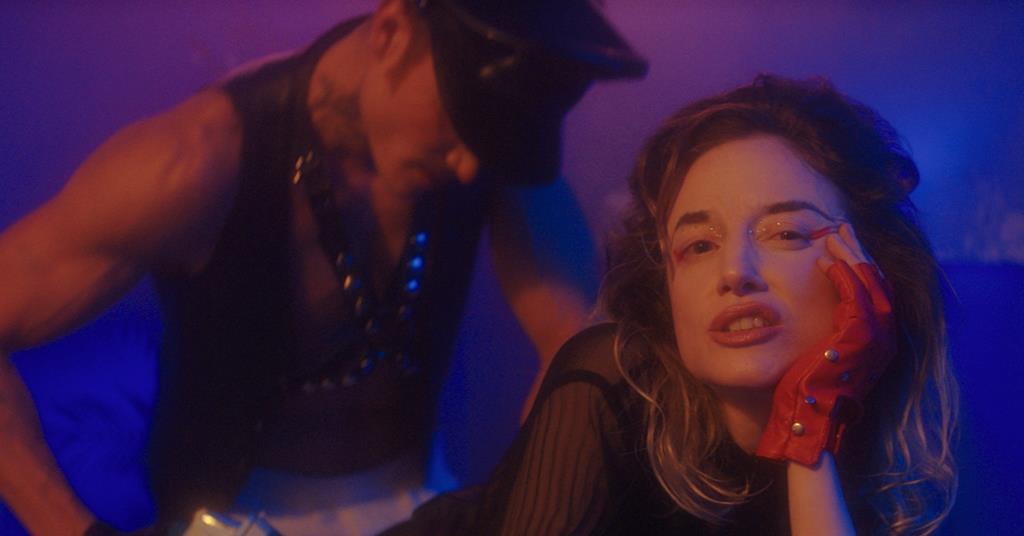
A great cast, phenomenal sets, tempestuous music, and spot-on costuming work together to bring life to director/co-writer Amanda Kramer’s film, Please Baby Please.

Together with co-writer Noel David Taylor, Kramer has the elements to craft a successful take on gender identity, sexual politics, and the fluidity of sexuality and gender expression.

But for all these strengths, it doesn’t quite work.

That’s not to say the film doesn’t have its moments. Andrea Riseborough, who plays Suze, is a powerhouse on screen. Her effortless portrayal of a stifled 1950s wife is a masterful balance between feminine sexuality and masculine anger. It’s her performance that really blurs the line on stereotypical gender roles.

Harry Melling (Dudley from the Harry Potter series) plays the less overt, meeker of the husband/wife duo, Arthur and Suze. He rails against the stereotype that to be a man he must have control – over his wife and the less tangible things that supposedly make a man a man.

When the couple runs across the gang known as the Young Gents, we start to see the dynamics of gender and sexuality and their precarious, yet significant, role in society.

While the Young Gents earn their place in the film, there are simply too many characters here. Aside from a couple, most don’t have much of a role to play. They appear on screen to represent the oppressive, toxic masculinity that pervades our culture, less character than caricature.

The film’s choreography is another element that doesn’t always work. A scene involving a split screen divides focus, and it’s hard to successfully take in both performances. Do you watch Arthur or Suze? Whose performance in this moment is more important to the film’s overall point?

There is a lot that can be said about our society’s views on gender and sexuality. Much can also be said about what has and hasn’t changed since the 1950s. Please Baby Please adds its messy but stylish take to the conversation.

In the Sky with Diamonds

Acid Test

by Rachel WIllis

Though at the time I was a bit younger than Acid Test’s main character, Jenny (Juliana Destefano), I still remember 1992 and 1993 quite well. So, it’s with some authority that I can attest that writer/director Jennifer Waldo’s coming-of-age film feels straight out of the early 90s. I even had the same haircut.

As Jenny turns 18, on the eve of the Clinton/Bush/Perot presidential election, she begins to question her goals and direction in life. Everything has been ironed out for her by her domineering father (Brian Thornton) and acquiescent mother (Mia Ruiz). The film begins with her college interview at Harvard, an ambition she’s carried for many years.

But after a few Riot Grrrl concerts that she attends with best friend Drea (Mai Le), Jenny starts to wonder: who exactly is in charge of her future? Is the dream of Harvard hers, or her father’s?

It’s not uncommon for adolescents to start seeing their parents with new eyes as they grow older. Jenny especially views her father in a harsher light, questioning his role in the family’s life. Were the choices her mother made of her own volition or because that’s what was chosen for her?

Destefano plays the rebellious teenager well. She convincingly skirts the line between obedient, loving daughter and a young woman trying to figure out her path in life. As her parents, Thornton and Ruiz play well against her.

Adolescence is often a time when parents and children start to clash, and Waldo navigates these waters with ease. This is a family with love for each other, but once you start to see your parents for who they really are, it’s impossible to go back.

As Jenny spins farther out of her parents’ orbit, she experiences many of the things that other young people do – falling in love (or possibly just lust), experimenting with drugs, choosing a path forward from childhood to adulthood. A particularly memorable scene lets us know that along with her father’s forceful nature, Mom isn’t shy about laying on the guilt.

It’s a tough situation for any teenager, but Jenny does it with insight and a great soundtrack backing her up. Though she doesn’t have all the answers, what she does have is knowledge. Her future is her own – and we get to watch her wake up. 

Drone On

Vesper

by Rachel Willis

Imagine a world in which most of the plant and animal life has been obliterated, and what’s left is deadly and inedible. In this world, Kristina Buozyte and Bruno Samper have crafted Vesper. The filmmakers share writing credits with Brian Clark, and together, they plunge us into an unforgiving dystopia.

Vesper (Raffiella Chapman) is an adolescent girl who primarily fends for herself while also caring for her invalid father (Richard Brake). Her father, however, has placed his consciousness inside a volleyball-shaped drone. The drone’s sloppily painted face and dialogue ensure that Vesper never truly seems alone. She doesn’t always get along with her drone father, but as the story unfolds, we get a sense of their strong connection.

Saying too much more would take away from the discovery that comes as each moment unfolds on screen. A lot of this world is left to the imagination and flashes hint at sinister elements in every nook and cranny. Though Vesper and her father live alone, there are others who inhabit this world, and their motives and actions vary from deadly to seemingly benign.  

The world-building in the film is mostly solid, just a few things requiring a strong suspension of disbelief. Allow yourself to be sucked in and the minor inconsistencies are easily overlooked. The science fiction elements bend closer to fiction than science, but it will only annoy the very skeptical.

This is because it’s hard to see past the powerful performances, particularly from Chapman. Though she shares the screen with numerous dynamic actors – and her very pessimistic drone – she commands every scene she’s in, which is nearly every one. She’s capable of carrying the film on her shoulders, and the movie is better for it.

Though sometimes reminiscent of films like Annihilation, Vesper manages to offer up a new vision of the future – one that’s terrifying, bleak, but sometimes hopeful. It’s a strong film with solid performances and a uniquely prescient take on our current reality.

No Bromance

To the Moon

by Rachel Willis

Written, directed by, and starring Scott Friend, To the Moon attempts to capture a tense weekend when a husband and wife are forced to spend time in the company of the husband’s estranged brother.

Dennis (Friend) and Mia (Madeleine Morgenweck) have retreated to the family cabin to help Dennis kick his numerous addictions. From what we gather, this isn’t the first time the couple has done this. An accident in Mia’s past, and a hinted miscarriage, compound the couple’s troubles.

To complicate matters, the two wake up one morning to find Dennis’s brother, Roger (Will Brill), performing a strange, yoga-like ritual in the yard. The dog seems just as confused by this newcomer as Dennis and Mia.

What works for this taut little thriller is the obvious tension between Dennis and Roger, as well as between Dennis and Mia. There is a lot going on beneath the surface of their dinner table conversations, and from the moment Roger arrives, something is in the air between the brothers. Mia does her best to keep up cheery conversation, but Dennis makes it difficult. Roger also has a bad habit of offering his opinion in places where it isn’t wanted.

However, when Dennis describes this very Zen Roger as malevolent, it seems like a strange choice of words. There isn’t a lot of information forthcoming regarding Roger’s back story. He mentions a hospital, but the we’re left wondering about Roger’s past.

WIthheld information makes Dennis’s mistrust seems ill-conceived. Hallucinatory moments don’t exactly help us put faith in Dennis. Though Roger is nosy, a bit creepy with his mannerisms, and a little “out there,” he doesn’t put off a vicious vibe. Unlike Dennis. Everything from his resting bitch face to his tone of voice suggests a potential for violence.

It can be hard to convey paranoia on film, but Friend manages with a few key moments. However, his streamlined script leaves too much unsaid and unexplored. As we approach the climax, it isn’t enough to leave the audience wondering if Dennis’s paranoia is justified or simply a result of his withdrawal.  

Postcards from the Edge

Root Letter

by Rachel Willis

Loosely based on a video game from 2016, writer David Ebeltoft’s Root Letter offers a unique take on the idea of a pen pal seeking out a friend in trouble. Though director Sonja O’Hara does her best to flesh out the surprisingly bare-bones story, there doesn’t seem to be much for her to work with.

Sarah (Keana Marie) is given a school assignment at school to write four letters to a pen pal. She goes above and beyond the requirements, exchanging dozens of letters with Carlos (Danny Ramirez), who was hospitalized after his girlfriend’s dad discovered Carlos in his daughter’s bed.

When Carlos receives a distressing letter one year after the end of his communication with Sarah, he sets out to discover what happened to her.

It takes surprisingly little for Carlos to find Sarah despite only knowing her first name and the name of her high school. Carlos is able to elicit help from an English teacher who offers him a not-so-subtle nudge in the right direction.  

There isn’t a lot of meat to Carlos’s character. He doesn’t serve as a guide to the past, since Sarah’s story isn’t told through interviews with her friends, but rather through flashbacks from the previous year. The present story doesn’t raise new questions or offer surprising twists to the story. We’re mostly biding time waiting to get back to the heart of Sarah’s story.

And yet, Sarah’s tale isn’t very compelling either. It’s weightier than Carlos’s forays into Sarah’s past life, but not by much. For a mystery, there are zero surprises as you can predict each measure beat by beat.

There are also too many characters even though the number was greatly reduced compared to the video game. Aside from Sarah, few of the characters come to life in meaningful ways. Sarah’s best friend is the kind of woman who’ll do anything to keep hold of a tenuous relationship. Sarah’s mom is a stereotypical single mom drug addict with a bad back.

Sarah’s friend Caleb (Breon Pugh) is our most interesting character, but his brief moments on screen do little to make him stand out.

There is a certain quaintness to the story, particularly in the beginning – who knew letter writing could be so endearing? – but any originality is dropped in favor of a paint-by-numbers mystery. If only the actors had something more compelling to work with, perhaps their earnestness would have been rewarded with a more watchable story.

This Little Piggy

Squeal

by Rachel Willis

Why did the pig cross the road?

To get hit by a car and lead us into a dark and comedic fairy tale along with our hero, Chef Sam (Kevin Janssens, Revenge). Director Aik Karapetian, working from a script co-written with Aleksandr Rodionov, brings us a more funny than scary tale of a man who stumbles into a strange situation.

While searching for a father he’s never met, in a country he’s never heard of, Sam not only hits the aforementioned pig but meets Kirke (Laura Silina). Because she claims the pig was hers, Sam offers the woman a ride home. He shares a meal with her, and she offers him a bed for the night. Revealing any more of the plot would take away from the joy of experiencing it for yourself.

Though several scenes are more reminiscent of a horror film than a comedy, Karapetian never loses the element of humor. What helps maintain the lighthearted nature, despite several darker sections, is the presence of the film’s jaunty-voiced narrator. His occurrence in the film is as welcome and natural as any of the characters on-screen.

As is the presence of the many pigs who share screen time with our human characters. As with most fairy tales, the animals are as essential to the story as the humans. At times, humans play the role of animals, and animals take on near-human qualities.  

This is an unusual film, to be sure. Karapetian broadcasts early and often that what you can expect is the unexpected. It’s an accomplishment that the actors embrace their characters as naturally as if you stumbled upon them in some unnamed forest in Eastern Europe.

The score is another element that keeps things from taking a darker turn. The harp makes you feel you’re dining in a five-star restaurant, even while watching pigs covered in filth getting a shower. The fancy font for the opening credits only furthers this feeling.  Villains and heroes, pigs and wolves, this film is populated with many things strange and unusual. And it’s all the better for it.

https://www.youtube.com/watch?v=F8ywlJ5_cmg

The Odd Couple

Ali & Ava

by Rachel Willis

In the years since the 1974 release of Rainer Werner Fassbinder’s masterful Fear Eats the Soul, it’s quite depressing to realize so little has changed. The evidence is there in Clio Barnard’s poignant and relevant film, Ali & Ava.

Treading similar ground as Fassbinder, Ali & Ava charts the growth of a relationship between Ava, an older, white, working-class woman, and Ali, a 30-something, middle-class man of Pakistani descent. However, Barnard carves a fresh story, the West Yorkshire city of Bradford serving as the setting for the racial and economic tensions permeating the couple’s relationship.

The most winning aspect of the film is the charm and natural chemistry shared between the two leads, Claire Rushbrook’s Ava and Adeel Akhtar’s Ali. Though their backgrounds are quite different – Ava is a teacher’s aide with several children and grandchildren, while Ali is a landlord who befriends his tenants, many of them immigrants who speak little English – the two find a connection through music.

The film’s soundtrack works as a third character, serving as an emotional backdrop to the growing attachment between Ali and Ava. Though Ali professes to hate folk when Ava declares her enjoyment, he spends time listening to Bob Dylan, trying to perfect one of his songs on the ukulele. It’s little touches like this that draw the viewer into the couple’s relationship.

Like similar films, the biggest obstacles to the new couple’s happiness are family. Ava’s son, Callum (Shaun Thomas) — his recently deceased father a skinhead — professes his disgust in a dramatic scene that rings a little false in light of the film’s subtler moments. Meanwhile, Ali’s sister employs a classist slur akin to white trash.

The one thing that doesn’t seem to work against the couple is their age difference, which in films with similar themes has often been as shocking as the class or race differences. Perhaps we’ve made a little forward progress in one respect.

Despite the roadblocks to the couple’s happiness, Barnard doesn’t give up hope. The soundtrack remains upbeat, connecting not just Ali and Ava, but Ali to a handful of kids who throw rocks at his car. (Why they do this is yet one more subtle moment highlighting the issues still facing us.)

Perhaps not as profound as thematically similar films, Ali & Ava serves as a nice reminder that sometimes love is more powerful than hate.

No Stones Allowed

Glasshouse

by Rachel Willis

Hidden away in a sanctuary, a mother, her three daughters, and one son do their best to avoid a disease known as The Shred. Glasshouse is the kind of slow burn that drags you in gradually and inexorably. Co-writing with Emma Lungiswa De Wet, director Kelsey Egan knows how to pull the tension like thread through a wound.  

Curiosity killed the cat, but it seems Bee (Jessica Alexander) can’t help herself when a stranger stumbles upon the family. While each of the women cares for brother Gabe, who has been affected by The Shred, their mercy has its limits.

A few particularly gruesome scenes make you wonder who to be afraid of in this world.   

Egan’s world-building is richly detailed. The youngest girl sings a nursery rhyme with her older brother that centers around the new world. The mother holds a religious service with its own rites and rituals. Stories are told that suggest the world that once was.

The richness of the score and the beauty of the setting enhance the feeling of watching a fairy tale, but every so often something happens to remind us that this isn’t an idyllic other world. It’s a nightmare with no end.

After COVID, which has its cameo, The Shred has a false ring as a toxin. Egan isn’t interested in the realities of disease but in the unreliability of memory. When the world has been stripped away, whose memories are significant? Which ones are important? Does the truth matter anymore? 

Each character comes to life in the film, but Anja Taljaard’s turn as Evie is a standout. Adrienne Pearce as Mother also commands the screen whenever she appears. Newcomer Kitty Harris plays a large role in the beginning as Daisy but her presence shrinks as the film progresses, which is a shame since the youngest member of the cast does the best job at convincing us to accept this world for what it is.

With a film that spins so many possibilities, it’s nearly impossible to land on explanations that will satisfy everyone. Some things are better left to the imagination, but it can be hard to leave loose ends untied. The film falls victim to wanting to find some reason for its events. Those reasons will rivet some and disappoint others.

For a film like this, it’s best to enjoy the journey rather than the destination.