Tag Archives: movies

The Shape of Horror

Halloween

by Hope Madden

Any sequel to an iconic horror—particularly one that introduced a nightmarish, game changing villain—is bound to disappoint in some fashion because our imagination has attached its own terror to the story and the boogeyman that no one else can match.

Though they certainly tried their best with the Michael Myers franchise, to the tune of seven sequels and two reboots preceding this 40th anniversary comeback, Halloween.

Wisely, director/co-writer David Gordon Green and his writing partners Danny McBride and Jeff Fradley ignore all those other films, creating a universe where only John Carpenter’s 1978 original exists.

Jamie Lee Curtis returns to the star-making role of Laurie Strode, Carpenter’s final girl who has spent the last 40 years struggling to recover from the trauma of that Halloween night by stockpiling guns, booby-trapping her home and alienating her family.

She’s not the only character with a one-track mind. Myers’s attending doc, Dr. Sartain (Haluk Bilginer) thinks of, studies and devotes himself to nothing else but his star patient.

“You’re the new Loomis,” Laurie Strode quips upon meeting him—exactly what we were thinking. And though Bilginer’s performance borders on camp (and not in that respectable way Donald Pleasance had of overacting), his musings articulate the film’s basic principles. After 40 years of obsessing over having failed to achieve their goals—neither killed the other—Laurie Strode and Michael Myers are as connected as they might be if they were still siblings.

See, that came up in 1981’s Halloween II, so no longer canon.

Green’s direct sequel is, above all things, a mash note to the original. Visual odes continually call back to Carpenter, often in ways that allude to an intriguing about face the film is leading to.

Aside from Bilginer and Andi Matichak—unmemorable as Strode’s high school-aged granddaughter, Allyson—the cast is far stronger than what any of the other sequels could boast.

The humor peppered throughout the film, mainly as dialog between characters about to be butchered, too often undermines the tension being built. But Green, whose style refuses to be pinned down, embraces the slasher genre without submitting to it.

Kills—more numerous and grisly than the first go round—are often handled offscreen, just the wet thud or slice of the deed to enlighten us until the corpse gets a quick showcase. The result is a jumpy, fun, “don’t go in there!” experience reminiscent of the best of the genre.

The film takes it up a notch in its final reel, as tables turn, panic rooms open and cop heads become Jack-o-lanterns. The result is a respectful, fun and creepy experience meant to be shared with a crowd.

Indivisible

The Oath

by Hope Madden

The Oath, writer/director/star Ike Barinholtz’s deep, dark comedy of manners and political upheaval, almost feels like a prequel to The Purge franchise.

As Kai (Tiffany Haddish, criminally underused) and Chris (Barinholtz) prepare for the yearly celebration of family dysfunction that is Thanksgiving, pressure within and outside the house builds around the US government’s new Patriot’s Oath.

This oath is a pledge of unfaltering dedication to the president. It is voluntary—and anyone who loves America would certainly volunteer. Deadline for signing is Black Friday.

The premise allows Barinholtz to mine the old dinner table comedy concept for insights about a divided nation. As lead, he creates a self-righteous liberal who’s quick to judge, blindly passionate and dismissive of other opinions.

Chris’s opposite this holiday season is not exactly his conservative brother Pat (played by actual brother Jon Barinholtz) as much as it is Pat’s Tomi Lahren-esque girlfriend, Abbie (perfectly played by Meredith Hagner). The rest of the family —played by Nora Dunn, Carrie Brownstein, and Chris Ellis —fall somewhere between the two on the political spectrum. Mainly, they’d just like some quiet to enjoy their turkey.

The Oath exacerbates tensions with an all-too-relevant and believable horror, but makes a wild tonal shift when two government officials (John Cho, Billy Magnussen) arrive on Black Friday to talk to Chris, who hasn’t signed.

Barinholtz’s premise is alarmingly tight. Equally on-target is the tension about sharing holidays with politically opposed loved ones, as well as the image of our irrevocably altered news consumption. But beyond that, The Oath doesn’t offer a lot of insight.

It makes some weird decisions and Barinholtz’s dialog—especially the quick one-offs—are both character defining and often hilarious. But as a black comedy, The Oath can’t decide what it delivers. A middle class family comfortably in the suburbs faces the unthinkable: potential incarceration and separation with no true justice system in place to work for their freedom.

Unfortunately, this actually describes far too many immigrant families for the film to pull that final punch. Barinholtz settles, offering a convenient resolution that robs his film of any credibility its first two acts had earned.

I Don’t Want to Go Out—Week of October 15

What’s new in home entertainment? The most likable Avenger comes home, as does one underappreciated horror and one doc destined for Oscar contention. Let us help you choose.

Click the film title for a full review.

Whitney

Ant-Man and the Wasp

Unfriended: Dark Web

The Screening Room: Shocks and Awes

We run down so many movies this week, most of them great and well worth your time. Check out our thoughts on First Man, Bad Times at the El Royale, Goosebumps 2, Old Man & the Gun, All About Nina, The Sisters Brothers and everything new in home entertainment.

Listen to the full podcast HERE.

Twisted Sisters

The Sisters Brothers

by Hope Madden

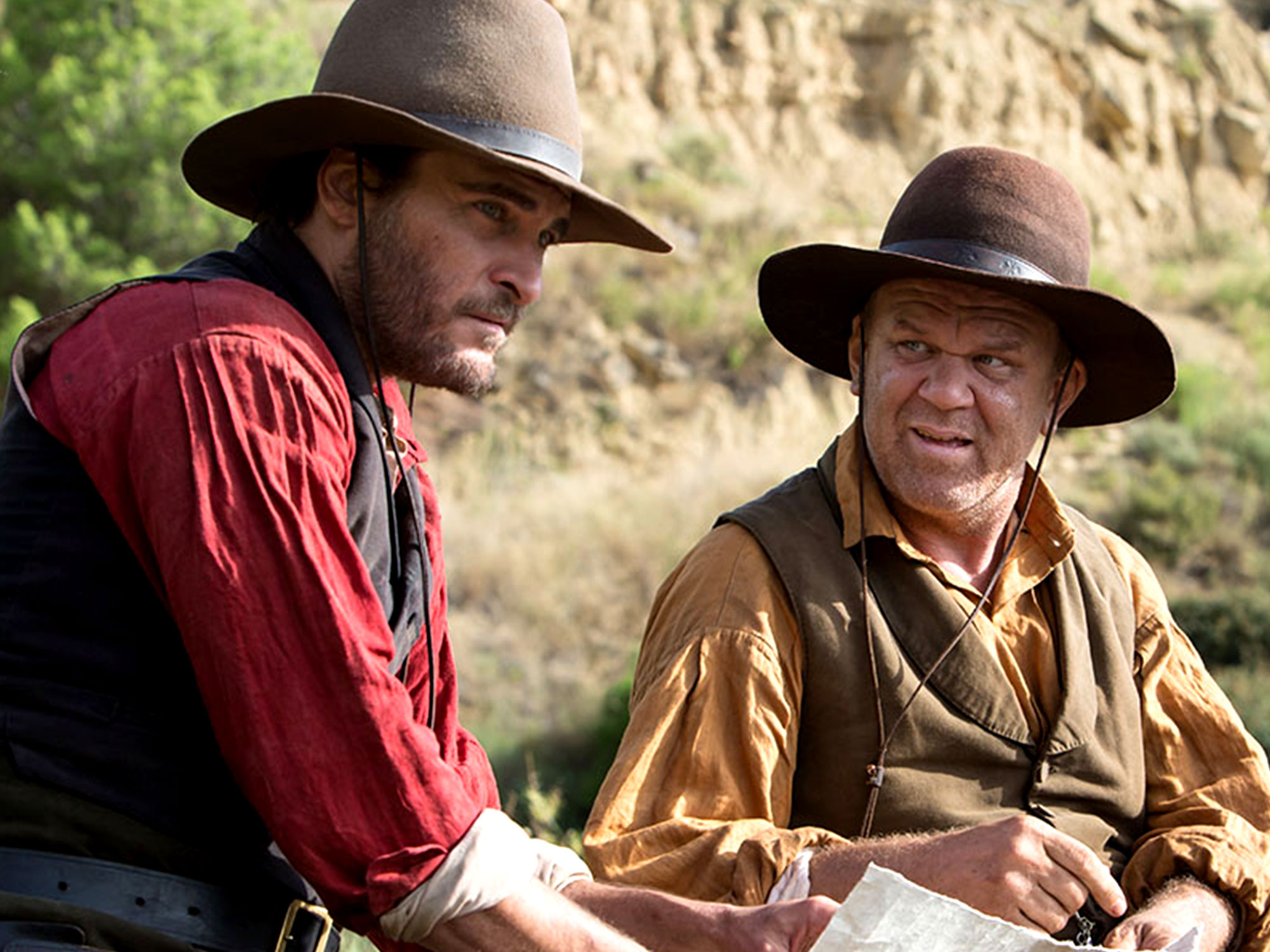
How many Jacques Audiard films have you seen? You should probably see all of them, including his latest, The Sisters Brothers.

Like his previous films (Rust and Bone, A Prophet, Dheepan), The Sisters Brothers starts out as one film, inserts another fascinating story, and as those two come together the movie unveils its true intent. Unlike Audiard’s other films, The Sisters Brothers is a Western.

We open with Charlie and Eli Sisters (Joaquin Phoenix and John C. Reilly, respectively), two gunslingers for hire on the job. Their next big gig assigned by The Commodore (Rutger Hauer) will put them on the trail of a prospector in the 1850s West.

Phoenix, who is having a banner year even for him (if you haven’t already seen You Were Never Really Here and Don’t Worry, He Won’t Get Far on Foot, please do), plays the loose cannon brother. Making trouble is in his blood—a fact his brother is trying to forget.

Eli longs for something better for himself, something settled and adult. But he is bound to his brother and their friction bristles with the bonds and bondage of family. Reilly’s conflicted tenderness and responsibility mingle with a genuine longing that offers an emotional center for the film.

A few days’ ride ahead of the brothers is the tracker The Commodore hired to assist in the deed. Jake Gyllenhaal’s John Morris is an observer and a loner, a man who believes in his own intellect but is willfully blind to the consequences of his career choice—until he befriends the object of The Commodore’s interest, a chemist with ideals and a compound that seriously simplifies the act of finding gold.

Good-natured chemist Hermann Kermit Warm is played by Riz Ahmed (also having quite a year, back to back this week with his strong turn in the overly criticized Venom). He and Gyllenhaal remind you of the amazing chemistry they shared in 2014’s Nightcrawler. Though their characters couldn’t be more different this time around, the two actors again share a natural rapport that makes you a believer.

Peppered with fascinating images, intriguing side characters and the lonesome beauty that infects the best Westerns, Audiard’s film embraces a genre without bending to expectations. Does it all come down to daddy issues? Yes, but the longing for camaraderie and the quest for redemption has rarely been this charming.

The film meanders intentionally, serving the rugged outdoorsiness required of its genre, but relies on its four leads to craft fascinating characters whose relationships and destinies infect you with a hope often lacking in Westerns.

The Good, the Bad, and the Hungry

Black ’47

by Brandon Thomas

The Irish haven’t always fared so well in the world of cinema. Sean Connery’s singing in Darby O’Gill and the Little People isn’t quite remembered as one of the top musical performances. Thankfully, in the years since Darby O’Gill, the Irish have fared a lot better with films like My Left Foot, Angela’s Ashes and Once.

Black ’47 opens at the height of the Great Famine in Ireland – a time when countless Irish left their homeland for America, and when over a million that stayed died of starvation. At this time, Ireland is also under the punishing rule of the British Empire. While the Irish people starve, the British lords presiding over Ireland complain that the people want “too much.”

Martin Feeney (James Frecheville) has returned to Ireland after having deserted the British Army while fighting in Afghanistan. Feeney learns that his mother has succumbed to the famine, and his brother has been hanged for murder. Desperate to get his remaining family out of Ireland, he pleads with them to join him in going to America. Unfortunately, tragedy strikes, and Feeney finds himself hunted by former comrade Hannah (Hugo Weaving), and two young British soldiers (Freddie Fox and Barry Keoghan).

What’s immediately interesting about Black ’47 is that it’s essentially a Western. These characters might not be fighting the Comanche, or ordering up a bottle of whiskey in a saloon, but the Western tropes are there: the recently returned solider seeking revenge; the posse turned lose to hunt down a raging outlaw; evil land barons uninterested in the lives they destroy. Director Lance Daly has fun tipping his hat at the great American genre, while never going full John Ford.

Any good Western homage has to be anchored by lead performances with presence. Frecheville brings a soulless quality to Martin. He is a man that barely had anything to begin with, and when the rest is taken from him he becomes cold and methodical. Grieving isn’t an option, and the emptiness in Frecheville’s eyes in the latter half of the film is chilling.

Weaving’s world-weary Hannah slowly becomes the moral compass of the film. He’s numb to so much of the horror around him – having participated in it, too – but Feeney’s rampage opens up something in the veteran soldier that he can’t quiet. Weaving has a gravitas that cannot be ignored.

Black ’47 has something to say about the horrors of Ireland’s past. The film just wants to say it through the guise of shootouts and rollicking revenge.

I Don’t Want to Go Out—Week of October 8

One of everything this week in home entertainment, from the best you will find in 2018 through a couple of hotel-related adventures to a towering inferno adventure. You can choose from exquisite to dumb fun, from family to noir. Who can take that kind of pressure? Don’t stress! We will walk you through it.

Click the film titles for the full review.

Eighth Grade

Don’t Worry, He Won’t Get Far on Foot

Hotel Artemis

Skyscraper

Hotel Transylvania 3

The Screening Room: Earning the Spotlight

Hey, it’s October! The big money winners start rolling out this week. The season kicks off with the first real Oscar contender. Is A Star Is Born as good as the hype? Yes! We also have the next big comic book movie, Tom Hardy’s Venom. Is it as bad as they’re saying? No!

Plus, we share a rundown on all that’s new in home entertainment.

Listen to the full podcast HERE.

Snapped

Colette

by Christie Robb

Emotional, entitled, white men seem omnipresent these days. They’re on the news. They’re on social media. They’re on the big screen. At least with the biopic Colette, they are confined to an historical period safely a century behind us.

Colette gives us the origin story of French novelist Sidonie-Gabrielle Colette (Keira Knightley), a Madonna-like figure of the early 1900s who emerged from a small provincial village to become the toast of Paris, reinventing herself over the years as a novelist, mime, actress and journalist.

She wrote frankly about women’s independence, sexuality and aging. She sparked a riot at the Moulin Rouge in 1907 when she performed a lesbian love scene in a pantomime. She was nominated for the Nobel Prize in Literature in 1948. She wrote the book Gigi, which was adapted for the stage where she personally selected a then-unknown Audrey Hepburn for the leading role in 1951. The book then became an MGM musical that won nine Academy Awards in 1958 (including Best Picture). When she died, Colette was the first woman in France to be given a state funeral.

But before all that, Colette married a bully named Willy (Dominic West). Over a decade her senior, Willy was a popular writer who put out music reviews, stories and novels. Quite a bit were written by other people in a factory system where Willy provided the brand, but others produced the work. He compelled his wife to join the team, asking her to mine her childhood experiences so he could publish them under his name. Once the Claudine books became popular, he would lock Colette in a room until he was satisfied she had written enough.

The movie tells the story of Colette’s time with Willy and traces an arc from her awkward introduction into Paris salon society to an eventual break with the abusive hack and first steps toward an independent life.

Knightly is masterful inhabiting the multifaceted Colette, using her eyes to hint at the hurt she’s experiencing while wielding a bold bravado as a shield in her constant verbal fencing matches with her husband. West presents as a believable blowhard—initially charming, then volatile, narcissistic, abusive, and ultimately self-pitying, sniveling and weak.

Given the breadth of Colette’s life and its many acts, it makes sense that director Wash Westmoreland would focus on a distinct part of it. However, because of his desire to give screen time to so many of the big Personalities of the Belle Époque and to keep the focus squarely on the time period of the Colette/Willy relationship, the movie seems simultaneously thinly-sketched and agonizingly long. With so much of the movie involving Colette being shit on, the movie verges on indignity porn. How much can this woman take, before she snaps?

But when she snaps…it’s so good. Oscar-bait good.

Given this week, I’d have vastly preferred it if more of the movie had focused on the glorious and adventurous life Colette led after she dumped Willy and struck out on her own. But, even so, it’s a story of liberation and the claiming of a woman’s power. Something that’s needed.

I just hope there’s a sequel.

Say Something

A Star is Born

by George Wolf

A few weeks ago, for homework, I revisited the 3 previous versions of A Star Is Born. A friend later asked me which one was best.

I have a different answer now.

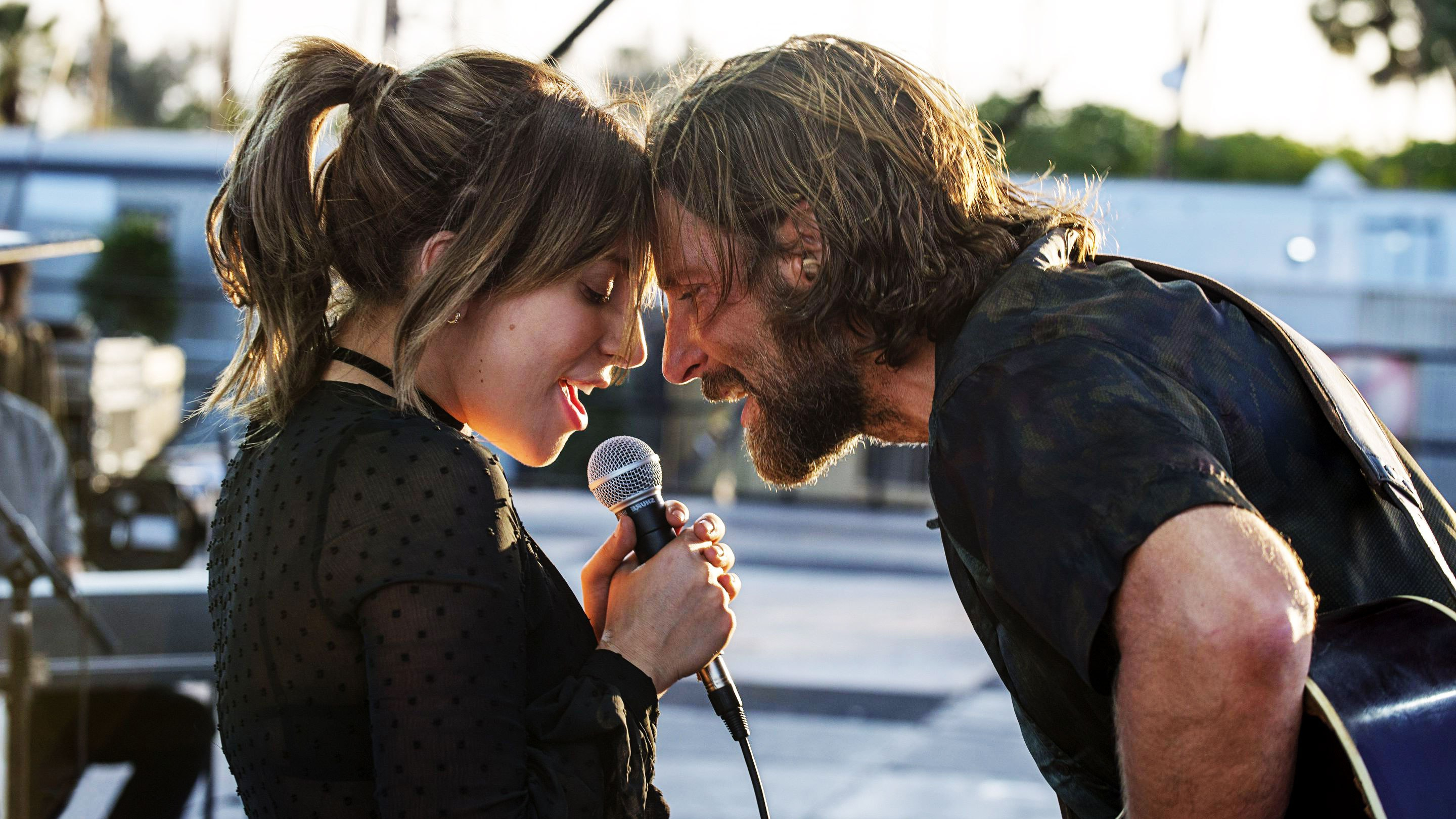
Director/co-writer/co-star Bradley Cooper brings a new depth of storytelling to the warhorse, with a greater commitment to character and the blazing star power of Lady Gaga.

Cooper is Jackson Maine, a booze-swilling, pill-popping rock star who wanders into a random bar post-gig and catches Ally (Gaga) belting out “La Vie en Rose.” Jack’s entranced, and begins coaxing Ally to sing her own songs instead of covers. Everyone’s got a talent, he tells her, the real gift is having something to say.

Each previous film version represented its era well, but with the rock music setting and several recognizable homages, it’s clear Cooper has a fondness for the Streisand/Kristofferson take from ’76. His new vision carries a raw authenticity that eclipses them all.

The battered star’s instant infatuation with the young talent has never felt more understandable, the undeniable chemistry between Cooper and Gaga fueling the feeling that in Ally, Jack sees a better version of himself.

Cooper, with a lower-range speaking voice and the musical talent from nearly 2 years of tutelage, is every bit the weathered rocker, on a misplaced search for redemption. Watch him when Jack is not the focus of a scene to see a character become complete.

But then, another outstanding acting performance from Bradley Cooper is not a surprise. His remarkably instinctual directing debut here, though, must now place him among the premier talents in film.

Nearly every scene, from stadium rock concert to intimate conversation, is framed for maximum impact. His camera can be stylish but not showy, with seamless scene transitions fueling a forward momentum that will not let the film drag.

The melodramatic story has been stripped of pretense and buoyed by more layers of humanity, and not just between the two leads. Jack’s brother (Sam Elliot), his boyhood friend (Dave Chappelle) and Ally’s father (Andrew Dice Clay) emerge as important characters despite limited screen time.

And then there’s Gaga.

The voice is, well, it’s a force of nature, and the songs (some co-written with Cooper) are memorable. But if a star already shining can be born, welcome Gaga the movie star. She is electric, taking Ally from wide-eyed stage fright to SNL headliner with both tenderness and ferocity, giving this character the strength and nuance she has never had before.

This film has talent everywhere, but it also has stirring things to say about love and sacrifice, about art and commerce, ambition and fame.

I’ll say this: A Star is Born is among the very best of the year.