Screening Room: Poor Things, Aquaman 2, Anyone But You, Iron Claw, Color Purple, Ferrari, Boys in the Boat, Rebel Moon
by George Wolf
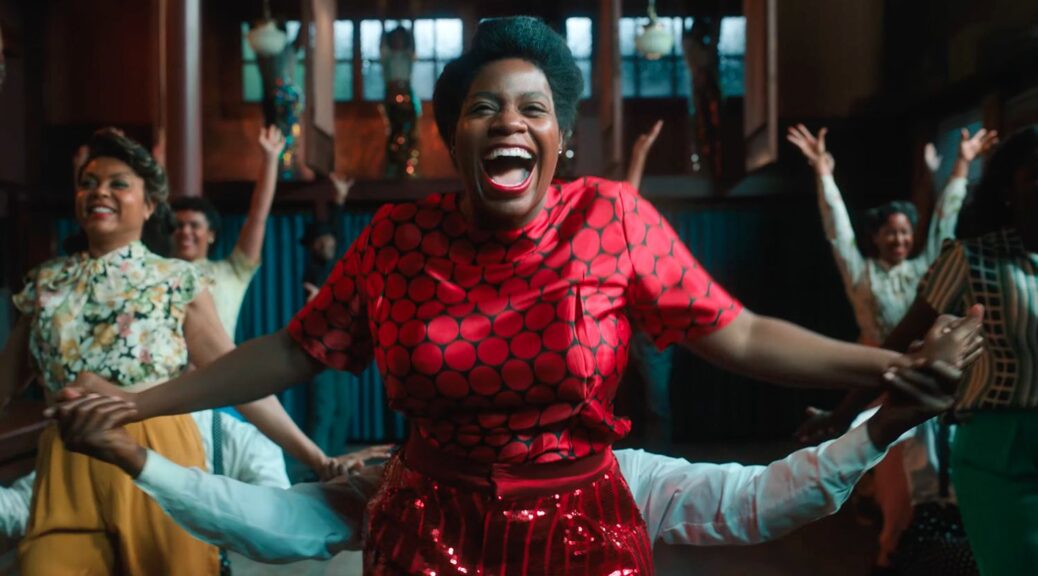
No matter how familiar you are with Alice Walker’s original novel, or Spielberg’s 1985 film, director Blitz Bazawule’s adaptation of The Color Purple Broadway musical comes to the big screen as a heartfelt and joyous experience.
Yes, it is the same, often heartbreaking story. Young sisters Celie (Phylicia Pearl Mpasi) and Nettie (Halle Bailey) are separated in early 1900s Georgia, and adult Celie (an Oscar-worthy Fantasia Barrino, reprising her Broadway role) endures decades of heartache and abuse before proudly reclaiming her dignity.
Memorable characters and story beats surround Celie in the first two acts. Celie’s abusive husband Mister (Colman Domingo) pines for the famous singer Shug Avery (Taraji P. Henson), while son Harpo (Corey Hawkins) opens a juke joint and Harpo’s proud and defiant wife Sofia (Danielle Brooks, reprising her role from the 2015 Broadway revival) suffers repercussions from standing up to a white mayor and his condescending wife.
Through all the engaging drama and jubilant musical set pieces, Miss Celie bides her time, slowly inching closer to when both character and star step into the stoplight.
And when that third act hits, it is a glorious exhibition of pride, music and love. With Fantasia’s show-stopping rendition of “I’m Here,” Miss Celie begins to stand on her own as a successful business woman, and the film delivers her some well-earned flowers.
Have those tissues handy, but rest assured they will all be tears of joy. Because as much suffering as Miss Celie and her family endure, that pain is not what drives this vision. Bazawule, Barrino and a top flight ensemble make this The Color Purple an uplifting celebration of heritage and family, and an exhilarating film experience.

by Hope Madden
My first worry as I watched Michael Mann’s long-awaited return to the screen, Ferrari, was triggered by a line delivered by Enzo Ferrari’s (Adam Driver) mother (Daniela Piperno). In recalling the death of her eldest child, she muses, “The wrong son died.”
There is, of course, no more clichéd way to begin a biopic. Just ask Walk Hard. But Mann, working from a 30-year-old by script the late Troy Kennedy Martina and Brock Yates, veers from formula immediately after that bit of dialog. His approach does not always work, but buoyed by a few remarkable performances, he recreates a compelling piece of history.
Though Driver’s accent is sometimes questionable, he sidesteps cliché in every scene. His Enzo Ferrari is a singular man, driven and emotionally careful but quietly compassionate and endlessly human. The performance is soulful and delightfully humorous, and he makes even the script’s most convenient or obligatory dialog feel authentic.
He’s got nothing on Penélope Cruz, though, who’s a solid contender for an Oscar nomination in the role of Enzo’s wife and business partner, Laura. Moody, funny, but more than anything, worn thin by years of grief and anger, Laura is a character unlike any other in this film or most any other. Cruz dials the drama back just when you’d expect an eruption, erupts at surprising moments, and refuses to make Laura Ferrari a cartoon or a villain.
With these performances at the center of the film and the specter of death in both the rear view and the headlights, Ferrari delivers an emotionally charged adventure. The real possibility of disaster – within the family, within the business, and on the racetrack – is a current running through every scene.
Mann captures the thrill and dread inside that danger with a restless camera and visceral racing action. Thanks to commitment to the human drama, the action never feels glossy or superficial – thrill for thrill’s sake. Mann’s latest embraces the compromise and corrosion that accompany success. It feels less stylish than a Michael Mann film, but more human.

by Rachel Willis
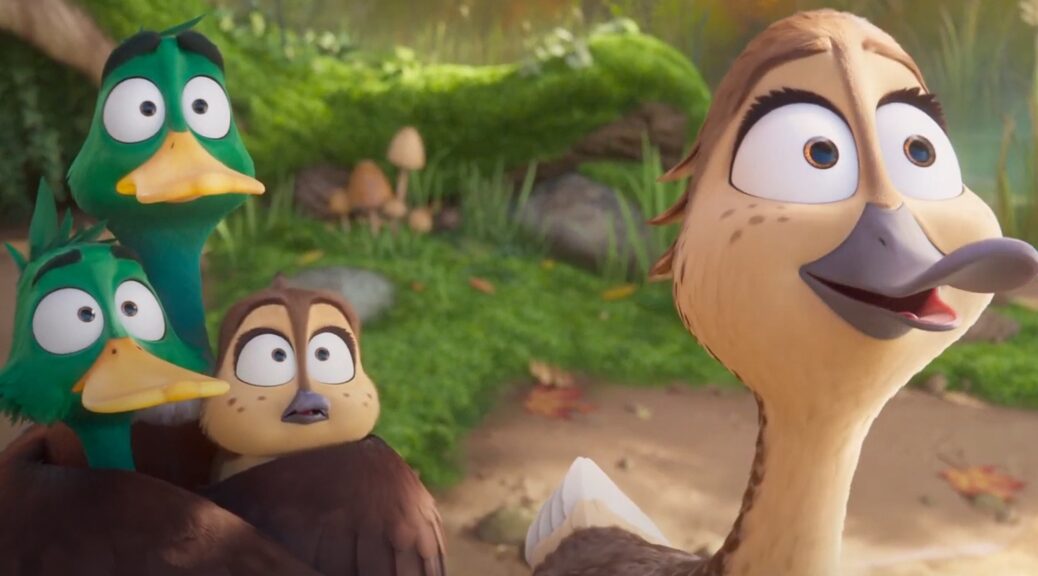
A family of mallard ducks decides to migrate to Jamaica, setting off a series of misadventures and kid-friendly comedy in the latest animated film from Illumination, Migration.
When exotic ducks land in same pond as our mallard family, son Dax (voiced by Caspar Jennings) becomes smitten with one of the flock, prompting his desire to head south for the winter. Mom Pam (Elizabeth Banks), is also intrigued by idea. Littlest duck, Gwen (Tresi Gazal), seems ready for anything, but Dad Mack (Kumail Nanjiani), it too fearful of the outside world to consider leaving their little pond.
The catalyst for adventure comes from Uncle Dan (Danny DeVito). He gives Mack the prod he needs for accepting Pam’s request to open his eyes to the world.
So little time is spent on Mack’s paranoia and fear that his change of heart doesn’t make much of an impact. Based on the title, we already know the family – with Uncle Dan along for the ride – is going to make the journey, so no surprise there. And you can expect hijinx along the way.
The humor–mainly predictable and heavy-handed–derives from the family’s reactions to the obstacles and characters they meet along the way. While this might entertain the youngest in the audience, it gets tedious for the rest of us.
Migration’s tender-hearted treatment of each member of our duck family is its selling point. Though Mack’s fears would keep him in his little window forever, Pam is willing to help him overcome his reticence and step out into the wider world. Uncle Dan’s sweet relationship with little Gwen makes him more than just comic relief.
The ancillary characters don’t all get the same heart. The imprisoned parrot Delroy (Keegan-MichaelKey) is a standout in a sea of mostly forgettable side players. His longing for his former home is palpable. On the opposite side of the spectrum is the film’s unnecessary villain. The grunting chef who cooks ducks and particularly dislikes Mack and Pam lacks the menace necessary to create a memorable bad guy.
Migration fits the bill for lighthearted fun. But its predictability and shallow characters limit its potential to become anyone’s newest holiday favorite.

by Matt Weiner
For the Von Erich professional wrestling family, success in the ring—starting in the freewheeling territory days and continuing into the present—has existed uneasily alongside the “family curse.”
Writer/director Sean Durkin (Martha Marcy May Marlene and The Nest) brings together his lifelong love of wrestling with a keen ability to heighten psychological tension to the breaking point and then see what fills the void that comes after that break.
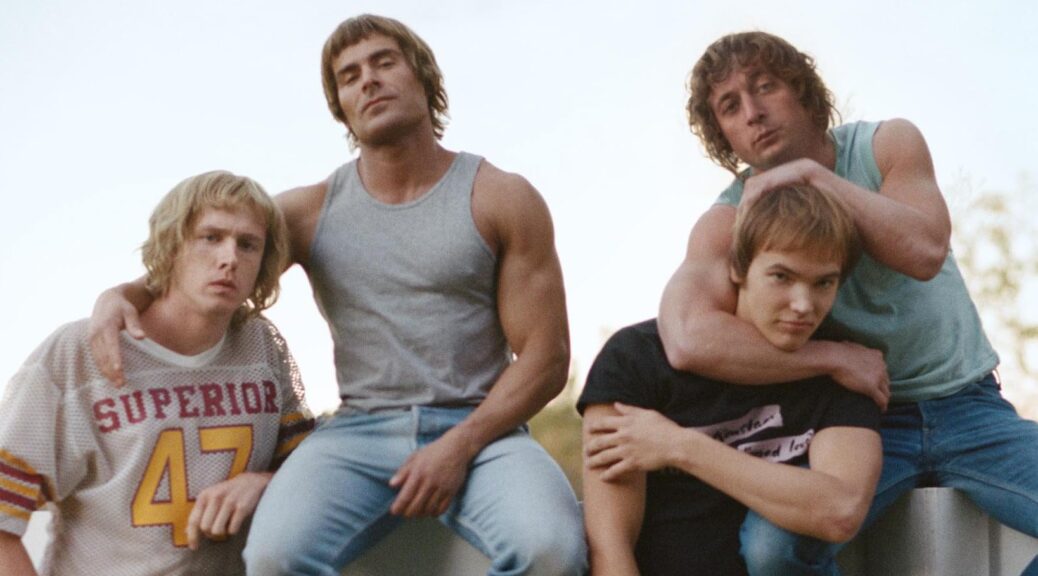
The Iron Claw charts these harrowing ups and downs starting with family patriarch Fritz (Holt McCallany), whose overbearing presence dominates every aspect of his children’s lives. The athletic Von Erich children unquestioningly glide into the path Fritz lays out for them, the family business of wrestling.
The series of events that ultimately spin out of this fateful choice gives rise to the legend of the curse, which the brothers deal with in their own (mostly taciturn) ways. Kevin (Zac Efron) is the genial audience stand-in, who wants nothing more than to please his father and have fun in and out of the ring with his brothers.
This includes the charismatic David (Harris Dickinson), golden boy Kerry (Jeremy Allen White) and the sensitive aspiring artist Mike (Stanley Simons). Fritz and the boys are given varying degrees of personality and dialogue that at times sacrifices depth for quick characterizations.
But with so much biopic ground to cover, Durkin narrows in on Kevin as the one bearing witness to all the inexplicable tragedy. It’s a difficult role to serve, and Efron delivers a commanding performance. As the family’s Job-like suffering grinds down his stoicism and filial loyalty, he remains tethered to hope and the possibility of a different life thanks to his stalwart wife Pam (Lily James, matching Efron with a vibrant performance that elevates her otherwise dutiful lines).
The result is a mesmerizing sports movie with more echoes of Malick than Aronofksy. Call it a curse or call it bad luck, but Durkin’s deft handling of these events turns public tragedy into a searing meditation on familial bonds and the limits of a certain type of masculinity.
by Hope Madden and George Wolf
Frankenstein was a breathing, bleeding act of feminism, not because Mary Shelly’s masterpiece illuminated or elevated women’s discourse, but because Mary Shelly – an 18-year-old girl – created science fiction.
Naturally, her husband took credit.
Many, many writers and filmmakers have taken a stab at reimagining Shelly’s ideas. None is as astonishing as Yorgos Lanthimos and the triumph that is Poor Things.
Working from a script by Tony McNamara and Alasdair Gray, Lanthimos creates a luscious world that is difficult to pin down. It’s part Victorian England, part Blade Runner 2049, and it is where Bella Baxter evolves to challenge the patriarchal notions that surround her.
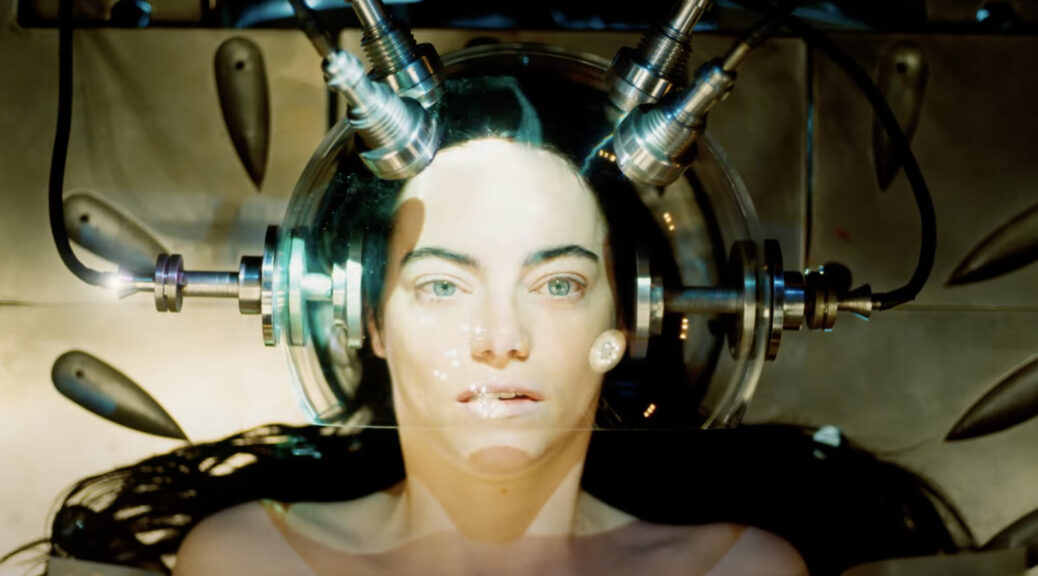
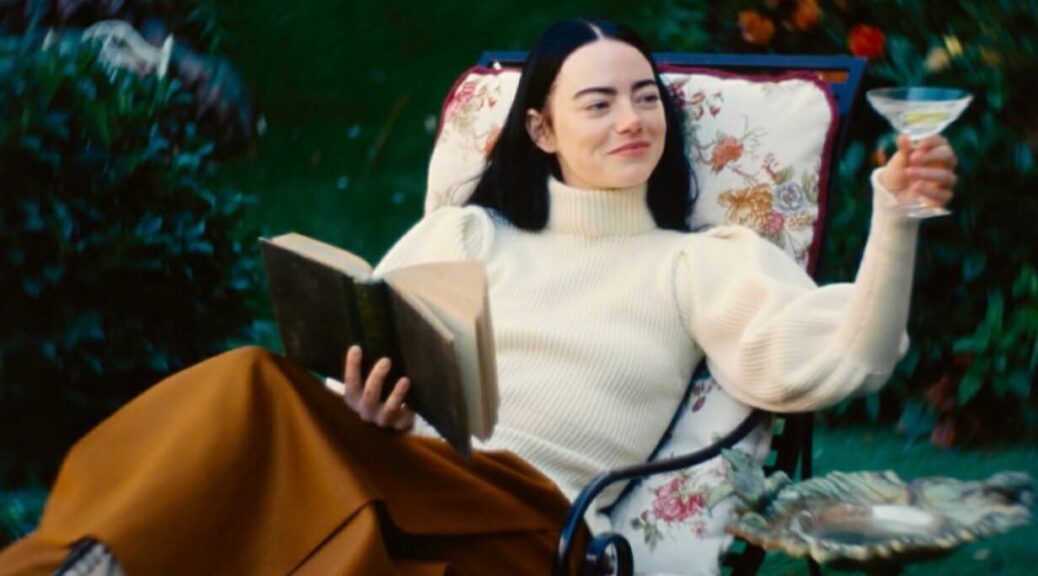
Bella (Emma Stone, sheer perfection) is brought back from the dead by Dr. Godwin Baxter (Willem Dafoe), a scientist with no romantic notions about polite society – or about Bella, for that matter. Dr. Baxter reanimates Bella’s adult body with the brain of a small child, and under his watch, Bella develops sans the outside pressures of conformity to societal expectations. Which is to say, she thrives.
Imagine a woman’s sense of self forming without shame, without the stifling existence of it. Lanthimos, McNamara and Gray have done just that, and the result is exhilarating.
Still, “God” (as Bella calls him) wishes to keep her safe, as does God’s beguiled assistant, Max (Remy Youssef). But Bella must experience life, and the adventure she fearlessly attacks is simultaneously hilarious, daring, lewd, ingenious and completely intoxicating.
The arc of Bella’s character is as satisfying as anything put to screen, and Stone revels in every unexpected, delightful, brash moment. And though it’s tough to pull your eyes away from Stone, along comes Mark Ruffalo to commit grand larceny with every scene of his hysterical cad Duncan Wedderburn, who indulges his ego teaching Bella about “furious jumping” (take a wild guess) but is reduced to mush when she moves past him without mercy or apology.
Expect Oscar nods for both, and they won’t be alone here.
Lanthimos’s direction is again nimble and ambitious, dipping back into his bag of angles and staging for a feast of ambitious panache. The result is a perfect visual complement to Bella’s journey of intellectual and philosophical wonder, one always buoyed by vivid cinematography from Robbie Ryan (The Favourite), and Holly Waddington’s wonderful costuming.
Poor Things may find longtime Yorgos fans spotting thematic terrain that’s similar to 2009’s Dogtooth, but these latest questions he’s pondering are even more pointed and brilliantly satirical.
What if someone could navigate the world anew, armed with the benefit of physical independence, but with a complete social naïveté that came merely from inexperience rather than isolation? And what if that someone was a woman in a man’s man’s man’s man’s world?
That someone is Bella Baxter, and Poor Things makes her gloriously alive, in ways you’ll probably wish you could be.

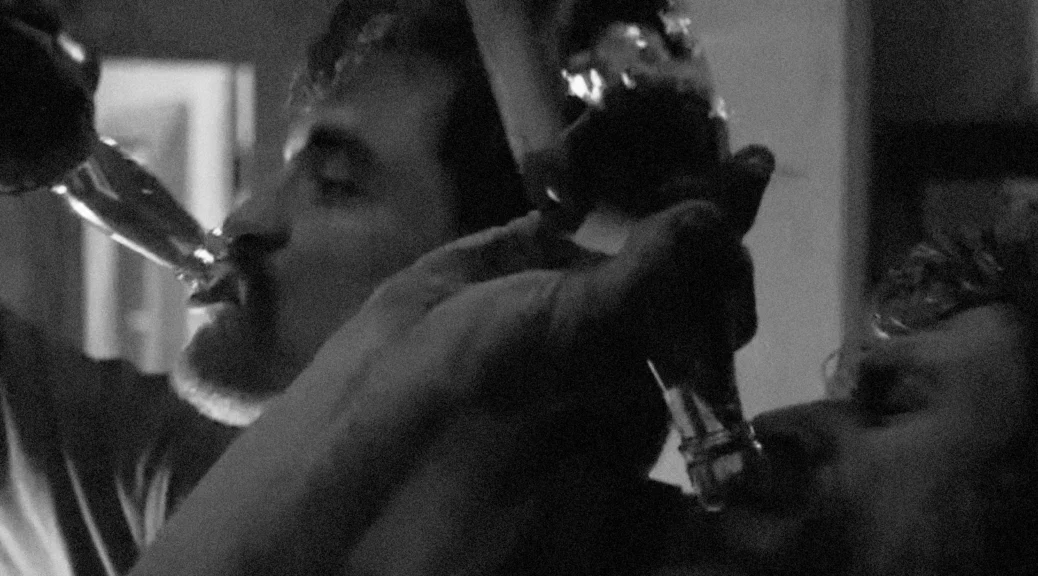
Whether they’re merrymakers (Grabbers), comic relief (Mrs. MacHenry, Black Christmas), tempted heroes (Dan Torrance, Doctor Sleep), or outright villains (Jane, What Ever Happened to Baby Jane), the drunk is a staple of horror. They can generate a laugh to help offset tension, or develop dread along with their temptation. They can add tragedy, comedy, lunacy and even terror. Here are our favorite horror movie alcoholics.
An unrelenting work of tension and sweat, Ted Kotcheff’s Outback thriller follows an aggrieved school teacher who stops over for a single night in the Yabba on his way from his consripted teaching post to Sydney for Christmas.
One bad decision later, and he (John Grant) and we are trapped, possibly forever, in drunken, mad, dangerous, almost sadistic debauchery. Donald Pleasence co stars as part of a merry band of utter lunatics whose sold purpose seems to be to trap this man in their depravity with them.
Writer/director/star Larry Fessenden explores alcoholism via vampire symbolism in this NY indie. Fessenden plays Sam, a longtime drunk bohemian type in the city. He’s recently lost his father, his longtime girlfriend finally cut bait, and he runs into a woman who is undoubtedly out of his league at a party.
And then he wakes up naked and bleeding in a park.
The whole film works beautifully as an analogy for alcoholism without crumbling under the weight of metaphor. Fessenden crafts a wise, sad vampiric tale here and also shines as its lead.
Writer/director/star Jim Cummings is officer John Marshall of the Snow Hollow sheriff’s department. John’s father (Robert Forster, in his final role) is the longtime sheriff of the small ski resort town, but Dad’s reached the age and condition where John feels he’s really the one in charge.
John’s also a recovering alcoholic with a hot temper, a bitter ex-wife and a teen daughter who doesn’t like him much. But when a young ski bunny gets slaughtered near the hot tub under a full moon, suddenly John’s got a much bigger, much bloodier problem.
Cumming’s script, like his writing for Thunder Road, is full of life, and has hin again juggling random outbursts of absurd non-sequiturs and hilarious anger with real human issues of struggle and loss. John’s afraid of losing his father, women are being preyed upon, and a drink would sure hit the spot.
Robert Eggars has gone to sea. The Lighthouse strands you, along with two wickies, on the unforgiving island home of one lonely 1890s New England lighthouse.
Salty sea dog Thomas Wake (Willem Dafoe) keeps the light, mind ye. He also handles among the most impressive briny soliloquies delivered on screen in a lifetime. Joining him as second is one Ephraim Winslow (Robert Pattinson)—aimless, prone to self-abuse, disinclined to appreciate a man’s cooking. Both enjoy a bit of drink.
This is thrilling cinema. Let it in, and it will consume you to the point of nearly missing the deft gothic storytelling at work. The film is other-worldly, surreal, meticulous and consistently creepy.
And we’ll tell you what The Lighthouse is not. It is not a film ye will soon forget.
It’s isolated, it’s haunted, you’re trapped, but somehow nothing feels derivative and you’re never able to predict what happens next. It’s Stanley Kubrick’s masterpiece rendition of Stephen King’s The Shining.
Jack Nicholson outdoes himself. His early, veiled contempt blossoms into pure homicidal mania, and there’s something so wonderful about watching Nicholson slowly lose his mind. Between writer’s block, isolation, ghosts, alcohol withdrawal, midlife crisis, and “a momentary loss of muscular coordination,” the playfully sadistic creature lurking inside this husband and father emerges.
by Hope Madden
Multiple generations have been simultaneously scarred and entertained by Willy Wonka. Roald Dahl’s book leapt to the screen in 1971, and if we weren’t horrified by four grandparents choosing never to leave a single bed, we were terrified by Wonka or Slugworth or the Oompa Loompas. And if not, we were pretty sure people died on this chocolate factory tour.
And then in 2005, Tim Burton took his shot. There were giant teeth and Christopher Lee, which only added to the trauma.
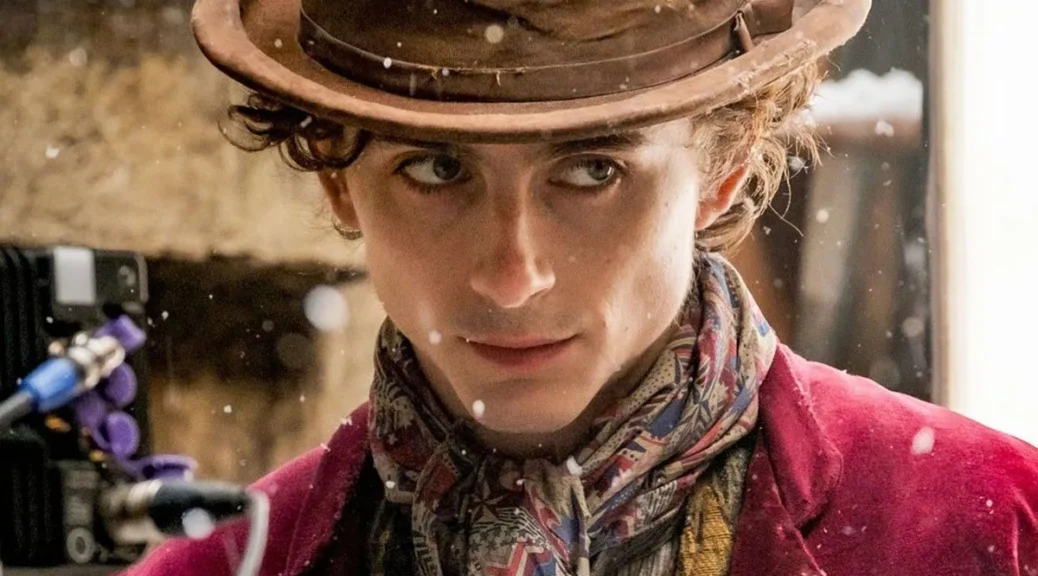
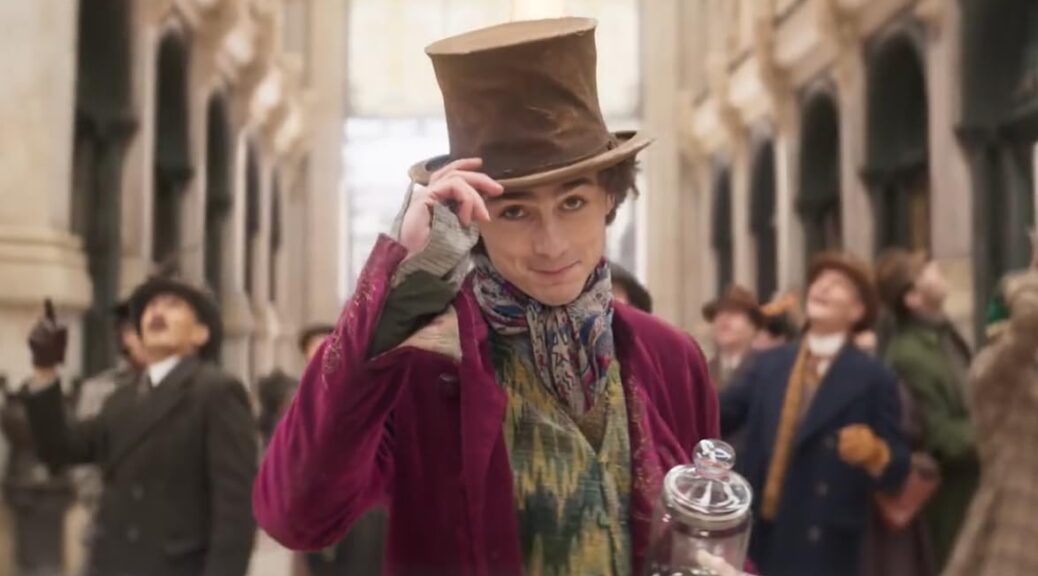
You know who can make a Willy Wonka story that isn’t nightmarish? That guy who does the Paddington movies. Yes, Paul King co-writes and directs a delightful, never traumatic tale of young Willy Wonka (Timothée Chalamet) out to find his fortune as a chocolatier.
There is just something about King’s low-key whimsy that sits nicely. Gone is the macabre that haunted the other two Wonka iterations, replaced with a dash of grief and a spoonful of Dickensian working conditions.
Wonka heads to the big city with little more than a hatful of dreams. But he quickly learns that “the greedy beat the needy” as nefarious types take advantage of Willy’s good nature and naïve disposition. From slumlords (Olivia Colman, Tom Davis) to corrupt constables (Keegan-Michael Key, often in an unfortunate fat suit), to the greedy chocolate cartel. Plus there’s a vengeful Oompa Loompa (Hugh Grant) on his tail. But with friends and imagination – and chocolate – things never look too dire.
Wonka is a musical, which is its weakest element. No one sings particularly well, certainly not Chalamet, and the new songs don’t leave an impression. But Chalamet is endlessly charming, and an appealing supporting cast keeps things lively.
King’s visuals are intricate, vibrant and joyous as ever, which is a key ingredient in Wonka’s success. It’s a delight to watch. Though it never reaches the heights of either Paddington film, Wonka delivers family friendly and fun without any of the scarring side effects of the last two efforts.
by Hope Madden
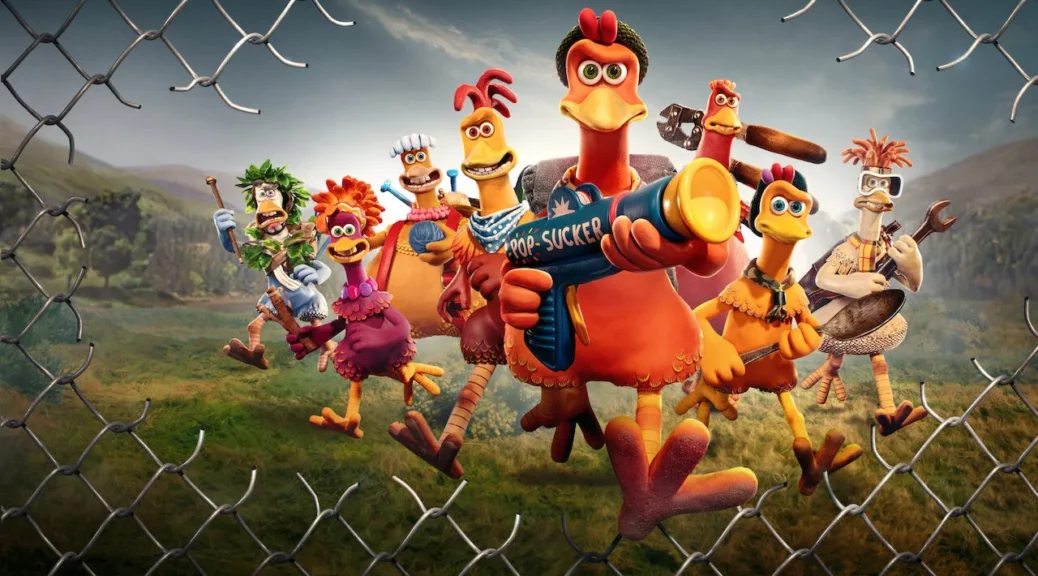
It has been 23 years since Aardman animation briefly abandoned its cheese-loving besties Wallace & Gromit in favor of a prison break caper. Chicken Run saw one plucky hen named Ginger – inspired by Rocky the Rooster’s tall tales of being able to fly – organize a leave-no-chicken-behind escape mission from Tweedy’s Farm.
Chick Run: Dawn of the Nugget finds Ginger (voiced this go-round by Thandiwe Newton) and Rocky (now Zachary Levi) some time later (though certainly not 23 years later) living in chicken paradise with their friends and their brand-new chick, Molly (Bella Ramsey). But motherhood has turned Ginger from a courageous leader to a, well, chicken. Protective and worried about little Molly, Ginger encourages the flock to hide when they see trucks hauling chickens to a high-tech factory that will turn them into nuggets.
Ginger’s attitude changes once Molly’s in jeopardy, and the whole flock rallies to save the strong-willed little chick and the day.
It may be a lot to expect viewers to recognize some of the callbacks to the original, in that the target audience for this film was born about 15 years after Chicken Run was released. Adults may notice some absent voices but are more likely to sense the absence of Nick Park.
Park co-wrote, directed, and animated most of the early Ardman masterpieces. Like the Muppets without Jim Henson, Aardman just isn’t Aardman without Park. Sam Fell directs a script by Karey Kirkpatrick, John O’Farrell (both of whom worked on the original) and Rachel Tunnard. The visuals are pretty and nearly as engaging as you expect from Ardman, but everything – including the story, dialog and gags – feels a bit standard, a bit bland.
Newton and Levi offer relatively dull performances. On the other hand, Ramsey’s a delight and the vocal ensemble – Imelda Staunton, David Gradley, Romesh Ranganathan, Daniel Mays, Jane Horrocks, Josie Sedgwick-Davies and Miranda Richardson – elevate and energize the otherwise vanilla script.
There’s nothing terribly wrong about Chicken Run: Dawn of the Nugget. But when your animation studio sets the bar so high, “nothing terribly wrong” is quite a disappointment.