Boyz in the Hood is a great movie. In 1991, the same year 23-year-old John Singleton’s feature debut made box office and Oscar history, Julie Dash released the beautiful, generational drama, Daughters of the Dust. No guns, no cops, no real violence to speak of, Dash’s film nabbed a Sundance grand jury prize nomination and cinematography award.
Daughters of the Dust was essentially forgotten upon its release. (It has, thank God, in recent years been rediscovered, restored, and added to the National Film Preservation Registry.) But Boyz in the Hood immediately reshaped movies.
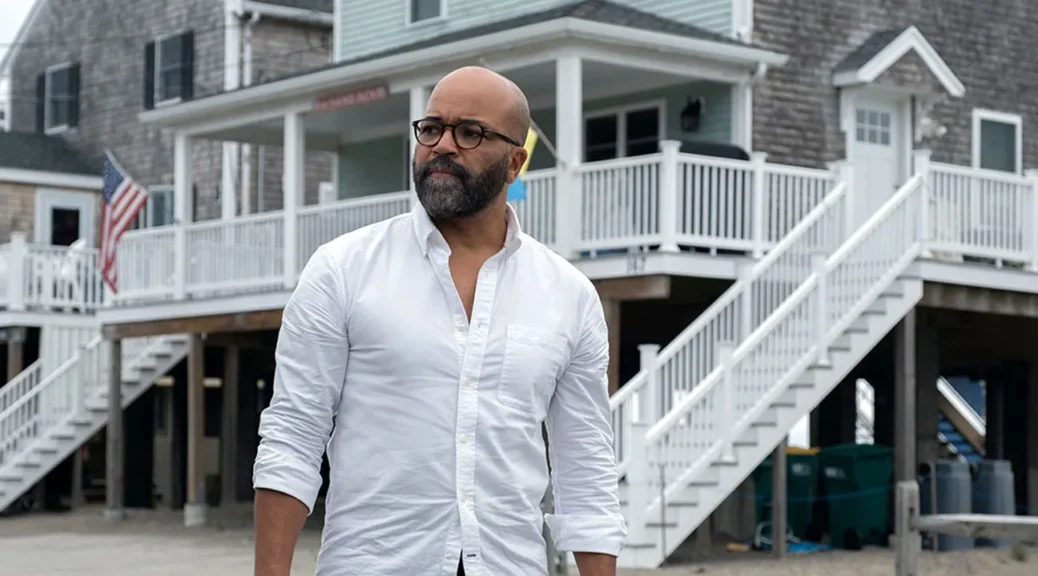
Writer/director Cord Jefferson’s American Fiction takes aim at fiction – print or cinematic – and its problematic relationship with Black trauma. But to say that Cord’s film would like to see movies move beyond Boyz in the Hood and other films that revel in suffering would be to simplify, even miss its point. The filmmaker complicates the discussion with debate over a Black creator’s right to simply pursue success, as any other creator might. Even if that means catering to a white audience’s thirst for Black trauma.
“White people think that they want the truth, but they don’t. They just want to feel absolved.”
You might not expect a film that floats this truth so effortlessly to be a laugh riot, but American Fiction delivers an awful lot of laugh-out-loud moments.
Jeffrey Wright plays cantankerous college professor and literary writer Thelonious “Monk” Ellison. His latest manuscript is not being picked up for publication, his students hate him, and suddenly he needs to look after his mother, who will need round-the-clock care. Which costs money. The kind of money you can make if you pander to exactly the readership he loathes.
Monk does, incognito, and soon he’s pretending to be something he’s not at work and pretending not to be something he is at home. Buried within this are a couple of really lovely, sweetly complex middle-aged romances. Those are rare in films, so they deserve a mention here.
Issa Rae and Sterling K. Brown offer remarkable supporting turns as characters you want to dislike but simply cannot – part and parcel of a film that forever asks you to rethink what you believe you know. And maybe laugh bitterly as you do.
Adam Brody is also a hoot as that same smarmy douche he always plays, but he does it so very well. Jon Ortiz and Erika Alexander both bring warmth and humanity to a story essentially about a man who is not quite sure how to be warm and human.
Wright – an underappreciated genius of an actor if ever there was one – does what he always does. He conjures a fully formed human being, flawed but forgivable and endlessly earnest. Buoyed by a delightful ensemble and cuttingly hilarious script, he delivers one of the finest performances of his career.
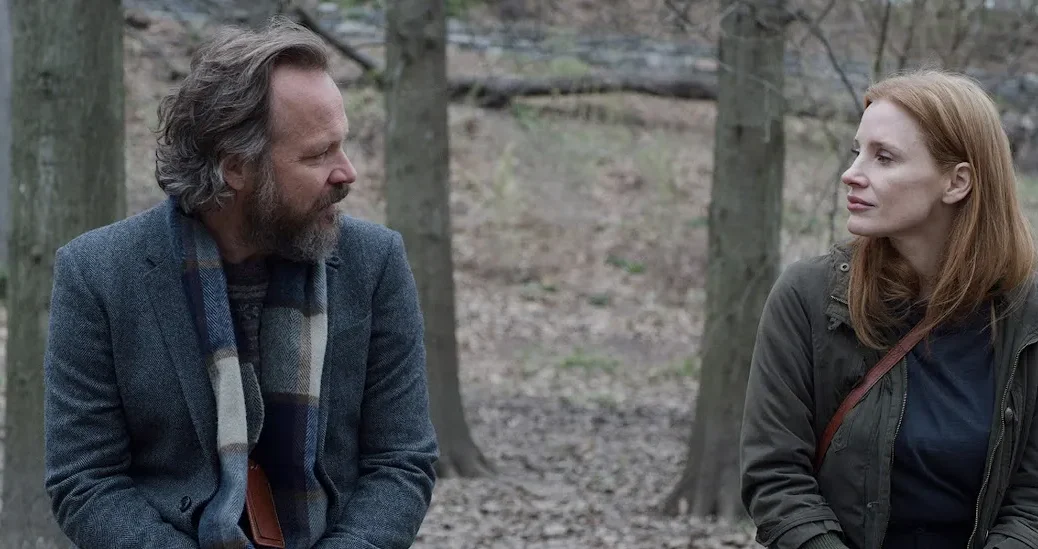
These are the first words uttered in Michel Franco’s deceptively spare drama, Memory. Sylvia (Jessica Chastain) is celebrating 13 years of sobriety at an AA meeting. She’s brought her daughter, and those around her are remembering her impact on them.
For the next 140 minutes, Franco examines what’s true and what’s faulty in the human memory, and what he finds is sometimes harsh and unpleasant, but just often, profoundly tender.
Chastain’s performance is brittle but with complexity and depth. Sylvia’s life, and her hard-edged wall, are built from the years of being denied her truth. She knows who she is and she’s doing what she can with that.
Saul (Peter Sarsgaard, astonishing) does not always know who he is, but when he does the film shimmers with life and humanity. Saul follows Sylvia home from a high school reunion of sorts. The catalyst is provocative in that it makes Sylvie reconsider her own memory, which allows those around her to reignite their assault on its veracity.
A razor-sharp ensemble lends remarkable support to Chastain and Sarsgaard. Jessica Harper, in particular, is picture perfect, her sly and cheery manipulation leading to an emotional climax blistered by authenticity.
Memory is a bit of a departure for Franco, who’s films often keep audiences at arm’s length from the emotional turmoil beneath a character’s enigmatic surface. Not so here. Chastain’s slowly melting wall of ice creates real intimacy, and what she reveals beneath is raw.
She and Sarsgaard are veteran talents reveling in an opportunity to discard artifice and create something untidy. Their work, particularly in scenes together, testifies again to each actor’s remarkable skill.
Franco’s films rarely answer all the questions they ask, and can feel almost shapeless and often hopeless. Memory is a departure here as well. Though it’s far less rigidly structured than many Hollywood films, there’s a comforting structure to it and, more comforting, an undeniable spark of hope.
A film for anyone who squeezes creative passions into the hours outside other responsibilities, refuses the label “hobby” and still never manages to complete anything, Destroy All Neighbors lives that nightmare.
William (Jonah Ray) has been working and reworking the final song on his prog-rock album for ages. Years. He’s so close, but then the loudest, most aggressively weird neighbor moves in next door. Vlad (Alex Winter, who also produces) may have charmed William’s longsuffering girlfriend (Kiran Deol), but he’s pushing William to the brink of insanity. Who can get anything done with all that noise?!
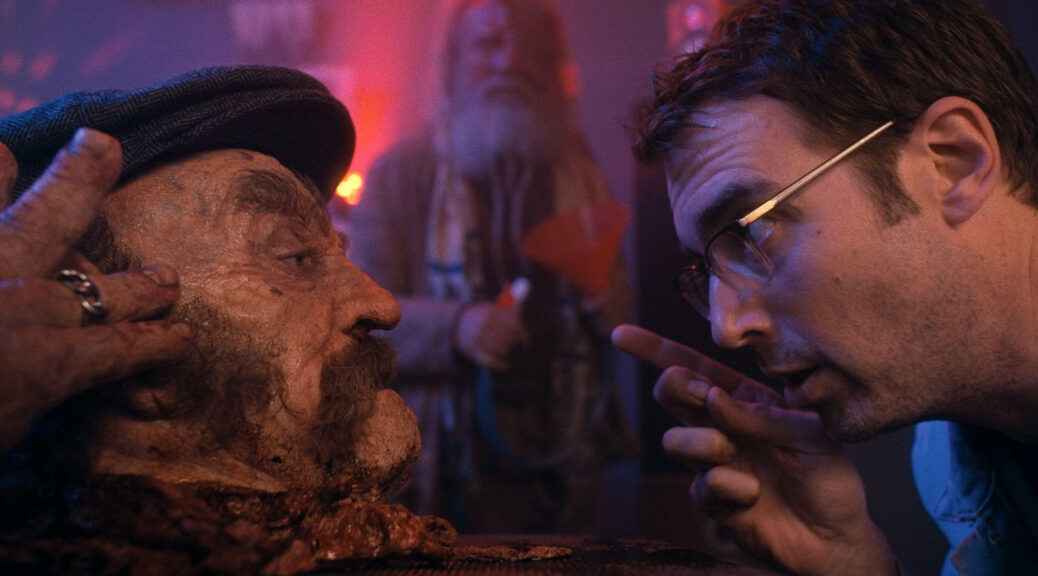
William is that nonconfrontational nice guy who’s always being taken advantage of. But Vlad has pushed him too far. Which is why it will be so difficult to convince anyone that Vlad accidentally killed and dismembered his own self. But he did! Really!
Destroy All Neighbors delivers silly, sloppy horror comedy with the highly relevant message: maybe this is all your own fault. Ray (MST3K) drives the lunacy with an earnest performance. You kind of already know this guy. Hell, he could be you.
And that’s the real charm of Destroy All Neighbors. Director Josh Forbes, working from a script by Mike Benner, Jared Logan and Charles A. Pieper, isn’t wagging a finger of judgment. The finger is gently pointed inward.
The writing team comes from animation and comedy rather than horror, which may be why the film is so gleefully gory, no meanness in it. Whenever William does find his inner badass, the film makes sure he immediately regrets it.
A cameo from Kumail Nanjiani and the supporting goofiness from Lennon and Ryan Kattner as rock and roll has been Caleb Bang Jansen (say the whole name!) keep the tone silly.
Destroy All Neighbors is not a great movie. It’s definitely not a great horror movie. But it’s a light, weird, gentle reminder that you may be all that’s holding you back. (And also, loud neighbors kind of suck.)
With Clear Mind, director Rebecca Eskreis and writer Seanea Kofoed craft a darkly comedic tale of revenge while also poking fun at new age therapy.
After losing her daughter in a freak drowning accident, Nora (Rebecca Creskoff) finds herself adrift in grief. Her marriage over and dropped from her friend group, Nora seeks solace in a new form of virtual reality therapy. In the virtual world, Nora gets to exact revenge against the family and friends who have wronged her. Unfortunately the violence doesn’t stay virtual.
Despite presenting itself as a horror thriller, Clear Mind is surprising light on frights. As the carnage begins to splash across the screen later in the film, it’s only after Eskreis has subjected the audience to round after round of uncomfortable confrontations between Nora and her former friends. While the kills and gore gags might not wow horror fiends, the tension and seat-squirming anxiety created in the lead up more than makes up for it.
Despite being high-concept, Clear Mind is not a plot heavy film. The bulk of the movie features characters simply talking to one another around a table. It’s a testament to Kofoed’s writing that while the movie is overly chatty, it’s never boring. Only when the movie stops to propel the plot forward does Clear Mind stumble.
Eskreis and Kofoed’s commentary on therapy and the people found in Nora’s friend group is so well established through character relationships that any push to highlight it through plot seems disingenuous and clunky. The genre hook of the movie feels like the part the filmmakers were the least interested in.
Despite somewhat pulling punches with its genre elements, Clear Mind is still a well written jab at pseudo-science and the people in its orbit.
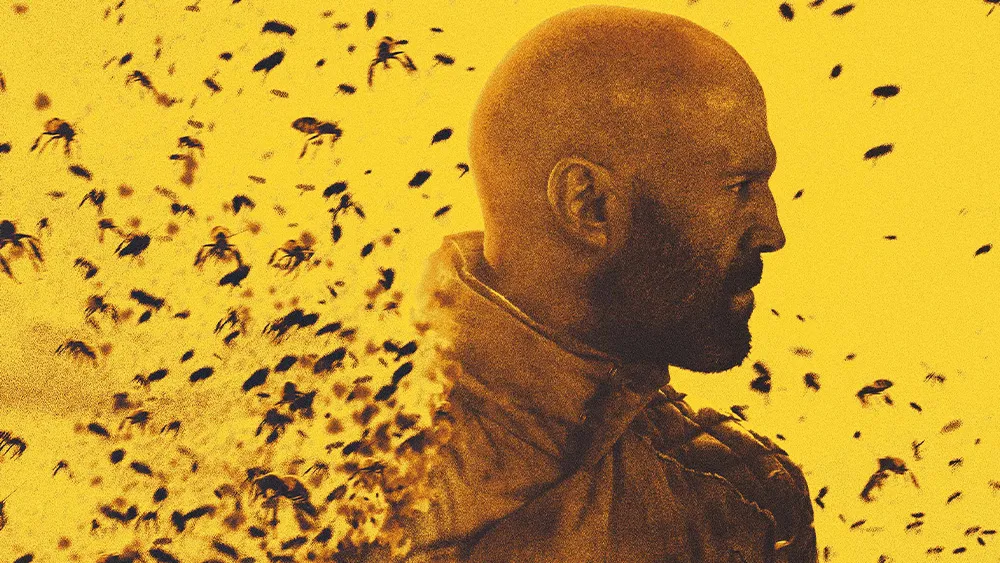
About two-thirds of the way through The Beekeeper, director David Ayer and star Jason Statham hit us with the film’s highlight. It’s an elevator sequence that takes an unexpectedly gory turn, then adds a clever surprise for the finishing touch.
If only the rest of the film could be this interesting.
Statham is playing his usual one man killing machine, this time named Adam Clay. He’s living a quiet and reclusive life as a beekeeper in rural Massachsetts, until a cybercrime firm scams Clay’s only friend (Phylicia Rashad) so badly she kills herself.
Clay takes very explosive, very lethal revenge.
But the phishing firm’s CEO Derek Danforth (Josh Hutcherson in hipster douchebag mode) has friends is high places, including a former CIA director (Jeremy Irons, classing up the joint). Danforth wants Clay taken out, but he soon learns that will not be so easy.
See, Clay is more than a beekeeper, he’s a former beekeeper, an elite group of enforcers who are outside the chain of command and charged only with “protecting the hive when the system is out of balance.”
Bad news for anyone standing between Clay and the scale-tipping Danforth.
Screenwriter Kurt Wimmer (Expend4bles, the Point Break and Total Recall reboots) rolls out a script that feels like a discarded idea from Denzel’s first Equalizer film. Each step closer to “the head of the snake” gets more ridiculous, all presented with a bone dry seriousness from Ayer (Fury, Suicide Squad) and Statham that screams for a little self awareness.
Instead, The Beekeeper keeps pushing toward its own misguided goal of sermonizing about corruption while celebrating vigilante vengeance. Where it lands – elevator ride aside – is strictly in plug-and-play Statham territory, another ironic reminder of why his comedic turn in Spy was such a joyous bullseye.
Writer, director, and star Dana Kippel delivers a trippy journey through a form of psychotherapy called shadow work in her film, Reflect.
As Summer, Kippel invites participants to a spiritual retreat as a challenge of sorts in which they can win money upon completing “reflective” obstacle courses.
Accompanying her on this journey to the desert (both spiritual and literal) are three friends (and one frenemy). Each woman brings her own past traumas with her, but none of them take their upcoming journey too seriously. From the clothes they wear to the things they pack, they don’t seem to understand the gravity of what they’re getting into.
Along the way, the characters meet some odd balls – odd balls that are part of a show, The Game of Life, in which the women are unaware participants.
It’s a strange set up for sure. By putting our characters on this journey, Kippel mines the sources of trauma in each woman’s life, some of those traumas more damaging than others.
As each woman undertakes the obstacle courses, they must face their anguish. It’s part of the game, part of the journey, but it makes you wonder what exactly becomes of a person who can’t handle the pain that plagues them.
Reflect excels at delivering a game cast of women (including Grace Patterson and Jadelyn Breier) who play off each other with the authentic dynamic of friends. There is genuine affection, but also a level of cattiness that keeps the quintet from truly letting each other in. Perhaps if they were able to do so, those life traumas would not be so overwhelming.
The film’s only weak element is when Kippel cuts away from the women to the gameshow framing device. Reflect would have worked just as well as a psychedelic journey into shadow work without the added element of voyeurism.
However, Kippel wisely keeps most of our attention on Summer and her friends, revealing their baggage little by little. It’s an interesting look at how our past infects our present and influences our future. Is there a way to move forward when the past pervades our every being? Maybe, maybe not. Kippel offers no easy answers, and the film is better for it.
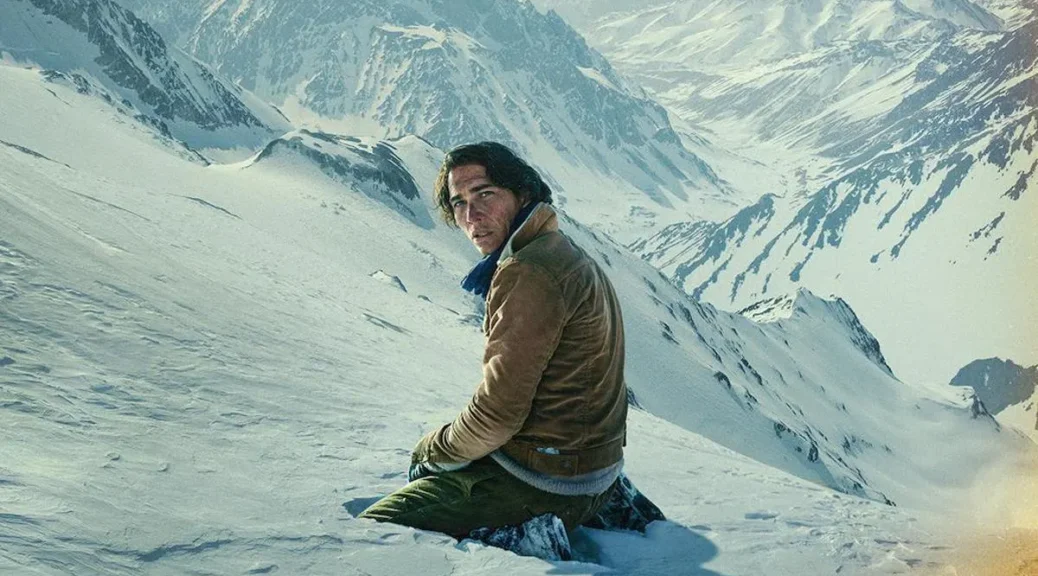
2012’s The Impossible proved director J.A. Bayona could recreate a real life disaster with heart-racing precision, and then mine the intimate aftermath to find a touching depth.
Since then, he’s had his big screen mind on monsters, with results both miraculous (A Monster Calls) and mixed (Jurassic World: Fallen Kingdom). Now, Netflix’s Society of the Snow finds Bayona back in the true adventure business.
And his business in Society of the Snow is heartbreakingly, thrillingly, unbelievably good.
It’s the latest account of the 1972 Andes flight disaster, a legendary ordeal that has been detailed in several books and films over the last five decades plus. Bayona read Pablo Vierci’s “La Sociedad de la Nieve” while researching The Impossible, bought the rights soon after, and now teams with co-writers Bernat Vilaplana and Jaime Marques for a harrowing and fittingly reverent treatment.
Following Vierci’s lead, Bayona makes sure we get to know many of the members of the ill-fated Uruguayan rugby team, who were on their way to a long weekend in Chili when their plane – carrying 40 passengers and 5 crew members – went down among the snowy peaks.
After an introduction that endears the young men to us via enthusiastic friendship and youthful naïveté, Bayona pulls us into the crash experience with a spectacular, terrifying set piece almost guaranteed to whiten your knuckles and quicken your pulse.
It’s a stunner, as it should be, because it anchors the film in a survival mode that will be tested beyond what most people could ever imagine.
The ensemble cast, filled mainly with newcomers, is deeply affecting. The survivors will be pushed to their physical, moral and spiritual breaking points, and these young actors make sure not one exhausting second of it feels false.
Bayona and cinematographer Pedro Lugue present the Andes as a beautiful monster in its own right, capable of majesty and menace in equal measure. The smaller you feel, the better, so experience this one on the biggest screen you can find.
Forget what you know. Even if you’re aware of what these people went through, Society of the Snow will reframe the tale with a deeper level of humanity and courage. And should this legend be new to you, resist the urge to research until after you’ve seen Bayona’s take.
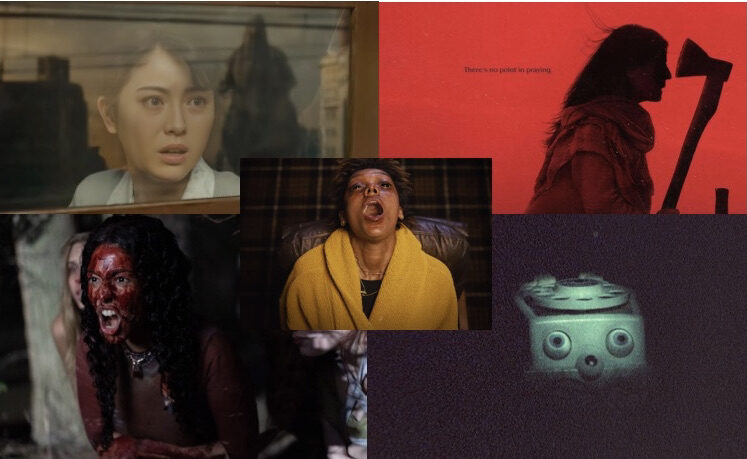
Blood soaked comedies, visceral supernatural thrillers, gory satires, haunting social commentaries, throwbacks and holidays and gore galore – that’s what was on display in the best horror films of 2023.
We’re not going to lie – our favorite horror movie of 2023 was our own Obstacle Corpse (streaming on Prime, Tubi, Vudu and Plex). And though we are wildly biased, we’re going to take the high road and not list it here. Still, you should watch it!
Besides that one – here’s a rundown of our favorite horror films of 2023.
20. M3gan
Hilarious. Gerard Johnstone – whose 2014 horror gem Housebound is a must see – displays a sly instinct for humor in a film that understands what’s creepy about dolls and toxic relationships.
Allison Williams is solid as the workaholic who just wasn’t cut out to be a parent. That would be fine, except her orphaned niece could really use a parent, not an AI caregiver whose rushed-to-production programming and unseemly backstory make her dangerous in, let’s be honest, a pretty fun way.
You remember that trailer. We could have used more dancing, but when M3GAN plays “Toy Soldiers” on the piano, we were already hooked.
19. The Blackening
Several friends from college (including Jay Pharaoh, Yvonne Orji, Sinqua Walls, Antoinette Robertson, and the film’s co-writer Dewayne Perkins) are reuniting at a remote cabin for a Juneteenth celebration. It isn’t long before they discover a talking blackface at the center of a board game called The Blackening (“probably runs on racism!”) and fall into a sadistic killer’s plan to pick them off one by one.
The game will test their knowledge of Black history and culture, and demand they sacrifice the friend they deem “the Blackest.” It’s a clever device that Perkins, co-writer Tracy Oliver and director Tim Story use to skewer both well-known horror tropes and well-worn identity politicking.
The old joke about Black people being the first to die in horror films is pretty well-worn, too, but don’t let that poster tagline convince you that the film has nothing new to say. The less “Blacker” these characters seem, the greater chance they have of surviving. That’s some fertile ground for social commentary, and what began as a viral comedy sketch lands on the screen as a refreshing new angle for a horror comedy.
18. Birth/Rebirth
Birth/Rebirth opens on two different women performing two different tasks in a hospital. Their paths will cross, but at the moment, Celie (Judy Reyes, Smile) and Rose (Marin Ireland, The Dark and Wicked) are revealing something of themselves to us.
Their story, like Barbie’s, is about how impossible it is to be a woman. Director Laura Moss moves seamlessly from short to feature with this modern take on Frankenstein and motherhood.
Tragedy strikes early in Moss’s film. Overworked and under rested, Celie blames herself for her daughter Lila’s death. And now the hospital can’t even find the girl’s body.
But Rose can.
The film amounts to a profound parenting nightmare, and each actor takes on the role of parent to create an unnerving dynamic guided by authenticity. All of it pulls the psychological scabs of exhausted parenting.
17. The Angry Black Girl and Her Monster
An awful lot of people have reimagined Mary Shelley’s Frankenstein in an awful lot of ways. What makes writer/director Bomani J. Story’s take, The Angry Black Girl and Her Monster, so effective is that it tackles a lot in very little time and handles all of it heartbreakingly well.
To say that Story situates Shelley’s tale in the context of drug violence would be to sell his film short. He’s moved the story from European castles and laboratories to the projects, where Vicaria’s (Laya DeLeon Hayes, stunning) mother fell victim to a drive-by shooting, her brother was shot to death on a drug deal gone wrong, and her father deals with his grief by using. But drugs are just part of the larger problem, the almost escapable, systemic and cyclical nature of violence and poverty.
Story’s chosen genre may feel slight, even campy, but the tropes belie some densely packed ideas, and there’s a current of empathy running through the film that not only separates this from other Frankenstein tales, but deepens the film’s genuine sense of tragedy.
16. Totally Killer
The quickest description is Back to the Future meets a mash of Scream and Happy Death Day. But Totally Killer offers a funhouse full of other genre wink-winks in a violent, raunchy, rollicking good time that often works in spite of itself.
Director Nahnatchka Khan and a writing team relatively new to features riff on everything from the Disney Channel to Sixteen Candles to Ace Ventura and beyond as a terrific Kiernan Shipka leads us on a life-saving mission back to the late 80s.
15. Thanksgiving
Hungry for a new turkey day tradition that delivers on outlandish violence? Skip the Westminster Dog Show and enjoy a helping of Thanksgiving.
Eli Roth returns to the grindhouse trailer he made in 2007 to deliver a slick, fun holiday slasher with enough old school Roth to remind you of the genre bad boy he once was.
A game cast, a heaping helping of genre tropes, gore a plenty, and a refreshing dose of cynicism make this visit to a New England town one year after its Black Friday Massacre the best horror film for this holiday.
14. Influencer
Kurtis David Harder’s approach to influencer horror leans Neo-noir thriller as the cold and calculating CW (Cassandra Naud – outstanding) spins a dangerous web for an unsuspecting social butterfly.
Harder and cinematographer David Schuurman create an absolutely gorgeous pot for boiling this mystery. From atop deserted island beaches to below crystal clear waters and inside lavish vacation homes, Harder’s nimble camera and visual aesthetics reinforce the notion that pretty pictures don’t always tell the whole story.
With sharp dialogue, skillful plotting and simmering dread, Influencer is plenty worthy of that “Like” button.
13. Huesera: The Bone Woman
Michelle Garza Cervera’s maternal nightmare is bright and decisive, pulling in common genre tropes only long enough to grant entrance to the territory of a central metaphor before casting them aside for something sinister, honest and honestly terrifying.
While it toes certain familiar ground – the gaslighting of Rosemary’s Baby, for instance – what sets Huesera apart from other maternal horror is its deliberate untidiness. Cervera refuses to embrace the good mother/bad mother dichotomy and disregards the common cinematic journey of convincing a woman that all she really wants is to be a mom.
Huesera’s metaphor is brave and timely. Brave not only because of its LGBTQ themes but because of its motherhood themes. It’s a melancholy and necessary look at what you give up, what you kill.
12. The Sacrifice Game
The Holdovers by way of Blackcoat’s Daughter, Jenn Wexler’s latest mines the Manson-esque horror of the American Seventies for a new holiday favorite.
Part of the reason The Sacrifice Game works as well as it does is the casting of the cultish murderers, each with a fully formed character and each somehow reminiscent of the kind of Satanic hippie villains that once gloriously populated trash horror.
The film looks fantastic, and though the storyline itself is clearly familiar, Wexler’s script, co-written with Sean Redlitz, feels consistently clever. There’s enough grisly material for the true horror moniker, but nothing feels gratuitous. Each scene serves a purpose, and all dialog allows characters to unveil something of themselves.
11. Malum
Equal parts Assault on Precinct 13 and The Shining by way of Charles Manson, Anthony DiBlasi’s Malum is a quick, mean, mad look into the abyss.
DiBlasi is reimagining his own 2014 flick Last Shift, although it feels more like a riff on Carpenter’s 1976 Precinct 13 than anything. Regardless, what the filmmaker does is confine the audience along with our hero in a diabolical funhouse.
Malum gets nuts, exactly as it should. Though it never feels genuinely unique, it manages to avoid feeling derivative because of DiBlasi’s commitment to the grisly madness afoot. The result is a solid, blood soaked bit of genre entertainment fully worthy of your 92 minutes.
10. Where the Devil Roams
There is macabre beauty in every frame of Where the Devil Roams, the latest offbeat horror from the Adams family. The film was co-directed and co-written by its three lead actors – Toby Poser, John Adams and Zelda Adams – who are also a family. ike their earlier efforts, Where the Devil Roams concerns itself with life on the fringes, rock music, and the family dynamic.
The ensemble convinces, particularly the sideshow performers, but the film’s most enduring charm is its vintage portrait look. It’s a gorgeous movie, the filmmakers creating the beautifully seedy atmosphere ideal to the era and setting.
Where the Devil Roams feels expansive and open, but like anything else in the sideshow, that’s all trickery. There’s more happening in this film than they let on, which is why the final act feels simultaneously “a ha!” and “WTF?!” You won’t see it coming, but in retrospect, it was there all along.
9. El Conde
Pablo Larraín has a particular gift for poetic historical retellings grounded in a singular woman’s perspective: Spencer, Jackie. But his passion for the political history of his native Chile rings through most of his films, including Naruda and No. But did we see a vampire movie coming?
El Conde reimagines Augusto Pinochet as a vampire weary of his many years on earth and ready to leave his bickering family in squalor and finally die – until the church sends a vampire slayer after him. What follows is a near-slapstick political satire, sort of The Death of Stalin meets What We Do in the Shadows.
Every moment’s a delight, and a late-film reveal is a cynical and biting reward for a gloriously spent couple of hours.
8. Dark Harvest
Dark Harvest finds filmmaker David Slade back on the big screen, and back among teens and monsters, for a gorgeous and often brutal creature feature with a winning throwback vibe. Adapting the 2006 Bram Stoker Award-winning novel with author Norman Partridge and screenwriter Michael Gilio, Slade blends the period pastiche of The Vast of Night with narrative nods to The Lottery, The Hunger Games, and a few choice slices of Pumpkinhead.
Slade leans on cinematographer Larry Smith (Only God Forgives) and the production design team to give the film a wonderful vintage look, with terrific use of backlighting that sets an imposing mood – especially deep in the corn stalks. And once ol’ Sawtooth Jack comes calling, the effects department earns that R rating, with some vicious bloodletting that proves Jack can be a very naughty boy.
7. Evil Dead Rise
Deadites hit the big city in Lee Cronin’s Evil Dead Rise, the latest instalment in the old Sam Raimi demon possession franchise. As was true with its predecessors, blood will rain, viscera will spew, chainsaws will bite, and the dead will most definitely rise.
We open, as usual, on a cabin. Despite the top-notch title sequence, though, this episode will not be a cabin-in-the-woods horror. Cronin, who’s credited with the script as well, takes the Necronomicon and all its secrets into an urban high rise to see what hell he can raise.
Cronin uses disorienting angels and shots throughout the film to beautifully bewildering effect. A fisheye-of-death through a peephole is just one of the film’s many horrifying highlights.
6. Infinity Pool
Brandon Cronenberg + Mia Goth + Alexander Skarsgård … for a very specific set of people, the sum there is hell yes.
Riding our favorite wave in horror – that rich people are unspeakably diabolical – writer/director Cronenberg takes us on a strange journey through privilege, debauchery, entitlement, boredom, narcissism, psychotropic drugs and more in his trippy new flick, Infinity Pool.
Cronenberg’s ultimate concept is clearly, wildly his own, but moments sometimes call to mind ideas from last year’s Speak No Evil, as well as Society, Kill List, Hour of the Wolf, and A Serbian Film (no, not that part). Still, the film never feels borrowed. Uncomfortable, yes. Borrowed? No.
5. Perpetrator
Jennifer Reeder’s work routinely circles back to peculiar notions of coming of age, but John Hughes she ain’t. Goofiness and seriousness, the eerie and the grim, the surreal and familiar all swim the same bloody hallways, practice the same open shooter drills, and speak up at the same assemblies honoring the latest missing girl.
As Jonny (Kiah McKirnan) approaches her 18th birthday she goes a tad out of control. Her dad (also in some kind of crisis) doesn’t know what to do with her, but an out-of-town aunt (Alicia Silverstone, a sinister delight) offers to take her in. So, Jonny goes from a fairly anonymous, if reckless, urban life to something far more noticeable in her aunt’s small town.
Reeder’s interested in the way women are raised to disregard one another, to compete with each other, to be adored and consumed, sexualized, victimized and vilified. Her reaction to this environment amounts to a reclamation of blood. Perpetrator swims in blood and gore and humor and terror and feminism galore.
4. Skinamarink
There’s probably some version of this nightmare in your past. You were just a kid, separated from your parents and trying in vain to reach them or call out for help, or maybe just escape.
Remember how scared you were? Director Kyle Edward Ball and cinematographer Jamie McRae do, and they twist that knife again and again for 100 minutes of dark, disorienting dread.
Cinematography and sound design are intertwined in an analog, cathode-ray aesthetic that recalls vintage, grainy VHS. Two children whisper to each other (“Where do you think Dad is? I don’t know.”) as they wander from room to room, with Ball’s camera never allowing you one second of relief.
3. Talk to Me
Talk to Me somehow feels familiar, but uncomfortably so. It’s a horror show always eager to deface the rulebook, and leave you with a wonderfully organic sign that this game is not over.
The script smartly stays a step or two ahead of contrivance, and is able to find some impressive psychological depth as it touches on grief, trauma, and the anxieties of leaving childhood behind.
This is R-rated horror, refreshingly light on the jump scares and false alarms, leaning instead on a parade of visual images that can truly terrify. And even when we don’t see what the game players are seeing, the fact that we’ve already had a hellish glimpse feeds a devilishly fun game within our own imaginations.
2. Godzilla Minus One
Writer/director Takashi Yamazaki returns to themes he explored ten years ago in The Fighter Pilot, tips some unmistakable hats to both Jaws and Dunkirk, and emerges with a completely satisfying Kaiju adventure.
The morals are clearly marked, but this is a crowd pleasing and often thrilling adventure, with some well-chosen moments of humor woven into a pace that rarely bogs down, despite a bit of schmaltz and one or two unsurprising surprises that dot the landscape.
And though Yamazaki makes sure Godzilla wreaks his havoc early and often, Minus One is a film driven by characters with all-too-human complexities. He gives Godzilla a wonderfully classic look, with imposing and well-defined features like those spiky scales that turn blue when he’s about to spit that fire! Hell yeah!
1. When Evil Lurks
Just when you thought no one could do anything fresh with a possession movie, Terrified filmmaker Demián Rugna surprises you. When Evil Lurks does sometimes feel familiar, its road trip to hell detouring through The Crazies, among others. But Rugna’s take on all the familiar elements feels new, in that you cannot and would not want to predict where he’s headed.
This is a magnificently written piece of horror, and Rugna’s expansive direction gives it an otherworldly yet dirty, earthy presence.
The inexplicable ugliness – this particularly foul presence of evil – is handled with enough distance, enough elegance to make the film almost beautiful, regardless of the truly awful nature of the footage. And Rugna never lets up. Each passing minute is more difficult than the last, to the very last, which is an absolute knife to the heart.