Tag Archives: Michel Franco

Rude Awakening

Dreams

by Hope Madden

Early in Dreams, Michel Franco’s latest, a wealthy white guy at a board meeting says, “Why Mexicans? Isn’t there anybody here we can help?”

It’s a pristine boardroom, just the questioning Jake McCarthy (Rupert Friend), speaking to his benevolent father (Marshall Bell), and his philanthropic sister, Jennifer (Jessica Chastain). She gives him a playfully annoyed shake of the head, hands him a dossier to sign, and promises her “little projects” are all tax write offs. She and her father share a “what are we going to do with this guy?” smile and roll of the eyes.

Franco’s film is not subtle.

Chastain cuts an elegant figure, Franco’s cinematographer Yves Cape lingering over every meticulous ensemble, fetishizing each pair of impossible heels. She never smiles. There’s a hand ready to help her out of every vehicle as its door opens for her. She has never a hair out of place.

Except when she’s having energetic sex with Fernando (Isaac Hernández), the talented ballet dancer who’s just crossed the border and most of the US on his own to be with her.

The erotic thriller’s psychosexual politics are eye-catchingly surface level, with a heavy-handed examination of the American Dream driving the action. The role reversal—that the wealthy philanthropist is a woman and the beautiful ballet dancer in distress is a man—allows Franco provocative opportunities.

One of the most interesting things about Franco’s films, including Memory, also starring Chastaine, and 2022’s Sundown, is that, at just past the halfway mark, each becomes an entirely different film.

Dreams follows that path as well, although with less satisfying results.

Like Memory, Dreams considers power and consent in sexual relationships, and again, the latter film comes up shorter. Dreams seems more obviously built to provoke, more relentlessly opposed to choosing a side.

That feels less provocative and more irresponsible here. Whether, in the final image on the screen, we are expected to see the evil of privilege or the righteous glare of vengeance, what’s important to note is that no white men were harmed in the making of this film.

Don’t Look Back

Memory

by Hope Madden

“I remember…”

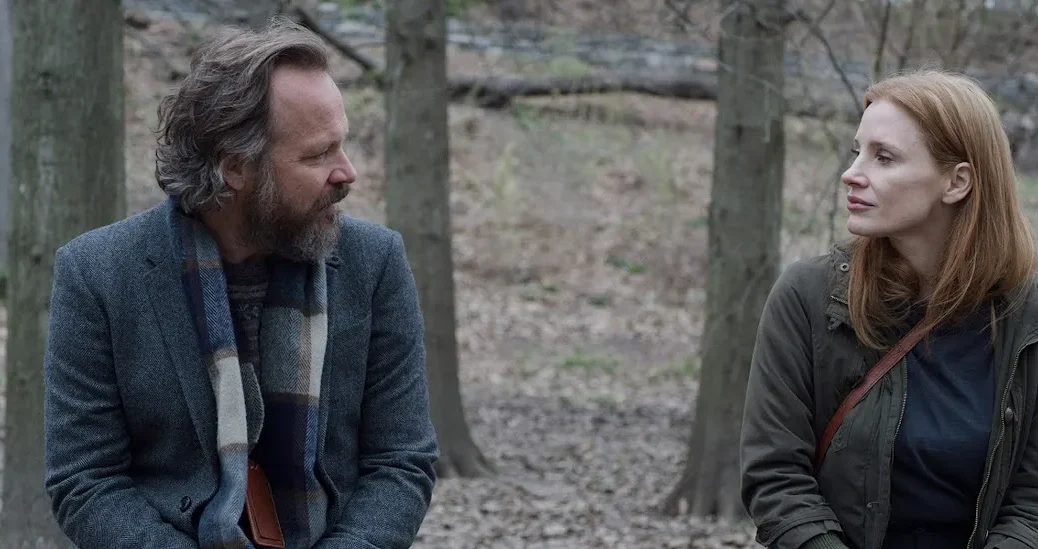
These are the first words uttered in Michel Franco’s deceptively spare drama, Memory. Sylvia (Jessica Chastain) is celebrating 13 years of sobriety at an AA meeting. She’s brought her daughter, and those around her are remembering her impact on them.

For the next 140 minutes, Franco examines what’s true and what’s faulty in the human memory, and what he finds is sometimes harsh and unpleasant, but just often, profoundly tender.

Chastain’s performance is brittle but with complexity and depth. Sylvia’s life, and her hard-edged wall, are built from the years of being denied her truth. She knows who she is and she’s doing what she can with that.

Saul (Peter Sarsgaard, astonishing) does not always know who he is, but when he does the film shimmers with life and humanity. Saul follows Sylvia home from a high school reunion of sorts. The catalyst is provocative in that it makes Sylvie reconsider her own memory, which allows those around her to reignite their assault on its veracity.

A razor-sharp ensemble lends remarkable support to Chastain and Sarsgaard. Jessica Harper, in particular, is picture perfect, her sly and cheery manipulation leading to an emotional climax blistered by authenticity.

Memory is a bit of a departure for Franco, who’s films often keep audiences at arm’s length from the emotional turmoil beneath a character’s enigmatic surface. Not so here. Chastain’s slowly melting wall of ice creates real intimacy, and what she reveals beneath is raw.

She and Sarsgaard are veteran talents reveling in an opportunity to discard artifice and create something untidy. Their work, particularly in scenes together, testifies again to each actor’s remarkable skill.

Franco’s films rarely answer all the questions they ask, and can feel almost shapeless and often hopeless. Memory is a departure here as well. Though it’s far less rigidly structured than many Hollywood films, there’s a comforting structure to it and, more comforting, an undeniable spark of hope.

Made in the Shade

Sundown

by Hope Madden

Usually, when you try to avoid giving any plot synopsis it’s because so much happens in a film that you don’t want to spoil any surprises.

That’s sort of why it’s nearly impossible to describe Michel Franco’s latest drama Sundown. And yet, it’s also kind of the opposite.

The film in its entirety is a sleight of hand. In a way, it’s as if you’re watching a dysfunctional family drama, then an international thriller, but always from the perspective of someone barely involved in what’s going on. The result is simultaneously frustrating and mesmerizing.

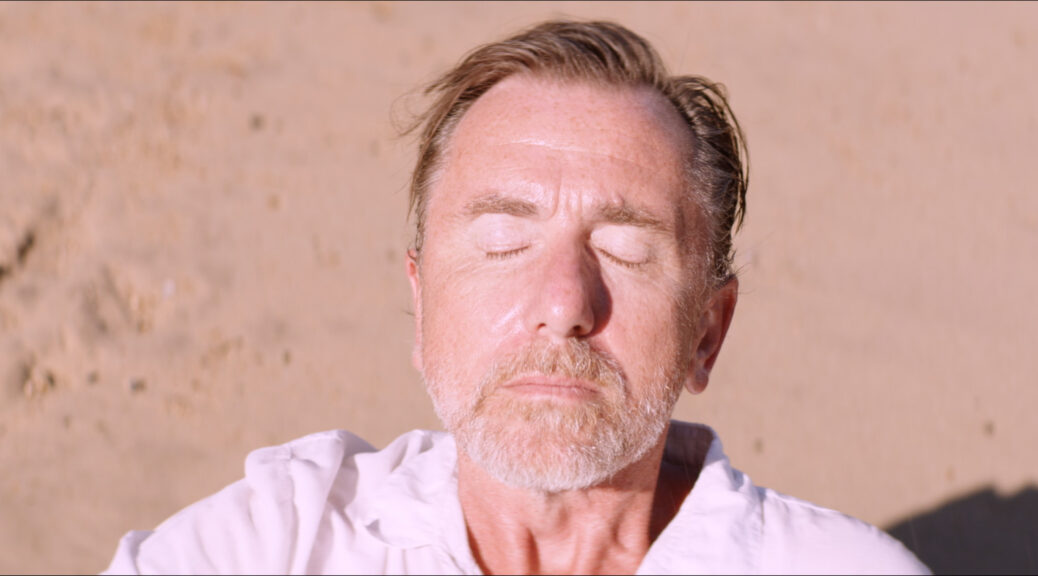
Tim Roth provides a slyly empathetic turn as Neil. He and Alice (Charlotte Gainsbourg) plus two young adult kids are on a pricy vacation. Franco lingers for about 25 minutes on pools and vistas, private beaches and ridiculous accommodations. The dialog—what there is of it—amounts to background noise. The point is there’s love here, a bit of distance, and an absolutely insane amount of money.

Then a tragedy calls the family home, cutting short their holiday. From here the show belongs to Roth. Franco trusts the actor to carry the full weight of this character and this film with no exposition at all, next to no emotion and bursts of action withheld until the last half hour of the film.

Roth delivers. A blend of tenderness and resignation, he fascinates and the less he explains the more confoundingly intriguing he becomes. Neil is the mystery, his every action a surprise delivered in the lowest of keys.

Gainsbourg’s tumult of emotion offers a brash counterpoint, while Iazua Larios balances that drama with something raw and sometimes sweet.  

It’s almost amazing how much happens in a film that feels so meandering and lethargic. Sundown defies expectations, but it’s all the better for it.

https://www.youtube.com/watch?v=eCqdGkgS9ow