Crime drama, social commentary, action flick, vampire movie—Night Patrol bites off a lot. But since director Ryan Prows and writers Tim Cairo, Jack Gibson and Shaye Ogbonna’s last teaming combined an organ harvesting crime caper with the life of a luchador, it shouldn’t come as a surprise.
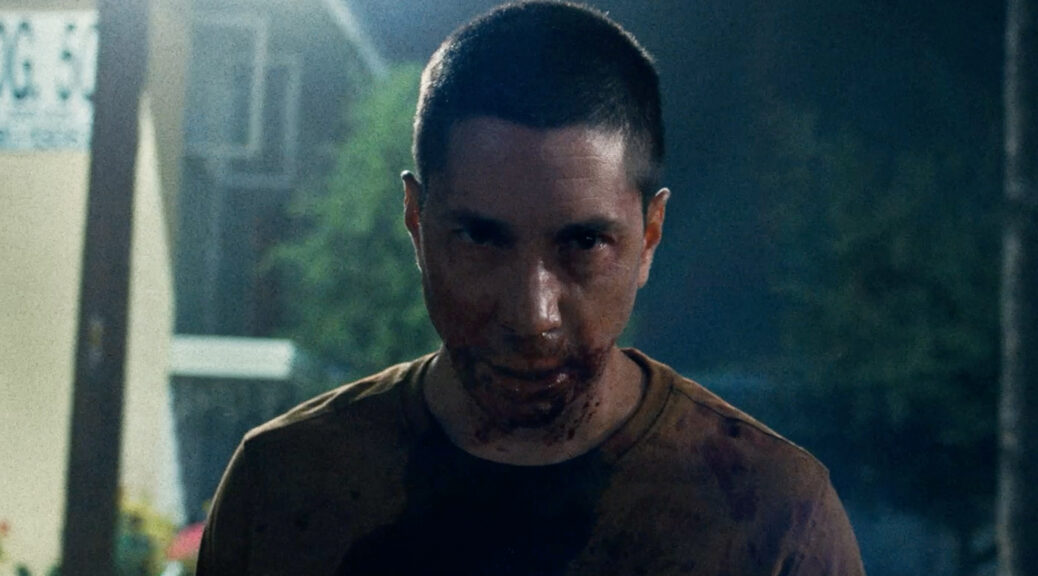
Night Patrol opens on a young man (RJ Cyler) bleeding from a weapon still poking out of his ribs. He’s in police custody, sitting across from a nonplussed LAPD officer (Nick Gillie), who’d like him to explain himself.
Prows then flashes back a couple of days, introducing the young man, the girl he loves, and the LA cops known as Night Patrol. What follows is an allegory about white supremacy dressed up as some kind of higher calling but behaving as bloodthirsty beasts.
Apt, particularly after what we all witnessed in Minneapolis last Wednesday night.
Justin Long co-stars as a cop looking to get to the bottom of whatever it is Night Patrol is up to, and he’ll go to some regrettable means to meet those ends. But he hopes to be remembered as “one of the good ones”.
It’s unfair to compare Prows’s film with the similarly themed Sinners because it’s unfair to compare any film at all with Ryan Coogler’s masterpiece. Prows’s ire is focused on the here and now, and probably bears a closer resemblance to Bomani J. Story’s 2023 film The Angry Black Girl and Her Monster as well as Remington Smith’s 2025 festival favorite LandLord.
The theme is clear-eyed and relevant: Systemic racism in the U.S. is monstrous, its willing participants are monsters.
Prows solicits game performances from Cyler, Long, and especially Nicki Micheaux who dominates every scene she’s in, as only her character could.
Where Night Patrol falters is in its wild mix of tones and genres. For all its bloodsucking, this is no horror film. The violence is action violence, but even that is sometimes lost in the loonier, funnier moments. The rival gang is preoccupied with supernatural entities, including Lizard Men, giving the film a bizarre sense of humor that doesn’t fully fit.
The hodgepodge approach to genre hampers its castmates—Cyler, in particular—from finding a suitable performing style. Long is custom designed for this character, and Micheaux elevates the material, but with no discernable genre, Night Patrol leaves you a little dizzy.
Chinese filmmaker Bi Gan set the bar high for himself with his second feature, the surreal sensation Long Day’s Journey into Night that capped off a dreamy neo-noir with an hour-long single take in 3D.
With his new film Resurrection, it’s clear that Bi’s ambition and technical skill have only grown. Resurrection trades the languorous pace of his first two films for short chapters that meticulously pay homage to distinct filmmaking genres. There’s the opening silent film with its eye-popping production design and nods to Expressionism and early greats like Méliès and Griffith, but if that’s not your taste just give it 20 minutes. Each section gives way to the next, including mid-century noir, a Buddhist parable and even a Y2K vampire love story.
The story (from Bi, with a screenplay by the director and Zhai Xiaohui) loosely unites the wide-ranging chapters—but emphasis on loosely. Jackson Yee plays a Deliriant, a dissident dreamer in a speculative future where “the secret to eternal life is to no longer dream.” These Deliriants must be hunted down by “Other One” (Shu Qi, who also narrates throughout the film).
This is explained at breakneck speed in the opening silent film cards, but don’t worry. The cinematic metaphors tend not to be subtle in each of the chapters, with story taking a backseat to Bi’s dazzling visuals. After the Other One tracks down the Deliriant in the opening chapter, the rest of Resurrection is a projection of his dying dreams across time.
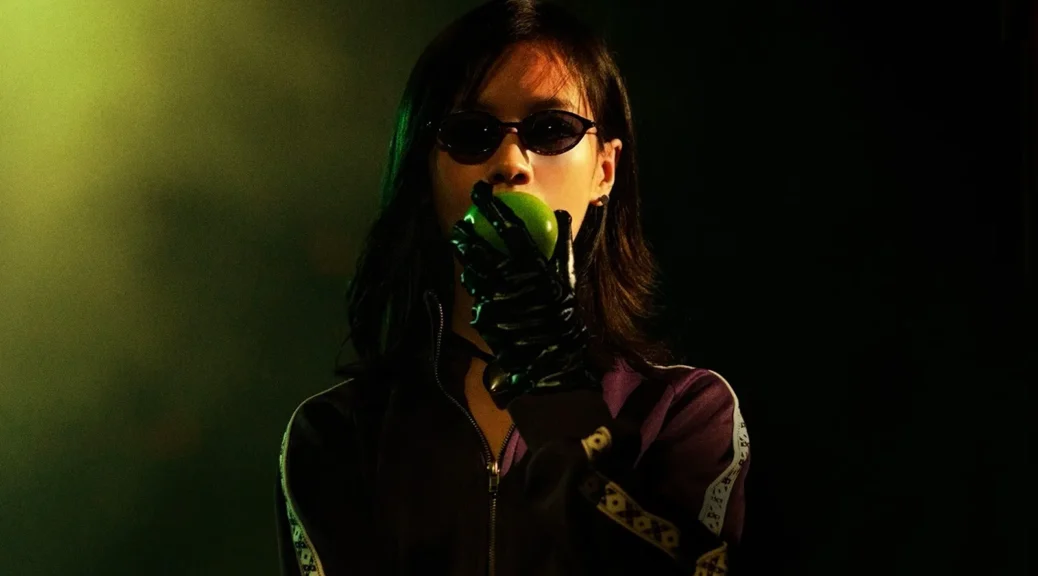
The final chapter is the one with “that shot” – one of Bi’s now-trademark long takes that follows a whirlwind romance between the Deliriant (now a street tough named Apollo) and a vampire singer (Li Gengxi) through Chongqing’s foggy nighttime streets. It’s Before Sunset with vampires plus Bi’s stunning use of light, darkness and color coming together perfectly, and the cinematography is such an achievement on its own that the long take is almost superfluous.
It’s a neat encapsulation of what can be equal parts beguiling and frustrating about Resurrection. There’s a deft bit of poetry on ending with the vampire vignette, as the two lovers seek to find something real, something even more sublime than immortality. (And cinema is also something we find meaning in with each another, but only in fleeting darkness before the lights come up.)
And it also draws attention to its own artifice in ways that might be intentional but, over the course of a 150-minute movie, threaten to overshadow the emotion of an already threadbare story. Bi has the immaculate craft to look back at diverse eras of filmmaking, but the burning question in today’s climate is forward-looking: Can film as an art survive? Can we be at peace with the idea that art is not a cure for suffering but rather a place to find our shared humanity? It’s a little corny or maybe it’s a little deep, or both depending on your tolerance. But the questions are worth asking. Especially from a master technician who is practically demanding that you see this on a big screen, with a hushed crowd of strangers, all in agreement that there is still something essential about the power of stories through moving images on a screen.
Even without the cameo from Al Pacino, Dead Man’s Wire has the gritty, absurdist vibe of legendary 70s thriller Dog Day Afternoon. Also based on true crime events, the latest from director Gus Van Sant leans on a timely, anti-hero tone and some stellar performances for a look into the desperate edges of the American dream.
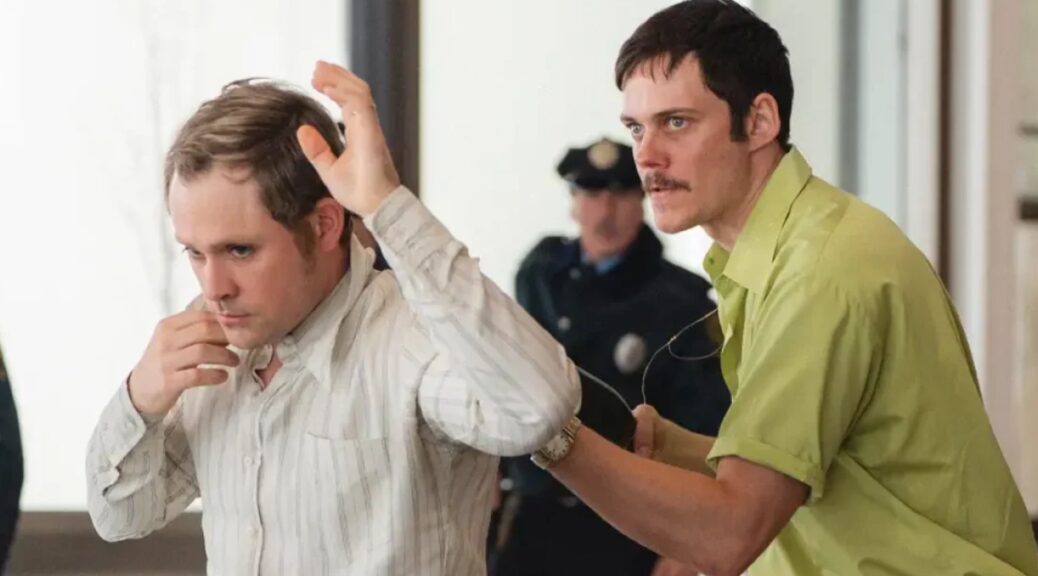
Bill Skarsgård is utterly manic and completely magnetic as Tony Kiritsis, who held an Indianapolis mortgage company executive hostage in February of 1977. Kiritsis, who hoped to build a shopping center on his 17 acres of land, became convinced that Meridian Mortgage president M.L. Hall (Pacino) was sabotaging the project. Finding M.L. out of town, Kiritis settled on son Richard Hall (Dacre Montgomery from Stranger Things) for his plan of revenge.
Armed with a sawed-off shotgun and a “dead man’s wire” running from the trigger to Richard’s neck, Tony demanded media access, immunity, compensation and a personal apology from M.L. himself.
Tony’s mood swings with wild abandon, but he’s downright starstruck when telling his story to WCYD deejay Fred Temple, the “voice of Indianapolis.” The great Colman Domingo plays Temple with a grounded mix of caution and curiosity, as the confused local celeb is reluctantly pulled into a life-or- death drama where a potential murderer is a gushing fanboy.
Writer Austin Kolodney comes from a comedy background, and Van Sant weaves some darkly comedic layers through terrific period details that only enhance the through line from 1977 to today’s breaking news.
Just two years ago, we saw how a communal feeling of hopelessness can turn a fugitive into a heroic man of the people. Dead Man’s Wire reminds us this feeling of simmering resentment is as old as the art of stacking decks. And while his narrative approach ultimately carries more polish than bite, Van Sant and a terrific ensemble never fail to make this history lesson an engaging high wire act of sadness, surprise and bittersweet delight.
Maybe you enjoyed last year’s coming-of-age survival story masquerading as horror, 28 Years Later. Respect. But if you believe the film lacked the genuine terror required for this franchise, director Nia DaCosta has you covered.
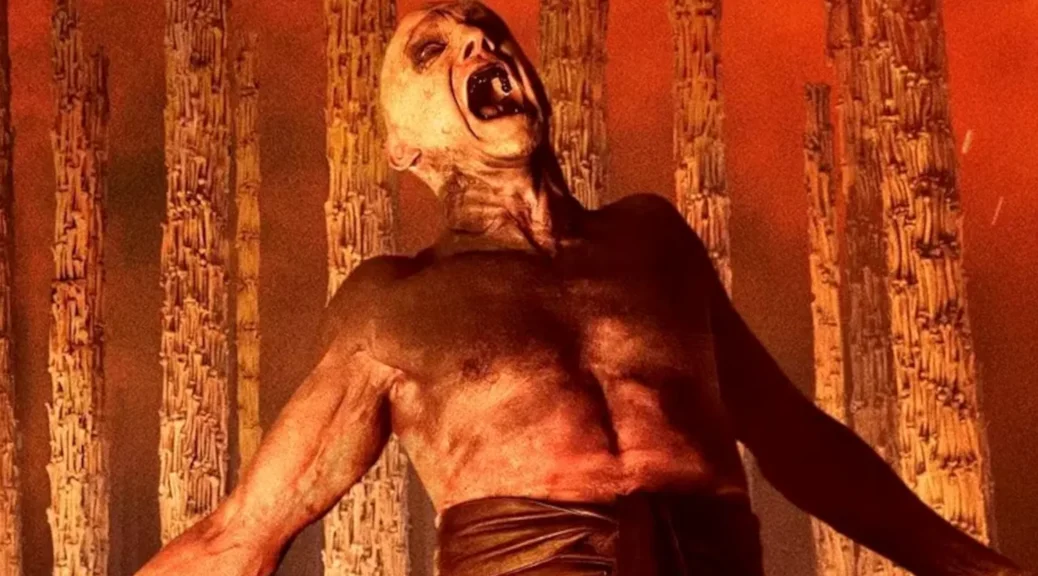
She delivers the first great horror film of the year with 28 Years Later: The Bone Temple, also written by Alex Garland. It picks up the most intriguing threads left untied last time: those of the band of Clockwork Orange-esque marauders who saved young Spike (Alfie Williams) from the infected, and the beautiful soul covered in iodine and living amongst the bones, Dr. Ian Kelson (Ralph Fiennes).
There is more visceral horror in the first three scenes of DaCosta’s film than in the entire hour and fifty-five minutes of the previous installment.
Spike finds himself unwittingly and unwillingly one of the Jimmys, the seven blond-wigged disciples of Sir Jimmy Crystal (O’Connell). Meanwhile, die-hard Duran Duran fan (hell yeah!) Dr. Kelson might be making friends with Samson (Chi Lewis-Parry), the pantsless alfa-infected who left such an impression in the last film.
As the two stories lead toward inevitable collision, Garland, who wrote the 2000 genre masterpiece 28 Days Laterbefore writing and directing some of the best genre films of the 2000s (Ex Machina, Annihilation, Men, Civil War), delivers smart storytelling, impeccable world building, and scares aplenty.
And again, Garland is able to display an intense social conscience, with timely and relevant nods to humanity fighting cruelty for survival, and the desperate allure of demagogues.
O’Connell’s never given a bad performance, and thanks to Sinners, the world knows what he can do with a villain role. But the man’s been doing the charismatic sadist better than any actor since his 2008 breakout, Eden Lake. His performance here is diabolical and unsettlingly funny.
Fiennes is again in wonderous form, soulful, earnest and dear. DaCosta surrounds them both with a strong ensemble that more than sells this story.
The filmmaker (Little Woods, Candyman, The Marvels, Hedda) returns to horror with aplomb, expertly weaving from the grimmest horrors the Jimmys can muster to the tender bromance blossoming over at the bone temple. And the climactic musical number she stages there is a thing for the ages.
Back in the summer of 2002, Danny Boyle released the single scariest movie to hit screens in a decade or more. The next two sequels are solid films. But credit DaCosta and her game and gamey cast for upping the ante to deliver everything a horror fan hoped to get last time out.
The last decade has seen an explosion in Spanish language horror—so many incredible options that we went fuzzy math for this list and still had to leave off some incredible movies, including Amigo, Veronica, The Platform, Terrified, Luz: The Flower of Evil, La Llorona, Huesera: The Bone Woman, and The Untamed. So, make sure you check every one of those out, but first, you should peruse the films that did make our list.
Thanks as always to a great crowd at Gateway Film Center!
6. El Conde (2023, Chile)
On Netflix Pablo Larraín has a particular gift for poetic historical retellings grounded in a singular woman’s perspective: Spencer, Jackie. But his passion for the political history of his native Chile rings through most of his films, including Naruda and No. But did we see a vampire movie coming?
El Conde reimagines Augusto Pinochet as a vampire weary of his many years on earth and ready to leave his bickering family in squalor and finally die – until the church sends a vampire slayer after him. What follows is a near-slapstick political satire, sort of The Death of Stalin meets What We Do in the Shadows.
Every moment’s a delight, and a late-film reveal is a cynical and biting reward for a gloriously spent couple of hours.
5. Tigers Are Not Afraid (2019, Mexico)
On Shudder, Prime and AMC+
Lopez’s fable of children and war brandishes the same themes as Guillermo del Toro’s masterpiece Pan’s Labyrinth, but grounds the magic with a rugged street style.
Tigers follows Estrella, a child studying fairy tales—or, she was until her school is temporarily closed due to the stray bullets that make it unsafe for students. As Estrella and her classmates hide beneath desks to avoid gunfire, her teacher hands her three broken pieces of chalk and tells her these are her three wishes.
But wishes never turn out the way you want them to.
4. Piggy (2022, Spain)
On Hulu, HBO Max, Prime, AMC+
Mean girls are a fixture in cinema, from Mean Girls to Carrie, Heathers to Jawbreaker to Napoleon Dynamite and countless others. Why is that? It’s because we like to see mean girls taken down.
Writer/director Carlota Pereda wants to challenge that base instinct. But first, she is going to make you hate Maca (Claudia Salas), Roci (Camille Aguilar) and Claudia (Irene Ferreiro). In one tiny Spanish town, the three girls make Sara’s (Laura Galán, remarkable) life utterly miserable. Like worse than Carrie White’s.
The filmmaker complicates every trope, all the one-dimensional victim/hero/villain ideas this genre and others feast on. Redemption doesn’t come easily to anyone. Pereda also seamlessly blends themes and ideas from across the genre, upending expectations but never skimping on brutal, visceral horror.
3. The Coffee Table (2022, Spain)
On Shudder, Prime, Tubi, AMC+
A remarkably well written script fleshed out by a stunning ensemble becomes utter torture as you want so badly for some other outcome. Co-writer/director Caye Casas ties threads, builds anxiety, plunges the depths of “what’s the worst that could happen?” and leaves you shaken.
David Pareja and Estefania de los Santos craft indelible, believable, beautifully flawed characters so convincing that their experience becomes painful for you. Casas salts the wounds with dark comedy, but the tenderness and tragedy collaborate toward something far more crushingly human.
2. The Wolf House (2018, Chile)
On Prime, Tubi, Plex, Fawesome
Another Chilean horror, so you’re safe in assuming it has something to do with Pinochet. This breathtaking, incredibly creepy stop motion animated wonder tells of a true cult, Colonia Dignidad. One of its inhabitants escapes into the woods, has a near-miss catastrophe with a wolf, and hides in an abandoned house.
Directors/animators Cristobal León and Joaquín Cociña pull you into Maria’s dreamlike world, as her thoughts and reality blend before your eyes. Sets are painted, built, melted, and destroyed on the screen as Maria’s thoughts and the dangers she faces come and go. It’s an eerily beautiful and unforgettable fairy tale rooted in reality.
1. When Evil Lurks (2023, Argentina)
On Shudder, Hulu, Max, AMC+, Prime
Just when you thought no one could do anything fresh with a possession movie, Terrified filmmaker Demián Rugna surprises you. When Evil Lurks does sometimes feel familiar, its road trip to hell detouring through The Crazies, among others. But Rugna’s take on all the familiar elements feels new, in that you cannot and would not want to predict where he’s headed.
This is a magnificently written piece of horror, and Rugna’s expansive direction gives it an otherworldly yet dirty, earthy presence.
The inexplicable ugliness – this particularly foul presence of evil – is handled with enough distance, enough elegance to make the film almost beautiful, regardless of the truly awful nature of the footage. And Rugna never lets up. Each passing minute is more difficult than the last, to the very last, which is an absolute knife to the heart.
Hope & George review this week’s new releases: Is This Thing On?, Primate, Greenland 2: Migration, Father Mother Sister Brother, The Chronology of Water, All That’s Left Behind, and Sleepwalker.
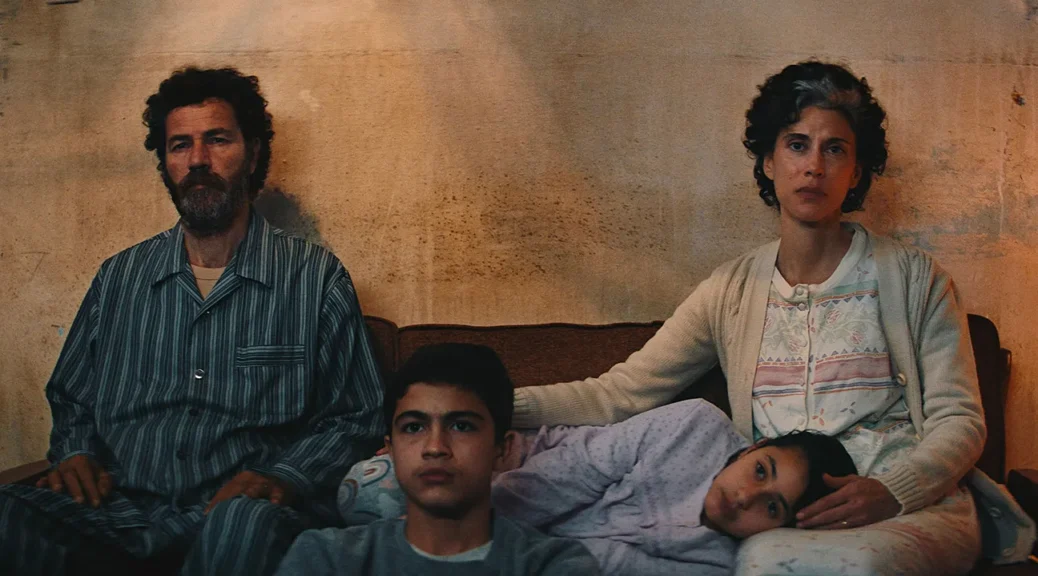
Opening with two teenagers swept up in a demonstration in the West Bank, writer/director Cherien Dabis drops us into a world of strife and sorrow with her film, All That’s Left of You.
After the tense opening, the film moves backward in time to 1948, Jaffa, Palestine. From here, we follow Sharif (Adam Bakri) as he struggles to hold onto his land and home amid ever worsening strikes in the region. His wife is less concerned with his ideals than she is with keeping her family safe.
As we follow Sharif and his family, and the decisions they have to make as Zionist troops close-in, we get a sense of the hopelessness of the situation. Whether or not you know the history, there is a sense of impending doom as the men in the region discuss their options—stay and resist or leave in hopes of a safer future.
The 1948 segment of the film is the shortest, but it gives a sense of what was lost for the people of Jaffa.
Jumping ahead 30 years to the occupied West Bank, Sharif is now an old man who lives with his son Salim (Saleh Bakri) and his family. Each moment we spend with this family shows how deeply the film cares about its subject matter.
One scene during the 1978 segment is so intense it’s nearly impossible to watch. As soldiers torture and humiliate Salim in front of his son, Noor (Sanad Alkabareti), their laughter only underscores the cruelty present when we dehumanize each other. Noor’s reaction to the event is heartbreaking, yet honest.
The film jumps ahead another ten years as we follow an angry, teenage Noor (Muhammad Abed Elrahman) in an increasingly charged West Bank. The scene that opens the film comes full circle as the third section begins.
This family’s trauma across generations is our gateway into this world. Events unfold around them that are almost incomprehensible. Protestors are gunned down in the street. Treatment for a medical emergency is delayed over bureaucratic red tape and a misplaced ID. All That’s Left of You is an impassioned portrayal of one family’s experiences of displacement and heartbreak in Palestine.
Horror has always used trauma as a foundation for some of the best of the genre. Films like TheChangeling or Don’t Look Now wouldn’t be what they are without the emotional trauma haunting their characters. However, these films also had outstanding scripts, a top-notch cast, and directors who knew how to bring it all together. How does Sleepwalker fare as a new entry into Trauma Horror? Unfortunately, like a bad dream.
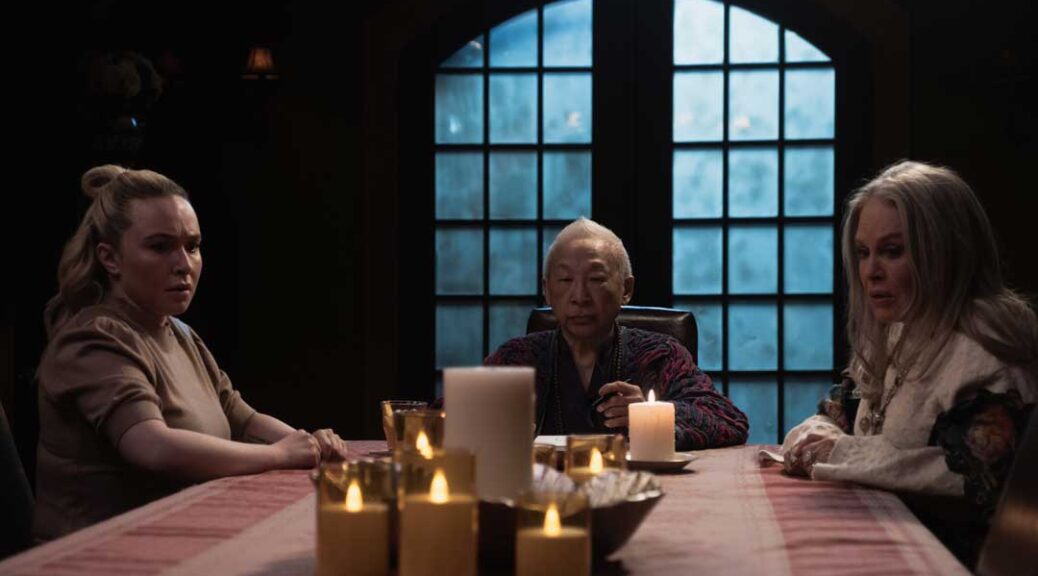
Acclaimed artist Sarah (Hayden Panettiere of Scream4 & 6, TV’s Heroes) is still in the throes of grief after the loss of her daughter in a car accident. This same accident left her estranged and abusive husband, Michael (Justin Chatwin of War of the Worlds), in a coma. As Sarah’s grief begins to manifest itself in sleepwalking, her grip on reality begins to loosen, putting those around her at risk.
Director Brandon Auman attempts to craft a psychological tale that works equally well as a dark drama as it does as a horror film. Think Ari Aster’s Hereditary. However, Auman’s script lacks the nuance, depth, and frankly, the scares, of Aster’s film. The very real topics of PTSD, domestic abuse, and grief get skimmed over with broad strokes instead of being given the attention and finesse needed to be effective.
When Sleepwalker shifts into horror mode, it’s never really able to escape reliance on the dreaded jump scare and a score that telegraphs said jump scares a mile away. There’s a lack of visual flair during these scenes that robs the film of any kind of mood or atmosphere and ultimately hobbles Sleepwalker from the get-go.
Instead of being given a complex, nuanced character to play, Panettiere’s Sarah spends the entire film bouncing through a cornucopia of emotions. Her entire role boils down to “gaslit character”. Chatwin fares even worse. His Michael is a walking, talking (actually, yelling) stereotype. Having your two lead characters be such empty vessels keeps Sleepwalker from finding any kind of emotional traction.
There are lofty goals to be found within Sleepwalker, but unfortunately, the film is ultimately DOA due to a poor script, uninspired direction, and a complete lack of scares.
January is often regarded as a dumping ground for throwaway theater releases, featuring films not good enough to make into the holiday/award season push.
But this month is the perfect time to catch Father Mother Sister Brother, a richly human big screen triptych that explores the type of strained family get- togethers many of us experienced just weeks ago.
Writer/director Jim Jarmusch reportedly began writing the film as a way to cast Tom Waits as Adam Driver’s dad, and the opening “Father” sequence gives us just that. Jeff (Driver) and sister Emily (Mayim Bialik) don’t exactly seemed thrilled about visiting their father (Waits) at his place in very rural New Jersey. As the siblings converse in the car, we learn some things about Dad. But it isn’t long into their strained family reunion that we begin to doubt every one of these things.
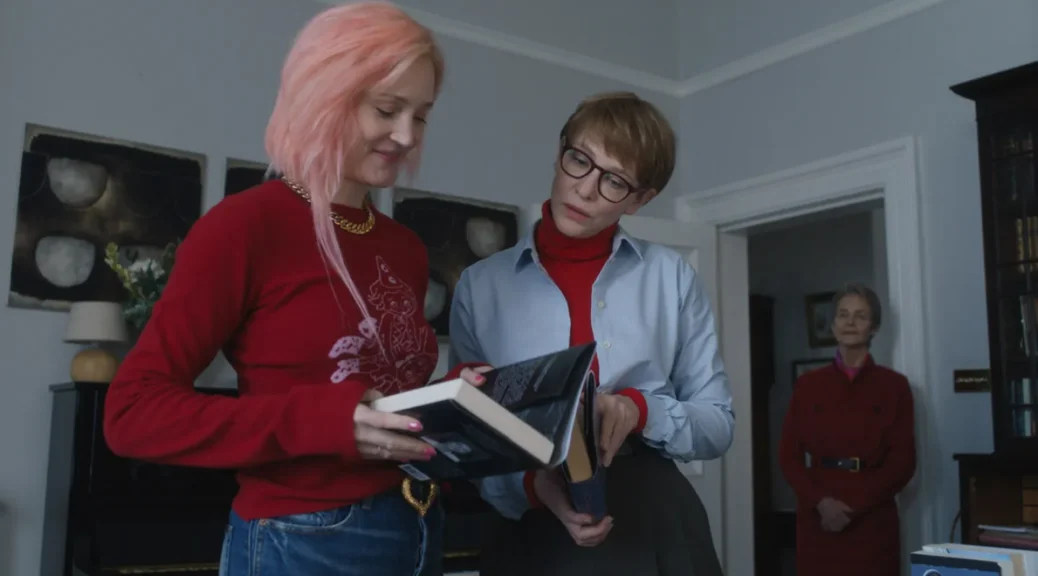
The “Mother” chapter takes us to Dublin, Ireland, where Mom (Charlotte Rampling) is awaiting daughters Lilith (Vicky Krieps) and Timothea (Cate Blanchett) for their annual visit. Though life updates are spilled around a beautiful array of tea and cakes, only a few crumbs of truth actually get shared.
And in Paris for the “Sister Brother” finale, twins Skye (Indya Moore) and Billy (Luka Sabbat) meet after the recent plane crash that killed their parents. From a small cafe to an empty apartment, sister and brother sort through mementos and memories as they take a small step toward moving on.
Though Jarmusch films can sometimes be glacially paced (The Limits of Control) or deadpan enough (The Dead Don’t Die) to frustrate the uninitiated, FMSB finds him at perhaps his most tender and warmly funny.
The segments aren’t connected through these characters, but instead via beverages, watches, skateboarders and the old English phrase “Bob’s your uncle.” The camera lingers on old frames, photographs and empty rooms, making a subtle call to all that caused these recent moments to be less worthy of commemorating. Ultimately, what we don’t see happen begins to weigh as heavily as the things we do.
The cast – full of Jarmusch favorites old and new – is uniformly terrific. Each character is weary with obligations and regrets that seem as authentic as they are relatable, and each reacts to breaks of humor in ways that are different yet still feel very much like family.
And those people you were with over the holidays – would you have hung out even if they weren’t your family? Father Mother Sister Brother might make you consider the answer a bit longer.
Just find a screening, and you know, Bob’s your uncle.
Since becoming an undisputed acting heavyweight, Stewart’s moved on to a new challenge: filmmaker. Her leap to the big screen feature format is an adaptation of Lidia Yuknavitch’s memoir, The Chronology of Water.
Imogen Poots plays Lidia. It’s the kind of a role that would simultaneously entice and worry an actor—survivor of abuse who numbs her trauma with self-destructive behavior. And for Stewart, Lidia’s is a tale told in close-up. The filmmaker has apparently never met a wide shot she liked. Her approach creates a wild intimacy, taking a story told in flashback and requiring us to see every second’s urgent immediacy.
It’s also a choice that disallows any kind of acting cheat. No matter, because Poots is no cheat. The actor has impressed in a wide range of characters but never has she brought such raw agony to the screen.
Stewart’s made a punishing film, and in Poots’s more ferocious moments, it’s difficult to watch. The actor externalizes pain as rage brilliantly, making her moments of vulnerability that much more heartbreaking.
A supporting cast goes often nameless, existing as fragments of Lidia’s reality. Still, Stewart draws wonderful performances from everyone. Thora Birch is understated excellence, a perfect counterpoint to Poots’s explosive passion. And Jim Belushi offers an affable, caring turn as Ken Kesey.
Together, cast and filmmaker find beauty in Yuknavitch’s tale, though at times The Chronolog of Water feels like it’s wallowing. Still, Stewart’s touch is lyrical, offsetting the brutality of the film’s content with images that are delicately wondrous, contradictorily peaceful, sometimes even lightly but discordantly funny.