A young city girl wants to make a difference. She has no idea what she’s doing, and stirs up a lot of dust in a small rural community. Also there are dogs.
Sara Gold works for the United Animal Protection Agency (UAPA). The offices are pristine and corporate, mysterious for an agency which can’t afford to even pay the people manning its desks, but Sara is up for a “promotion” anyway and is ready to make a name for herself.
Sara is assigned to go undercover, posing as a second-year vet student and eager summer intern, at the Holloway family owned and operated dog breeder. There have been allegations of inhumane circumstances, and armed with a handful of wireless cameras, Sara is determined to get justice for the dogs she loves so much.
The strangest thing about The Dog Lover is that there really aren’t many dogs, not in the way you’d hope. While the opening credits are composed of various internet clips of people interacting with their beloved family pets, no one in the film seems to actually love dogs. Sara doesn’t seem to even know any herself. The Holloway family has a house dog, but no one is shown connecting with it.
Director Alex Ranarivelo spends a lot of time peering at big brown eyes through chain link. These shots are sure to tug at heart strings, but fail to create a real connection between any of the actors and their companions.
This puzzle has a lot of pieces that just don’t seem to fit. The struggling family dog breeding business also has horses, a very expensive animal to house. The only time a horse appears useful is when strapping young Will Holloway rides up, shot-gun in hand, to save Sara from threatening red-neck “backyard breeders.” Yes, he actually rides in on horseback.
A lot of work is spent undermining Sara at the outset. When she arrives at the small airport, Will suggests she might want to reconsider. “Reconsider what?” It’s her shirt that’s apparently offensive. Will explains that his father is very conservative. Sara is wearing a v-neck t-shirt.
When she joins the Holloway family for dinner on her first night, she declines an offer of chicken, explaining that she’s a vegetarian. The family reactions vary from disbelief to dismissal. The mother laughs that she was a vegetarian when she was in vet school too, but that she eventually “couldn’t resist.” When Sara hesitates to hold hands at prayer, the father asks gruffly “You aren’t an atheist, too?”
The Dog Lover promises to have heart, but never delivers. It settles somewhere close to Hallmark channel original. The plot isn’t much, the actors are middling to good, and there are some standard Americana shots, including a running herd of horses for good measure.
The film concludes with a warning message fading on a black screen. “Investigate before you donate.” Turns out, the animal protection agency were the bad guys all along, small town America reigns supreme, and the backyard breeders who were actually doing animals harm never get their comeuppance. Woof.
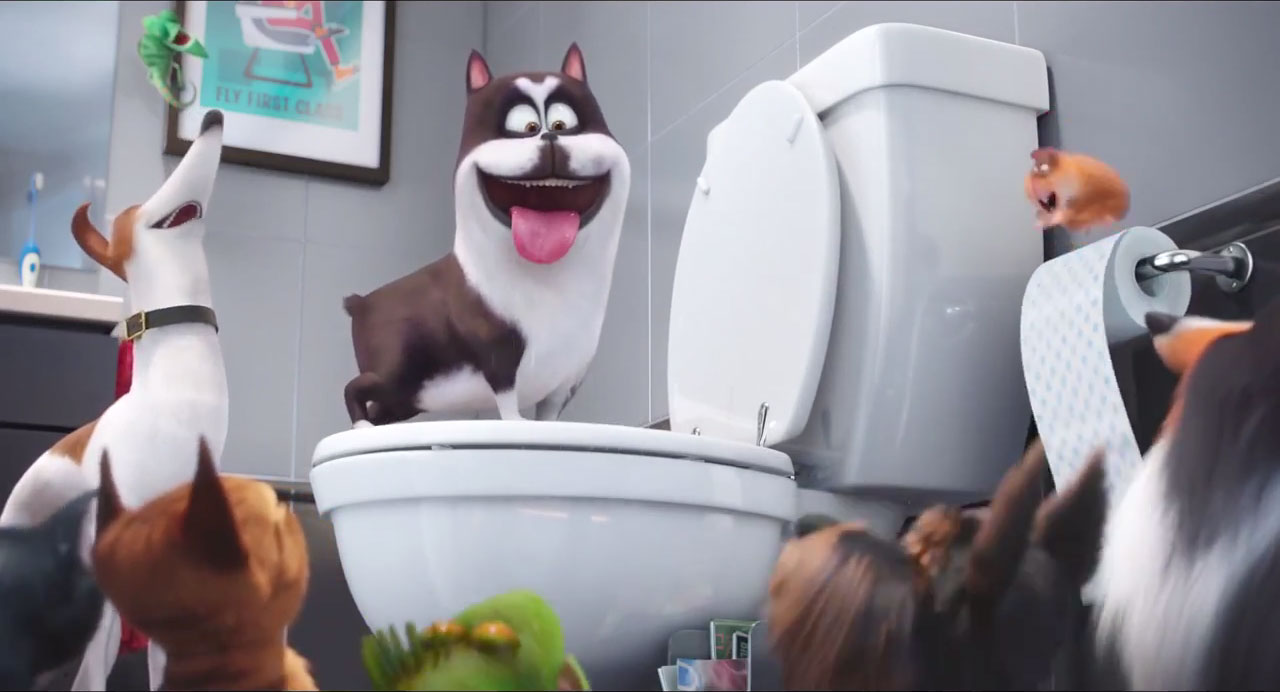
For a madcap family movie, The Secret Life of Pets raises some deeply disturbing questions. How much libido could fuel a romantic subplot when the lovers have been neutered? Why does “No Sleep Till Brooklyn” cue up during a drive into Manhattan? And exactly where is the autonomic system located on a sausage?
Alas, The Secret Life of Pets, directed by Chris Renaud and Yarrow Cheney (Despicable Me franchise veterans), answers none of these questions. Instead, the movie offers up a diverting animated comedy with plenty of action but little cohesion or earned emotion to back it up.
The plot, as much as it exists other than to fling a Bronx Zoo’s worth of animals across New York City set pieces, hints at a Toy Story-light conflict between earnest terrier Max (Louis C.K.) and the newly adopted Duke (Eric Stonestreet), a gruff Newfoundland with a sad past.
It’s fitting that Duke, a shaggy dog, gets the action going. Once he and Max find themselves captured by the only two animal control officers in a city of 8 million, the sole remaining tension is whether Max and Duke will learn to get along before or after a successful rescue effort, as led by Gidget the tougher-than-she-looks Pomeranian (Jenny Slate) and Chloe, a scene-stealing cat (Lake Bell).
The Secret Life of Pets features inspired physical comedy, in a Buster-Keaton-meets-future-theme-park-ride kind of way that turned the Minions into cash cows. But it’s Pixar without the pathos: the movie never misses a chance to ignore any avenue for genuine emotion, whether it’s Duke learning what happened to his former owner or the streetwise villain Snowball (Kevin Hart, playing to the back row) hinting at the dark desires that animals really harbor toward their fickle owners.
It’s the single-note drone of the movie’s action that makes the glimpses of what might have been all the more remarkable. An extended fantasy sequence in a Brooklyn sausage factory takes place for no reason other than setting up a song-and-dance number that’s a drugged-out tribute to edible body horror, complete with dancing hot dogs made rapturous by their imminent consumption. None of this advances the plot in any way, but it’s a rare delight in a movie mostly content to coast.
In the end, predators and prey make amends, Max and Duke are ready for a sequel and a reliable supporting cast have made their case for a spinoff. Not bad for a day’s work in New York. But the real secret is that our pets are very much like their human counterparts: they share our likes and dislikes, our strengths and our flaws, and — most of all — our willingness to settle for just good enough.
Back in 2012, Aubrey Plaza starred in an eccentric little SciFi adventure based on a Craigslist ad. Safety Not Guaranteed was a surprised (and welcome) hit, partly because of writer Derek Connelly’s fertile imagination, partly because of the genuinely bizarre ad: Wanted: Somebody to go back in time. This is no joke. You’ll get paid after. Bring your own weapons. Safety not guaranteed. I have done this once before.
That is ripe.
Since then, two all-American bros took to Craigslist to get dates to a wedding they were forbidden to attend stag for fear they would harass all the female guests and become generally unruly. That particular ad has already been milked of every conceivable bit of interest, with TV spots AND a book. A book! And yet, Andrew Jay Cohen and Brendan O’Brien (writers behind the Neighbors franchise) have adapted the ad for the new film Mike and Dave Need Wedding Dates.
It also stars Plaza, alongside Anna Kendrick, Zac Efron and Adam Devine as the destination-wedding-bound foursome.
Jake Szymanski directs the raunchy comedy that pits two lovable losers trapped in their never ending adolescence against the equally immature but more scheming young women just looking for a free trip to Hawaii.
Efron and Plaza co-starred in the very-R comedy Dirty Grandpa earlier this year, with Devine and Kendrick sharing the screen in both Pitch Perfect films. The four of them are likeable and – to varying degrees – talented. They’d have to be comedic lightning bolts to get this off the ground, though.
With a plot this thin, the film has to lean too heavily on shock situations and over-the-top language to generate any energy. Expect moms to call sons “assholes,” sisters to bare some pelt, and Aubrey Plaza to demonstrate sexual technique using texting as the metaphor.
The cast offsets the raunch with character earnestness (except for Plaza, who’s all in), but the film always feels too slapped together to hold water and a bit to mean-spirited to merit more than a smile here and there.
The whole thing is so thin, so desperate for content, it’s as if some idiot based an entire screenplay on a 400 word Craigslist ad.
The year is half over already?! Well, hell. Suppose we should argue over the best the genre has had to offer thus far? Senior Filmmaking Correspondent Jason Tastevin joins us to debate whether 10 Cloverfield Lane is a horror film or not, whether The Witch is any good, and to count down the best in horror so far this year.
5. Southbound
“For all you lost souls racing down that long road to redemption…”
Successful anthology horror is difficult to pull off. Southbound manages to do so as it spins its diabolical tale, interlocking five stories of travelers on a particularly lonesome road.
The film opens strong as two bloodied passengers rush to a desolate gas station to clean up and take stock of their situation – a situation we’re given very few clues about. But the immediately menacing, we-know-something-you-don’t-know atmosphere inside that gas station sets us up for the nightmarish episode that will unravel.
What follows are pieces on similarly distressed wayfarers – a rock trio with a flat tire, a distracted driver, a brother searching desperately for his missing sister, a family on an ill-planned vacation, then back to the original bloodied pair heading for gas.
Rather than feeling like five shorts slapped together with a contrived framing device, the segments work as a group to inform a larger idea – together they help to define this particular and peculiar stretch of highway.
4. Nina Forever
Brothers Ben and Chris Blaine crafted their feature debut as a “fucked-up fairy tale.” The truth is, that tag line sells their bleakly comedic, emotionally relevant, disquietingly familiar film short. Though you may laugh, Nina Forever swims a wellspring of sadness.
Check out girl Holly (Abigail Hardingham, wonderful) falls hard for mopey, over-aged stock boy Rob (Cian Barry), who’s still suicidal over the motoring death of his longtime girlfriend Nina (Fiona O’Shaughnessy). Whenever the two living lovers hook up, Rob’s viscera-and-glass-shard-covered ex writhes her way into their embrace.
As an analogy for those awkward relationships you just can’t seem to let go of, Nina Forever excels in its amplification of all that is awkward and unruly. The filmmaking duo, who also write, avoid clichés and easy answers while their talented cast creates unpredictable and dimensional characters.
There is real depth and authenticity to a film that constantly surprises without really feeling contrived. Few seasoned directors handle tonal shifts with as much confidence as the Blaines in their feature debut.
https://www.youtube.com/watch?v=1IokJt_05co
3. Baskin
If you’ve ever wondered what hell might look like, first time feature director Can Evrenol has some ideas to share. They are vivid. You’ll swear they even have an odor.
Evrenol’s Baskin is a loose, dreamily structured descent into that netherworld in the company of a 5-man Turkish police unit. (Baskin is Turkish for “police raid.”) The serpentine sequencing of events evokes a dream logic that gives the film an inescapable atmosphere of dread. We are trapped along with this group of somewhat detestable, somewhat sympathetic men as they respond to a call for backup in an “off the map” nearby area. What they find is deeply disturbing.
Evrenol’s imagery is morbidly amazing. Much of it only glimpsed, most of it left unarticulated, but all of it becomes that much more disturbing for its lack of clarity.
There are moments when Baskin feels like a classier, more stylishly made Nightbreed, but there’s no camp factor here. Just a surreal exploration of the corruptibility of the human soul, and its final destination.
2. Green Room
The tragic loss of 27-year-old talent Anton Yelchin makes this one bittersweet. Young punk band the Ain’t Rights is in desperate need of a paying gig, even if it is at a rough private club for the “boots and braces” crowd (i.e. white power skinheads). Bass guitarist Pat (Yelchin) eschews social media promotion for the “time and aggression” of live shows, and when he accidentally witnesses a murder in the club’s makeshift green room, Pat and his band find plenty of both.
Along with concertgoer Amber (a terrific Imogen Poots), they’re held at gunpoint while the club manager (Macon Blair from Blue Ruin) fetches the mysterious Darcy (Patrick Stewart, gloriously grim) to sort things out. Though Darcy is full of calm reassurances, it quickly becomes clear the captives will have to fight for their lives.
As he did with Blue Ruin, writer/director Jeremy Saulnier plunges unprepared characters into a world of casual savagery, finding out just what they have to offer in a nasty backwoods standoff. It’s a path worn by Straw Dogs, Deliverance, and plenty more, but Saulnier again shows a knack for establishing his own thoughtful thumbprint. What Green Room lacks in depth, it makes up in commitment to genre.
Only a flirtation with contrivance keeps Green Room from classic status. It’s lean, mean, loud and grisly, and a ton of bloody fun.
1. The Witch (2015)
The unerring authenticity of The Witch makes it the most unnerving horror film in years.
Ideas of gender inequality, sexual awakening, slavish devotion to dogma, isolationism and radicalization roil beneath the surface of the film, yet the tale itself is deceptively simple. One family, fresh off the boat from England in 1630 and expelled from their puritanical village, sets up house and farm in a clearing near a wood.
As a series of grim catastrophes befalls the family, members turn on members with ever-heightening hysteria. The Witch creates an atmosphere of the most intimate and unpleasant tension, a sense of anxiety that builds relentlessly and traps you along with this helpless, miserable family.
As frenzy and paranoia feed on ignorance and helplessness, tensions balloon to bursting. You are trapped as they are trapped in this inescapable mess, where man’s overanxious attempt to purge himself absolutely of his capacity for sin only opens him up to the true evil lurking, as it always is, in the woods.
Some people dream of the hero. There are folks who swoon during Avengers films, choosing their fave from the assemblage of good guys, or wait with baited breath for Wonder Woman to get her stand alone film.
But what about the bad guys? Are you saying that, just because we like a date with blood on their teeth, there’s something wrong with us? Surely not! Tell us you didn’t get a little weak in the knees for Skeet Ulrich in Scream, or swoon just a little when Catherine Deneuve seduced Susan Sarandon in The Hunger. Of course you did! And why not?
So today, we celebrate the sexy villains. Join us, won’t you?
George Pick #3: Elizabeth Olsen – Silent House (2011)
Olsen is a tremendous talent, consistently excellent even in lesser films. Silent House starts off strong but eventually relies too heavily on a gimmick and Olsen’s tight shirt to keep you interested. Still, Olsen’s vulnerable yet badass character is undeniably hot – tight shirt or no.
Hope Pick #3: Tony Todd – Candyman (1992)
No, he’s not classically handsome. In fact, on paper, Candyman is not that sexy of a villain. He has a hook for a hand, bees in his chest, that moldy velvet robe thing has to smell awful. But Tony Todd’s voice is the push over the cliff. When he tells Helen (Virginia Madsen) “Don’t fear the pain. The pain is exquisite,” you can’t help but want to believe.
George’s #2 Natasha Henstridge – Species (1995)
Species is more a SciFi thriller than a horror movies, but George gets to choose so it’s not up to Hope and her picky rules. No one could blame the guy for landing on this one – Henstridge is fierce and sexy and very naked. What is he, made of stone?
Hope’s #2: Johnny Depp – Sweeney Todd: The Demon Barber of Fleet Street (2007)
Sweeney Todd is to Hope what Chocolat is to normal people. Sure, Depp is a dreamboat regardless of his role, but with Sweeney Todd, director Tim Burton finally lets him get a little mean. When he lifts that blade above his head, singing of his “old friend,” he is hypnotic.
George’s #1: Salma Hayek – From Dusk til Dawn (1996)
Duh. Bow your head, dogs! When Salma Hayak appears in Robert Rodriguez’s From Dusk til Dawn, everybody pays attention – everybody in the bar Titty Twister, and everybody watching. Hayek is easily one of the most gorgeous humans on earth, and her snake-bedecked dance is no doubt enough to lure many voluntarily to her eternal servitude.
Hope’s #1: Rutger Hauer- The Hitcher (1986)
Hope had been nursing a crush on Hauer since Blade Runner, but it was The Hitcher that sent her over the edge. Unsettling, given the tender age at which she saw the film? No doubt, but his brilliant eyes and steely delivery and the way he seduced girlie C. Thomas Howell on that drive across the desert was just more than her bored little heart could bear. Don’t judge her.
Who did we miss? Let us know on twitter @maddwolf!
So says an uncredited Alessandro Nivola, a fashion designer waxing philosophic in Nicolas Winding Refn’s (Bronson, Drive) nightmarish new film The Neon Demon.
The line, of course, is borrowed. Refn tweaks the familiar idea to suit his fluid, perfectly framed, cynical vision.
Jesse (Elle Fanning) is an underaged modeling hopeful recently relocated to a sketchy motel in Pasadena. Will she be swallowed whole by the darker, more monstrous elements of Hollywood?
Refn is as assured a director as you’ll find. Each of his films has its own peculiar and magnificent look and sound that sets it apart and marks the helmsman as someone with a unique vision to share. The Neon Demon looks and sounds great, but it doesn’t look or sound unique. The entire aesthetic, from the shots to the palette to the score, feels like a mash up of Stanley Kubrick and Dario Argento. Interestingly – or boringly, depending on your perspective – the story swims such familiar waters that this borrowed aesthetic feels simultaneously intentional and derivative.
Hollywood is a soulless machine that crushes people. The world objectifies women, a toxic reality that poisons everyone it touches. Small town girl gets in trouble following her dreams in Tinseltown. There’s nothing new here. To manufacture something, it’s as though Refn replaces fresh ideas with bizarre imagery.
It’s tough to make a film about the dehumanizing effect of objectification without objectifying, and even the deeply talented Refn can’t seem to do it.
The film is not without its charms. The Neon Demon is the closest thing to a horror film as anything Refn has delivered, even if it takes 100 minutes or so to get there. Like Only God Forgives, the longer you wander through this nightmarish landscape, the more outlandish the dream becomes. But for all its detractors and laborious weirdness, Only God Forgives felt like a breakneck action thriller compared to the languid, even leaden pace of Neon Demon.
Is The Shallows – Blake Lively’s new flick about a surfer trying to survive a shark attack – simply a girl power exercise wrapped in a sandy bikini?
Yes.
Still, it gets as much right as it does wrong.
Lively plays Nancy, a med student alone on a secluded, secret beach in Mexico. She’s here to be alone, to mourn, to surf. As the local drops her off on the beach and refuses her offer of cash, he asks how she plans to get back to town.
Excellent question.
There’s a great deal of convenient idiocy in this screenplay, but director Jaume Collet-Serra – who is no comrade of subtlety – actually handles most of these items deftly. After a few middling horror efforts, Collet-Serra made his name with a string of Liam Neeson films, so he knows a little something about a solitary figure fighting deadly odds.
Lively does a fine job in what is essentially a one-surfer-show. Nancy is smart. Not smart enough to avoid surfing alone in an isolated area of a foreign land, but a different kind of smart. MacGyver smart. And it’s with a balance of delicacy and grit that she just about makes you believe the ludicrous.
The Shallows is gorgeously filmed – and not just Lively. Yes, the camera hugs her form more closely than a wet suit, but Collet-Serra treats the surf, sky and sand with as much ardor. A generous reviewer might even say he’s creating a parallel – something about breathtaking beauty that belies serious ferocity. I am not generous enough to buy that theory, but I am generous enough to throw it out there.
For stretches, The Shallows will have you believing you’re watching a tense, thoughtful survival drama. Eventually the shark becomes a vengeful-mythical-beast-warrior-machine-monster, and any hint of credibility is lost at sea. This is the age of Sharknado – maybe Collet-Serra didn’t think he could keep his audience’s attention until the shark tried to scale something with his teeth?
Whatever the case, it’s a wild mashup of efforts: equal parts empowerment and ogling, survival thriller and Sharkasaurus Rex.
Welcome to the fringes of Caracas, where a life barely lived collides with vibrant and violent passions in From Afar, the confident feature debut from director Lorenzo Vigas.
Veteran Chilean actor Alfredo Castro plays Armando, a solitary figure who stokes what little longing he still has by paying street kids for company.
Castro’s masterful performance mirrors Vigas’s detached style, but there’s more to this character than meets the eye. Vigas, who also wrote, shares only as many details as needed, encouraging the viewer to fill in the missing pieces. Meanwhile, Castro’s resigned, closed-off performance still roils at times with passion that threatens to break through his carefully protected surface.
Vigas’s deliberate use of focus and carefully observational approach keeps the audience at arm’s length, but this remote tone is frequently punctuated by the brute ferocity of young Luis Silva’s performance.
In a blistering screen debut as Elder, the 17-year-old punk who captures Armando’s interest, Silva is a shock to the system. Primal, urgent and impulsive, he bursts through the screen as well as Armando’s emotional walls.
The tension between Armando and Elder and the damage each may be doing to his own life and the other’s cause nerve-wracking tension as the relationship blooms, and yet Silva takes the narrative in directions that are simultaneously inevitable and heartbreakingly surprising.
Though the film sometimes feels overly crafted, and perhaps Vigas allows style to dictate more than it should, there is no denying the lead performances. Committed and natural, sympathetic yet repellant, the two actors unveil characters that are as similar and as dissimilar as people can be.
Vigas understands the power in silence. His film explains very little and yet exposes much – about yearning, class divides, human nature, and survival. He and his remarkable cast invite you into lives you couldn’t possibly know to tell a story with no judgment, and the truth in it is devastating.
What the? The year is half over? Let’s get caught up.
Cleveland won a championship!!!
But back to movies…
Batman v. Superman wasn’t that bad, Civil War wasn’t that good, and two Gerard Butler flicks are clubhouse leaders for worst of the year. But let’s focus on the positive.
With honorable mentions going to Finding Dory, Love and Friendship, Keanu, Everybody Wants Some!!, Neighbors 2: Sorority Rising and Viva, here are our picks for the top of the mid-year report card:
10) The Nice Guys
Hey girl, guess what – Ryan Gosling is a hoot! And if you found his scene-stealing performance in last year’s gem The Big Short a refreshing and joyous change of pace for the award-bedecked actor, you will surely enjoy this masterpiece of comic timing and physicality.
Gosling plays Holland March, an alcoholic PI with questionable parenting skills who reluctantly teams up with muscle-for-hire Jackson Healy (Russell Crowe). What begins as a low-rent missing persons case snowballs into an enormous conspiracy involving porn, the government, and the all-powerful auto industry.
Aah, 1977 – when everybody smoked, ogled women, and found alcoholism a laugh riot. Writer/director Shane Black puts this time machine quality to excellent use in a film that would have felt stale and rote during his Eighties heyday, but today it serves as an endlessly entertaining riff on all that was so wrong and so right about the Seventies.
9) 10 Cloverfield Lane
Less a sequel than a tangentially related piece, 10 Cloverfield Lane amplifies tensions with genuine filmmaking craftsmanship, unveiling more than one kind of monster.
Michelle (Mary Elizabeth Winstead) wakes from a car crash handcuffed to a pipe in a bunker. Howard (John Goodman, top-notch as usual), may simply be saving her from herself and the apocalypse outside. Good natured Emmett (John Gallagher Jr.) certainly thinks so.
Goodman is phenomenal, but Winstead and Gallagher prove, once again, to be among the strongest young actors working in independent film today.
Talented newcomer Dan Trachtenberg toys with tensions as well as claustrophobia in a film that finds often terrifying relevance in the most mundane moments, each leading through a mystery to a hell of a climax.
8) Deadpool
A thug with a quick wit, foul mouth, a likeminded girl, and quite possibly a ring pop up his ass, Wade Wilson has it all – including inoperable cancer, which sends him into the arms of some very bad doctors. The rest of the film – in energetically non-chronological order – is the revenge plot.
An utterly unbridled Ryan Reynolds returns as the titular Super (yes) Hero (no), and though the actor’s reserve of talent has long been debated, few disagree that his brand of self-referential sarcasm and quippage beautifully suits this character.
All the sarcastic cuteness can wear thin, but Deadpool does not stoop to hard won lessons or self-sacrificing victories. It flips the bird at the Marvel formula, turns Ryan Reynolds into an avocado, and offers the most agreeably childish R-rated film of the year.
7) Krisha
Krisha is not only a powerful character study awash in piercing intimacy, it is a stunning feature debut for Trey Edward Shults, a young writer/director with seemingly dizzying potential.
And then there’s the startling turn from Krisha Fairchild, Shults’s real-life Aunt, who after decades of scattershot film and voice work, delivers a jaw-dropping lead performance full of such raw authenticity you begin to feel you are treading where you don’t belong.
Expanding his own short film from 2014, Shults is remarkably assured in constructing his narrative. Nothing is spoon fed, rather we grasp what we know about Krisha and her family through guarded conversations and quiet, private moments. From the awkwardness of forced holiday small talk to the inevitable request for the “techy” relative to fix a computer, the scene is unmistakably real. Then, as old wounds become new, the film strikes with a humanity so deeply felt we expect to see our own faces in those family albums left out on the table.
Krisha is a timely reminder what undiscovered talents can achieve despite their limitations of budget, cast or location.
Here’s hoping we discover these two again soon.
https://www.youtube.com/watch?v=1njjaYizV1Q
6) Zootopia
With Zootopia, Disney – not Pixar, not Dreamworks, but Disney proper – spins an amazingly relevant and of-the-moment political tale with real merit, and they do it with a frenetically paced, visually dazzling, perfectly cast movie.
In this astoundingly detailed, brilliantly conceived, and visually glorious urban mecca, prey and predator have long since given up their archaic, bloodthirsty ways in favor of peaceful coexistence. And while the adventure that follows is a vibrantly animated buddy cop mystery – smartly told and filled with laughs – the boldly expressed themes of diversity, prejudice, and empowerment are even more jaw dropping than the spectacular set pieces.
If you worry that Zootopia is a preachy liberal finger-wagger, fear not. It is simply the most relevant Disney film to come along in at least a generation.
5) Green Room
The tragic loss of 27-year-old talent Anton Yelchin makes this one bittersweet. Young punk band the Ain’t Rights is in desperate need of a paying gig, even if it is at a rough private club for the “boots and braces” crowd (i.e. white power skinheads). Bass guitarist Pat (Yelchin) eschews social media promotion for the “time and aggression” of live shows, and when he accidentally witnesses a murder in the club’s makeshift green room, Pat and his band find plenty of both.
Along with concertgoer Amber (a terrific Imogen Poots), they’re held at gunpoint while the club manager (Macon Blair from Blue Ruin) fetches the mysterious Darcy (Patrick Stewart, gloriously grim) to sort things out. Though Darcy is full of calm reassurances, it quickly becomes clear the captives will have to fight for their lives.
As he did with Blue Ruin, writer/director Jeremy Saulnier plunges unprepared characters into a world of casual savagery, finding out just what they have to offer in a nasty backwoods standoff. It’s a path worn by Straw Dogs, Deliverance, and plenty more, but Saulnier again shows a knack for establishing his own thoughtful thumbprint. What Green Room lacks in depth, it makes up in commitment to genre.
Only a flirtation with contrivance keeps Green Room from classic status. It’s lean, mean, loud and grisly, and a ton of bloody fun.
4) The Jungle Book
Much like the “man-cub” Mowgli prancing gracefully on a thin tree branch, director Jon Favreau’s new live action version of Disney’s The Jungle Book finds an artful balance between modern wizardry and beloved tradition.
The film looks utterly amazing, and feels nearly as special.
Based on the stories of Rudyard Kipling, Disney’s 1967 animated feature showcased impeccable voice casting and memorable songs to carve its way into the hearts of countless children (myself included). Clearly, Favreau is also one of the faithful, as he gives the reboot a loving treatment with sincere, effective tweaks more in line with Kipling’s vision, and just the right amount of homage to the original film.
All the elements blend seamlessly, never giving the impression that the CGI is just for flash or the brilliant voice cast merely here for star power. The characters are rich, the story engrossing and the suspense heartfelt. Credit Favreau for having impressive fun with all these fancy toys, while not forgetting where the magic of this tale truly lives.
3) Midnight Special
Get to know Jeff Nichols. The Arkansas native is batting 1000, writing and directing among the most beautiful and compelling American films being made. His latest, Midnight Special, is no different. But then again, it is very, very different.
Nichols mainstay Michael Shannon, as well as Joel Edgerton, are armed men in a seedy motel. They have a child in tow (Jaeden Lieberher – wonderful). Local news casts a dark image of the trio, but there’s also a Waco-esque religious community looking for the boy, not to mention the FBI. So, what the hell is going on?
Nichols knows, and he invites your curiosity as he upends expectations.
Midnight Special is just another gem of a film that allows Nichols and his extraordinary cast to find exceptional moments in both the outlandish and the terribly mundane, and that’s probably the skill that sets this filmmaker above nearly anyone else working today. He sees beyond expectations and asks you to do it, too.
You should.
2) The Lobster
How to describe The Lobster?
Imagining how Charlie Kaufman might direct a mashup of 1984 and Logan’s Run would get you in the area code, but still couldn’t quite capture director Yorgos Lanthimos’s darkly comic trip to a future where it’s a crime to be single.
Lanthimos, who also co-wrote the screenplay, crafts a film which ends up feeling like a minor miracle. The Lobster builds on themes we’ve seen before (most recently in Kaufman’s Anomalisa) but bursts with originality, while every setting looks at once familiar and yet like nothing we’ve ever known.
The ensemble cast is uniformly terrific, each actor finding subtle but important variations in delivering the script’s wonderfully intelligent takedown of societal expectations.
It’s a captivating experience full of humor, tenderness, and longing, even before Lanthimos starts to bring a subversive beauty into soft focus. The Lobster pokes wicked fun at the rules of attraction, but finds its lasting power in asking disquieting questions about the very nature of our motives when following them.
1) The Witch
The unerring authenticity of The Witch makes it the most unnerving horror film in years.
Ideas of gender inequality, sexual awakening, slavish devotion to dogma, and isolationism roil beneath the surface of the film, yet the tale itself is deceptively simple. One family, fresh off the boat from England in 1630 and expelled from their puritanical village, sets up house and farm in a clearing near a wood.
As a series of grim catastrophes befalls the family, members turn on members with ever-heightening hysteria. The Witch creates an atmosphere of the most intimate and unpleasant tension, a sense of anxiety that builds relentlessly and traps you along with this helpless, miserable family.
As frenzy and paranoia feed on ignorance and helplessness, tensions balloon to bursting. You are trapped as they are trapped in this inescapable mess, where man’s overanxious attempt to purge himself absolutely of his capacity for sin only opens him up to the true evil lurking, as it always is, in the woods.
Bones to pick? Join the conversation on twitter @maddwolf!
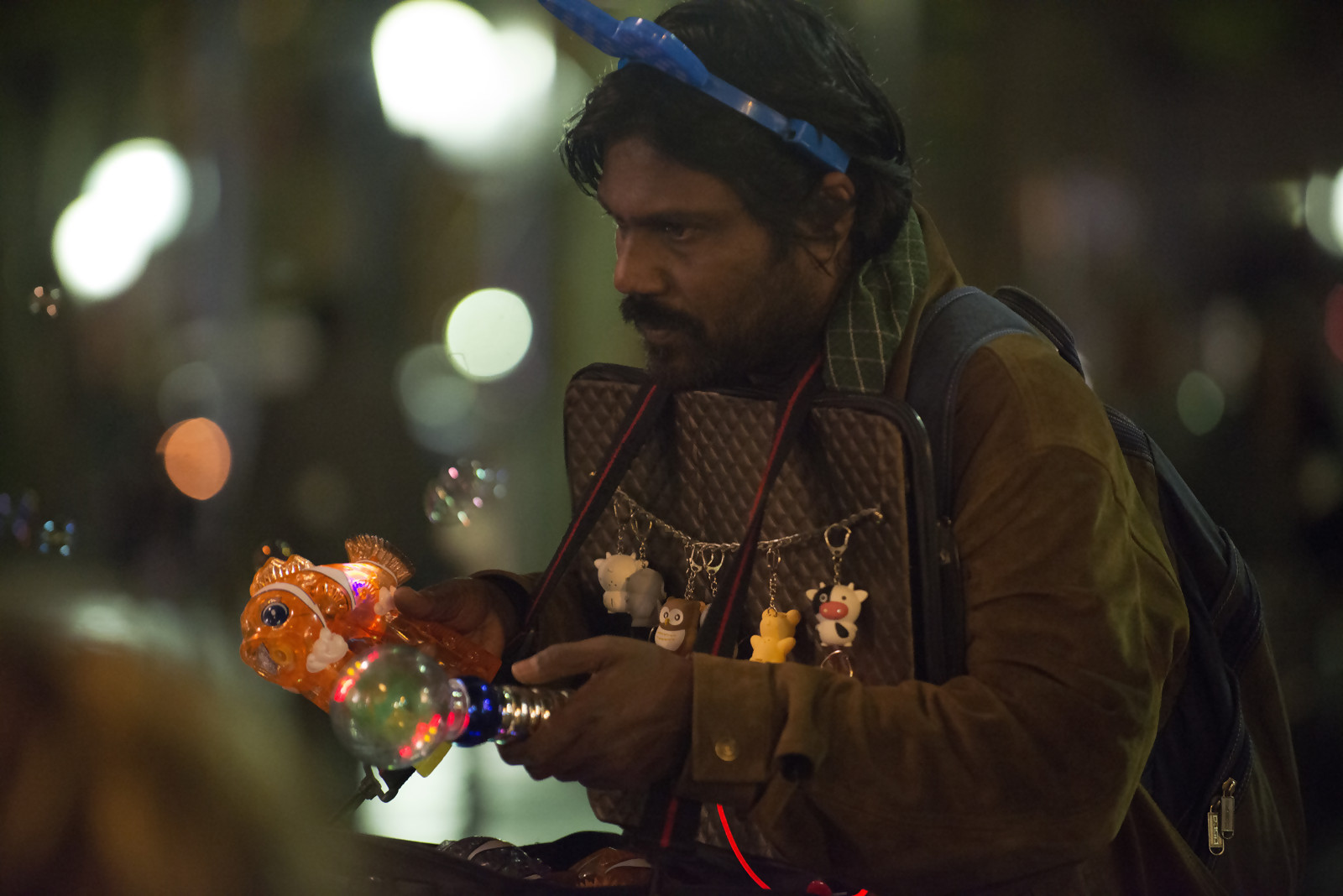
When you recommend this film, do not lead with “French, subtitled.” Though an accurate description on both counts, the association of moody cigarette smoking would do little to represent the raw heart of Dheepan.
Dheepan is a Tamil freedom fighter (called Tigers) who flees as the war begins its bloody close. Having lost his own wife and daughters, he must travel with Yalini (26) and Illayaal (9), posing as family to secure asylum in France.
These three strangers become dependent on one another for the facade that protects them. Unfortunately, fleeing Sri Lanka makes only minor improvements in their livelihoods, and the makeshift family discovers that war comes in sizes great and small.
Writer/director Jacques Audiard (A Prophet) is hyper-aware of light, using both color and shape to carve out living, breathing moments. Dheepan battles his monsters in a red-lit basement room. An elephant sways slowly in the dappled light of the forest. Yalini leaves the door open while she showers, and the blue light from the bathroom flickers teasingly.
This is the vision that truly guides the narrative, finding those quiet moments in-between the gruesome truths of war, gangs, poverty, immigrants, and trying to love someone you do not know.
The camera work, too, defines these moments. The close-up seems to be a favorite of Audiard, but it is not misused in context. The camera betrays when Dheepan’s world feels small and when it feels large. The watcher often feels like they are peering into rooms where they were not invited.
Jesuthasan Antonythasan’s Dheepan is stoic, contemplative, and yearning. You can feel his need for anything simple and real. His violence is believable and earned. Kalieaswari Srinivasan as Yalini builds a curious fear of the world and people around her. She is rarely likable, but always enthralling. That’s the humanity in Audiard’s characters, they are more real because they are less likeable, but this can make Dheepan harder to watch.
The film could lose 20 or 30 minutes, or at least appropriate it to the more aggressive scenes. Beautiful and real though it is, there are long periods where not much happens. Its pinnacle violence is gruesome and triumphant, leaving you wanting more. But a lust for violence is precisely what Dheepan and his family have been running from.