So many movies of the brand-spankin’ variety available this week in home viewing. You’ve got your bona fide awesomeness, some better-than-you-think big budget bombs, and one flaming piece of garbage. And more! More! So much, there may be no reason to leave home all week. Except to go see It, of course.
The history of indigenous people in America is one of erasure. Their contributions are overlooked, rewritten, or simply forgotten. In Rumble: The Indians Who Rocked the World, Catherine Bainbridge (and co-director Alfonso Maiorana) seeks to shed light on the American Indian musicians who helped form the sound of American music.
The documentary explores many aspects of indigenous influence in American music. It profiles individual artists, including Link Wray, Buffy Sainte-Marie, and Charlie Patton, among others, but also examines how traditional Indian music, specifically the music of the Mississippi delta, shaped rock and roll, blues, and the big band sound of the 1930’s.
With each artist profiled, there is a shift in narrative style. In some ways, this works as many of the musicians represent different genres of music. The shifts help to better highlight the hand indigenous peoples have had in multiple areas of American music. However, it also gives the film an episodic feel. One wonders if the material would have been better served as a multi-part television documentary.
Interviews with music historians and ethnologists help explain the evolution of traditional indigenous music into different aspects of rock and roll and blues. Vocal styles heard in recordings from 1907 can be heard again in the early blues of Charlie Patton. Many Americans consider these sounds to be the traditional sounds of African music, but the reality is more complex. The true history is one that blends cultures, with a heavy emphasis on American indigenous music. When one hears the comparison, it’s hard not to hear the traditional music of the American Indian in the blues.
Musicians like Iggy Pop, George Clinton, and Steve Van Zandt are also interviewed. They provide a context in which the early American Indian musicians influenced scores of famous bands and musicians. At times, it feels they’re revealing a secret that many in the music world know to the rest of us. They’ve known all along where the indigenous musicians fit into the history of music and they’re finally opening the eyes of the rest of us.
While the music history is interesting, the most important aspect of the film is what it gives to indigenous communities. It emphasizes their role in American history. It gives Indian kids heroes to emulate. It shows the rest of us that the culture of the American Indian exists within the fabric of what makes us all Americans. It’s the kind of documentary that deserves a wide audience.
Click HERE to join us in the Screening Room to talk The Trip to Spain, Patti Cake$ and Goon: Last of the Enforcers. We’ll also break down what’s new in home entertainment.
Oh, siblings—our closest friends and the bane of our existence. Horror movies know that, which is why both sibling rivalry and sisterly bonds populate so many worthwhile flicks: Sisters, Excision, Mama, Only Lovers Left Alive, Kiss of the Vampire. Too many to count, really, but that’s exactly what we plan to do: count down the five best.
5. The Lure (2015)
Sisters Gold (Michalina Olszanska) and Silver (Marta Mazurek) are not your typical movie mermaids, and director Agnieszka Smoczynska’s feature debut The Lure is not your typical – well, anything.
The musical fable offers a vivid mix of fairy tale, socio-political commentary, whimsy and throat tearing. But it’s not as bizarre a combination as you might thing.
The Little Mermaid is actually a heartbreaking story. Not Disney’s crustacean song-stravaganza, but Hans Christian Andersen’s bleak meditation on the catastrophic consequences of sacrificing who you are for someone undeserving. It’s a cautionary tale for young girls, really, and Lure writer Robert Bolesto remains true to that theme.
But that’s really too tidy a description for a film that wriggles in disorienting directions every few minutes. There are slyly feminist observations made about objectification, but that’s never the point. Expect other lurid side turns, fetishistic explorations, dissonant musical numbers and a host of other vaguely defined sea creatures to color the fable.
https://www.youtube.com/watch?v=vxhi_3hDUPE
4. Ginger Snaps (2000)
Sisters Ginger and Bridget, outcasts in the wasteland of Canadian suburbia, cling to each other, and reject/loathe high school (a feeling that high school in general returns).
On the evening of Ginger’s first period, she’s bitten by a werewolf. Writer Karen Walton cares not for subtlety: the curse, get it? It turns out, lycanthropy makes for a pretty vivid metaphor for puberty. This turn of events proves especially provocative and appropriate for a film that upends many mainstay female cliches.
Walton’s wickedly humorous script stays in your face with the metaphors, successfully building an entire film on clever turns of phrase, puns, and analogies, stirring up the kind of hysteria that surrounds puberty, sex, reputations, body hair, and one’s own helplessness to these very elements. It’s as insightful a high school horror film as you’ll find, peppered equally with dark humor and gore – kind of A Canadian Werewolf in High School, if you will.
https://www.youtube.com/watch?v=Zoa1A987A_k
3. Raw (2016)
Justine (Garance Marillier, impressive) is off to join her older sister (Ella Rumpf) at veterinary school – the very same school where their parents met. Justine may be a bit sheltered, a bit prudish to settle in immediately, but surely with her sister’s help, she’ll be fine.
Writer/director Julia Ducournau has her cagey way with the same themes that populate any coming-of-age story – pressure to conform, peer pressure generally, societal order and sexual hysteria. Here all take on a sly, macabre humor that’s both refreshing and unsettling.
A vegetarian from a meat-free family, Justine objects to the freshman hazing ritual of eating a piece of raw meat. But once she submits to peer pressure and tastes that taboo, her appetite is awakened and it will take more and more dangerous, self-destructive acts to indulge her blood lust.
In a very obvious way, Raw is a metaphor for what can and often does happen to a sheltered girl when she leaves home for college. But as Ducournau looks at those excesses committed on the cusp of adulthood, she creates opportunities to explore and comment on so many upsetting realities and does so with absolute fidelity to her core metaphor.
2. What Ever Happened to Baby Jane? (1962)
Bette Davis and Joan Crawford? Yes, please!
The two then-aging (just barely, if we’re honest) starlets played aging starlets who were sisters. One (Davis’s Jane) had been a child star darling. The other (Crawford’s Blanche) didn’t steal the limelight from her sister until both were older, then Blanche was admired for her skill as an adult actress. Meanwhile, Jane descended into alcoholism and madness. She also seemed a bit lax on hygiene.
Blanche winds up wheelchair bound (How? Why? Is Jane to blame?!) and Jane’s envy and insanity get the better of her while they’re alone in their house.
Famously, the two celebrities did not get along on set or off. Whether true or rumor, the performances suggest a deep, authentic and frightening hatred borne of envy that fuels the escalating tension.
Davis is at her unhinged best in a performance that earned her an Oscar nomination. Crawford pales by comparison (as the part requires), but between the hateful chemistry and the story’s sometimes surprising turns, this is a movie that ages well, even if its characters did not.
1. A Tale of Two Sisters (2003)
A lurid Korean fairy tale of sorts – replete with dreamy cottage and evil stepmother – Jee-woon Kim’s Tale of Two Sisters is saturated with bold colors and family troubles.
A tight-lipped father returns home with his daughter after her prolonged hospital stay. Her sister has missed her; her stepmother has not. Or so it all would seem, although jealousy, dream sequences, ghosts, a nonlinear time frame, and confused identity keep you from ever fully articulating what is going on. The film takes on an unreliable point of view, subverting expectations and keeping the audience off balance. But that’s just one of the reasons it works.
The director’s use of space, the composition of his frame, the set decoration, and the disturbing and constant anxiety he creates about what’s just beyond the edge of the frame wrings tensions and heightens chills. The composite effect disturbs more then it horrifies, but it stays with you either way.
Tale masters the slow reveal, and the dinner party scene is a pivotal one for that reason. One of the great things about this picture is not the surprise about to be revealed – one you may have guessed by this point, but is nonetheless handled beautifully – but the fact that Tale has something else up its sleeve. And under its table.
Cutie pies—that’s what’s available for home entertainment this week. Whether you’re in the mood to eyeball ab-tastic beach bods or baby pandas (and we will totally judge you if you pick the wrong one), what hits your screen will be far cuter than it should legally be.
Click the title for a full review. And as always, please use this information for good, not evil.
Click HERE to join us in the Screening Room to break down Leap!, Ingrid Goes West, Good Time, Whose Streets?, Lemon, In This Corner of the World and what’s new in home entertainment!
As a documentary on the horrors of war plays on a TV, the camera pans a drab living room, finding a man asleep upright on a sofa. He wakes to realize he’s wet himself.
He is Isaac. Isaac is a lemon.
The documentary Isaac had slept and peed through provides the context for a story in which one man can so obliviously wallow in self-inflicted misery.
In quick succession, Isaac will dismiss what his (randomly blind) girlfriend Ramona (Judy Greer) has to say before publically humiliating a female student (Gillian Jacobs). Both are too focused on themselves.
Why aren’t they focused on him?
Co-writer Brett Gelman plays Isaac, a send-up of sorts of the self-pitying hero of so many indies.
Director/co-writer Janicza Bravo borrows and rebrands independent film stylizing – from Wes Anderson to Jared Hess to Todd Solondz – to deliver a wry satire of the quirky worlds they create. Her framing, color palette, set design and timing offer spot-on re-renderings of the atmospheres created in a generation of arthouse movies that follow the unraveling lives of misunderstood, entitled outcasts.
Bravo peppers the film with a handful of perfectly discordant scenes: Isaac running up a road with a stroke-impaired old woman in a wheelchair; Isaac awkwardly threatening and then kissing Michael Cera; Isaac and his profoundly dysfunctional family participating merrily in a rendition of the song A Million Matzoh Balls.
Individually, these scenes are amazing. Truly. But they don’t string together to form a cohesive image or a compelling narrative.
Gelman’s intentionally weird and flat performance engages, in a trainwreck sort of way that suits the effort. You believe him. And many – most – of the performances around him are clever, individual and memorable. Their interactions and the story, slight as it is, strain the imagination, though.
Nia Long’s Cleo, for instance, seems included solely to allow for a new series of awkward moments. Long’s performance rings true, from her friendly introduction through her polite if wearied response to Isaac’s racist flirtation.
Her actions, however, defy logic in a way that exposes a narrative weakness you’re less likely to find in the films of Anderson, Hess or Solondz.
Todd Solondz knows what to do with an unlikeable protagonist. You won’t enjoy it, but he will not pull any punches and you will have closure. This is the problem with subverting the work of superior filmmakers – your film invariably suffers by comparison.
Which is not to say that Lemon has nothing to offer. It offers a pantload of intriguing character work and suggests the vision of a worthy director. The script just needed another draft.
Regardless of the film’s title, Connie Nikas (Robert Pattinson) does not appear to be having a Good Time.
Connie is trying to keep the system away from his mentally impaired brother Nick (Benny Safdie, who also co-writes and co-directs). He uses what means he has, none of which are legal.
After a botched bank robbery sees the brothers separated and Nick incarcerated, Connie engages in ever riskier behavior in a desperate attempt to save his brother.
Safdie, alongside his real brother and filmmaking partner Josh, once again explores an urban underbelly. The two have proven with films like their 2014 festival favorite Heaven Knows What that they can tell a deeply human story set on the fringe of society.
Good Time is a bit more high energy than Heaven Knows What, but once again the Safdies create a world that’s simultaneously alien and authentic. It’s hard to believe people live like this, and yet every moment of Connie’s increasingly erratic evening rings true. Nuts, but true.
Pattinson delivers his strongest performance yet. His glittering vampire days long behind him, he’s shown versatility in recent projects including Cosmopolis, The Rover and Maps to the Stars. Here he balances a seedy survival instinct with heart-wrenching loyalty and tenderness.
Everything Connie touches, he poisons. In Pattinson’s hands, he’s righteous enough to believe in his own cause, even when it means convincing himself that he’s protecting someone – his brother, a teenage girl, another lowlife looking for a score – who’d be better off without him.
Benny Safdie impresses in front of the camera as well as behind. His understated performance shows no sign of artificiality, and his skill as a filmmaker has never shined more brightly.
His gift for pacing that matches the hustle – the constant shifting, shuffling and scheming needed for survival – keeps Good Time both exhilarating and exhausting.
The film showcases the kind of desperation that fueled many a New York indie of the Seventies, Midnight Cowboy among them. The urgency of a quick con that could lead to freedom but will undoubtedly end in tragedy seems the only kind of choice Connie ever makes.
It’s a grim film full of bruised people, but it never loses hope entirely.
Who was not delighted and surprised by David Bautista’s runaway comedic performance in 2014’s Guardians of the Galaxy?
And truth be told, his turn in the sequel was funnier still. Dave Bautista is comic gold!
Drama, on the other hand, is still just a tad outside his grasp.
Bautista stars with Brittany Snow (Pitch Perfect) in Bushwick, a real-time(ish) survival adventure.
Lucy (Snow) brings a new beau home to her Brooklyn neighborhood Bushwick to meet the fam. Weirdly, there is not a soul in their subway station – aside from that screaming man who’s on fire. That’s extreme, even for New York.
Bombs, snipers and general mayhem greet the two as they try to leave the underground and head to Lucy’s grandma’s place. What is happening?
Directors Cary Murnion and Jonathan Milott want to take a minute before laying it all out for you. It’s not a bad narrative decision – having the audience share in Lucy’s confusion. The directors make a handful of worthy choices, the most provocative and obvious of which is the sleight of hand used to make the film look and feel like one long take.
Beyond the visual trickery employed to minimize the noticeability of cuts, most scenes are delivered as if caught in one take. Actors stumble over lines, for instance, in much the same way humans might when conversing.
There’s even a chance it could have even worked to generate urgency and underscore the raw, wild ride of the adventure if the writing weren’t so bad and the actors had talent.
Snow could not be more irritating or less believable and Bautista, God help us, is asked to deliver an earnest, emotionally devastated monolog.
He’s awful, but he’s not alone. Everyone is. In fact, the most common comment in my notes from the film: This is so bad.
The one reason the film may stick out this weekend is its utterly amazing timing.
Bushwick has been invaded by a well-armed, organized militia of entitled racists.
Shut the F up.
The film won’t satisfy your blood lust, your peaceful dreams or your hope for a decent movie. But damn, its timing is eerie.
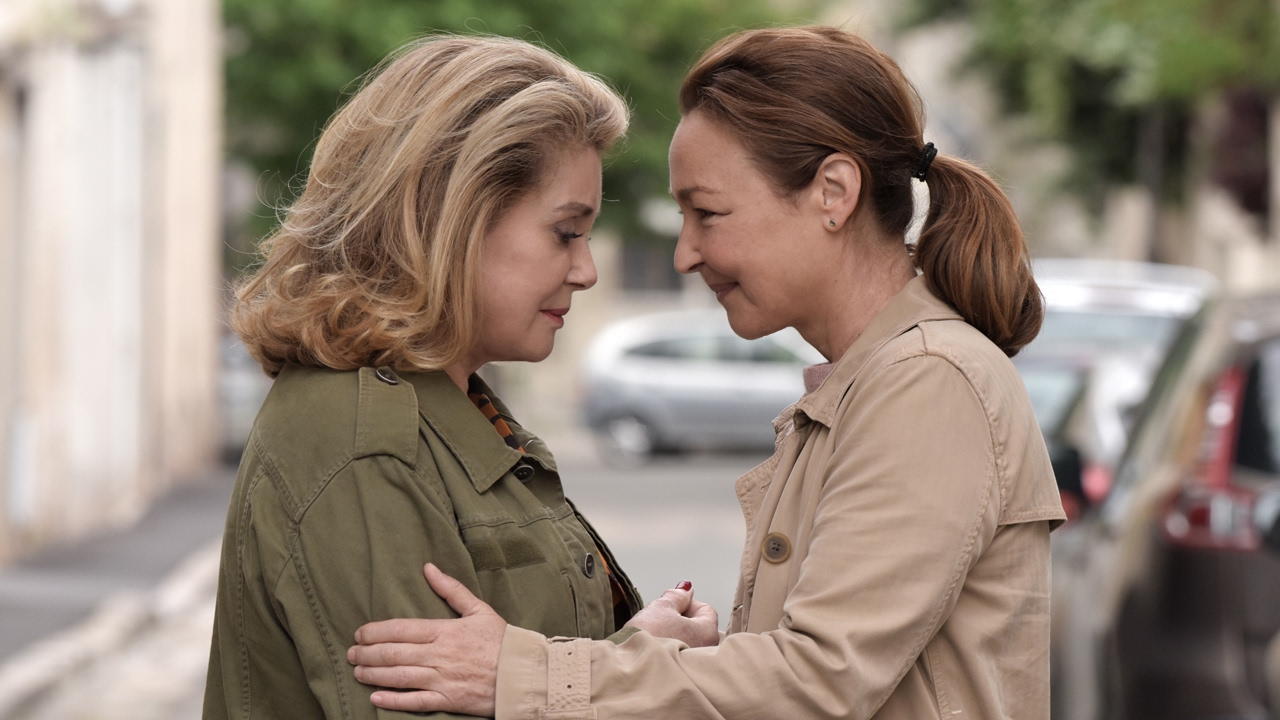
There is a scene early on in The Midwife that consists almost entirely of a conversation between Beatrice (Catherine Deneuve) and her doctor, in which Beatrice says barely a word and yet the camera doesn’t move from her face the entire time.
Director and writer Martin Provost allows moments like these to unfold again and again throughout the film, relying on superb performances and an unsentimental treatment of the material to present an arresting and spare meditation on love and the passage of time.
Claire (Catherine Frot) is an uptight midwife in Paris whose grim adherence to routine seems on the verge of upheaval, both professionally and personally. This coincides with the free-spirited Beatrice, the mistress of Claire’s dead father, reappearing out of nowhere.
It’s a familiar setup: Claire and Beatrice are natural foils, and they both have some unexorcised emotions to work out over the man they both loved, in their own ways. But that relationship between Claire and Beatrice is the main attraction, and the two actresses work off one another in a way that keeps things poignant, never melodramatic.
Deneuve, in particular, is equal parts devastating and disarming as Beatrice. It’s fitting that at this point in her career, she’s now deconstructing the haughty mystery that she become indelibly associated with over the last 50 years.
What happens when life finally strips away all the defensive layers and artifice that a woman like Beatrice has worked so hard to maintain? What remains when you’re all alone save a body that’s slowly betraying you?
The film doesn’t answer all these questions. And, beguilingly, neither does Deneuve. As circumstances force Beatrice to part with all her glamorous trappings, she holds onto her defiance. And some of her reticence.
In The Midwife, it’s not death that the characters are afraid of—it’s all the indignity that time heaps on us in between being born and dying. Babies “spring out from nothing,” Claire observes. Controlling as she is, Claire can only do so much for those she has brought into the world.
What anyone chooses to make of their time afterward, the film suggests, is all part of the mystery, joy and frustration of being alive.