Tag Archives: movie reviews

Bachelorette

Spinster

by Hope Madden

Director Andrea Dorfman and her frequent collaborator, writer Jennifer Deyell, are quietly establishing a pattern. They are preoccupied by the fact that people are preoccupied with a woman’s relationship status.

They’ve certainly put a fine point on that with their latest, Spinster.

A sort of anti-romantic comedy, the film opens as a voiceover gushes through the most romantic, fairy tale meeting ever. Pan to Gaby (Chelsea Peretti, Brooklyn Nine-Nine), the caterer listening to the bride-to-be with overt cynicism, possibly a little contempt, definitely mockery.

Gaby is 39 today and before the day is over, her boyfriend will break up with her, her married friend’s buddies will demean her childlessness, her dad will disappoint her (and she him), and her brother will forget it’s her birthday but rope her into babysitting.

That is to say, the stage is set for Gaby to actually take stock of her life and address what’s really causing her existential grief. (Hint: it’s not a boyfriend.)

Peretti is so comfortable in this character that she creates believability even when situations and the ensemble around her lack authenticity. Dorfman’s film has an episodic, even sit-com feel to it. She pieces together moments of Gaby’s life with a more “and then this happened, and then this happened” approach than with an outright narrative.

On occasion, this works. Peretti’s one-on-one chemistry is often enough to elevate individual scenes. Her deadpan delivery is ideal for Deyell’s slyly clever script, which refuses to preach, preferring to resignedly point out certain frustrating realities.

Though the execution lacks polish, Spinster makes up for most of that with Peretti’s cynical charm and its own quiet determination to subvert its chosen genre.


What the Puck?

Red Penguins

by Brandon Thomas

It’s been 35 years since Ivan Drago tried to break Rocky Balboa. While the fictional Italian Stallion may have prevailed against his Russian foe, the Americans at the heart of Red Penguins weren’t so lucky in their experience with our former Cold War nemesis. 

After the fall of the Soviet Union, the famous Red Army hockey team found itself struggling to find funding. Pittsburgh Penguins co-owner Howard Baldwin thought it would be interesting to invest in the team as a way to funnel great Russian players to his own NHL club. With marketing guru Steve Warsaw acting as the man on the ground in Russia, the new American investors sought to navigate their way through an unfamiliar culture that was tasting the free market for the first time. 

Director Gabe Polsky dives right into the absurdity of these Americans thinking they could immediately saunter into the former USSR. Baldwin and Warsaw’s eccentricities certainly caught their Russian partners off-guard, but also led the two to be unequivocally naive about many things Russian. The film’s early playfulness is fun and entertaining but also feels like a warning to the audience: a warning that the American investors never fully saw. 

At times, Red Penguins feels like a documentary version of a Coen Brothers film. It’s hard not to laugh at the darkly comic situations Warsaw finds himself dealing with. Whether it be a beer- guzzling bear biting off the finger of a drunk employee, or a spy for the Russian mob that took up residence in Warsaw’s office. Anton Chigurh would feel right at home.

More than anything, Red Penguins is a cautionary tale about American overreach. Howard Baldwin wasn’t the first American businessman to foolishly believe that he could march into Russia and woo the former communists with his business savvy. Even the backing of the Disney empire couldn’t solidify a positive outcome. 

While not coming together as a definitive hockey documentary, Red Penguins offers a unique look at a transitional time in the former Soviet Union. The beer-guzzling bears are just icing on the cake. 

Cry Little Sister

La Llorona

by Hope Madden

Another timely Shudder original plays upon the madness that can creep into a period of lockdown. The righteous anger of a population, the chanting and signs, corruption in the government—that all seems pretty of-the-moment, too, but this isn’t Portland. This is Guatemala, and if you think the context seems familiar, you should hear the title: La Llorona.

But co-writer/director Jayro Bustamante’s indigenous horror bears little resemblance to Michael Chaves’s middling 2019 effort (which was partly salvaged by a solid-as-always turn from Linda Cardellini). Instead, Bustamante retools the Latin American ghost story of the weeping woman to spin a yarn of righteous vengeance.

La Llorona takes us inside the home of a war criminal (Julio Diaz). El General’s home is on lockdown since his conviction was overturned. Angry Guatemalan citizens, and especially members of the Kaqchikel people most terrorized by his bloodlust, protest outside the door all hours of the day and night.

Inside, the General, his bitter wife (Margarita Kenéfic), their doctor daughter (Sabrina De La Hoz), her daughter (Ayla-Elea Hurtado), and two female servants (María Mercedes Coroy and María Telón) begin to crumble under the tensions.

Bustamante’s film is a slow boil as interested in those who’ve tacitly accepted evil as it is in those who’ve committed it. What goes unsaid weighs as heavily as what happens in front of us. Impressively, this is also the first horror film in decades to make truly effective use of a dream sequence.

The fact that justice, however slowly, comes in the form of generations of women is understated perfection.

Justice springs from compassion, which requires empathy—which sometimes depends upon courage and selflessness. No tears necessary.

Legend

Marley

by Seth Troyer

In our current era of memes and wikipedia summaries, the true power of a figure like Bob Marley can become diminished. To many in the US, Marley is simply known as “that reggae guy, who smoked weed and thought peace was cool.” Dorm room posters, white kids with dreadlocks, and Marley related drug paraphernalia can sometimes threaten to make us forget what it was that made Marley a legend in the first place.

Kevin Macdonald’s in-depth documentary from 2012 seeks to jog the world’s memory about the revolutionary king of reggae. Marley is epic in scale and creates an experience that will be eye opening for long time fans and newcomers alike.

Re-released for what would have been Marley’s 75th birthday, the film has a two and a half hour runtime, but I can’t stress enough for audiences to not be daunted by the film’s length. The story here feels instantly essential and engrossing. It simply opts for a thoughtful, methodical pace that seems perfectly in sync with the reggae movement.

Even the editing of the film seems to be in reverence of its subject. For instance, a scene that introduces a popular song like “Natty Dread” in less mature hands may have been used as an excuse to showcase wild camera work and the ADD rapid cut editing. Instead we are given a slow motion aerial shot of Marley’s home country of Jamaica. We are granted a quiet moment where we listen to the music and gaze out at the beauty that helped inspire it.

The length also allows interviews with Marley’s band mates and family members to be more than just cut up sound bites. Macdonald is in no hurry and his patience elevates the film. The interviewees are given time to articulate their thoughts, and have genuine moments of joy and heartbreak as they offer their recollections.

The film is clearly a love letter to the man and his music, but unlike many celebrity documentaries, it does not shy away from some of the more difficult truths about its subject. Those who were closest to him are often painfully honest in the film when it comes to his egotistical tendencies and shortcomings as a family man.

Its comprehensive honesty makes Marley much more than a simple fan rock doc. It is an honest portrait, a celebration of a man who helped open the eyes of the world to a new era of music.

Hillbilly Noir

The Big Ugly

by Hope Madden

When my son was young, we liked to watch Animal Face-Off, an educational program that proposed hypothetical battles between animals that wouldn’t normally fight. Sperm Whale v Colossal Squid, African Lion v Nile Crocodile, Walrus v Polar Bear.

Ohioan Scott Wiper delivers a similar culture clash movie: Brit gangster v hillbillies with money. The filmmaker drops us in the Appalachians along with London mob elite Harris (Malcolm McDowell), his muscle, Neelyn (Vinnie Jones), and Neelyn’s girl, Fiona (Lenora Crichlow).

After decades of hard, dirty work, these men are about to make a deal with an oilman who can’t get legal money to drill. They finance Preston (Ron Perlman) and his son Junior (Brandon Sklenar) now, and it pays off for the rest of their lives.

Bills are exchanged, drinks are drunk, but when the dust clears the next day, Fiona comes up missing.

Even at 55, Jones is still an intimidating presence. He’s looking a bit worse for the wear here, but the effect gives Neelyn a weariness that serves the character well. And while it’s always wonderful to see veterans McDowell and Perlman with real characters to dig into, it’s Sklenar who impresses most.

His entitled sociopath schtick slides fluidly from charming and hateful, and the fact that he and writer/director Wiper offer the character both intelligence and physical prowess makes this a villain who may just stand a chance.

It’s also to the filmmaker’s credit that the West Virginians are rarely the oversimplified hillbilly clichés we’ve come to expect.

Which isn’t to say the film is full of nuance. Though the tone is less laughable, The Big Ugly sometimes takes on a Roadhouse feel about it. Plot contrivances and obvious resolutions mark a film that’s clearly breaking no new ground.

The subplot about the heads of the families carries too little weight and too much screen time. It’s hard to complain about an honor-among-thieves conflict between two such beloved genre veterans as Perlman and McDowell, but Wiper tells of the bond more than he shows it, so the payoff feels unearned.

Still, for a B-movie, The Big Ugly delivers what it needs to. Our favorite Animal Face-Off was Hippopotamus v Bull Shark because we love it when the big, lumbering beast you’d bet against turns out to be the badass. Doesn’t everybody?

Domestic Bliss

Amulet

by Hope Madden

It’s a comforting notion, the idea that we each need to forgive ourselves for the wrongs we’ve done in order to heal and move forward. Everyone deserves to be happy, right?

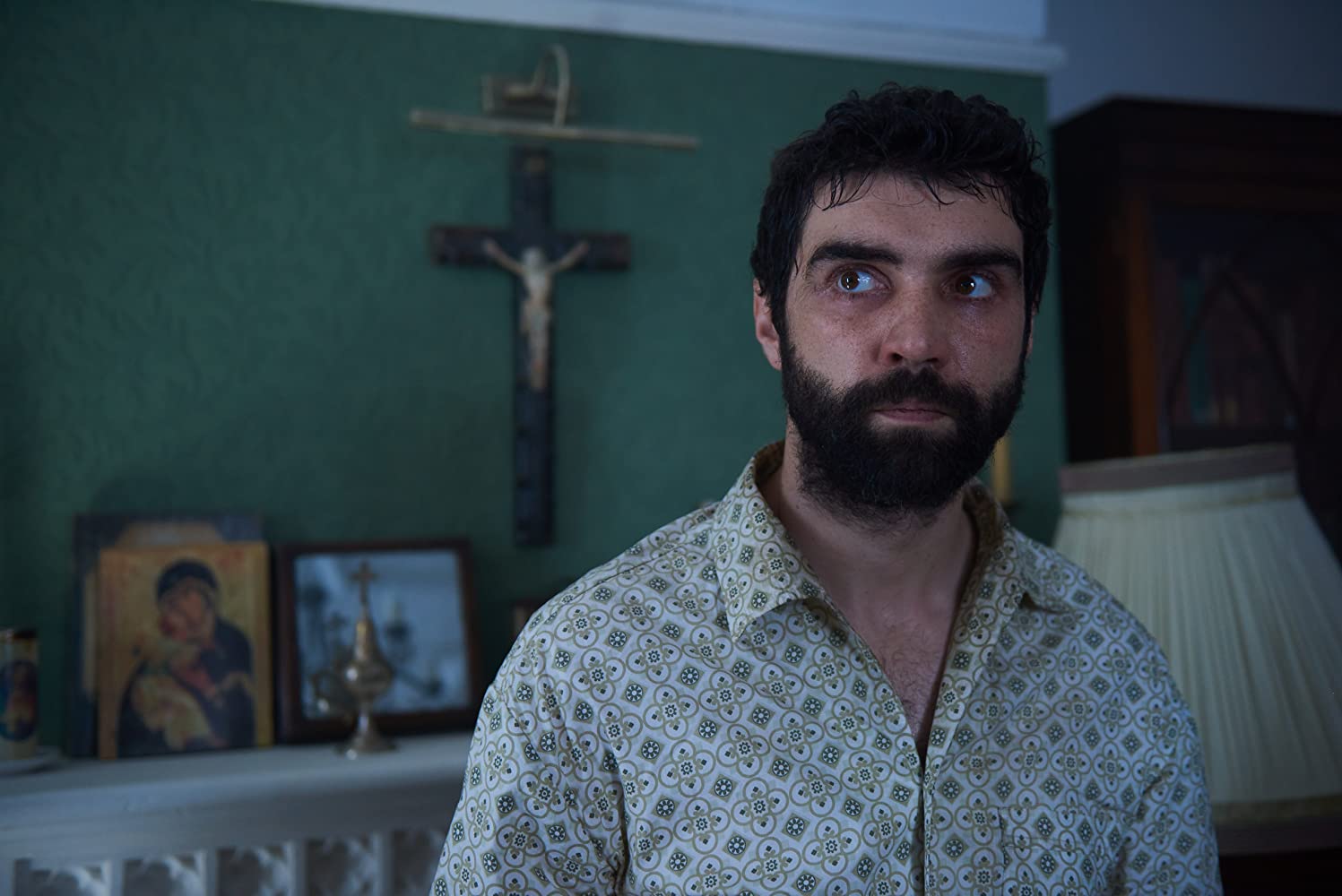
But is that forgiveness ever really ours to give? Tomaz (a remarkable Alec Secareanu) doesn’t think so.

Making her feature debut as writer/director, Romola Garai delivers an entrancing horror show concerned with sexual politics, cowardice and proper punishment.

Tomaz is living a destitute existence as a day laborer in London, picking up gigs as he can and sheltering at night with others like him—mainly refugees wordlessly sharing space in an abandoned building. He used to live in an unnamed but war torn European nation, and his dreams are still haunted by the experience.

A chance encounter puts Tomaz in the path of Sister Claire (Imelda Staunton, relishing her small role). She introduces Tomaz to Magda (Carla Juri, Wetlands), who needs help with the house that’s falling down around her and her ailing, bedridden mother.

From there, Garai toys with familiar horror elements—the decrepit building as metaphor, the horrifying relative hidden away—but you can never predict Amulet’s secrets.

Juri is hypnotic as the reluctant, wearied, lonesome Magda and her slow growing chemistry with Tomaz creates a quietly seductive force for the film. Clearly Tomaz should leave, there is something powerfully unhealthy happening in this house. But maybe this is his path to happiness? Maybe he can help?

That’s how the film traps you, because Secareanu is terribly empathetic and because it is his point of view we share. His performance is full of understated power and, paired with Juri’s resigned sensuality, it holds your interest.

Garai braids two mysteries together, the one Tomaz is living and the one he’s keeping from us. That second secret haunts his dreams and, little by little, he convinces himself that unraveling the mystery in this house might free him from his past.

The delivery is measured and creepy, and though the final act feels simultaneously tidy and nonsensical, the mysteries themselves—not to mention a trio of excellent performances—more than satisfy.

Suddenly Salad

Yes, God, Yes

by Hope Madden

A few years back, Gillian Robespierre and Karen Maine co-wrote Obvious Child, a whip-smart subversion of rom-com tropes that went on to be our nation’s first and still best mainstream abortion comedy.

How did it succeed? It lived in a low key, non-sentimental world and gifted a remarkable comedic talent (Jenny Slate) with an outstanding character.

Fast forward half a dozen years and Maine has moved on to directing the solo writing effort Yes, God, Yes. But she’s clearly learned from the previous experience, crafting an unsentimental but tender coming-of-age film—a teen sex comedy, if you will—from the female perspective.

And again, she relies on a genuine talent to deliver the goods.

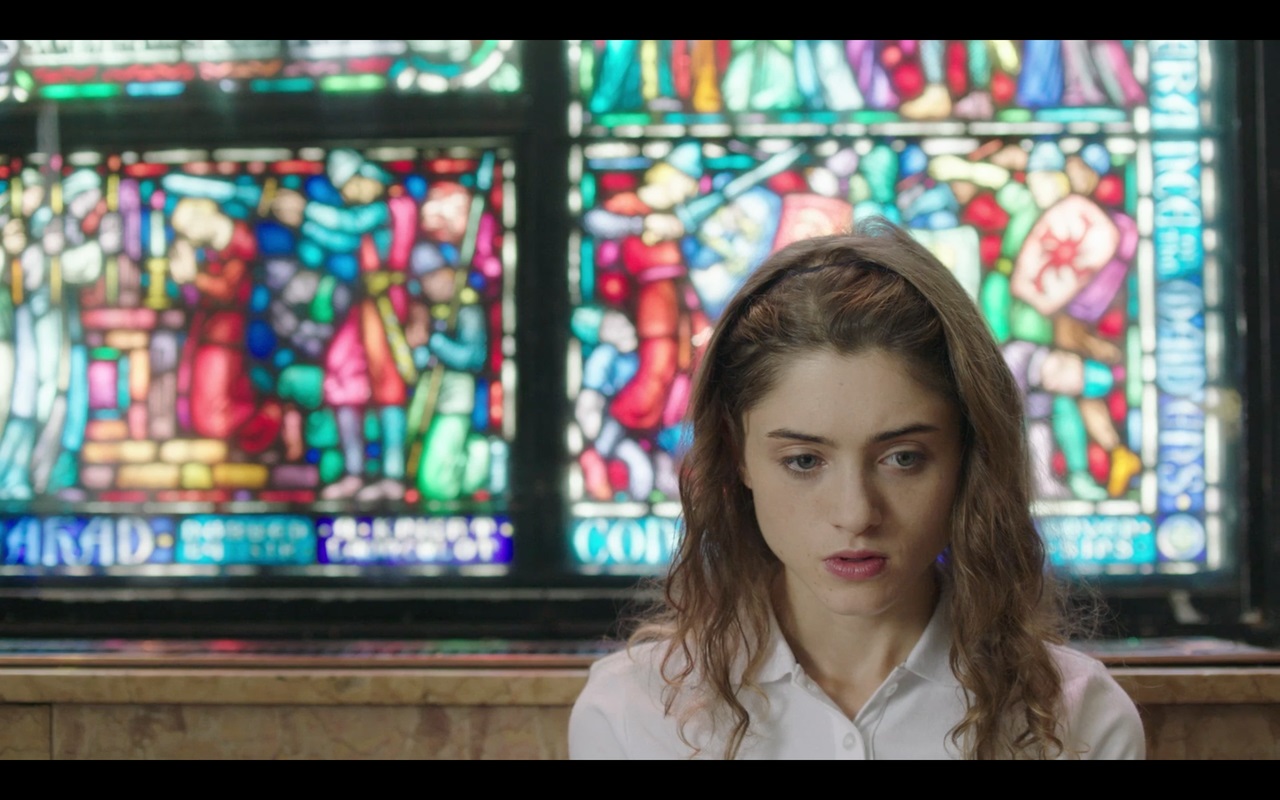
Natalia Dyer (Stranger Things) is Alice, a Catholic high school junior who has done absolutely nothing (regardless of one persistent rumor), but still thinks she may be a budding pervert hurtling toward eternal damnation.

It seems a lot of people may harbor that same suspicion of Alice.

Alice, like basically everyone in high school, is in for some awkward times. Dyer is wonderfully expressive, especially in her most quiet moments. Her understated comedic energy belies a gawky sweetness that makes Alice easy to root for.

Maine’s script is equally insightful, funny and tender. The humor rarely gets too crude, although there’s no question of the film’s R rating. Still, the film never loses its relatively innocent sensibility.

Yes, God, Yes is occasionally hampered by broad stroke depictions and the story ends up feeling fairly slight.

What Maine principally points out, though, is not the insidious problem of sexual repression festering inside Catholic education (because that too easy a target). Rather, the filmmaker offers a clear eyed if forgiving picture of human beings, each one struggling to “figure out their own shit.”

Honestly, I can think of no lesson more important for a teen to learn (although that bit of advice about protecting your online passwords is solid, too).

Yes, God, Yes will be available on UK Digital Download from 17th August and can be pre-ordered here

Home Away from Home

The Rental

by Hope Madden

Dave Franco has made a movie. James Franco’s younger, less creepy brother has been a welcome, smiling face in films since his teens. Directing his first feature, he sidesteps the more obvious choice of a comedy – given his background – and instead delivers a tense horror about jealousy, deteriorating relationships, and the dangers of Airbnb.

Dan Stevens stars as Charlie, handsome and successful older brother of Josh (Jeremy Allen White). As if Josh doesn’t have enough to live up to, his beloved and brilliant girlfriend Mina (Sheila Vand) is Charlie’s work partner and the two just really click.

Together Mina and Charlie land a big deal. To celebrate, they and their significant others—Josh, plus Charlie’s wife Michelle (Alison Brie, Franco’s real life wife)—rent a gorgeous, off the grid place for a weekend getaway.

If you’re thinking this is an incredibly common premise jazzed up with a couple of impressive actors, you are correct. But there’s a lot to be said for a good cast.

All four convey a lived-in chemistry that gives the relationship conflicts more resonance. Brie and White, in particular, deliver believable warmth as big sister-in-law/little brother-in-law. Both are dealing with some jealousy, each lending support and guidance to the other. Secondary characters in indie horror are rarely given this kind of opportunity to breathe, but drawing the audience into these relationships benefits the tensions Franco is working to create.

Stevens and Vand work wonders as the morally conflicted central characters. Vand (exquisite in A Girl Walks Home Alone at Night—see it!) blends righteous indignation with guilty conscience. This helps her build believable motives for what could, in lesser hands, feel like conveniently poor decision making.

Liberal guilt, entitlement, questionable morality and selfishness rarely come packaged as sympathetically as Charlie, but Stevens is a solid character actor and here he creates a nicely complex character.

Rounding out the small ensemble, the always welcome Toby Huss also finds layers in a character that could easily have been one note.

So, performances are solid and Franco delivers a decent sleight of hand by Act 3. The film feels imbalanced by then, though, as if it wasn’t until  the 11th hour that Franco decided this was a horror movie. There’s enough suffering in the final reel to clarify The Rental’s genre, but that doesn’t mean it entirely works.

Unforgiven

Retaliation

by Seth Troyer

Written by Geoff Thompson, a survivor of sexual abuse, Retaliation is a loosely autobiographical descent into the pain and violence that can come in the aftermath of trauma. Orlando Bloom steps up to this challenging material with surprising ease.

Any Lord of the Rings jokes you may want to make will be silenced within the first few minutes as you see Bloom fully embody the character of Malky. He has been tormented all his life by the memory of being molested as a child by a local priest.

Malky is a powder keg ready to blow, attempting to channel this energy into his construction job, demolishing dilapidated churches with vengeful satisfaction. Where the film truly amps up is when he realizes his abuser has returned to preaching in Malky’s hometown.

What follows almost feels like Ingmar Bergman making a John Wick film (in a good way, for the most part). Bloom and the film itself may not perfectly execute every complex maneuver they attempt, but they often reach heights that are undeniably moving.

Brothers Ludwig and Paul Shammasian are a competent directing duo, though they make some choices that threaten to turn the film into an exploitive, bass pulsing thriller that doesn’t suit the material. In addition, several characters—Malky’s girlfriend Emma (Jane Montgomery) among them—often feel less like characters and more like plot tools despite the actors’ best efforts. 

In the end, what does shine through is the writer’s personal story, offering a brooding character study rather than a simple revenge thriller.

Thompson has stated on his website that, like Malky, he struggled with a thirst for violence and revenge. His demons are clearly being exorcised here.

The film’s intense conclusion, where Malky and his old priest finally cross paths, has been understandably divisive for audiences. Regardless, the questions this showdown raises are well worth discussing.

While you will probably never find a Retaliation DVD for sale at a Christian book store, the film’s sentiment seems far from atheistic. It unflinchingly condemns the corruption that can come from organized religion, but also appears to have a strange sort of reverence for the idea of God and biblical teachings. It’s a brutal concoction that makes for a fascinating and unique experience.