Lucky takes a well-known horror trope – the masked killer whose “dead” body vanishes when you turn your back – and puts it in a freshly relevant light.
A gaslight, if you will.
May (Brea Grant, who also wrote the screenplay) is a self-help author living in the California suburbs with her husband Ted (Dhruv Uday Singh). They are working to get past a rough patch in their marriage when a strange, persistent threat presents himself.
Every night, a masked man (Hunter C. Smith) tries to break in and kill May. She fights him off – sometimes spilling plenty of blood in the process – but he always seems to get away. The police are on the case, but they’re more interested in why Ted doesn’t appear to be around anymore.
And they’d really like her to calm down.
Grant’s script is often smart and timely, and director Natasha Kermani peels enough layers successfully to hit a number of societal bullseyes. But an extended metaphor such as this is tough to keep constantly afloat, and some gaps of logic in the narrative work against the film’s subtlety and in turn, its overall power.
Grant and Kermani end up walking an entertaining line between subversive humor and metaphorical slasher. Lucky works best in that center, when May becomes a living example of that internet meme comparing what men and women do each day to avoid becoming a victim.
This is the final girl in a modern world of gaslighting and victim-shaming, where women form common bonds overs fears too often dismissed.
Opening on a man
sprawled on the beach, a crashed motorcycle and a wallet floating into the
ocean, Sometime Other Than Now is immediately intriguing. Written and
directed by Dylan McCormick, this is a quickly-paced drama that will just as
quickly hook you.
The pacing of the film is the first thing that stands out. It’s faster than you might expect. Characters pop up and interact rapid fire. In the age of the slow-burn, it takes a minute to adjust. But it’s rewarding to watch as instant attractions pay off, as we come to know the characters and their situations. Not every question is answered immediately, but you’ll enjoy yourself as you wait for the solutions.
The dialogue is the next element setting this film apart from similar stories. It’s realistic, funny, no bullshit talk that draws you in and makes you care for characters you haven’t known long.
As the man on the
beach, Sam, Donal Logue shows off his talent for drama. Both endearing and
frustrating, you want to know where he’s been and to see where he’s going.
Playing off Logue with near equal talent, Kate Walsh brings depth to her
character, Kate.
The rest of the cast isn’t given same level of attention. Characters pop up in the beginning that are given some weight, making you think they’ll come up again as a larger part of the story. While they do appear later on, they don’t receive the resolution you might expect. Everyone who plays a role in the film does a fine job, but when compared to the two main characters, they feel hollow.
McCormick is also
partly responsible for the film’s score, and it pales in comparison to his
writing/directing talent. There’s nothing exactly wrong with the score; it’s
just not the right music for the film. Although, there is a particularly lovely
song that plays over the end credits that’s worth a listen.
This is only McCormick’s second film (and his first came out 15 years ago), and it’s a bit rough around the edges – a lot like its main character. But that’s part of what gives it its charm.
Authenticity is certainly the main differentiator between
Chad Crawford Kinkle’s latest horror and others of the genre.
It’s been eight years since the filmmaker released his
underseen backwoods gem Jug Face. He once again pits a tenacious female
against the unrelenting pressure of an unholy presence, but Kinkle has a more
personal kind of dread in store with Dementer.
Katie (Katie Groshong), looking for a fresh start, applies for a job at a skills training facility that works with adults who have special needs. She’s hired, working with clients two days a week in the facility, then spending two nights in a group home with three of them.
Katie is especially concerned with Stephanie (Stephanie
Kinkle, the filmmaker’s sister).
Kinkle’s sister is an adult with Down Syndrome, which not
only elevates the reality of the situation but also the tenderness and anxiety
around the character’s safety. You can almost feel the filmmaker’s own personal
dread over his sister’s vulnerability in an untrustworthy world.
Aside from Larry Fessenden, who appears briefly, Groshong is
the only professional actor in the film. Kinkle, working with a skeleton crew,
films in an actual skill center. The majority of the staff and clients
represented in the film are, indeed, staff and clients.
The approach gives the film a verité style often seen in
horror films, rarely if ever seen in a horror film with a main character who
has special needs. Dementer lacks any of the sheen or noble heroism you
often find in films centered around a character with a disability. The realism
adds a level of discomfort, a sense that vulnerable adults who need care could
easily find themselves in a precarious situation.
Dementer also offers an uncomfortably realistic look
at working poverty.
Kinkle mines these anxieties as Groshong begins to see and hear signs that suggest Stephanie may be in real danger. As she races against the clock to save her, Kinkle slyly upends plenty of horror tropes.
It’s an often fascinating deconstruction of a particular
subgenre of horror, an approach that usually benefits from the verité style.
But too much of the loose narrative feels like filler. We watch Katie buckle
her seat belt no fewer than five times.
Unanswered questions can strengthen a film, but Dementer feels underwritten. Still, you get the sense that Kinkle made the best of what he had on hand and told a deeply personal story in the most authentic way he could.
Google has meant a lot of changes, perhaps the most tragic is the end of the old library scene in horror. While we find ourselves settling for the new cliche of the quick online search to uncover the hidden history behind a haunted home or town tragedy, this never used to be the case. Countless horror films led invariably to the Act 2 discovery in the old library. Either a helpful librarian carried large, impressive volumes to our hero at their tidy, green lamp lit library table, or a plucky sleuth scrolled their way through the old microfiche via the big microfilm machine.
How much do we miss those days? Enough to look into the very best in library horror.
Big thank you to Jennifer Snoek Brown of Reel Librarians for dropping loads of knowledge.
5. Se7en (1995)
Countless horror films begin Act 2 with a trip to the library. Act 1 has something creepy happening that puts our hero (or, more often than not, heroine) on edge and there’s nothing that can put them at ease except a little information search.
But David Fincher is not like other directors. While the beats are all here: big books stacked on an elegant desk, green lamps illuminating pen-and-ink drawings of the macabre and unsavory, a montage of pages being copied. But here, by flashing back and forth between Somerset (Morgan Freeman) doing the research and Mills (Brad Pitt) simultaneously studying case files, we learn a great deal more about what has happened and – don’t overlook all those decapitation images – what will happen.
The music gives the whole affair am appropriately religious fervor. This is how you make that cliche library scene work.
4. It (2017)
Poor Ben. It’s not enough that he pines in poetic silence for the lovely Beverly. It’s not enough that he’s the lonely new kid without even a posse of losers to hang out with (yet, anyway).
Nope, now he’s got intel and he doesn’t even have anyone to talk to about it.
This is the traditional “digging up big ol’ books about my spooky new hometown” scene, complete with a very creepy librarian. (Keep an eye on her in the background while Ben’s reading.)
But then comes the balloon. I have come to learn that a red balloon is never a welcome sight in a small town library.
3. It (1990)
Normally, we don’t include TV horror, but this scene is just so good! The Nineties TV miniseries is inferior to the later big screen adaptation (Part 1, anyway) in many ways, but not here.
Part of the credit goes to the fact that this film does not recreate that same, tired library scene. No microfiche, no big books on the history of Derry. Not in this scene. Just lunacy, Prince Albert in a Can jokes, and exploding, blood-filled balloons.
Plus Tim Curry, who improves any scene.
https://www.youtube.com/watch?v=cmOLwrvH-Ag
2. Behind the Mask: The Rise of Leslie Vernon (2006)
Another film that takes what you know to expect and serves it up to you in the most delightful way, Behind the Mask is among the greatest of all horror comedies and satires.
This particular scene points out the inevitability of that library research scene in horror movies. That would be reason enough to appreciate it, but Zelda Rubenstein (of Poltergeist, obviously) is the icing on the cake. Ever the dramatic, weirdly helpful librarian that the genre relies on for all its historical towny gossip, Rubenstein shines as a woman who really wants to shine in the spotlight.
Just one more reason this film is such a treasure.
1. Ghostbusters (1984)
No, it’s not horror – but it is a scary scene! In fact, for most people it is the scariest scene in Ivan Reitman’s comedy classic.
What makes it perfect is the tension it generates before the jump scare because we know Pete Venkman (Bill Murray, perfection) is going to get in trouble. You just can’t keep talking like that in the library.
Scooby-Doo is having a moment. The franchise got its
first wide release feature film last year, and the brains of the Mystery, Inc.
outfit, Velma, just nabbed her own spin off show. Why not dig deep and
reintroduce us to other cartoon favorites?
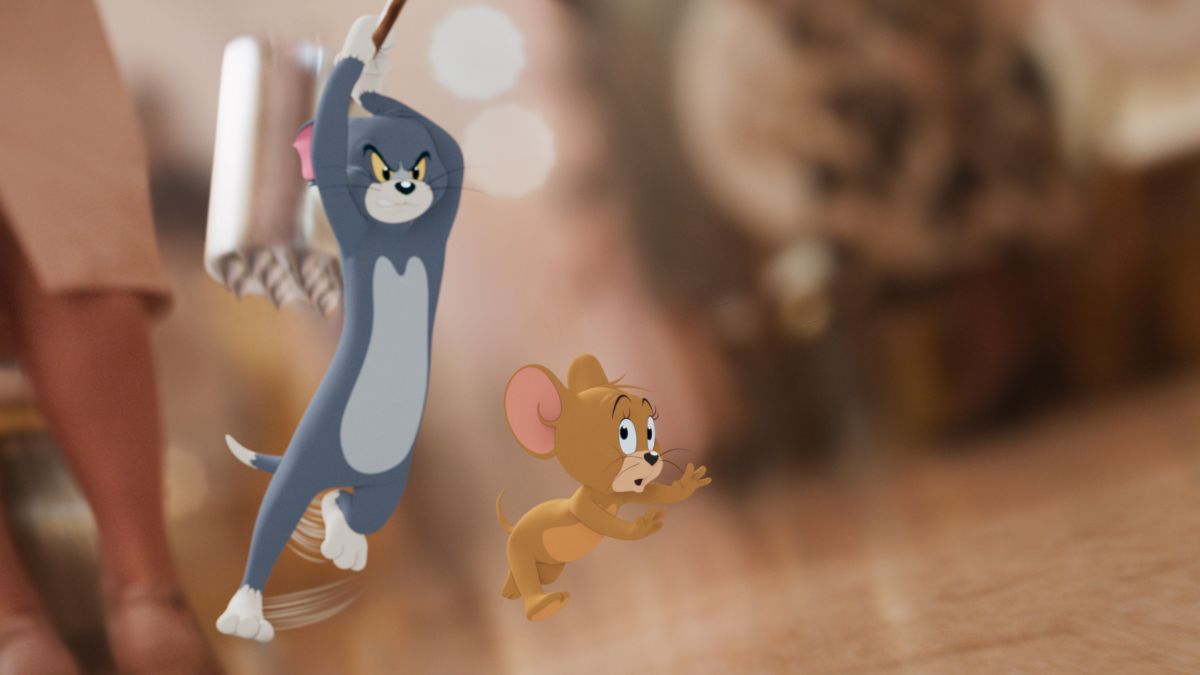
Tom and Jerry make their case for relevance with a
live action/animation hybrid by director Tim Story (Ride Along, Barbershop).
The film sees the squabbling cat and mouse team relocating to New York City,
where Tom hopes (presumably – he doesn’t talk so it’s hard to say definitely)
to become a musician.
Jerry just wants to keep being a jerk.
Is it me, or is Jerry really the villain in this twosome?
They run afoul of Kayla (Chloe Grace Moretz, who needs to
fire her agent because she should definitely be getting better movies than this).
Kayla requires a new job after some insane, hand-drawn cat
knocks her off her bike, ruining her delivery. She cons her way onto a hotel
staff. Now if she can just prove that she is good enough and keep the guests’
(Pallavi Sharda and Colin Jost) wedding-of-the-century on the rails, she’ll be
fine.
Or will there be animated chaos?
Trying to make old school ‘toons fresh and interesting for a
modern audience does not always work. Even Scoob from 2020 was a miss,
but Tom and Jerry’s failure to entertain lands closer to the colossal disappointment
of Garfield (a film so bad Bill Murray apologized for it in a death
scene in an entirely different movie).
The animation sequences are hand drawn, so that’s a great change of pace from the lifeless CGI churned out in films like Earwig and the Witch. Too bad Story doesn’t know how to blend them with live action in a way that feels at all engaging.
T&J is long. The story, by Brigsby Bearwriter Kevin Costello, is over-stuffed and under-enjoyable. He mistakes idiocy for lunacy, busy for kinetic. A lot happens, none of it interesting, none of it funny, all of it surrounded by a bombastic soundtrack. Surprisingly little of the adventure really has to do with the ‘toons, either.
There are long stretches of Kayla learning valuable lessons and Michael Peña affecting some kind of unplaceably bizarre accent.
When your funniest joke is about scooping animated dog poop, no one is enjoying themselves.
Two hours and twenty minutes – plus an intermission – for a documentary on a teenage pop star? Isn’t that a bit indulgent?
When you put it that way, probably, but director R.J. Cutler hardly wastes a minute of the time we spend with Billie Eilish (born Billie Eilish Pirate Baird O’Connell – nice!). Bolstered by a goldmine of home and backstage video, The World’s a Little Blurry becomes a captivating window into the life of a talented young performer – and a generation coming of age in these often scary and confusing times.
Eilish first got noticed as a 13-year-old after she posted the song “Ocean Eyes” (written by her older brother Finneas O’Connell) on SoundCloud, and it became a million-streaming viral hit.
Billie describes her home-schooled L.A. upbringing as being “one big fucking song,” and there is no denying the family joy as we witness them all react to hearing “Ocean Eyes” on the radio for the first time.
From there, we see Billie and Finneas writing “Bad Guy” – the international smash that would springboard her to world tours and multiple Grammys – and this doc quickly becomes more than just another marketing project from the record label.
Billie is clearly a deep thinker – as insightful writers often are – and she isn’t afraid to put her darkness and vulnerability right there in the storefront window. But it’s clear that her family anchor is strong, and that big bro Finneas is not only a calming influence but a multi-talented musical MVP in his own right.
And along with the hits, Cutler gives us plenty of real human moments. From Billie getting her driving permit to meeting her idol Justin Beiber, from rolling her eyes at something her mom just said to embracing fans as “part of me,” the film captivates because it becomes the story of a family.
One member just happens to attract a little more attention.
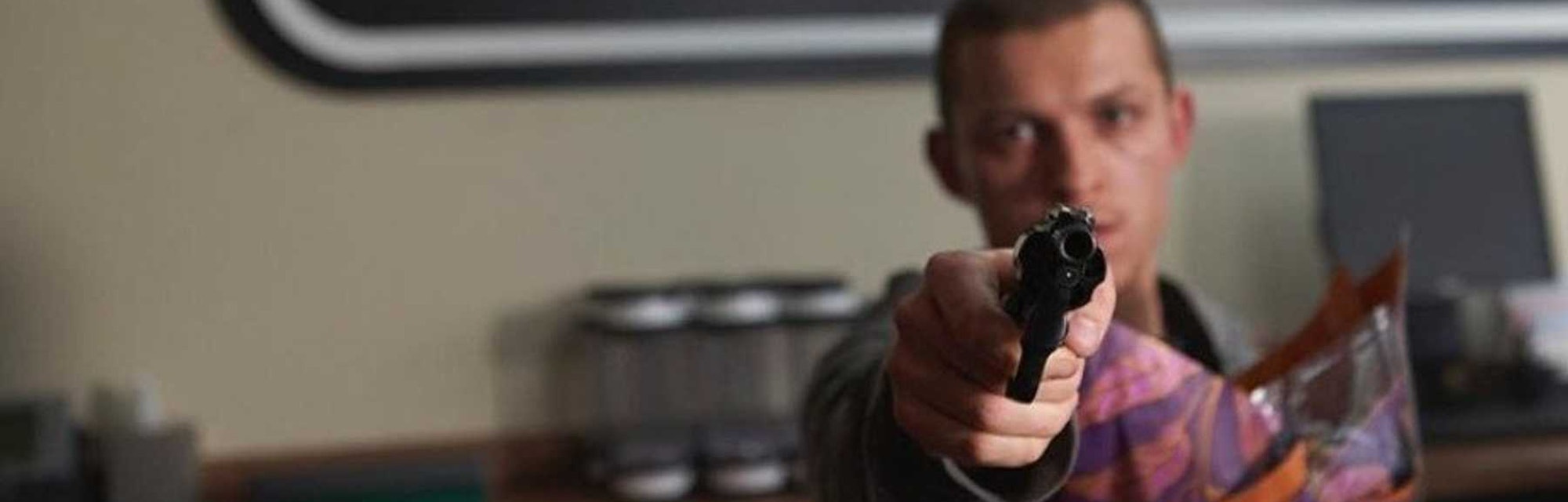
Last year we lured this sweety pie to Knockemstiff with the sole purpose of, well, knocking him stiff in Antonio Campos’s big screen adaptation of Donald Pollack’s novel The Devil All the Time.
And now Cleveland.
Filmmakers and brothers Joe and Anthony Russo—both fans of
The Land, having filmed many of their Marvel films there—bring Nico Walker’s Cleveland-based
semi-autobiographical novel to the screen. Cherry sees a young man,
nameless through most of the film, make a bad decision and then pay for it
dearly for the rest of his life.
That young man is played with as much humanity and
tenderness as you’ve come to expect from Holland. You cannot root against this
kid.
Walker himself, whose novel was adapted for the screen by
Angela Russo-Otstot and Jessica Goldberg, apparently wrote what he knew. The Russos
take his tale and, in their best moments, inject a cynical visual commentary to
offset Holland’s earnest good nature.
The star draws support from some impressive ensemble work. Forrest Goodluck (The Revenant) and Jack Raynor (Midsommar) deliver an excellent mix of tragedy and comedy, while Ciara Bravo gives love interest Emily a believably bruised soul.
The combination, when it works, generates a knowing story about a screwup who paid too high a price for one mistake but never lost his humanity.
It doesn’t always work, though.
Cherry clocks in at a hefty 2:20 and it feels for all
the world like the Russos and their writers simply didn’t know how or where to
cut Walker’s story down. The movie lacks focus.
And while there are clever stylistic choices made—the names of the banks as written on walls and other nods toward a subversive side commentary—the structure is far, far too standard. This should feel like no other movie you’ve ever seen because Walker’s story is really unusual.
Instead, Cherry seems too much like a string of broken person meets terrible consequences before facing personal demons thrillers.
How much you’re moved by The Father will likely depend on how you see the central narrative device employed by director/co-writer Florian Zeller.
Is it a gimmick that cheapens the very subject he’s digging into, or is it an effective – even logical – new frame for a familiar picture?
Anthony Hopkins and Olivia Colman star as father and daughter Anthony and Anne. Now, with these Oscar winners as your leads, your device could be the mail-in offer from the back of a cereal box and it would most likely be riveting, but Zeller has more lofty ambitions.
Anthony’s memory is fading fast, forcing Anne to navigate his mood swings and growing combativeness while she looks for an in-home caregiver who can handle him. Young Laura (Imogen Poots) looks promising, but Anthony’s initial charm at their meeting gives way to insults and accusations about a plan to force him from his well-appointed flat.
But is it his flat? And who is the man in the living room (Mark Gatiss) who says he lives there?
Is Anne really planning to move to Paris with a new boyfriend, or is she still married to the impatient and angry Paul (Rufus Sewell)? And just who is that other woman who looks like Anne (Olivia Williams)? Zeller adapts his own stage play with a profound intimacy that feeds the intentional confusion.
In the last several years, movies such as Away From Her and Amour have mined their greatness through the effect of dementia on the longtime spouse of the afflicted.
But here, not only does Zeller make a sympathetic pivot to the adult child of an ailing parent, but his chamber piece finds its greatest resonance through the heartbreaking empathy that comes from giving us Anthony’s point of view.
And even if the whole affair does strike you as gimmicky, the transcendent heights hit by Hopkins and Colman (and indeed, the entire ensemble) make spending time with The Father more than worthwhile.
As artistic as it is nuanced, as lyrical as it is devastating, it’s a film with not only something to say, but a welcome new approach to saying it.
For the garden variety movie viewer (myself included), it
can be hard to get comfortable with the idea of spending a bunch of time alone
in a room with a corpse, even if that’s your job.
We always expect to see a figure sit up under that drawn
sheet.
When done well, movies that pick that particular scab can be incredibly effective. Keith Thomas’s The Vigil is one such movie. He leaves us alone in a house with the late Mr. Litvak. But we’re not really alone, are we?
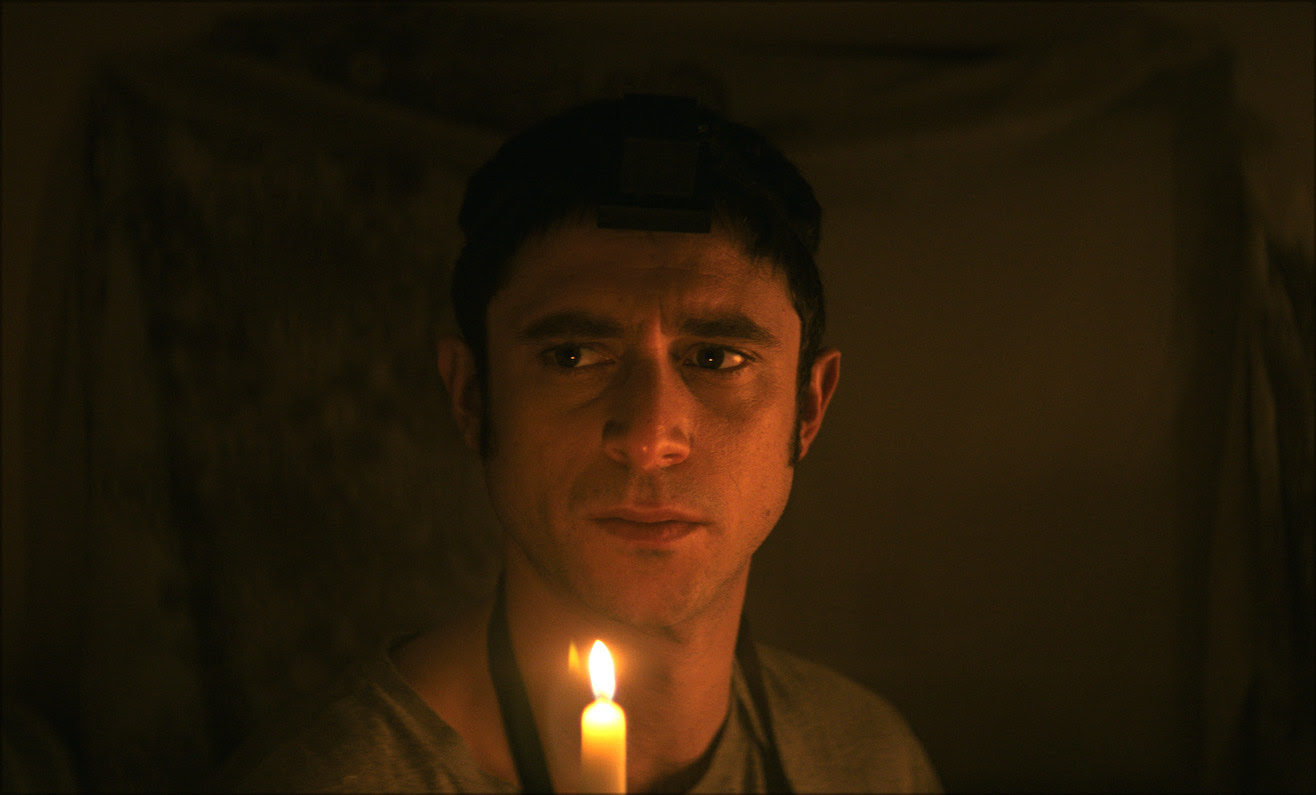
An endlessly tender Dave Davis plays Yakov, who has recently
left the Hasidic Jewish community in Brooklyn. It’s so recent, in fact, that he
goes to a support group of others like himself, all of them in need of some
kind of training to figure out how to live a “normal” life. And as much as
Yakov really does want to distance himself, when his former rabbi approaches
him about Mr. Litvak, well, Yakov just needs the money.
Yakov will serve as Mr. Litvak’s shomer, sitting with the
body for the night to protect Mr. Litvak’s soul until his body can be interred
in the morning. Mrs. Litvak (Lynn Cohen, remarkable as always) doesn’t want him
there.
It’s a straightforward enough premise, something Thomas
executes with plenty of spectral dread. What the basic outline and many of the
jump scares lack in originality, The Vigil makes up for with the underexplored
folklore and customs specific to Orthodox Judaism. The general ideas are common
to the genre, but the specific acts and images are precise and certainly new to
horror cinema.
As Yakov’s night wares dangerously forward, he faces a Mazzik.
But, as is usually the case in films such as these, the real demons Yakov faces
are his own.
Thomas’s screenplay may present that metaphor more bluntly than necessary, and certain scenes are just so obvious (old footage projecting on a wall near a diorama of newspaper clippings and photos). But the compassion the filmmaker has for both Yakov and Mrs. Litvak, combined with the impressive performances from both actors, gives the film a soft spot that heightens the dread and terror.
It’s a solid effort, one that reframes a story you’re used to in a way that gives it more depth and emotional power.