Tag Archives: Madd at the Movies

Furry Feathered Friday

Swapped

by Hope Madden

Director Nathan Greno pulls from a lot of influences for his new feature, the Netflix exclusive Swapped. The vibrant colors and poetically gorgeous woodland creatures conjure Miyazaki, particularly the more serene scenes from Princess Mononoke. And the bit where the little chipmunk looking thing and the big plumy bird switch bodies, that is obviously the Disney classic Freaky Friday

Swapped is a visual feast, especially the earliest sequences when a young Pookoo (chipmunk like thing) named Ollie (voiced in youth by Camden Brooks and in adulthood by Oscar winner Michael B. Jordan) explores the waters around Pookoo Island. But Ollie’s mom and dad (Justina Machado, Cedric The Entertainer) warn him that everything off island is dangerous. Everything!

Ollie doesn’t believe them, so things, of course, go terribly wrong. Mean birds steal the seeds that keep the Pookoo alive, and Ollie has to make things right. But instead, he Freaky Fridays with one of those birds (Juno Temple), and suddenly everybody’s in a terrible state.

Swapped takes that time honored tale to share a meaningful fable on the power of empathy. Temple and Jordan both provide strong voice talent—Temple is especially on point.

Tracy Morgan is ideal as Boogle, an enormous, simple-minded fish. Honestly, Swapped offers Morgan more of an opportunity to stretch than any role he’s had in recent memory, and he nails it.

And while the story leans into familiar territory, its tale is important. Greno and his team of writers don’t complicate it beyond what youngsters will gladly follow, nor do they water down their message. The result is emotional, funny, sometimes even harrowing. And really gorgeous.

Swapped doesn’t do enough to set itself apart from other animated wonders, but what it does it does really well. It’s a powerful story beautifully animated and well told.

Fashion Comeback

The Devil Wears Prada 2

by Hope Madden

It has been 20 years since Andy Sachs (Anne Hathaway) learned how to dress. And now, after two decades of award-winning investigative work, she’s back at Runway Magazine thanks to the death of journalism.

What makes her think print magazines aren’t also mortally wounded?

The Devil Wears Prada 2 is essentially a mash note to all things analog. Can Andy and the gang save this fashion icon through sheer determination, journalistic integrity and fashion sense?

Hathaway’s co-stars return: Emily Blunt as the irascible Emily, Stanley Tucci as the warm yet caustic Nigel, and Meryl Streep as the formidable Miranda Priestly. Also returning: impeccable costuming, gorgeous locations and glamour. And quips, acerbic remarks, and fish-out-of-water humor. Amanda Priestly flying coach?! Bon dieu!

Yes, Miranda’s lost a bit of her bite. She’s even hanging up her own coat now, thanks to the ever-present HR checklist (a fairly funny gag during staff meetings). No, the real villain in TDWP2 is the soulless maw of progress, personified by the CEO’s son (B.J. Novak) and Emily’s billionaire boyfriend (Justin Theroux). And fast fashion.

While Blunt, Tucci and Streep slip easily back into the old skin, it’s tough to believe Hathaway’s Andy, after years of global investigative journalism, hasn’t developed a thicker skin. Indeed, Andy’s well-intentioned naivete causes as many problems this go-round as it did in 2006.

But that’s the point, right? Update context to the degree necessary but play the hits. Returning director David Frankel and screenwriter Aline Brosh McKenna understand the assignment.

The stakes never feel as high as they should, the resolution is a telegraphed fantasy, and it’s less fun seeing Miranda Priestly brought down a peg than you’d expect. But Streep looks amazing, and she gives Miranda’s third act the bittersweet vulnerability it deserves. She has too few scenes with Tucci if only because the two are so effortlessly perfect onscreen together. Still, his eye-rolling snarky nurturing is as charming as ever.

Blunt is again the butt of the joke and, again, she shoulders the comedic weight with aplomb.

The Devil Wears Prada 2 ends up being a jacket that doesn’t fit quite as well as it did years ago, but it’s comfortable and it still looks pretty good.  

Wicked

Heresy

by Hope Madden

I’m really enjoying the evolution of the witch movie. There was a time when you either had 1) evil witches out to damn the souls of all in their view, or 2) evil men damning innocent women with claims of witchcraft. But lately, there seem to be other ideas. Like, what if choosing witchcraft over religion is actually the best option?

Credit Robert Eggers for getting the push started with his 2015 masterpiece The VVitch. Saïd Belktibia’s Hood Witch (2023) tangled the natural female versus patriarchal male threads with the complications and complicity of capitalism, further blurring right from wrong. And now Didier Konings wonders whether the morally superior choice is to disappear into the woods to commune with the fae.

Konings sets his latest, Heresy, in a medieval Dutch village. Frieda (Anneke Sluiters) awakens to find she’s started her period again. Still not pregnant. Sluiters’s despondent look tells you all you need to know.

In fact, Konings relies on gestures, glances, and weighty expressions to tell a lot of his tale of religion versus nature, male versus female. Heresy runs barely more than an hour, but it doesn’t feel skimpy. You learn what you need to know when Sasha (Nola Elvis Kemper), her throat and wrists purple with bruises, is required by priest and community to forgive Gelo (Léon van Waas) as they release him from the cramped wooden cage in the village center. And again, when Hikko (Len Leo Vincent) chastises Frieda for referring to her barrenness as “their problem.”

And when Frieda has no choice but to run from Gelo into the dark, forbidden forest, who would blame her for wanting to return?

Heresy is not heavy on horror, but what Konings delivers is memorable.  Like the balance of the film, the horror is primarily implied. But when we do see something, it’s quite something.

As is Sluiters’s performance. She covers an enormous emotional range with very little dialog to support her. Her chemistry with the ensemble and her physical performance, particularly the way every indignity hangs on her expression, are captivating. Her rage, when it finally breaks the surface, is glorious.

Heresy probably could have used a little more time to fill out its story, but at 61 minutes, it certainly doesn’t outstay its welcome. Konings gives you what you need to understand why women choose the bear.

Irish Spirits

Hokum

by Hope Madden

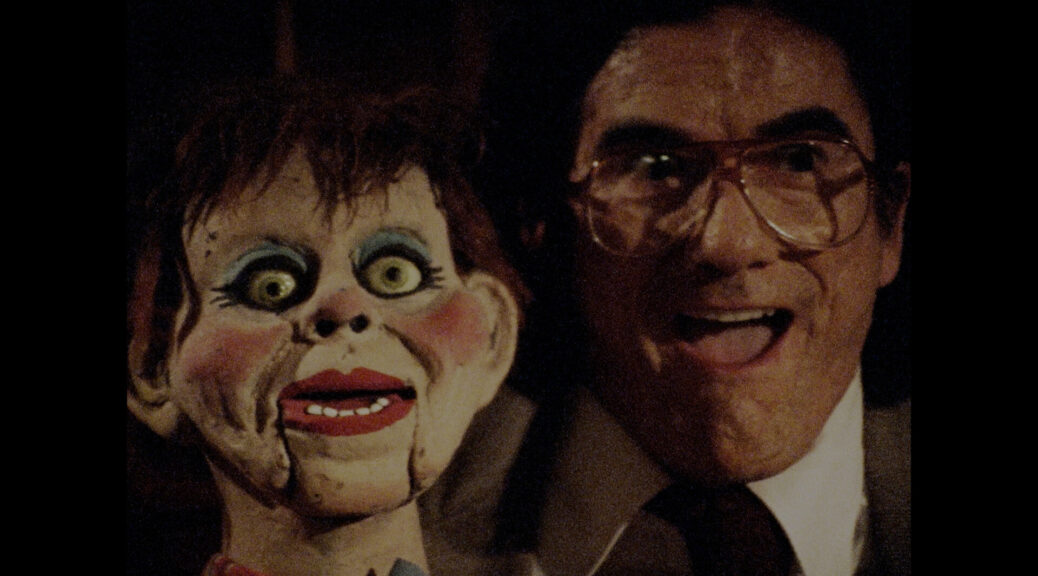
Damian Mc Carthy is doing something right. The Irish filmmaker writes original stories, invests time and attention to visual storytelling, and produces eerie, memorable horror. There’s an elegance to his movies, but his tales are not meant simply to provoke thought or to elevate the genre. Caveat, Oddity, and now Hokum draw from a long tradition of Irish horror storytelling and love a jump scare as much as anybody.

Mc Carthy’s latest sees an absolute prick of an American writer (Adam Scott) checking into an Irish inn to spread his parents’ ashes. Is he having a problem with writer’s block? He is! Is the hotel haunted? It is!

Hokum does feel less original than either of the filmmaker’s previous features, but somehow that works in its favor. Mc Carthy knows you think you’ve seen this before, and he leans into its familiarity to lull you.

Scott’s prickly, unpleasant performance at the center of the film is a gift. His unlikability gives the film a nice edge. Scott’s lowkey, brittle performance anchors the macabre whimsy so gorgeously brought to life by Til Frolich’s production design. The inn looks like a place where time stood still, quaint to the eyes of a tourist, spooky in the hands of a talented filmmaker.

Though Mc Carthy’s script feels less original than expected, he knows how to light, pace, and frame scenes to heighten dread. The sound design is also an eerie delight. And Mc Carthy reminds you that jump scares are not just for kiddie horror.

It would be easy for Hokum to feel overstuffed. The protagonist’s own ghost story, a very flesh-bound horror, and don’t forget the witch—that’s a lot to fit into a honeymoon suite. Scott’s grounded performance provides a clear path through it, and Mc Carthy ‘s skill at crafting intelligent yet primal horror pulls it together.

Scene after scene balances a funhouse vibe with Irish folktale spookiness, and the vintage horror beauty of every frame beguiles you. Caviat offered quietly claustrophobic terror. Oddity delivered clever, melancholy horror. Hokum feels more polished yet more old school. It is perhaps less terrifying than Mc Carthy’s previous features, but it’s a haunting good time.

Full of Grace

Mother Mary

by Hope Madden

Whatever it is director David Lowery is making, I’m watching. Not every film lands but he always delivers something thought provoking, and his best films are unlike anything else you’ll see.

Ain’t Them Bodies Saints, A Ghost Story, and The Green Knight were cinematic wonders. His latest, Mother Mary, is as tough to pin down as any of these, and just as gorgeous.

Anne Hathaway is Mother Mary, a Lady Gaga styled music icon and diva in the midst of some kind of prolonged torment who seeks the aid of an old friend. Michaela Coel is Sam, Mother Mary’s oldest confidant and the designer who created the pop star’s legendary look. Ostensibly, Mother Mary needs a gown. In reality, both women are open wounds who need the other, either to heal or to die.

Essentially a chamber piece—more than half of the film takes place in Sam’s barnlike studio—Mother Mary is as poetic and dramatic as a pop song. Lowery, who also writes, seems genuinely empathetic of the isolating nature of superstardom, particularly for those vulnerable souls who create their own art.

Lowery’s vision benefits immeasurably from two outstanding performances. Hathaway seems equally comfortable in semi-surreal concert footage as she does with the raw, constant verge-of-tears intimate drama. And Coel may be the one person who cuts so fascinating a figure that she makes Hathaway look ordinary.

Their fraught back and forth, though occasionally overwritten, feels lived in and wounded but seeking. What they ask of each other allows the filmmaker to pose, but not answer, questions about connection, authenticity, superficiality, fame, creativity, and who ultimately owns the artist and their art.

It’s a heady piece wrapped in silks and sequins, and it won’t be for everybody. But Lowery and his small cast make bold, risky choices. It works because the actors are fully committed and taking those risks themselves, some of which don’t pay off. But Cole and Hathaway bring their vulnerability, buoyed by tremendous talent. The result is a film that feels quite unlike anything else, and for any piece of art, sometimes that’s accomplishment enough.

Pushed to the Limit

Apex

by Hope Madden

What is it about Charlize Theron that you totally buy her badassedness? Maybe it’s her natural athleticism. She was a ballerina, leaving her with grace and fitness that suggest power. She hangs by fingertips from a rock face, and you think, yep, that’s Charlize Theron. Not, that’s a really skilled stunt performer.

That’s probably because it is Charlize Theron. According to her interview with Outside Magazine, Theron learned to rock climb for the new Netflix thriller Apex, so nearly all of that dizzying  and astonishing  footage is, indeed, the actor herself.

Baltasar Kormákur’s outback survival film pits Theron’s Sasha, an extreme adventure enthusiast, against Ben (Taron Egerton), an extreme psychopath.

Sasha, still stinging from the death of her partner (Eric Bana), is looking to do some solo Outback water adventuring. Ben seems like a helpful Boy Scout type, and when Sasha finds her gear missing, she hikes up to Ben’s shelter to ask for assistance. Ben is less than helpful.

Like Theron, Egerton also does his own stunt work. The reality this offers the film, framed to emphasize its death-defying glory by cinematographer Lawrence Sher (Joker, The Bride), elevates Apex above its spare Aussie horror script.

Jeremy Robbins’s screenplay takes a mid-story genre turn that doesn’t entirely work. Egerton more than convinces as the sweet-faced psycho, but the plot turn asks a little more than he can deliver. Theron’s sharp acting instincts—and a well-timed bite—almost salvage the scene.

But Apex rights itself pretty quickly. As long as we’re watching Theron tearing through forests, up rock faces, and down rapids with Egerton in jolly pursuit, all is well. And honestly, that’s about half the film.

Kormákur’s passion has always been the survival thriller: The Deep, Everest, Adrift, Beast. In every case, it’s the writing, not the directing, that’s been the drawback. Apex suffers less from writing woes. Robbins gives Theron a character to dig into, and Egerton’s dialog is deeply unnerving, particularly as it’s delivered with such a cherubic grin.

But it’s definitely the way Kormákur frames the action, and the way his actors push themselves physically, that make Apex such a fun watch. 

Walk Like an Egyptian

Lee Cronin’s The Mummy

by Hope Madden

So, Lee Cronin’s The Mummy. You may be wondering, who is Lee Cronin? Do I even know that guy?

You probably do, if you saw 2023’sEvil Dead Rise, the story of a family trapped in their apartment as their mother turns Deadite and tries to murder them all.

You may have missed his 2019 Irish horror, The Hole in the Ground, where a changeling takes the shape of a woman’s young son, traps her in a house and tries to kill her.

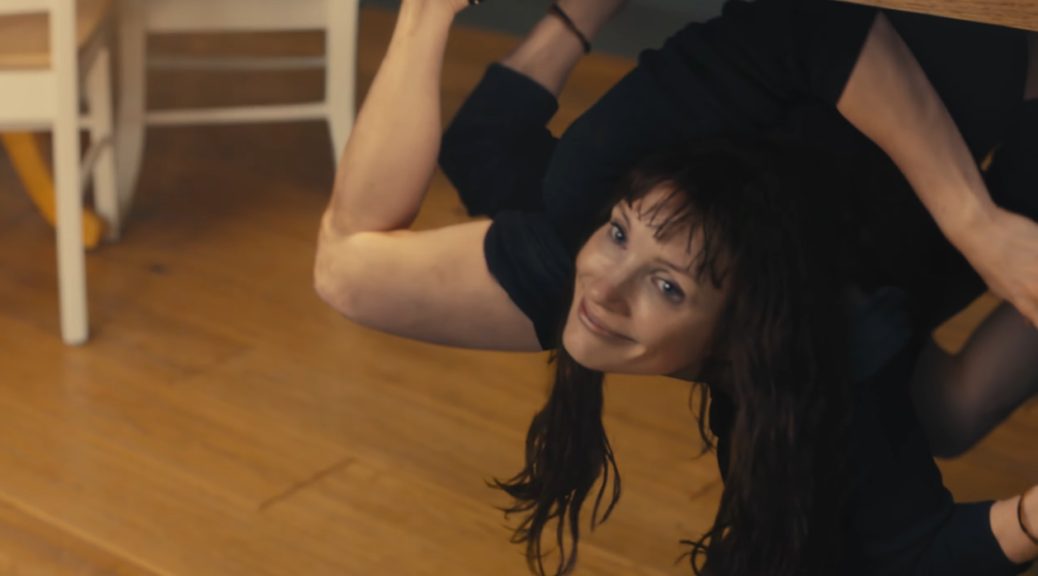
Now Cronin takes on a mummy’s curse, trapping a family inside a house with their daughter, who is now a monster out to kill every one of them. By the third time, you have to think that the idea of an evil entity taking over the body of a loved one is a real fixation for the filmmaker. Lucky for us!

Jack Raynor and Laia Costa are the parents of three: little Maud (Billie Roy), tween Sebastian (Shylo Molina), and their oldest, Katie (Emily Mitchell, then Natalie Grace). Katie went missing in Cairo 8 years ago, but she’s been found and she’s ready to come home. It’ll just take some adjusting.

The trailer for the film gave it the look of a PG13 horror—quick cuts, jump scares, and black vomit. I’m pleased to report that this is not the film at all. Cronin mines the situation for grief and sorrow before descending into body horror. It’s a wild line he crosses, manipulating your emotions and then throwing gross-out body fluid horror all over the deviled eggs.

It’s nasty. Like almost early Peter Jackson nasty.

And Cronin is not afraid to take the film places you may not want to go. The darkest, sloppiest comedy butts up against emotional horror so moving you may want to look away. Or if that doesn’t make you divert your eyes, the pus, eyeballs, tongues, and unspecified body fluids will.

It’s a mixed bag, this one, and it gets a little tedious toward the end. Plus, Cronin doesn’t always balance the tone effectively. This is very much an R-rated horror, at times taking itself too seriously and at others, delivering some of the nastiest comic gags you’ve ever seen during a funeral.

I was unsettled at times and grossed out at others, but I must say, I was thoroughly entertained.

Anything But

Normal

by Hope Madden

Do you know what’s especially fun about watching Normal? It’s not seeing Bob Odenkirk crack heads and blow stuff up. I mean, that’s always fun, but it’s nothing new. Nor is it new to see what fresh fisticuffs and cutlery mayhem writer Derek Kolstad (John Wick [all four], Nobody [both], Ballerina) can dream up. We’ve seen his dreams. They’re somewhat similar.

What is especially fun about watching the star of Nobody and its writer team up again to drop a middle aged schmo into a sudden and unexpected explosion of violence is that Ben Wheatley is directing. We haven’t seen Ben Wheatley get really nuts in a bit.

Odenkirk, who co-writes the script with Kolstad, is Ulysses. He used to be a real sheriff, but now he takes interim sheriff gigs around the country and leaves rambling accounts of his days on his estranged wife Penny’s voicemail.

His latest assignment: Normal, Minnesota.

The town of about 1500 people and one moose looks…strangely prosperous. Not like the small towns shuttering due to a poor economy. When two good hearted, down-on-their-luck bank robbers roll into town, Ulysses gets a glimpse of the what’s really going on.

That leaves us with about 45 minutes of handguns, rifles, Tommy Guns, knives, fists, rocket launchers, chains, dynamite, and knitting needles. Plenty of time for Wheatley to help us remember what a blast he had directing 2016’s Freefire.

Odenkirk’s ideal as the begrudgingly heroic schlub, and Normal surrounds him with eclectic characters and solid comic performances. But there’s no question the relish Wheatley takes in wry, witty bursts of extreme violence, each gag its own punchline, is what delivers the film’s fun.

There’s a touch of Fargo, a smidge of Hot Fuzz, a bit of the filmmaker’s own Freefire, and maybe a hint of his Sightseers. These borrowed flavors blend favorably with the inescapable familiarity of the concept—Bob Odenkirk, badass—as well as Kolstad’s routine action beats.

Normal is a ton of bloody fun that you’ll kind of remember later but you’ll laugh and enjoy yourself now.