Tag Archives: Madd at the Movies

School Daze

Seance

by Hope Madden

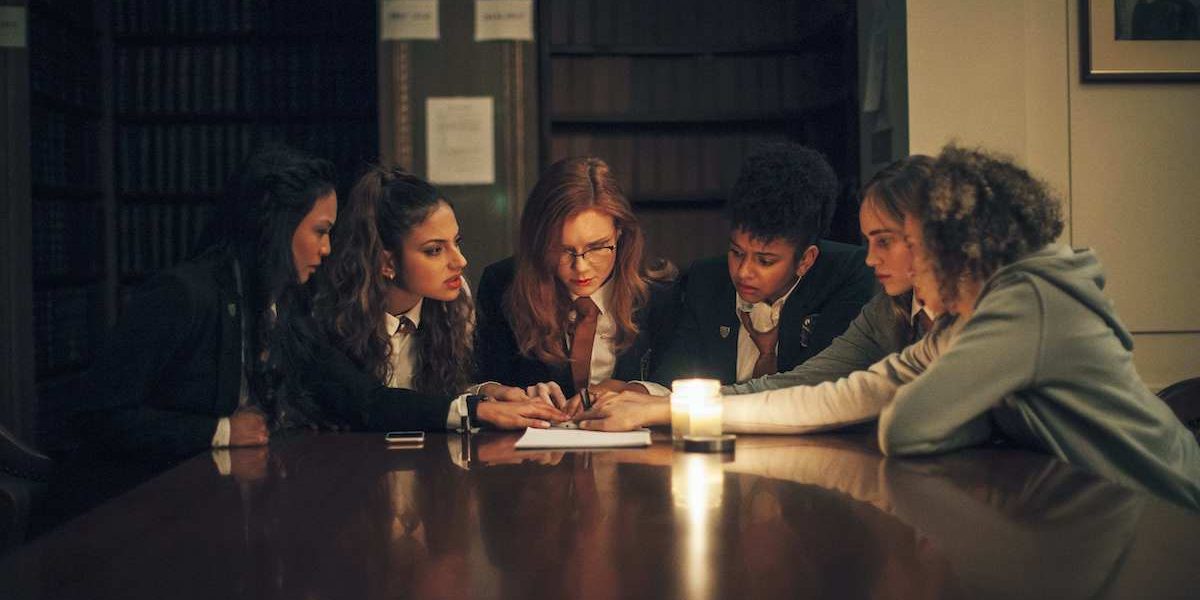
Off in the dusty old Edelvine boarding school, the girls are restless. They need something to pass the time, something to entertain them. They need a Séance.

Essentially, the mean girls gather in a dorm lav and Candyman the school’s ghost—saying her name 3 times at 3:13 am, the moment she died, in the very bathroom where it all happened.

Oooo, spooky!

Well, it’s all just a harmless prank until one of the girls winds up dead. Was it the ghost?

Fast forward a bit and Camille (Suki Waterhouse) arrives to fill the vacant room. More girls go missing or turn up dead in a film that cannot find a way to say anything new. Simon Barrett has written some good stuff: Blair Witch (2016), The Guest (2014), You’re Next (2011), Dead Birds (2004). He had not directed any features prior to Séance, but it’s hard to blame this film’s doldrums on its direction. The story just isn’t there.

Everything feels borrowed, not from any film in particular, but from the collective unconscious of dorm room horror that involves whispering ghosts, nubile schoolgirls, glinting blades and mystery. Barrett’s writing has tended to utilize tropes from the 80s and 90s to lull audiences into a sense of familiarity that allows him to deliver unexpected thrills.

His latest pulls most clearly from 90s staples like the Urban Legend franchise. But when he zigs instead of zags, the lull has turned stupor and Séance’s surprises just aren’t enough to snap us out of it.

Performances are fine, production values solid. There’s nothing embarrassing here, just nothing to get excited about. Some of the film’s sleights of hand are clever enough, but the storytelling is so anemic that it’s hard to applaud them. Barrett generates no dread and no sense of connection to any of the characters.

Unlike Guest’s Maika Monroe or You’re Next’s Sharni Vinson, who command the screen and drive the film, Waterhouse delivers a mainly listless performance. She’s neither scared nor curious, and though her bursts of ferocity feel cagey, it’s not enough to inject the film with any fire.

Viva Laz Vegaz

Army of the Dead

by Hope Madden

The single best feature film Zack Snyder ever made was his first: 2004’s Romero reboot Dawn of the Dead. (That is my hill.) For that reason (plus my sheer, giddy joy for zombie movies), I was far more eager about his latest zombie installment, Army of the Dead, than in anything else he’s made recently.

Even the title suggested that he was still on the Romero wavelength and, indeed, by his own 2005 Land of the Dead, the maestro of the undead was already dropping us into a town where the Z population had begun to organize.

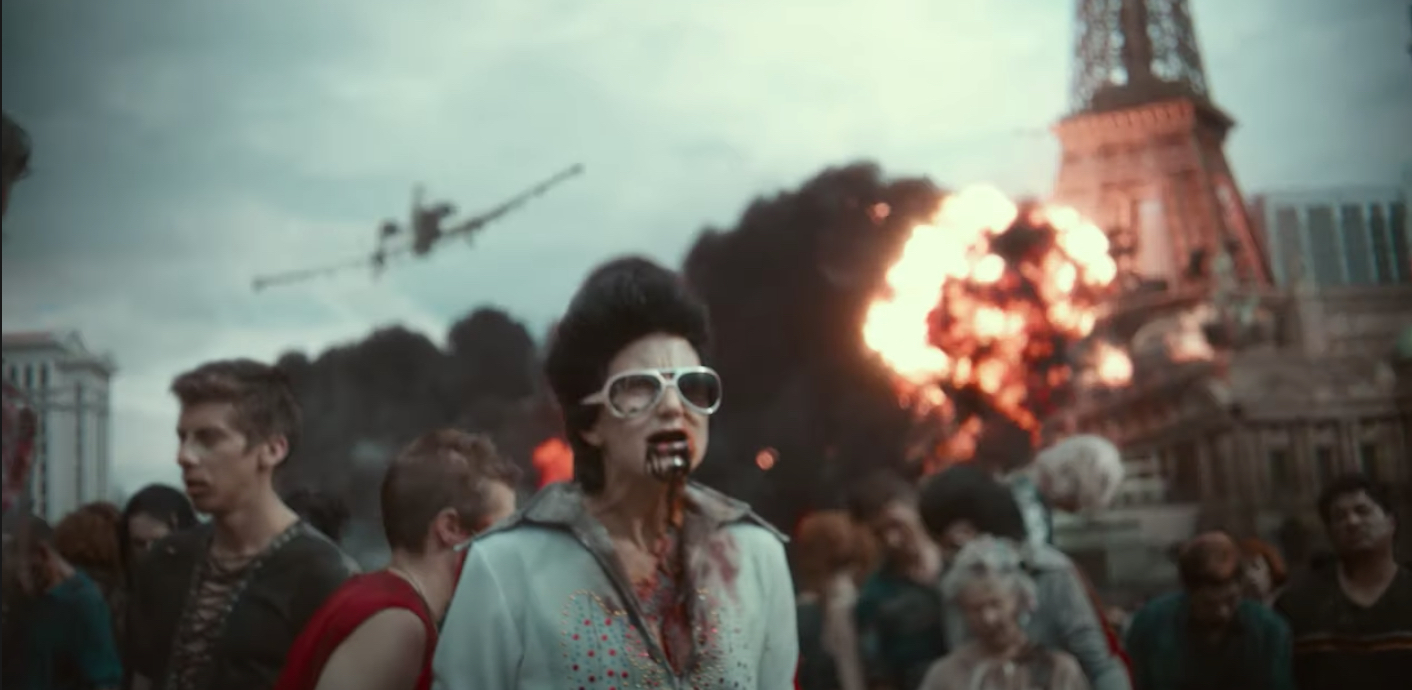
In Snyder’s case, it’s not just any town. We open on the catalyst—a rapid-fire transformation just over the hill from Vegas. Conjuring fond memories of his prior undead flick, Snyder cuts together an excellent opening montage with some inspired musical accompaniment to quickly bring us up to the film’s current plight. (Likely also offering a preview to their upcoming Netflix series.)

Not a moment or line of dialogue wasted. Which is great, because this is going to trudge on for another 2 ½ hours, which is entirely unforgivable for a zombie movie.

How about a zombie heist movie?!

I mean, the zombies aren’t stealing anything, and nobody’s stealing zombies. Instead, some smarmy billionaire (Hiroyuki Sanada) convinces a Z-war hero (Dave Bautista) to get a crew together and head into Vegas to steal a fortune inside his casino vault.

So, Train to Busan: Peninsula. That’s not where Snyder and co-writers Shay Hatten (John Wick 3) and Joby Harold (King Arthur: Legend of the Sword) got all their ideas, though. You will also notice Aliens, The Girl with All the Gifts, I Am Legend, Ghosts of Mars, World War Z, Raiders of the Lost Ark, and just a touch of Danny Ocean.

Still, Army of the Dead would be pretty entertaining if it weren’t so tediously predictable. (That does happen when you borrow so liberally, I guess.) Tig Notaro’s a fun piece of miscasting as the wise-cracking chopper pilot, Matthias Schweighofer delivers a bright performance (though it does feel as if it is part of another film entirely), and it’s always a delight to watch Garret Dillahunt weasel his way through a role.

The whole mess could have been mindless and merry were it not for its bloated running time. (Self-indulgence, thy name is Snyder.) It still delivers the goods here and there, but it won’t stick with you.

In Search of Hunky Boys

Psycho Goreman

by Hope Madden

How much fun is this movie?!

Tons. Endlessly quotable and boasting inspired creature design and a twisted Saturday Morning Kidventure tone, Psycho Goreman is a blast

Mimi (a wrong-headed and glorious Nita-Josee Hanna) and her loyal (OK, cowering) brother Luke (Owen Myre) inadvertently summon—nay, control—an intergalactic evil so dastardly it can bring out the end of worlds.

But they totally control him, so they make him learn their favorite games, wear cowboy hats and do assorted hilarious and embarrassing things.

Fans of writer/director Steven Kostanski’s 2016 breakout The Void (a perfect blend of Lovecraft and Halloween 2) might not expect the childlike lunacy and gleeful brutality of Psycho Goreman (PG for short), but they should. His 2012 gem Father’s Day (not for the easily offended) and his 2011 Manborg define not only his tendencies but his commitment to tone and mastery of his material.

Kostanski’s films—The Void aside—fall on the intersection of silly and gory, most of them with a bold VHS aftertaste. I mean all those things in a good way. The tone here is more live-action children’s programming (gone way, way wrong)–perhaps a tad Turbo Kid in its execution.

There is so much joy here, not only in the lunacy of the story or of the creature design (PG’s nemeses from Planet Gigax make an appearance, natch, and they are a riot to look upon).

Will Mimi’s unphased cruelty and selfishness be curbed by friendship? Or will it save the day? Neither? Oh, ok, well then at least it makes for one fiercely funny central character.

Hanna’s command of this unruly heroine may be what sets the film above others in Canadian production company Astron 6’s arsenal. She’s not alone. Astron regular Adam Brooks steals scenes as the kids’ layabout dad, with Alexis Kara Hancey showing off deadpan delivery as his put-upon spouse.

The ensemble works wonders together, each hitting the comedic beats in Kostanski’s script hard enough that the goretastic conclusion feels downright cheery.

This movie could not be more fun.

Fire Starter

Those Who Wish Me Dead

by Hope Madden

Michael Koryta’s heart-thumping YA adventure tale Those Who Wish Me Dead comes to the big screen. Well, mainly—it’s also on HBO Max—but the mountainous, fiery, wooded adventure is better suited to the largest screen you can find.

Koryta himself adapted his novel, along with co-writers Charles Leavitt (not very good—Warcraft, Seventh Son, In the Heart of the Sea) and Taylor Sheridan (very good—Hell or High Water, Sicario).

It should even out.

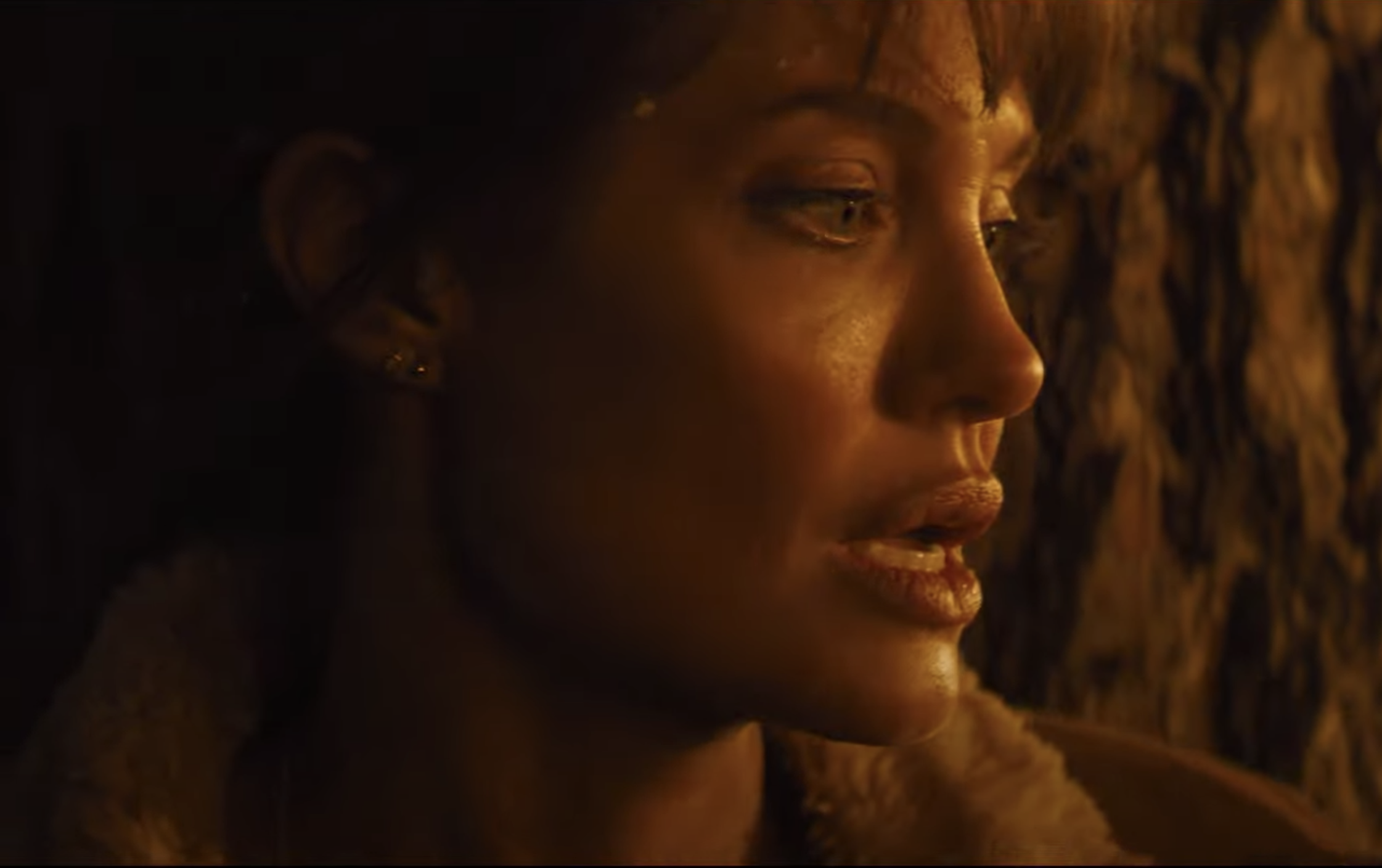
Sheridan also directs, dropping a young boy (Finn Little) in a burning forest, hunted by two murderers (Nicholas Hoult and Aiden Gillen), with only Angelina Jolie to help.

She does have a way with children, though.

Jolie’s Hanna Faber is a damaged Hotshot (those firefighters who parachute into forest blazes). She failed her psych eval after those fatalities last season and now she’s stuck in a lonely fire lookout tower miles from anywhere with nothing to keep her company but her own haunted thoughts.

So what I’m saying is, Those Who Wish Me Dead is now about Hanna rather than being about the kid who is wished dead. I just want fans of the novel to be prepared for this.

It’s still a perfectly satisfying if not particularly inspired adventure tale.

Little delivers an emotional blow as the newly orphaned youth who’s trying to be brave, trying to be smart, and sincerely in need of a hug. The biggest issue is simply the way he becomes a side character in his own story.

He’s not as discarded as the couple who run the survival camp (Jon Bernthal and Medina Senghore – though the latter does look glorious riding horseback with her rifle through the flames).

The basic backstory does suit this cinematic vehicle, though, and Jolie proves a charismatic central figure who can sure take a beating. As the bad guys close in from one direction, the fire from the other, Sheridan and team build a perfectly reasonable and structurally sound thriller.

Performances are strong and locations are gorgeous, but Those Who Wish Me Dead doesn’t take a lot of risks and that’s unfortunate.

He Is Wrath

Wrath of Man

by Hope Madden

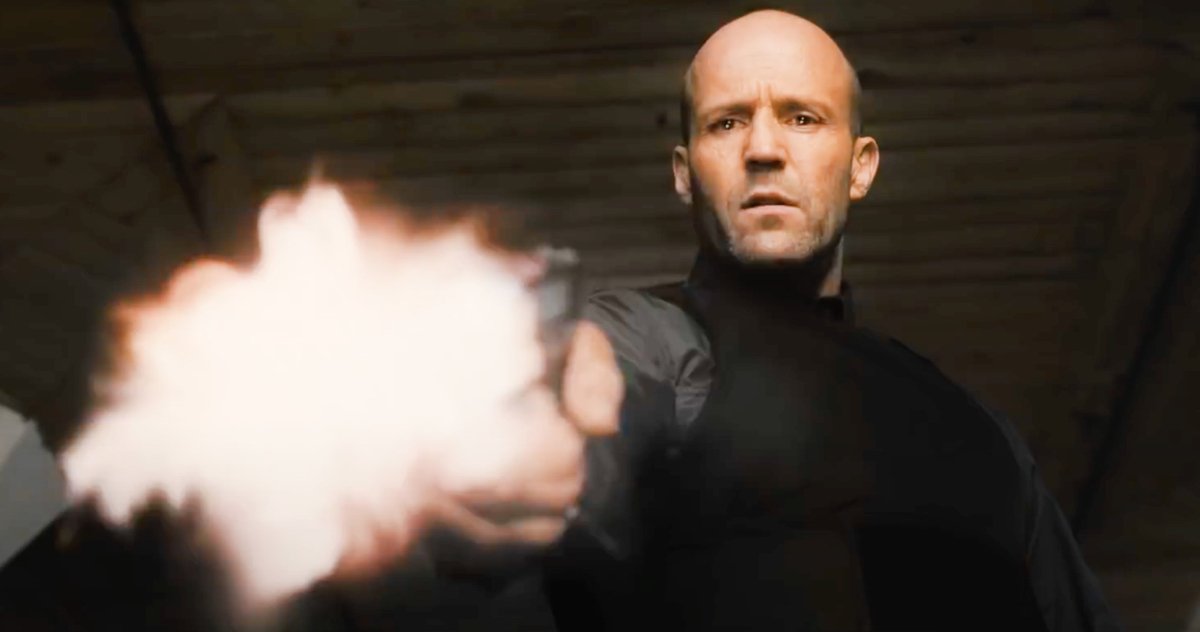
I’m not saying Jason Statham is unconvincing with a gun. Nor am I saying that Guy Ritchie is ill-suited to direct a humorless vengeance drama.

I’m just saying that these are not their strong suits.

Wrath of Man shadows a very dour Statham—just call him H, like the bomb—as he begins training for his new gig with a cash truck crew.

Something’s up, obviously, and the only fun to be had in the film is trying to figure out what it is, so do not watch the trailer.

At The Depot, where all the trucks come and go and all the crew mock and belittle one another, we meet the assortment of characters you will not come to know or care about: Boy Sweat Dave (Josh Hartnett – where have you been?), Dana (Niamh Algar), Bullet (Holt McCallany). All of them choking on ludicrously overwritten banter, none of them drawing even a single compelling character.

Which is fine because there are at least 16 more people you won’t get to know, won’t care if they’re killed, won’t be invested in their conflicts.

Ritchie is usually much better than this at scattershot introductions of oddball lowlife clusters, each pod with its own story, each story intersection every other story at one turn or another. Maybe he’s just too out of his element setting the action in LA rather than his beloved London, but the lived-in feel of a reprobate world that’s usually a high point to a Ritchie flick is sorely missing here.

And what is the deal with these accents? By now, we know better than to expect Statham to attempt a yank accent, but what exactly is Eddie Marsan’s nationality supposed to be? Or Andy Garcia’s, for that matter?

Hell if I know. I do know that casting Statham generally guarantees some nifty fisticuffs.

Not today!

He shoots a bunch of people, sure, but there’s no panache to anything. It’s a heist movie without the meticulous execution, a vengeance thriller with no emotional connection to the villain, a Statham movie with no ass kicking, and a Ritchie movie with no humor, no flash, no style.

No thank you.   

Tall Tales

The Oak Room

by Hope Madden

There’s nothing as immediately cool and comforting as a boozy hillbilly noir. The haunting soundtrack choices, shadowy basement barrooms, isolating cushion of all those trees—it’s a tall tale of blood, beer and backstabbing just waiting to happen.

That’s just what director Cody Calahan serves up from the opening strains of The Oak Room, a stylish little thriller. It may be a bit too wordy, but it repays you for your patience.

There’s a story within a story within a story on this blustery night in smalltown Canada as ne’er do well Steve (RJ Mitte, Breaking Bad) dares to show his face at closing time. He’s been gone a long time and bartender Paul (Peter Outerbridge) is none too happy to see him. There’s a score to settle here, a debt owed, and Steve has until midnight to take care of it.

First, though, Steve wants to tell Paul a story.

Over the next 90 minutes, Calahan weaves from near-midnight at Paul’s bar to Steve’s story and back, giving a lovely cinematic quality to the power of storytelling inherent in Peter Genoway’s script. There is something hypnotic in the way the night progresses, and in the way phrases and ideas repeat across different decades and different tales.

Outerbridge is particularly effective, but every actor remains true to the style the filmmaker develops. Genoway’s script gets away from him at times, especially in the first half of the film, giving certain scenes the feel of filler. A leaner script would have benefitted the overall project. As it is, there are conversations in the first half of the film that come close to breaking the spell Calahan casts.

The filmmaker deploys other tactics to keep you engaged, though. The Oak Room glories in its sound design, whether the creak of mop bucket wheels across a wooden bar floor, the swing of a metal trashcan lid, or the hush of the wind outside the window where snow deepens. Steph Copeland’s score—a mixture of Kabuki-style drums and Appalachian strings—foretells of violence and misery.

Calahan also develops a fun dose of dread as midnight nears and tales—both present and past—take sinister turns. It’s all good fun, though, right? Just a couple of guys passing the time until debts are to be paid.

Hillbilly Eulogy

Above Suspicion

by Hope Madden

There are films that open with voiceover. Sometimes the voiceover is a character who is already dead. These films are rarely very good.

It’s no spoiler. As Susan Smith (Emilia Clarke) waxes melancholic over the opening images of Phillip Noyce’s true crime thriller Above Suspicion, she’s straightforward with us. She’s dead, we’re watching her body being found, there sure are a lot of trees, and now she has a lot of time to think.

Chris Gerolmo (Mississippi Burning) adapts Joe Sharkey’s book about the case, which was also the subject of Aphrodite Jones’s book The FBI Killer as well as at least one true crime TV series episode. Why all the fuss?

Susan Smith’s case represented the first in history to see an FBI agent convicted of murder.

Smith, a smalltown Kentucky addict with two kids, a live-in ex-husband for a dealer, took a shine to Mark Putnam (Jack Huston) the moment she saw him. The shiny new FBI agent, just two weeks on the force, had taken the gig to begin to build a career. He and his wife Kathy (Sophie Lowe) had a 5-year plan.

Smith would alter that plan.

Noyce’s movie looks good. It looks the part, plenty of dusty small towns, low rent lots, dive bars and trees. And he’s assembled a game cast. Clarke surprises as a hard and hard-headed woman looking for a way out.

A cascade of odd ducks and smalltown curiosities give plenty of supporting actors the chance to add some layers to the Appalachian backdrop. Johnny Knoxville especially impresses as Smith’s low key but dangerous ex.

Huston’s take on Putnam is pretty forgiving. The performance feels indecisive. In his hands, Putnam is certainly too smart to fall into this situation, but is he naïve enough to do it? This is partly where the entire film falters.

The voiceover lets us know whose story we’re hearing, and yet somehow we’re mainly on Mark’s side through most of this. Kudos to Noyce and Clarke for sidestepping noble victim cliches and giving Smith a backbone as strong as her head is wrong, but the film’s overall tone lacks conviction.

It doesn’t help that we know where everything is going from the opening scene, since Smith tells us. There’s no real tension to build, and Noyce never takes advantage of his opportunity to give us an unreliable narrator. At least that would have given us something to think about. Lacking that, or any real insight and certainly no deep empathy for anyone involved, Above Suspicion can’t help but feel like a couple hours of wallowing in someone else’s pain.

South African Mayhem

Fried Barry

by Hope Madden

So, Fried Barry then.

Four years ago, South African writer/director Ryan Kruger made the 28th short film of his young career, a quick and experimental one-man meth attack starring Gary Green called Fried Barry. On the merits of Kruger’s vision for harrowing realism underlying a scifi vibe, as well as the startling central figure (Green is quite something to gaze upon), the short film made a big impact.

It’s also a single scene of a profound reaction to a drug. Not a lot to build on, and yet that’s just what Kruger does in his feature of the same name, streaming this week on Shudder.

Green returns as a Cape Town low life whose latest high is complicated due to an alien abduction.

Or is he just really, really, really high?

Kruger maintains an experimental feel, although his feature takes on more of a traditional cinematic structure. This primarily consists of Green—looking as disheveled, lean and imposing as ever—wandering wide-eyed and silent through Cape Town. Oh, the adventures he finds!

Most of them involve different women who are curiously interested in having sex with this obvious junkie. He must just smell so rank! Suspend disbelief. The movie is nuts.

It’s not entirely unique, though, as it continuously calls to mind Rolf de Heer’s notorious 1993 film Bad Boy Bubby—another Huck Finn style adventure about a man-child and the curiosities he stumbles into.

And to be honest, de Veer’s film is far more of a mind f*ck.

Fried Barry also conjures Terry Gilliam and Panos Cosmatos (top-notch purveyors of drug-fueled mayhem), and maybe even an especially high-octane Lynch. Which is to say, the film offers insanity to spare. Kruger’s episodic fever dream blends frenetic editing and a charged soundtrack into something harsher and harder than a psychedelic trip, but the film lives and dies with Green.

It isn’t as if the actor performs alone. He stumbles into and upon a slew of wild, weird and sometimes insane (literally) characters. But it’s Green you cannot take your eyes off of.

Dude is fried.

Aging Disgracefully

The Paper Tigers

by Hope Madden

“You look like a fat, Asian Mr. Rogers.”

That’s not how any middle-aged man wants to be described, least of all a man who was once one of The Paper Tigers.

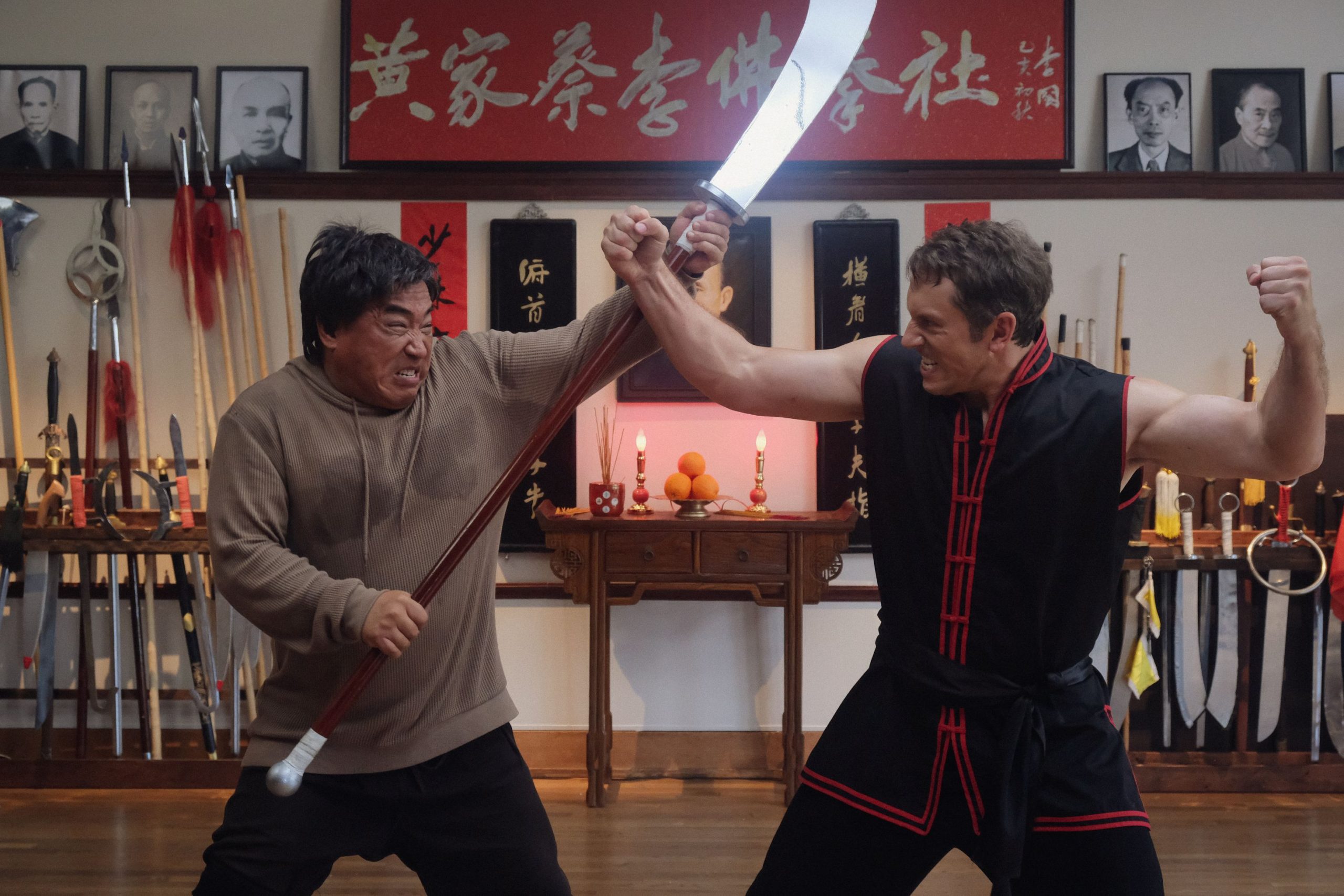
When Danny (Alain Uy), Jim (Mykel Shannon Jenkins) and Hing (Ron Yuan, Mulan) were in their prime, they were disciples of Chinatown’s great kung fu master Sifu Cheung (Roger Yuan, veteran of martial arts films). They couldn’t be stopped—certainly not by that poseur Carter (played with relish as an adult by Matthew Page).

But that was then.

It takes a murder mystery to convince the trio to a) talk to each other again, and b) fight. But first, they will really need to embarrass themselves.

Writer/director Quoc Bao Tran makes his feature debut with this family-friendly coming-of-middle-age comedy. Though the story itself is stridently formulaic, solid instincts for lensing physical comedy, as well as charming performances, elevate the film.

Uy offers a reliable center for the story. A relatable everyman, Danny’s lost focus on what matters, and Uy’s understated performance creates a nice counterbalance for some of the zanier moments in the film.

Page and Ron Yuan—whether together or separately—shoulder responsibility for most of those moments of lunacy. Yuan delivers an underdog you’re happy to cheer on, while Page’s comic foil is an embarrassing, irritating joy  to behold.

The writing is sometimes suspect. Formula makes up for a tight structure—you know where things are headed, even if not every step in the journey makes a lot of sense. But The Paper Tigers makes up for those missteps, mainly with affability and good nature. This is a hard film to root against.  

More Like Amateur

The Virtuoso

by Hope Madden

Hey, Anthony Hopkins just won his second Oscar! The octogenarian was not the favorite, but there’s no denying that, after dozens of phoned-in near-cameos, he landed the role of a lifetime and gave a performance to match.

So, back to phoned-in near-cameos, I guess.

In director Nick Stagliano’s The Virtuoso, Hopkins plays The Mentor, an enigmatic man in a shadowy office. Mentor to whom, you ask? To The Virtuoso (Anson Mount), of course. He’s one of those “put my black ops training to good use responding only to this one guy by phone who sends me on my missions and otherwise I am utterly, stoically alone” kind of guys.

The Virtuoso is a man of few words—except in voiceover. In voiceover you cannot get him to shut up, his monotone musings on scheduling, technique, blah blah blah so wearying you can’t help but suddenly, brightly realize all over again what an absolute masterpiece American Psycho was.

One hit goes well. One hit goes south. Then we dig in for the next hit, where all the voiceover details about planning, timing, persistence and detail go straight out the window.

From here, we’re with The Virtuoso step by step as he bungles this and misunderstands that and misfires his weapon over here and makes poor decisions over there. It might make a half-decent comedy if it weren’t played so, so, so seriously.

Stagliano and writer James C. Wolf aim for neo-noir hipness but miss the mark by a wide distance.

Mount does what he can and almost generates interest as his character practices making normal people faces in the mirror before going out in public. Hopkins is saddled with nonsensical speeches meant to suggest his deadened soul. He doesn’t try too hard to make anything of it.

Abbie Cornish does try, bringing a flash of human interest as The Waitress. But no amount of homespun charm can save a movie this dumb.