Tag Archives: horror

Fright Club: Best Horror of the 1950s

When we first started this podcast, one hundred thirtysomething episodes ago, we devoted specific shows to the best horror movies by the decade. We started with the Sixties, but we got called on that at one point by a listener who wanted to know what we thought were the best horror movies of the Fifties.

We have finally responded to that (hopefully) very patient listener, and enlisted the help of our old friend Phantom Dark Dave. Together, we wander through the cold war movies that scared a generation.

5. Godzilla (1954)

Is Godzilla the best film on this list? No. But, more than any other film in the genre, it spoke directly to global anxieties, became a phenomenal success, and changed the face of horror.

As Japan struggled to re-emerge from the 1945 bombings of Hiroshima and Nagasaki, director Ishiro Honda unleashed that dreaded kaiju—followed quickly by a tidal wave of creature features focused on scientists whose ungodly work creates global cataclysm.

Far more pointed and insightful than its American bastardization or any of the sequels or reboots to follow, the 1954 Japanese original mirrored the desperate, helpless impotence of a global population in the face of very real, apocalyptic danger. Sure, that danger breathed fire and came in a rubber suit, but history shows again and again how nature points out the folly of man.

4. Invasion of the Body Snatchers (1956)

Director Dono Siegel was the first filmmaker to bring Jack Finney’s Cold War nightmare to the screen. He wouldn’t be the last, maybe not even the best, but what he did with this eerie alien tale tapped into a societal anxiety and quickly became one of the most influential and terrifying films of its time.

Doc Miles Bennell (Kevin McCarthy) is just home from a short trip when he’s inundated by patients swearing their loved ones are not their loved ones at all. Sure, they look the same and have all the same skills and memories, but there’s no warmth, no passion.

With this, the fear that our very nation could be overtaken by an outside force – Russians, say, for terrifyingly immediate sake of argument – working its way through not by force, but by quietly taking over each and every person in one town, then spreading from town to town to town.

It’s the kind of insidious evil that fuels contagion horror, infestation horror, even demonic horror. But Invasion of the Body Snatchers spoke to a society’s deepest fears and became a touchstone for all SciFi to follow it.

3. Dracula (Horror of Dracula) (1958)

In 1958, Hammer Films began its long and fabulous love affair with the cloaked one, introducing the irrefutably awesome Christopher Lee as the Count.

Their tale varies a bit from Stoker’s, but the main players are mostly accounted for. Peter Cushing steps in early and often as Van Helsing, bringing his inimitable brand of prissy kick-ass, but it’s Lee who carries the film.

Six foot 5 and sporting that elegant yet sinister baritone, Lee cuts by far the most intimidating figure of the lot as Dracula. Director Terence Fisher (what?!) uses that to the film’s advantage by developing a far more vicious, brutal vampire than what we’d seen previously.

Still, the film is about seduction, though, which gives Lee’s brute force an unseemly thrill. Unlike so many victims in other vampire tales, it’s not just that Melissa Stribling’s Mina is helpless to stop Dracula’s penetration. She’s in league. She wants it.

Ribald stuff for 1958!

2. The Bad Seed (1956)

The minute delicate Christine’s (Nancy Kelly) husband leaves for his 4-week assignment in DC, their way-too-perfect daughter begins to betray some scary behavior. The creepy handyman Leroy (Henry Jones) has her figured out – he knows she’s not as perfect as she pretends.

You may be tempted to abandon the film in its first reel, feeling as if you know where the it’s going. You’ll be right, but there are two big reasons to stick it out. One is that Bad Seed did it first, and did it well, considering the conservative cinematic limitations of the Fifties.

Second, because director Mervyn LeRoy’s approach – not a single vile act appears onscreen – gives the picture an air of restraint and dignity while employing the perversity of individual imaginations to ramp up the creepiness.

Enough can’t be said about Patty McCormack. There’s surprising nuance in her manipulations, and the Oscar-nominated 9-year-old handles the role with both grace and menace.

1. Diabolique (1955)

Pierre Boileau’s novel was such hot property that even Alfred Hitchcock pined to make it into a film. But Henri-Georges Clouzot got hold if it first. His psychological thriller with horror-ific undertones is crafty, spooky, jumpy and wonderful.

And it wouldn’t work if it weren’t for the weirdly lived-in relationship among Nicole (Simone Signoret) – a hard-edged boarding school teacher – and the married couple that runs the school. Christina (Vera Clouzot) is a fragile heiress; her husband Michel (Paul Meurisse) is the abusive, blowhard school headmaster. Michel and Nicole are sleeping together, Christine knows, both women are friends, both realize he’s a bastard. Wonder if there’s something they can do about it.

What unravels is a mystery with a supernatural flavor that never fails to surprise and entrance. All the performances are wonderful, the black and white cinematography creates a spectral atmosphere, and that bathtub scene can still make you jump.

Do Not Open

The Devil’s Doorway

by Hope Madden

So many horror films delve into those murky holy waters of Catholicism. So many horror movies are clearly made by lifelong non-Catholics. If Aislinn Clarke’s The Devil’s Doorway gets extra points, it’s for knowing the religion it is lambasting.

Two priests—one young, one a veteran—head into dangerous spiritual territory in a film that fully understands that you will compare it to The Exorcist. How can you not?

The Devil’s Doorway follows Fr. Thomas Riley (Lalor Roddy) and Fr. John Thornton (Ciaran Flynn) to a Magdalene Laundry, one of Ireland’s infamous workhouses populated by women the country wanted to hide and exploit.

The setting itself is a way of inverting the gravitas of The Exorcist, which saw two priests—one firm in his belief, the other confronting a crisis of faith—come to the aid of an innocent girl facing the corruption of her purity from something demonic.

Here, Fr. Riley, the elder priest, has to face his own crisis of faith. But his belief has been stretched to breaking by the corruption of the church itself, as manifest by this place.

So, they go to investigate a miracle but find something more predictably menacing is afoot.

There is an earnestness in the battle between faith and cynicism in this film. The Exorcist and films like it, those that saw the wayward horror of man as only correctable with help from above, have long given way to something else. A demonic possession now feels like it happens within holy walls because that’s where the devil lives in the first place.

While most films of this ilk simply take potshots, The Devil’s Doorway mourns the corrosion of something worthwhile and holy. Applause for finding an honest statement to make within this over-worked subgenre, although the congratulations belong primarily to Roddy.

The Irish actor finds truth in Fr. Riley—Doubting Thomas’s—struggle. He stands out as the only sane person, the only responsible adult in the house. And though the Mother Superior role is written with evil relish (as per usual), Helena Bereen’s delivery stings in a way that is eerily authentic.

Until it’s not.

We get it. Nuns are creepy. Twelve years of Catholic school clarified that.

The film gets a bit caught in genre trappings, and what starts as an indictment of the church becomes so punchdrunk on jump scares it loses its focus entirely. The found-footage gimmick works well enough for a while, but devolves in the end into something so familiar it’s almost sad.

The Devil’s Doorway started out with promise, but like so many lapsed Catholics, it lost its way.

Fright Club: Murderous Mentors

Everybody needs a hand now and then, a little guidance. Everybody, even cold-blooded killers, because murder can be really difficult to pull off. You can’t just google a how-to. I mean, you probably can, but where’s the personal connection? The relationship? The trust.

It’s all here, in our list of the best films focusing on murderous mentors.

5. Addiction (1995)

Like most of director Abel Ferrara’s work, the film is an overtly stylish, rhythmically urban tale of brutal violence, sin and redemption (maybe). Expect drug use, weighty speeches and blood in this tale of a doctoral candidate in philosophy (Lili Taylor) over-thinking her transformation from student to predator.

Taylor cuts an interesting figure as Kathleen, a very grunge-era vampire in her jeans, Doc Martens and oversized, thrift store blazer. She’s joined by an altogether awesome cast—Annabella Sciorra, Edie Falco and Christopher Walken among them.

Ferrara parallels Kathleen’s need for blood to drug addiction, but uses her philosophy jibberish to plumb humanity’s historical bloodlust. In monologues and voiceovers, Taylor waxes philosophic as she comes to terms with her own evil nature, and here is where the film nearly implodes. It begins to feel like Ferrara’s real warning is that philosophical pretentiousness spreads like a disease. But just when you are tempted to give up on the pomposity, Walken appears as Kathleen’s vampiric mentor. Thank you.

He injects the film with random violence and nuttiness, as is his way, and Ferrara pays you for your patience and thoughtfulness with viscera aplenty before settling on the uneasy answer that there is no excusing your own bad behavior.

4. The Poughkeepsie Tapes (2007)

John Erick Dowdle’s film is a difficult one to watch. It contains enough elements of found footage to achieve realism, enough police procedural to provide structure, and enough grim imagination to give you nightmares.

Edward Carver (Ben Messmer) is a particularly theatrical serial killer, and the film, which takes you into the police academy classroom, asks you to watch his evolution from impetuous brute to unerring craftsman. This evolution we witness mainly through a library of videotapes he’s left behind—along with poor Cheryl Dempsey (Stacy Chbosky)—for the police to find.

Cheryl is Carver’s masterpiece, the one victim he did not kill but instead reformed as his protégé. It’s easily the most unsettling element in a film that manages to shake you without really showing you anything.

3. The Last Horror Movie (2003)

A clever concept handled very craftily, The Last Horror Movie is found footage in that we, the audience, have found this surprising bit of footage recorded over the VHS tape we are apparently watching. What serial killer Max (a top-notch Kevin Howarth) has done, you see, is made a documentary of his ghastly habits and shared them with an audience that has shown, by virtue of the movie it intended to rent just now, its predilection for something grisly.

Like Edward in The Poughkeepsie Tapes, Max wants to pass on his expertise to a protégé. (There’s a reason the audience isn’t quite enough.) He hires an assistant (Mark Stevenson), who helps with the documentary Max is making. The assistant shoots the footage. Max tells the camera, step by step, what he’s doing, why he’s doing it, how he came to the decision. It’s a how-to, really, and the assistant is supposed to be paying attention.

But when push comes to shove, will the assistant have the stomach for it?

2. Behind the Mask: The Rise of Leslie Vernon (2006)

Writer/director Scott Glosserman’s film takes us to Glen Echo, Maryland. It’s a small town, exactly the kind of town that would be perfect for a slasher, and Leslie Vernon is just the villain Glen Echo doesn’t know it’s aching for.

This is a mockumentary and an affectionate ode to slashers. It pulls the concept of a documentary crew participating in the crime (a la Man Bites Dog), builds on the expected steps of every slasher film (Scream), and yet somehow feels fresh and fun.

One reason is Nathan Baesel as Leslie. He’s a charming, self-deprecating joy.

The second reason is the whole “training” concept. By way of the documentary being filmed, we’re invited into the hard-core training that goes into becoming the next immortal slasher villain. Not just cardio—although Leslie is very clear on the need for cardio—but all the little skills you can’t just pick up on your own. That’s why Leslie is blessed to have the help of a committed community who wants to see him succeed, including Eugene (Scott Wilson), a retired slasher himself.

Clever, funny and surprisingly adorable, this one’s a keeper.

1. Henry: Portrait of a Serial Killer (1986)

Henry offers an unforgivingly realistic portrayal of evil. Michael Rooker is brilliant as serial killer Henry (based on real-life murderer Henry Lee Lucas). We follow him through his humdrum days of stalking and then dispatching his prey, until he finds his own unwholesome kind of family in the form of buddy Otis and his sister, Becky.

“You mean to tell me you’ve never killed anybody before?” a disdainful Henry asks Otis, and the mentoring relationship is born. Otis really takes to it, too.

What’s diabolically fascinating is the workaday, white trash camaraderie of the psychopath relationship in this film, and the grey areas where one crazy killer feels the other has crossed some line of decency.

Rooker’s performance unsettles to the bone, flashing glimpses of an almost sympathetic beast now and again, but there’s never a question that he will do the worst things every time, more out of boredom than anything.

It’s a uniquely awful, absolutely compelling piece of filmmaking.

https://www.youtube.com/watch?v=IU3P6WXzvXU

Fright Club: Best Horror of the First Half of 2018

What a killer year 2018 has in horror been already! One mega-blockbuster, another big indie hit, loads of fun stuff big and small. Whether you think the great Annihilation and The Endless are horror, whether you believe unhinged Mom and Dad-style Nic Cage is the best kind of Nic Cage, and no matter where you stand on The Strangers: Prey at Night, we’re here to has it out.

It’s time we count down the best of the best so far this year, and we are thrilled to have Senior Filmmaker Correspondent Jason Tostevin join us, as is tradition, to argue over what is and is not horror, what is and is not great. Plus, we sing!

5. The Ritual

David Bruckner has entertained us with some of the best shorts in horror today, including work from V/H/S, Southbound, and one of our favorites, The Signal. Directing his feature debut in The Ritual, Bruckner takes what feels familiar, roots it in genuine human emotion, takes a wild left turn and delivers the scares.

Five friends decide to mourn a tragedy with a trip together into the woods. Grief is a tricky, personal, often ugly process and as they work through their feelings, their frustration quickly turns to fear as they lose themselves in a foreign forest where danger lurks.

The film works for a number of reasons, but its greatest triumph is in making the woods scary again. That environment has become such a profound cliché in horror that it is almost impossible to make it feel fresh, but there is an authenticity to the performances, the interaction among the characters, and the frustration and fear that grounds the horror. And then there is horror—intriguing, startling, genuinely frightening horror. Yay!

4. Unsane

Sawyer Valentini (Claire Foy—brittle, unlikeable and amazing) is living your worst nightmare. After moving 400 miles to escape her stalker, she begins seeing him everywhere. She visits an insurance-approved therapist in a nearby clinic and quickly finds herself being held involuntarily for 24 hours.

After punching an orderly she mistakes for her stalker, that 24 hours turns into one week. And now she’s convinced that the new orderly George is, in fact, her stalker David (Joshua Leonard—cloying, terrifying perfection).

After laying bare some terrifying facts about our privatized mental health industry, Steven Soderbergh structures this critique with a somewhat traditional is-she-or-isn’t-she-crazy storyline. Anyone who watches much horror will recognize that uneasy line: you may be here against your will, but that doesn’t mean you shouldn’t be here.

And the seasoned director of misdirection knows how to toy with that notion, how to employ Sawyer’s very real damage, touch on her raw nerve of struggling to remain in control of her own life only to have another’s will forced upon her.

He relies on familiar tropes to say something relevant and in doing so creates a tidy, satisfying thriller.

3. Revenge

The rape-revenge film is a tough one to pull off. Even in the cases where the victim rips bloody vengeance through the bodies of her betrayers, the films are too often titillating. Almost exclusively written and directed by men for a primarily male audience, the comeuppance angle can be so bent by the male gaze that the film feels more like an additional violation.

Well, friends, writer/director Coralie Fargeat changes all that with Revenge, a breathless, visually fascinating, bloody-as-hell vengeance flick that repays the viewer for her endurance. (His, too.)

Fargeat’s grasp of male entitlement and the elements of a rape culture are as sharp as her instincts for visual storytelling. Wildly off-kilter close-ups sandwich gorgeous vistas to create a dreamlike frame for the utterly brutal mess of a film unfolding.

Symbol-heavy but never pretentious or preachy, the film follows a traditional path—she is betrayed, she is underestimated, she repays her assailants for their toxic masculinity. But between Fargeat’s wild aesthetic, four very solid performances, and thoughtful yet visceral storytelling, the film feels break-neck, terrifying and entirely satisfying.

2. A Quiet Place

Damn. John Krasinski. That big, tall guy, kind of doughy-faced? Married to Emily Blunt? Dude can direct the shit out of a horror movie.

Krasinski plays the patriarch of a close-knit family trying to survive the post-alien-invasion apocalypse by staying really, really quiet. The beasts use sound to hunt, but the family is prepared. The cast, anchored by Krasinski’s on-and-off-screen wife Emily Blunt is amazing. That you may expect.

What you may not expect is Krasinski’s masterful direction: where and when the camera lingers or cuts away, how often and how much he shows the monsters, when he decides the silence will generate the most dread and when he chooses to let Marco Beltrami’s ominous score do that work for him.

It’s smart in the way it’s written, sly in its direction and spot-on in its ability to pile on the mayhem in the final reel without feeling gimmicky or silly.

1. Hereditary

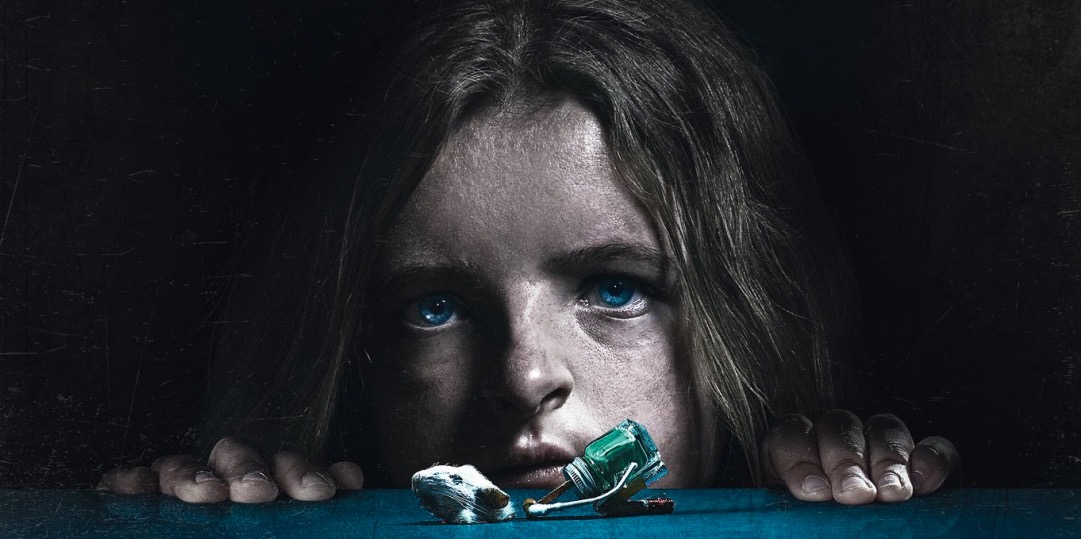
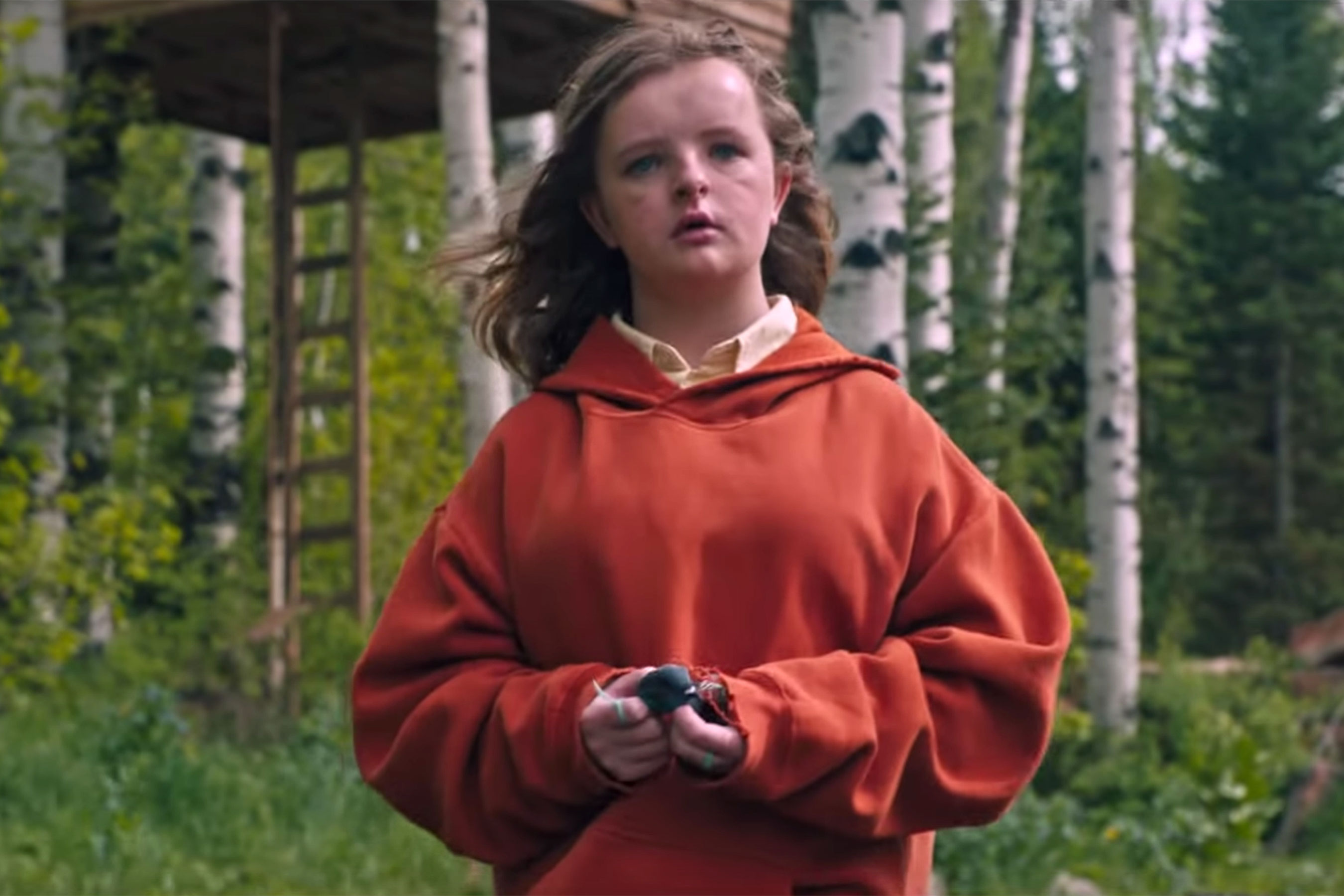
Grief and guilt color every somber, shadowy frame of writer/director Ari Aster’s unbelievably assured feature film debut, Hereditary.

With just a handful of mannerisms, one melodic clucking noise, and a few seemingly throwaway lines, Aster and his magnificent cast quickly establish what will become nuanced, layered human characters, all of them scarred and battered by family.

Art and life imitate each other to macabre degrees while family members strain to behave in the manner that feels human, seems connected, or might be normal. What is said and what stays hidden, what’s festering in the attic and in the unspoken tensions within the family, it’s all part of a horrific atmosphere meticulously crafted to unnerve you.

Aster takes advantage of a remarkably committed cast to explore family dysfunction of the most insidious type. Whether his supernatural twisting and turning amount to metaphor or fact hardly matters with performances this unnerving and visual storytelling this hypnotic.

Fright Club: Realism in Horror

Part of the fun of horror is to be able to separate yourself from the images onscreen. The old “this could never really happen” thing helps us sleep at night. But there are some films that rob you of that safety net, burrowing under your skin and into your subconscious specifically because you are convinced that it could definitely happen—maybe it already has.

Today we salute realism in horror with five films to give you nightmares.

5. Nothing Bad Can Happen (2001)

This film is tough to watch, and the fact that it is based on a true story only makes the feat of endurance that much harder. But writer-director Katrin Gebbe mines this horrific tale for a peculiar point of view that suits it brilliantly and ensures that it is never simply a gratuitous wallowing in someone else’s suffering.

Tore (Julius Feldmeier) is an awkward teen in Germany. His best friend is Jesus. He means it. In fact, he’s so genuine and pure that when he lays his hands on stranded motorist Benno’s (Sascha Alexander Gersak) car, the engine starts.

Thus begins a relationship that devolves into a sociological exploration of button-pushing evil and submission to your own beliefs. Feldmeier is wondrous—so tender and vulnerable you will ache for him. Gersak is his equal in a role of burgeoning cruelty. The whole film has a, “you’re making me do this,” mentality that is hard to shake. It examines one peculiar nature of evil and does it so authentically as to leave you truly shaken.

4. Open Water (2003)

Jaws wasn’t cinema’s only powerful shark horror. In 2003, young filmmaker Chris Kentis’s first foray into terror is unerringly realistic and, therefore, deeply disturbing.

From the true events that inspired it to one unreasonably recognizable married couple, from superbly accurate dialog to actual sharks, Open Water’s greatest strength is its unsettling authenticity. Every element benefits from Chris Kentis’s control of the project. Writer, director, cinematographer and editor, Kentis clarifies his conception for this relentless film, and it is devastating.

A couple on vacation (Blanchard Ryan and Daniel Travis) books a trip on a crowded, touristy scuba boat. Once in the water, they swim off on their own – they’re really a little too accomplished to hang with the tourists. And then, when they emerge from the depths, they realize the boat is gone. It’s just empty water in every direction.

Now, sharks aren’t an immediate threat, right? I mean, tourist scuba boats don’t just drop you off in shark-infested waters. But the longer you drift, the later it gets, who knows what will happen?

3. The Snowtown Murders (2011)

John Bunting tortured and killed eleven people during his spree in South Australia in the Nineties. We only watch it happen once on film, but that’s more than enough.

Director Justin Kurzel seems less interested in the lurid details of Bunting’s brutal violence than he is in the complicated and alarming nature of complicity. Ironically, this less-is-more approach may be why the movie leaves you so shaken.

An unflinching examination of a predator swimming among prey, Snowtown succeeds where many true crime films fail because of its understatement, its casual observational style, and its unsettling authenticity. More than anything, though, the film excels due to one astounding performance.

Daniel Henshall (also in Babadook) cuts an unimpressive figure on screen – a round faced, smiling schlub. But he brings Bunting an amiability and confrontational fearlessness that provides insight into what draws people to a sadistic madman.

https://www.youtube.com/watch?v=qcoCTA2IZ7c

2. Hounds of Love (2016)

Driven by a fiercely invested and touchingly deranged performance from Emma Booth, Hounds of Love makes a subtle shift from horrific torture tale to psychological character study. In 108 grueling minutes, writer/director Ben Young’s feature debut marks him as a filmmaker with confident vision and exciting potential.

It is the late 1980s in Perth, Australia, and at least one young girl has already gone missing when the grounded Vicki (Ashleigh Cummings) sneaks out her bedroom window to attend a party. This isn’t nearly as dumb a move as is accepting a ride from Evie White (Booth) and her husband John (Stephen Curry).

As the couple dance seductively and drink to celebrate, Young disturbingly conveys the weight of Vicki’s panicked realization that she is now their captive. It is just one in a series of moments where Young flexes impressive chops for visual storytelling, utilizing slo-motion, freeze frame, patient panning shots and carefully chosen soundtrack music to set the mood and advance the dreadful narrative without a spoken word.

And then, just when you might suspect his film to wallow in the grisly nature of the Whites’ plan for Vicki, Young turns to dialog sharp enough to upend your expectations, and three vivid characters are crafted in the suffocating dread of the White’s neighborhood home.

No doubt, events get brutal, but never without reminders that Young is a craftsman. Subtle additions, such as airplanes flying freely overhead to contrast with Vicki’s captivity, give Hounds of Love a steady dose of smarts, even as it’s shaking your core.

https://www.youtube.com/watch?v=UNEurXzvHqE

1. Texas Chainsaw Massacre (1974)

Not everyone considers The Texas Chainsaw Massacre a classic. Those people are wrong. Perhaps even stupid.

Tobe Hooper’s camera work, so home-movie like, worked with the “based on a true story” tag line like nothing before it, and the result seriously disturbed the folks of 1974. It has been ripped off and copied dozens of times since its release, but in the context of its time, it was so absolutely original it was terrifying.

Hooper sidestepped all the horror gimmicks audiences had grown accustomed to – a spooky score that let you know when to grow tense, shadowy interiors that predicted oncoming scares – and instead shot guerilla-style in broad daylight, outdoors, with no score at all. You just couldn’t predict what was coming.

He dashes your expectations, making you uncomfortable, as if you have no idea what you could be in for. As if, in watching this film, you yourself are in more danger than you’d predicted.

But not more danger than Franklin is in, because Franklin is not in for a good time.

So, poor, unlikeable Franklin Hardesty, his pretty sister Sally, and a few other friends head out to Grampa Hardesty’s final resting place after hearing the news of some Texas cemeteries being grave-robbed. They just want to make sure Grampy’s still resting in peace – an adventure which eventually leads to most of them making a second trip to a cemetery. Well, what’s left of them.

http://www.youtube.com/watch?v=eY4ldz615FA

Wait—Camping Is Dangerous?

Feral

by Hope Madden

Here’s the thing about Feral. It’s a decent movie: well-paced, competently directed, solidly performed. And there is not a single interesting, novel, surprising or inspired moment in it.

Maybe one, but it’s not reason enough to make this movie.

Three handsome couples head into the woods. They get a little lost, decide to pitch tents and find the lake in the morning.

They hear a noise.

One of them goes out to pee.

There’s something dangerous in the woods.

Duh.

Co-writer/director Mark Young follows up half a dozen low budget, middling-to-poor horror and action films with this adequate take on a monster-in-the-woods tale.

The sole reason the film stands out in any way is that Young’s hero, Alice (Scout Taylor-Compton) is a lesbian. Equally refreshing, males are as likely as females to fall prey to the hungry forest beast.

Bravo the nonchalance with which this is depicted, as the film does not strain to call attention to the novelty of this final girl and hero twist.

Yes, it’s about time. And yet, maybe Feral needed at least one other thing to set it apart? Because as it is, it’s simply a checklist of cabin-in-the-woods horror tropes, faithfully rendered, right up to the waning moments of its running time.

Taylor-Compton offers a perfectly serviceable performance, as do most of the actors around her. Olivia Luccardi, Renee Olstead and Landry Allbright all work to provide something close to a second dimension to underwritten, throwaway characters.

Lew Temple is an always welcome sight as the—wait for it—hermit whose assistance in this situation is suspect.

Together, cast and director generate scares by relying less on imagination and more on your familiarity with the genre itself. Therefore, assuming you have ever seen a horror movie in your life, you will not be scared.

You’ll just be reminded for the thousandth time that camping is an undeniably stupid thing to do. That’s what I got out of it, anyway.

All in the Family

Hereditary

by Hope Madden and George Wolf

Grief and guilt color every somber, shadowy frame of writer/director Ari Aster’s unbelievably assured feature film debut, Hereditary.

The Graham family is maybe less grief-stricken over the loss of Grandma than you might expect. Daughter Annie (Toni Collette) delivers a eulogy that admits her mother was difficult, secretive. Her oldest son Peter (Alex Wolff) seems nonplussed by it all. He’s probably stoned, though.

Supportive but exhausted husband Steve (Gabriel Byrne) is almost relieved, but the loss does bother the Graham’s socially isolated younger daughter, Charlie (Millie Shapiro, in one of the more chilling performances this year).

With just a handful of mannerisms, one melodic clucking noise, and a few seemingly throwaway lines, Aster and his magnificent cast quickly establish what will become nuanced, layered human characters, all of them scarred and battered by family.

The eulogy caps a striking film opening, where serpentine camera movement intertwines the Graham family with the intricate miniatures Annie creates inside their grand, secluded house. What we see suggests a scaled-down world of its own, lifelike but lifeless.

Art and life imitate each other to macabre degrees while family members strain to behave in the manner that feels human, seems connected, or might be normal. What is said and what stays hidden, what’s festering in the attic and in the unspoken tensions within the family, it’s all part of a horrific atmosphere meticulously crafted to unnerve you.

If horror fare such as The VVitch or It Comes at Night is not your bag, then you probably don’t care for the slow, detailed burn that A24 studio regularly serves. For those that do, hooray! Here’s another “adult” horror film, one that invests more in character development than in jump scares (though there are a few, including one so jarring it awakens the potential of the device).

Aster takes advantage of a remarkably committed cast to explore family dysfunction of the most insidious type. Whether his supernatural twisting and turning amount to metaphor or fact hardly matters with performances this unnerving and visual storytelling this hypnotic.

Applause to cinematographer Pawel Pogorzelski for turning this intricately designed home into a foreboding character all its own. Like Rosemary’s Baby, The Shining, The Haunting, The Others and any number of brilliant genre hauntings, Hereditary uses its surroundings to create a space where the most mundane moments take on a diabolical chill.

The family dynamic at work here is gut-punch authentic. Collette anchors the film with a performance full of grief, insecurity, bitterness and terror. It’s another in a string of award-worthy turns, and the support she gets from the ensemble, including a game Ann Dowd, elevates the tension in every intricately detailed frame.

You will have been quietly unnerved, startled from your seat, and then unsettled by the time the supernatural elements overtake the story. The peppering of hardline genre tropes in act 3 may feel like a cop out, but Aster’s interplay with the differing family members is too careful for such an easy summation.

The web of mental states, understandable suspicions and direct bloodlines layer the brutally effective fable, and Aster wields these weapons with stealthy precision. His work here is so smartly embedded that Hereditary continually tempts potential non-believers to dismiss where it leads as something you’ve seen before.

Don’t. You haven’t.

Fright Club: Best Horror Endings, Part 2

Thanks to S.A. Bradley of Hellbent for Horror for joining us to finish out our look at the best endings in horror movie history. A tough list to finalize, for sure, this one hits on some of the most brutal and memorable parting shots on film.

5. Kill List (2011)

Ben Wheatley’s diabolical 2011 indie slides from grim Brit crime thriller into something far more sinister.

Hitman Jay (a volcanic Neil Maskell) is wary to take another job after the botched Kiev assignment, but his bank account is empty and his wife Shel (an also eruptive MyAnna Buring) has become vocally impatient about carrying the financial load. But this new gig proves to be seriously weird.

The final act offers something simultaneously fitting and surprising. Wheatley’s climax recalls a couple of other horror films, but what he does with the elements is utterly and bewilderingly his own.

4. The Mist (2007)

If there’s one thing a successful Stephen King adaptation needs, it’s a writer/director who knows how to end a story. For all of King’s many strengths, ending his tale is no a strong suit.

Frank Darabont has certainly proven to have a knack for King’s source material, having helmed among the most successful and beloved films based on King’s books. But with The Mist, he outdid himself.

Thomas Jane plays a writer who, along with his young son, finds himself trapped in a grocery store when an opening in the space/time continuum allows giant, bloodthirsty creatures into New England. What begins as a wonderful creature feature turns into a terrifying Lord of the Flies before setting us up with a gut punch of utter, devastating perfection in a horror film ending.

https://www.youtube.com/watch?v=ktqNNsVJhUE

3. Carrie (1976)

Another excellent King adaptation, Brian De Palma’s Carrie streamlines King’s sprawling ending to focus our attention where it will do the most damage.

And yes, the entirety of Act 3 is magnificent, but De Palma started something with those final, lingering images. He goes back to the cheese-cloth fuzziness of the earliest moments of the film as Sue Snell (this is really all your fault, Sue Snell!) glows with goodness and self-sacrifice. Only she truly loved poor, misunderstood Carrie.

Sue carries white flowers to the unholy ground where Carrie White lies.

And BLAM! De Palma has invented a new and forever mimicked horror movie ending.

2. Martyrs (2008)

Holy shit. This film is a brilliant and brutal test of endurance.

Writer/director Pascal Laugier’s mystifying sense of misdirection shares the aching, dysfunctional love of two best friends as one descends into madness. But that is not the point.

A couple of abrupt story turns later and we learn the point of the film and the film’s title. That’s about the time we meet Mademoiselle (Cahterine Begin, perfect).

And after ninety minutes of dread and terror, the climax Pascal and Mademoiselle have in store for you may not be satisfying, but it is perfect.

1. Night of the Living Dead (1968)

From the brightly lit opening cemetery sequence to the paranoid power struggle in the house to the devastating closing montage, Night of the Living Dead teems with the racial, sexual and political tensions of its time. An unsettlingly relevant George A. Romero knew how to push societal panic buttons.

As the first film of its kind, the lasting impact of this picture on horror cinema is hard to overstate. His inventive imagination created the genre and the monster from the ground up.

Still, the shrill sense of confinement, the danger of one inmate turning on another, and the unthinkable transformation going on in the cellar build to a startling climax – one that utterly upends expectations – followed by the kind of absolutely genius ending that guarantees the film’s eternal position in the annals of horror cinema.

Tell Me a Story

Ghost Stories

by Hope Madden

Billed as a return to the old-school British horror anthology, Ghost Stories takes us through three paranormal cases passed from the chief investigator to a colleague he’s hoping can prove them false.

Ghost Stories is based on a popular stage play written by the film’s own co-writers and co-directors, Andy Nyman and Jeremy Dyson. Nyman also stars as Professor Goodman, the paranormalist who agrees to look into the trio of cases that muddled his hero and mentor.

The movie invests far more in this set up than expected, developing a fascinating connecting tale rather than a simple framing device that holds together a handful of otherwise disconnected shorts. Instead, we get a deeper story, one that influences and is influenced by the shorts in ways more organic than the run-of-the-mill anthology.

And though the three individual shorts contain nothing extraordinary in the way of scares, each offers a richly developed world full of detail and shadow. Every short has its own personality and style, although they all contain puzzle pieces that provide a coherence to the overall story, little items that range from the peculiar to the outright spooky.

A great deal of the success lies in the wonderfully human portrayal delivered by Nyman, who conveys humility, pomposity, self-righteousness, pity and terror in turns without ever hitting a false note. Other solid performances pepper the film. Martin Freeman is particularly engaging. Paul Whitehouse and Alex Lawther also bring uniquely high-strung characters to life.

As scares go, the first short packs the biggest wallop. A night guard at a dilapidated old asylum for women sees and hears strange things, leading to horror.

If that sounds like well-worn territory, that’s because it is. In fact, the three short films themselves don’t deliver much in the way of new scares, but that isn’t Nyman and Dyson’s intention. The terror here is far less paranormal than existential, and clever clues combine with crisp writing to create a full picture that’s more satisfying than it should probably be.

Respect

Revenge

by Hope Madden

The rape-revenge film is a tough one to pull off. Even in the cases where the victim rips bloody vengeance through the bodies of her betrayers, the films are too often titillating. Almost exclusively written and directed by men for a primarily male audience, the comeuppance angle can be so bent by the male gaze that the film feels more like an additional violation.

Well, friends, writer/director Coralie Fargeat changes all that with Revenge, a breathless, visually fascinating, bloody-as-hell vengeance flick that repays the viewer for her endurance. (His, too.)

Jen (Matilda Lutz—Rings) travels with her wealthy, married boyfriend to a remote desert getaway. She’s very young, bubble-gum sweet and trusting, a sexy charmer who wants far too much to be liked and noticed.

Her lover, Richard (Kevin Janssens) is happy to oblige with that attention. Unfortunately, so are his two sketchy hunting buddies (Vincent Colombe, Guillaume Bouchede), who show up a day early, interrupting the romance and creating an unseemly tension at the house.

Fargeat’s grasp of male entitlement and the elements of a rape culture are as sharp as her instincts for visual storytelling. Wildly off-kilter close-ups sandwich gorgeous vistas to create a dreamlike frame for the utterly brutal mess of a film unfolding.

The filmmaker articulates the gender power struggle throughout the film as sights and sounds reflect and repeat—the echo of the image of a trail of blood from Act 1, for example, wordlessly emphasizes the shifting power.

Symbol-heavy but never pretentious or preachy, the film follows a traditional path—she is betrayed, she is underestimated, she repays her assailants for their toxic masculinity. But between Fargeat’s wild aesthetic, four very solid performances, and thoughtful yet visceral storytelling, the film feels break-neck, terrifying and entirely satisfying.