Violence and cameos. It’s not a bad business model – just ask Deadpool & Wolverine.
Stream offers a steady stream of both, inside a rollicking blend of familiar tropes and beloved icons that should make Gen X horror fans positively giddy .
Linda Spring (the legendary Dee Wallace) owns a cozy hotel in the Pennsylvania countryside, and it’s finally ready for the big reopening. Perfect timing, because Roy and Elaine Keenan (Charles Edwin Powell, scream queen Danielle Harris) need a vacation. So they round up their gaming-obsessed son (Wesley Holloway) and boundary-testing daughter (Sydney Malakeh) and head for the hills.
But not long after checking in with Mr. Lockwood (Re-Animator‘s Jeffrey Combs), the Keenan family finds themselves in danger of checking out permanently. Four masked murderers are gleefully hunting the hotel guests, and competing for creative kill points in a sadistic competition that’s being streamed for wagering.
Director and co-writer Michael Leavy (a producer on Terrifier 2) keeps the body count high and the welcome practical effects in focus, with obvious nods to The Purge, Cabin in the Woods and more as the hotel guest list reveals more fan favorites from horror and beyond.
There’s Tony Todd, Bill Moseley and Felissa Rose! Plus, Tim Reid (WKRP), Terry Kiser (Weekend at Bernie‘s), Mark Holton (Francis from Pee Wee’s Big Adventure) and more to keep you pointing at the screen like DiCaprio in that one meme.
None of this is very original or profound, and the two-hour running time would definitely benefit from a more firm editing hand. But if you’d gladly trade all that for more cameos and bloody, nostalgic fun, Stream delivers a satisfying getaway.
2013’s Evil Dead proved that director Fede Alvarez could honor what made a franchise iconic, and still blast it with some new vitality. For me, his is the best in the deadite series.
No, I’m not saying Romulus is the new king of the Alien mountain, but it sits pretty comfortably at number three, right after the first two.
And it’s between those first two films that Alvarez, co-writing again with Rodo Sayagues, carves out a memorable place in the franchise timeline, two decades after the Nostromo crew answered what they thought was a distress signal.
We still fall in with a group of weary contractors from the Weyland-Yutani Corp., but this time they are twentysomethings who have grown up on a grim mining colony and never seen the sunlight. Rain (Cailee Spaeny, solid) and her brother Andy (a terrific David Jonsson) lost their parents “three cycles ago,” and it’s become clear that the chances of ever earning their release from Weyland-Yutani are slim to none.
But her friends Tyler (Archie Senaux), Kay (Isabela Merced), Bjorn (Spike Fearn) and Navarro (Aileen Wu) have a plan.
They steal the decommissioned Weyland ship that’s docked on the Romulus space station, reboot its hyper sleep program, and set off on a nine-year journey to a new life on a planet with sunshine.
But there’s something else waiting on Romulus. You know.
And Alvarez taps into what we know early and often, creating that instant layer of tension that comes from new characters discovering the “perfect organism” we’re already plenty familiar with. That familiarity also means there’s no need to spare the monster rum, so prepare for plenty of brutal alien action that harkens back to the glorious sci-fi horror of Ridley Scott’s original 1979 film.
The technical craftsmanship (save for one curiously shaky effect I won’t spoil) is stellar, as well. Alvarez leans on the expertise of cinematographer Galo Olivares (Roma) and sound designer Lee Gilmore (Prey, Dune: Part One) to create another gritty, foreboding aesthetic that reeks of desperation and terrifying breaks of silence.
As Rain and her crew start learning what they’re up against, Alvarez shifts gears to mirror the clock-ticking adventure thrills that James Cameron wowed us with in 1986’s Aliens. So yes, you will be reminded of past glory, but Romulus also has some clever and refreshing ideas of its own.
One of those is an ingenious twist on Alien lore that is so tense and visually compelling it is hard to believe we haven’t seen it before. Bravo. On a more philosophical level, the script is able to develop a fascinating contrast between humans and their “synthetic” counterparts, exploring how quickly some acid blood can change the nature of expendability.
But this is not another rumination on the Engineers and why they engineered. Romulus is back-to-franchise-basics, giving us a little more insight into the Corporation’s endgame with a reveal that leads to one humdinger of an Act Three.
And it’s how you accept what is waiting there, along with the film’s amount of fan service (for me, it’s one callback too many), that should cement your feelings about Romulus.
Credit Alvarez for another win. He knows what made this franchise work, and how to make it work again. Alien: Romulus is relentlessly tense, consistently thrilling, and one thoroughly crowd-pleasing ride.
The Wendigo is a presence that has proven hard to create on film. Ravenous—Antonia Bird’s 1999 small miracle of Western horror—conjures the spirit of the beast and comes off best. In her hands, the flesh consuming monster equates to the horrors of war.
For director Michael Altieri, working from a script by David Calbert, the mythical creature is a stand-in for cancer. It’s a great conceit, honestly, and one I wish had been executed a little more successfully.
Courtney Halverson plays Beth, who heads into the deep woods with her husband, Jay (Mark Famiglietti) to celebrate one year of remission. But the two are stalked by something terrifying and eventually fall into the hands of another person (Devon Sawa)—friend or foe, they can’t quite tell—as they plot their escape from the forest.
Altieri—formerly half of the Butcher Brothers (The Hamiltons, A Beginner’s Guide to Snuff, The Violent Kind), this time directing solo—soaks much production value from his two or three locations. A clear pro with limited means, Altieri makes the most of just three performers, generating dread and analogizing well.
The performers range in skill. Genre veteran Sawa convinces as the hunter with a past and an agenda and Famiglietti fares well enough as the supportive husband, although there’s not a lot to the role.
Most of the weight of the film lands on Halverson’s shoulders and she struggles early on, the layers of her conflicted emotions never taking authentic shape. She’s on more solid ground once Beth goes full badass, but without an early emotional hook for her character and relationship with her husband, you’re less invested in their survival.
More problematic is the presentation of the beast itself. Here the budget really makes itself known. Altieri oscillates between smoky swirls of digital FX and the shadowy presence of practical FX, but the combination is far from seamless. The film would have benefitted from sticking with practical and taking a less-is-more approach to what it showed.
It doesn’t entirely sink the production, but it does slow whatever momentum Consumed builds every time the beast arrives. Given its other setbacks, that’s enough to lessen the overall satisfaction the movie offers.
Very few 2024 films have been more eagerly anticipated by horror fans than Oz Perkins’s Longlegs. For some, it’s the filmmaker’s criminally underappreciated features The Blackcoat’s Daughter, Gretel & Hansel, and I Am the Pretty Thing That Lives in the House that compel interest in his latest effort.
For others, it’s lead Maika Monroe, a tremendous talent who routinely chooses challenging, satisfying horror, including It Follows, Watcher, The Guest and more. But for most people, let’s be honest, it’s the chance to see Nic Cage play a deeply deranged serial killer. (We are not made of stone!)
Cage excels, as does Monroe—both aided immeasurably by memorable support work from Blair Underwood and Alicia Witt. Monroe is Agent Lee Harker whose “hyper intuitive” nature has her assigned to a confounding case of whole families murdering one another, the only sign of an outside presence being an encoded note left at the scenes.
Monroe’s green FBI agent is as stiff and awkwardly internal as Cage’s psycho is theatrical. Her terror is as authentic as his lunacy.
Perkins shines as bright as ever, too. As always, his shot selection and framing evoke dark poetry. His use of light and shadow, architecture and space is like no one else’s.
His Longlegs direction and writing contain provocative notes of his own Blackcoat’s Daughter, but the plotting here is anchored by something slightly more predictable. I defy you to watch Blackcoat’s Daughter and figure out where it’s going, and yet it ends up exactly where it needs to be. For all the many fascinating flourishes and unsettling performances in Longlegs, there is something here that feels more obvious than any of the filmmaker’s previous films. Maybe it’s the clear influence of 90s thrillers: The Silence of the Lambs, Zodiac, maybe even a little bit of Se7en.
It is nagging—the sense, for the first time in any of his films, of recognizability. But don’t let that deter you. In many ways, it’s Perkins’s sleight of hand, his way of suggesting one thing while saying something else, of rooting audiences in something familiar expressly to pull that comfy rug away.
Longlegs is strangely beautiful, deeply unnerving, and a fine reason to be a horror fan.
Mia Goth and Ti West had both existed successfully separately in moviedom for years, West having become an indie horror filmmaking darling with his third feature, 2009’s The House of the Devil. Goth’s unique beauty and malleable ennui made her a showstopper as early as her 2013 feature debut, Nymphomaniac: Vol. II.
But, appropriately enough, it was with their collaboration that they both became stars.
Their 2022 feature X delivered a magnificent mashup of Boogie Nights and A Texas Chain Saw Massacre, a late Seventies grindhouse ode with style for miles. Easily the best film of West’s career, it was followed quickly with a prequel, the absolute lunatic genius of 2023’s Pearl.
If X articulated just how much skill West brought to a feature, Pearl declared Goth a talent to be reckoned with. She deserved an Oscar nomination. She was breathtaking.
And so, obviously, horror fans have been giddy since the trailer for the third film in the trilogy, Maxxxine, dropped. We circle back to Goth’s X character some years since the incident in Texas. A popular porn star, Maxine Minx is about to make the leap to legit films with a starring turn in a horror sequel.
The popularity of West’s series means a boost in both budget and cast. Elizabeth Debicki, Kevin Bacon, Giancarlo Esposito, Halsey, Michelle Monaghan and Bobby Cannavale class up the ensemble this go-round in a film that feels more apiece with late 70s/early 80s urban thrillers a la Eyes Of Laura Mars.
As warnings about California’s “Night Stalker” plead with women to be careful, Maxine asserts her ability to take care of herself, even as it becomes clear that she is being stalked. Maxine’s director (Debicki) warns her to eliminate the distractions in life, and Maxine makes a promise to do just that.
Okay, then, here we go!
But though blood does flow around West’s pastiche of 80s pop and fashion, nothing here pops like the uniquely stylized timestamps that helped make the first two horrors so memorable. Much of the film begins to feel like a series of setups in search of that elusive, satisfying payoff.
There’s no doubt Goth still commands attention, but West’s foray into the 80s seems less edgy, less ambitious, and just less horrific. The comments on fame and excess become broadly generic, and somehow Maxine herself becomes a little less interesting.
On its own, the film fits nicely into the role of a competent urban thriller. But when cast as the final piece of a potentially iconic horror trilogy, MaXXXine ends up limping to the finish.
Nightmares may be the source of all horror. There’s a theory that sleep paralysis may be to blame for history’s waking nightmares: ghosts, demons, specters. We dive into this horrifying complex and the horror films it has inspired.
5. The Night House (2020)
Director David Bruckner’s The Night House rests on a trusted horror foundation that’s adorned with several stylishly creepy fixtures. A remarkable as always Rebecca Hall plays the recently, startlingly widowed Beth whose grief combines with nightmares, sleuthing with doubt.
Though Beth’s neighbor (Vondie Curtis-Hall, always a pleasure) and best friend (Sarah Goldberg) both warn her not to fill the void in her life with “something dark,” the dark keeps calling. The more Beth digs into things Owen left behind, the more signs point to an unsettling secret life, and to the possibility that Owen may not have entirely moved on.
Beth’s sustained grief, and her indignation toward everyone who’s not Owen, carries an authenticity that gets us squarely behind Beth’s personal journey. And that pays dividends once the film relies on our belief in what Beth believes. Thanks to Hall, we end up buying in.
https://www.youtube.com/watch?v=ZB_Ir9TWj6c
4. Insidious (2010)
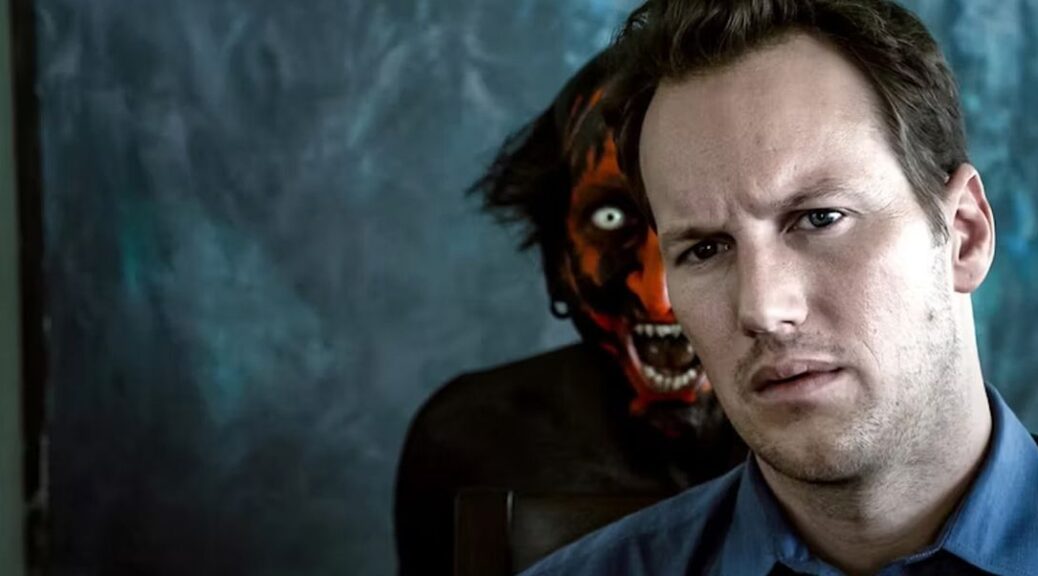
Director James Wan and writer (and co-star) Leigh Whannell launched a second franchise with this clever, creepy, star-studded flick about a haunted family.
Patrick Wilson (who would become a Wan/Whannell staple) and Rose Byrne anchor the film as a married couple dealing with the peculiar coma-like state affecting their son, not to mention the weird noises affecting their house. The catch in this sleep paralysis film is that we are not with the dreamer. Instead, the dreamer is an innocent, helpless child, combining the hallucinatory imagery with child-in-peril tension.
But what makes this particular film so effective is that we get to go into The Further to reclaim the lost soul. It’s a risky move, but these filmmakers do what few are able to: they show us what we are afraid of.
3. A Nightmare on Elm Street (1984)
Teens on suburban Elm St. share nightmares, and one by one, these teens are not waking up. Not that their disbelieving parents care. When Tina woke one night, her nightgown shredded by Freddie’s razor fingers, her super-classy mother admonished, “Tina, hon, you gotta cut your fingernails or you gotta stop that kind of dreamin’. One or the other.”
Depositing a boogieman in your dreams to create nightmares that will truly kill you was a genius concept by writer/director Craven because you can only stay awake for so long. It took everyone’s fear of nightmares to a more concrete level.
The film was sequeled to death, it suffers slightly from a low budget and even more from a synth-heavy score and weak FX that date it, but it’s still an effective shocker. That face that stretches through the wall is cool, the stretched out arms behind Tina are still scary. The nightmare images are apt, and the hopscotch chant and the vision of Freddie himself were not only refreshingly original but wildly creepy.
2. Borgman (2013)
Writer/director Alex van Warmerdam delivers a surreal, nightmarish, sometimes darkly comical fable guaranteed to keep you off balance. It is meticulously crafted and deliberately paced, a minefield of psychological torment.
van Warmerdam offsets his mysterious script with assured, thoughtful direction, buoyed by a fine ensemble cast and crisp, sometimes remarkable cinematography.
Like its title character, Borgman is unique and hypnotic, leaving you with so many different feelings you won’t be quite sure which one is right.
1. The Nightmare (2015)
An effective scary movie is one that haunts your dreams long after the credits roll. It’s that kind of impact that most horror buffs are seeking, but even the most ardent genre fan will hope out loud that Rodney Ascher’s documentary The Nightmare doesn’t follow them to sleep.
Sleep paralysis is the phenomenon that inspired Wes Craven to write A Nightmare on Elm Street. It’s a clear creative root for Insidious, Borgman, and scores of other horror movies. But it isn’t fiction. It’s a sometimes nightly horror show real people have to live with. And dig this – it sounds like it might be contagious.
We spend a great deal of time watching horror movies, and we cannot remember an instance in our lives that we considered turning off a film for fear that we would dream about it later. Until now.
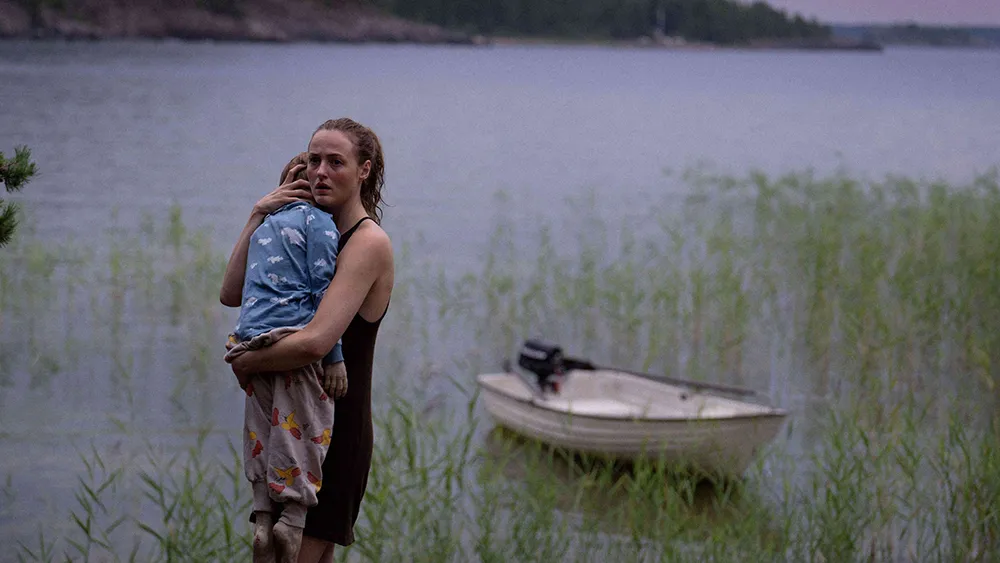
With his source novel and screenplay for Let the Right One In, John Ajvide Lindqvist mixed vampire bloodlust and emotional bonds. Handling the Undead (Håndtering av udøde) finds Lindqyist turning similar attention to zombies, teaming with director/co-writer Thea Hvistendahl for a deeply atmospheric tale of grief, longing, and dread-filled reunions.
We follow three families in Norway, each one dealing with tragedy. An old man and his daughter (Renate Reinsve, The Worst Person in the World) have lost their young son/grandson; an elderly woman still grieves for her lifelong partner; while a man (Anders Danielsen Lie from The Worst Person in the World and Personal Shopper) and his children struggle to accept that the wife and mother they depend on (Bahar Pars) may now be gone.
Hvistendahl sets the stakes with minimal dialog and maximum sorrow. Characters move through sweaty summer days in a fog of grief that’s expertly defined by cinematographer Pål Ulvik Rokseth. They grasp at memories and battle regret over feelings left unexpressed.
And then an unexplained electro-magnetic event hits Oslo…and the dead aren’t so dead anymore.
In the film’s first two acts, Hvistendahl unveils these awakenings with a barren and foreboding tenderness. Everyone knows this can’t end well, but the tears of joy that come from seemingly answered prayers create moments that straddle a fascinating line between touching and horrifying.
How much of our grief is defined by selfishness? And how far could it push us before we finally let go?
Those may not be new themes for the zombie landscape, but the way Hvistendahl frames the inevitable bloodshed goes a long way toward making her shift of focus less jarring. While so much time is spent exploring the pain of those left behind, we know that eventually zombies gonna zombie.
And indeed they do, but Hvistendahl sidesteps excess carnage for a more subtle form of gruesome. The interactions between the living and the undead take on a surreal, experimental quality that seems plenty curious about whether we’d really think dead is better.
After all, the grieving family in Pet Sematary went asking for trouble. Here, the trouble comes calling, and Handling the Undead answers with a bleak but compelling study of desperation meeting inhuman connection.
There is something clever underlying directors Alex Henes and Matthew Merenda’s first feature, Mind Body Spirit.
Anya (Sarah J. Bartholomew) is sharing videos of her journey to wellness. She’s just moved cross country into the home her departed grandmother Verasha left her. She never knew her grandmother, but she sees this as an opportunity for a new life.
Her only friend on this side of the country—wellness influencer Kenzi (Madi Bready)—stops by occasionally to check in and collab on videos. But she can’t really get behind Anya’s new direction, taken from a hand-written book left by the deceased and written mostly in Russian.
Mind Body Spirit has a bit more compassion for influencers than most horror films do. Though the tale mines the cultural appropriation and blissful ignorance that is easy to find among influencers—particularly those peddling wellness—the depiction is not entirely one sided.
Bartholomew’s performance is endlessly vulnerable and empathetic, but even rushed and cynical Kenzi gets a nice arc that deepens the impact of the film’s horror. Because naturally, naïve Anya misinterprets the underlying message in the tome her departed grandmother left her.
The directors also write, along with Topher Hendricks, and their script sometimes dances with language, toying with the way mystical turns of phrase can easily be used, depending on inflection, to terrify.
Shot in one location with a total cast of 4 (one of whom appears exclusively via FaceTime), Mind Body Spirit rarely gives evidence of its budget. The found footage approach is sometimes fresh—the ads between video segments are inspired—but like most films of the genre, there is no integrity to the actual footage: who shot it, who edited it, why and how it got posted, etc.
More problematic is the occasional blood gag. Outright horror is included sparingly, but when it is, the unreality of the gag is pretty evident. The filmmakers don’t really tread any new ground, either. They just pull in social media as a slightly askew way to tell the same story you’ve seen a number of times.
Nonetheless, Bartholomew shoulders what is at least 75% one-person-show and does it with enough tenderness that Mind Body Spirit never loses your attention.
Muse and madness, art and commerce duke it out in a slew of films that mine the depths of the artistic nature. We welcome author LCW Allingham, whose dark novella Muse looks at the darker side of art, to join us as we use a little fuzzy math to share our favorite horror movies about artists.
6. Devil’s Candy (2015)
Ethan Embry plays Jesse Hellman, struggling metalhead painter who, with his wife and pre-teen daughter, just bought a bargain of a house out in the Texas sticks. Why so cheap? Amityville shit.
Jesse’s a metalhead and a painter and writer/director Sean Byrne (The Loved Ones) mines the dark artist nature for all its worth in a film that benefits from a rockin soundtrack, and a slew of good performances (shout at the devil to Pruitt Taylor Vince).
A convoluted storyline that mixes supernatural with serial killer is a bit of a drawback. But clocking in at under 90 minutes, Devil’s Candy is a tight little rocker. The lyrics are familiar, but the riffs still kick ass.
5. House of Wax (1953)
An update of the 1933 Mystery of the Wax Museum and precursor to Wax Works (and, of course, the 2005 loose remake), this Vincent Price classic tells a campy fun tale that also resembles a lot of Price’s other films.
An elegant artist turned disfigured madman, Price’s Henry Jarrod creates masterful wax figures of historical horrors. But there’s a secret behind the realistic look!
Yes, you totally know what that secret is, but that diminishes the fun of this film not one tiny bit. Price is fun, Carolyn Jones is a hoot, Charles Bronson’s a wild piece of casting. And the whole bit of insanity boils down to the fact that an artist who wants to earn a living has to sacrifice their integrity.
4. A Bucket of Blood (1959)
Roger Corman’s riff on House of Wax sets this dark comedy in LA’s beanik community of the late Fifties. Dick Miller’s perfect as a dimwitted janitor who accidentally becomes the next big thing by turning a cat, then a police officer, then other people he kills into sculptures.
The more he makes, the more famous he becomes, and the more he rationalizes the murders. Corman’s tone is cynical but fun, working from Charles B. Griffith, who’d also write Corman’s Little Shop of Horrors. It’s a weird little gem of a film.
3. Stopmotion (2024)
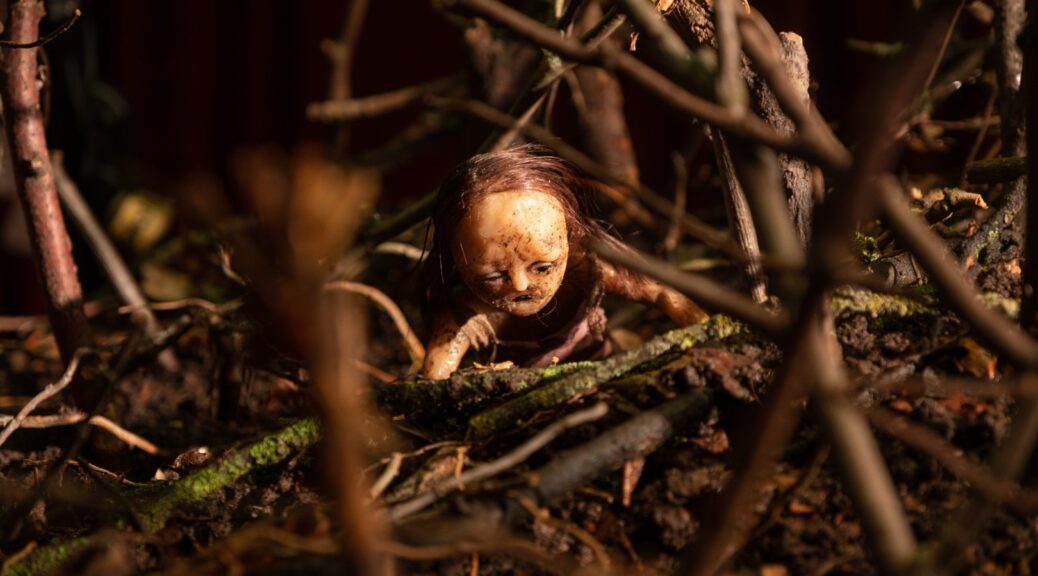
There will be moments when you’re watching Robert Morgan’s macabre vision Stopmotion that you’ll think you see the twists as they’re coming. That’s a trick. Morgan, writing with Robin King, assumes you’ll catch the handful of common horror twists, but he knows that you won’t predict the real story unfolding.
Aisling Franciosi (The Nightingale) is Ella. She’d like to make her own stop-motion animated film, but instead she’s helping her mom finish hers. Ella’s domineering mother Suzanne (Stella Gonet, very stern) is a legend in the field, and she makes Ella feel as if she has no stories of her own to tell.
Stopmotion delivers a trippy, uncomfortable, and deeply felt tale of a struggling artist. This is a descent into madness horror of sorts, but it’s also the story of an artist coming to a realization about what scares her most.
2. Mandy (2018)
Writer/director Panos Cosmatos’s hallucinogenic fever dream of social, political and pop-culture subtexts layered with good old, blood-soaked revenge, Mandy throws enough visionary strangeness on the screen to dwarf even Nicolas Cage in full freakout mode.
Like Cosmatos’s 2010 debut Beyond the Black Rainbow, Mandy is both formally daring and wildly borrowed. While Black Rainbow, also set in 1983, shines with the antiseptic aesthetic of Cronenberg or Kubrick, Mandy feels more like something snatched from a Dio album cover.
When his artist girlfriend Mandy (Andrea Riseborough) is kidnapped and killed by a cult, Red (Cage) enacts a bloody quest for revenge.
Or is it all the story Mandy’s painting?
Either way, it is as badass as it can be.
1. Candyman (2021)
For Nia DaCosta’s sequel to the 1992 classic, we go back to Chicago’s now-gentrified Cabrini Green housing project with up-and-coming artist Anthony McCoy (Yahya Abdul-Mateen II), whose works have taken a very dark turn since he learned of the Candyman legend from laundromat manager William Burke (Colman Domingo).
DaCosta’s savvy storytelling is angry without being self-righteous. Great horror often holds a mirror to society, and DaCosta works mirrors into nearly every single scene in the film. Her grasp of the visual here is stunning—macabre, horrifying, and elegant. She takes cues from the art world her tale populates, unveiling truly artful bloodletting and framing sequences with grotesque but undeniable beauty. It’s hard to believe this is only her second feature.
By the time a brilliant coda of sadly familiar shadow puppet stories runs alongside the closing credits, there’s more than enough reason for horror fans to rejoice and…#telleveryone.
When Brandon Cronenberg decided to be a filmmaker—one keenly interested in corporeal horror—it felt both natural and brave. Natural because his father David is perhaps the all-time master of body horror. Brave for the same reason.
It turns out, Brandon Cronenberg is a natural. (If you haven’t, you should definitely see his films.) But the family affair doesn’t end with him. Daughter Caitlin Cronenberg’s feature debut Humane sets her slightly apart from the fellas, though.
Written by Michael Sparaga, Humane takes place in a near future where climate catastrophe requires that each country on earth purge itself of 20% of its population. A euthanasia program allows citizens to enlist, helping the nation reach its quota, helping the planet survive, and providing government funds to the family bereaved. But with numbers lower than expected, the nation is considering conscription.
Cronenberg’s tale focuses on one family in particular. Patriarch Charles York (Peter Gallagher), retired from a storied career as a TV journalist, invites his four adult children (Jay Baruchel, Emily Hampshire, Sebastian Chacon, Alanna Bale) home for an important dinner. Dad, and the kids’ stepmother Dawn (Uni Park), have decided to enlist.
With this dinner bombshell Cronenberg sets in motion a realistically cynical look at a government’s opportunistic manipulation of a thinning of the herd. She then zeroes in on the festering effect of privilege on the York children, simultaneously throwing shade at the “salt of the earth” types who are as violently judgmental as their position allows.
Gallagher’s great as the martyr desperate to leave a legacy, and Hampshire’s ferociously self-serving villain is a joy. Enrico Colantoni delivers the most fascinating, frustrating character, easily stealing every scene.
Humane makes two horror films in a row, following last week’s Abigail, where you don’t really root for anyone. Everyone’s terrible and it’s slightly disappointing that anyone survives at all. Worse, the big revelation that pushes characters toward the climax is unearned.
More problematic is that there are two fairly substantial omissions—not plot holes, just conveniently placed gaps in clarification that feel like intentional cheats. Beyond that, the writing often feels slightly behind the times. Jared York’s (Baruchel) claim that he “doesn’t see color” feels more suited to a tale set a decade ago rather than in a near-future dystopia.
These writing concerns don’t sink the effort entirely. An intriguing premise buoyed with darkly comedic performances, plus a brisk 90 minute runtime keep Humane entertaining, but it’s hard not to feel a bit disappointed.