Tag Archives: horror movies

Up All Night

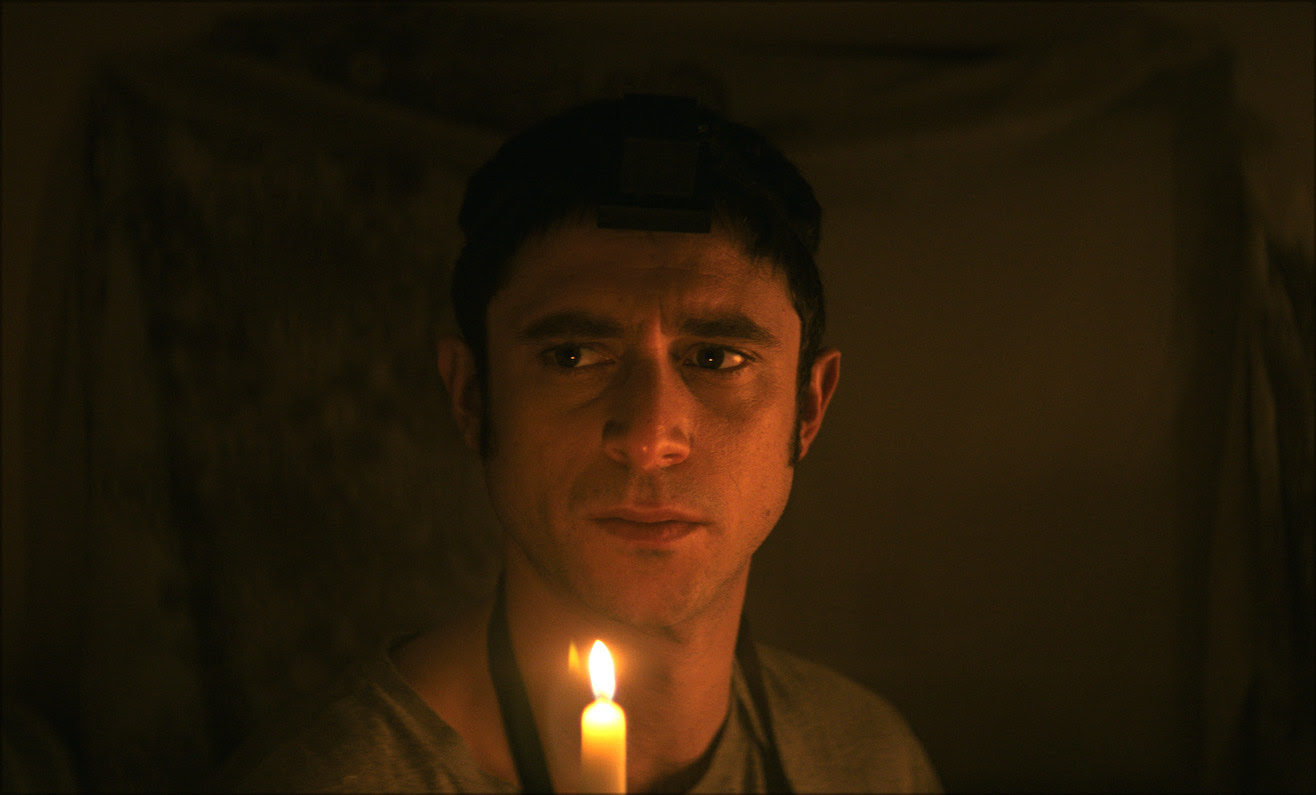
The Vigil

by Hope Madden

For the garden variety movie viewer (myself included), it can be hard to get comfortable with the idea of spending a bunch of time alone in a room with a corpse, even if that’s your job.

We always expect to see a figure sit up under that drawn sheet.

When done well, movies that pick that particular scab can be incredibly effective. Keith Thomas’s The Vigil is one such movie. He leaves us alone in a house with the late Mr. Litvak. But we’re not really alone, are we?

An endlessly tender Dave Davis plays Yakov, who has recently left the Hasidic Jewish community in Brooklyn. It’s so recent, in fact, that he goes to a support group of others like himself, all of them in need of some kind of training to figure out how to live a “normal” life. And as much as Yakov really does want to distance himself, when his former rabbi approaches him about Mr. Litvak, well, Yakov just needs the money.

Yakov will serve as Mr. Litvak’s shomer, sitting with the body for the night to protect Mr. Litvak’s soul until his body can be interred in the morning. Mrs. Litvak (Lynn Cohen, remarkable as always) doesn’t want him there.

It’s a straightforward enough premise, something Thomas executes with plenty of spectral dread. What the basic outline and many of the jump scares lack in originality, The Vigil makes up for with the underexplored folklore and customs specific to Orthodox Judaism. The general ideas are common to the genre, but the specific acts and images are precise and certainly new to horror cinema.

As Yakov’s night wares dangerously forward, he faces a Mazzik. But, as is usually the case in films such as these, the real demons Yakov faces are his own.

Thomas’s screenplay may present that metaphor more bluntly than necessary, and certain scenes are just so obvious (old footage projecting on a wall near a diorama of newspaper clippings and photos). But the compassion the filmmaker has for both Yakov and Mrs. Litvak, combined with the impressive performances from both actors, gives the film a soft spot that heightens the dread and terror.

It’s a solid effort, one that reframes a story you’re used to in a way that gives it more depth and emotional power.

Enter at Your Own Risk

Wrong Turn

by Hope Madden

Writer/director Mark P. Nelson is kind of fixated on the social rifts in America.

His 2018 film Domestics followed the aftermath of an apocalypse intentionally deployed by a ruling class looking to thin the herd. The smaller herds only fracture into groups of radicalized, violent maniacs, though, and even your white bread nuclear family types are threatened.

Which is to say, this filmmaker brings a different perspective to the inbred cannibal franchise, Wrong Turn.

Yes, big city liberals on a hiking trip run afoul of Virginia rednecks. But where Nelson varies from the script of the 2003 original is in reimagining the antagonists.

We know there’s trouble afoot from the opening scene when Matthew Modine drives into the quaint Virginia town looking for his character Scott’s missing daughter (Charlotte Vega). The lovely blonde was last seen here, along with her African American boyfriend, another heterosexual couple, and a gay couple, one of whom is Muslim.

Because apparently not one of these people has ever seen a horror movie.

The film gets into trouble early by conjuring moments from Tucker and Dale vs Evil, which is a great movie. It’s an insightful lampooning of movies just like the one Nelson is trying to make, though.

Nelson’s more successful when he borrows a bit from the likes of Green Room and The Ritual, although he plants Wrong Turn’s folkloric barbarism firmly on American soil. This is a film about America.

If you’re looking for a movie about cannibal families, you will most definitely be disappointed.

The horror is less unseemly, all of it in support of Nelson’s image of a divided America. There are some startling moments of gore, and other more harrowing ideas that suit the picture well.

Nelson takes too long getting to the point, unfortunately. The film runs just under two hours, which is at least 20 minutes too long. A trimmer runtime might have helped the film leave more of a mark. Instead, Wrong Turn is a decent if unremarkable backwoods thriller.

https://www.youtube.com/watch?v=fkoCo1bpNRs

Far From Wonderland

Alice Fades Away

by Rachel Willis

Watching Alice Fades Away is akin to stepping into a Flannery O’Connor short story (without the overt religiosity). The film crackles with ominous energy as a larger-than-life villain haunts the rural, isolated landscape. As a horror/thriller blend, this one hits the mark.

In his first feature, writer/director Ryan Bliss crafts a film that seamlessly blends genres: horror, drama, mystery. Set in the early 1950’s, the film is reminiscent not only of O’Connor, but films such as The Night of the Hunter. The tradition of the Southern gothic lends itself well to Bliss’s vision.

Seeking refuge on her uncle Bishop’s farm, Alice (Ashley Shelton) is on the run. She is accepted by a group of people suffering from their own terrible pasts, all taken under the wing of her generous uncle. We’re not quite sure of Alice’s story, but we’re given disturbing glimpses as past and present merge on screen.

As Alice’s past catches up with her, we’re held hostage to the increasing dread the situation conjures. The cinematography works wonders at turning the idyllic setting of Bishop’s farm into one of dreadful isolation. Its setup as the ideal hideaway melts beautifully into a desolate trap.

All of the actors in the movie are well cast, but the one to watch is Timothy Sekk as Holden. His performance, along with Bliss’s writing, adds depth to a character that could have easily been a lifeless stereotype. Sekk’s energy adds to the mounting horror of what has followed Alice.

With so many great scenes, the film’s blunders are even more obvious. It performs best when it has minimal dialogue, some lines are melodramatic while others are poorly delivered. Many themes are broached, but only a few are explored. A character disappears, leaving us scratching our heads. And what’s with the rabbits?

However, the few moments that don’t land can’t wholly detract from the film’s overall effect. Bliss knows how to invoke dread, and the moments that take us out of the film are easily ignored considering what works. You’ll care less about some of the details and more about what’s ahead.

Same goes for the filmmaker, as Alice Fades Away is a debut that will make you curious to see what Bliss does next.

https://www.youtube.com/watch?v=CBZJCLqUO6c

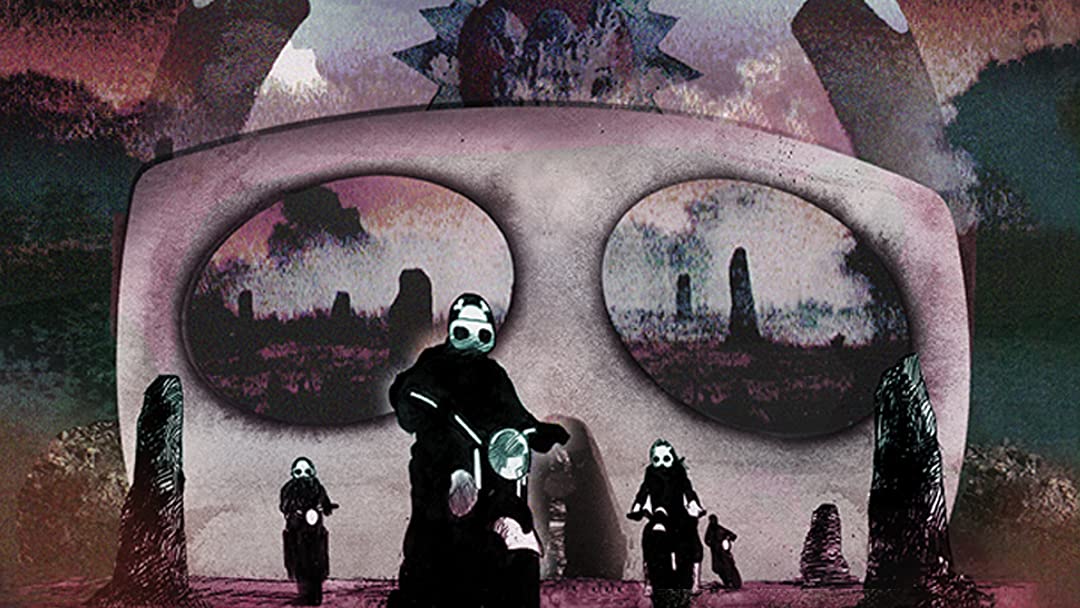
Fright Club: Motorcycle Mayhem

Is it ever too cold to ride? My God, yes – it is way too cold to ride. So instead, we invited our friend Jamie Ray from the Fave Five from Fans podcast to join us as we talk through our favorite chopper-themed horror flicks. Some of these are pretty bad – but so fun! – so prepare for a bumpy ride!

5. Deathmaster (1972)

Oh, there were so many terrible films that could have taken this final slot. Would it be Blood Freak? Chopper Chicks in Zombietown? Werewolves on Wheels?

So many choices!

Deathmaster gets the nod because it combines all the required elements – Satanism, hippies, and motorcycles – but it cranks it up a notch. This subgenre owes its very existence to Charles Manson, who braided those three elements together in the minds of Americans. But Deathmaster takes that one step further by creating a specifically Manson-like character—the charismatic guru Khorda – and making him a vampire.

Why is he a vampire? Maybe because they cast Robert Quarry (Count Yorga), who already had the teeth. Who knows, it comes off as utter nonsense, but it makes for a little fun variety.

4. These Are the Damned (1963)

Black leather, black leather, smash smash smash

Black leather, black leather, crash crash crash

Black leather, black leather, kill kill kill

I got that feelin’ – black leather rock

That, in a nutshell, is how dumb this movie is. And yet, like the ludicrous theme song, it’s just weird enough to stay in your head.

Oliver Reed is at his youngest, sultriest, Oliver Reediest as the street tough who chases his sister and her older American boyfriend right into some kind of underground lair where radioactive children are kept.

Suddenly you’re in what appears to be an entirely different movie. It’s like somebody sewed A Clockwork Orange and Village of the Damned together, buried them under rock, and them lobotomized the final version.

Which is kind of appealing, isn’t it?

3. Psychomania (The Death Wheelers) (1973)

More adorably sketchy Brit motorbikers in this one. Some mods wreak havoc on their bikes (because apparently drivers in England have no idea how much more vulnerable a bike is than a truck). But they crave more!

More danger! More excitement!

So they decide that if they kill themselves they can will themselves back to life and become hip zombie bikers.

The film’s appeal has a strange longevity. It’s never scary for even a moment, and it’s often outright ludicrous – if not adorable – but it does have a style and a couple of performances you can admire.

2. The Rocky Horror Picture Show (1975)

Yes, Janet. Life’s pretty cheap to that type.

Whether it’s the Transylvanians traveling dto Time Warp with the doctor and his domestics, or the arrival (and quick removal) of Eddie, motorcycles play a significant role in this treasure of a film.

It was 1975, after all, and no self-respecting edgy, dangerous film could possibly convince the world of its anti-establishment bonafides if no one rode a motorcycle. It turns out, it’s the ones who aren’t riders you need to watch out for.

1. Race with the Devil (1975)

At some point somebody decided they were tired of seeing the motorcycle riders always turning out to be Satanic hippies. Nope, not this time.

The film re-teams Peter Fonda and Warren Oates – so great together in 1971’s The Hired Hand. They’re buddies taking a top-of-the-line RV out for a spin across Texas, along with their lovely wives. They stop to camp in the middle of nowhere, the guys take their bikes out for a stretch, and next thing you know, they’re being followed by Satanists and who knows which of these backwoods locals can be trusted?

The film generates real tension in much the same way Spielberg had done four years earlier with Duel. That tension, supported by solid, gritty performances, give this one surprising punch.

The Forest is Satan’s Church

Sator

by Hope Madden

There are a lot of films that can be considered a passion project. Sator fits the category, that passion coming from writer/director/producer/cinematographer/composer Jordan Graham.

Graham essentially did everything besides act, and it gives the film a specific vision that’s clearly undiluted by collaboration. That is in the film’s win column, but it’s also a bit of a loss.

Graham’s vision is one of isolation, dysfunction, paranoia, and mental illness—or it’s about the presence of a supernatural being with bad intentions concerning Adam (Gabriel Nicholson) and his family.

The sound design here is as impressive as the way Graham guides us visually. The filmmaker shifts slowly between different aspect ratios, as well as from black and white to color and back. The movement is so gradual as to almost hypnotize.

Meanwhile, somewhere in the background Nani (June Peterson)—Adam’s grandmother—talks on and on. The voice is pre-recorded, and she’s talking about, and sometimes talking for, a presence.

Graham slides in an out of the audio, which often mismatches the visual although all of it blends into a dreamlike horror. The film resembles a nightmare, but it may also simply resemble a form of mental illness that is itself a bit of a nightmare.

Graham’s slow burn unveils trauma as it wallows in its aftermath, and the thick fog of delusion hangs everywhere. But films like this sometimes paint themselves into a corner because there are no real answers, and the audience investment needs to be repaid somehow.

Here’s where Sator comes up slightly short. Though the sudden punctuation of violence startles you from the dream of the film and provides a reasonable and horrific cap to the picture, it’s hard to shake the feeling that the whole adventure took too long. Act 2 feels too often like a slog, and the entirely unresolved images peppered here and there wind up feeling less like spooky ambiguity and more like points of frustration.

It’s not nearly enough to sink this Herculean effort. Graham’s film possesses an artistry that can’t be denied, and it succeeds more than it fails.

Fright Club: 1, 2, or 3 Person Casts

Fuzzy math takes over as we count cast members and celebrate minimalist films that can seep into your nightmares with the help of very few performers. There are some great options, but here are our six favorites films with 1, 2, or 3 people in the cast.

Thanks Fright Clubber Michael for the topic!

6. Hard Candy (2005)

It would be two years before Elliot Paige burst into public consciousness as the hilarious and pregnant teen in Juno–still a kid getting herself into trouble, I guess. But the trouble in Hard Candy is tougher to manage.

Paige is a force of nature, playing off Patrick Wilson in a cat-and-mouse game where roles are flexible. Director David Slade keeps tensions ratcheted up to an unbearable level while Brian Nelson (who collaborated with Spade on the underappreciated vampire flick 30 Days of Night) twists the knife in a script as sharp and shady as these actors are wily and hard edged. It’s a breathless exploration of all that’s bad in the world.

5. Buried (2010)

If you’re claustrophobic, you might want to sit this one out. A tour de force meant to unveil Ryan Reynolds’s skill as an actor, Buried spends a breathless 95 minutes inside a coffin with the lanky Canadian, who’s left his quips on the surface.

Writer Chris Spalding stretches credibility as he tries to keep the crises lively, which is unfortunate because the simple story and Reynolds’s raw delivery makes this a gut-wrenching experience.

4. Creep (2014)

This true two-man show boasts dark and twisted humor, a great jump scare, and a truly exceptional mask.

Writer/director Patrick Brice plays Aaron, hapless videographer seeking work, thrills, maybe even love. He answers an ad to record Josef (Mark Duplass) at home, and then on the road. The film toys with that inner warning you hear and then choose to ignore.

Duplass has an incredible aptitude for pushing boundaries just enough to prick that inner voice but not quite enough to guarantee that you’ll head for the exit. As red flag after red flag go unheeded, Brice unveils more and more chilling detail.

3. 10 Cloverfield Lane (2016)

This one is a threesome. Well, not if Howard (a glorious John Goodman) has anything to say about it.

The feature debut from director Dan Trachtenberg toys with the idea of an alien invasion (or some kind of chemical warfare), but it keeps you snugly indoors with Howard and his guests Michelle (Mary Elizabeth Winstead) and Emmett (John Gallagher Jr.). Guess which one Howard doesn’t really want around?

The trio of performances compel your attention, even in the few down moments. This is a tight, taut thrill ride—even if it is confined to one guy’s basement.

2. Antichrist (2009)

Boy, Charlotte Gainsbourg and Willem Dafoe are a one/two punch in this one. A married couple overcoming the guilt and desperate grief of their son’s death, the two make some increasingly dreadful decisions.

Alone in their apartment, the two bodies take up much of the screen. Once we move to the cabin in the woods, the colors become deeper and darker, the atmosphere denser, and the actors appear almost tiny and insignificant inside all this throbbing, living nature. Both performances are jarring and fantastic in a movie quite unlike any other.

1. The Lighthouse (2019)

The one thing you just don’t do as you descend into madness is spill your beans.

Dafoe again, this time with Robert Pattinson as his wickie mate in one of the most fascinating examinations of power shifts in horror history. Gorgeously photographed in black and white and boasting 2019’s best sound design, The Lighthouse offers these two actors plenty to work with.

But in the end, it’s the performances that kill you. Madness!

Queen of Mean

The Queen of Black Magic

by Hope Madden

Filmmaker Kimo Stamboel resurrects 70s exploitation horror with The Queen of Black Magic. Not a remake or really a sequel or reboot of the Indonesian cult classic, Stamboel’s film is more inspired by its namesake.

Fun throwbacks to Liliek Sudjio’s original over the end credits do more to remind you how comparably tame this one is.

Not that it is without merit. Or gore.

Hanif (Ario Bayu) returns to the orphanage where he grew up. The man who raised him is dying, and now Hanif and his two childhood friends reunite, families in tow, having come home to pay their respects.

But bad things haunt the old orphanage.

Of course they do! What are you, new?!

Stamboel and writer Joko Anwar can’t come up with anything particularly new when deciding what, exactly, is the problem with this orphanage. But they populate their scenes of carnage with actors who generate some empathy, and put those actors into scenes that are pretty compelling. Especially if you have a thing about crawly creatures. Or a sensitive gag reflex.

Anwar is a master of conjuring nightmarish environments, complete with nightmare logic. His 2017 remake Satan’s Slave and his 2019 original Impetigore throw narrative logic aside in favor of a denseness of dread punctuated with unseemly carnage.

The Queen of Black Magic makes more narrative sense, but somehow that seems to flatten it out a little. It feels less magically horrific and unsettling as the films Anwar directs. But strong, dimensional performances elevate every scene.

And both filmmakers know gore. They know what sounds make you wince, what sights make you look away. Between that, the performances, and a tight enough screenplay to keep your interest, they’ve pieced together a tough little horror flick worth a genre fan’s time.  

Check Out Anytime You Like

The Night

by George Wolf

Come on, it’s been forty years, can’t we get a new haunted hotel flick without you screaming bloody redrum?

That’s fair, but what if the new take unveils a slow shower curtain reveal and turns to a golden oldie for creepy soundtrack effect?

Oh. Well then the film’s going to have to work even harder to avoid the dustbin of shameless Shining wannabees.

The Night does just that, and ultimately manages to find its own voice with a goosebump-inducing tale of a frantic family’s sleepless night away from home.

Babak (Shahab Hosseini) and Neda (Niousha Noor) are an Iranian couple living in the U.S. They have a new daughter, who is pretty well-behaved during their game night with some friends.

Neda’s not happy that Babak knocked back a few shots during the evening, so when the GPS starts acting crazy on the drive home and the baby is fussing, Neda suggests they find the nearest hotel and start fresh in the morning.

But from the moment the clerk at the Hotel Normandie (George Maguire – perfectly weird) greets Babak with tales of all the death he’s seen in his life, things ain’t right.

They get worse.

Director/co writer Kourosh Ahari proves adept at spooky atmospherics, with long, not-quite-Kubrick hallways around many turns and unsettling, not-exactly Serling paintings hanging about. Things go bump, voices carry and wandering souls appear, with Hosseini (The Salesman, A Separation) and Noor proving terrific vehicles for selling the scare.

Babek was hoping the booze would dull his toothache, but now he’s just exhausted from being kept awake by what he’s seeing…or just thinks he’s seeing. While Neda, increasingly desperate just to keep her child safe, begins to suspect the key to escaping may lie in revealing some long-held family secrets.

As a simple device with plenty of easy fright potential, the haunted house has served horror well for decades. But elevating it to a metaphor for something deeper is only as successful as the weakest pillar involved.

The Night shows strength all around, and by daybreak a pretty well-known blueprint builds to a satisfying reminder on the cost of deception.

Fright Club: Best Cosmic Horror

Author Hailey Piper joins the club this week to tear through about 25 different cosmic horror movies, eventually landing on some fuzzy math favorites. Join us, won’t you?

6. Hellraiser

“The box…you opened it. We came.”

Man, those cenobites were scary cool, weren’t they?

Hellraiser, Clive Barker’s feature directing debut, worked not only as a grisly splatterfest suited to the Eighties horror landscape. It’s easy to see the film as an occult or supernatural horror, but it’s just as likely a cosmic tale of a dimension you could open without even trying, another reality on the other side of an afternoon’s puzzle past time.

5. Spiral (Uzumaki) (2000)

Higuchinsky’s mind bending 2000 Japanese horror went underappreciated upon release – likely because of the interest in ghosts and digital horror during that period. That’s too bad, because his adaptation of the not-yet-released Manga Uzumaki is a delight.

It starts with a snail shell. It ends with a town in chaos. If you missed it, you should remedy that now.

4. In the Mouth of Madness

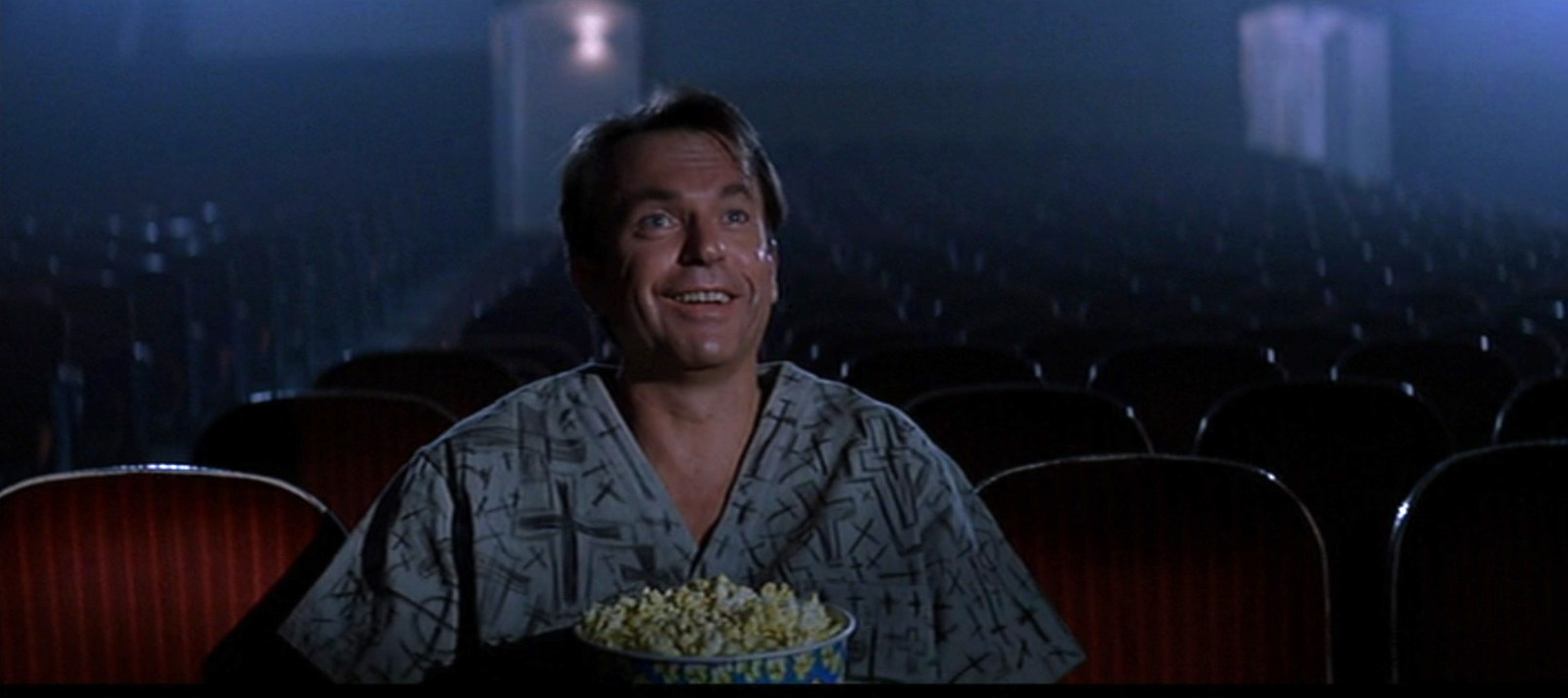
Sutter Cane may be awfully close to Stephen King, but John Carpenter’s cosmic horror is even more preoccupied by Lovecraft. The great Sam Neill leads a fun cast in a tale of madness as created by the written world.

What if those horror novels you read became reality? What if that sketchy writer with the maybe-too-vivid imagination was not just got to his own page, but god for real? This movie tackles that ripe premise while ladling love for both of the horror novelists who made New England the creepiest section of America.

3. The Endless

There is something very clever about the way Justin Benson and Aaron Moorehead’s movies sneak up on you. Always creepy, still they defy genre expectations even as they play with them.

Camp Arcadia offers the rustic backdrop for their latest, The Endless. A clever bit of SciFi misdirection, the film follows two brothers as they return to the cult they’d escaped a decade earlier.

It is this story and the pair’s storytelling skill that continues to impress. Their looping timelines provide fertile ground for clever turns that fans of the filmmakers will find delightful, but the uninitiated will appreciate as well.

2. Annihilation

Alex Garland’s work as both a writer (28 Days Later…, Sunshine, Never Let Me Go) and a writer/director (Ex Machina) has shown a visionary talent for molding the other-worldly and the familiar. Annihilation unveils Garland at his most existential, becoming an utterly absorbing sci-fi thriller where each answer begs more questions.

Taking root as a strange mystery, it offers satisfying surprises amid an ambitious narrative flow full of intermittent tension, scares, and blood—and a constant sense of wonder.

Just his second feature as a director, Annihilation proves Ex Machina was no fluke. Garland is pondering similar themes—creation, self-destruction, extinction—on an even deeper level, streamlining the source material into an Earthbound cousin to 2001.

1. The Mist

David Drayton (Thomas Jane) and his young son head to town for some groceries. Meanwhile, a tear in the space/time continuum opens a doorway to alien monsters. So he, his boy, and a dozen or so other shoppers are all trapped inside this glass-fronted store just waiting for rescue or death.

Marcia Gay Harden is characteristically brilliant as the religious zealot who turns survival inside the store into something less likely than survival out with the monsters, but the whole cast offers surprisingly restrained but emotional turns.

The FX look amazing, too, but it’s the provocative ending that guarantees this one will sear itself into your memory.

Hair of the Dog

Bright Hill Road

by Hope Madden

No one looks forward to the consequences of their actions. If you believe in God, they’re coming for you one way or the other.

Robert Cuffley’s latest economically made horror Bright Hill Road shadows no-longer-functioning alcoholic Marcy (Siobhan Williams) through a pretty bad stretch. It would be hard to imagine things getting any worse, really. So, Marcy decides to drive across country to spend some time with her sister Mia in California.

She doesn’t drive straight through, though. She wakes up in her car in front of a pretty dodgy looking hotel in some forgotten little town and finds herself checking in. The place is super weird, though, and Marcy’s never sure if she’s hallucinating, drying out, or seeing and hearing ghosts.

Most of the time Bright Hill Road works—playing on your guesswork without giving away all its secrets. Sometimes it does not work. But the film lives and dies with Siobhan Williams’s performance.

Slight but scrappy, she takes on the image of Angela Bettis or Elliot Page. You worry for her, believe in both her vulnerability and the chip on her shoulder that might get her through it. She’s weary but spirited and more than anything, she’s in denial.

Cuffley’s direction takes on a hallucinatory quality that suits Susie Maloney’s trippy script. Both Act 1 and Act 3 feel rushed—the opening bit of violence shocks you out of complaining, but the final moments border on being unearned. Still, the meat of the film meanders at a creepy pace, one that conjures the feeling of a bad dream.

Bright Hill Road has an intentional, low rent Overlook quality to it—something both supernatural and seedy. It carries its own internal logic, and while the toughest eruptions of violence hit us in the film’s opening moments, it has some grim images to share as the hotel takes on additional guests.

Cuffley doesn’t break a lot of new ground, but his is an appealing riff on a familiar tune. Most of our demons are within. Trauma takes on an even more sinister form when it’s mixed up with shame. Addiction is its own monster. No one likes a shared bathroom.