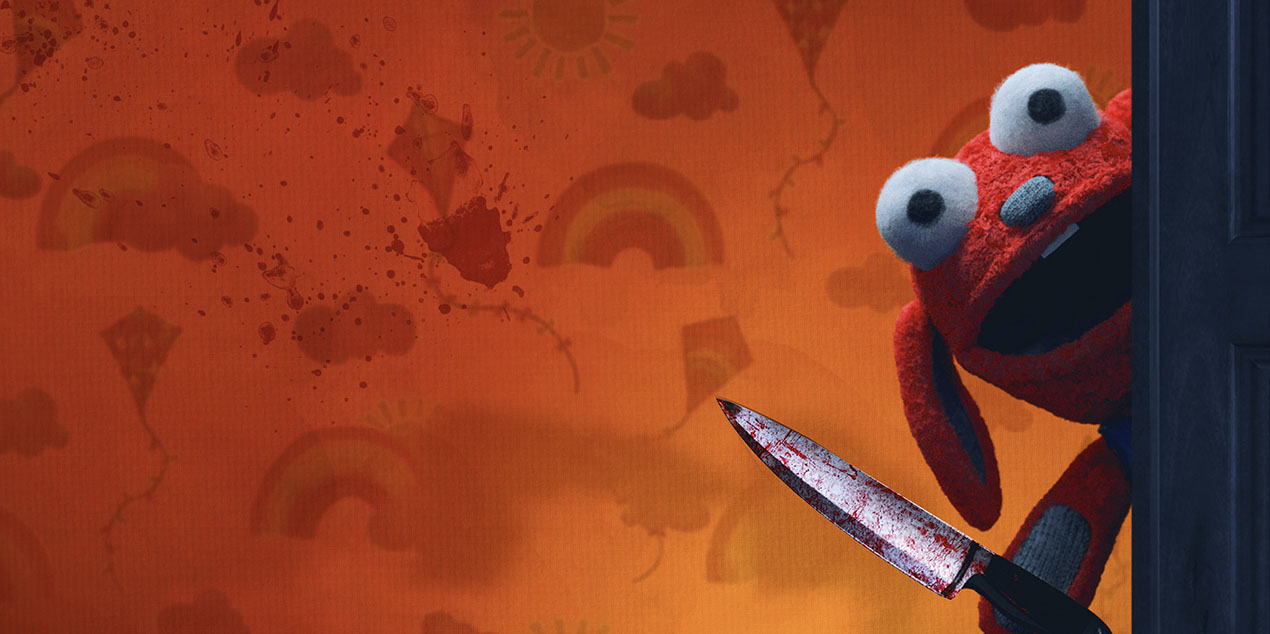
There is something inescapably silly about toy horror.
Whether it’s a marionette or a ventriloquist doll, a china doll (with those
creepy eyelashes) or a friend til the end, the toy itself can only generate so
much authentic terror. After that, it’s just goofiness.
Karl Holt embraces that combination for his vengeful toy
story, Benny Loves You.
We open on a spoiled child, her new Barbie, and the now-discarded
stuffed dog, Todd. But soon we’re entrenched in the subpar life of Jack (Holt,
who also writes and directs). It’s his 35th birthday. He still lives
with his parents, still sleeps in his childhood bedroom that is still decorated
as it was when he was seven.
Jack is a toy designer, but co-worker Richard (a colossal
tit) makes him look like a peon. They’re both up for the same promotion. Things
go from bad to worse, then worse, then worse still. Finally, Jack decides to
grow up and put away all his childish things, including his beloved stuffed
bear (Bear? With those ears?), Benny.
It goes less than well, the unruly toy responding like a bloodthirsty
if very cheery jilted lover.
Holt turns in a solid performance as the stunted man-child living a nightmare of adulthood, and there are times when his writing suggests something deeper. He almost develops themes about arrested development, the entertainment/gaming/toy industry, maybe even masculine entitlement. Almost.
Instead of digging in, he settles for a superficial but
generally charming and very violent comedy. (Dog lovers may want to skip this
one.)
Low-rent FX heighten the film’s silliness and general wrong-headed glee. All the support work is on target, from George Collie as the noxious Richard to the love interest (Claire Cartwright), dog-loving boss (James Parsons), and incompetent cops (Anthony Styles and Darren Benedict). Each understands the tone here and nails it.
It’s just that it doesn’t amount to much. A mean spirit punctuates the romplike atmosphere a couple of times and feels wildly out of step with the balance of the film, but other than that, Benny Loves You offers forgettable, bloody fun.
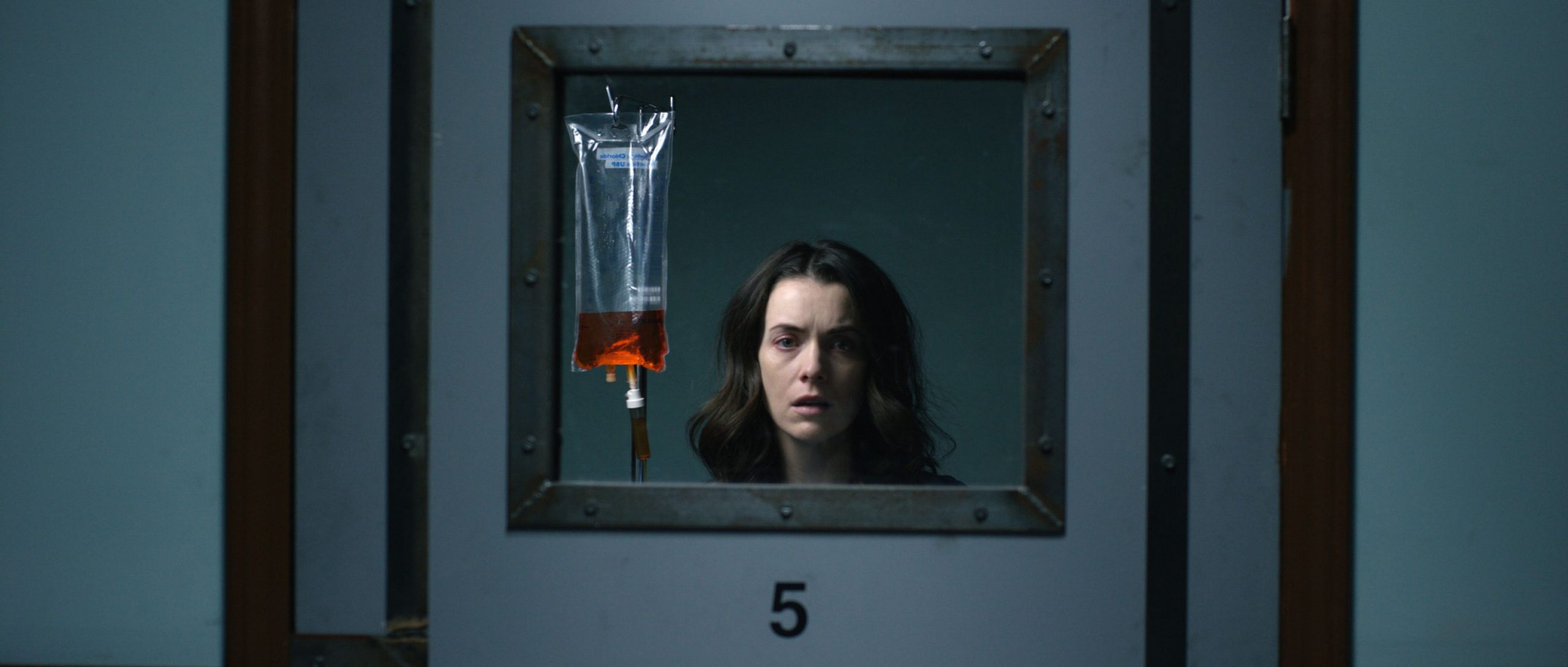
Imagine going to the hospital for a routine appendectomy and waking up in a hospital that’s a little too Hostel. That’s what happens to Sharyn (Ashlynn Yennie) in director Peter Daskaloff’s film, Antidote.
From the mysterious and gruesome opening, we’re quickly plunged into this warehouse-style hospital where patients are chained to their beds and answers to the question ‘why am I here?’ are in short supply.
We’re not given much information as Sharyn awakens to this nightmarish situation. A mysteriously polite doctor (Louis Mandylor) appears to offer her medicine for her anxiety, leading us down one alley of possible explanations. Glimpses into Sharyn’s past as she struggles to cope with her new world offer another possibility.
However, Daskaloff wants to keep us guessing with each new
bit of information. As Sharyn meets her fellow patients, we learn new facets of
the horrific experimentation that happens at the facility. A mysterious serum
promises healing from every possible injury: amputation, burning, hanging,
tongue removal. The antidote is really quite magnificent stuff.
While I was initially reminded of films like Hostel and
Saw, Antidote doesn’t relish the gore quite as much. Most of the
brutality happens off-screen, and the film is more interested in the tension
created by the unknown. The suggestion of violence often does more to put the
audience on edge than the ultra-realistic rendition.
But to work, the film must keep the audience hooked. We need to feel Sharyn’s anxiety and desperation, and this is where the film struggles. Watching Sharyn wander around the hospital (why is she allowed to do this?) is repetitive and boring. It’s easy to grow disinterested as we wait for the big reveal.
Yennie does bring an everywoman quality to her character. Sharyn’s dubious past unfolds throughout the film and is the most interesting aspect. It’s a problem when the film’s backstory is more engaging than the present action. Maybe if we’d seen a little more of that suggested violence, I’d have sat up straighter in my seat.
Playing against our everywoman, Mandylor makes Dr. Aaron Hellenbach a cool, sophisticated, sadistic madman – a bit like Hannibal Lecter only not so terrifying. He never feels like a villain, even though he appears to be the main engineer of the ‘experiments’ done on the patients.
Antidote has the elements to be intriguing, but doesn’t effectively deliver them.
This episode is years in the making. We’ve talked about doing this, jotted down ideas and characters, debated — and now it’s finally here. Well, half of it, anyway. There’s just no way to reasonably fit the best side characters—those fully deserving a film of their own—in just one podcast. So here is our list, in alphabetical order (no need to rank them!). This one’s for the ladies.
Smartly dressed, thoughtful, loving, misguided, and as if a creature from an entirely different film. She made a decision and, sure, Angela probably should have been a part of that decision-making process. But it wasn’t Aunt Martha’s fault that Paul was a no-good cheater. Or that Judy was such an asshole. I mean, yes, that surprise at the end was due in large part to Aunt Martha, but as for the campers—they had it coming.
Mademoiselle (Catherine Begin), Martyrs (2008)
What a presence. Commanding, calm, wizened and weary, Catherine Begin’s Madamoiselle has such resigned decisiveness that it’s almost impossible to argue with her. She turns something that could have easily become torture porn into a mesmerizing glimpse at zealotry.
Ruth Gordon earned an Oscar as Rosemary and Guy Woodhouse’s busybody neighbor Minnie Castavet, wife of Roman and nonplussed chief operations officer of the coven. Yes, Roman made a good figurehead, but somebody has to just keep things moving. And as long as she ate the mouse, everything’s fine.
Mother (Fons Rademakers), Daughters of Darkness (1971)
One of the many glorious things about Harry Kumel’s decadent 1971 vampire fable is the way it feels like two or three different films colliding into one elegant bloodletting. Mother casts a looming shadow over one of those storylines, that of a young, beautiful couple recently married, Stefan and Valerie. Even before they’re ensnared in Countess Bathory’s love web, Stefan (an irredeemable asshole if ever there was one) needs to figure out how to break the news of his nuptials to Mother.
Whenever a new character makes you simply need to hear an entirely other story, one focused on whatever they’re not telling you about that character, you know you have a winner. The way Fons Rademakers pets his butler’s head, holds court in the greenhouse, and wields unspecified but somehow sinister power over Stefan begs for its own movie.
Mrs. Baylock (Billie Whitelaw), The Omen (1976)
From the moment she takes the screen, Mrs. Baylock is the new sheriff in town. She quietly yet immediately takes control of the Thorn household. If you didn’t know who was alpha, you only need to see who the dog listens to. Yep, Richard Thorn is in trouble. To say nothing of his poor, useless wife Catherine.
Tangina (Zelda Rubenstein), Poltergeist (1982)
Walks in the house, owns the place. Tangina is a force of nature with a soft little lilt and a no-nonsense approach to cleaning the Freeling house. Her confidence gives the character more than a huckster vibe, although there is a sense of showmanship to everything she does. But when she is addressing the living, it’s best not to give trick answers.
Zelda (Andrew Hubatsek), Pet Sematary (1989)
Scary as hell. Sure, the cat, little Gage, that guy with the brain on the outside of his skull—all of it has its horror charm. But the real nightmare in Mary Lamber’s adaptation of the Stephen King tale is Rachel Creed’s guilty memory of the sister who terrified and horrified her, the sister she believes died—at least in part—due to her own negligence and hatred. Thanks to the angular, monstrous vision of Andrew Hubastek in a nightdress, all contorting ribcage and spine, Zelda became easily the scariest thing in the film.
For a while, less can be more in a monster movie (i.e. Jaws). Still, diving into a werewolf flick without the budget for showy CGI or well-crafted practicals is ambitious.
While Dog Soldiers proved you can make an impression without breaking the bank, so much of werewolf lore is about transformation – both the literal and the metaphorical – that as much as one layer falters, the other needs to stand that much stronger.
Unfortunately, Bloodthirsty is shaky on both grounds.
Pop singer Grey (Lauren Beatty) became a sensation with her first album, and now she’s feeling the pressure to produce a blockbuster follow-up. Grey is plagued by nightmarish hallucinations about turning into an animal, so her doctor (Michael Ironside in a distracting cameo) has upped her meds.
Plans for the second album look brighter when famed producer Vaughn Daniels (Greg Byrk) agrees to helm the project. He invites Grey and her girlfriend Charlie (Katherine King So) to stay at his lavish home/studio in the Canadian wilderness while they record, but Charlie is concerned about Vaughn’s unsavory past.
Grey isn’t, but things get weird as soon as Vaughn’s creepy housekeeper (Judith Buchan) shows the ladies to their room. Music isn’t the only reason Vaughn volunteered to work with Grey, and director Amelia Moses (Bleed With Me, which also starred Beatty) attempts a tone of Gothic seduction as the mystery unfolds.
But it’s not really much of a mystery. The script, from Wendy Hill-Tout and her daughter Lowell (who also contributes original songs) delivers pale imitations of the carnivorous temptations in Raw as their film builds to a reveal that is less than shocking.
Bloodthirsty is a werewolf film that never really feels like one, which has both up and down sides.
Ditching the focus on full moons for a lesbian artist at a creative crossroads has promise, but the characters lack the depth required for any effective metaphor to take root. Pair that with scant transformation scenes which impress more with sound than vision, and a horror fan’s thirst for blood will likely be left wanting.
Her name is Anne Fedder. But Jakob’s Wife pretty much sums up the nearly invisible routine Anne (Barbara Crampton) is living.
Jakob Fedder (Larry Fessenden) is the well-known pastor of a small town church, and Anne is well known as his wife. Anne’s life seems to have only gotten smaller during her thirty-year marriage, and if pressed, she’d probably admit she wouldn’t mind a little shakeup.
A late-night meeting with old boyfriend Tom (Robert Rusler)? Intriguing, but his seduction skills got nuthin’ on The Master (Bonnie Aarrons, aka The Nun), who’s waiting on them both.
The next morning, Jakob gets the first clue that things will be changing.
“Did you make breakfast?” he asks.
Anne answers, “I’m not hungry.”
At least not for pancakes. After The Master’s touch, Anne is a brand new woman, sporting fresh hair and makeup, tight, low-cut dresses and provocative new appetites.
It’s no wonder this has been a passion project for Crampton (who’s also a producer), and she makes the extended feminist metaphor ring gloriously true.
Director/co-writer Travis Stevens (Girl on the Third Floor) wraps the bloodlusty tale in a fun retro vibe of ’80s low-budget practical, blood spurting gore, but it’s Crampton (and the chemistry with her fellow horror vet Fessenden) who truly elevates this beyond the standard vampire playbook.
To see a female character of this age experiencing a spiritual, philosophical and sexual awakening is alone refreshing, and Crampton (looking fantastic, by the way) makes Anne’s cautious embrace of her new ageless wonder an empowering – and even touching – journey.
Stevens revels in the B-movie underpinnings, stopping short of tackling any systemic issues inherent in a woman’s longtime restlessness. The focus stays intimate, and only on how Anne’s new freedom affects Jakob and their local community (which remains nameless, though filming was entirely in Mississippi).
But with Crampton and Fessenden so completely in their element, Jakob’s Wife is an irresistibly fun take on the bite of eternity. Here, it’s not about taking souls, it’s about empowering them. And once this lady is a vamp, we’re the lucky ones.
It’s the most wonderful time of the year! The Oscars are coming and we get to spend some time celebrating the worst of the horror movies made by nominees. Have they made great horror? Well, Daniel Kaluuya (Get Out) and Anthony Hopkins (The Silence of the Lambs) are nominees, so yes. In fact, there are a whole slew of horror films made by this year’s batch of nominees, most of them far too good to qualify for this list.
No, we want the skeletons. And every single year, nominees have them. Here are this year’s contenders.
5. Daniel Kaluuya: Chatroom (2010)
What is the matter with this movie? Writer Edna Walsh, who’d go on to pen the excellent films Disco Pigs and Hunger, adapted her own stage play. Hideo Nakata (Ringu, Dark Water) directed. The cast is exceptional: Daniel Kaluuya, Imogen Poots, Aaron Taylor-Johnson all play Chelsea teens who hang out in a new chatroom.
How did this to so terribly wrong? As five kids get to know each other online, it turns out that one is a predator looking for a very specific weakness and playing the others against each other. Not a terrible premise, and the overall design is surreal enough to avoid individuals at their laptops. Performances are solid as well.
But, ideas come and go, conflicts arise and disappear, characters appear without warning or introduction and vanish, and storylines fail to make any real sense.
4. Amanda Seyfried & Gary Oldman: Red Riding Hood (2011)
A two-fer! Truth be told, there were plenty of two-fer opportunities with Oldman on this list (he also co-starred with fellow nominee Anthony Hopkins in both Bram Stoker’s Dracula and Hannibal).
But this is the one, because it lets us talk about another time he co-starred with Amanda Seyfried. Both are nominated for their work together in 2020’s Mank. Neither were nominated for this.
Twilight director Catherine Hardwicke helms this fractured fairy tale, and it looks gorgeous. The story is overly complicated and stupid, but it hits all the important marks: Valerie (Seyfried) is loved by two potentially dangerous boys whose passion might actually kill her. Oh, it’s such an angsty YA dream!
Seyfried is fine. Oldman is a ham, and he’s such a joy when he’s a ham. There’s a fun cameo from Julie Christie as well. But the weak writing and utterly laughable performances by the two suitors (Max Irons and Shiloh Fernandez) are enough to sink this one deep.
3. Anthony Hopkins: The Wolfman (2010)
Hopkins has a lot of horror in his closet, much of it bad. The Rite is the least watchable, but this is the one that’s the most fun to lambast. What a ludicrous waste of talent!
Sir Anthony bites through scenery (among other things) as Sir John Talbot, father of Lawrence Talbot (Benicio Del Toro). Their background is murky, their property is foggy, their accents are jarringly different.
Director Joe Johnson likes stuff big and hokey. You’ll find that here. The film won an Oscar for its make up, which we cannot get behind. The final battle looks like two rhoided-up Pomeranians duking it out.
Still, Emily Blunt and Hugo Weaving are good, and even though the great Del Toro sleepwalks through this embarrassment, Hopkins is always a bit of fun when he camps it up in a bad movie.
2. Gary Oldman: The Unborn (2009)
Oh, Gary Oldman, why do you so rarely say no?
He’s just in so, so, so many movies – mathematically speaking, it only makes sense that a lot of them will be terrible. Like this one, a film that feels less like a single cohesive unit and more like a string of individual scenes filmed as examples of cliches and non sequiturs.
Oldman plays a rabbi who works with a Christian minister played by Idris Elba to help an incredibly entitled young woman who looks like a blander version of Megan Fox (Odette Annable) exorcise a Jewish demon who likes twins.
Cam Gigandet, Meagan Good, James Remar and Carla Gugino also co-star for no logical reason. Well, writer/director David S. Goyer is also writer David S. Goyer (Blade trilogy & Nolan’s Batman trilogy). This movie came immediately on the heels of 2008’s The Dark Knight, which explains Oldman as well as some unmet expectations.
1. Youn Yuh-jung: Insect Woman (1972)
Youn Yuh-jung is a treasure. Her fifty years in movies boasts dozens of remarkable performances usually marked by quirky humor that never feels gimmicky. She’s had a hell of a 2020, with pivotal supporting roles in Beasts Clawing at Straws and the Oscar-nominated Minari.
She does what she can in writer/director Kim Ki-young’s inexplicably titled Insect Woman.
Oh my God, what a trainwreck! What is going on here? Youn plays a teen with nowhere to turn once her father returns to his wife. Now her mother, older brother and she must fend for themselves. But how? Well, maybe she can be mistress to an impotent (or is he?!) high school teacher.
The film swings back and forth between highly irrational melodrama to profoundly unsexy eroticism to unconvincing gritty street indie. An hour or more into this, they introduce a vampire baby.
I swear!
Then it’s on. Who knows what the hell is happening or is going to happen or why it’s happening or what the film is trying to say. If it were a better movie I’d think Insect Woman was trying to make a point about misogyny and classism in South Korea.
What would you do if everyone in your small town turned into a bloodthirsty zombie after eating sausage from an esteemed food truck?
Witness Infection is the story of three friends Carlo (Robert Belushi), Gina (Jill-Michele Melean) and Vince (Vince Donvito), who try to save themselves and the people they love from the zombie infection rapidly spreading through their hometown.
Writers Carlos Alazraqui and Jill-Michele Melean deliver humor, but the emotion is lacking. There are so many perfectly placed references from classic movies like Raiders of the Lost Ark, Pulp Fiction and The Godfather. Carlo’s dad (Carlos Alazraqui) even makes a reference to Miller’s Crossing, telling his sons to “always leave one in the head.” Still, Witness Infection misses the mark when it comes to creating a unique and unforgettable screenplay.
It does, at times, add to the film. Andy Palmer’s direction only seems to cancel it out. Palmer chooses camera angles that don’t make sense and create noticeably unnatural transitions. So unnatural that it takes away from the focus of the movie, and it’s hard to maintain interest when so little of the film surprises.
Zombie apocalypse movies have been done countless times. Witness Infection is too similar to every other zombie movie to be remembered. Nothing really stands out until we get to see Rose (Monique Coleman) dominate the screen.
The heroic trio finds Rose at one of the few bars in town, still defending herself and the bar. She refuses to be the black character that dies before the end of the movie. Declaring that she isn’t going to give up, Rose claims the most memorable quote from the film: “I am not Samuel L. Jackson in Jurassic Park. I am not Yaphet Kotto in Alien, nor am I Dwayne mother fucking Johnson.”
Unfortunately, after that amazing performance, we don’t see her again.
Palmer cut out the one thing that kept me interested in his film and left me instead with three of the most stale and even at times frustrating characters in the movie.
Big, old, empty houses are creepy, right? Lots of dark, musty spaces to get the imagination conjuring up all manner of nasty things that might be lurking.
There are some nasty things lurking in Shudder’s Stay Out of the F**kingAttic, but the way they’re conjured leans more toward laborious and silly.
Shillinger (Ryan Francis), Imani (Morgan Alexandria) and Carlos (Bryce Fernelius) are three ex-cons working for the Second Chance moving company. When they show up to move the elderly Vern (Michael Flynn) out of his mansion, he surprises them with a hard-to-resist offer.
If the three will work through the night to get the job done by morning, Vern will reward them with a nice chunk of cash. Two things, though: stay out of the attic and the basement.
Bet they don’t.
The use of the edited F**king in the title suggests a mischievous, knowing tone that got off the bus in a totally different zip code than director/co-writer Jerren Lauder. That’s too bad, because this film is in serious need of lightening up.
Almost every element – from performances to dialog to cheesy score to practical creature effects – lands as stilted and overly staged. Though Flynn does make an effective villain and one particular creature ain’t half bad, even the brisk 80-minute run of Lauder’s feature debut seems like an overstayed welcome.
As our Second Chance movers uncover secrets about Vern (and each other), Lauder leans on body horror closeups and weak jump scares on the way to a big reveal that is bigly ridiculous.
Shudder’s been on an impressive run of originals lately, which makes this misfire a little surprising. Here’s hoping Lauder’s second chance will be a bit more worthy of the investment.
The music world and the horror world have a simpatico relationship. The Rocky Horror Picture Show and The Phantom of the Paradise are quintessential cool horror rock operas. More recently, Deathgasm – the New Zealand love letter to metal – has gained momentum as a cult classic with its fun mix of gory carnage and shredding guitars.
Where does the world of underground DJing fit into this legacy? Well, if Dreamcatcher is any indication, any legacy might be over before it starts.
Pierce (Niki Koss) and her friend, Jake (Zachary Gordon), tag along to a hot-ticket underground music fest with Pierce’s sister, Ivy (Elizabeth Posey), and her friend, Brecken (Emrhys Cooper). As the show winds down, tragedy strikes and the friends are thrust into a world of deceit and violence.
It’s hard to get excited about slasher flicks these days. Heck, it was hard to get excited about them by the mid-80s. These are movies built on tropes – it’s what the fans expect – and Dreamcatcher is no exception, despite a few clumsy attempts to be something different. The film swings big, trying to be more character-focused. This approach does nothing but put a spotlight on the incredibly weak script, and pad the running time to an excruciating hour and 48 minutes.
The parts of the movie that are your standard stalk-and-slash clash with the other side that wants to be something more akin to a 90s thriller (think Kiss the Girls or other Silence of the Lambs wannabes). Director Jacob Johnston handles the slasher elements well. These scenes are shot in a more grounded and brutal fashion. When the story starts to dip its toe into character motivation or anything resembling drama, the suspense falls apart.
The characters in Dreamcatcher run the gamut from unlikeable to downright loathsome. Scene after scene of Pierce, Jake, and Ivy airing their petty grievances wear out fast. Dreamcatcher lacks even one character for the audience to latch onto as a surrogate. This ends up making the horror shallow and meaningless.
Dreamcatcher might satisfy die hard fans of the slasher genre, but those looking for something a little more challenging will find themselves checking their watches on more than a few occasions.
Google has meant a lot of changes, perhaps the most tragic is the end of the old library scene in horror. While we find ourselves settling for the new cliche of the quick online search to uncover the hidden history behind a haunted home or town tragedy, this never used to be the case. Countless horror films led invariably to the Act 2 discovery in the old library. Either a helpful librarian carried large, impressive volumes to our hero at their tidy, green lamp lit library table, or a plucky sleuth scrolled their way through the old microfiche via the big microfilm machine.
How much do we miss those days? Enough to look into the very best in library horror.
Big thank you to Jennifer Snoek Brown of Reel Librarians for dropping loads of knowledge.
5. Se7en (1995)
Countless horror films begin Act 2 with a trip to the library. Act 1 has something creepy happening that puts our hero (or, more often than not, heroine) on edge and there’s nothing that can put them at ease except a little information search.
But David Fincher is not like other directors. While the beats are all here: big books stacked on an elegant desk, green lamps illuminating pen-and-ink drawings of the macabre and unsavory, a montage of pages being copied. But here, by flashing back and forth between Somerset (Morgan Freeman) doing the research and Mills (Brad Pitt) simultaneously studying case files, we learn a great deal more about what has happened and – don’t overlook all those decapitation images – what will happen.
The music gives the whole affair am appropriately religious fervor. This is how you make that cliche library scene work.
4. It (2017)
Poor Ben. It’s not enough that he pines in poetic silence for the lovely Beverly. It’s not enough that he’s the lonely new kid without even a posse of losers to hang out with (yet, anyway).
Nope, now he’s got intel and he doesn’t even have anyone to talk to about it.
This is the traditional “digging up big ol’ books about my spooky new hometown” scene, complete with a very creepy librarian. (Keep an eye on her in the background while Ben’s reading.)
But then comes the balloon. I have come to learn that a red balloon is never a welcome sight in a small town library.
3. It (1990)
Normally, we don’t include TV horror, but this scene is just so good! The Nineties TV miniseries is inferior to the later big screen adaptation (Part 1, anyway) in many ways, but not here.
Part of the credit goes to the fact that this film does not recreate that same, tired library scene. No microfiche, no big books on the history of Derry. Not in this scene. Just lunacy, Prince Albert in a Can jokes, and exploding, blood-filled balloons.
Plus Tim Curry, who improves any scene.
https://www.youtube.com/watch?v=cmOLwrvH-Ag
2. Behind the Mask: The Rise of Leslie Vernon (2006)
Another film that takes what you know to expect and serves it up to you in the most delightful way, Behind the Mask is among the greatest of all horror comedies and satires.
This particular scene points out the inevitability of that library research scene in horror movies. That would be reason enough to appreciate it, but Zelda Rubenstein (of Poltergeist, obviously) is the icing on the cake. Ever the dramatic, weirdly helpful librarian that the genre relies on for all its historical towny gossip, Rubenstein shines as a woman who really wants to shine in the spotlight.
Just one more reason this film is such a treasure.
1. Ghostbusters (1984)
No, it’s not horror – but it is a scary scene! In fact, for most people it is the scariest scene in Ivan Reitman’s comedy classic.
What makes it perfect is the tension it generates before the jump scare because we know Pete Venkman (Bill Murray, perfection) is going to get in trouble. You just can’t keep talking like that in the library.