Tag Archives: Hope Madden

Thicker than Water

Blood Relatives

by Hope Madden

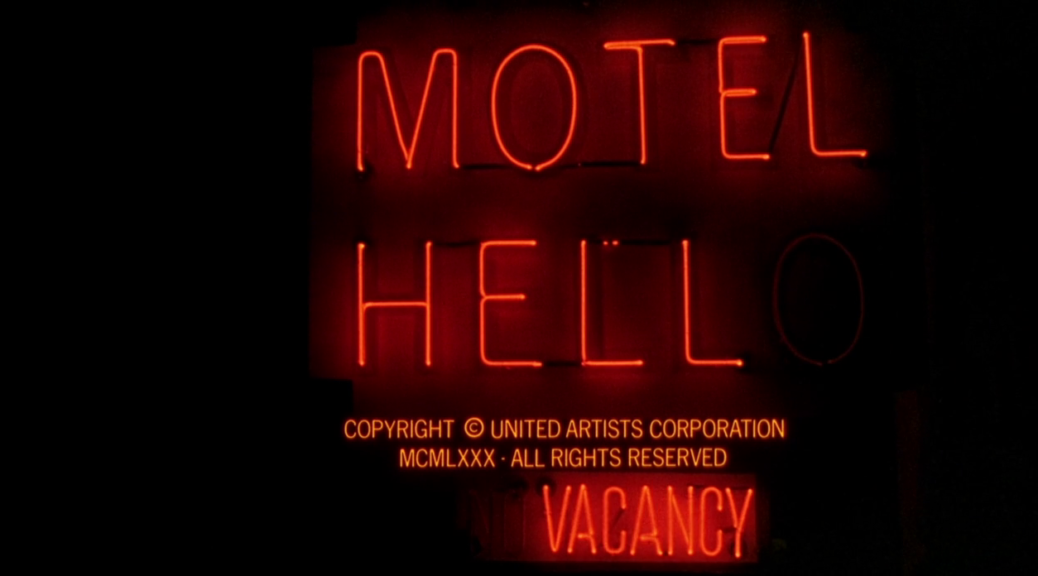
Noah Segan – a welcome surprise in a Dude-esque role in Rian Johnson’s mystery romp Glass Onion: A Knives Out Mystery – embodies quite a different character for another new release, Blood Relatives.

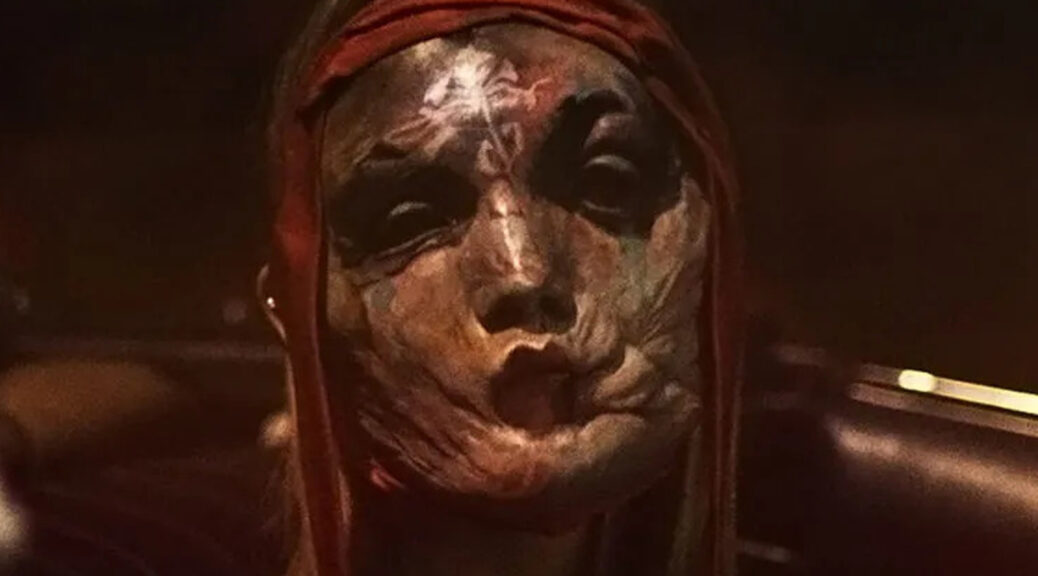
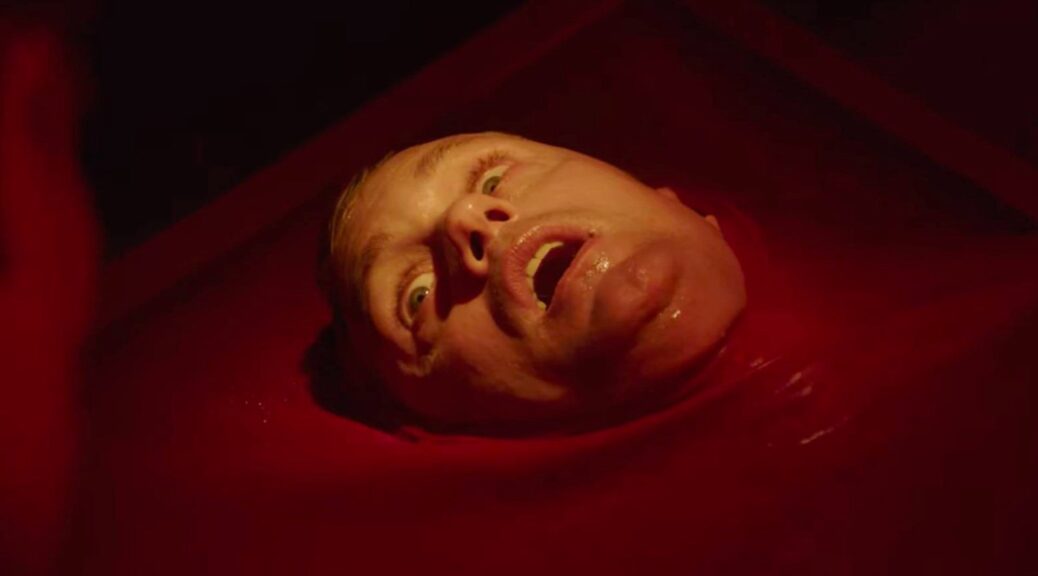
Segan writes, directs and stars as well, upending the traditional coming-of-age perspective as a vampire learning of a teenage daughter and figuring out how to become a parent. It’s a darkly comedic road trip toward mundanity.

Segan’s screenplay is loose but knowing. It never feels overly scripted but offers enough backstory to ground the tale. And though moments feel familiar – maybe a bit of Near Dark and Stakeland with far more humor and far less dystopia – there is something pleasantly new afoot in this film.

Francis (Segan) is a loner in a muscle car, making his way hither and yon across dusty old by-ways and trying not to draw attention to himself. It’s a lonesome road, but what are you going to do? Jane (Victoria Moroles, Plan B) is a 15-year-old: sarcastic, hostile – you know, normal. Only she’s not normal and now that her mom’s gone, she intends to find out who she is.

That’s the simple success of Segan’s story. It’s about two people figuring out who they are, as we all must. Without feeling preachy or pretentious, Blood Relatives offers some real insight into what parenting ought to be. Even when the only thing you really have in common is the desire to suck the life out of people.

Moroles excels in the role of an angsty teen who recognizes the symbolism of turning into a monster as you hit adolescence. She’s slyly funny but moments of tenderness humanize her Jane. Likewise, Segan finds an arc that suits a man-turned-killer trying to turn back into a man.

Supporting turns, while small, all add a nice spark to the proceedings. Josh Rubin, in particular, is a creepy delight in a Renfield-esque role.

The film’s greatest weakness is its final act, which is enjoyable but unsatisfying. Still, the entertaining Blood Relatives delivers a savvy family comedy.

Over the Hills And Far Way

Strange World

by Hope Madden and George Wolf

So, one of the main characters here looks exactly like John Krasinski, but is voiced by Jake Gyllenhaal?

Strange World, indeed, but that’s just an amusing footnote in Disney’s latest animated feature, an enjoyable family adventure with a straightforward message and commitment to inclusion.

Jake is the voice of Searcher Clade, a contented farmer still dealing with the ghost of his famous father, Jaeger (Dennis Quaid). Twenty-five years ago, Jaeger vanished during the family’s quest to discover what lies beyond the mountains of Avalonia. But while Jaeger was lost on the expedition, Searcher brought back a vital new resource for his homeland: the Pando plant.

Pando now provides the energy that drives almost everything in Avalonia, which is all fine until the crops show signs of a serious infection. Putting aside a vow not to follow his father’s adventuring path, Searcher, his wife Meridian (Gabrielle Union), their son Ethan (Jaboukie Young-White) and their three-legged dog join President Mal (Lucy Liu) on a mission to cure the Pando plant and preserve their comfortable way of life.

Writer Qui Nguyen (Raya and the Last Dragon) joins his co-director Don Hall (Raya, Moana, Big Hero 6) to craft an ecological allegory seemingly inspired by the union of a role-playing board game and one of those cute posters you pass while waiting in the lines at Disney World.

The animation itself is stunning, whether snowy peaks, verdant village or trippy, drippy otherworld. Strange World lives up to its title, delivering a visual feast.

But there’s more on Nguyen’s mind than eye candy. His story offers a world where generations do not have to be defined by what they always believed was right, where masculinity has no concrete quality but is a term owned by the individual. More importantly, this Strange World is one where creature comfort is not more important than survival.

Often the film feels like it’s trying too hard to correct the stereotypes nourished by generations of children’s entertainment. But there’s a kindness and a sense of forgiveness throughout the movie that does make you yearn for a world like this one.

The Nose Plays

Guillermo Del Toro’s Pinocchio

by Hope Madden

Is it any surprise that Guillermo del Toro’s visionary style, sentimental sensibilities, and macabre leanings suit animation so well? If there was any question, he dispels it with his gorgeous, emotional stop-motion wonder, Guillermo del Toro’s Pinocchio.

Co-directed with sculptor/animator Mark Gustafson, the film begins, as all good children’s tales must, with devastating loss and grief. If you thought the opening minutes of Up! were heartbreaking, gird your loins for this one.

The tragedy begins to abate, albeit clumsily and with much shouting, once Geppetto (David Bradley) hacks away at the tree recently occupied by one Sebastian J. Cricket, homeowner (Ewan McGregor, charming). Cricket’s home becomes Geppetto’s disobedient new puppet. You may think you know where it goes from here, but you do not.

Del Toro’s script, co-written with Patrick McHale and Matthew Robbins, establishes itself immediately as a very different story than Disney’s. The 1940 film – and, to a degree, the live-action remake Disney launched earlier this year – offers a cautionary tale about obedience. So does del Toro’s, although, in true GDT fashion, he’s warning against it.

Set between world wars in rural Italy, the film – as so many of del Toro’s do – examines the presence and pressures of authoritarianism, specifically Catholicism and fascism, on families and on the young.  

A magnificent cast including Cate Blanchett, Tilda Swinton, Tim Blake Nelson, Ron Perlman, Burn Gorman, Finn Wolfhard, John Turturro, Christoph Waltz, and Gregory Mann as Pinocchio brings charisma and dark humor to their roles. This matches the sometimes darkly funny images. Waltz, in particular, is garish, frightening fun as Count Volpe, puppet master.

The animation itself is breathtaking, and perfectly suited to the content, as if we’ve caught an artist in the act of giving his all to bring his creation to life. Everything about the film is so tenderly del Toro, whose work mingles wonder with melancholy, historical insight with childlike playfulness as no other’s does.

A Little Wicked

Disenchanted

by Hope Madden

Amy Adams’s small part in Spielberg’s Catch Me If You Can stood out, even in that pool of talent. Her role in Phil Morrison’s 2005 indie Junebug nabbed her the first of many Oscar nominations. But she wasn’t really a star until she donned that enormous, sparkly white dress and went searching for love’s first kiss in Disney’s unabashed 2007 mash note to Disney, Enchanted.

Between 2007 and today, Adams has earned an additional five Academy Award nominations and worked with many of the greatest directors and actors to live. The fact that she chose to reprise her role as wide-eyed innocent Giselle in Disney’s tardy sequel Disenchanted is reason enough to be intrigued.

And Maya Rudolph as the evil queen? I’m listening.

Giselle and her beloved Robert (Patrick Dempsey) leave New York City behind for the fairy tale world of suburbia, the now-teenaged Morgan (Gabriella Baldacchino) and their own toddler in tow. Things don’t go as magically as Giselle had hoped, not because suburbia is so terrible, but because having a teenager is.

Desperate for the happily that’s supposed to come ever after, Giselle wishes for a life like a fairy tale. What she forgot is that she’s a stepmother, and that’s never a good thing in a fairy tale. Soon, she’s battling it out with Rudolph’s Malvina to see who really deserves the title of evil.

There’s also a bit about Morgan finding her inner hero, Robert discovering his purpose, there’s a teen romance, dire consequences back in Andalasia, a lengthy animated preamble, and, of course, singing.

Lyricist Stephen Schwartz and composer Alan Menken return with songs less memorable than the three that earned them Oscar nominations in 2007. In fact, besides a couple of exceptional villainous costumes, very little about Disenchanted stays with you.

It’s overstuffed and feels it. Rather than making an interesting point about midlife crises or – better still, the ill effects of a lifetime of Disney nonsense on a female’s outlook and sense of self-worth – Disenchanted settles for a watered-down “everything’s fine” message.

And that’s what the film is. It’s fine. It doesn’t take advantage of its potential, doesn’t even take advantage of its impressive cast. It’s a pretty slog through missed opportunities and aging odes that reflects Giselle’s angst: wasn’t there supposed to be something better than this?

Going Like a Ghost Town

Sideworld: Damnation Village

by Hope Madden

Director/narrator George Popov and writer Jonathan Russell return to England’s shadowy past for the third installment of their documentary series, Sideworld: Damnation Village. We leave the forests and seas behind to peek inside the cottages, inns and public houses beset by residents unwilling or unable to leave.

The sixty-minute doc benefits again from the collaboration of a team that’s clearly on the same page. Russell and Popov have worked together, not only on both previous installments in this series (The Haunted Forests of England and Terrors of the Sea) but also the narrative features Hex and The Droving.

Cinematographer Richard Suckling once again helps Popov fill the screen with spooky but beautiful scenes, while composer Matthew Laming again breathes eerie life to the imagery with his whispering, whistling score.

Their focus this go-round are the tiny clusters of cottages dotting the English countryside, villages that have withstood centuries of war, pestilence and trauma that have left their marks. We begin, of course, in Pluckley – Guinness’s “most haunted village”.

The film moves on to Prestbury and the tale of, among others, the Black Abbott. Visits to the mostly empty villages are accompanied by Popov’s associated tale of the macabre. The filmmakers enlist actors Helen O’Connor and William Poulter to give voice to letters, articles and witness accounts.

As intriguing as the tales of lost love and criminal retribution are, it’s the mournful story of Eyam that stays with you. Perhaps it’s the connection to modern tragedy – Eyam voluntarily quarantined during the Plague, saving all the communities around it from infection but dooming themselves in the process.

As the series progresses, an interest in connecting the spectral with the scientific has become one of Sideworld’s prominent elements. In this case, Popov and company explore British archeologist/author T.C. Lethbridge’s Stone Tape theory to help explain recurring, looping paranormal phenomena.

Perhaps what best sets this series apart from other spooky folklore entertainment is its reverence for the subject – not just the scary stories, but the actual human lives behind them. Mingled with the solid storytelling – visual and aural – the heady concoction delivers another solid look at the unexplainable.

https://www.youtube.com/watch?v=C0bzPJYgpS0

Screening Room: Wakanda Forever, Spirited, My Father’s Dragon & More

Northern Lights

Slash/Back

by Hope Madden

Nyla Innuksuk’s sci-fi horror Slash/Back opens with a likable, snow-suited scientist gathering permafrost samples in a breathtaking Northern Canadian snowscape.

Researchers on the Arctic Circle don’t have a great track record for surviving horror movies. Don’t you love the way blood pops on snow? The tentacled menace that cuts the scientist’s research short is soon to terrorize a remote fishing village called Pangnitung, or as Maika (Tasiana Shirley) and her buddies call it, Pang.

Innuksuk has a lot of fun reconsidering John Carpenter’s The Thing – the tale of an invasive species and the terrifying havoc it can wreak ­– from the perspective of four indigenous teens. And in case the point is lost on you, Maika has a badass jacket to wear when killing invasive species that may help to clarify things.

None of the performances suggest a superstar in the making, although Nalajoss Ellsworth impresses as instigator, malcontent and comic relief Uki. Still, the buddies – who include Chelsea Prusky as Lee Lee and Alexis Wolfe as Jesse – share a rapport that feels honest and relatable. Innuksuk mines this to enrich the fantasy elements with realism.

The filmmaker’s greatest collaborator is cinematographer Guy Godfree (MaudieLet Him Go). The two contrast the ramshackle buildings of Pang with the glorious natural landscape around it. The effect not only conveys what could be lost to these bloodthirsty outsiders, but what was lost the last time.

Creature design is sometimes inspired, sometimes a little weak, but Innuksuk embraces these limitations. Production value is high, even when the images and performances on the screen seem a bit amateurish. Somehow the two fit together in this world at the edge of the world, where that adolescent urge to pretend to be someone you’re not feels like a real betrayal and those seal hunting trips you took with your dad finally pay off.

Eye of the Beholder

Brainwashed: Sex-Camera-Power

by Hope Madden

Filmmaker Nina Menkes tries to distill the effect of a century of cinema’s male gaze in her documentary Brainwashed: Sex-Camera-Power. Her focus is the way the language of film – particularly shot design, lighting and sound – subconsciously, insidiously inform how we see not just the film we’re watching, but everything we see everywhere.

Menkes’s doc is essentially a Ted Talk, padded here and there with talking head footage from academics, filmmakers and actors. Their conclusion? Filmmakers can’t fall back on any of the existing language of cinema because this language was developed by men for men, with men as the subject (one who acts) and women as the object (one who is acted upon) of their interest. It’s a language of power, and is used to disempower not only women, but any person or population meant to be seen as subject to the white, heterosexual patriarchy.

Intriguingly, Menkes chooses as examples mainly films universally considered masterpieces – Raging Bull, The Phantom Thread, The Hurt Locker, Do the Right Thing. Her aim is not to diminish each film on its own, but to point out that cinematic techniques that objectify women are so ingrained in filmmaking that even female filmmakers invoke them without thinking.

Menkes’s expert commentary includes Laura Mulvey, who coined the term “male gaze” in her 1973 essay “Visual Pleasure and Narrative Cinema.” The incomparable Julie Dash (Daughters of the Dust) quotes Audre Lourde to explain why even Patty Jenkins and Kathryn Bigelow fall prey to the same disempowering cinematic tendencies in their films. “The master’s tools will never dismantle the master’s house.”

And when women do make films, in all likelihood, we do not see them. Director Eliza Hittman (Never Rarely Sometimes Always, It Felt Like Love) points to one of the many reasons we are so inundated by films awash in objectifying visuals. Men also choose which films are distributed.

The film clips she chooses are often spot on, sometimes head-scratchers. (I would argue that one Phantom Thread sequence is, in fact, an example of Paul Thomas Anderson intentionally subverting a common shot sequence to give the female power.) But more troubling is an over-reliance on her own footage.

Menkes’s brief venture into the lawsuits facing Hollywood studios is too brief. So, too, are sections about the connection between cinema’s treatment of women and Hollywood’s hiring practices, as well as global rape culture.

The arguments she raises are necessary, though. It’s important for women to see how the films we love betray us in large ways and small, and perhaps even more important for all of us to see that this is a structured, intentional device that we should notice and change.

All In the Family

Sam & Kate

by Hope Madden

Film right now is littered with “geezer teasers” – lowish budget action flicks with inflated cameos from aging actors who were once the world’s biggest box office draws. Bruce Willis and John Travolta have one right now. Mel Gibson has one every other week.

Wouldn’t it be lovely to see a film that casts veteran actors in challenging roles that respect the actor, their age, and the audience? Yes, it would. The proof is called Kate & Sam.

Dustin Hoffman and Sissy Spacek co-star in the indie dramedy about resilience, grief and family. Hoffman’s Bill, a boisterous widowed veteran, lives modestly with his good-natured son, Sam (Jake Hoffman, coincidentally Dustin Hoffman’s actual son).

Father and son fall, almost simultaneously, for Spacek’s Tina and her daughter, Kate (Schuyler Fisk, coincidentally Spacek’s daughter – not that you could miss it with that pointed little nose).

As much as the family ties may seem like a gimmick, the truth is that they bring unmistakable depth and rapport to the pairings. Writer/director Darren Le Gallo mines this repeatedly in large and small ways to create a believable, rich environment for pathos and love. Even small details breathe with authenticity touched lightly by nostalgia. You can imagine Bill’s recliner and afghan perhaps belonging to Le Gallo’s own father, while the stash of family photos clearly, sweetly come from the Hoffmans.

Le Gallo never condescends, mercifully. His small town is possibly hipper than most, but the way the film expresses a healthy respect for vintage materials is impressive.

Spacek is the adorable, natural presence she’s always been in a film that looks without mockery but with humor at the toll life takes on us all. She and Hoffman are, as expected, excellent. But they never outshine their kids.

Fisk’s elegant, frustrated Kate is a solid anchor for the film’s drama, but Jake Hoffman is its heartbeat. With him in the lead, Le Gallo is able to make a lot of subtle points about fathers and sons, masculinity and acceptance. Most of all, the film balances loss and resilience beautifully.

Le Gallo’s first feature delivers grace and goodwill in ways that are genuinely uncommon. It doesn’t tell a big story, but the story it tells resonates. Yes, he lucked into a dream cast, but they may have been luckier still to have him.