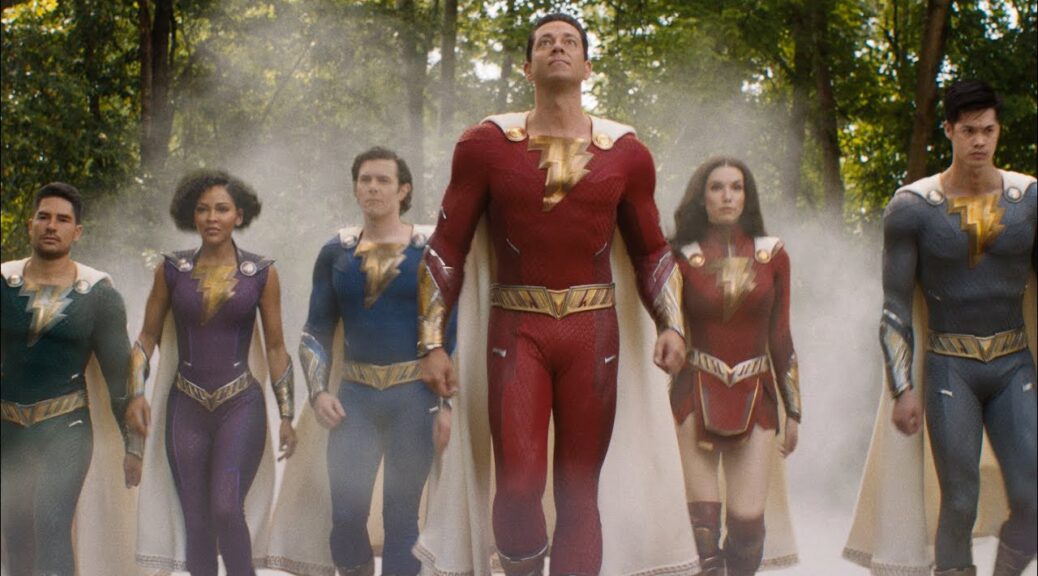
Filmmaker David F. Sandberg followed up the surprise horror hit Lights Out with a step into the Conjuring franchise, helming 2017’s Annabelle: Creation. And then in 2019 he took a sharp left turn to deliver the triumphantly adolescent superhero gem, Shazam!
This he followed with a literally four-hour film of himself flipping off the camera, titled I Flip You Off for Four Hours. I swear to God. And then back for the Shazam! sequel, Fury of the Gods.
Since he last saved the world and shared his superpowers with his foster siblings, Billy Batson has gotten clingy. Controlling, even. He’s about to turn 18 and age out of the foster system, and deep down, he’s afraid he’s going to lose his family.
Plus, there are these angry gods who want their power back, a power stolen from them by a wizard (Djimon Hounsou) and given away to a bunch of dumbass kids (Billy and those siblings).
Helen Mirren is a god. (I always expected as much.) And while the film suffers from the kind of superficial storytelling and sequel bloat that often plagues the second episode in a franchise, she’s glorious.
She’s also funny and badass – an excellent addition to the series. She’s joined by Lucy Liu as the angrier of the gods to look out for.
And even though there are multiple villains, the real problem is the multiple heroes and their multiple alter egos. Billy (Asher Angel) has five siblings, each of whom is now a hero, so that’s twelve characters to track. Plus mom and dad. Though the cast, Sandberg and screenwriters Henry Gayden and Chris Morgan offer clever shorthand characterizations, the result feels too slight.
Zachary Levi continues to shine, delivering the same infectious, boyish good nature that made the original such a charmer. And Sandberg’s direction continues to favor wonder over action, although the action continues to impress – not wow, but impress.
The result is a perfectly entertaining, thoroughly good natured opportunity to see Helen Mirren beat the tar out of some kids.
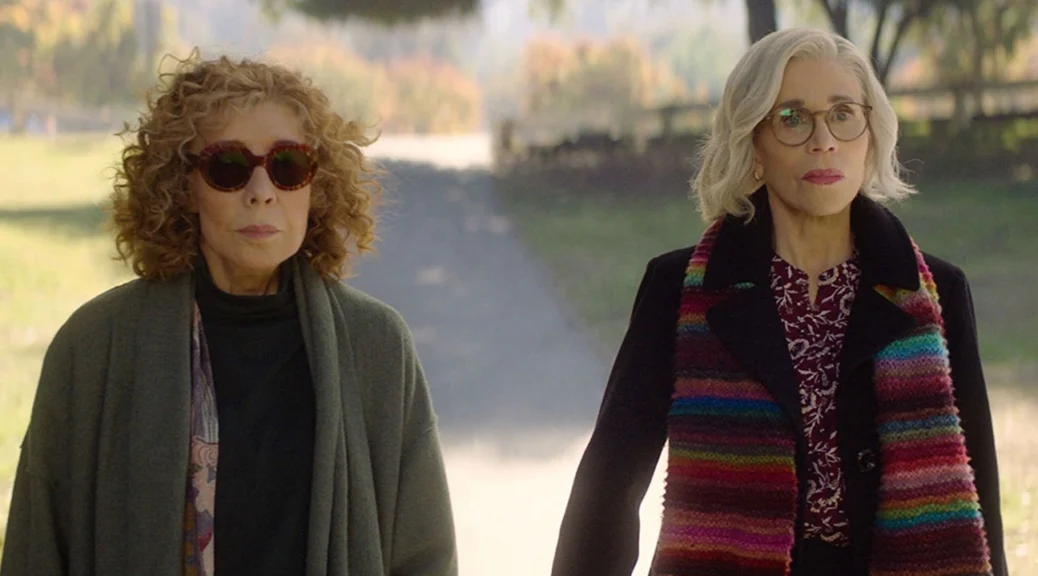
Lily Tomlin and Jane Fonda like each other, this is clear. And mainly that’s meant good things for audiences. Their treasure 9 to 5 was smarter, funnier and more feminist than anything else 1980 was likely to see. They had seven solid seasons as besties on Netflix’s Grace and Frankie.
Yes, we did have to sit through 80 for Brady, but at least that got adults back into theaters.
For Paul Weitz’s Moving On, the pair tosses aside broad comedy showcasing the hilarity of getting old in favor of something more insightful and less insulting.
Fonda plays Claire, in town from Ohio to go to her best friend’s funeral and murder the widower (Malcolm McDowell, as reliable a villain as ever). At the service, Claire runs into another old friend with no love lost for the old man, Evelyn (Lily Tomlin).
Maybe Evelyn will help!
As contrived and zany as that sounds on paper, in action it’s a relatively nuanced look at modern problems that aren’t really that modern. And though the story is overstuffed, Weitz (who also writes) and his leads draw attention to subtler comedy laced with the melancholy realities facing seventy- and eighty-somethings.
Fonda dials down the horny hijinks she seems to bring to every new role, and the tender evolution of Claire’s love life is far richer for it. Tomlin is Tomlin: eccentric, unaffected, maybe stoned, easily the coolest person in the room.
Part of what makes this duo so fun to watch is the way they balance each other out, and though the characters are allowed more room to breathe than usual, the result is the same.
Richard Roundtree charms as Claire’s ex, while Sarah Burns is the glue holding the film together portraying the bereaved adult daughter and only rational thinker.
Weitz tacks on a side story about a kid who likes to visit Evelyn and borrow her earrings, but the result is undernourished and adds little to the narrative. Tomlin’s great in these scenes, though, but even better in scenes on her own illustrating loneliness as it’s rarely been done.
What a refreshing film Moving On is. Not a great film, but a genuine piece of entertainment made for actors who deserve a project like this.
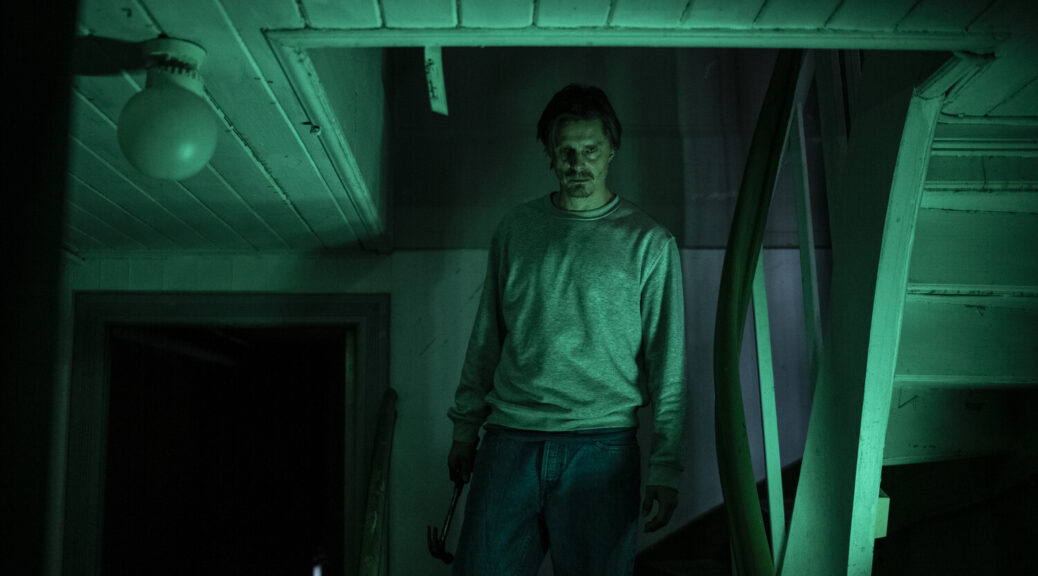
A baby left in a cemetery grows up to search for answers. Why was she abandoned in such a place, wrapped in a blanket covered in satanic markings and wearing an inverted cross? She discovers her parents were in a Norwegian Black Metal band.
So, to be honest, that explains it. Common practice, probably, and yet Hunter (Alicia von Rittberg) wants to know more.
Wait, will there be Norwegian Black Metal in Alex Herron’s Leave? Nice!
Herron, bringing writer Thomas Moldestad’s mystery to the screen, pits what you think you know about good against evil as he uproots a New Englander for Norway’s shores and answers.
Von Rittberg’s American accent is spotty, but the performance isn’t weakened by it. Her vulnerable but determined performance ably captures Hunter’s existential dilemma. She’s polite, slightly needy, capable but a little desperate. And the smiling faces she finds may or may not really be her friends.
These faces belong to rock stars (Ellen Dorrit Petersen) and schizophrenics (Morten Holst), spoiled cousins (Herman Tømmeraas) and clingy aunts (Ragnhild Gudbrandsen).
Herron’s atmosphere makes the safe look seedy and the dangerous appear benign, but there is more depth to the tale than that. Yes, every character is a little slower on the uptake than they should be. And yet, somehow – thanks mostly to the film’s understatement – you don’t disbelieve any of the characters. Stig R. Amdam delivers a particularly nuanced turn as the family patriarch.
There are interesting themes here concerning patriarchy and “Christianity”, but Herron doesn’t belabor the point. His film is rarely showy, and even at its most obvious this light touch keeps it engaging.
Still, I think I was promised Norwegian Black Metal.
It wasn’t always bears, kids. In other movies, people use drugs, although the result – limbs akimbo and carnage aplenty – usually still follows. Here are our favorite druggie horror flicks.
5. Cabin in the Woods (2011) (weed)
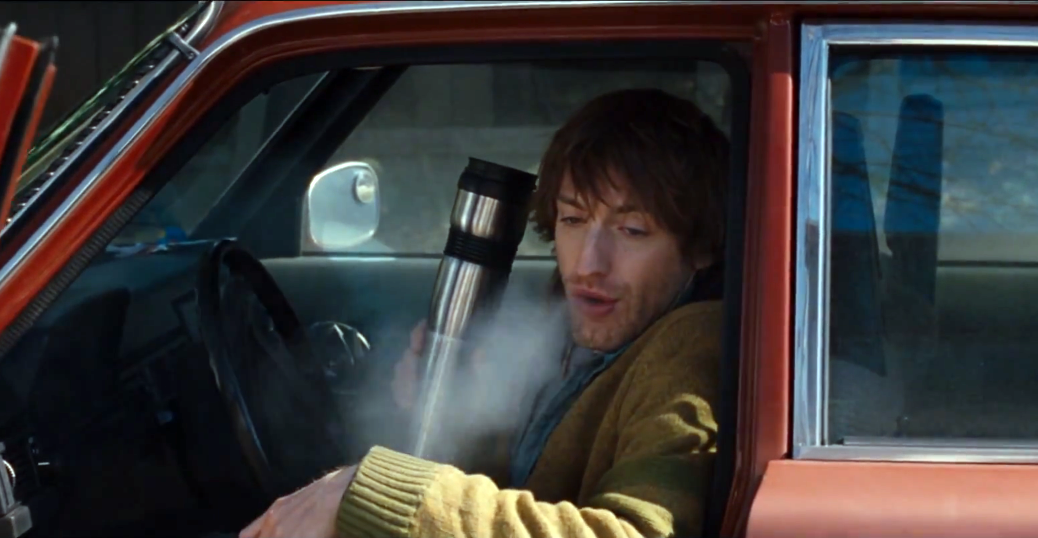
There are countless reasons to love Drew Goddard’s 2011 horror mash note Cabin in the Woods. Not the least of which is Fran Kranz as Marty, pothead.
Easily the favorite character (inside the cabin, anyway), Marty not only provides the levity necessary for this particular trope to work, his weedy logic is all that actually makes sense in this world.
The entire film is a trip, but it’s Marty’s trip that’s most worth taking.
4. Cocaine Bear (2023) (cocaine, obviously)
The year is 1985, from what I can piece together from an inspired soundtrack of pop hits spilling out of speakers, and one Jefferson Starship fan is about to make a jump from his plane with an awful lot of coke. Things don’t go well, and next thing you know, drug kingpin Syd (Ray Liotta in his final screen performance) is sending his reluctant son (Alden Ehrenreich) and best guy (O’Shea Jackson Jr.) to Blood Mountain to retrieve $14 million in missing blow.
As you may have guessed from the title, a bear found it first.
Inspired, manic carnage follows. Entrails spill, children fill their mouths with cocaine, skate punks lose their heads (well, parts of their heads), EMTs really earn their pay, and we all have an incredible, brightly colored, viscera covered good time!
3. Climax (2018) (LSD)
Oh, Gaspar Noe, you scamp! The provocateur returned to screens in 2018 with a bad trip full of percussive dancing and concussive beats that will leave you as bewildered, wrung out, unsettled and horrified as the characters.
Sofia Boutella leads an ensemble of dancers locked into a French warehouse post-production to just party. But there’s more in that sangria than fruit and soon enough, the party is an inescapable hellscape.
Noe has a way with pummeling an audience, overstimulating and punishing us into submission. Turns out, he can also choreograph a decent dance number!
2. Hagazussa (2017) (mushrooms)
Making a remarkably assured feature debut as director, Lukas Feigelfeld mesmerizes with his German Gothic poetry, Hagazussa: A Heathen’s Curse. Settled somewhere in the 15th Century Alps, the film shadows lonely, ostracized women struggling against a period where plague, paranoia and superstition reigned.
Albrun’s is a tragic story and Feigelfeld crafts it with a believable loneliness that bends toward madness. He’s captured this moment in time, this draining and ugly paranoia that caused women such misery, with imagery that is perplexingly beautiful.
He’s cast a spell and you should submit.
1. Mandy (2018) (LSD)
A hallucinogenic fever dream of social, political and pop-culture subtexts layered with good old, blood-soaked revenge, Mandy throws enough visionary strangeness on the screen to dwarf even Nicolas Cage in full freakout mode.
Not just Nic, either. Andrea Riseborough, cannibal bikers on LSD, The Chemist, and a religious sex cult led by a terrible folk singer. Plus a sword, an axe, a lot of blood, and did I mention the LSD?
Like director Panos Cosmatos’s 2010 debut Beyond the Black Rainbow, Mandy is both formally daring and wildly borrowed. While Black Rainbow, also set in 1983, shines with the antiseptic aesthetic of Cronenberg or Kubrick, Mandy feels more like something snatched from a Dio album cover.
It is as insane as any beautifully conceived, expertly executed film has ever been and you must give yourself to it.
Things look a little more predictable this year than in years past, but who knows? There’s usually some drama, some upsets, possibly some face slapping. Who can really predict it? We are here to try.
Best Director
Daniel Kwan and Daniel Scheinert will need a wheelbarrow by the time this year’s Oscar ceremony is over. Their delightful, heart wrenching, hilarious Everything Everywhere All at Once is likely to clean up. We certainly think they’ll take home the award for directing.
Best Actor in a Leading Role
For a while, it felt like Colin Farrell and Brendan Fraser were neck and neck for this one. The SAG may have sealed the deal for Fraser, though, which is why we predict he’ll take home the statuette.
Best Actress in a Leading Role
The Daniels created an opportunity for veteran badass Michelle Yeoh to play a frustrated laundromat owner, a glamorous starlet, a lover with hot dog fingers, and many other characters. Yeoh had to give each Evelyn Wang a unique personality as well as connecting characteristics. And then, on top of all that, Yeoh had to find an arc for the main Evelyn. This was a deceptively complicated gig, but you’d never know that watching the final product. Yeoh is breathtaking in a film that knows how to showcase her talent, and Oscar will reward her.
Best Supporting Actor
It’s hard not to root for the effervescent and endearing Ke Huy Quan, who will likely win for his performance in Everything Everywhere All at Once. Hopefully it won’t go overlooked that, in playing several versions of the same character, the film gave the actor a chance to show off acting chops we simply never knew he had. It’s a beautiful, tender performance deserving of the prize.
Best Supporting Actress
While early momentum favored the glorious Angela Bassett in her powerful turn in Black Panther: Wakanda Forever, things seem now to point to Jamie Lee Curtis for her performance as Deirdre Beaubierdre (best character name ever!) in Everything Everywhere All at Once. There is tremendous goodwill toward both veterans, but all signs now are pointing toward JLC.
Best Adapted Screenplay
Thanks to the Writers Guild award (a heavy Oscar predictor), we are beyond thrilled to predict that Sarah Polley’s Women Talking will win the Oscar for Adapted screenplay. A beautiful, tender, brave and glorious film, we are really hoping this is the case.
Best Original Screenplay
The key word here is original, because there are few contenders as truly original as The Daniels’ Everything Everywhere All at Once.
Best Animated Feature
2022 was a great year for animation, and our pick is GdT’s Pinocchio.
Best Documentary Feature
We’re going with All That Breathes.
Best International Feature
All Quiet on the Western Front seems the likely winner.
Best Cinematography
It should be Bardo, but the nomination feels like the best the Academy is going to do for a film nobody saw on the big screen it deserved. Our pick is James Friend for All Quiet on the Western Front.
Best Score
Our gut says Justin Hurwitz for Babylon.
Best Original Song
This will be the year of EEAAO, so we’re tempted to go with “This Is a Life.” But instead, we’re picking “Naatu Naatu” from the ridiculously entertaining RRR.
Best Film
It would be a true shock to see anything but Everything Everywhere All at Once win the top prize this year. The momentum is clearly there, and why not? It’s the most original, charming, creative film to be recognized by the Academy in ages. Well deserved!
The 95th Academy Awards will be presented on March 12 at 8pm on ABC.
Two young Asian women are separated by 1400 miles but connected by their invisible daily struggle against countless racist, misogynistic slights. And also, this phone call, placed blindly by Emily (Midori Francis, The Good Boys, Oceans 8) to Sam (Jolene Purdy, Orange Is the New Black).
Emily stepped on her glasses in her hasty escape from ex, Charlie (Michael Patrick Lane). Her hands are zip-tied, she can’t see, she’s in the middle of the Michigan woods, but she has her cell phone. If she can get anyone on the line, maybe they can be her eyes and guide her to safety.
To a degree, this is a gimmick exploited in Randall Okita’s 2021 See for Me, but director Yoko Okumura makes it work somewhat organically when Emily reaches Sam, a misused Tallahassee convenience store cashier who’d recently misdialed looking for a pizza.
Sam doesn’t believe the call is real, then doesn’t think she could possibly be the best person to help, but eventually relents. What follows is often tense, frequently poignant, sometimes a bit forced, but ultimately charming and satisfying. Even in moments where the contrivance is pulled a little thin, Gator Galore employee Sam anchors the antics emotionally and logically. While you are eager for Emily to survive, it’s Sam you’re rooting for.
Mainly (and wisely), writers Salvatore Cardoni and Brian Rawlins’s script puts the point of view someplace audiences can understand – a gas station convenience store. This simplifies things because it’s a very common, almost comforting location for a horror story. And, although we may or may not have been in the woods of Michigan running frantically and blindly from a maniacal ex, we’ve all been to a gas station convenience store.
Likewise, Purdy’s performance feels real, regardless of the absurdity of her situation. Here is where the film struggles slightly, though. What goes on inside Gator Galore is a broad, garish, Gators n Guns adventure that crosses over to comedy, albeit incredibly tense and horrifically frustrating comedy. These scenes work, developing a hateful and sadly recognizable tension that launches the film’s anxiety toward its truly satisfying conclusion. It just sometimes feels like whiplash against the far more traditional wooded survival horror going on at the other end of the line.
Back in Tallahassee, Missi Pyle is, per usual, the ideal candidate to play entitled trash who truly believes that her slightest whim is of so much more value than any other possible situation that murder would be justifiable. I mean, is it even murder when you’re being so inconvenienced by a convenience store employee?!
Unseen is an angry film. Okumura’s is an angry voice, but it finds comfort and salvation in community. The film takes aim at casual racism, gaslighting and toxic white privilege but never lets anger overshadow her central relationship.
In partnership with the Greater Columbus Film Commission, Gateway FIlm Center has announced that acclaimed new filmmaker, Kyle Edward Ball, will visit the Center on Saturday, March 18, to premiere a 35mm version of his film, Skinamarink (2023).
“We are excited to welcome Kyle to Columbus, to the Film Center, and to share the 35mm print of his incredible independent film, Skinamarink” said Gateway Film Foundation CEO, Christopher Hamel.
In Skinamarink (2023), two children wake up in the middle of the night to find their father is missing, and all the windows and doors in their home have vanished. To cope with the strange situation, the two bring pillows and blankets to the living room and settle into a quiet slumber party situation. They play well worn videotapes of cartoons to fill the silence of the house and distract from the frightening and inexplicable situation. All the while in the hopes that eventually some grown-ups will come to rescue them. However, after a while it becomes clear that something is watching over them.
The film stars Lucas Paul, Dali Rose Tetreault, Ross Paul and Jaime Hill and is executive produced by Edmon Rotea, Ava Karvonen, Bonnie Lewis, Alan Lewis, Josh Doke, and Jonathan Barkan.
Ball, a first-time filmmaker, made Skinamarink (2023), which premiered at the Fantasia International Film Festival in Montreal, for about $15,000. Since the film’s debut, it has become an instant cult classic, often compared to micro-budget horror hits such as The Blair Witch Project (1999) and Paranormal Activity (2007). However, Skinamarink is not found-footage or improvised, but is fully scripted and features images, sounds, and camera angles which were created to add depth and discomfort.
Shudder and IFC FIlms released Skinamarink (2023) in the United States on Friday, January 13, 2023. Gateway Film Center was selected as one of the first venues to feature the film and the Center has continuously screened Skinamarink (2023) since the release in January. To date, Skinamarink (2023) has grossed over two million dollars in the United States, making it one of the most successful and profitable independent films of all-time.
“Members of our community continue to hear about this film and want to experience it the way it was intended, with an audience and on a big screen. The Film Center is proud that we continue to present the film and I know Kyle’s visit, and this 35mm screening, will be a great event for Columbus”, said Hamel.
Tickets for these screenings are on sale now at gatewayfilmcenter.org. The 35mm presentation of Skinamarink (2023) on Saturday, March 18 will screen at 7:00pm exclusively for myGFC Members alongside a workshop co-presented with Film Columbus. The 9:30pm screening will be introduced by the filmmaker and is now on sale. Normal ticket prices apply. MaddWolf’s Hope Madden and George Wolf will moderate the q&a session following the 7:00pm performance.
Gateway Film Center is wholly owned by the Gateway Film Foundation, a 501(c)(3) nonprofit organization and receives support from the National Endowment for the Arts, the Ohio Arts Council, the Greater Columbus Arts Council, Campus Partners, The Columbus Foundation, and thousands of individual donors. To learn more, visit the website at gatewayfilmcenter.org.
Guy Ritchie’s latest, Operation Fortune: Ruse de Guerre, is neither the crisscrossing schemery of 2019’s The Gentlemen, nor the dour action plodder of 2021’s Wrath of Man. Although it has elements of both.
Like the former, the film delivers an incredibly talky tale of flippant action shenanigans undertaken by varying teams at cross purposes and boasts a delightful turn from Hugh Grant. Like the latter, it’s not very good and stars Jason Statham.
Statham plays Orson Fortune, a cantankerous special agent whose skillset is the only thing standing between some unknown item recently stolen and, you know, whatever it might do to the world.
That is the fun part. Fancy lad Nathan Jasmine (Cary Elwes) pieces together the team tasked with finding and returning the missing “handle” although no one knows what it is, so determining that bit will be useful as well. Figuring out who took it, why they took it and what they mean to do with it, then stopping them from doing it, whatever it is, represents the balance of the job.
Who’s to help Mr. Fortune? Bugzy Malone (rapper and regular Ritchie contributor) and Aubrey Plaza (the only truly new flavor in Ritchie’s crockpot of leftover ideas).
Plaza contributes that uncomfortable comedy she does so well, although it sometimes feels like she’s actually performing in a different film that has somehow broken into Ritchie’s movie. Still, she’s at least a lively and amusing distraction, although I can’t say she has real chemistry with anyone onscreen besides Grant.
Grant’s a hoot no matter whose scenes he is stealing, and Josh Hartnett surprises in a comedic role that would be more fun if it didn’t feel borrowed directly from (the entirely superior) The Unbearable Weight of Massive Talent.
There are a few laugh-out-loud moments, and some scenes that push the film toward parody, although Ritchie and crew cannot land on a tone. Everything feels more like a brainstorming session than a finished film. Nobody gels, nothing hangs together. The action is just this side of exciting, the humor lands about 40% of the time, and one scene pulls directly from Team America: World Police.
Mainly Operation Fortune: Ruse de Guerre just made me wish I was watching Team America.
It’s our favorite time of year! This is when we take the Way Back Machine (or this year, the Not-So-Way-Back Machine) to unearth 2023 Oscar nominees’ bad horror movie past.
Some nominees have made exceptional horror films. We’re looking at you, Brendan Gleeson (28 Days Later), Bill Nighy (Shaun of the Dead), Austin Butler (The Dead Don’t Die), Andrea Riseborough (Possessor, Mandy), and let’s not forget the queen, Jamie Lee Curtis (Halloween, duh).
Of course, JLC has also made enough bad horror for her own entire Skeletons podcast. But today, we’re focused on other people. Why? Because these guys made some bad, bad choices.
5) Knock Knock (2015), Ana de Armas
In 2015, Eli Roth remade Peter S. Traynor’s 1977 cult horror Death Game for the uber generation. Ana de Armas and Roth’s then-wife Lorenza Izzo play two wayward strangers, drenched and looking for a party but their uber driver dropped them off at the wrong place. Won’t Keanu Reeves let them in for just a minute to use his laptop and figure things out? Their phones got all wet!
And he does. Where Trynor’s film was a belated entry into the “what’s with these damn hippie kids” horror, Roth only barely taps into the paranoia and tension around generational differences in the social media era. Instead, he digs into midlife crisis and male weakness as Keanu’s devoted dad Evan caves to the pair’s mocking seduction.
You don’t believe it for a minute. De Armas is fine (in her first English language film), but Roth doesn’t find anything to say and the slight premise feels stretched well beyond its breaking point.
4) The Grudge (2020), Andrea Riseborough
Oh, Andrea Riseborough! Oh, Nicolas Pesce!
One of the most reliable character actors of her generation teams up with Eyes of My Mother filmmaker to revisit the haunted world of Takashi Shimizu’s Ju-On: The Grudge. The result is spectacularly unspectacular.
Riseborough is a detective in what amounts to an anthology film, each short a quick look at a haunting. Pesce, who co-wrote the screenplay, revisits a lot of Shimizu’s threads but breathes no new life into anything. Transitions from one short to the next are choppy, the imagery is never compelling, shocking or fun, and worst of all, that creepy sound design that made all the previous installments memorable is absent.
None of the talented cast members – Riseborough, Demian Bishir, Lin Shaye, Betty Gilpin, John Cho or Jacki Weaver (who seems to be acting in an entirely different film) – elevates the listless material.
3) The Intruders (2015), Austin Butler
It’s an iCarly reunion! Miranda Cosgrove and her sometime co-star Austin Butler co-star in this “your new house is probably haunted or something” thriller.
Cosgrove is Rose, and she has stopped taking her meds, so her dad (Donal Logue) doesn’t believe her wild stories about the house being haunted. And maybe it isn’t. Maybe it’s that creepy yet dreamy handyman (Butler).
What it is not is good. Plot holes could swallow you whole, contrivance and convenience are the primary narrative devices, but Butler’s as cute as can be and his little smirk fits both the character and the film itself.
2) I, Frankenstein (2014), Bill Nighy
Good lord, who greenlit this mess? Aaron Eckhart is Frankenstein’s monster, unintentionally drawn into the ongoing war between demons and gargoyles because no one cares. On planet earth. Nothing could be less interesting.
Oh, wait. The CGI is less interesting. Everything looks like the pre-play opening to a 1990s video game. And the gargoyle queen gives the monster a name: Adam. Why? Because co-writer/director Stuart Beattie thinks so little of viewers that he assumes no one will realize Adam is his name. It’s in the book. He thinks we are illiterate morons.
He’s hoping so, anyway, because even the great Bill Nighy cannot do anything to help this turd.
1) Critters 4 (1992), Angela Bassett
So, what’s worse than I, Frankenstein? Worse, sure, but also far more charming, Critters 4 sends those Gremlin/Ghoulie ripoff fur balls to space with Angela Bassett, Brad Dourif and a terrible script.
Cheaply made and far too slight on carnage, the film still benefits from Bassett’s undeniable badassedness. Her lines are garbage, and yet you believe her. (Same with Dourif.) And it’s the kind of stupid that can, if you’re in the right frame of mind, almost be fun. What Bassett is doing in it is too puzzling to consider, but she got her Ripley moment and that’s all that counts.