With a funny shuffle step and a blank stare, Henry Rollins announces Jack, anti-hero of the new indie noir/horror mash up He Never Died, as an odd sort.
Jack, you see, has kind of always been here. The here in question at the moment is a dodgy one bedroom, walking distance from the diner where he eats and the church where he plays bingo. An exciting existence, no doubt, but this mindlessness is disturbed by a series of events: an unexpected visit, a needed ally with an unfortunate bookie run in, and a possible love connection with a waitress.
Even if this sounds vaguely familiar, rest assured. This theologically confused but utterly entertaining tale of moral ambiguity, blood thirst, and eternity plays unlike any other film centered on an immortal.
Writer/director Jason Krawczyk’s screenplay drops us in a middling criminal world populated by unimpressive thugs. Jack’s environment is refreshingly and entirely lacking glamour, Krawczyk’s concept uniquely quirky and low key.
From the word go, He Never Died teems with deadpan humor and unexpected irony. Casting Rollins in the lead, for instance, suggests something the film actively avoids: energy. The star never seethes, and even his rare hollers are muted, less full of anger than primal necessity.
Jack’s battle is not with the goons at his door, but with something higher and more confusing to him. This day to day bloodbath he perceives more as a nuisance, although there’s a tale of redemption bobbing just below the surface of all this blood. Krawczyk should be congratulated not only for the light touch he gives this thematic thread, but for the unexpected turns the film takes before embracing it.
Rollins’s performance is strong, offering Jack as a solitary figure who clings to all things mind numbing as a way to pass the time without complication or human interaction. As a survival mechanism, he’s all but forgotten how to behave around humanity, a species he regards without needless sentimentality.
While Rollins is the showcase, the supporting players around him add nice touches of eccentricity (Steven Ogg), resignation (Scott Edgecombe), and energy (Jordan Todosey). Particularly good is Kate Greenhouse as the film’s disgusted, completely frustrated conscience, Cara.
It’s an unusual mix worth checking out. Plus, who hasn’t always wanted to see Henry Rollins eat a man’s larynx?
It’s the holidays!! Who doesn’t want to snuggle in with their cup of nog and a nice, Christmassy bloodletting? I know we do. But with so very much to choose from – Krampus, A Christmas Horror Story, Silent Night, Deadly Night, Santa Claws, Gremlins, The Nightmare Before Christmas, The Legend of Hell House, The Children, Satan’s Little Helper, Santa’s Slay – which should you watch?
Well, none of those. I mean, they’re great in their own (sometimes awful) ways, but we have a list of 5 that may actually scare you.
What is every child’s immediate reaction upon first meeting Santa? Terror. Now imagine a mash-up between Santa, a pirate, and an old school Catholic bishop. How scary is that?
Well, that’s basically what the Dutch have to live with, as their Sinterklaas, along with his helper Black Peter, sails in yearly to deliver toys and bag naughty children to kidnap to Spain. I’m not making this up. This truly is their Christmas fairy tale. So, really, how hard was it for writer/director Dick Maas to mine his native holiday traditions for a horror flick?
Allegorical of the generations-old abuse against children quieted by the Catholic Church, Saint manages to hit a few nerves without losing its focus on simple, gory storytelling.
4. Black Christmas (1974)
Director Bob Clark made two Christmas-themed films in his erratic career. His 1940s era A Christmas Story has become a holiday tradition for many families and most cable channels, but we celebrate a darker yule tide tale: Black Christmas.
Sure, it’s another case of mysterious phone calls leading to grisly murders; sure it’s another one-by-one pick off of sorority stereotypes; sure, there’s a damaged child backstory; naturally John Saxon co-stars. Wait, what was different? Oh yeah, it did it first.
Released in 1974, the film predates most slashers by at least a half dozen years. It created the architecture. More importantly, the phone calls are actually quite unsettling.
Why the girls remain in the sorority house (if only they’d had an Official Red Ryder Carbine-Action Two-Hundred-Shot Range Model Air Rifle!), or why campus police are so baffled remains a mystery, but Clark was onto something with the phone calls, as evidenced by the number of films that ripped off this original convention.
3. Sheitan (2006)
How fucked up is this one? The fantastic Vincent Cassel stars as the weirdest handyman ever, spending a decadent Christmas weekend with a rag tag assortment of nightclub refugees. After Bart (Olivier Barthelemy) is tossed from the club, his mates and the girls they’re flirting with head out to spend the weekend at Eve’s (a not shy Rosane Mesquida). Way out in rural France, they meet Eve’s handyman, his very pregnant wife, and a village full of borderline freaks.
But who cares when somebody might be knocking boots at any minute?
The film is savagely uncomfortable and refreshingly unusual. Cassel’s performance is a work of lunatic genius, and his film is never less than memorable.
2. Rare Exports: A Christmas Tale (2010)
It’s not just the Dutch with a sketchy relationship with Santa. That same year Saint was released, the Fins put out an even better Christmas treat, one that sees Santa as a bloodthirsty giant imprisoned in Korvatunturi mountains centuries ago.
Some quick thinking reindeer farmers living in the land of the original Santa Claus are able to separate naughty from nice and make good use of Santa’s helpers. There are outstanding shots of wonderment, brilliantly subverted by director Jalmari Helander, with much aid from his chubby cheeked lead, a wonderful Onni Tommila.
Rare Exports is an incredibly well put together film. Yes, the story is original and the acting truly is wonderful, but the cinematography, sound design, art direction and editing are top notch.
1. Inside (2007)
Who didn’t know this would be our #1?
This is not your usual Christmas cheer – not even for this list. No, this is a horror movie, no question about it, and it stems from the country that put out some of the most extreme yet excellent the genre had to offer in the first decade of this century. France’s 2000 – 2010 output included High Tension, Frontiers, Martyrs, Sheitan, Calvaire, Them, Irreversible, and Trouble Every Day, all of which are spectacular and challenging horror options. Inisde stands out for its exponentially developing pace, its sinister sense of humor, and one outstanding villain.
Beatrice Dalle’s insidious performance is hard to shake. Fearless, predatory, pitiless and able to take an enormous amount of abuse, her nameless character stalks a very, very pregnant Sarah (Alysson Paradis). Sarah lost her husband in a car crash some months back, and now, on the eve of Christmas, she sits, enormous, uncomfortable, and melancholy about the whole business. She’s grown cynical and despondent, more depressed than excited about giving birth in the morning.
Alexandre Bustillo’s film seeks to change her mind, make her want that baby. Because Dalle’s lurking menace certainly wants it. Her black clad silhouette is in the back yard, smoking and stalking – and she has seriously bad plans in mind.
Bustillo and directing partner Julien Maury swing the film from intelligent white collar angst to goretastic bloodfest with ease. The sadistic humor Dalle brings to the performance adds chills, and Paradis’s realistic, handicapping size makes her vulnerability palpable.
This is a mostly brilliant effort, a study in tension wherein one woman will do whatever it takes, with whatever utensils are available, to get at the baby still firmly inside another woman’s body.
From its opening image of a deceased toddler, his grieving parents – Macbeth and his Lady – witnessing the funeral pyre, Justin Kurzel’s Macbeth announces itself as a departure. The somber tone, the ominous atmosphere, and the adjustments to Shakespeare’s text already on display prepare you for the filmmaker’s ambitious and mostly successful new vision of the Man Who Would be King.
Drawing two of cinema’s most compelling talents to the challenging lead roles was Kurtzel’s other great achievement. The always excellent Michael Fassbender is at once valiant and fragile, ruthless and pitiful. As Lady Macbeth, Marion Cotillard – thanks in part to the opening sequence, only hinted at in the original text – mines personal grief as a source of her own wrong thinking, giving her character a soulful depth to match her ferocious nature.
Many of Kurtzel’s ideas translate into inspired images, thanks in large part to Adam Arkapaw’s lens. The cinematographer, who worked with Kurtzel on his blistering film debut The Snowtown Murders, here articulates a vision of medieval madness and horror appropriate for the Bard’s tale of bloodlust, ambition, and mania.
Skies awash in red, battlefields smothered in smoke and teeming with carnage, the flame of a candle or a blaze, all feed into the haunting, dreamlike quality Kurtzel emphasizes with a mournful score. The screen becomes a misty nightmare, punctuated by impressive action pieces that the stage would not allow.
Sometimes distracting changes to the text can take you out of that dream, though, as the play’s most iconic lines and scenes are occasionally altered or omitted. The cinematic update also offers a hushed quality, particularly to lines that are now delivered mostly as soliloquies or in voiceover. This muted approach sometimes serves to emphasize the bursts of violence and lunacy, but just as often gives the performances and the madness itself too distant a quality.
Powerhouse lead performances and arresting visuals aside, the streamlined narrative can make it difficult to invest in lesser characters. It also feels as if the film capitalizes on the popularity of medieval action when it could have mined the political intrigue for some modern relevance.
Regardless, Kurtzel’s execution suits the supernatural horror of the material, showcasing two of cinema’s greatest talents as it does.
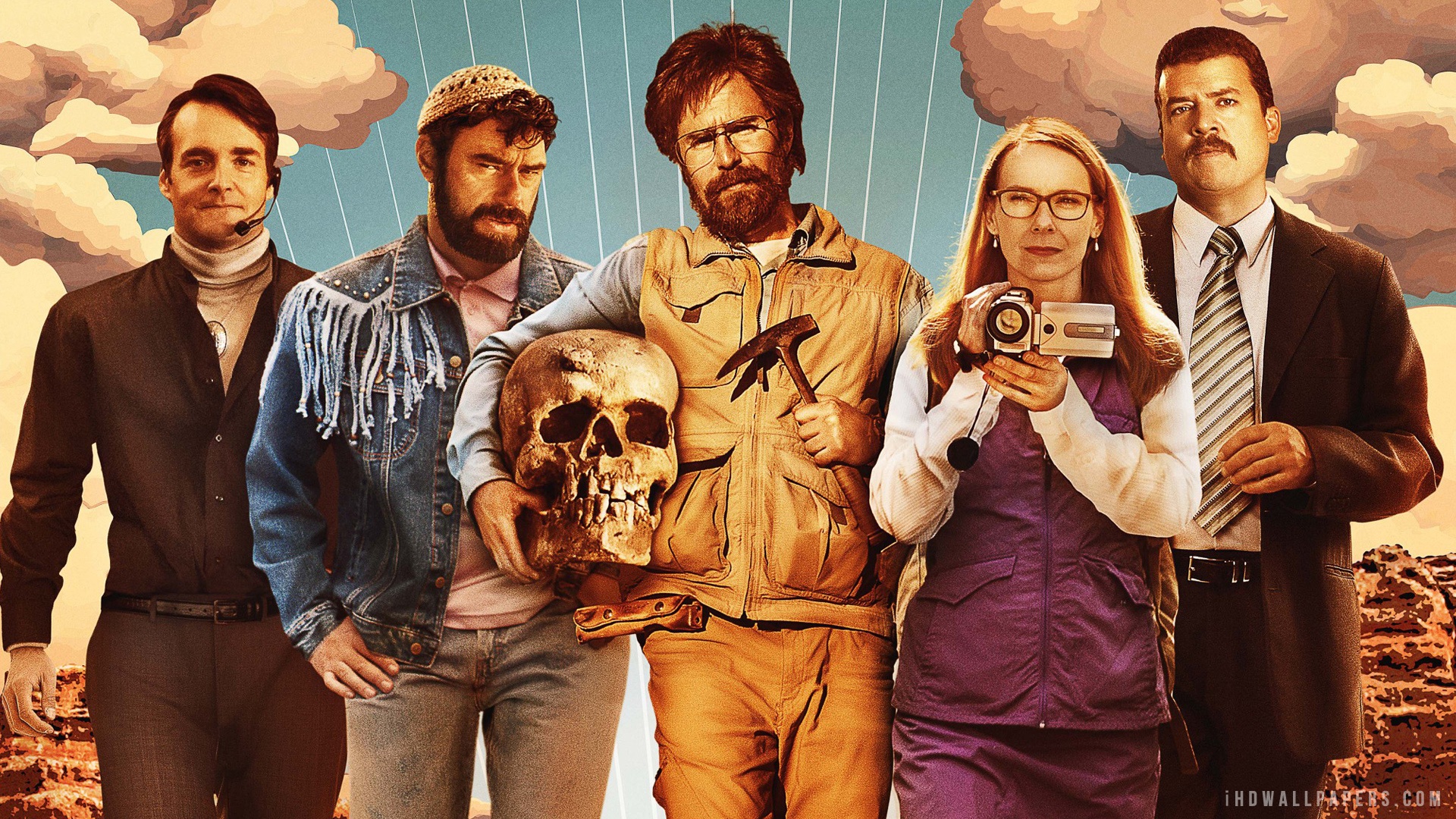
A self-proclaimed biblical archeologist somehow finds holy artifacts that have eluded the scientific and theological community for centuries – millennia, even – and brings them home to the US of A to help one Utah pastor reinvigorate his flock.
A ripe premise, that. The fact that the archeologist is played by Sam Rockwell, and the pastor by Danny McBride, only heightens the possibilities. On top of that, Don Verdean was directed by Jared Hess, co-written with his wife Jerusha, the team responsible for Napoleon Dynamite.
This should definitely work better than it does.
On paper, Don Verdean is a hoot. Add to the capable leads and a satire-rich premise the outstanding supporting cast. Amy Ryan offers an understated tenderness and humor as Don’s faithful assistant Carol, and Leslie Bibb is a stitch in her too-small role as Joylinda Lazarus, former prostitute, current pastor’s wife.
But Jemaine Clement could face criminal charges for the way he steals scenes as Verdean’s man on the ground in the Holy Land, Boaz.
The pieces are there, but the execution is way off. Hess’s film is too sweetly, compassionately cynical for its own good. What humor the film offers is frustratingly laid back, and far too often a tart comedic set up suffers from weak follow through.
The Hesses don’t seem to have the teeth for religious satire. Is Verdean a huckster or a soft but decent man led astray by Satan’s earthly influence, greed? Or is everyone in the film just suffering from idiocy and whimsy in equal measure?
Most disheartening of all is the misuse of Rockwell, who also executive produces. His performance is so low key as to be sleep inducing.
Rockwell and Clement co-starred in the Hesses’ previous effort, Gentlemen Broncos, which was far weirder than it was funny. For their next film they dialed down the weird a bit, but the comedy itself is even more subdued.
That’s unfortunate, because they may have really had something if they’d known what to do with it.
Why radio station horror? Because George is a radio DJ and Hope is in the mood to scare him.
You might be surprised by how many films use the idea of a radio station DJ for horror. Most of these films are not very good – Dead Air, The Severed Arm, Bad Channels, yes, even Rob Zombie’s Lords of Salem. Not good. But other films manage to mine the public exposure and personal vulnerability of an on air DJ to excellent effect, generating an anxious terror that can fuel a whole film. Here are our five personal favorites.
5. A Christmas Horror Story (2015)
A trio of Canadian directors – Steve Hoban, Brett Sullivan, and Grant Harvey – pull together a series of holiday shorts with this one. Held together by Dangerous Dan (William Shatner), the small town radio announcer who’s pulling a double shift this Christmas Eve, the tales vary wickedly from three teens trapped in their own wrong-headed Nativity, to a family who accidentally brought home a violent changeling with their pilfered Christmas tree, to a dysfunctional family stalked by Krampus, to Santa himself, besieged by zombie elves.
Yes, there is a second film out this holiday season with Krampus in it. You know what? This one’s better – in fact, it’s almost patterned after Krampus director John Dougherty’s cult favorite Trick r’Treat and it offers more laughs and more scares.
Plus Shatner! He’s adorably jolly in the broadcast booth, particularly as the evening progresses and his nog to liquor ratio slowly changes. This is a cleverly written film, well-acted and sometimes creepy as hell. Merry f’ing Christmas!
4. The Fog (1980)
Stevie Wayne (director John Carpenter favorite, at least while they were married, Adrienne Barbeau) does an air shift from a studio in that old lighthouse out on Antonio Bay. But the fog rolling in off the bay is just too thick tonight. It’s as if she’s entirely alone in the world. Can anyone hear her? Will someone go check on her young son?
While a lot does not work in Carpenter’s pirate leper ghost story (leper pirates?!), his first theatrical release after Halloween does hit some of the right marks. The vulnerability of a radio DJ – totally isolated while simultaneously exposed – has never been more palpable than in this film.
Jamie Lee Curtis (another Carpenter favorite) joins her mom Janet Leigh and B-horror legend Tom Atkins to fill out the pool of leper pirate bait. While the film is hardly one of Carpenter’s best, his knack for framing, his voyeuristic camera, and his ability to generate scares with a meager budget are on full display.
https://www.youtube.com/watch?v=nOZwnivtLbc
3. Pontypool
Canadian director Bruce McDonald’s shock jock horror film is best appreciated as a metaphor on journalistic responsibility and the damage that words can do. Radio air personality and general pot-stirrer Grant Mazzy (Stephen McHattie) finds himself kicked out of yet another large market and licking his wounds in the small time – Pontypool, Ontario, to be exact. But he’s about to find himself at the epicenter of a national emergency.
McDonald uses sound design and the cramped, claustrophobic space of the radio studio to wondrous effect as Mazzy and his producers broadcast through some kind of zombie epidemic, with Mazzy goosing on the mayhem in the name of good radio. As he listens to callers describe the action, and then be eaten up within it, the veteran McHattie compels attention while McDonald tweaks tensions.
Shut up or die is the tagline for the film. Fitting, as it turns out that what’s poisoning the throng, turning them into mindless, violent zombies, are the very words spewing at them. It’s a clever premise effectively executed, and while McDonald owes debts all around to previous efforts, his vision is unique enough to stand out and relevant enough to leave an impression.
2. Texas Chainsaw Massacre 2 (1986)
Tobe Hooper himself revisited his southern cannibal clan 12 years later, the great Dennis Hopper in tow. Hopper plays a retired Texas Marshall bent on finding the family that killed those kids back in the day. He joins forces with a radio host, played gamely by Caroline Williams. Together they flush the Sawyer (they have no family name in the first installment) family out of hiding. And just in case we’d missed how Leatherface got his name, the act of removing someone’s face to wear as a mask is revisited in a kind of weird wooing ritual.
TCM2 certainly gets weird, and boasts an unhinged performance by Hopper as a lawman willing to make some ugly choices to follow his obsession. Jim Siedow (The Cook) returns, and veteran genre favorite Bill Moseley adds a quirky ugliness to the proceedings. There’s also an awful lot of screaming, even for this kind of a film, but it’s a worthy genre flick. It pales in comparison to the original, but hold it up against any other low-rent horror output of 1986 and it’s a stand out.
1. Play Misty for Me (1971)
Clint Eastwood made his directorial debut with this cautionary tale. Free-wheeling bachelor and jazz radio DJ Dave Garver (Eastwood) picks up a fan (Julie Walter) in a local bar, but it turns out she’s an obsessive and dangerous nut job.
You can see this film all over later psycho girlfriend flicks, most notably Fatal Attraction, but it was groundbreaking at the time. To watch hard edged action hero Eastwood – in more of a quiet storm mode – visibly frightened by this woman was also a turning point. We’re told the shag haircut sported by Donna Mills also became quite the rage after the film debuted in ’71.
Eastwood capitalizes on something that all the rest of the films on this list pick up – that voice on the radio is actually a person who’s somewhat trapped. You can hear him, but you can’t necessarily help him. He’s both public and isolated. Eastwood’s slow boil direction and Walter’s eerie instability infuse the soft jazz sound with an undercurrent of danger that generates unease in every frame.
Hometown boy Michael Dougherty, whose 2007 directorial debut Trick ‘r Treat is a seasonal gem, returns to the land of holidays and horror with his second effort behind the camera, Krampus.
This Christmas tale – not unlike Joe Dante’s ’84 smash Gremlins – hopes to spin a weird and horrifying yet not entirely family unfriendly yarn suitable for seasonal viewing. Young Max (Emjay Anthony) secretly still believes in Santa, but Christmas just isn’t what it used to be. Sure, his German grandmother Omi shares his sentiment, but not the rest of the family – stressed out upper crust parents (Toni Collette and Adam Scott), boorish relatives (led by the ideal oaf, David Koechner), and a cranky great aunt, played by Conchata Ferrell.
When family dysfunction pushes him too far, Max tears up his letter to Santa, unwittingly inviting in his stead, the evil shadow-Santa, Krampus.
The film looks good, the performances are solid, but Dougherty has trouble finding and keeping a tone. Though Koechner does deliver a handful of decent lines, the film, on the whole, is not funny, nor is it particularly scary.
Perhaps hamstrung by a PG-13 rating (unlike the similarly themed 2010 Dutch film Saint), Krampus feels too restrained for horror lovers, too horrific for families.
The ancient demon and his anti-merry makers get too little screen time, and though a couple of them get a fantastic design, Krampus himself is never as visually articulated as he should be.
Dougherty has put together a very talented cast and crafted some interesting characters for them, the writing (duties he shared with Todd Casey and Zach Shields) feels lazy. Often the film pauses for what would be a one-liner zinger, and instead we get the talented Conchata Ferrell delivering a line no more interesting than, “I got this.”
Heavy with sentiment but light on redemption or terror, Krampus is one of those Christmas treats that doesn’t feel quite worth the caloric intake.
Aah, the precarious position of the alpha male. Oh should I say Aaaaaaaah!? Because that is the delightfully appropriate title of Steve Oram’s feature directorial debut.
An absurd horror comedy, the film offers no dialog at all, just grunts, as humans – devolved into ape mentality – go about their poop-throwing, territory marking, television smashing daily existence.
It’s the kind of overly clever premise you expect to wear thin, but honestly, it doesn’t. Much credit goes to a game cast (including Oram) that sells every minute of the ridiculousness, and to Oram again as director. He keeps the pace quick, his images a flurry of insanity you need to see more than once to fully appreciate.
Oram has more in store than a wickedly bloody send up, though. His film wisely deconstructs our own human preoccupations and foibles in a way that’s strangely touching, even sad at times.
The lack of dialog suits the experiment in the same way Steven Soderbergh’s meta-dialog suited his weirdly personal 1996 effort Schizopolis, or the way Miroslav Slaboshpitsky’s use of unsubtitled sign language fits his brilliant film The Tribe. While Aaaaaaaah! is far lighter and more madcap than either of these, it still asks you to use another means of understanding character actions, which allows you to see humanity on a more jarringly primal level.
It wouldn’t even be a horror movie were it not for all those severed penises.
Oram and his appealing cast keep you interested as seemingly divergent stories blend and reshape, and domestic hierarchies shift. Lucy Honigman is particularly compelling, but every actor has surprising success in articulating a dimensional character with nary a word to help.
A familiar face in British comedy, Oram stood out in Ben Wheatley’s 2012 horror comedy Sightseers. He’s playing against type here as the threatening male presence, but he’s equally hilarious. The talent has to rely primarily on sight gags, obviously, and Oram has a flair for presentation. His quick 79 minute running time helps, but there’s never a dull moment in this jungle.
Ever since Romero reimagined the mindless monster in 1968, horror cinema’s go-to beast has been the zombie. Perfect for true terror or splatter comedy – or, hell, even a romantic comedy now and again – films of the undead proliferated faster than a zombie horde. You can find them in nearly every genre, on almost every continent, and in just about every possible medium including children’s books. (If you have not read Ten Little Zombies, it makes an excellent stocking stuffer. Trust us!)
To help us hone our list we enlisted Dave Man, who kindly joins us on this week’s podcast. If you only have time for 5 (or maybe 6) zombie films, which to choose? Rest easy! We have some candidates.
5. Zombie (1979)
Originally filmed as an unofficial sequel to Romero’s Dawn of the Dead, this was director Lucio Fulci’s first true horror film, though he’d done several very violent films previously (Don’t Torture a Duckling, for instance). Shot to showcase violence, and immeasurably aided by Fabio Frizzi’s score, Zombie became a turning point in Z films and in Italian horror.
A boat docks in New York with one undead seaman aboard. A young woman and an investigative reporter head out to the island of that boat’s origins, where her father has been doing scientific work, only to find that the island is overrun with hungry walking corpses.
Fulci’s film tries to marry Romero’s take on the undead with the traditional voodoo narrative of films like White Zombie, but it’s the director’s vivid imagination for festering flesh, plus his now go-to shock of eye gouging, that helped the film make its mark. Plus, zombie-on-shark action!
https://www.youtube.com/watch?v=mqFWrGKLb4E
4. Dead Snow (2009)
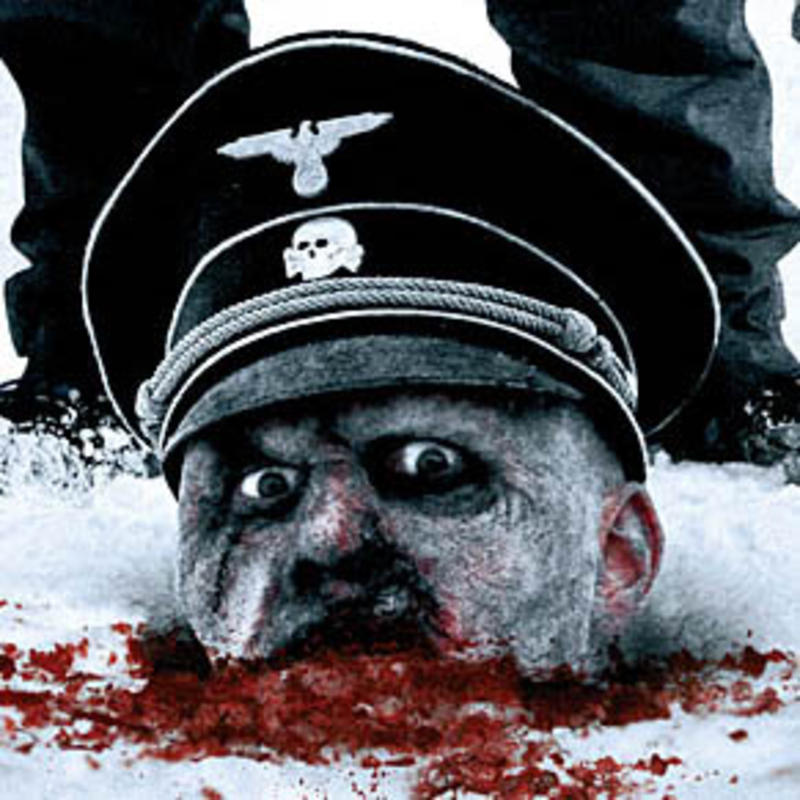
Like its portly nerd character Erlend, Dead Snow loves horror movies. A familiarly self-referential “cabin in the woods” flick, Dead Snow follows a handsome mixed-gender group of college students as they head to a remote cabin for Spring Break. A creepy old dude warns them off with a tale of local evil. They mock and ignore him at their peril.
But co-writer/director/Scandinavian Tommy Wirkola doesn’t just obey these rules. He embraces our prior knowledge of the path we’re taking to mine for comedy, but he doesn’t give up on the scares. Wirkola’s artful imagination generates plenty of startles and gore by the gallon.
Spectacular location shooting, exquisite cinematography, effective sound editing and a killer soundtrack combine to elevate the film above its clever script and solid acting. Take the gorgeous image of Norwegian peace: a tent, lit from within, sits like a jewel nestled in the quiet of a snowy mountainside. The image glistens with pristine outdoorsy beauty – until it … doesn’t.
https://www.youtube.com/watch?v=55uGN58UOkk
3. Braindead (Dead Alive) (1992)
Rated R for “an abundance of outrageous gore,” Braindead is everything the early Peter Jackson did well. It’s a bright, silly, outrageously gory bloodbath.
Lionel Cosgrove (Timothy Balme) secretly loves shopkeeper Paquita Maria Sanchez (Diana Penalver). Unfortunately, Lionel’s overbearing sadist of a mother follows the lovebirds to a date at the zoo, where she’s bitten (pretty hilariously) by a Sumatran rat-monkey (do not mistake this dangerous creature for a rabid Muppet or misshapen lump of clay). The bite kills her, but not before she can squeeze pus into some soup and wreak general havoc, which is nothing compared to the hell she raises once she comes back from the dead.
Braindead is so gloriously over-the-top that nearly any flaw can be forgiven. Jackson includes truly memorable images, takes zombies in fresh directions, and crafts characters you can root for. But more than anything, he knows where to point his hoseful of gore, and he has a keen imagination when it comes to just how much damage a lawnmower can do.
2. Dawn of the Dead (1978/2004)
Romero returned to the land of the undead in ’78 with a full-color sequel to Night. Set in Philadelphia, at a news broadcast gone crazy, the film follows a news producer, her chopper pilot boyfriend, and two Philly SWAT cops ready to abandon the organized zombie fight and find peace elsewhere. The four board a helicopter, eventually landing on the roof of a mall, which they turn into their private hideaway.
Romero, make-up legend Tom Savini, and Italian horror director Dario Argento teamed up for the sequel. You feel Argento’s presence in the score and the vivid red of the gore. Ken Foree and Scott Reiniger as the buddies from SWAT create the most effective moments, whether character-driven tension or zombie-driven action. Romero’s politics are on his sleeve with this one. He uses the “z” word, digs at consumerism, shows full-color entrails, and reminds us again that the undead may not be our biggest enemy once the zombie-tastrophe falls.
Plenty of filmmakers have remade or reimagined Romero’s flicks, but none did it as well as Zack Snyder.
In Romero’s version, themes of capitalism, greed, mindless consumerism run through the narrative. Snyder, though affectionate to the source material, focuses more on survival, humanity, and thrills. (He also has a wickedly clever soundtrack.) It’s more visceral and more fun. His feature is gripping, breathlessly paced, well developed and genuinely terrifying.
https://www.youtube.com/watch?v=PpuNE1cX03c
https://www.youtube.com/watch?v=rhsutNfvuAY
1 Night of the Living Dead (1968)
From the brightly lit opening cemetery sequence to the paranoid power struggle in the house to the devastating closing montage, Night of the Living Dead teems with the racial, sexual, and political tensions of its time. An unsettlingly relevant George A. Romero knew how to push societal panic buttons.
As the first film of its kind, the lasting impact of this picture on horror cinema is hard to overstate. His inventive imagination created the genre and the monster from the ground up.
They’re dead.
They’re back.
They’re hungry for human flesh.
Their bite infects the bitten.
The bitten will eventually bite.
Aim for the head.
The shrill sense of confinement, the danger of one inmate turning on another, and the unthinkable transformation going on in the cellar build to a startling climax – one that utterly upends expectations – followed by the kind of absolutely genius ending that guarantees the film’s eternal position in the annals of horror cinema.
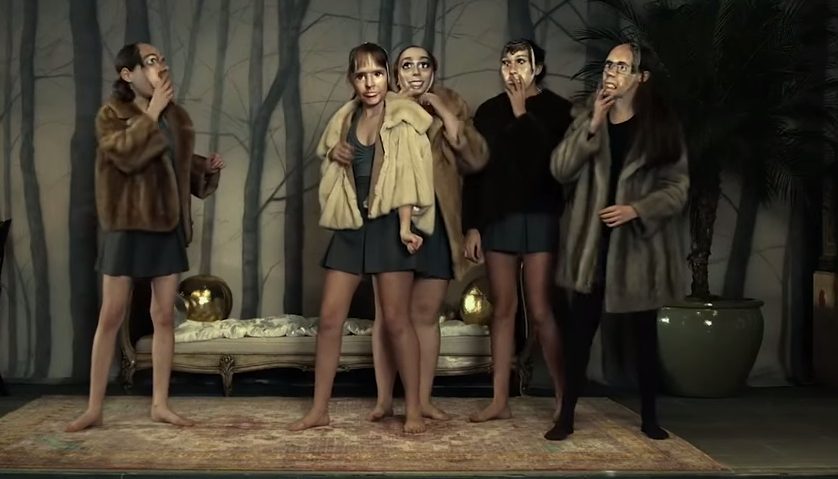
Simultaneously spoiled and neglected, handed every luxury imaginable and then abandoned to do with their time what they will, a group of 12-year-old girls at a sleepover pay the price for a too-modern childhood.
Loosely inspired by true events, #Horror tracks the evolution of the mean girl. Between cyberbullying and online gaming, one pre-adolescent clique elevates their coming-of-age angst into a post-modern horror show.
Writer/director Tara Subkoff populates her soullessly luxurious world with bizarre and arresting visuals, and her cast – both the seasoned adults and the mostly unknown child performers – offer a range of unique and compelling performances. The atmosphere created is so detached, stylized, and surreal, you can imagine almost anything happening.
Subkoff has provocative things to say about coming of age, and though none of them are entirely novel, she wisely avoids one-sided arguments. Yes, the five 12-year-olds ultimately blame their selfish, negligent parents for their own fucked-up-edness, although the film’s heroine Sam, (Sadie Seelert) chooses to reject her loving and protective mother in favor of the attention of her new school’s mean girl circle.
Subkoff’s film is at its best when it drops you into the undercooked logic of a child.
“Nothing is mean if you laugh,” explains a genuinely earnest and confused Cat (Haley Murphy). And that’s really the point of the film: kids are stupid, parents are blind, the world offers more immediate and accessible dangers than ever before, and that time between childhood and adulthood is a haze of misunderstood circumstances and unavoidable selfishness.
Chloe Sevigny and Timothy Hutton are over-the-top wonders, both horrifying yet wonderful in their own way, but Subkoff’s real victory is her ability to capture, with the help of a game pre-adolescent cast, the combination of cynicism and playfulness that marks these particular girls’ youth.
The horror story is a tad thin – derivative, even – but what Subkoff, her visual panache and her cast manage to do with it keeps you intrigued and guessing for the full 90 minute run.
Read Hope’s interview with director Tara Subkoff HERE.
As Daniel Radcliffe’s Igor begins to spin his Gothic yarn in voiceover, he tells us that everyone knows about the monster, but too few people know about Victor Frankenstein.
Here is the first problem with this movie.
In fact, only James Whale and Boris Karloff did Frankenstein’s monster proper. Everyone else – everyone else – has been preoccupied with the mad scientist whose compulsion to create life went wildly out of control.
Still, Paul McGuigan’s film invites us, not just to the headspace of the mad doctor, but to the bond between scientist and assistant, because VF is, at its heart, a buddy picture. In fact, we learn a lot more about Igor than we do the title character.
Radcliffe’s performance is tender and sincere as the malformed and bullied young man, rescued by the anatomically obsessed surgeon. As Victor, James McAvoy waffles between a believably wounded and vulnerable genius, and some hammy overacting.
Neither McAvoy nor Radcliffe are the issue, though. Max Landis’s screenplay meanders hither and yon without the slightest focus, from circus to laboratory to ball to medical college to isolated castle without a clear narrative path or sense of purpose. Worse still, the utterly baffling leaps in logic. (Igor is crippled circus clown who’s never known anything but cruelty; he is also the circus doctor. I’m sorry – what?)
McGuigan’s pacing only exacerbates the situation. The film feels twice as long as it is, and the very-late-entrance of the monster only makes the balance of the running time feel that much more tedious. Though he pastes together eye-catching images now and again – the twirl of a red skirt, an oversized medical sketch on the floor, enormous advertisement heads atop a building – on the whole he can’t capitalize on either a visual aesthetic or any sense of movement.
Victor Frankenstein is as stagnant and bloated as his corpses.
Regardless of all that, the question is, who needs another doctor with a God complex? Whale was right. It’s the monster who’s interesting.