The destinies of two undersized twin wrestlers and a pair of aging prostitutes braid in Arturo Ripstein’s grimly surreal Bleak Street (La Calle de la Amargura).
The veteran Mexican filmmaker works again with his regular collaborator and life partner, writer Paz Alicia Garciadiego. The two enlist the aid of cinematographer Alejandro Cantu to conjure an atmosphere that is simultaneously desolate and dreamy.
Filmed in stylized black and white and set in a maze of back alleys in Mexico City, Bleak Street begins with off-kilter vignettes that provide glimpses into the dreary lives of the film’s four primary figures before pulling the strands together to depict the true crime that inspired the effort.
Juan Francisco Longoria and Guillermo Lopez play the twin brothers, costumed dwarf wrestlers who “shadow” full size grappling counterparts and never remove their masks.
Patricia Reyes Spindola and Nora Velasquez portray prostitutes facing the realities of their shelf lives as they watch younger women take over their corners and customers.
The two pairs have workplace struggles and disrespect in common, though this hardly binds them. While Ripstein never misses a chance to showcase the humanity of each of his characters, transcending their destiny is not his aim, nor theirs.
Ripstein adds to the hypnotic quality of his picture with a score consisting only of the nearly imperceptible sound of water as scenes fade to black.
Cantu’s lengthy, prowling shots underscore the voyeuristic feel of the film. His sparkling black and white fills the screen with brightly lit surfaces and shadowy backdrops, the landscape taking on a beautiful but nightmarish quality that suits the wild assortment of characters.
Regardless of their actions, these are not characters Ripstein judges. This is both refreshing and off-putting, because the film never feels like the tragedy it is.
Respectful but absolutely never preachy, Bleak Street holds itself and its audience at a distance from the characters onscreen. While that disconnect feels intentional, Ripstein missed an opportunity for lasting relevance because he doesn’t generate any kind of emotional connection with the tragic, true events unfolding.
Bleak Street screens this weekend only at the Wexner Center for the Arts.
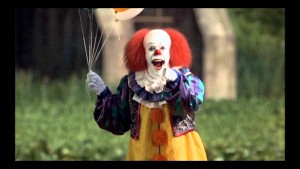
Clowns! You hate ’em, we hate ’em. There may be nothing as universally terrifying as the clown, and yet, a proper clown horror film is a tough nut to crack.
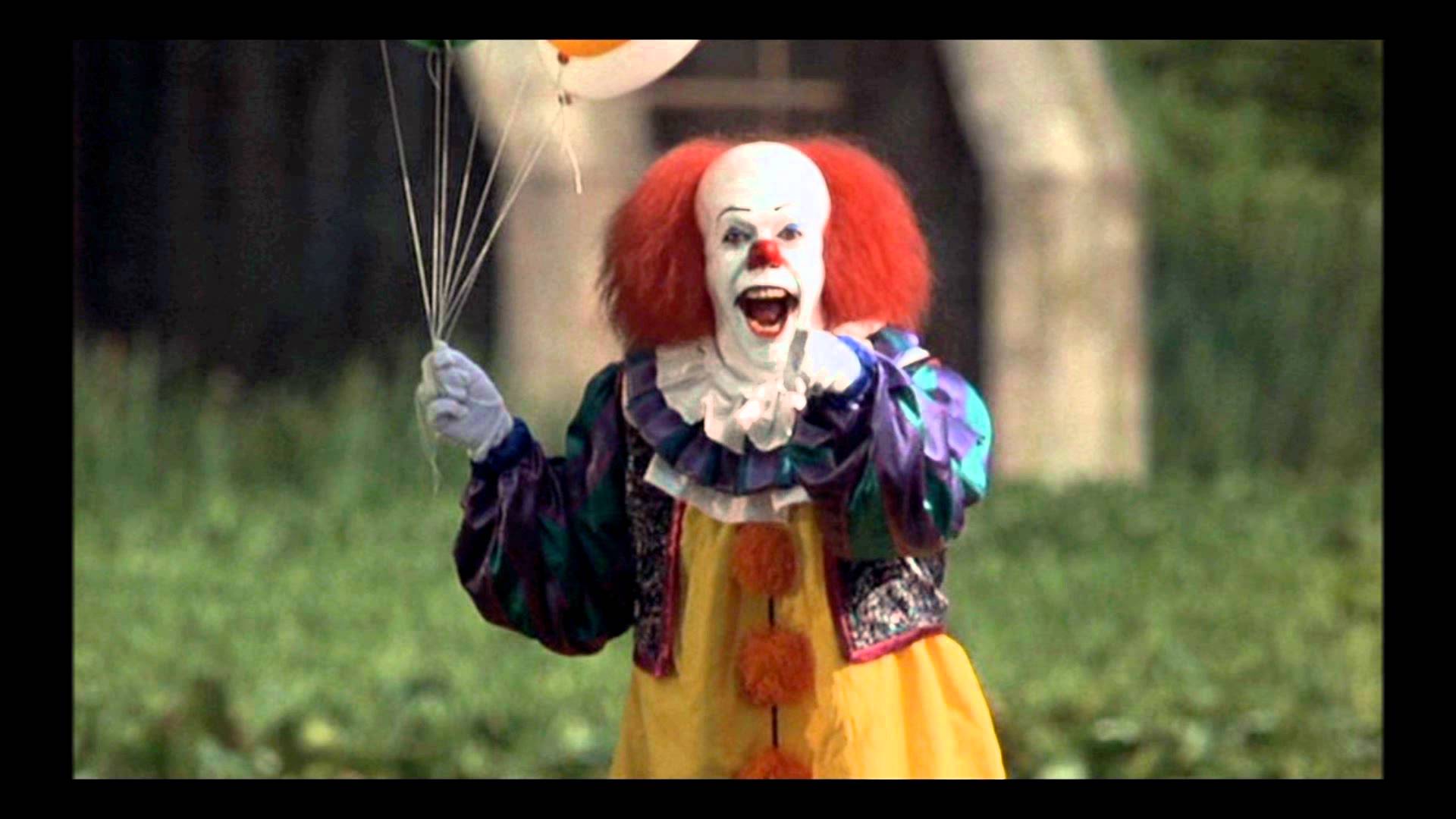
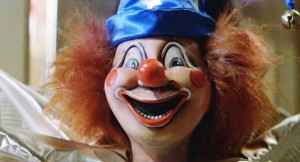
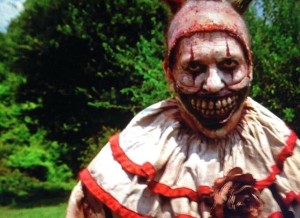
So, before we launch into the 5 best clown films, let’s first pay tribute to the 5 scariest clowns to ever grace the screen:
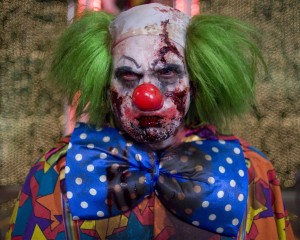
5. Zombieland Clown (Derek Graf)
4. Captain Spalding (House of 1000 Corpses/Devil’s Rejects) (Sid Haig)
On to the main event! Here are the five clowniest horror movies!
5. Clownhouse (1989)
There are several fascinating pieces of information concerning the derivative yet uniquely weird Clownhouse. These range from odd to awful.
1) The Sundance Film Festival somehow found this film – this one, Clownhouse, the movie about 3 escaped mental patients who dress as clowns, break into a house where three brothers are home alone on Halloween night, and commence to terrify and slaughter them – worthy of a nomination for Best Drama. If you haven’t seen this film, you might not quite recognize how profoundly insane that is.
2) The great and underappreciated Sam Rockwell made his feature debut as the dickhead oldest brother in this movie. The clowns themselves – Cheezo, Bippo, and Dippo – are genuinely scary and garishly fascinating, but outside of them, only Rockwell can act. At all.
3) Writer/director Victor Salva would go on to create the Jeepers Creepers franchise. But first he would serve 15 months of a 3-year state prison sentence for molesting the 12-year-old lead actor in this film, Nathan Forrest Winters.
Basically, there are four really solid clown horror movies in the world and about 200 truly bad ones. Clownhouse does set itself above the rest of the muck with these disturbing points of interest.
https://www.youtube.com/watch?v=xi0ci-GjLx4
4. Clown (2014)
Sympathetic, surprising, and often very uncomfortable, Jon Watt’s 2014 horror flick, though far from perfect, does an excellent job of morphing that lovable party favorite into the red-nosed freak from your nightmares.
Kent (a pitiful Andy Powers) stumbles across a vintage clown outfit in an estate property he’s fitting for resale. Perfect timing – his son’s birthday party is in an hour. What a surprise this will be, unless the suit is cursed in some way and will slowly turn Kent into a child-eating demon.
It does! Hooray!!!
A weird-as-ever supporting turn from Peter Stormare helps the film overcome other acting weaknesses, but Watts gets credit for taking the horror places you might not expect, and for squeezing as much sympathy as possible before that last swing of the ax.
3. The Man Who Laughs (1928)
The German Expressionist director Paul Leni (Waxworks, The Cat and the Canary) worked with J. Grubb Alexander’s adaptation of Victor Hugo’s novel to cast a macabre spell with this film – one of our very favorites.
A nobleman offends the king, who kills the nobleman (iron maiden!) and has his son, Gwynplaine, disfigured by a surgeon so he can spend his life laughing at his fool of a father. The boy is tossed out, wandering in the snow. He finds a blind baby girl, and the two are saved by a traveling carny.
As is Hugo’s way, goodness is found in the tormented and hideous while the gorgeous society show themselves to be the true beasts. The film looks gloomily gorgeous, and in the hands of silent film star Conrad Veidt, Gwynplaine becomes Hugo’s most sympathetic and heartbreaking monster.
2. Stitches (2012)
There are a lot of scary clowns in films, but not that many can carry an entire film. Stitches can.
This Irish import sees a half-assed clown accidentally offed at a 6-year-old’s birthday party, only to return to finish his act when the lad turns 16.
Yes, it is a familiar slasher set up: something happened ten years ago – an accident! It was nobody’s fault! They were only children!! And then, ten years later, a return from the grave timed perfectly with a big bash that lets the grisly menace pick teens off one by one. But co-writer/director Connor McMahon does not simply tread that well-worn path. He makes glorious use of the main difference: his menace is a sketchy, ill-tempered clown.
Dark yet bawdy humor and game performances elevate this one way above teen slasher. Gory, gross, funny and well-acted – it brings to mind some of Peter Jackson’s early work. It’s worth a look.
1. The Last Circus (2010)
Who’s in the mood for something weird?
Unhinged Spanish filmmaker Alex de la Iglesia returns to form with The Last Circus, a breathtakingly bizarre look at a Big Top love triangle set in Franco’s Spain.
Describing the story in much detail would risk giving away too many of the astonishing images. A boy loses his performer father to conscription in Spain’s civil war, and decades later, with Franco’s reign’s end in sight, he follows in pop’s clown-sized footsteps and joins the circus. There he falls for another clown’s woman, and stuff gets nutty.
Like Tarantino, Igelsia pulls together ideas and images from across cinema and blends them into something uniquely his own, crafting a film that’s somewhat familiar, but never, ever predictable.
The Last Circus boasts more than brilliantly wrong-minded direction and stunningly macabre imagery – though of these things it certainly boasts. Within that bloody and perverse chaos are some of the more touching performances to be found onscreen.
One billion dollars. That’s global money, keep in mind, but still, who’d have thought Tim Burton’s utterly banal and forgettable 2010 acid trip Alice in Wonderland had made so very much money? Too much – and not just because the film had no genuine merit, but because that kind of sum necessitates a sequel, however wildly and wholly unnecessary – even unwanted – that kind of muchness must be.
And so, back to Underland we go, accompanying an adult(ish) Alice who returns from a stint as sea captain to find Victorian England just as restrictive as it had been when she was a child escaping into her imagination. And so, to her imagination she returns.
Director James Bobin (The Muppets) has the unenviable task of following Burton into the rabbit hole – not unenviable because he may suffer by comparison, but because his options are somewhat limited based on the film’s predecessor. Expect garishly overdone visuals that offset weekly drawn characters.
Familial tensions are at the heart of the tale, penned by Linda Woolverton and based on some of Lewis Carroll’s most dreamlike and incongruous storytelling. Too bad Woolverton and Disney insisted on hemming Carroll’s wild imagination inside such a tediously structured framework.
The Hatter is depressed to the point of death and Alice has to go back in time to save him. Basically. But you can’t change the past – a lesson she’d allegedly learned in her first fantastic voyage, but I guess it didn’t stick. So, let’s learn it again, with the help of Time himself, as played by Sacha Baron Cohen with a Schwarzenegger-esque accent.
Aside from that new face, the same forgettably wacky group returns to the future/past. The talented Mia Wasikowska struggles to find life inside the bland Alice while Helena Bonham Carter pointlessly chews scenery.
An underused Anne Hathaway brightens certain scenes, and Johnny Depp – reliable as ever inside a fright wig and exaggerated make up – does bring a wistful humanity to the otherworldly events.
But imagination and tiresome capitalism butt heads from the opening sequence, and without the foundation of compelling characters or the requirement of engaging storytelling, Through the Looking Glass proves to be a pointless, though colorful, bore.
For many – perhaps most – coming of age is a horror in and of itself, full of confusion, embarrassment, personality change, even blood. Which is why it is ripe fodder for horror, a genre that has plumbed the depths of adolescent despair for any number of monster movies, slashers, camping horrors, and nasty prom dates. Today we celebrate the unmitigated horror of burgeoning adulthood with our list of the five best Coming of Age horror films, with the help of Get It Together podcasters Pete Stroup and David Huff.
5. Ginger Snaps
Sisters Ginger and Bridget, outcasts in the wasteland of Canadian suburbia, cling to each other, and reject/loathe high school (a feeling that high school in general returns).
On the evening of Ginger’s first period, she’s bitten by a werewolf. Writer Karen Walton cares not for subtlety: the curse, get it? It turns out, lycanthropy makes for a pretty vivid metaphor for puberty. This turn of events proves especially provocative and appropriate for a film that upends many mainstay female cliches.
Walton’s wickedly humorous script stays in your face with the metaphors, successfully building an entire film on clever turns of phrase, puns, and analogies, stirring up the kind of hysteria that surrounds puberty, sex, reputations, body hair, and one’s own helplessness to these very elements. It’s as insightful a high school horror film as you’ll find, peppered equally with dark humor and gore.
https://www.youtube.com/watch?v=Zoa1A987A_k
4. Let the Right One In
In 2008, Sweden’s Let the Right One In emerged as an original, stylish thriller – and the best vampire flicks in years. A spooky coming of age tale populated by outcasts in the bleakest, coldest imaginable environment, the film breaks hearts and bleeds victims in equal measure.
Kare Hedebrant‘s Oskar with a blond Prince Valiant cut falls innocently for the odd new girl (an outstanding Lina Leandersson) in his shabby apartment complex. Reluctantly, she returns his admiration, and a sweet and bloody romance buds.
This is a coming of age film full of life lessons and adult choices, told with a tremendous atmosphere of melancholy, tainted innocence, and isolation. Plus the best swimming pool carnage scene ever.
The unsettling scene is so uniquely handled, not just for horrifying effect (which it certainly achieves), but to reinforce the two main characters, their bond, and their roles. It’s beautiful, like the strangely lovely film itself.
3. Carrie
The seminal film about teen angst and high school carnage has to be Brian De Palma’s 1976 landmark adaptation of Stephen King’s first full length novel, the tale of an unpopular teenager who marks the arrival of her period by suddenly embracing her psychic powers.
Sure the film opens like a ‘70s soft core porno, with images created by a director who has clearly never been in a girls’ locker room and therefore chose to depict the one in his dirty, dirty mind. But as soon as the bloody stream punctures the dreamlike shower sequence, we witness the definitive moment in Mean Girl Cinema. The “plug it up” refrain, coupled with Sissy Spacek’s authentic, even animalistic portrayal of panic, sets a tone for the film. Whatever Carrie may do, we (the voyeurs, no doubt more like the normal kids than like Carrie) are to blame.
This film exposes a panic about the onslaught of womanhood. The same panic informs <em>The Exorcist</em> and dozens of others, but De Palma’s version offers more sympathy than most. Spacek is the perfect balance of freckle-faced vulnerability and awed vengeance.
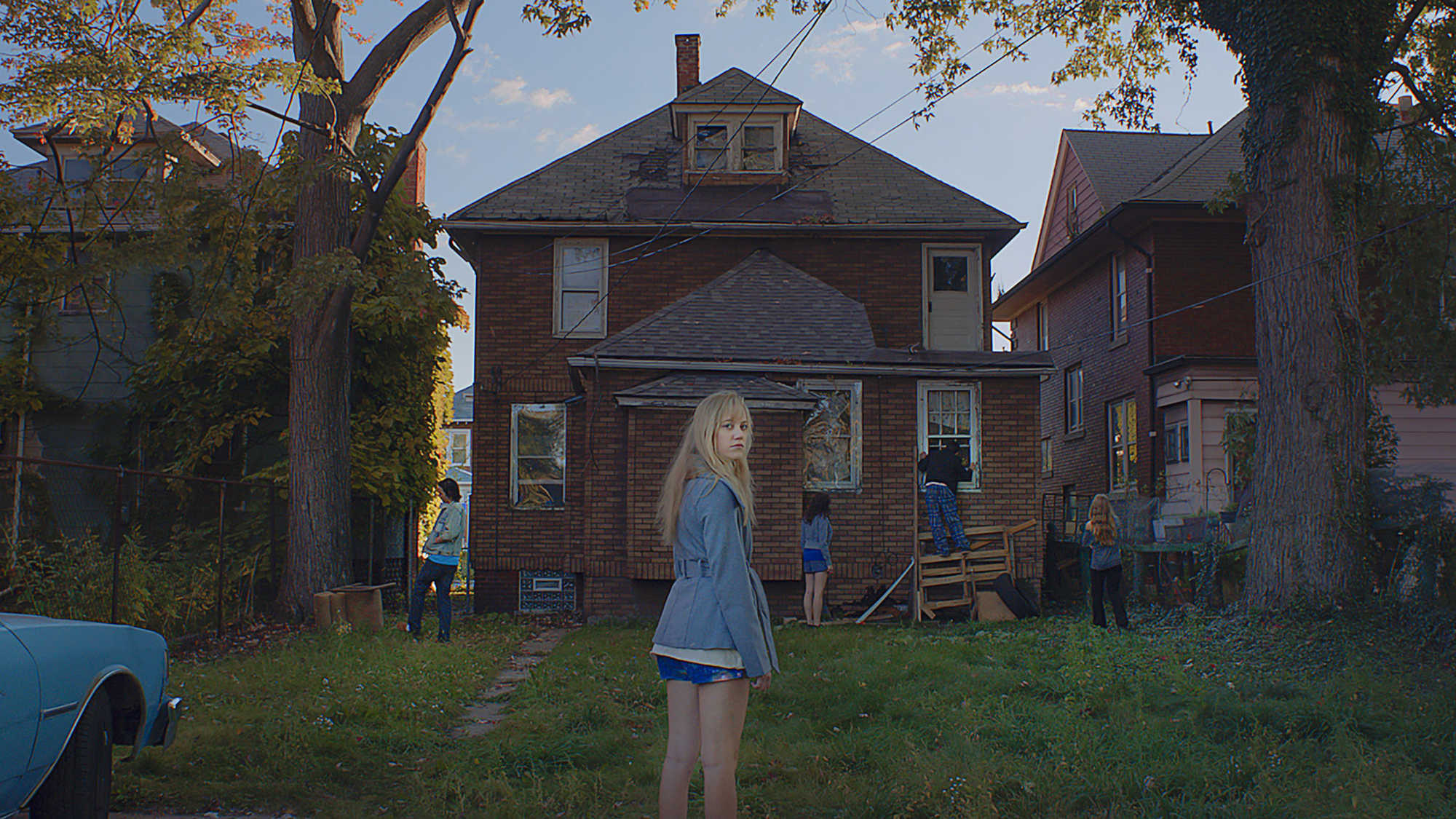
2. It Follows
It Follows is a coming of age tale that mines a primal terror. Yes, it’s the STD or horror movies, but don’t let that dissuade you. Writer/director David Robert Mitchell understands the anxiety of adolescence and he has not simply crafted yet another cautionary tale about premarital sex.
Mitchell has captured that fleeting yet dragging moment between childhood and adulthood and given the lurking dread of that time of life a powerful image. There is something that lies just beyond the innocence of youth. You feel it in every frame and begin to look out for it, walking toward you at a consistent pace, long before the characters have begun to check the periphery themselves.
Mitchell borrows from a number of coming of age horror shows, but his film is confident enough to pull it off without feeling derivative in any way. The writer/director takes familiar tropes and uses them with skill to lull you with familiarity, and then terrify you with it.
1. The Witch
Ideas of gender inequality, sexual awakening, slavish devotion to dogma, and isolationism roil beneath the surface of this film, yet the tale itself is deceptively simple. One family, fresh off the boat from England in 1630 and expelled from their puritanical village, sets up house and farm in a clearing near a wood.
There William (Ralph Ineson) and Katherine (Kate Dickie) will raise their five children: the infant Samuel, young twins Mercy (Ellie Grainger) and Jonas (Lucas Dawson), nearly adolescent Caleb (Harvey Scrimshaw), and the eldest, Tomasin (Anya Taylor-Joy), nearly a woman now.
As a series of grim catastrophes befalls the family, members turn on members with ever-heightening hysteria. The Witch creates an atmosphere of the most intimate and unpleasant tension, a sense of anxiety that builds relentlessly and traps you along with this helpless, miserable family.
As frenzy and paranoia feed on ignorance and helplessness, tensions balloon to bursting. You are trapped as they are trapped in this inescapable mess, where man’s overanxious attempt to purge himself absolutely of his capacity for sin only opens him up to the true evil lurking, as it always is, in the woods.
Tell me you’ve seen any of the countless trailers for Shane Black’s new action comedy The Nice Guys. Funny! I haven’t had such high expectations for a new film yet this year.
Ever since Black announced his presence with authority, penning ‘87’s iconic buddy cop action flick Lethal Weapon, he’s been one to watch. Kiss Kiss Bang Bang, his directorial debut, suggested he might even be keeping his best stuff for himself. But after a while, his tics and tendencies grow tiresome.
The Long Kiss Goodnight, anyone?
And though his newest effort absolutely revisits most of the filmmaker’s by-now obvious predilections, his craftsmanship and casting have never been better.
Hey girl, guess what – Ryan Gosling is a hoot! No, no, I didn’t say he’s hot (as that goes without saying). He’s a hoot. And if you found his scene-stealing performance in last year’s gem The Big Short a refreshing and joyous change of pace for the award-bedecked actor, you will surely enjoy this masterpiece of comic timing and physicality.
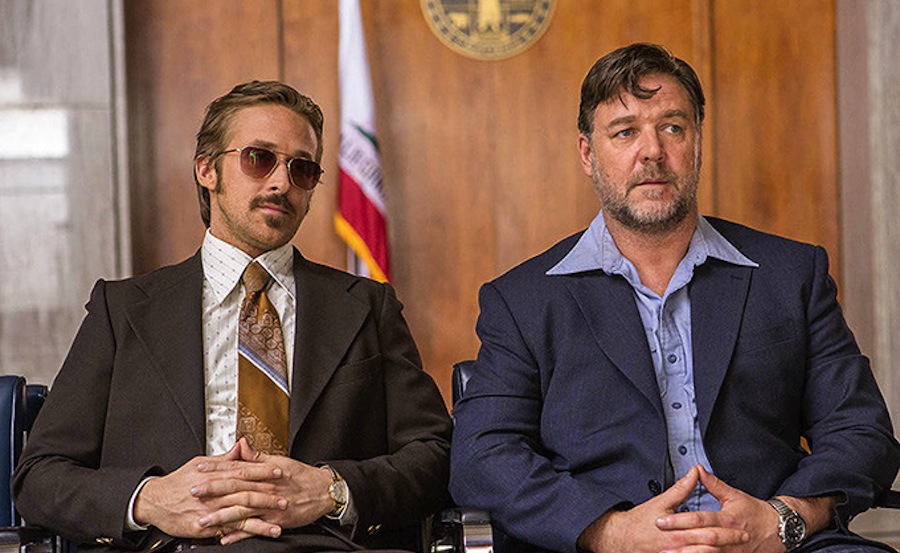
Gosling plays Holland March, an alcoholic PI with questionable parenting skills who reluctantly teams up with muscle-for-hire Jackson Healy (Russell Crowe). What begins as a low-rent missing persons case snowballs into an enormous conspiracy involving porn, the government, and the all-powerful auto industry. (It is 1977, after all.)
Aah, 1977 – when everybody smoked, ogled women, and found alcoholism a laugh riot. Black puts this time machine quality to excellent use in a film that would have felt stale and rote during his Eighties heyday, but today it serves as an endlessly entertaining riff on all that was so wrong and so right about the Seventies.
A brightly lit (if smog-choked) Southern California noir-turned-buddy-action comedy, The Nice Guys does a surprisingly good job at finding its tone. All the lurid, twisty plot fodder could easily weigh the film down in gritty drama, but Shane’s heart is in the budding, unsanitized bromance.
Gosling’s impeccable hilarity is custom-made for Black’s machine gun fire dialog, but Crowe also manages to get comfortable in the script, allowing both the conversation and action to breathe and take shape. The pair’s chemistry is a joy to watch, and is aided immeasurably by Angourie Rice’s flinty, intelligent turn as March’s disappointed daughter, Holly.
There’s always reason to be proud when one of he most established and respected directors decides to dabble in horror, and likewise, when one of our own makes it big in the mainstream. It put us in the mood for some double features: great directors, one horror movie, one non-horror movie. And the possibilities are endless. How about Scorsese’s Cape Fear/Taxi Driver? Or something a little more contemporary – maybe Jeremy Saulnier’s Green Room and Blue Ruin (if you’re feeling colorful)? Oh, what fun! Let’s get started!
5. Ben Wheatley: Kill List (2011)/ High Rise (2015)
Kill List
Never has the line “Thank you” had a weirder effect than in this genre bender. Without ever losing its gritty, indie sensibility, Ben Wheatley’s fascinating film begins a slide in Act 2 from crime drama toward macabre thriller. You spend the balance of the film’s brisk 95 minutes actively puzzling out clues, ambiguities and oddities.
For those looking for blood and guts and bullets, Kill List will only partially satisfy and may bewilder by the end. But audiences seeking a finely crafted, unusual horror film may find themselves saying thank you.
High-Rise
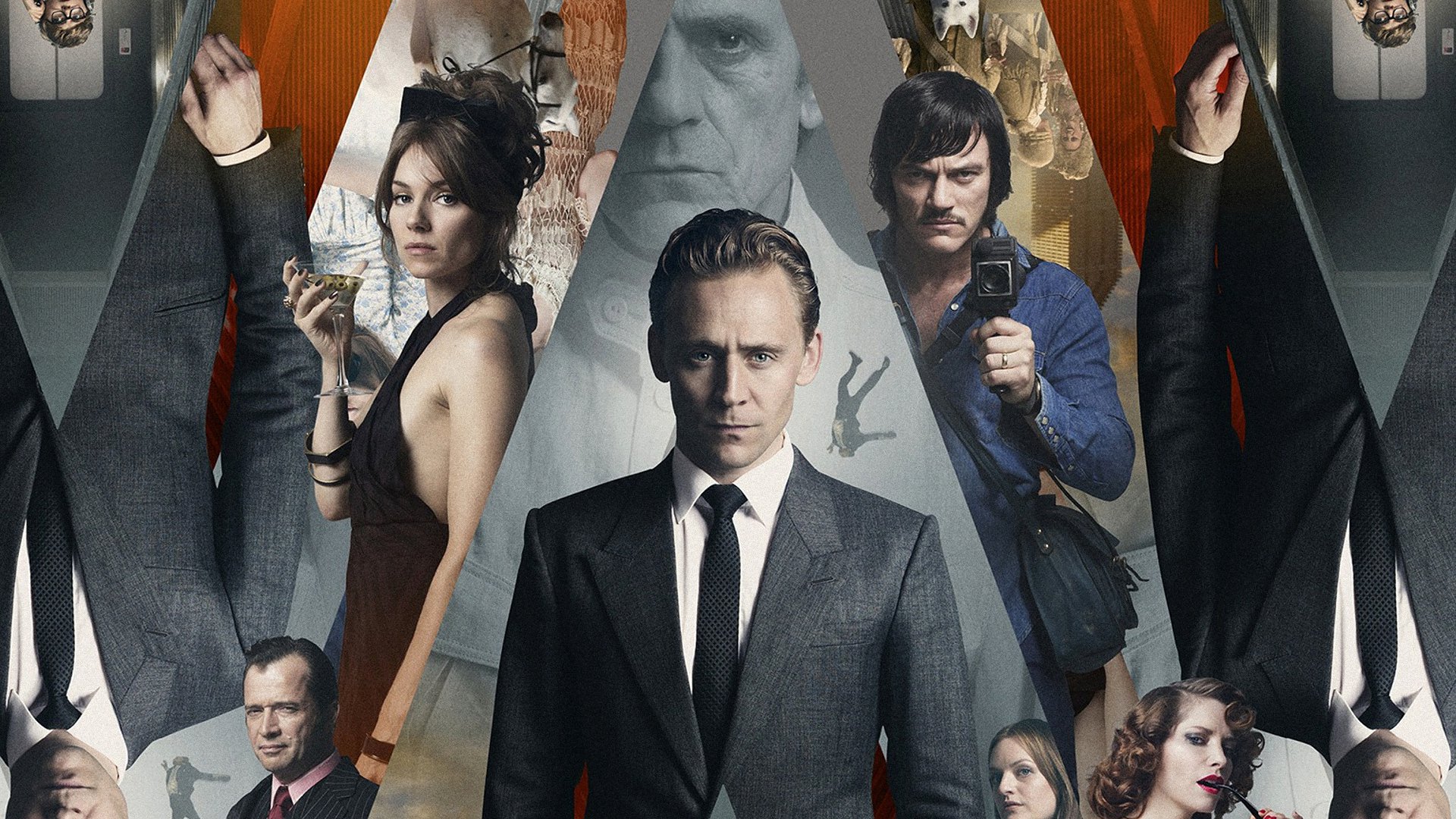
Set inside a skyscraper in a gloriously retro London, Ben Wheatley’s adaptation of J.G. Ballard’s High-Rise is a dystopia full of misanthropic humor.
Laing (Tom Hiddleston) narrates his own story of life inside the “grand social experiment” – a high rise where the higher the floor, the higher the tenant’s social status. Performances range from slyly understated (Hiddleston, Elizabeth Moss) to powerful (Sienna Miller, Luke Evans) to alarmingly hammy (James Purefoy), but each contributes entertainingly to this particular brand of dystopia. Still, the wicked humor and wild chaos will certainly keep your attention.
4. Peter Jackson: Dead Alive (1992) / Heavenly Creatures (1994)
Dead Alive
This film is everything the early Peter Jackson did well. It’s a bright, silly, outrageous bloodbath. Lionel Cosgrove (Timothy Balme), destiny, a Sumatran rat monkey, an overbearing mother, a prying uncle, and true love are bathed in gore in the Kiwi director’s last true horror flick – a film so gloriously over-the-top that nearly anything can be forgiven it.
Jackson includes truly memorable images, takes zombies in fresh directions, and crafts characters you can root for. But more than anything, he knows where to point his hoseful of gore, and he has a keen imagination when it comes to just how much damage a lawnmower can do.
Heavenly Creatures
Jackson’s first non-horror film still follows rather horrific circumstances – New Zealand’s infamous Parker-Hulme murder case. Even fans of the director’s work to this point couldn’t have suspected he (and writing partner/write Fran Walsh) had anything this elegant and fantastical in them.
Certainly, spellbinding performances from young Kate Winslet and Melanie Lynskey didn’t hurt. Jackson and Walsh received their first Oscar noms for the screenplay in a film that eschews the trial, barely witnesses the crime, and focuses instead on the intense friendship that went horrifyingly wrong. It respects its source material and every person involved in the historical event, but it also understands the delirium of adolescence in a way few films do. Hobbits be damned, this is Jackson’s masterpiece.
3. David Cronenberg: Scanners (1981) / Eastern Promises (2007)
Scanners
The film that made Cronenberg an international name in the genre is about mind control – a very sloppy version of it – and that societal fear of being dominated by a stronger being. At its heart, this is another government conspiracy film wherein an agency foolishly believes they can harness an uncontrollable element for military purposes. Scanners is hardly the best of these (Alien is, FYI). But it’s gory fun nonetheless. What makes the effort undeniably Cronenberg (besides the exploding heads) is that connection between human tissue and technology.
The acting is silly, the technology is comically dated, and the computer nerd toward the end of the film inexplicably boasts a band aid on his face. But Michael Ironside is on fire and the movie ratchets up tension by keeping you wondering when the next head will explode.
Eastern Promises
In 2005, Cronenberg produced his most acclaimed and most mainstream film to date, A History of Violence. That success spawned more than an interest in non-genre fare, but also a fruitful collaboration with the underappreciated and versatile actor Viggo Mortensen.
Two years later, Mortensen would join an impeccable cast including Vincent Cassel, Armin Mueller-Stahl, and Naomi Watts in what would be the Canadian auteur’s finest film. Eastern promises is Cronenberg’s characteristically off kilter, visceral take on the mafia movie.
https://www.youtube.com/watch?v=dWC-ECjNqxo
2. Stanley Kubrick: The Shining (1980)/ 2001: A Space Odyssey (1968)
The Shining
A study in atmospheric tension, Kubrick’s vision of the Torrance family collapse at the Overlook Hotel is both visually and aurally meticulous. It opens with that stunning helicopter shot, following Jack Torrance’s little yellow Beetle up the mountainside, the ominous score announcing a foreboding that the film never shakes.
What image stays with you most? The two creepy little girls? The blood pouring out of the elevator? The impressive afro in the velvet painting above Scatman Crothers’s bed? That freaky guy in the bear suit? Whatever the answer, thanks be to Kubrick’s deviant yet tidy imagination.
2001: A Space Odyssey
After a less than enthusiastic reception from both audiences and critics in 1968, 2001 persevered, establishing its legend as perhaps the most magnificent science fiction film ever made.
Kubrick and legendary sci-fi author Arthur C. Clarke adapt Clarke’s short story with ambitious vision, epic scope, precise execution. More than a film, 2001 transcends the screen to become a mind-bending look at “first contact” that elicits levels of awe and wonder reserved for timeless pieces of art.
Very simply. 2001 is essential cinema of the highest order.
https://www.youtube.com/watch?v=E8TABIFAN4o
1. William Friedkin: The Exorcist (1973)/ Killer Joe (2011)
The Exorcist
Thanks to an intricate and nuanced screenplay adapted by William Peter Blatty from his own novel, the film boasts any number of flawed characters struggling to find faith and to do what’s right in this impossible situation.
Friedkin balanced every scene to expose its divinity and warts, and to quietly build tension. When he was good and ready, he let that tension burst into explosions of terrifying mayhem that became a blueprint for dozens of films throughout the Seventies and marked a lasting icon for the genre. Even after all this time, The Exorcist is a flat-out masterpiece.
Killer Joe
Following a long, fairly quiet period, in 2011 Friedkin returned with something bold and nasty:Killer Joe. Matthew McConaughey plays the titular killer, a predator in a cowboy hat making deals with some Texas white trash. The deal goes haywire, and some crazy, mean, vividly depicted shit befalls those unthinking trailer folk.
Subdued, charming, merciless, weird, and oh-so-Southern, Joe scares the living hell out of any thinking person. Unfortunately, that doesn’t really describe the Smiths – an exquisitely cast Emile Hirsch, Juno Temple, Thomas Hayden Church, and a flawless Gina Gershon. This is an ugly and unsettlingly funny film about compromises, bad ideas, and bruised women. And it is the best thing Friedkin has done since The Exorcist.
Back in 2005, Aussie filmmaker Greg McLean set the genre world ablaze with his merciless Outback horror Wolf Creek. An amazingly disturbing and well-crafted film, it seemed to mark a strong new presence in horror.
Nearly a dozen years later, McLean hasn’t been able to reproduce that success, although he tries once again with this PG-13 terror starring Kevin Bacon.
Bacon is Peter Taylor, and while Pete and his family were vacationing in the Grand Canyon, his autistic son picked up a handful of ancient Anasi demons and brought them home.
Back at the ranch, family members turn on each other while the dog next door barks incessantly, and a once promising director falls back on tired clichés and unconvincing FX. All this in an attempt to lead us to the conclusion that something supernatural is afoot.
Once the drama in the house sets in, The Darkness becomes a wearisome riff on Poltergeist.
Since it is now mandatory in all “is it evil or am I crazy” storylines, you can expect close-ups of computer screens as the concerned and beleaguered google ridiculous phrases and uncover incredible evidence. The mom (McLean favorite Radha Mitchell) googles “strange smells” and finds a link between autism and the spirit realm. I swear to God.
This is the filmmaker who once taught us that we do not want to play “head on a stick,” and he is now contenting himself with diluted, formulaic, toothless scares? WTF?
That’s not to say that you can’t make a good horror movie without an R-rating. The Ring was the scariest movie of 2002, PG-13 tag and all. Hell, the MPAA gave Jaws a PG and that film scared every person who saw it.
It can be done, and ten years ago I would have believed a talent like McLean would be the next filmmaker to succeed.
If you think a movie about math can’t be thrilling, well, The Man Who Knew Infinity won’t prove you wrong.
Writer/director Matt Brown’s painfully earnest biopic of Indian mathematical genius Srinivasa Ramanujan (Dev Patel) seeks to tackle divine inspiration, institutional racism, culture clash, colonialism, and mathematical proof against the backdrop of WWI Britain. Unfortunately, the film feels far more hemmed in by cinematic tradition than inspired by historical events.
Brown’s approach is certainly by-the-numbers, and a stifling respect for the subject hamstrings the effort. Ramanujan is never more than an utterly wholesome, godlike presence. A lead turn by Patel does nothing to burst through the clichés. As has been the case in each of his films, Patel’s performance is broadly drawn and lacking depth.
He isn’t given much to work with, truth be told. Brown’s screenplay offers little more than saintly suffering. Look how nobly he endures taunts, cultural misunderstandings, loneliness, illness!
The scenes at home in India are even more appallingly respectful, everything quaintly simple and yet admirable. It’s as if Brown distrusts the audience with any complexity or information on Ramanujan they might deem offensive. (Like, for instance, that his wife was a 10-year-old when they married.)
As Ramanujan’s Cambridge mentor G.H. Hardy, Jeremy Irons, of course, shines. A veteran of the melancholy Englishman role, Irons inhabits this academic with emotional rigor mortis, occasionally lapsing into the most charming flashes of vulnerability and ardor. The subtlety and sly tenderness of his performance suggests a longing that nearly revives the film from its terminal anemia.
A handful of supporting turns – Toby Jones, Jeremy Northam – almost add layers, but Brown’s screenplay relies so heavily on the rote of Traditional British Cinema that the film never gets the chance to breathe.
I’m willing to bet that Srinivasa Ramanujan was a flawed and fascinating person – geniuses so often are. Too bad Brown is content to see him as a romantic mystery.
Set inside a skyscraper in a gloriously retro London, Ben Wheatley’s adaptation of J.G. Ballard’s High-Rise is a dystopia full of misanthropic humor.
Laing (Tom Hiddleston) narrates his own story of life inside the “grand social experiment” – a high rise where the higher the floor, the higher the tenant’s social status. Laing lives keenly alone, somewhere in the middle floors. Socialite Charlotte (a fantastic Sienna Miller) lives one floor above; put upon wife and philandering husband Helen and Wilder (Elizabeth Moss and Luke Evans, respectively) live near the bottom. And at the tippy top, The Architect (Jeremy Irons, magnificent as always).
The film treads some of the same ground as Fritz Lang’s Metropolis, only Ballard’s feelings were less respectful of the lowly. The author’s interest was always in peeling that last layer that separates civility from savagery in every member of every class. No one is blameless, no one is incorruptible. It can make his material difficult because no character is entirely sympathetic, which is certainly the case in High-Rise.
Our protagonist holds himself at a distance from all tenants, seeing himself as that singular soul that can fit almost anonymously within every strata, when, in fact, he fits nowhere. And as chaos descends and carnality and carnage, it’s very hard to decide whether anyone is worth rooting for.
The film brings to mind David Cronenberg’s gem, Shivers. The Canadian auteur’s first film saw a high end high rise taken down from within by a parasite that turned its victims into voracious pleasure seekers. Always the Ballard enthusiast (Cronenberg adapted the author’s Crash into a chilly NC-17 adaptation in 1996), the filmmaker’s 1975 flick eerily predicted the British cult novelist’s plot of the same year.
High-Rise’s performances range from slyly understated (Hiddleston, Moss) to powerful (Miller, Evans) to alarmingly hammy (James Purefoy), but each contributes entertainingly to this particular brand of dystopia.
Ballard’s prose is tough to bring to life on the big screen. While Cronenberg’s 1996 adaptation breathed the author’s chilly, disgusted detachment, Wheatley’s version mines Ballard’s humor in a film that is wildly alive but terrifically flawed.
The class war has not waned since Ballard set its microcosm inside his London skyscraper. Its flame burns as bright and toxic today as it ever has, but somehow Wheatley’s film lacks that heat. It’s a fascinating mess without the punch of relevance.
Still, the wicked humor and wild chaos will certainly keep your attention.
Who’s up for a little B&E? We are, that’s who! That particular fear of violation – that someone can harm you inside your own home – is universal enough that it hits a nerve with nearly everybody. And there are a lot of options, many of them really great, which means we had to leave a bunch behind. Sorry about that, but just to be fair, it’s a fuzzy math countdown. So, let’s hit it! Today we stroll through some of the most unsettling and affecting home invasion horror.
Don’t let the title fool you. While there is, indeed, a kidnapping in Miguel Angel Vivas’s Spanish film, the real horror is happening back at home.
It’s moving day, and a family is still unpacking boxes in their new home when three masked men break in. There are certainly familiar threads that run through the films on this list, but Kidnapped is terrifying because it is wholly believable.
The family feels real. The perpetrators seem real. No sadistic toying in Halloween masks, their goal is specific, and yet, these are not good men.
Viva allows tensions to build until they occasionally burst in fits of violence. And while the workaday motives of these villains may make other entries in the genre seem more colorful, there is something uncomfortable, even terrifying, in seeing a situation so believably articulated.
https://www.youtube.com/watch?v=CNn-OKqR87Q
4. The Strangers (2008)
Writer/director Bryan Bertino creates an awful lot of terror in a gem of a horror flick that made an impression on horror fans. You can see that in the number of movies that stole the unsettling image of adults in children’s masks.
Bertino beautifully crafts his first act to ratchet up suspense, with lovely wide shots that allow so much to happen quietly in a frame. This is a home invasion film with an almost unbearable slow burn. Bertino creates an impenetrably terrifying atmosphere of not just helplessness, but sadistic game playing. The film recalls Michael Haneke’s brilliant Funny Games, as well as the French import Them, but Bertino roots the terror for his excruciating cat and mouse thriller firmly in American soil, with scratchy country blues on the turntable, freshly pressed Mormon youth on bicycles, and rusty Ford pick-ups hauling folks in kids’ Halloween masks.
His image is grisly and unforgiving – part and parcel with the horror output of the early 2000s – but The Strangers is a cut above other films of its decade.
3. Ills/Them (2006)
For another look at what can happen when you’re trapped inside a house, there’s Ills/Them. Brisk, effective and terrifying, Them is among the most impressive horror flicks to rely on the savagery of adolescent boredom as its central conceit.
Writers/directors/Frenchmen David Moreau and Xavier Palud offer a lean, unapologetic, tightly conceived thriller that never lets up.
A French film set in Romania, Them follows Lucas and Clementine, a young couple still moving into the big rattling old house where they’ll stay while they’re working abroad. It will be a shorter trip than they’d originally planned.
What the film offers in 77 minutes is relentless suspense. I’m not sure what else you want.
Creepy noises, hooded figures, sadistic children and the chaos that entails – Them sets up a fresh and mean cat and mouse game that pulls you in immediately and leaves you unsettled.
2. Straw Dogs (1971)
Sam Peckinpah had a complicated relationship with his notion of manhood, and his notion of womanhood was even harder to define (some would say stomach). He explored these issues in many films, perhaps never more graphically than in 1971’s Straw Dogs.
A sincere product of its time, Peckinpah’s film swam the dangerous waters of the era’s culture clashes. Love it or hate it, you remember it.
Dustin Hoffman’s schlubby American mathematician David returns to his hot young wife’s (Susan George) hometown in rural England to encounter not-so-subtle attacks on his masculinity from the more traditionally manly townies, who remember his wife Amy as a hometown trophy they seem determined to reclaim.
Peckinpah’s film generates dread like few others. As is his way, he crafts heroes that are more flawed than heroic. Hoffman’s character is as cowardly as the townies suggest, and their taunting does not bring out his better side.
Essentially a Western, Straw Dogs leads to a phenomenally violent home invasion sequence that highlights the rotty human underbelly Peckinpah finds so appealing. Survival, but at what cost?
1. Funny Games (1997, 2007)
Michael Haneke is a genius, an amazing creator of tension. Everything he’s done deserves repeated viewing. With Funny Games, he makes it easy because he made it twice.
A family pulls into their vacation lake home to be quickly bothered by two young men in white gloves. Things deteriorate.
Haneke begins this nerve wracking exercise by treading tensions created through etiquette, toying with subtle social mores and yet building dread so deftly, so authentically, that you begin to clench your teeth long before the first act of true violence.
Haneke is hardly the first filmmaker to use adolescent boredom as a source of frightening possibility. Kubrick mined Anthony Burgess’s similar theme to icy perfection in A Clockwork Orange, perhaps the definitive work on the topic, but Haneke’s material refuses to follow conventions.
His teen thugs’ calm, bemused sadism leaves you both indignant and terrified as they put the family through a series of horrifying games. And several times, they (and Haneke) remind us that we are participating in this ugliness, too. That we’ve tuned in to see the family tormented. Sure, we root for them, but we came into this with the specific intention of seeing harm come to them. So, the villains rather insist that we play, too.