Tag Archives: Hope Madden

School Daze

Seance

by Hope Madden

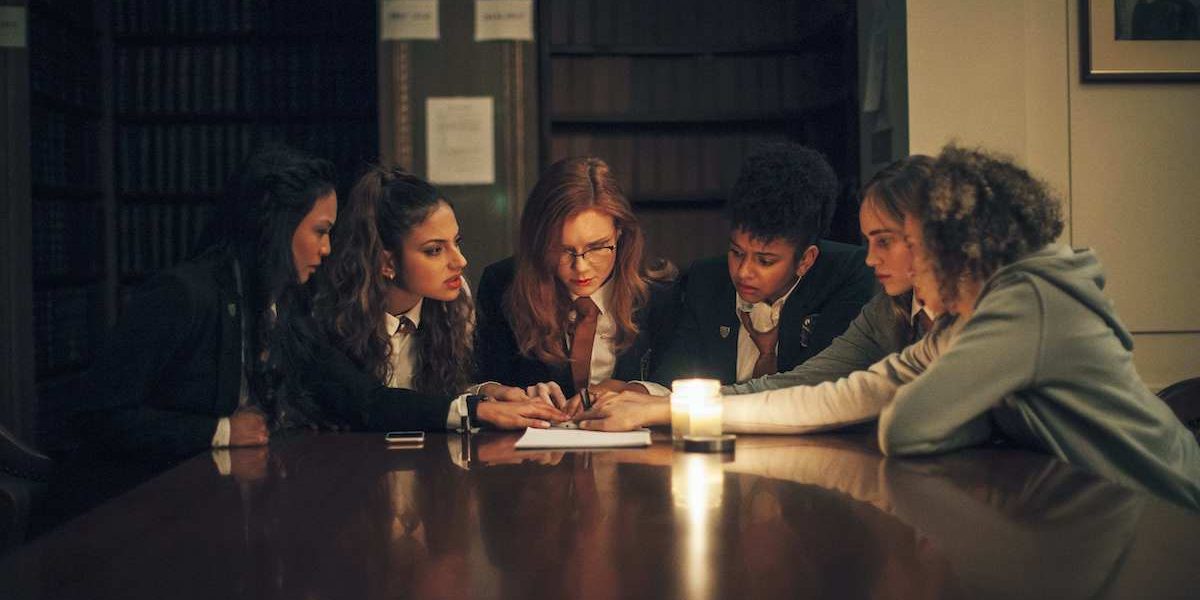
Off in the dusty old Edelvine boarding school, the girls are restless. They need something to pass the time, something to entertain them. They need a Séance.

Essentially, the mean girls gather in a dorm lav and Candyman the school’s ghost—saying her name 3 times at 3:13 am, the moment she died, in the very bathroom where it all happened.

Oooo, spooky!

Well, it’s all just a harmless prank until one of the girls winds up dead. Was it the ghost?

Fast forward a bit and Camille (Suki Waterhouse) arrives to fill the vacant room. More girls go missing or turn up dead in a film that cannot find a way to say anything new. Simon Barrett has written some good stuff: Blair Witch (2016), The Guest (2014), You’re Next (2011), Dead Birds (2004). He had not directed any features prior to Séance, but it’s hard to blame this film’s doldrums on its direction. The story just isn’t there.

Everything feels borrowed, not from any film in particular, but from the collective unconscious of dorm room horror that involves whispering ghosts, nubile schoolgirls, glinting blades and mystery. Barrett’s writing has tended to utilize tropes from the 80s and 90s to lull audiences into a sense of familiarity that allows him to deliver unexpected thrills.

His latest pulls most clearly from 90s staples like the Urban Legend franchise. But when he zigs instead of zags, the lull has turned stupor and Séance’s surprises just aren’t enough to snap us out of it.

Performances are fine, production values solid. There’s nothing embarrassing here, just nothing to get excited about. Some of the film’s sleights of hand are clever enough, but the storytelling is so anemic that it’s hard to applaud them. Barrett generates no dread and no sense of connection to any of the characters.

Unlike Guest’s Maika Monroe or You’re Next’s Sharni Vinson, who command the screen and drive the film, Waterhouse delivers a mainly listless performance. She’s neither scared nor curious, and though her bursts of ferocity feel cagey, it’s not enough to inject the film with any fire.

In Search of Hunky Boys

Psycho Goreman

by Hope Madden

How much fun is this movie?!

Tons. Endlessly quotable and boasting inspired creature design and a twisted Saturday Morning Kidventure tone, Psycho Goreman is a blast

Mimi (a wrong-headed and glorious Nita-Josee Hanna) and her loyal (OK, cowering) brother Luke (Owen Myre) inadvertently summon—nay, control—an intergalactic evil so dastardly it can bring out the end of worlds.

But they totally control him, so they make him learn their favorite games, wear cowboy hats and do assorted hilarious and embarrassing things.

Fans of writer/director Steven Kostanski’s 2016 breakout The Void (a perfect blend of Lovecraft and Halloween 2) might not expect the childlike lunacy and gleeful brutality of Psycho Goreman (PG for short), but they should. His 2012 gem Father’s Day (not for the easily offended) and his 2011 Manborg define not only his tendencies but his commitment to tone and mastery of his material.

Kostanski’s films—The Void aside—fall on the intersection of silly and gory, most of them with a bold VHS aftertaste. I mean all those things in a good way. The tone here is more live-action children’s programming (gone way, way wrong)–perhaps a tad Turbo Kid in its execution.

There is so much joy here, not only in the lunacy of the story or of the creature design (PG’s nemeses from Planet Gigax make an appearance, natch, and they are a riot to look upon).

Will Mimi’s unphased cruelty and selfishness be curbed by friendship? Or will it save the day? Neither? Oh, ok, well then at least it makes for one fiercely funny central character.

Hanna’s command of this unruly heroine may be what sets the film above others in Canadian production company Astron 6’s arsenal. She’s not alone. Astron regular Adam Brooks steals scenes as the kids’ layabout dad, with Alexis Kara Hancey showing off deadpan delivery as his put-upon spouse.

The ensemble works wonders together, each hitting the comedic beats in Kostanski’s script hard enough that the goretastic conclusion feels downright cheery.

This movie could not be more fun.

Screening Room: Woman in the Window, Spiral, Those Who Wish Me Dead & More

Wishful Thinking

The Djinn

by Hope Madden

There is something to be said for films that do a lot with very little. The ability to awaken the imagination without the help of a big budget, multiple locations, a giant cast or too much in the way of FX is a credit to filmmakers.

And hell, David Charbonier and Justin Powell’s The Djinn does most of it without dialog.

Dylan Jacobs (Ezra Dewey) and his dad (Rob Brownstein) have just moved into a new apartment. There’s a recent tragedy in their past, but that’s not the only reason Dad’s a little hesitant to go to his shift at the radio station. Dylan is mute and maybe he needs another day or two in the apartment to be truly safe on his own.

Ignoring his instincts, Dad leaves for work. For the balance of the film, we’re alone in the apartment with Dylan and the demon he innocently summons trying to regain his voice.

The Djinn succeeds on the strength of its young lead, who carries every scene without benefit of dialog. Star of the filmmakers’ 2020 horror tale The Boy Behind the Door, Dewey’s emotional performance is enough to keep you compelled for the film’s brisk run time.

Charbonier and Powell have other tricks up their sleeve to elevate their story. Cinematographer Julian Estrada, for one, who gives the impression that the apartment itself is watching the boy. Setting the film in 1988 frees the filmmakers up from recent tech that simplifies communication, which feels a tad like a cheat but does amplify a creepy sense of helplessness.

Not everything works, though. The filmmakers rely too heavily on music stabs and jumps, the soft rock soundtrack is curious, and a handful of tropes—the asthma inhaler, in particular—give the film a less-than-inspired feel.

But plenty of tense moments and creepy images punctuate the heartbreaking, age-old cautionary tale about getting what you wish for.

Fire Starter

Those Who Wish Me Dead

by Hope Madden

Michael Koryta’s heart-thumping YA adventure tale Those Who Wish Me Dead comes to the big screen. Well, mainly—it’s also on HBO Max—but the mountainous, fiery, wooded adventure is better suited to the largest screen you can find.

Koryta himself adapted his novel, along with co-writers Charles Leavitt (not very good—Warcraft, Seventh Son, In the Heart of the Sea) and Taylor Sheridan (very good—Hell or High Water, Sicario).

It should even out.

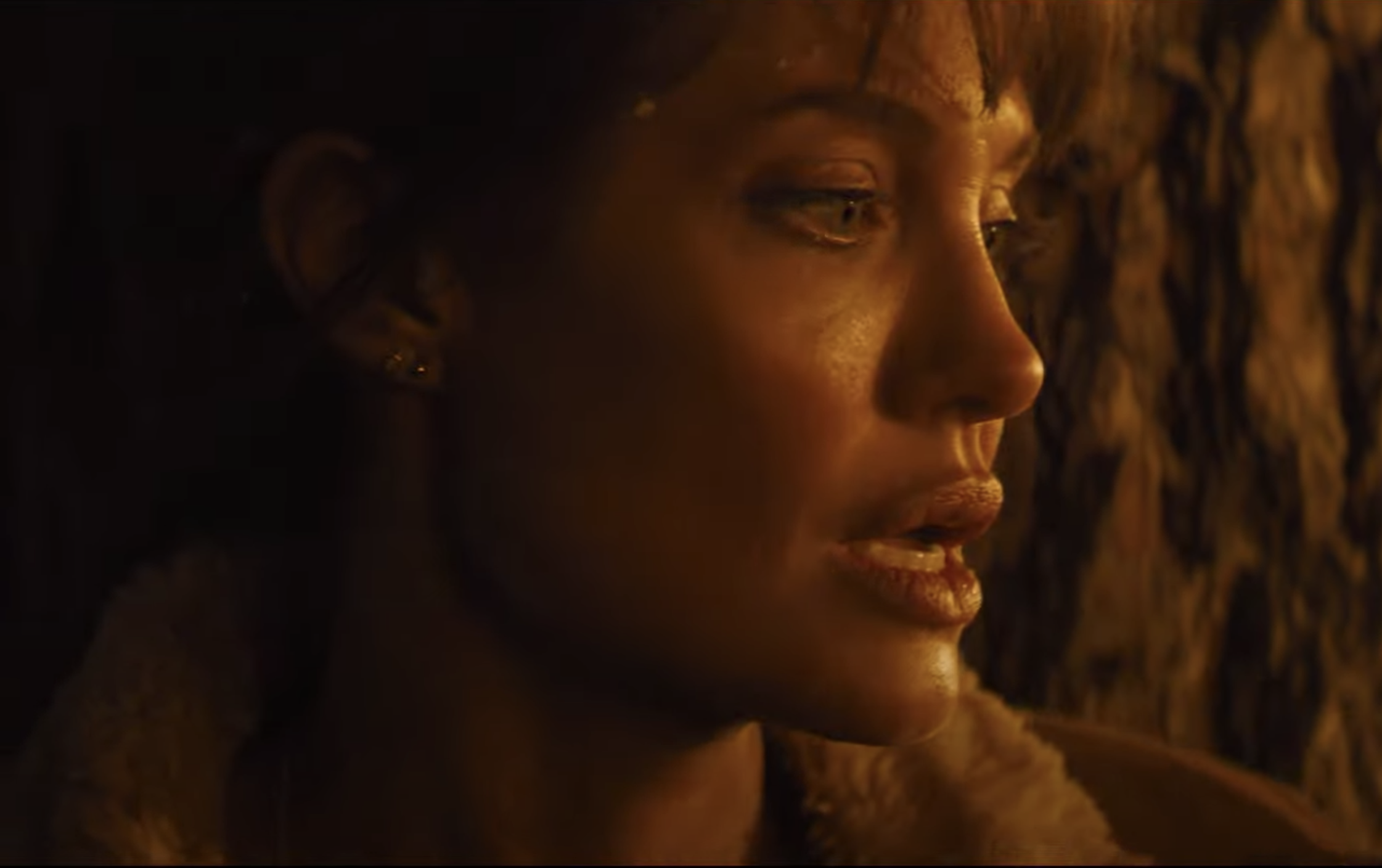
Sheridan also directs, dropping a young boy (Finn Little) in a burning forest, hunted by two murderers (Nicholas Hoult and Aiden Gillen), with only Angelina Jolie to help.

She does have a way with children, though.

Jolie’s Hanna Faber is a damaged Hotshot (those firefighters who parachute into forest blazes). She failed her psych eval after those fatalities last season and now she’s stuck in a lonely fire lookout tower miles from anywhere with nothing to keep her company but her own haunted thoughts.

So what I’m saying is, Those Who Wish Me Dead is now about Hanna rather than being about the kid who is wished dead. I just want fans of the novel to be prepared for this.

It’s still a perfectly satisfying if not particularly inspired adventure tale.

Little delivers an emotional blow as the newly orphaned youth who’s trying to be brave, trying to be smart, and sincerely in need of a hug. The biggest issue is simply the way he becomes a side character in his own story.

He’s not as discarded as the couple who run the survival camp (Jon Bernthal and Medina Senghore – though the latter does look glorious riding horseback with her rifle through the flames).

The basic backstory does suit this cinematic vehicle, though, and Jolie proves a charismatic central figure who can sure take a beating. As the bad guys close in from one direction, the fire from the other, Sheridan and team build a perfectly reasonable and structurally sound thriller.

Performances are strong and locations are gorgeous, but Those Who Wish Me Dead doesn’t take a lot of risks and that’s unfortunate.

Benny and the Deaths

Benny Loves You

by Hope Madden

There is something inescapably silly about toy horror. Whether it’s a marionette or a ventriloquist doll, a china doll (with those creepy eyelashes) or a friend til the end, the toy itself can only generate so much authentic terror. After that, it’s just goofiness.

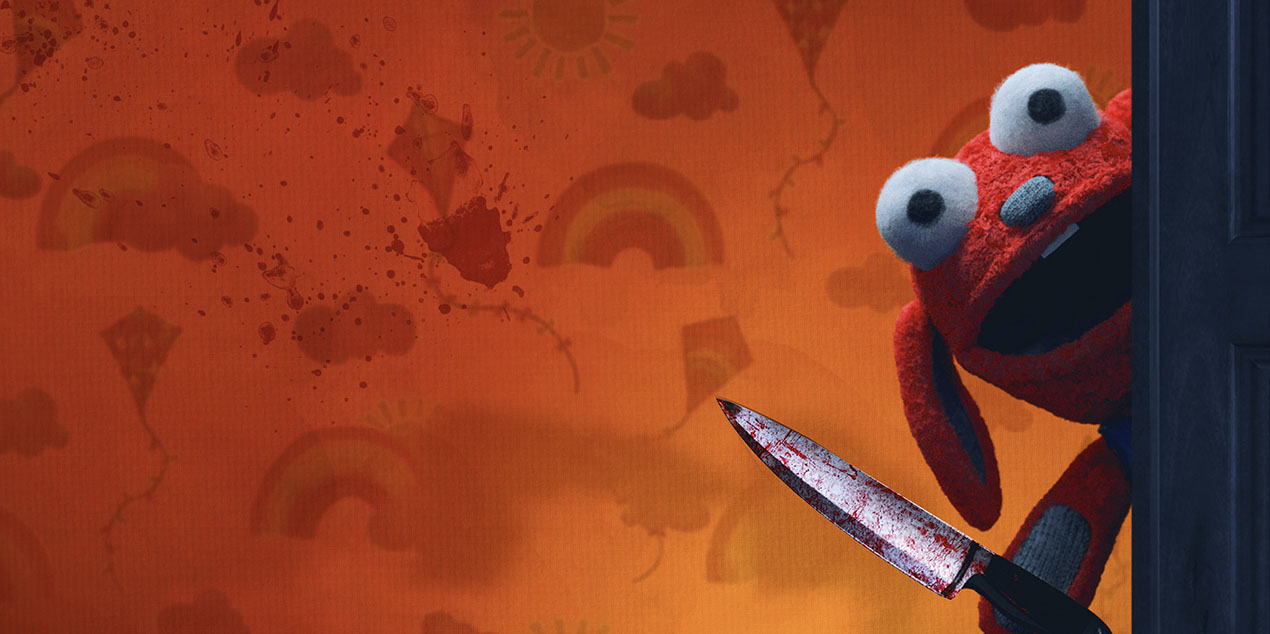
Karl Holt embraces that combination for his vengeful toy story, Benny Loves You.

We open on a spoiled child, her new Barbie, and the now-discarded stuffed dog, Todd. But soon we’re entrenched in the subpar life of Jack (Holt, who also writes and directs). It’s his 35th birthday. He still lives with his parents, still sleeps in his childhood bedroom that is still decorated as it was when he was seven.

Jack is a toy designer, but co-worker Richard (a colossal tit) makes him look like a peon. They’re both up for the same promotion. Things go from bad to worse, then worse, then worse still. Finally, Jack decides to grow up and put away all his childish things, including his beloved stuffed bear (Bear? With those ears?), Benny.

It goes less than well, the unruly toy responding like a bloodthirsty if very cheery jilted lover.

Holt turns in a solid performance as the stunted man-child living a nightmare of adulthood, and there are times when his writing suggests something deeper. He almost develops themes about arrested development, the entertainment/gaming/toy industry, maybe even masculine entitlement. Almost.

Instead of digging in, he settles for a superficial but generally charming and very violent comedy. (Dog lovers may want to skip this one.)

Low-rent FX heighten the film’s silliness and general wrong-headed glee. All the support work is on target, from George Collie as the noxious Richard to the love interest (Claire Cartwright), dog-loving boss (James Parsons), and incompetent cops (Anthony Styles and Darren Benedict). Each understands the tone here and nails it.

It’s just that it doesn’t amount to much. A mean spirit punctuates the romplike atmosphere a couple of times and feels wildly out of step with the balance of the film, but other than that, Benny Loves You offers forgettable, bloody fun.

Fright Club: Side Characters, Part 1

This episode is years in the making. We’ve talked about doing this, jotted down ideas and characters, debated — and now it’s finally here. Well, half of it, anyway. There’s just no way to reasonably fit the best side characters—those fully deserving a film of their own—in just one podcast. So here is our list, in alphabetical order (no need to rank them!). This one’s for the ladies.

Aunt Martha (Desiree Gould), Sleepaway Camp (1983)

Smartly dressed, thoughtful, loving, misguided, and as if a creature from an entirely different film. She made a decision and, sure, Angela probably should have been a part of that decision-making process. But it wasn’t Aunt Martha’s fault that Paul was a no-good cheater. Or that Judy was such an asshole. I mean, yes, that surprise at the end was due in large part to Aunt Martha, but as for the campers—they had it coming.

Mademoiselle (Catherine Begin), Martyrs (2008)

What a presence. Commanding, calm, wizened and weary, Catherine Begin’s Madamoiselle has such resigned decisiveness that it’s almost impossible to argue with her. She turns something that could have easily become torture porn into a mesmerizing glimpse at zealotry.

https://www.youtube.com/watch?v=KWYFLwHbu8k

Minnie Castavet (Ruth Gordon) Rosemary’s Baby (1968)

Ruth Gordon earned an Oscar as Rosemary and Guy Woodhouse’s busybody neighbor Minnie Castavet, wife of Roman and nonplussed chief operations officer of the coven. Yes, Roman made a good figurehead, but somebody has to just keep things moving. And as long as she ate the mouse, everything’s fine.

Mother (Fons Rademakers), Daughters of Darkness (1971)

One of the many glorious things about Harry Kumel’s decadent 1971 vampire fable is the way it feels like two or three different films colliding into one elegant bloodletting. Mother casts a looming shadow over one of those storylines, that of a young, beautiful couple recently married, Stefan and Valerie. Even before they’re ensnared in Countess Bathory’s love web, Stefan (an irredeemable asshole if ever there was one) needs to figure out how to break the news of his nuptials to Mother.

Whenever a new character makes you simply need to hear an entirely other story, one focused on whatever they’re not telling you about that character, you know you have a winner. The way Fons Rademakers pets his butler’s head, holds court in the greenhouse, and wields unspecified but somehow sinister power over Stefan begs for its own movie.

Mrs. Baylock (Billie Whitelaw), The Omen (1976)

From the moment she takes the screen, Mrs. Baylock is the new sheriff in town. She quietly yet immediately takes control of the Thorn household. If you didn’t know who was alpha, you only need to see who the dog listens to. Yep, Richard Thorn is in trouble. To say nothing of his poor, useless wife Catherine.

Tangina (Zelda Rubenstein), Poltergeist (1982)

Walks in the house, owns the place. Tangina is a force of nature with a soft little lilt and a no-nonsense approach to cleaning the Freeling house. Her confidence gives the character more than a huckster vibe, although there is a sense of showmanship to everything she does. But when she is addressing the living, it’s best not to give trick answers.

Zelda (Andrew Hubatsek), Pet Sematary (1989)

Scary as hell. Sure, the cat, little Gage, that guy with the brain on the outside of his skull—all of it has its horror charm. But the real nightmare in Mary Lamber’s adaptation of the Stephen King tale is Rachel Creed’s guilty memory of the sister who terrified and horrified her, the sister she believes died—at least in part—due to her own negligence and hatred. Thanks to the angular, monstrous vision of Andrew Hubastek in a nightdress, all contorting ribcage and spine, Zelda became easily the scariest thing in the film.

Screening Room: Wrath of Man, Here Today, Fried Barry, Above Suspicion, The Oak Room & More

He Is Wrath

Wrath of Man

by Hope Madden

I’m not saying Jason Statham is unconvincing with a gun. Nor am I saying that Guy Ritchie is ill-suited to direct a humorless vengeance drama.

I’m just saying that these are not their strong suits.

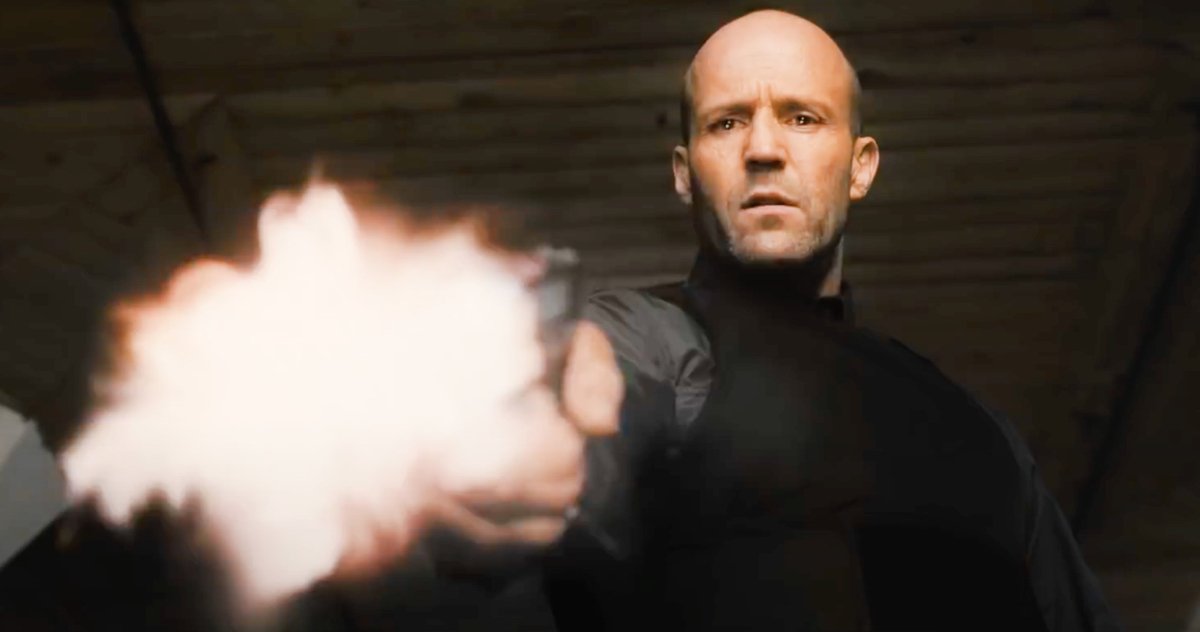
Wrath of Man shadows a very dour Statham—just call him H, like the bomb—as he begins training for his new gig with a cash truck crew.

Something’s up, obviously, and the only fun to be had in the film is trying to figure out what it is, so do not watch the trailer.

At The Depot, where all the trucks come and go and all the crew mock and belittle one another, we meet the assortment of characters you will not come to know or care about: Boy Sweat Dave (Josh Hartnett – where have you been?), Dana (Niamh Algar), Bullet (Holt McCallany). All of them choking on ludicrously overwritten banter, none of them drawing even a single compelling character.

Which is fine because there are at least 16 more people you won’t get to know, won’t care if they’re killed, won’t be invested in their conflicts.

Ritchie is usually much better than this at scattershot introductions of oddball lowlife clusters, each pod with its own story, each story intersection every other story at one turn or another. Maybe he’s just too out of his element setting the action in LA rather than his beloved London, but the lived-in feel of a reprobate world that’s usually a high point to a Ritchie flick is sorely missing here.

And what is the deal with these accents? By now, we know better than to expect Statham to attempt a yank accent, but what exactly is Eddie Marsan’s nationality supposed to be? Or Andy Garcia’s, for that matter?

Hell if I know. I do know that casting Statham generally guarantees some nifty fisticuffs.

Not today!

He shoots a bunch of people, sure, but there’s no panache to anything. It’s a heist movie without the meticulous execution, a vengeance thriller with no emotional connection to the villain, a Statham movie with no ass kicking, and a Ritchie movie with no humor, no flash, no style.

No thank you.   

Hillbilly Eulogy

Above Suspicion

by Hope Madden

There are films that open with voiceover. Sometimes the voiceover is a character who is already dead. These films are rarely very good.

It’s no spoiler. As Susan Smith (Emilia Clarke) waxes melancholic over the opening images of Phillip Noyce’s true crime thriller Above Suspicion, she’s straightforward with us. She’s dead, we’re watching her body being found, there sure are a lot of trees, and now she has a lot of time to think.

Chris Gerolmo (Mississippi Burning) adapts Joe Sharkey’s book about the case, which was also the subject of Aphrodite Jones’s book The FBI Killer as well as at least one true crime TV series episode. Why all the fuss?

Susan Smith’s case represented the first in history to see an FBI agent convicted of murder.

Smith, a smalltown Kentucky addict with two kids, a live-in ex-husband for a dealer, took a shine to Mark Putnam (Jack Huston) the moment she saw him. The shiny new FBI agent, just two weeks on the force, had taken the gig to begin to build a career. He and his wife Kathy (Sophie Lowe) had a 5-year plan.

Smith would alter that plan.

Noyce’s movie looks good. It looks the part, plenty of dusty small towns, low rent lots, dive bars and trees. And he’s assembled a game cast. Clarke surprises as a hard and hard-headed woman looking for a way out.

A cascade of odd ducks and smalltown curiosities give plenty of supporting actors the chance to add some layers to the Appalachian backdrop. Johnny Knoxville especially impresses as Smith’s low key but dangerous ex.

Huston’s take on Putnam is pretty forgiving. The performance feels indecisive. In his hands, Putnam is certainly too smart to fall into this situation, but is he naïve enough to do it? This is partly where the entire film falters.

The voiceover lets us know whose story we’re hearing, and yet somehow we’re mainly on Mark’s side through most of this. Kudos to Noyce and Clarke for sidestepping noble victim cliches and giving Smith a backbone as strong as her head is wrong, but the film’s overall tone lacks conviction.

It doesn’t help that we know where everything is going from the opening scene, since Smith tells us. There’s no real tension to build, and Noyce never takes advantage of his opportunity to give us an unreliable narrator. At least that would have given us something to think about. Lacking that, or any real insight and certainly no deep empathy for anyone involved, Above Suspicion can’t help but feel like a couple hours of wallowing in someone else’s pain.