The settlement in writer/director Wyatt Rockefeller’s feature debut may be on Mars, but it’s his measured treatment of the colony’s constant dangers that allow the story to transcend any specific time and place.
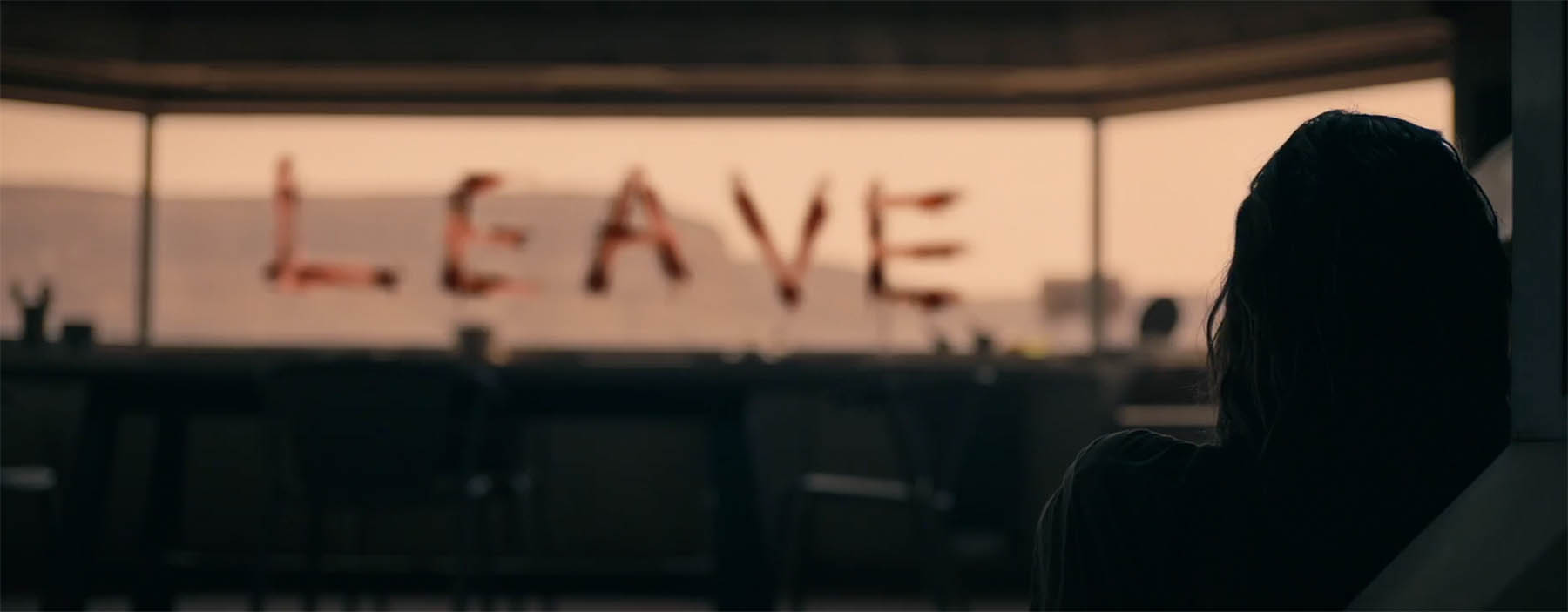
Ilsa (Sofia Boutella), Reza (Jonny Lee Miller) and young Remmy (The Florida Project’s Brooklynn Prince) appear to be the only family on a barren Martian settlement, but then they wake to a giant “LEAVE” written on their front window and the questions begin to stack up.
Why is Jerry (Ismael Cruz Cordova) staking a claim to their place? What happened to all the other colonists, and how many others are out there lurking, maybe plotting to attack?
And what caused them all to leave Earth in the first place?
Rockefeller is not at all interested in easy answers, instead employing some first-rate performances and stellar production design to evoke a more universal statement on human nature, and more specifically, the often desperate and consistently overlooked role of women in nation building.
It’s a theme given an effective horror treatment in The Wind three years ago, and while the science fiction elements in Settlers are well-played, they’re also subtle enough to never upstage the character studies at work.
We see the first two acts of the film through young Remmy’s eyes, carefully observing the adults around her and making friends with a dog-like robot she calls “Steve.” Prince delivers a wonderfully tender performance, enabling us to feel Remmy sizing up her future choices with each passing day.
The film’s final act jumps ahead ten years, when a now teenage Remmy (the awesomely named Nell Tiger Free from GoT) is nearing the day she’ll be forced to make those hard choices. Jerry has become an even bigger presence in her life, and Cordova flexes an impressive ability to keep you guessing about Jerry’s true nature until late in the game.
If you lean toward tidy endings wrapped in unmistakable red bows, you’ll find none of those in Settlers. You will find an engrossing tale careful to leave plenty of opportunities for filling in the blank spaces.
Follow where it leads, and you’ll glimpse a future that’s inviting you to rethink the past. And the present.
Early on, plenty in the Shudder original Kandisha is going to remind you of Candyman. The filmmakers wisely address this early as well, and then move right along with a brisk and bloody realization of a Moroccan vendetta born from centuries-old roots.
On summer break from school, teen best friends Amélie (Mathilde Lamusse), Bintou (Suzy Bemba) and Morjana (Samarcande Saadi) are busy practicing their graffiti art in a dilapidated building. Peeling back some rotting drywall, Amélie spots a spray-painted tag of “Kandisha,” and Morjana recounts the legend.
In 16th century Morocco, Kandisha fought the Portuguese occupation that took her husband’s life. She even managed to kill six enemy occupiers before being caught, tortured, and killed.
Now, she roams the netherworld as a half-beast walking upright on hooves, waiting for a summons that will require her to slay six men before returning to her eternal unrest.
And how do you summon Kandisha? You look in the mirror and say her name five times.
“Like in the movies?”
Yes, girls, just like in the movies.
Writers/directors Alexandre Bustillo and Julien Maury (the unforgettable Inside) are smart enough to take what we’re thinking and make it organic. We instantly relate to the girls’ scoffing, which helps make us feel connected to the journey that will make them believers.
Once Amélie conjures Kandisha to avenge an assault, it’s a trip that doesn’t waste much time getting down to business. There’s no trace of the silly humor Bustillo and Maury added to Inside, but their penchant for grandiose bloodletting is front and center as Kandisha begins counting to six.
The girls turn to an Imam for help reversing the curse, a narrative thread that ultimately provides more than just monstrous thrills. It’s also the chance for international audiences – especially in America – to see Islam depicted as a source for salvation instead of the stereotypical terrorist breeding ground.
If you’re going back to the well of Bloody Mary and Candyman, the water gets finer via each original filter. Kandisha adds a fresh cultural and female-specific lens to a bloody, take-no-prisoners approach that does much to overcome the tale’s familiar building blocks.
Broadcasting—TV, radio, podcasts—offer plentiful opportunities for horror. You have the good broadcasts, where an important message is being delivered to the right people: The Fog, I Am Legend, A Quiet Place Part II, Texas Chainsaw Massacre 2. And, of course, there are the evil broadcasts: Lords of Salem, Trick or Treat, The Cleansing Hour.
There are also two (well, three really)N utterly brilliant films with very particular broadcasts that are difficult to come by. We narrowed the list to broadcasts aimed at as many people as can be affected, and for that reason alone we’ve left off Poltergeist and Ring/Ringu.
So here are the five best ways horror filmmakers found to wreak havoc over the airwaves.
5. They Live (1988)
More SciFi and action than horror, still John Carpenter’s vision of an elite class using tech to mollify and control the population of the US was eerily prescient. And horrifying.
At the time, though, it was just plain entertaining in a way that married Carpenter’s own iconic Escape from New York vibe with the SciFi horror miniseries of the day, V.
But mainly, it’s Rowdy Roddy Piper chewing bubble gum, and the 6 1/2 minute fight scene between Piper and undeniable badass Keith David that make this film as fun to watch today as it was when it was released.
4. Halloween III: Season of the Witch (1982)
Man, people did not like this movie when it came out. After two massive blockbusters kicking off the franchise, somebody decided to make a Halloween movie without Michael Myers. It would go on to be one of the most beloved cult movies of all time.
Is the storyline confused? Well, its mythology—Celts and Stonehenge and shamrocks and Halloween masks and blah blah blah—but the point is Tom Atkins, isn’t it? Plus the main plot points: kids wear the masks, they watch the commercial, they hear that creepy jingle, and their heads effing melt.
Now that’s showbusiness.
3. The Signal (2007)
A transmission – a hypnotic frequency – broadcasting over TV, cell and landline telephones has driven the good folks of the city of Terminus crazy. David Bruckner, Dan Bush and Jacob Gentry created a film in three segments, or transmissions.
Transmission 1 introduces our lover heroes as well as the chaos. Can Mya (Anessa Ramsey) and Ben (Justin Welborn) remain sane, reunite and outrun the insanity?
Transmission 2 takes a deeply, darkly funny turn as we pick up on the illogical logic of a houseful of folks believing themselves not to have “the crazy.” The final transmission brings us full circle.
The movie capitalizes on the audience’s inability to know for certain who’s OK and who’s dangerous. Here’s what we do know, thanks to The Signal: duct tape is a powerful tool, bug spray is lethal, and crazy people can sure take a beating.
2. Pontypool (2008)
Canadian director Bruce McDonald’s shock jock horror film is best appreciated as a metaphor on journalistic responsibility and the damage that words can do. Radio air personality and general pot-stirrer Grant Mazzy (Stephen McHattie) finds himself kicked out of yet another large market and licking his wounds in the small time – Pontypool, Ontario, to be exact. But he’s about to find himself at the epicenter of a national emergency.
McDonald uses sound design and the cramped, claustrophobic space of the radio studio to wondrous effect as Mazzy and his producers broadcast through some kind of zombie epidemic, with Mazzy goosing on the mayhem in the name of good radio. As he listens to callers describe the action, and then be eaten up within it, the veteran McHattie compels attention while McDonald tweaks tensions.
Shut up or die is the tagline for the film. Fitting, as it turns out that what’s poisoning the throng, turning them into mindless, violent zombies, are the very words spewing at them. It’s a clever premise effectively executed, and while McDonald owes debts all around to previous efforts, his vision is unique enough to stand out and relevant enough to leave an impression.
1. Videodrome (1983)
Videodrome was the last true horror and truly Canadian film in David Conenberg’s arsenal, and it shows an evolution in his preoccupations with body horror, media, and technology as well as his progress as a filmmaker.
James Woods plays sleazy TV programmer Max Renn, who pirates a program he believes is being taped in Malaysia – a snuff show, where people are slowly tortured to death in front of viewers’ eyes. But it turns out to be more than he’d bargained for. Corporate greed, zealot conspiracy, medical manipulation all come together in this hallucinatory insanity that could only make sense with Cronenberg at the wheel.
Deborah Harry co-stars, and Woods shoulders his abundant screen time quite well. What? James Woods plays a sleaze ball? Get out! Still, he does a great job with it. But the real star is Cronenberg, who explores his own personal obsessions, dragging us willingly down the rabbit hole with him. Long live the new flesh!
You think the GOAT debate about hoop gets heated? Just wait ’til your twitter thread blows up with hot takes on the thespian greatness of Jordan vs. LeBron!
Yeah, that’s not likely to happen.
I can tell you Don Cheadle is a great actor, and he’s clearly having a ball as the high-tech heavy in Space Jam: A New Legacy.
Cheadle is Al G. Rhythm, a (what else?) algorithm inside the Warner 3000 computer system that has designed a can’t miss WB idea for LeBron James. But LeBron is not impressed, so Al decides to get even by pitting LBJ against his own 12 year-old son, Dom (Cedric Joe).
Dom is actually more interested in video game design than basketball, but feels pressured by his superstar Dad to follow in the family business. Al seizes on this rift, pulling father and son into the virtual world, stealing Dom’s design for a basketball video game, and offering a deal.
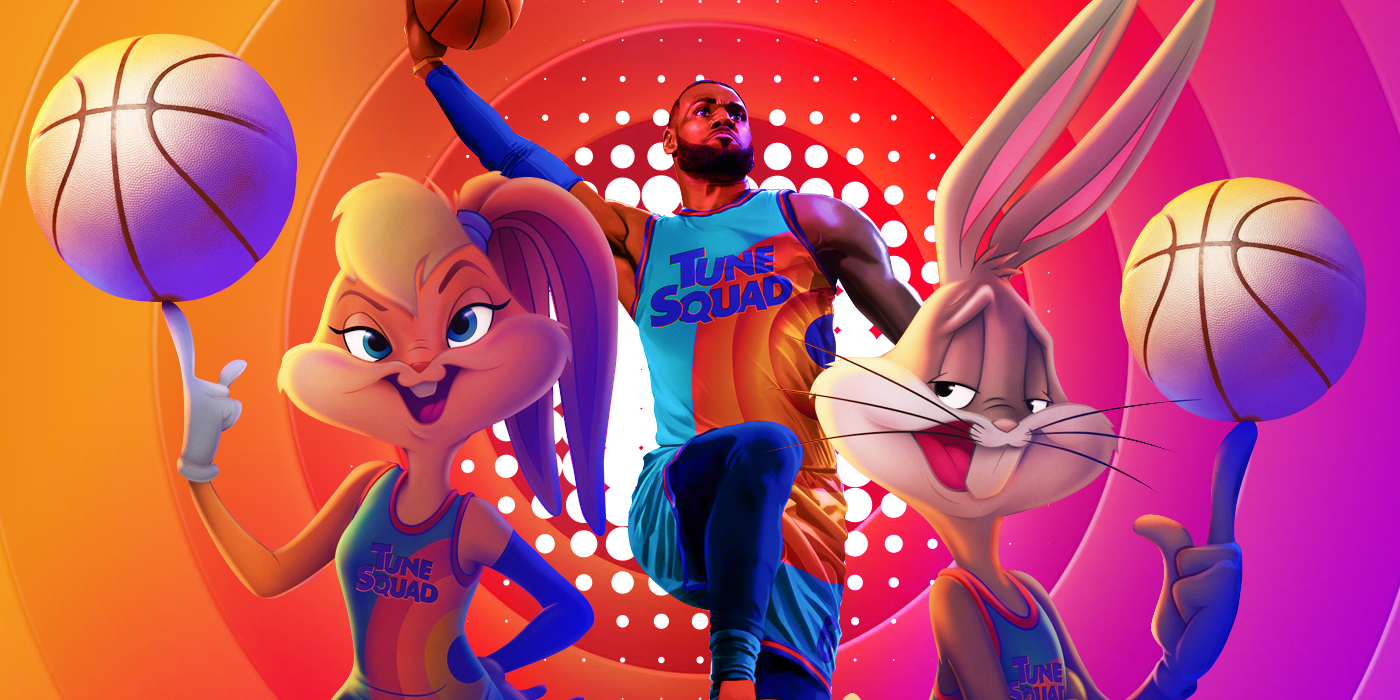
You guessed it: classic Tunes (featuring Zendaya voicing Lola Bunny) vs. some brand new Goons (basketball superstars including Anthony Davis, Damian Lillard and Diana Turasi). A win for the Tune Squad puts the James family back to normal, but a loss means they’ll stay in the “server-verse” forever.
Adding WNBA stars and a new look for Lola are just two of the ways director Malcolm D. Lee (Girls Trip, TheBest Man franchise) and the writing team succeed with an updated premise required for new sensibilities. Sure, the resolution of the father-son tension is predictable, but it manages a schmaltzy level of resonance amid the cartoon nuttiness that we’re really here for.
The antics of your favorite Looney Tunes characters (aside from an ill-advised, rapping Porky Pig) are classically looney, but the script also scores with some topical, self-aware humor aimed at the digital age, a classic Dave Chappelle bit, and LeBron himself (Dom: “Did my Dad leave?” Al: “That’s what he does, isn’t it?”)
And while the original ’96 Space Jam always smacked of product placement marketing, A New Legacy ups that ante, dropping LBJ and friends into any number of Warner properties, from Casablanca to Rick & Morty. Shameless, yes. Fun? Also yes.
As for King James, he follows that standout cameo in Trainwreck with a lead performance that alternates between awkward and decent. He does bring more natural onscreen charisma than Jordan (there’s a reason MJ barely speaks in his TV ads), but I’m guessing the task of acting opposite cartoons didn’t help with James finding a comfort zone in his first lead role.
But LeBron sure looks at home on the court, and once everybody joins him (and I mean everybody – have fun scanning the crowd), Lee rolls out some frantically fun game action with plenty of visual pop. This Space Jam may follow some of the original’s playbook, but there’s enough “new” here to justify the title, and by the time the buckets and anvils start dropping, A New Legacy finds its own fun and satisfying groove.
Near the end of director Carlos López Estrada’s impressive 2018 debut feature Blindspotting, Daveed Diggs unleashes a blisteringly beautiful rap monologue. Estrada showcases the raw, extended wordplay to lay bare a character’s journey and a film’s soul.
Now, after joining the directing team on Disney’s enchanting Raya and the Last Dragonlast year, Estrada returns to solo work – as well as the streets – with Summertime, an uplifting celebration of urban poets “spitting that emotional fire” amid an interconnected assemblage of L.A. stories.
Anewbyss & Rah (Bryce Banks & Austin Antoine) are a rap duo trying to build a following. Gordon (Gordon Ip) is tired of working in a burger joint. Brokenhearted Sophia (Maia Mayor) is stalking her ex-boyfriend and finds a kindred spirit in the thoughtful Marquesha (Marquesha Babers). Mila (Mila Cuda) is standing up to a bus riding homophobe while Tyris (Tyris Winter) is just searching for a good cheeseburger and documenting his quest on Yelp.
These are but a few of the many compelling personalities in this magnetic mosaic of poems, images, cultures and identities. Estrada weaves together the work of twenty-six different poets, each one spitting emotional fire to spare.
Anchored proudly in the City of Angels, Summertime drops the beats of a grittier West Coast bookend to In the Heights. There are dreamers of diverse backgrounds here, too, though these are the more openly wounded variety, finding comfort from channeling the hurt into writing.
But as raw as those wounds can get, the performers never abandon the humor, joy and hope that comes from upending conventions about who they are, where they’re from, and what they have to offer.
So many different threads in one 95-minute tour of L.A. probably shouldn’t work this well. Credit Estrada’s balanced vision and his wonderful cast of artists for making sure that stopping, looking, and listening to Summertime is a thoroughly rewarding thing to do.
Ask any rando what their favorite Star Trek movie is, and you’ll get plenty of the same response.
“The one with the whales!”
To save the universe, Kirk and the gang have to make sure a whale’s song gets answered. It was touching, right?
The Loneliest Whale: The Search for 52 finds a similar nerve, chasing a legendary animal seemingly alone in the vastness of the ocean.
The U.S. Navy first heard the whale in 1992, calling out at 52 Hz, a unique frequency no other whale could understand. And so the songs of this lonely whale – dubbed “52” – went unanswered, until the Navy stopped listening ten years ago.
A New York Times article about 52’s plight ignited a global community of souls who could relate to feeling alone in a sea of noise. One of those was director Joshua Zemen, and his film attempts to separate the facts from the legend while documenting a weeklong expedition to actually track down 52 in the open ocean.
52’s story is certainly a compelling one, and Zemen gives it more context through background info on the history of whaling and how 1970’s “Songs of the Humpback Whale” began to change the way we thought about these majestic creatures.
Zemen’s approach may be far from stylish, but it is earnest, ambitious and respectful, which seems fitting for a story anchored in a love of science and nature. And while the correlations between a friendless whale and a sea of people increasingly detached through technology are hard to miss, Zemen finds the restraint to avoid boldly going there once too often.
The Loneliest Whale captures its most effective feels in the epilogue, when we catch up with Zemen and members of his team getting some surprising news two months after their expedition came to an end. It’s a surprise that not only brings hope for 52, but for anyone warmed by nature’s little victories.
Avenger Natasha Romanoff had to wait a while to get the green light on her own standalone origin story, and then even longer for the big screens to carry it. Now Black Widow is finally here, and Natasha’s not even the most interesting character in her own show.
And the film is better for it.
Director Cate Shortland and writer Eric Pearson surround Natasha with uniquely compelling personalities that become important parts of a whole, while surrounding star Scarlett Johansson with a supporting ensemble skilled enough to make this one of the MCU’s most character-driven successes.
Oh, there’s action, too, but we start with a prologue set in 1995 Ohio, when Natasha’s family is trying to flee the country at a moment’s notice. Father Alexei (David Harbour), and mother Melina (Rachel Weiss) were prepared for this day, so they scoop up young Natasha (Ever Anderson) and sister Yelena (Violet McGraw) and put the escape plan into action.
An overlong, Watchmen-style montage mixing music and news headlines brings us up to 2006, when the family is long estranged. Natasha is on the run since the Avengers “divorce” (between Civil War and Infinity War), Yelena (Florence Pugh) is taking names in Norway, Alexei is in prison and Melina’s loyalties seem tied to some talented pigs. Meanwhile the villainous Dreykov (Ray Winstone – nice! His accent – not so much) has plans to build an army of mind-controlled “Black Widow” assassins.
That means females only, but while the reveal lands as a clear metaphor for sex trafficking, Shortland (Berlin Syndrome, the underseen gem Lore) and Pearson (Godzilla vs. Kong, Thor: Ragnarok) never belabor any well-taken points. Even better, they fill the entire adventure with enough organic, self-aware humor about posing, too tight supersuits and the need for pockets that very few of the 133 minutes seem laborious at all.
The core foursome is uniformly terrific, as you would expect from actors of this caliber. Performances blossom and surprise, their chemistry buoying the familial longing required of every superhero backstory while anchoring action in characters you can care about.
Pugh—sympathetic, comedic and badass—is the standout, but Johansson shines, especially in a climactic bout with Winstone that lands satisfying jabs about weak men.
Shortland never forgets the point of a superhero film, though. The breathless action in Black Widow impresses as much as it entertains, whether hand-to-hand or aerial.
And it is a Marvel film, so be sure to stick around post-credits for an intriguing stinger and a welcome addition to the universe.
Three characters, and one big house. That’s all that directors/writers Martin Blousson and Macarena Garcia Lenzi need to conjur up a good bit of creepy in Rock, Paper and Scissors (Piedra, papel y tijera).
Jesus (Pablo Sigal) and Maria Jose (Augustina Cervino) are isolated siblings living alone in the family home after the recent death of their father. When their paternal half-sister Magdalena (Valeria Giorcelli) arrives from Spain to discuss the inheritance and plans for the house, Jesus and Maria offer to put her up for the length of her stay.
Magdalena doesn’t want to trouble them for any more than one night, but a nasty fall down the stairs the next morning means little sister isn’t going anywhere.
Suddenly, Magdalena is a captive, and at the mercy of her siblings’ eyebrow-raising eccentricities. Jesus is an aspiring filmmaker filled with questionable inspirations, and Maria is a Wizard Of Oz-obsessed nursemaid who hopes to co-star with a guinea pig named Toto in Jesus’s upcoming film.
Magdalena’s only hope for escape seems to be separating her brother and sister, and probing for ways to work one against the other. Could Maria have pushed Magdalena down the stairs, or is Jesus the real danger in this house? And how did their father really die, anyway?
Blousson and Lenzi move past the Misery-like premise in short order, piling on some surrealistic Lynch-meets-Lanthimos weirdness and bathing it all in a stylistic visual pastiche of earth tone Goth.
The trio of actors reveals their characters’ true motivations at a languid pace that keeps us guessing, right up to the gorgeous closing shot that will leave you looking twice. Maybe three times.
Rock, Paper and Scissors is available on VOD beginning July 6th
Summer of Soul (…Or, When the Revolution Could Not Be Televised)
by George Wolf
According to Amir “Questlove” Thompson, the first time he saw some of the digitized footage from the 1969 Harlem Cultural Festival concerts, he nearly wept.
How could this event have been ignored to the extent that even a musical aficionado such as himself had never heard of it? And why had all these hours of stunning performances gone unseen for decades?
The free concerts ran for six consecutive weekends at Harlem’s Mt. Morris Park in the summer of 1969, attracting over 300,000 fans. That same summer, the Woodstock festival was held about 100 miles away, but even when producer Hal Tulchin tried to market his reels of video as “the Black Woodstock,” there were no takers.
And so the boxes sat in a basement for 50 years.
Once Thompson committed to directing his first film, he immersed himself in the footage nearly 24/7, and Summer of Soul emerges as a triumphant testament to the music that drove a “Black consciousness revolution.”
From the gospel of Mahalia Jackson to the blues of B.B. King, from the 5th Dimension’s smooth pop to Sly Stone’s psychedelic funk, the musical styles blend gloriously in the summer sun and the goosebump moments mount.
A young Mavis Staples and an aging Jackson share one microphone; Stevie Wonder unleashes a furious drum solo; Marilyn McCoo and Billy Davis. Jr. tear up recalling how important it was that the 5th Dimension’s perceived “white” sound be accepted as “black enough;” Nina Simone strikes a commanding presence as she challenges the crowd’s commitment to social change; and on and on and on.
But even more impressive than Thompson’s musical direction is the way he frames the entire festival through the context of time, place, and population.
Embraced by New York’s Republican mayor and sponsored by corporate giant Maxwell House, the festival was seen as a way to keep the Black community calm after the rising tensions of 1968.
But ’69 was – in the words of Rev. Al Sharpton – “the year Negro died and Black was born,” and Thompson layers the archival footage with new interviews that are equal parts poignant and timely.
We see festival attendees telling stories of what lengths they went to for a chance to be in the crowd, and how being there changed their lives. Starkly contrasting footage of white and black crowds being interviewed for reactions to the 1969 moon landing put a fine point on how sadly relevant yesterday’s civil rights struggles remain today.
And while the defiant cries of revolution and equality pulsate through Summer of Soul, they never eclipse the festival’s unbridled joy.
One man who was just a young boy in 1969 and had come to doubt his own memory over the years, cries with joy at seeing proof positive on film.