Tag Archives: Questlove

Mighty Mighty Joy

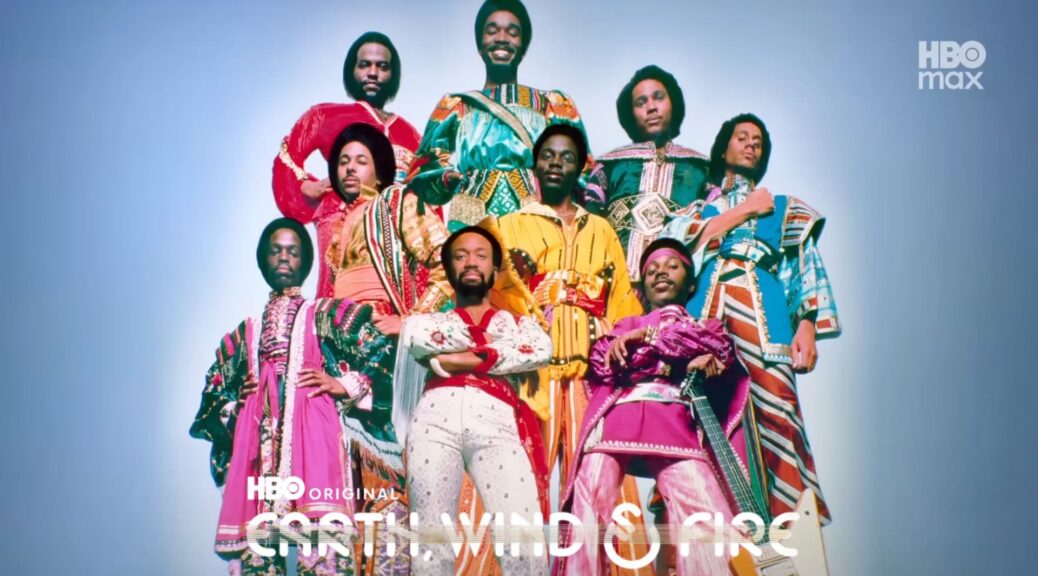
Earth, Wind & Fire: To Be Celestial vs. That’s the Weight of the World

by George Wolf

Don’t worry, Ahmir “Questlove” Thompson doesn’t let the surviving members of Earth, Wind & Fire sidestep the tough questions.

What is the meaning of “ba-dee-ya,” anyway?

But well before Thompson gets to that, his HBO streamer Earth, Wind & Fire: To Be Celestial vs. That’s the Weight of the World becomes an exhilarating celebration of a band making music so joyful it’s described as “Jesus-less gospel.”

Through archival footage, performance clips, family mementos and interviews new and old, we see the band’s visionary founder Maurice White persevere through early struggles to embrace a unique sound that propelled EWF’s journey as 70s superstars, 80s has-beens and eventual worldwide icons.

Director Thompson, already an Oscar winner for the triumphant Summer of Soul, again shows impeccable instincts for presenting a music doc that transcends any Behind the Music formula. Of course, being an accomplished music himself can’t hurt, and Thompson’s effervescent approach lets the stories and songs find a seamless blend of style and meaning.

And somehow, the film manages to smooth over the massive absence of White, who passed away in 2016 from Parkinson’s disease. Heartfelt remembrances from band members, family, partners, friends and admirers (including Stevie Wonder, Lionel Richie, and Barack and Michelle Obama) paint an effective portrait of a gifted but complex artist who rose above childhood trauma for professional success full of singalong affirmations that often masked a personal struggle.

Those who may not know much about White will get schooled plenty, and even longtime fans like myself (hey, my birthday just happens to be the 21st night of September) may find a few surprises here (like why Philip Bailey would apologize for his classic slow jam “Reasons”). What everyone will find with Earth, Wind & Fire is two solid hours of EWF magic, and an inescapable joy both celestial and weighty.

Wanna Take You Higher

Summer of Soul (…Or, When the Revolution Could Not Be Televised)

by George Wolf

According to Amir “Questlove” Thompson, the first time he saw some of the digitized footage from the 1969 Harlem Cultural Festival concerts, he nearly wept.

How could this event have been ignored to the extent that even a musical aficionado such as himself had never heard of it? And why had all these hours of stunning performances gone unseen for decades?

The free concerts ran for six consecutive weekends at Harlem’s Mt. Morris Park in the summer of 1969, attracting over 300,000 fans. That same summer, the Woodstock festival was held about 100 miles away, but even when producer Hal Tulchin tried to market his reels of video as “the Black Woodstock,” there were no takers.

And so the boxes sat in a basement for 50 years.

Once Thompson committed to directing his first film, he immersed himself in the footage nearly 24/7, and Summer of Soul emerges as a triumphant testament to the music that drove a “Black consciousness revolution.”

From the gospel of Mahalia Jackson to the blues of B.B. King, from the 5th Dimension’s smooth pop to Sly Stone’s psychedelic funk, the musical styles blend gloriously in the summer sun and the goosebump moments mount.

A young Mavis Staples and an aging Jackson share one microphone; Stevie Wonder unleashes a furious drum solo; Marilyn McCoo and Billy Davis. Jr. tear up recalling how important it was that the 5th Dimension’s perceived “white” sound be accepted as “black enough;” Nina Simone strikes a commanding presence as she challenges the crowd’s commitment to social change; and on and on and on.

But even more impressive than Thompson’s musical direction is the way he frames the entire festival through the context of time, place, and population.

Embraced by New York’s Republican mayor and sponsored by corporate giant Maxwell House, the festival was seen as a way to keep the Black community calm after the rising tensions of 1968.

But ’69 was – in the words of Rev. Al Sharpton – “the year Negro died and Black was born,” and Thompson layers the archival footage with new interviews that are equal parts poignant and timely.

We see festival attendees telling stories of what lengths they went to for a chance to be in the crowd, and how being there changed their lives. Starkly contrasting footage of white and black crowds being interviewed for reactions to the 1969 moon landing put a fine point on how sadly relevant yesterday’s civil rights struggles remain today.

And while the defiant cries of revolution and equality pulsate through Summer of Soul, they never eclipse the festival’s unbridled joy.

One man who was just a young boy in 1969 and had come to doubt his own memory over the years, cries with joy at seeing proof positive on film.

“I’m not crazy! And it was beautiful.”

It still is.
