Tag Archives: George Wolf

No Moose, Just Squirrel

Flora & Ulysses

by George Wolf

Is “Holy Bagumba!” gonna happen?

Too early to tell, but Flora & Ulysses wants it to happen.

Ten year-old Flora (Matilda Lawler) likes to blurt the phrase out in excited surprise, and there have been plenty of surprises since Ulysses got super powers.

Ulysses (a CGI squirrel with noises courtesy of John Kassir) has skills, no doubt, and in between trashing donut shops and learning how to type, he just might teach a self-described young cynic that there is some magic in this world after all.

Director Lena Khan brings the latest animal adventure tale from novelist Kate DiCamillo (The Tale of Despereaux, Because of Winn-Dixie) to the screen with broad brushes, easily digestible messages and family-friendly hijinks.

Khan does try to keep the parents interested through winking nods to E.T, Alien, and The Shining, along with a curious amount of music montages. The playlist ain’t bad (Bill Withers, Tom Jones) but it’s big enough to make you wonder how much was added just to get the film to feature length.

Young Lawler is a treat, with spunky charm to spare and a seemingly natural sense of comic timing (especially with a CGI co-star). But the adapted script from Brad Copeland (Spies in Disguise, Ferdinand) is all surface-level spoon feeding, where the family strife is sanitized, the danger little more than silly and the squirrel is a furry, slo-mo ninja.

In other words, perfectly fetch for the younger set transitioning from picture books to family films.

https://www.youtube.com/watch?v=05F8MmsiLQs

Shimmer Time

Barb and Star Go to Vista Del Mar

by George Wolf

Remember that opening of Napoleon Dynamite, where Napoleon was tossing a green plastic Army man on a string out of the school bus window? If you didn’t think that was funny, it was an early sign you were gonna have a bad time.

Barb and Star Go to Vista Del Mar opens with its own litmus test, as a kid on a bicycle is delivering papers while singing “Guilty” along with the Streisand and Gibb in his headphones.

If that makes you laugh, stick around, you’ll laugh more.

Things have been better for the always perky, cullotte-loving Barb and Star (co-writers Annie Mumolo and Kristen Wiig). They’ve lost their husbands, their spot in weekly “talking club,” and their jobs at the hottest furniture store in Soft Rock, Nebraska (not a real place, but it should be).

With mid-lifers in tube tops, a 24 hour CVS and a parade of guys in Tommy Bahama, Vista Del Mar, Florida promises a vacation paradise perfect for “finding their shimmer.” Plus, it’s the home of the annual Seafood Jam (“where the crowd’s on the older side!”).

After a Disney-on-Viagra greeting at the hotel, it isn’t long before the BFFs’ rock solid bond is threatened by the handsome Edgar (Jamie Dornan) and the chance to rent a banana boat.

Will the girls’ friendship survive all the fibs and sneaking around? And how long can Edgar hide his part in the nefarious plan by an evil genius (also Kristen Wiig) to kill everyone on the island with poisonous mosquitoes?

I’m sorry, what was that second thing?

Just know director Josh Greenbaum keeps a loose grip on a film that’s ridiculous at every turn but still full of good-natured, garish fun and about as many laugh out loud moments as dry patches. Even though Barb and Star are new to us, they feel like characters the two stars have been privately honing for years, and it’s the chemistry of Mumolo and Wiig (who also co-wrote Bridesmaids) that allows a bit about the name “Trish” to continue beyond all limits of good sense until you give in to the hilarity.

You’ll also recognize plenty of faces in the supporting cast, highlighted by Mark Jonathan Davis doing his Richard Cheese lounge singer persona and Damon Wayans, Jr. as a spy with a bad habit of spilling his personal info (“dammit!”).

Expect some goofy outtakes over the credits, and waves of silliness that just won’t rest until your frown is turned upside down! It may not be dynamite, but Barb and Star brings enough laughs to make spending time with them a pleasure.

Just don’t call it guilty.

Rough Justice

The Mauritanian

by George Wolf

In the face of the highest of ideals, America is capable of horrible things. According to his own writings, Mohamedou Ould Salahi believed in those ideals, until he was held without charge in Guantanamo Bay for over 14 years.

Oscar-winning director Kevin Macdonald and a cast full of veteran talent tell the story of The Mauritanian with impressive craftsmanship, a proud conscience and a narrative cluttered with good intentions.

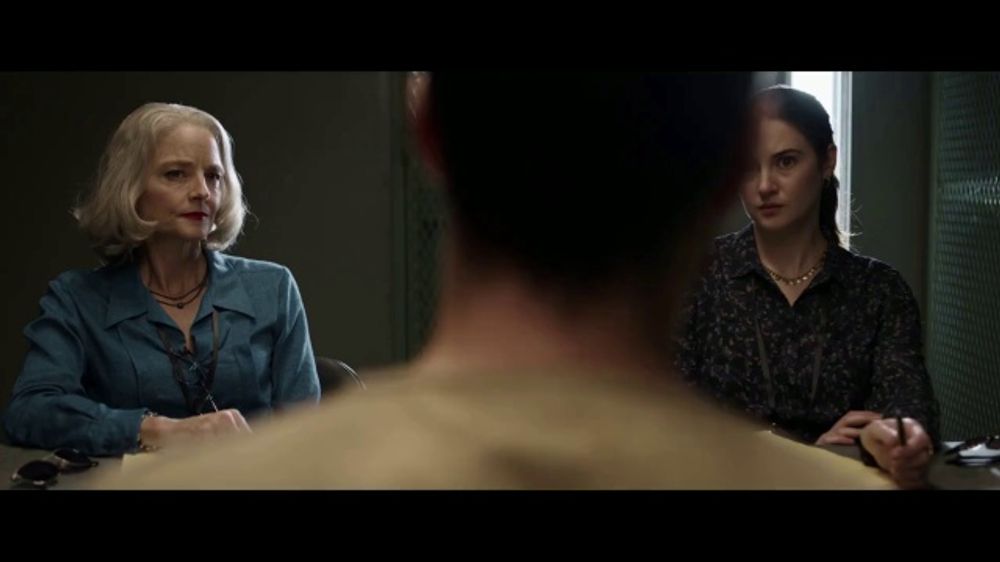
Not long after 9/11, Salahi (Tahar Rahim from A Prophet and The Past) was apprehended with suspicions of being a Bin Ladin confidant and the “Al-Qaeda Forrest Gump.” His was to be the first death penalty prosecution of The Bush/Cheney/Rumsfeld response, until human rights attorney Nancy Hollander (Jodie Foster) took up Salahi’s case pro bono.

The script, adapted from Salahi’s book by M.B. Traven, Rory Haines and Sohrab Noshirvani, picks the emotional teams early. Salahi is a sympathetic character, and quickly charms Hollander’s assistant Teri Duncan (Shailene Woodley) while Hollander herself remains unmoved, committed only to the rule of law.

This commitment serves her well, especially against Marine lawyer Stu Couch (Benedict Cumberbatch), who has a personal and professional stake in seeing Salahi put to death.

Macdonald (The Last King of Scotland, State of Play, One Day in September) breaks from the pack of similarly-themed films with a tone that shifts between self-congratulations and tearful apology. The “rough justice” abuse Salahi suffers is clearly barbaric but still feels sanitized, and part of a larger question the film eschews in favor of heavy hearted hindsight.

But there isn’t a false note in this cast. Even when their character arcs may feel predetermined, every player – from principals to supporting – delivers enough heart and humanity to keep the lessons of Salahi’s ordeal resonating.

Landing at a time when the conscience of the country is literally being voted on, The Mauritanian is a committed if somewhat unwieldy reminder of the stakes.

Forest for the Trees

Land

by George Wolf

After directing one short film and ten episodes of her House of Cards TV series, Robin Wright makes an assured feature debut with Land, mining one shattered life for graceful insight into healing.

Wright also delivers a touching and understated performance as Edee, a woman who clings to grief as her closest connection to the husband and child she has lost, and who can no longer bear any expectations that she will “get better.”

Moving alone to a remote cabin in the Wyoming wilderness, Edee ignores advice to at least keep a vehicle at her disposal and settles in, wanting nothing else to do with anything or anyone.

No surprise, but Wyoming winters are harsh for the inexperienced. Eventually, it is only the aid of a passing hunter named Miguel (Demián Bichir, also terrific) that saves Edee’s life.

Miguel is carrying emotional scars as well, and the two strike a deal. He will teach her the survival skills she needs, and when the lessons are done, she will never see him again.

The screenplay from Jesse Chatham and Erin Dignam may not blaze any thematic trails, but it does resist following the roads most expected. Of course Edee begins to feel a human connection again, but this point isn’t exploited for a cheap and easy narrative out.

The performances from Wright and Bichir make you care about pain even when you haven’t glimpsed it, giving director Wright a solid emotional base to lean on while deftly unveiling the different lives Edee and Miguel used to lead.

Edee’s memories of her family are brought to the screen with a tenderness from Wright that is both touching and well-played. Woven through the beautifully framed and intimidating Wyoming landscapes are wonderful sketches of visual storytelling.

Yes, we’ve heard Land‘s lessons before, but Wright’s feature debut behind the camera impresses through her fine instincts for subtle over showy, paring those lessons down to an essence as timeless as the majestic skyline.

Secret Love

Two of Us (Deux)

by George Wolf

The plan was to sell each of their neighboring French flats and move to Rome. After decades of living in secret, Nina and Madeleine (“Mado”) would enjoy their twilight years loving each other without hiding.

But after promising to finally come out to her grown son and daughter, Mado (Martine Chevallier) hesitates. Nina (Barbara Sukowa) is furious, and the entire plan is up in the air when fate intervenes.

A sudden stroke leaves Mado unable to speak, which makes Nina an outsider in the world of her longtime love.

The debut feature from director/co-writer Filippo Meneghetti, Two of Us cuts deep with its quiet, well-constructed observations. As Mado’s family and a hired caregiver populate Mado’s apartment, Meneghetti returns often to a tiny peephole in the door, silently amplifying the distance separating the lovers, along with Nina’s yearning to conquer it.

The two leads – no doubt relishing the chance to craft complex, aging females – are simply wonderful. When we meet them, Nina is the proud free spirit, and Mado the reserved, closeted mother and grandmother. The stroke reverses their roles, giving each actor room to redefine their characters, and deepen our connection to them.

Though restrained by silence, you can practically hear Mado screaming for Nina, and Meneghetti’s frequent tight shots give Chevallier to chance to break our hearts without saying a word.

Sukowa’s arc is even better, and she makes Nina’s desperation not only palpable, but the understandable product of a love that is simply part of her very being. It is Nina who now must learn to lie, as her only hope for getting close to Mado becomes making up stories that might placate Mado’s slightly suspicious daughter (Léa Drucker).

One of those schemes runs Nina afoul of the caregiver’s adult son, leading to a well-worn and utterly predictable plot device that brings a surprise dent to Meneghetti’s gentle tone.

But by the time Nina and Mado are framed in the sweetest of final shots, all is forgiven. More than a welcome reminder that love is love at any age, Two of Us is a touching testament to how much stronger togetherness can make us.

Choosing Sides

Son of the South

by George Wolf

Midway through Son of the South, Bob Zellner – a privileged white college student from 1960s Alabama – is quick to stand up to a young Black man who doesn’t think Bob’s interest in the Civil Rights movement is genuine.

Not far away, another young Black man is preparing for upcoming Alabama protests by trying to remain passive while his friends subject him to some of the verbal and physical abuse that is soon to come.

Director/co-writer Barry Alexander Brown’s juxtaposition is earnest, unmistakable, and surface-layer effective – ultimately a perfect snapshot of the entire film.

Zellner’s story, adapted from his own autobiography, is of one white man shaking off the ugly bigotry of his upbringing and family history to march alongside historical icons such as Rosa Parks and John Lewis.

But more than that, the film is an easily digestible message to well-meaning white America that good intentions mean nothing if they’re left on the sidelines.

We meet Zellner (Lucas Till, TV’s new MacGyver and Havoc from X-Men) when he’s “free, white and 21” in the early 60s, a student at Huntington college with a pretty fiancé (Lucy Hale) and plans for Ivy League grad school.

But writing a paper on race relations leads Bob to attend service at a Black church, where he meets Parks (Sharrone Lanier), Rev. Ralph Abernathy (Cedric the Entertainer) and a townfull of racists who don’t take kindly to fraternizing. One of those is Zellner’s own Grandfather (Brian Dennehy), a proud KKK member who does not sugar coat the stakes.

There isn’t much nuance anywhere in the film, and though that makes for a less riveting narrative, it ends up feeling appropriate. Brown, who has often edited films for Spike Lee (an executive producer here), wisely doesn’t try to mimic Lee’s challenging genius.

Brown seems to be aiming for the crowd that’s still inspired by The Blind Side. Lightening the mood with moments of sly humor (Zellner reading Ebony and Jet) and budding romance, Brown avoids lionizing Zellner while finding an entertaining avenue for making his choices a more universal call to end white silence.

You could call that playing it safe, but you can’t call it dumb.

Earning Your Wings

Palmer

by George Wolf

Palmer has Justin Timberlake, an adorable little kid and a heartwarming message. Heck, it’s not much more than some sexytime and a few beers away from being an afterschool special.

Yes, you can guess where it’s going. No, you will not be sorry for the trip.

J.T. is Eddie, who prefers you just call him by his last name. He was once a hot shot Louisiana high school quarterback with a scholarship to LSU. But after injuries ended Palmer’s career early, his quick temper got him sent away for 12 long on attempted murder.

But he’s served his time, so now Palmer has come back to his small, “church and football” hometown to move in with Grandma Vivian (June Squibb). Once there, it doesn’t take Palmer long to notice Shelly, the trailer train-wreck next door (Juno Temple).

Shelly leaves town a lot, and when she does, her son Sam (Ryder Allen in a perfectly lovable debut) stays with Viv. Sam doesn’t like football. Sam likes princesses, having tea parties, and dressing up in costumes that come with wings and tiaras.

Director Fisher Stevens fleshes out Cheryl Guerriero’s script with a fine instinct for knowing we don’t need to be led by the nose. There will be bonding, bullies beaten down and lessons learned, plus Sam’s pretty teacher (Alisha Wainwright) is single, so, you know.

Timberlake is gritty and finely understated, letting Palmer’s feelings for Sam unveil themselves with a gradual, and ultimately authentic depth. Palmer has scars from his childhood, too, but as expected as his kinship with Sam is, it seldom feels mawkish.

And Allen, well this kid just skips away with the movie tucked inside his glittery backpack. When Palmer tells Sam there are no boys on his favorite TV show and Sam confidently responds that he will be the first, all the hate that the world throws at kids like Sam seems – if only for a moment – miles away.

There is contrivance and familiarity at work in Palmer, no doubt. But there’s also enough heart, and pure hopeful innocence, to earn this film some wings.

Shooting Stars

Supernova

by George Wolf

Sometimes, just watching two master actors at work is worth the price of admission. And though Colin Firth and Stanley Tucci are not all that Supernova has in the win column, they are what keeps the film engaging throughout a fairly familiar narrative.

Firth is Sam and Tucci is Tusker, two longtime partners who have hit the road with their beloved dog, traveling across England in an old RV.

The two men have been in a committed, loving relationship for over twenty years. Now, after Tusker’s diagnosis of early onset dementia, they’re taking the time to catch up with cherished family and friends while they revisit some favorite spots from their past.

For his second feature, writer/director Harry Macqueen is on familiar ground as well, returning to some of the themes that drove Hinterland, his 2014 debut.

Like that film, Supernova becomes a road trip through wonderfully picturesque landscapes, as two souls appreciate the chance to share the beauty – and the heartbreak – that life brings.

But here, with older characters connected by more than just friendship, Macqueen adds a layer that is made beautifully resonant by the warm chemistry and fully formed characterizations of Tucci and Firth.

Every glance and subtle movement between them reflects the preciousness of the time that Sam and Tusker have left. And though its predictability has you wishing Supernova had something a bit more luminous to say, the two shooting stars in the lead are not to be missed.

Check Out Anytime You Like

The Night

by George Wolf

Come on, it’s been forty years, can’t we get a new haunted hotel flick without you screaming bloody redrum?

That’s fair, but what if the new take unveils a slow shower curtain reveal and turns to a golden oldie for creepy soundtrack effect?

Oh. Well then the film’s going to have to work even harder to avoid the dustbin of shameless Shining wannabees.

The Night does just that, and ultimately manages to find its own voice with a goosebump-inducing tale of a frantic family’s sleepless night away from home.

Babak (Shahab Hosseini) and Neda (Niousha Noor) are an Iranian couple living in the U.S. They have a new daughter, who is pretty well-behaved during their game night with some friends.

Neda’s not happy that Babak knocked back a few shots during the evening, so when the GPS starts acting crazy on the drive home and the baby is fussing, Neda suggests they find the nearest hotel and start fresh in the morning.

But from the moment the clerk at the Hotel Normandie (George Maguire – perfectly weird) greets Babak with tales of all the death he’s seen in his life, things ain’t right.

They get worse.

Director/co writer Kourosh Ahari proves adept at spooky atmospherics, with long, not-quite-Kubrick hallways around many turns and unsettling, not-exactly Serling paintings hanging about. Things go bump, voices carry and wandering souls appear, with Hosseini (The Salesman, A Separation) and Noor proving terrific vehicles for selling the scare.

Babek was hoping the booze would dull his toothache, but now he’s just exhausted from being kept awake by what he’s seeing…or just thinks he’s seeing. While Neda, increasingly desperate just to keep her child safe, begins to suspect the key to escaping may lie in revealing some long-held family secrets.

As a simple device with plenty of easy fright potential, the haunted house has served horror well for decades. But elevating it to a metaphor for something deeper is only as successful as the weakest pillar involved.

The Night shows strength all around, and by daybreak a pretty well-known blueprint builds to a satisfying reminder on the cost of deception.

‘Til the End

Our Friend

by George Wolf

We don’t tell the truth about dying.

Writer Matthew Teague came to that realization in 2012 when his wife Nicole died of cancer at the age of 34, leaving behind Matt, two daughters, and one very special best friend.

Five years later, Matt detailed their ordeal in an award-winning piece for Esquire magazine. Though it wasn’t Matt’s original intent, as the piece took shape it became clear his focus was Dane Faucheux, the friend who put his own life on hold to be there for Matt, Nicole and their girls.

Director Gabriela Cowperthwaite and screenwriter Brad Ingelsby deliver Teague’s memoir to the screen with a tender focus on the daily details, and a stellar trio of leads delivering authentic, emotional performances.

Dakota Johnson has never been better as Nicole, bringing a heartbreaking sweetness to the journey into physical and mental decay before her character’s final breaths.

The quiet, committed stoicism that Matt fights to maintain is a natural vehicle for Casey Affleck, and he absorbs the role seamlessly. The Oscar-winning Affleck allows Matt’s hurt to register even in the lightly humorous moments, revealing a man caught between remaining strong and truly processing what the future will bring.

But much like in Teague’s original story, Dane is the soul of this film, thanks to Jason Segel’s warm and vulnerable performance. We see – even before Dane does – that his place in the Teague family has given his life the purpose he’s been craving. Segel never stoops to melodrama, and his scenes with the Teague girls (Isabella Kai and Violet McGraw, both terrific) sparkle with the charm of a man who has found peace within this family.

A wonderful cameo by the always-welcome Cherry Jones as a hospice nurse only cements the effectiveness of this cast, and of Cowperthwaite’s dramatic instincts.

The drawback here is the non-linear structure in Ingelsby’s (The Way Back, Out of the Furnace) script. Though you can see how the shifting timelines might fit a magazine article, on screen they keeps us at a distance, and prevent the trio’s backstory from truly taking root. The chapters in these lives are not equally important, each builds on the other to strengthen the human bonds. Our connection suffers with the re-set of each new time stamp.

Is this a tear-jerker? For sure, but Cowperthwaite (Blackfish, Megan Leavey) creates a mood that steers clear of sappy. That elusive truth of dying will always be uniquely intimate, and the way Cowperthwaite’s camera gently wanders away from characters and conversations provides a consistent reminder that the nature of grieving is that it’s often for the lives left behind.

Because this isn’t really a story about dying, it’s one about caring – caring about other people enough to care for them when it helps. As one family found out, there’s a true beauty in that, and Our Friend lets us glimpse it.