Who do you think of when you hear the title “Mr. Soul!”?
James Brown? Otis Redding? Marvin Gaye?
Give writer/director Melissa Haizlip 104 minutes, and she’ll more than convince you the correct answer is her uncle, Ellis Haizlip, the trailblazing producer and host of the first “Black Tonight Show.”
Ellis and his team televised the revolution on Soul!, a landmark “love affair with blackness” which ran on New York public television from 1968 to 1973.
Under Ellis’s guidance as visionary producer and thoughtful host, Soul! confidently promoted the liberation of Black people. Tossing a truth bomb into the lily white television landscape of the late 60s, the show brought a focus on Black arts never before seen on screen.
Melissa Haizlip presents it all in absolutely riveting fashion. She primes us with the fascinating story behind the birth of the show and Ellis’s somewhat reluctant ascension to host, and then drops our jaws with a litany of archival performances that make the past crackle with new urgency.
Of course there are rousing musical segments from Stevie Wonder, Al Green, Gladys Knight, Billy Preston, Earth, Wind & Fire and more, but Ellis made sure Soul! also brought an overdue showcase to the “original avant-garde” of Black dance, writing and poetry.
Ellis’s goal was to share the Black experience first, and then educate and entertain. Bringing the brilliant work of Toni Morrison, the Last Poets, Nikki Giovanni and James Baldwin to television audiences cemented Ellis’s vision, and Melissa provides context to transcend the decades and allow the voices to speak their truth to current power.
And as you would expect, Melissa makes sure we see the caring soul of her uncle. With help from Blair Underwood often narrating Ellis’s writings (Ellis died in 1991 at the age of 61), we get to know an openly gay man who raised the topic of homosexuality with his audience and guests, and filled his own production team with a majority of female staffers.
Of the new interviews that Melissa weaves into the history lesson, hearing from Amir “Questlove” Thompson seems especially fitting. Though Mr. Soul! was completed 3 years ago, a more widespread release now makes it the perfect complement to Thompson’s own Summer of Soul.
This is Black history coming thrillingly, vibrantly alive, through the life of an enigmatic man earning that exclamation point.
Small casts working on limited sets with wide open spaces. We’ve seen plenty of these films lately, and we’ll see plenty more. Because even under pandemic rules, creators adjust and create.
Director/co-writer Trent O’Donnell and star/co-writer Jake Johnson adjusted to the tune of Ride the Eagle, a lightly sweet lesson in living your best life while you still can.
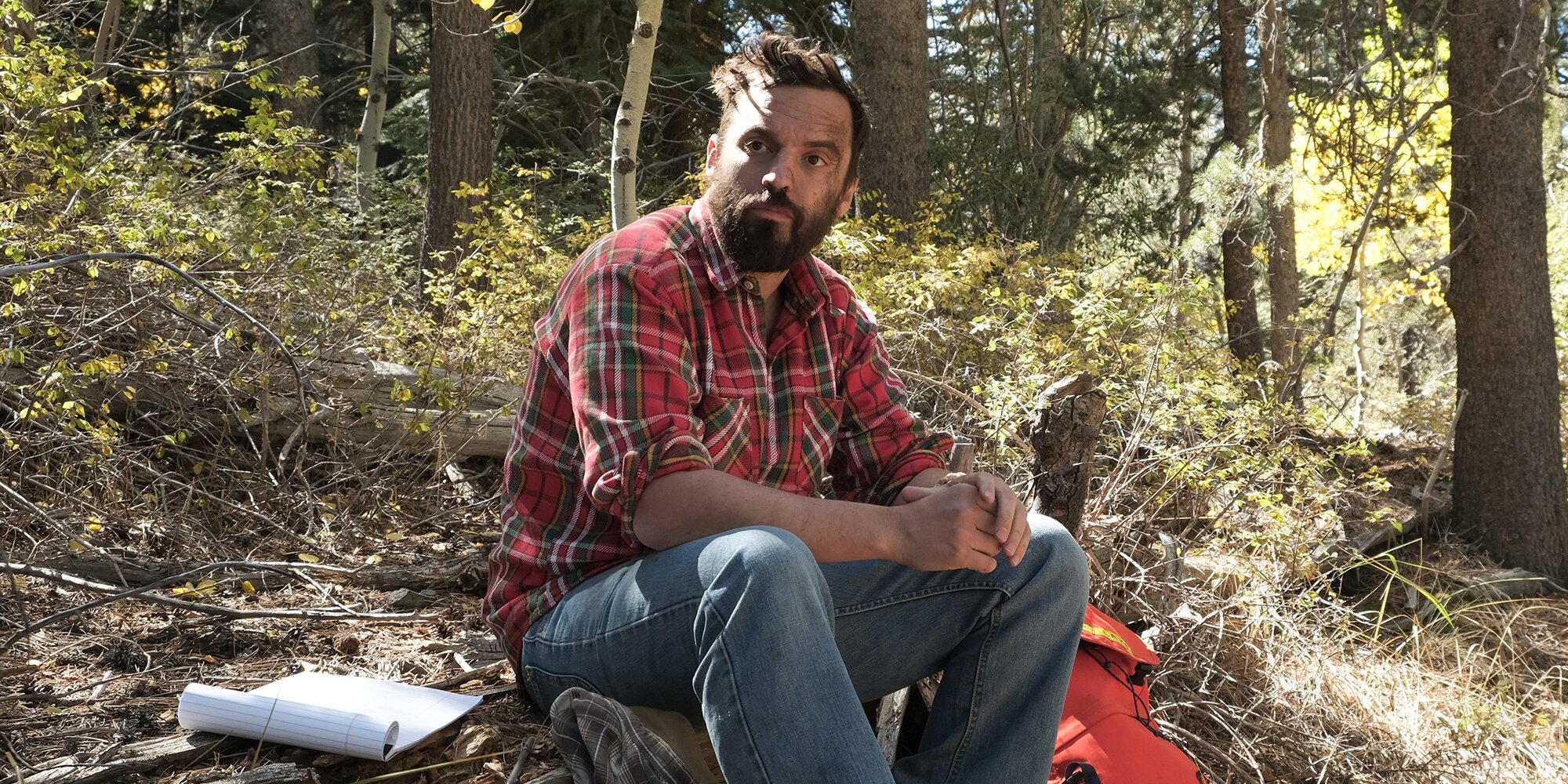
Johnson is Leif, a harmless California stoner who plays bongos (oh, sorry, “percussion”) in a band called Restaurant. Leif’s been estranged from his mom Honey (Susan Sarandon, in a role that seems tailored to her) since she left to join a cult when he was 12.
But now, Honey’s dead, and she’s left behind a couple things especially for Leif. The first is her sweet mountain cabin up near Yosemite, which he can take possession of only if he pays close attention to the other thing Mom left.
It’s a VHS tape, filled with a to-do list that comprises Leif’s “conditional inheritance.”
“Is this legal?” Apparently, it is.
And luckily, Mom’s VHS player isn’t dead. So Leif dutifully goes about the tasks that Honey hopes will teach him things she regretfully did not: express yourself, eat what you kill, call the one that got away.
Sarandon’s on tape, and ex Audrey (a charmingly flirty D’Arcy Carden) is on phone and text, so this is nearly a Johnson one man show. Good thing he’s in his likable comfort zone, using his talks with dog Nora as an endearingly organic way to both inform and crack wise.
It’s all perfectly warm and amusing, but in need of precisely the jolt delivered by Oscar-winner J.K. Simmons as Carl, Honey’s ex-lover who’s not shy about detailing their love life.
“That’s probably not what her son wants to hear, I guess.”
No probably not, but we do. Simmons’s cameo punctures the bubble by putting two humans in the same room to reflect on the passing of another human. It’s funny and it’s fuzzy and it goes a long way toward making sure these ruminations on forgiveness and regret actually resonate.
The Honey do list isn’t preaching anything new, but Johnson and O’Donnell never pretend that it is. Ride the Eagle is a casual, come as you are and wherever you are affair, like some comfort food two guys thought was worth another serving during a worldwide crisis.
And they’re not wrong. Some golden rules are always worth a rewind, even on VHS.
Ride the Eagle comes to theaters, VOD and digital July 30th
The last 20 some odd years have been somewhat odd for M. Night Shyamalan.
There was the meteoric rise, the faceplant fall, and the unexpected rise again. The writer/director’s highs (The Sixth Sense, Unbreakable, Split) have been clever, crowd-pleasing and well crafted, while the lows (The Last Airbender, After Earth, The Happening) became self-indulgent, condescending misfires.
Old, Shyamalan’s first since the disappointing Glass two years ago, may not rank among his best, but there is enough here to hold your interest while it delivers an earnest message about precious time.
Guy (Gael García Bernal) and Prisca (Vicky Krieps) are ready to separate, but want to enjoy one last dream vacation with 6 year-old Trent (Nolan River) and 11 year-old Maddox (Alexa Swinton) before breaking the news.
Shortly after getting a VIP welcome at their tropical resort, the family is offered access to a private beach paradise, just a short drive away. Once there, they find a few other guests have also gotten the invite to the pristine beach surrounded by majestic and imposing walls of rock.
But of course, there is a price to be paid for this privilege: time. Trent and Maddox are suddenly years older (and now played by Alex Wolff and Thomasin McKenzie), while the rest of the group (including Rufus Sewell, Abbey Lee and Aaron Pierre) also begins to feel the effects of a rapidly increased aging process.
Shyamalan’s camerawork – usually a plus – is again nimble and expressive. He’s able to fuel a feeling of confusion and disorientation on the ground, while frequent overhead shots provide the unmistakeable suggestion that this group is being watched.
His pace is also well-played, fast and frantic (with one very effective visual fright) in the early going, then a bit more measured to reflect cooler heads trying to plan an escape.
But while Shyamalan’s script is an adaptation of the graphic novel Sandcastle by Pierre-Oscar Lévy and Frederick Peeters, dialogue can still trip him up. It’s too frequently both silly and obvious, yet almost always rescued by a talented ensemble that never shrinks from selling every word of it.
This is a Shyamalan film, though, which will lead many to expect a humdinger of a twist. Don’t.
There is something waiting beyond the clearly defined metaphor about appreciating every day. But like the film, the resolution of Old is more tidy than revelatory, as easy to digest and appreciate as it is to forget.
This is the third Bruce Willis film so far this year. That leaves 13 more in production, and 1 in development. And if you’ve seen even a few of the titles in Bruno’s output over the last several years, you can assume a couple things about his latest right away.
First, regardless of his presence in the poster and/or trailer, Willis will only show up for a few scenes in the actual film. And secondly, his character won’t be that integral to the story.
Both assumptions prove true with Midnight in theSwitchgrass, a thriller that manages to work itself a notch or two above most films in the “Exit Stage Willis” subgenre.
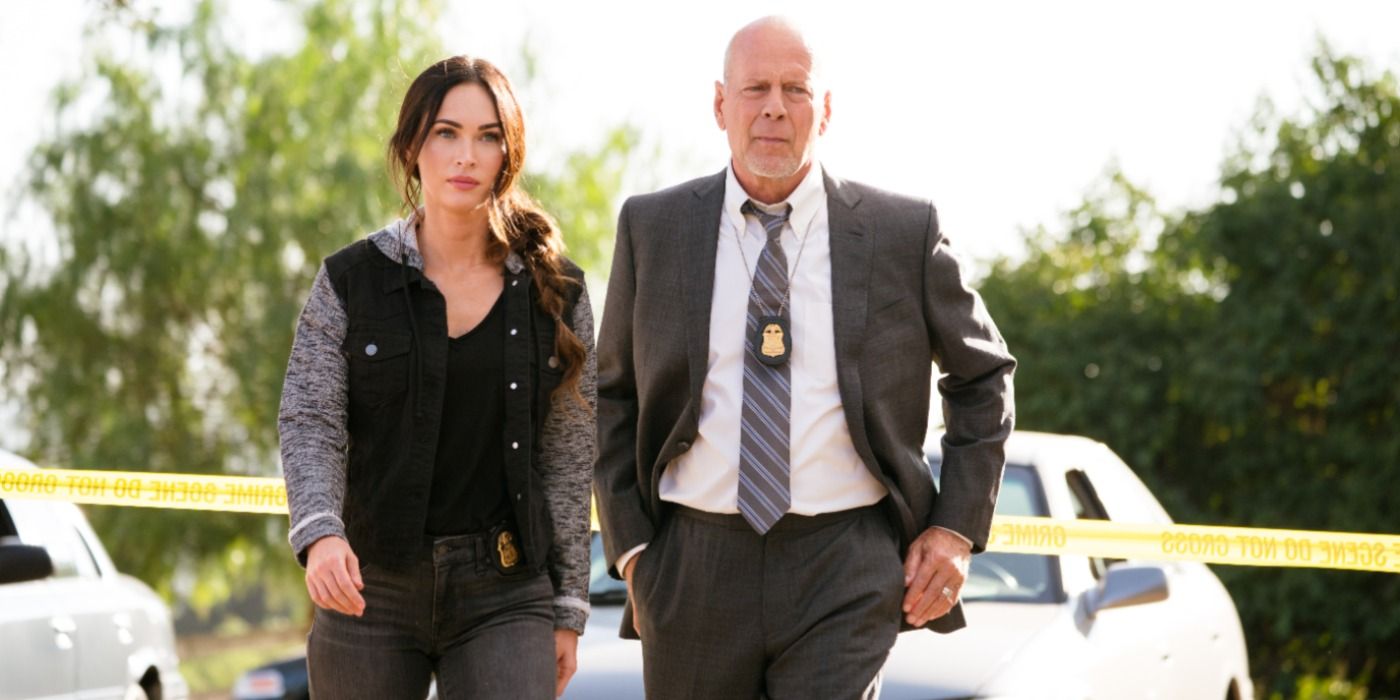
Willis is Karl Helter, the old and tired FBI partner of agent Rebecca Lombardi (Megan Fox). Rebecca’s been going undercover as a hooker to try and catch the serial killer (Lukas Haas) stalking truck stops and roadside motels around Pensacola, Florida (a character inspired by real life “Truck Stop Killer” Robert Rhoades).
There’s a string of similar cold cases dating back several years, a fact that still haunts Florida state police officer Byron Crawford (Emile Hirsch). When a new victim turns up, Byron is compelled to assist Rebecca and Karl any way he can.
Well, he assists one of them, anyway, because Karl conveniently bails before Rebecca is kidnapped by the killer and events turn mildly interesting.
This is the debut feature for both writer Alan Horsnail and director Randall Emmett, though Emmett’s long tenure as a producer appears to have honed his ability to craft a generic crime drama that imitates more gripping films – one in particular.
A killer’s identity that is never in doubt, paired with parallel storylines and certain other flourishes I won’t mention for fear of spoilers, all bring a serious Silence of The Lambs vibe.
That’s rarefied and ambitious air that Switchgrass can’t live in, though it does carve out a few respectably tense manhunt moments. Fox and Hirsch rise above some heavy-handed dialogue – even Bruno seems halfway interested while he’s around – and Haas is effectively creepy.
Add it all up, check the scorecards, and on the sliding scale of Willis its rank is roughly equal to Citizen Kane.
Midnight in the Switchgrass is available on VOD July 23rd.
The settlement in writer/director Wyatt Rockefeller’s feature debut may be on Mars, but it’s his measured treatment of the colony’s constant dangers that allow the story to transcend any specific time and place.
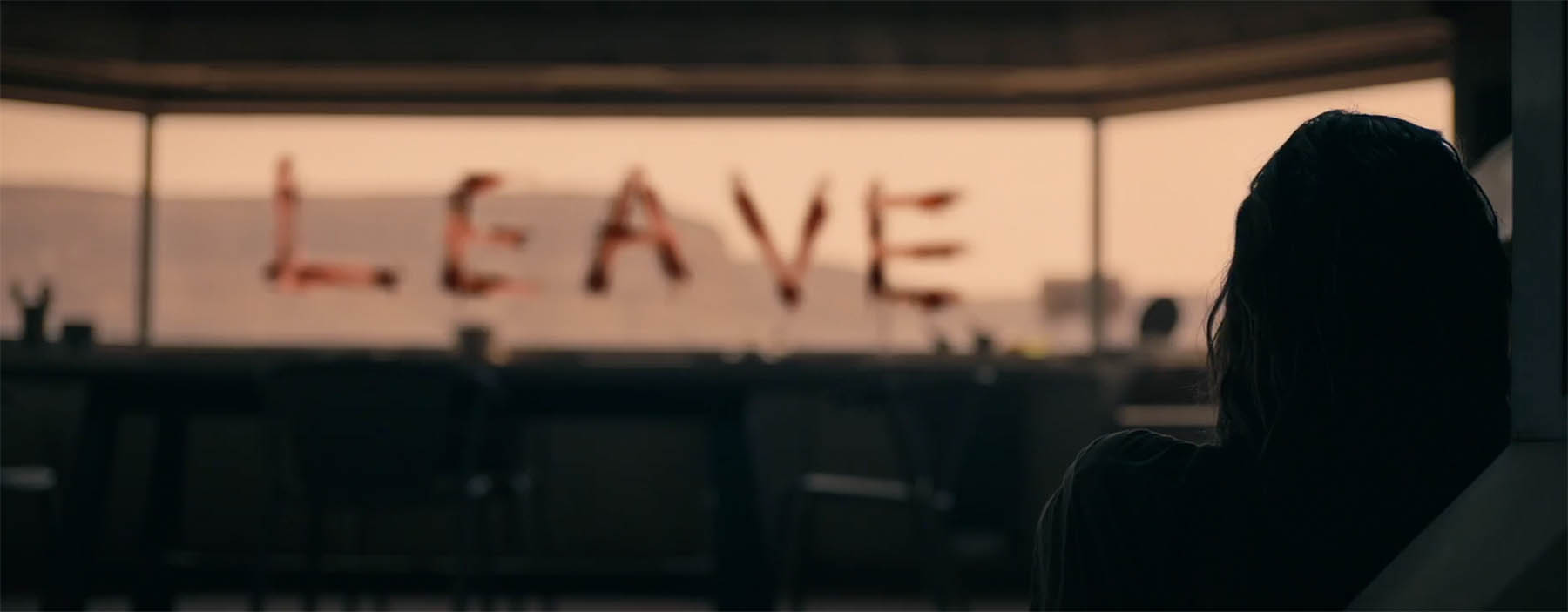
Ilsa (Sofia Boutella), Reza (Jonny Lee Miller) and young Remmy (The Florida Project’s Brooklynn Prince) appear to be the only family on a barren Martian settlement, but then they wake to a giant “LEAVE” written on their front window and the questions begin to stack up.
Why is Jerry (Ismael Cruz Cordova) staking a claim to their place? What happened to all the other colonists, and how many others are out there lurking, maybe plotting to attack?
And what caused them all to leave Earth in the first place?
Rockefeller is not at all interested in easy answers, instead employing some first-rate performances and stellar production design to evoke a more universal statement on human nature, and more specifically, the often desperate and consistently overlooked role of women in nation building.
It’s a theme given an effective horror treatment in The Wind three years ago, and while the science fiction elements in Settlers are well-played, they’re also subtle enough to never upstage the character studies at work.
We see the first two acts of the film through young Remmy’s eyes, carefully observing the adults around her and making friends with a dog-like robot she calls “Steve.” Prince delivers a wonderfully tender performance, enabling us to feel Remmy sizing up her future choices with each passing day.
The film’s final act jumps ahead ten years, when a now teenage Remmy (the awesomely named Nell Tiger Free from GoT) is nearing the day she’ll be forced to make those hard choices. Jerry has become an even bigger presence in her life, and Cordova flexes an impressive ability to keep you guessing about Jerry’s true nature until late in the game.
If you lean toward tidy endings wrapped in unmistakable red bows, you’ll find none of those in Settlers. You will find an engrossing tale careful to leave plenty of opportunities for filling in the blank spaces.
Follow where it leads, and you’ll glimpse a future that’s inviting you to rethink the past. And the present.
Early on, plenty in the Shudder original Kandisha is going to remind you of Candyman. The filmmakers wisely address this early as well, and then move right along with a brisk and bloody realization of a Moroccan vendetta born from centuries-old roots.
On summer break from school, teen best friends Amélie (Mathilde Lamusse), Bintou (Suzy Bemba) and Morjana (Samarcande Saadi) are busy practicing their graffiti art in a dilapidated building. Peeling back some rotting drywall, Amélie spots a spray-painted tag of “Kandisha,” and Morjana recounts the legend.
In 16th century Morocco, Kandisha fought the Portuguese occupation that took her husband’s life. She even managed to kill six enemy occupiers before being caught, tortured, and killed.
Now, she roams the netherworld as a half-beast walking upright on hooves, waiting for a summons that will require her to slay six men before returning to her eternal unrest.
And how do you summon Kandisha? You look in the mirror and say her name five times.
“Like in the movies?”
Yes, girls, just like in the movies.
Writers/directors Alexandre Bustillo and Julien Maury (the unforgettable Inside) are smart enough to take what we’re thinking and make it organic. We instantly relate to the girls’ scoffing, which helps make us feel connected to the journey that will make them believers.
Once Amélie conjures Kandisha to avenge an assault, it’s a trip that doesn’t waste much time getting down to business. There’s no trace of the silly humor Bustillo and Maury added to Inside, but their penchant for grandiose bloodletting is front and center as Kandisha begins counting to six.
The girls turn to an Imam for help reversing the curse, a narrative thread that ultimately provides more than just monstrous thrills. It’s also the chance for international audiences – especially in America – to see Islam depicted as a source for salvation instead of the stereotypical terrorist breeding ground.
If you’re going back to the well of Bloody Mary and Candyman, the water gets finer via each original filter. Kandisha adds a fresh cultural and female-specific lens to a bloody, take-no-prisoners approach that does much to overcome the tale’s familiar building blocks.
Broadcasting—TV, radio, podcasts—offer plentiful opportunities for horror. You have the good broadcasts, where an important message is being delivered to the right people: The Fog, I Am Legend, A Quiet Place Part II, Texas Chainsaw Massacre 2. And, of course, there are the evil broadcasts: Lords of Salem, Trick or Treat, The Cleansing Hour.
There are also two (well, three really)N utterly brilliant films with very particular broadcasts that are difficult to come by. We narrowed the list to broadcasts aimed at as many people as can be affected, and for that reason alone we’ve left off Poltergeist and Ring/Ringu.
So here are the five best ways horror filmmakers found to wreak havoc over the airwaves.
5. They Live (1988)
More SciFi and action than horror, still John Carpenter’s vision of an elite class using tech to mollify and control the population of the US was eerily prescient. And horrifying.
At the time, though, it was just plain entertaining in a way that married Carpenter’s own iconic Escape from New York vibe with the SciFi horror miniseries of the day, V.
But mainly, it’s Rowdy Roddy Piper chewing bubble gum, and the 6 1/2 minute fight scene between Piper and undeniable badass Keith David that make this film as fun to watch today as it was when it was released.
4. Halloween III: Season of the Witch (1982)
Man, people did not like this movie when it came out. After two massive blockbusters kicking off the franchise, somebody decided to make a Halloween movie without Michael Myers. It would go on to be one of the most beloved cult movies of all time.
Is the storyline confused? Well, its mythology—Celts and Stonehenge and shamrocks and Halloween masks and blah blah blah—but the point is Tom Atkins, isn’t it? Plus the main plot points: kids wear the masks, they watch the commercial, they hear that creepy jingle, and their heads effing melt.
Now that’s showbusiness.
3. The Signal (2007)
A transmission – a hypnotic frequency – broadcasting over TV, cell and landline telephones has driven the good folks of the city of Terminus crazy. David Bruckner, Dan Bush and Jacob Gentry created a film in three segments, or transmissions.
Transmission 1 introduces our lover heroes as well as the chaos. Can Mya (Anessa Ramsey) and Ben (Justin Welborn) remain sane, reunite and outrun the insanity?
Transmission 2 takes a deeply, darkly funny turn as we pick up on the illogical logic of a houseful of folks believing themselves not to have “the crazy.” The final transmission brings us full circle.
The movie capitalizes on the audience’s inability to know for certain who’s OK and who’s dangerous. Here’s what we do know, thanks to The Signal: duct tape is a powerful tool, bug spray is lethal, and crazy people can sure take a beating.
2. Pontypool (2008)
Canadian director Bruce McDonald’s shock jock horror film is best appreciated as a metaphor on journalistic responsibility and the damage that words can do. Radio air personality and general pot-stirrer Grant Mazzy (Stephen McHattie) finds himself kicked out of yet another large market and licking his wounds in the small time – Pontypool, Ontario, to be exact. But he’s about to find himself at the epicenter of a national emergency.
McDonald uses sound design and the cramped, claustrophobic space of the radio studio to wondrous effect as Mazzy and his producers broadcast through some kind of zombie epidemic, with Mazzy goosing on the mayhem in the name of good radio. As he listens to callers describe the action, and then be eaten up within it, the veteran McHattie compels attention while McDonald tweaks tensions.
Shut up or die is the tagline for the film. Fitting, as it turns out that what’s poisoning the throng, turning them into mindless, violent zombies, are the very words spewing at them. It’s a clever premise effectively executed, and while McDonald owes debts all around to previous efforts, his vision is unique enough to stand out and relevant enough to leave an impression.
1. Videodrome (1983)
Videodrome was the last true horror and truly Canadian film in David Conenberg’s arsenal, and it shows an evolution in his preoccupations with body horror, media, and technology as well as his progress as a filmmaker.
James Woods plays sleazy TV programmer Max Renn, who pirates a program he believes is being taped in Malaysia – a snuff show, where people are slowly tortured to death in front of viewers’ eyes. But it turns out to be more than he’d bargained for. Corporate greed, zealot conspiracy, medical manipulation all come together in this hallucinatory insanity that could only make sense with Cronenberg at the wheel.
Deborah Harry co-stars, and Woods shoulders his abundant screen time quite well. What? James Woods plays a sleaze ball? Get out! Still, he does a great job with it. But the real star is Cronenberg, who explores his own personal obsessions, dragging us willingly down the rabbit hole with him. Long live the new flesh!
You think the GOAT debate about hoop gets heated? Just wait ’til your twitter thread blows up with hot takes on the thespian greatness of Jordan vs. LeBron!
Yeah, that’s not likely to happen.
I can tell you Don Cheadle is a great actor, and he’s clearly having a ball as the high-tech heavy in Space Jam: A New Legacy.
Cheadle is Al G. Rhythm, a (what else?) algorithm inside the Warner 3000 computer system that has designed a can’t miss WB idea for LeBron James. But LeBron is not impressed, so Al decides to get even by pitting LBJ against his own 12 year-old son, Dom (Cedric Joe).
Dom is actually more interested in video game design than basketball, but feels pressured by his superstar Dad to follow in the family business. Al seizes on this rift, pulling father and son into the virtual world, stealing Dom’s design for a basketball video game, and offering a deal.
You guessed it: classic Tunes (featuring Zendaya voicing Lola Bunny) vs. some brand new Goons (basketball superstars including Anthony Davis, Damian Lillard and Diana Turasi). A win for the Tune Squad puts the James family back to normal, but a loss means they’ll stay in the “server-verse” forever.
Adding WNBA stars and a new look for Lola are just two of the ways director Malcolm D. Lee (Girls Trip, TheBest Man franchise) and the writing team succeed with an updated premise required for new sensibilities. Sure, the resolution of the father-son tension is predictable, but it manages a schmaltzy level of resonance amid the cartoon nuttiness that we’re really here for.
The antics of your favorite Looney Tunes characters (aside from an ill-advised, rapping Porky Pig) are classically looney, but the script also scores with some topical, self-aware humor aimed at the digital age, a classic Dave Chappelle bit, and LeBron himself (Dom: “Did my Dad leave?” Al: “That’s what he does, isn’t it?”)
And while the original ’96 Space Jam always smacked of product placement marketing, A New Legacy ups that ante, dropping LBJ and friends into any number of Warner properties, from Casablanca to Rick & Morty. Shameless, yes. Fun? Also yes.
As for King James, he follows that standout cameo in Trainwreck with a lead performance that alternates between awkward and decent. He does bring more natural onscreen charisma than Jordan (there’s a reason MJ barely speaks in his TV ads), but I’m guessing the task of acting opposite cartoons didn’t help with James finding a comfort zone in his first lead role.
But LeBron sure looks at home on the court, and once everybody joins him (and I mean everybody – have fun scanning the crowd), Lee rolls out some frantically fun game action with plenty of visual pop. This Space Jam may follow some of the original’s playbook, but there’s enough “new” here to justify the title, and by the time the buckets and anvils start dropping, A New Legacy finds its own fun and satisfying groove.
Near the end of director Carlos López Estrada’s impressive 2018 debut feature Blindspotting, Daveed Diggs unleashes a blisteringly beautiful rap monologue. Estrada showcases the raw, extended wordplay to lay bare a character’s journey and a film’s soul.
Now, after joining the directing team on Disney’s enchanting Raya and the Last Dragonlast year, Estrada returns to solo work – as well as the streets – with Summertime, an uplifting celebration of urban poets “spitting that emotional fire” amid an interconnected assemblage of L.A. stories.
Anewbyss & Rah (Bryce Banks & Austin Antoine) are a rap duo trying to build a following. Gordon (Gordon Ip) is tired of working in a burger joint. Brokenhearted Sophia (Maia Mayor) is stalking her ex-boyfriend and finds a kindred spirit in the thoughtful Marquesha (Marquesha Babers). Mila (Mila Cuda) is standing up to a bus riding homophobe while Tyris (Tyris Winter) is just searching for a good cheeseburger and documenting his quest on Yelp.
These are but a few of the many compelling personalities in this magnetic mosaic of poems, images, cultures and identities. Estrada weaves together the work of twenty-six different poets, each one spitting emotional fire to spare.
Anchored proudly in the City of Angels, Summertime drops the beats of a grittier West Coast bookend to In the Heights. There are dreamers of diverse backgrounds here, too, though these are the more openly wounded variety, finding comfort from channeling the hurt into writing.
But as raw as those wounds can get, the performers never abandon the humor, joy and hope that comes from upending conventions about who they are, where they’re from, and what they have to offer.
So many different threads in one 95-minute tour of L.A. probably shouldn’t work this well. Credit Estrada’s balanced vision and his wonderful cast of artists for making sure that stopping, looking, and listening to Summertime is a thoroughly rewarding thing to do.