If you’re a fan at all of genre films, chances are good Watcher will look plenty familiar. But in her feature debut, writer/director Chloe Okuno wields that familiarity with a cunning that leaves you feeling unnerved in urgent and important ways.
Maika Monroe is sensational as Julia, an actress who has left New York behind to follow husband Francis (Karl Glusman) and begin a new life in Bucharest. With a mother who was Romanian and a fluent grasp on the language, Francis instantly feels at home.
Julia does not, and her feelings of vulnerability are compounded by her trouble communicating, the news reports of a serial killer, her husband’s late nights at the office…and the man in the window across the street (the effortlessly creepy Burn Gorman) who is constantly watching her.
And as soon as Julia makes accusations, the games begin.
Is the watcher really a threat? Is he stalking Julia, or is she the one who’s following him?
None of these beats are new, and as events escalate, others are pretty clearly telegraphed. But it’s the way Okuno (who helmed the impressive “Storm Drain” segment from V/H/S /94) slowly twists the gaslighting knife that makes the film’s hair-raising chills resonate.
She finds a perfect conduit in Monroe, who emits an effectively fragile resolve. The absence of subtitles helps us relate to Julia immediately, and Monroe never squanders that sympathy, grounding the film at even the most questionably formulaic moments.
Even as Julia pleads to be believed, the mounting indignities create a subtle yet unmistakable nod to a culture that expects women to ignore their better judgment for the sake of being polite.
And from the friendly bystander who jokes about the creeper’s “crush” to Francis’s weak-willed humoring, Okuno envelopes Julia in male gazes that carry threats of varying degrees, all building to a bloody and damn satisfying crescendo.
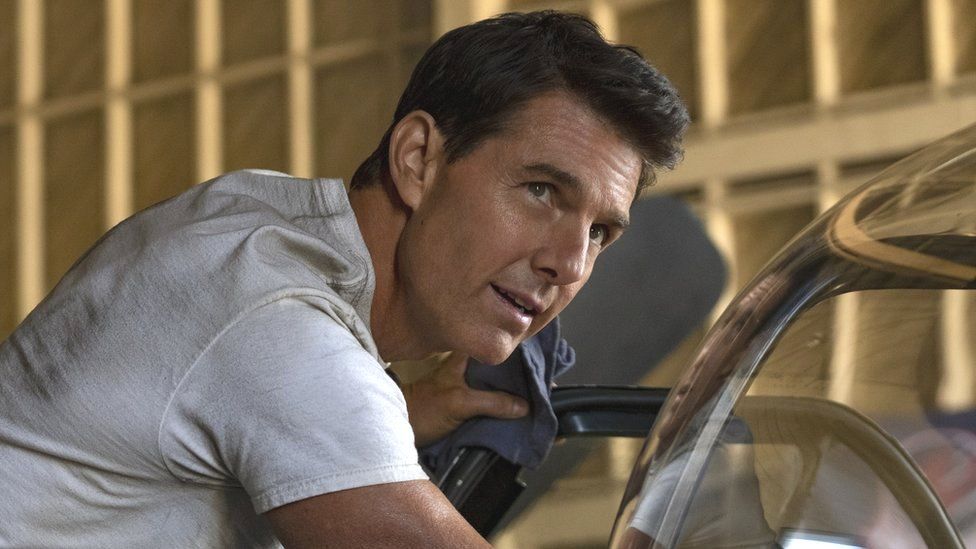
Sentimental, button-pushing and formulaic, as predictable as it is visceral, Top Gun: Maverick stays laser-focused on its objective.
Attract crowd. Thrill crowd. Please crowd.
Expect bullseyes on all three fronts, as star Tom Cruise and director Joseph Kosinski take a couple cues from the Star Wars franchise in reconnecting with friends and re-packaging feelings.
After all these years in the Navy, Pete Mitchell’s “Maverick” tendencies have kept him from advancing past the rank of Captain. And when Pete blatantly shows up Admiral Cain (Ed Harris), he’s in danger of being grounded until Admiral “Iceman” (Val Kilmer) rescues him with orders to return to Top Gun and whip some new flyboys and girls into shape for a secret mission.
One of those young guns is “Rooster” (Miles Teller), son of “Goose,” who resents Maverick for more than just coming home alive when his father did not.
Against the wishes of Admiral “Cyclone” (Jon Hamm), it is Maverick who will train the 12 Top Gun pilots, and then pick 6 to take out a newly discovered uranium plant that poses a clear and present threat to the U.S.
Who’s doing the threatening? We never know. Does it matter?
Not in Maverick‘s world.
The screenplay-by-commitee doesn’t stretch anybody’s imagination or talent, with early hotshot dialog so phony it feels like a spoof. But nobody came for banter. We came for nostalgia, flight action, and – god help us – Tom Cruise.
He delivers, in his inimitable movie star way. He cries on cue, runs like his hair’s on fire, and burns charisma. What more do you want?
Romance? Here’s old flame Penny (Jennifer Connelly), who now runs that famous San Diego beachfront bar and just happens to be a single mother who might be looking for someone as ridiculously good-looking as she is. As both characters and actors, they click.
Cruise’s chemistry with a mainly underused Teller – who really looks like a chip off the old Goose – finally gets to show itself late in the film, exposing both tenderness and humor in its wake.
And once we’re in the air, get in front of the biggest screen you can and hang on. Kosinski’s airborne action sequences are often downright breathtaking, every moment in the danger zone moving us closer to that Goose/Rooster/Maverick moment that has no business working as well as it does.
It’s emotional manipulation, but not nearly as garish an act as Val Kilmer’s thankless role. Still, Cruise and Kosinski know it’s nostalgia that flies this plane, and Iceman is part of the plan that starts right from that original Kenny Loggins tune heard in the opening minutes.
From manufactured rivalries to shirtless team building to the entrance of a surprise Top Gun instructor from last night at the bar, Maverick sells us back what we first bought back in 1986.
Some fifteen years ago (!), at a critics screening for the movie version of Strangers With Candy, I laughed early and often. I was a fan of the TV show and its particular brand of humor, and I thought the film was hilarious. And then I realized something.
I was the only one laughing.
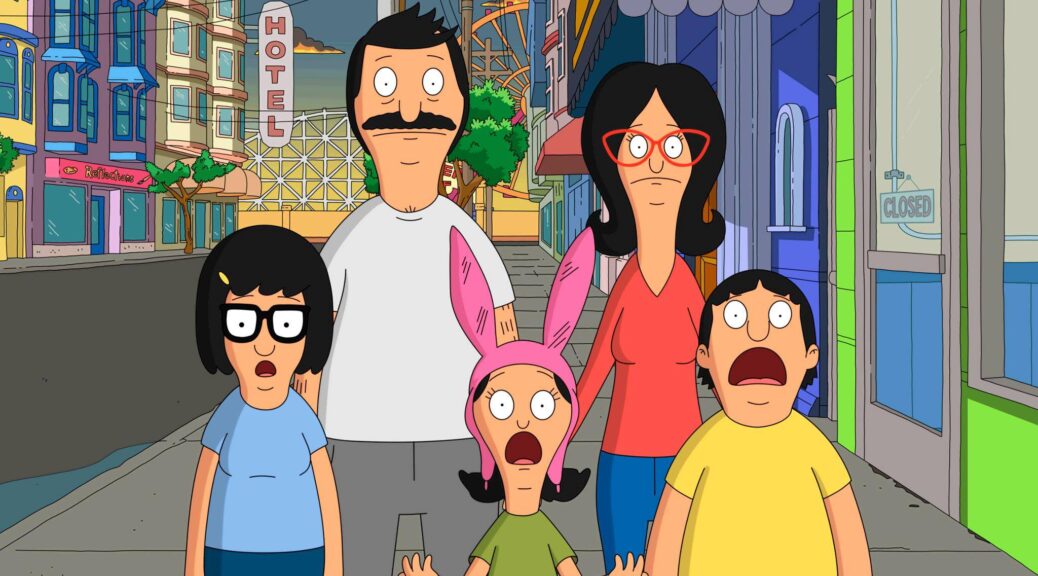
At the recent critics screening for TheBob’s BurgersMovie, a similar thing happened. Only one person was laughing.
It wasn’t me.
Series creator Loren Bouchard brings his baby to the big screen as co-writer and co-director, and he promptly puts the Belcher burger joint in jeopardy.
The family has just seven days to make a loan payment to the bank, and business isn’t exactly booming. And that was before a big sinkhole formed directly outside the front entrance! Meanwhile, the Belcher kids stumble onto a mystery involving the obnoxiously rich Calvin and Felix Fischoeder (voiced by Kevin Kline and Zach Galifianakis) that could reveal a way out of the whole mess.
Bouchard and his regular cast of voice actors (including H. Jon Benjamin, Kristen Schaal, Dan Mintz, Eugene Mirman and John Roberts) have been at this for over a decade, and their move to the multiplex shows no signs of re-inventing a formula that has clearly worked for years.
It just doesn’t work for me.
The songs are spirited, the animation well-crafted, and the dialogue often rapid fire. But it leans on a style of humor that’s often obvious and repetitive, in a cartoon world where nearly every single business has to have a corny name like “It’s Your Funeral Home,” “Sprain Sprain Go Away” and “Weight Weight Don’t Tell Me.”
But to its credit, The Bob’s Burgers Movie is here to super serve the regulars. There may be too much fatty in the patty to attract many new converts, but if you’ve already memorized the specials, belly up for a deluxe portion.
Filmmaker Vincent Kelner knows you don’t want to see what he has for you.
But while his documentary A Taste of Whale doesn’t shy away from blood in the water, his ultimate goal lies beyond the killing grounds.
In his feature debut, Kelner takes us to Europe’s Faroe Islands, where every year some 700 pilot whales die in a traditional slaughter known to locals as the “Grind” (pronounced like “grinned”). Though the Faroes is a constituent country of Denmark, the people live under their own constitution, just one of the reasons many natives believe it’s a privilege to call the Faroes home.
And Kelner lets many Faroese defend the Grind with conviction, pointing to mischaracterizations and misunderstandings, while labeling visiting activists as “tourists.”
But there are some on the island that are willing to admit their hunting methods have strayed far beyond the traditional, and that maybe some of the protesters have a point.
Kelner does an admirable job tackling the issue from opposing sides, even drawing a subtle parallel between pragmatic approaches to behavioral change and recent pandemic mandates here at home.
But Kelner’s understated hand begins to apply more pressure once someone comments on the disconnect between not wanting to see things die, but still wanting to eat things that are dead.
If you turn away in horror at Kelner’s graphic footage from the Grind – and later, from slaughterhouses – A Taste of Whale stresses that this bloodshed will always exist “wherever you have meat for food.”
It is a bit of rope-a-dope from Kelner, but he wants you to be horrified. And when you are, he’s waiting to challenge your convictions with a lifestyle change that’s framed as the only logical choice.
Take two longtime friends on the verge of going their separate ways, and throw in one night of epic partying before they graduate. There will be hijinks, conflict, feelings expressed, and resolution.
We know this formula, right?
Not so fast. Expanding their Emergency short from 2018, director Carey Williams and writer K.D. Dávila run those familiar tropes through a tense, in-the-moment lens that upends convention while still delivering a consistent layer of laughter.
Sean (RJ Cyler from Power Rangers and The Harder They Fall) and Kunle (Donald Elise Watkins, Black Box and The Underground Railroad) have two months until they graduate Buchanan college. Their plan is to make history by becoming the first Black men to complete Buchanan’s Legendary Party Tour. They’ve managed to score all seven necessary invites, but a complication arises.
There’s a passed-out underage white girl in their living room.
Kunle’s instinct is to call 911, but Sean quickly reminds him that Black folks have been shot for far less than what it might appear is going on.
And so the two friends decide to deal with the situation themselves, adding their pal Carlos (Sebastian Chacon) to the plan while the unconscious girl’s sister (Sabrina Carpenter) and two of her friends stay in pursuit via phone tracking.
Williams does a masterful job juggling tones. Early on, the terrific performances from Cyler and Watkins get us invested in the friendship before Williams increases the pressure. He’s able to blend some terrifying dread into the ridiculous nature of the situation with a quiet confidence that deepens the real-world stakes.
Dávila, fresh off writing the Oscar-nominated short Please Hold, again mines law enforcement anxieties with deft precision. Her transition to a feature-length screenplay is seamless, sharpening the narrative with clever, organic plot turns and the characters with authentically grounded humor.
From clueless white allies to the distance between “Black excellence” and “thug,” Emergency covers plenty of socially conscious ground. And though a beat or two may seem less than subtle, the film never panders.
So we get the two friends ready to explore the future, searching for their place in the world. But this wild night of partying holds more sobering lessons than we’re used to seeing.
For these young men, it’s about how quickly their perception of the world can change forever, and the unrelenting weight of navigating how the world sees them.
For anyone who’s still wary of the Gaspar Noé sensory assault in full feature length form, Lux Æterna offers a slight variation.
Oh, he’s still beating us about the face and neck with psychedelic imaging, pulsating rhythms and immersive colors, he’s just keeping it to under an hour this time. And, even bringing along a dare-I-say lighthearted touch to this meta mashup of cinema and witchcraft.
Most everyone here is playing themselves, starting right at the top with Béatrice Dalle and Charlotte Gainsbourg talking shop. They swap stories, laugh heartily at their “shit films” and eventually get down to the business of making “God’s Work,” a post-modern tale of witches.
Dalle is directing, Gainsbourg is starring, and once on set, the laughter gives way to a cascade of madness and hysterics, rendered even more disorienting by Noé’s consistent use of split screen formatics. Not only is following both sides often challenging, but anyone sensitive to flashing lights might well be overwhelmed.
The “God’s Work” producer is hatching a plan to get Dalle fired from the project. Gainsbourg is juggling trouble at home and unsolicited pitches from an aspiring director (Karl Glusman from Noé’s Love), while her female co-stars (including Abbey Lee and Clara Deshayes) face a string of indignities.
Noé intersperses it all with clips and quotes from films and filmmakers he admires, and when a lighting miscue becomes a flashpoint for total chaos on the production, Noé’s embrace of the breakdown is clear.
This is where his art thrives, and Lux Æterna finds Noé nearly winking at his own reputation. Longtime aficionados may feel a bit slighted, but any neophytes will get a healthy appetizer to help decide if you’re up for bigger portions.
Spooky buddies! What’s what we’re talking about, that’s who we’re talking to.
5. The Ritual (2017)
David Bruckner has entertained us with some of the best shorts in horror today, including work from V/H/S, Southbound, and one of our favorites, The Signal. Directing his feature debut in The Ritual, Bruckner takes what feels familiar, roots it in genuine human emotion, takes a wild left turn and delivers the scares.
Five friends decide to mourn a tragedy with a trip together into the woods. Grief is a tricky, personal, often ugly process and as they work through their feelings, their frustration quickly turns to fear as they lose themselves in a foreign forest where danger lurks.
The film works for a number of reasons, but its greatest triumph is in making the woods scary again. That environment has become such a profound cliché in horror that it is almost impossible to make it feel fresh, but there is an authenticity to the performances, the interaction among the characters, and the frustration and fear that grounds the horror. And then there is horror—intriguing, startling, genuinely frightening horror. Yay!
4. The Cabin in the Woods (2011)
You know the drill: 5 college kids head into the woods for a wild weekend of doobage, cocktails and hookups but find, instead, dismemberment, terror and pain. You can probably already picture the kids, too: a couple of hottie Alphas, the nice girl, the guy she may or may not be into, and the comic relief tag along. In fact, if you tried, you could almost predict who gets picked off when.
But that’s just the point, of course. Making his directorial debut, Drew Goddard uses that preexisting knowledge to entertain holy hell out of you.
Cabin is not a spoof. It’s not a satire. It’s sort of a celebratory homage, but not entirely. What you get with this film is a very different kind of horror-comedy.
3. Tigers Are Not Afraid ( 2017)
Issa Lopez’s fable of children and war brandishes the same themes as Guillermo del Toro’s masterpiece Pan’s Labyrinth, but grounds the magic with a rugged street style. One pack of feral children have only each other and their imaginations to keep them safe.
Tigers follows Estrella, a child studying fairy tales—or, she was until her school is temporarily closed due to the stray bullets that make it unsafe for students. As Estrella and her classmates hide beneath desks to avoid gunfire, her teacher hands her three broken pieces of chalk and tells her these are her three wishes.
But wishes never turn out the way you want them to.
2. The Descent (2005)
Adventuring buddies get together for a bit of spelunking. Writer/director Neil Marshall begins his film with an emotionally jolting shock, quickly followed by some awfully unsettling cave crawling and squeezing and generally hyperventilating, before turning dizzyingly panicky before snapping a bone right in two.
And then we find out there are monsters.
The grislier the film gets, the more primal the tone becomes, eventually taking on a tenor as much like a war movie as a horror film. This is not surprising from the director that unleashed Dog Soldiers – a gory, fun werewolf adventure. But Marshall’s second attempt is far scarier. For full-on horror, this is one hell of a monster movie.
1. It Follows (2014)
It Follows is a coming-of-age tale that mines a primal terror. Moments after a sexual encounter with a new boyfriend, Jay discovers that she is cursed.
As Jay’s close-knit crew does what they can to help her evade the shapeshifting horror that follows her, Mitchell captures that fleeting yet dragging moment between childhood and adulthood and gives the lurking dread of that time of life a powerful image. There is something that lies just beyond the innocence of youth. You feel it in every frame and begin to look out for it, walking toward you at a consistent pace, long before the characters have begun to check the periphery themselves.