Screening Room: Missing, The Son, Alice Darling & More
by George Wolf
Remember the palpable tension in the opening moments of 2020’s The Invisible Man ? We didn’t need visual evidence to believe Elisabeth Moss’s character was desperate to flee an abusive relationship. We felt it simply from the strength of Moss’s performance.
Anna Kendrick delivers similar results in Alice, Darling, reaching new career heights as a woman who has lost all sense of self to a controlling, manipulative partner.
Alice (Kendrick) can’t even join her besties Sophie and Tess (Wunmi Mosaku and Kaniehtiio Horn, both terrific) for happy hour without Simon (Charlie Carrick, politley menacing) texting multiple requests aimed at reminding Alice just who she answers to.
When the ladies rent a secluded lake house for a week-long celebration of Tess’s birthday, Alice tells Charlie her time away from him is strictly work-related. But once they’re at the cabin, Alice’s anxious behavior convinces her two friends that everything is not fine at home.
Kendrick – who also serves as an executive producer – has recently opened up about her regret and shame from letting a previous abusive relationship carry on too long. This is an understandably personal project for her, and she channels her own pain into a compelling portrait of a woman nearly suffocating from manipulation, where every message notification and car wheel on gravel serves as a trigger.
An apt underwater metaphor is just one of those skillfully employed by director Mary Nighy in an impressive debut that benefits from subtlety and confident restraint. Alice’s moments of self-harm are evident but not overdone, and her growing interest in the case of a local girl gone missing is understood simply from Kendrick’s quiet fascination.
Alanna Francis’s thoughtful script does eventually reveal Charlie’s gaslighting methods in action, but never to the point where it seems something needs to be proven, because nothing does.
This is no he said/she said. Kendrick has us believing from the start, as Alice, Darling becomes a healing journey back to self, and an intimate reflection on what love is not.

To some, it’s a lovely spot for a holiday or a proposal or just a little picnic. But we know better. Filmmakers have long taken advantage of the idyllic yet dangerous nature of a lake for horror. Almost always, it’s the irony, of finding death and mayhem exactly where you’re expecting joy and frivolity that makes lakeside horror so compelling.
Here are our favorite horror movies side at a lake.
This deceptive slow boil of a documentary is two movies in one: the one you think you’re watching and the one beneath. The obvious film is a clever true-crime bit, constantly introducing new information and fascinating twists, each delivered by incredibly authentic performances.
Alice Palmer drownd. Her parents and brother are having a hard time accepting it, and the noises coming from her bedroom at night promote their skepticism. They investigate, turning up a lot of peculiar intel.
But writer/director Joel Anderson does more than lead you through a surprising mystery. He layers into that the melancholy lonesomeness that any ghost story must have, and the two stories together become one wonderfully sad film.
Fun! Writer David E. Kelly is known more for his quirky TV series, but he takes the exact same approach –smart, bantering and bickering characters facing a huge challenge – to the big screen with this crocodile hunt.
Veteran horror director Steve Miner (Warlock, House, Friday the 13th parts 2 & 3) delivers thrills and comedy in equal measure, but the film lives and dies with this unbelievable cast.
Betty F. White and Brendan Gleeson! Both! And she tells him to suck her dick!! I don’t know what more you want, but you get Bridget Fonda, Oliver Platt, Bill Pullman and Meredith Salenger in a fun, bloody romp.
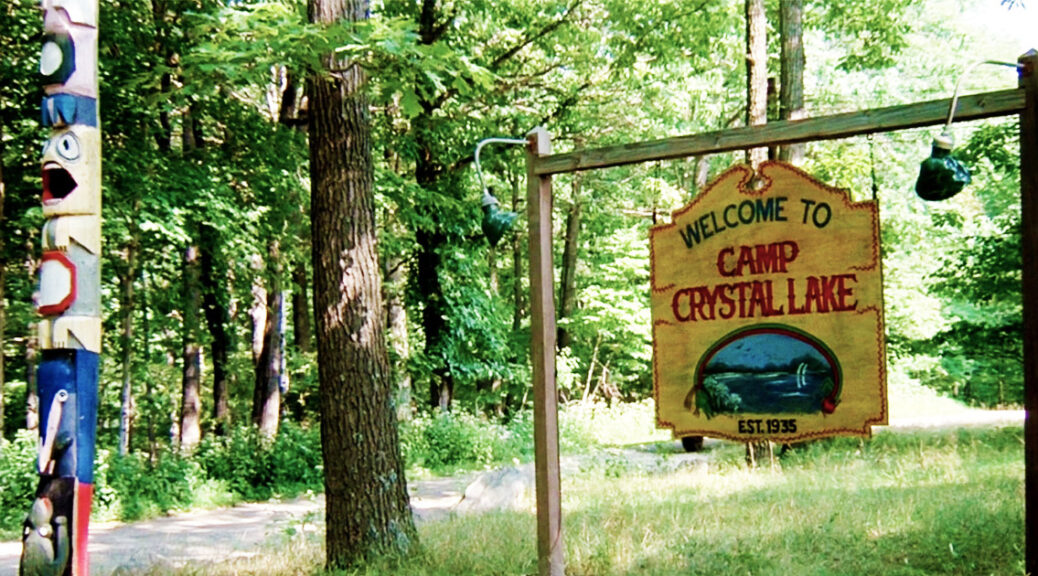
Before the mask, Sean Cunningham’s 1980 slasher penned by Victor Miller created the splatter-by-numbers blueprint for dozens of horror movies to follow – including 10 of its own sequels. Friday the 13th was a cultural and cinematic turning point that changed horror and the way we thought about summer camp.
With next to no budget but plenty of short shorts, remarkable blood fx by maestro Tom Savini, genuinely original kill sequences, and a masterful twist ending, the film awakened something in moviegoers. It’s been copycatted to death, but upon reinspection, the original is still champion.
A family pulls into their vacation lake home. They are quickly bothered by two young men in white gloves. Things, to put it mildly, deteriorate.
Writer/director/genius Michael Haneke begins this nerve-wracking exercise by treading tensions created through etiquette, toying with subtle social mores and yet building dread so deftly, so authentically, that you begin to clench your teeth long before the first act of true violence.
His 2007 English language remake is a shot-for-shot repeat of the 1997 German language original. In both films, it is the villains who sell the premise. Whether the German actors Arno Frisch and Frank Giering or the Americans Brady Corbet and Michael Pitt, the bored sadism that wafts from these kids is seriously unsettling, as, in turn, is each film.
The always outstanding Michael Fassbender takes his girl Jenny (Kelly Reilly) to his childhood stomping grounds – a flooded quarry and soon-to-be centerpiece for a grand housing development. He intends to propose, but he’s routinely disrupted, eventually in quite a bloody manner, by a roving band of teenage thugs.
Kids today!
The film expertly mixes liberal guilt with a genuine terror of the lower classes. The acting, particularly from the youngsters, is outstanding. Most impressive, Jack O’Connell’s performance as the young psychopath is chilling.
There’s the slow boil of the cowardly self-righteous. Then there’s this bit with a dog chain. Plus a railroad spike scene that may cause some squeamishness. Well, it’s a grisly mess, but a powerful and provocative one. Excellent performances are deftly handled by the director who would go on to helm The Woman in Black.
by George Wolf
“I am not the responsible party.”
Laurence Coly (Guslagie Malanda) admits that she deliberately left her 15-month old daughter on the water’s edge to die, alone at the mercy of the tide. But Mlle. Coly tells a court in Saint Omer, France that she is not to blame.
Rama (Kayije Kagame), a literature professor and novelist, has made the trip from Paris to attend Coly’s trial. Rama’s plan is to adapt the case into an updated version of the ancient myth of Medea (calculated revenge against an unfaithful husband). But Rama is now four months pregnant, and like Coly, she is a woman of Senegalese descent in a mixed-race relationship. And the more Coly defends herself, the more Rama feels a deepening kinship.
After a string of documentaries, writer/director Alice Diop moves into narrative features for the first time with her eye for authenticity intact. Coly’s case is based on an actual trial that Diop felt moved to attend in person, and she wrote Rama’s character to reflect her own experience.
Diop’s approach is strictly observational, and mostly anchored in the courtroom where Coly’s story is told, rebutted and debated. And though films with more tell and less show often suffer with emotional connection, Diop mines two impressive lead performances for resonance that comes from the things that are not being said.
Perspectives shift frequently, and an emotionally complex conversation emerges that begs for humanity in the midst of an unthinkable act. But no matter who may be speaking, or what side they may be on, we feel the bond growing between Rama and Coly, which makes Diop’s one overt camera move in the finale all the more worthy.
There is a judge in this French courtroom, but Saint Omer invites us to sit on the jury. It is a thoughtful and sensitive discussion that may surprise you. And it is one worth having.

by George Wolf
(Tom Hanks SNL voice) “My name is Kyle Edward Ball…and I’m going to scare the HELL out of YOU!”
And you know what? He just might do it.
Be extra prepared if the title Skinamarink reminds you of those fun singalongs from Sharon, Lois & Bram. Because Ball’s brand of nightmare fuel taps into the very essence of childhood fears, exploiting those exposed nerves with a committed resolve we haven’t seen since Laurence Olivier in Marathon Man.
Is it safe? It is not.
Ball’s premise is brilliant simplicity. It’s 1995, and two young children, Kaylee (Dali Rose Tetreault) and Kevin (Lucas Paul), wake in the night to find they are alone, with the windows and doors in their house suddenly gone. In an instant, the stakes are familiar – but not because you’ve seen this before.
It’s because there’s probably some version of this nightmare in your past. You were just a kid, separated from your parents and trying in vain to reach them or call out for help, or maybe just escape.
Remember how scared you were? Ball and cinematographer Jamie McRae do, and they twist that knife again and again for 100 slightly bloated minutes of dark, disorienting dread.
Cinematography and sound design are intertwined in an analog, cathode-ray aesthetic that recalls vintage, grainy VHS. The children whisper to each other (“Where do you think Dad is? I don’t know.”) as they wander from room to room, with Ball’s camera never allowing you one second of relief.
All through this fright night, familiar sources of comfort such as toys and cartoons turn eerily sinister, accentuating the feeling that it’s not just these kids that are in peril, it is childhood itself. POV is often at floor level, and then tight into a corner of the ceiling or high above the room and rising. You squint in the direction of the children’s flashlight, trying in vain to decipher anything about the house that will give you some sense of its layout, and you strain to separate the cracks of white noise from that deeper voice speaking to the children.
Come upstairs. Look under the bed. Close your eyes.
Ball started down this harrowing hallway by filming 3-4 minute short films of the actual dreams described by viewers of his YouTube channel. Some two years ago, his 29-minute short Heck emerged as the wonder of primal fear that inspired Skinamarink. And though it is a bit disappointing that the single most bone-chilling (and to be fair, most explanatory) moment of the short didn’t make it in the feature, Ball’s $15,000 budget buys much more killer than filler.
More than just nightmarish, this is a literal nightmare onscreen. And the intimate nature of nightmares means that the film’s patient, psychological assault is likely to bring out the “nothing happens!” barbs from those seeking more universally visceral thrills. But for others, the whispers of Skinamarink will hit like a sonic boom.
And they will be hard to shake.
by George Wolf
Nic Cage brings a Brimley-approved mustache and an itchy trigger finger to the The Old Way as Colton Briggs, meanest lowdown killer the Wild West ever saw.
But after an opening standoff that leaves plenty men dead and one young eyewitness without a father, director Brett Donowho jumps ahead twenty years, when the ‘stache is gone and…
…And a good woman has tamed this outlaw into a family man?
That’s right. Colton and his wife Ruth (Kerry Knuppe) run the Briggs Mercantile, while their pensive daughter Brooke (Ryan Kiera Armstrong from American Horror Story and last year’s Firestarter) looks for ways to challenge her smarts and curiosity.
So while Carl W. Lucas’s script scrapes together just enough reason for Colton to take a turn walking Brooke to school…
…Some gunslingers with an old score to settle pay a call to Mrs. Briggs, giving Mr. Briggs a mighty good reason to get out his guns and seek vengeance?
Right again. And though Ruth tells James McAllister (Noah Le Gros) and his crew that “you boys have woke up the devil!”, a face-to-face showdown is just what McAllister is after.
Obviously, nothing here is breaking any ground in the genre, as the real draw is Cage playing a grizzled killer in the Old West. He’s fine, just don’t expect any unhinged Caginess. Briggs is an always-restrained coil of intensity, as Donowho and Lucas instead try to craft some emotional heft from a father teaching his daughter the way of the gun.
Armstrong is clearly a talent, but both she and Cage are up against a script that leans too heavily on stilted, explanatory dialog and cliched exclamations (“You’re bringin’ Hell down on us, Jimmy!”). We’re told too much about who these people are without seeing enough to really care about them.
And by the time that showdown in the middle of a dusty trail finally plays out, what we do see doesn’t make for a memorable payoff.
It’s Nic Cage in a Western, so there are possibilities here. But The Old Way is too content to fall back on the old tropes to blaze anything at all.

What a treat we have for this episode! Producer Alok Mishra and actor Naomi Grossman join us to talk about the ghost of Peter Lawford, grand theft auto, Jessica Lange, the obstacles facing independent filming and the best apartment-based horror movies. Let’s hit it!
Written and directed by David Marmor and clearly inspired by Polanski’s “Apartment Trilogy,” this film is an unnerving experiment in neighborliness. And that’s even without post-lockdown trauma.
Sarah (Nicole Brydon Bloom) just wants to strike out on her own. Yes, she’s nervous, but maybe that’s why this new apartment building feels so right. It’s a real community where people look out for each other.
But they are not keen on pets.
Marmor and a sharp cast move through one surprising door after another. Shifting tones never throw the film off-kilter. Rather, each widens the ripple effect of horror.
[Rec] shares one cameraman’s footage of the night he and a reporter tagged along with a local fire department. The small news crew and two firefighters respond to a call from an urban apartment building. An elderly woman, locked inside her flat, has been screaming. Two officers are already on the scene. Bad, bad things will happen.
Just about the time the first responders realize they’re screwed, the building is completely sealed off from the outside by government forces. Power to the building is cut, leaving everyone without cell reception, cable, and finally, light. Suddenly we’re trapped inside the building with about fifteen people, some of them ill, some of them bleeding, some of them biting.
Filmmakers Jaume Balaguero and Paco Plaza make excellent use of their found footage approach, first by way of the news report, then because of the need to use the camera to see once power’s been cut. They play the claustrophobic nature of the quarantine to excellent effect, creating a kind of funhouse of horror that refuses to let you relax. The American reboot Quarantine is another excellent choice, but our vote has to go with the original.
We return to Chicago’s now-gentrified Cabrini Green housing project with up-and-coming artist Anthony McCoy (Yahya Abdul-Mateen II), whose works have taken a very dark turn since he learned of the Candyman legend from laundromat manager William Burke (Colman Domingo).
DaCosta’s savvy storytelling is angry without being self-righteous. Great horror often holds a mirror to society, and DaCosta works mirrors into nearly every single scene in the film. Her grasp of the visual here is stunning—macabre, horrifying, and elegant. She takes cues from the art world her tale populates, unveiling truly artful bloodletting and framing sequences with grotesque but undeniable beauty.
Rosemary’s Baby remains a disturbing, elegant, and fascinating tale, and Mia Farrow’s embodiment of defenselessness joins forces with William Fraker’s skillful camerawork to cast a spell. Along with Repulsion (1965) and The Tenant (1976), Rosemary’s Baby is part of Polanski’s “apartment trilogy” – disturbing films of tension and horror in which metropolitan life and nosey neighbors conspire to drive a person mad.
Working from Ira Levin’s novel, Polanski takes all the glamour out of Satanism – with a huge assist from Ruth Gordon, who won an Oscar for her turn as the highly rouged busybody Minnie Castevet. By now we all know what happens to poor Rosemary Woodhouse, but back in’69, thanks much to Mia Farrow’s vulnerable performance, the film boiled over with paranoid tension. Was Rosemary losing it, or was she utterly helpless and in evil hands?
First-time feature filmmaker, Iranian Babak Anvari, treads familiar ground yet manages to shift focus entirely and create the profound and unsettling Under the Shadow.
The tale is set in Tehran circa 1988, at the height of the Iran/Iraq war and just a few years into the “Cultural Revolution” that enforced fundamentalist ideologies. Shideh (Narges Rashidi) and her young daughter Dorsa (Avin Manshadi) shelter in their apartment as missiles rain on Tehran.
Frazzled, impatient, judged and constrained from all sides, Shideh’s nerve is hit with this threat. And as external and internal anxieties build, she’s no longer sure what she’s seeing, what she’s thinking, or what the hell to do about it. The fact that this menacing presence – a djinn, or wind spirit – takes the shape of a flapping, floating burka is no random choice. Shideh’s failure in this moment will determine her daughter’s entire future.